














































































Plus, the two-finger hustle that impressed Ari Emanuel

Senate Television via AP
In this image from video, House impeachment manager Rep. Jamie Raskin, D-Md., becomes emotional as he speaks during the second impeachment trial of former President Donald Trump in the Senate at the U.S. Capitol in Washington, Tuesday, Feb. 9, 2021.


 Add JewishInsider on Google
Good Monday morning.
In today’s Daily Kickoff, we report on yesterday’s strikes across Israel to call attention to the plight of the remaining 50 hostages, and report on Rep. Jamie Raskin’s support for the “Block the Bombs” bill that calls for limiting offensive weapons sales to Israel. We cover comments from Rep. Katherine Clark, the No. 2 House Democrat, calling Israel’s actions in Gaza a “genocide,” and report on a new push from leading Jewish organizations for universities to pursue reforms to deal with antisemitism. Also in today’s Daily Kickoff: Mark Shapiro, Larry Fink and Liv Schreiber.
What We’re Watching
- President Donald Trump is convening European leaders at the White House today following his meeting on Friday with Russian President Vladimir Putin. Trump will meet privately with Ukrainian President Volodymyr Zelensky at 1 p.m. ET, followed by a larger meeting with the European heads of state at 3 p.m.
- Leaders expected to be in attendance include U.K. Prime Minister Keir Starmer, Italian Prime Minister Giorgia Meloni, French President Emmanuel Macron, German Chancellor Friedrich Merz, President of the European Commission President Ursula von der Leyen and NATO Secretary-General Mark Rutte.
- Qatari Prime Minister and Foreign Minister Mohammed Al Thani is meeting with senior officials in Cairo today to discuss a new ceasefire proposal. The trip comes days after Al Thani met in Doha with Mossad head David Barnea.
What You Should Know
A QUICK WORD WITH JI’S TAMARA ZIEVE
The unrest could be felt everywhere — in traffic jams, on the airwaves, in WhatsApp groups, even in the waiting room of a dental clinic.
Across Israel yesterday, hundreds of thousands joined a nationwide unofficial strike, led by hostage families and bereaved families, demanding an end to the war in Gaza and the immediate release of the hostages still held there. According to the Hostages Families Forum, over 1 million people participated in protests throughout the day. As the government plans to escalate its military campaign against Hamas, emotions ran high across towns, cities and online spaces, deepening a national rift.
Police clashed with demonstrators blocking roads. In Ra’anana, a truck driver was arrested after allegedly attacking a protester. In a Tel Aviv neighborhood mothers’ WhatsApp group, several members condemned local cafés for staying open, while another defended them for “not strengthening Hamas.” At a dental clinic, a man berated staff for opening their doors, shouting, “What about the hostages!?”
At the heart of the tensions is a painful divide: Protesters — including the majority of the hostage families — argue that rescuing the captives must come before all else. Meanwhile, the government and its supporters, and even several hostage families, claim such demonstrations weaken Israel’s negotiating hand and embolden Hamas. Israeli President Issac Herzog, speaking at Hostages Square, said, “There’s no Israeli who doesn’t want them back home. We can argue about philosophies, but truly, the people of Israel want our brothers and sisters back home.”
Israeli Prime Minister Benjamin Netanyahu doubled down on his government’s stance in a public statement, warning: “Those who are calling for an end to the war today without defeating Hamas, are not only hardening Hamas’s stance and pushing off the release of our hostages, they are also ensuring that the horrors of October 7 will recur again and again … to advance the release of our hostages and to ensure that Gaza will never again constitute a threat to Israel, we must complete the work and defeat Hamas.”
Yet recent polls show that a majority of Israelis support prioritizing the hostages’ release and bringing an end to the war.
BACKING THE BLOCK
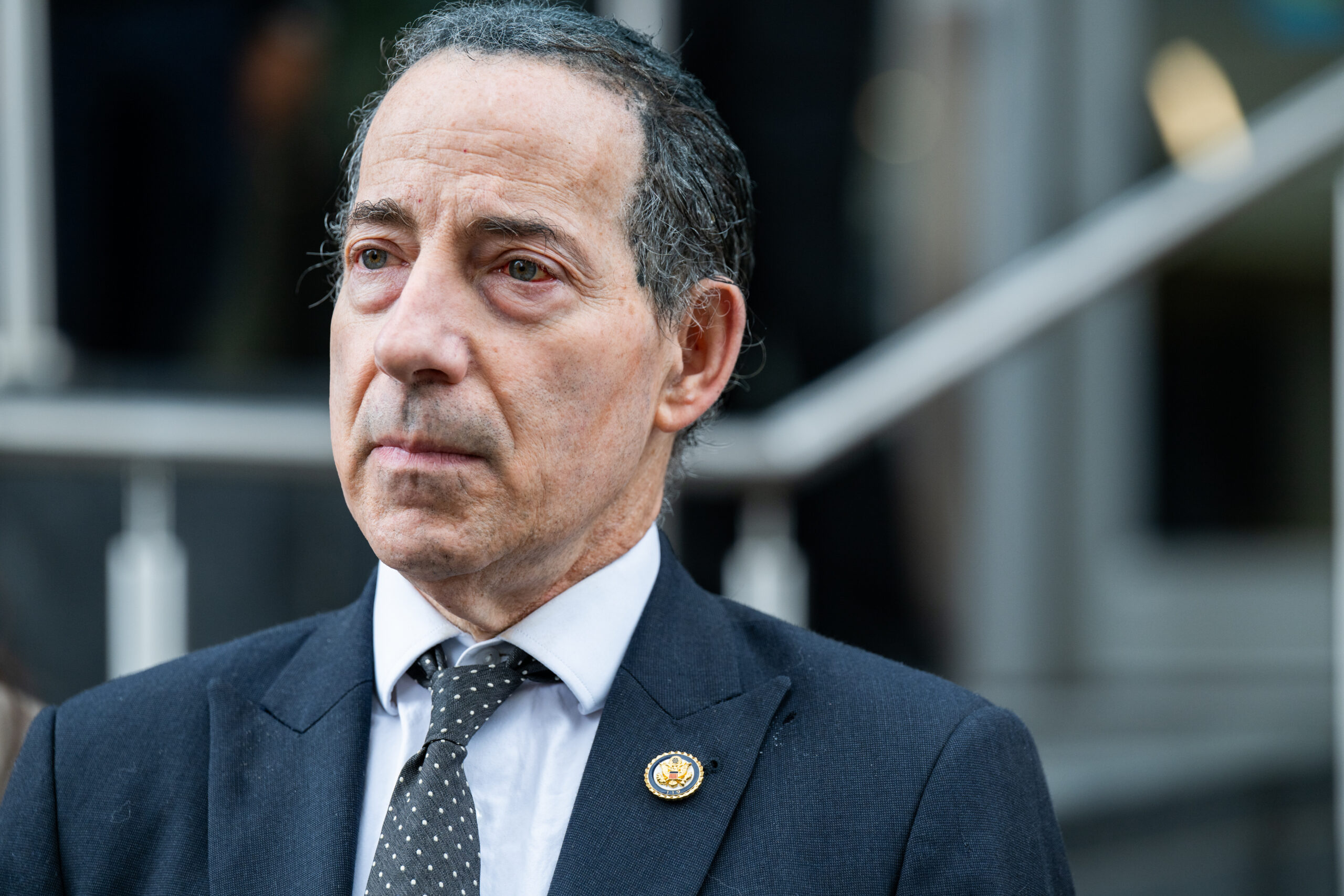
Rep. Jamie Raskin (D-MD), one of the most visible and well-known progressive Jewish lawmakers in Congress, late last week became a co-sponsor of the “Block the Bombs Act,” a bill led by far-left lawmakers that aims to severely restrict U.S. aid to Israel. The bill would impose unprecedented new conditions on weapons sales or transfers to Israel, requiring specific congressional authorization for each individual transfer of various weapons systems, and would require Congress to identify specific purposes for which those weapons would be used, Jewish Insider’s Marc Rod reports.
Arms embargo: Critics say that the bill would effectively constitute an arms embargo for the key weapons in question. Raskin has not issued any statement on his support for the bill, which aligns him with some of the most anti-Israel members of the House, and did not respond to a request for comment. Currently, 32 other lawmakers are co-sponsoring the legislation, but Raskin, the ranking member of the House Judiciary Committee, is among the most recognizable sponsors. Three other progressive Jewish House members, Reps. Sara Jacobs (D-CA), Becca Balint (D-VT) and Jan Schakowsky (D-IL), are also backing the bill.
sound of silence

Leading elected officials in Minnesota are remaining silent in response to a top Minneapolis mayoral candidate, far-left state Sen. Omar Fateh, whose campaign has faced scrutiny for employing staffers who have celebrated Hamas’ Oct. 7, 2023, attacks and called for Israel’s destruction, among other extreme views he has yet to publicly address, Jewish Insider’s Matthew Kassel reports.
No comment: Even as some of the state’s leading Democratic lawmakers have endorsed Fateh’s rival, incumbent Mayor Jacob Frey, who is seeking a third term, they have so far declined to weigh in on the staffers’ comments and Fateh’s decision to hire them, which has raised questions about his acceptance of extreme rhetoric on a particularly sensitive issue. Sen. Amy Klobuchar (D-MN) and Gov. Tim Walz, who are Frey’s most high-profile backers in what is expected to be a hotly contested race, both avoided addressing the matter to JI. A spokesperson for Klobuchar declined to comment on Friday, and representatives for Walz did not return multiple requests for comment.
CLARK’S BARK
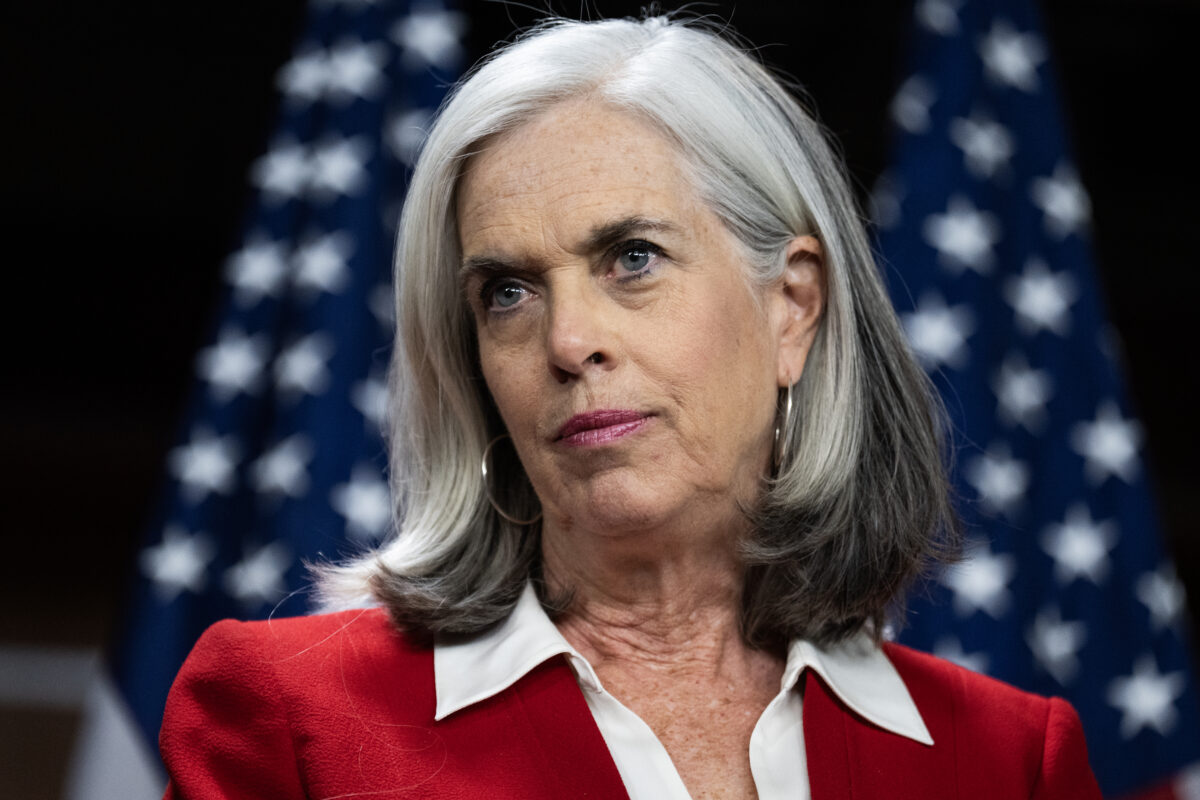
Rep. Katherine Clark (D-MA), who serves as the House Democratic whip, the No. 2 Democratic leader in the chamber, described the war in Gaza as a “genocide” at an event last Thursday, based on video of the event that has been shared online, Jewish Insider’s Marc Rod reports.
What she said: “We each have to continue to have an open heart about how we do this, how we do it effectively, and how we take action in time to make a difference, whether that is stopping the starvation and genocide and destruction of Gaza, or whether that means we are working together to stop the redistricting that is going on, taking away the vote from people in order to retain power,” Clark said in a brief clip from an event that was first reported by Axios.
CAMPUS BEAT

As students return to school in the coming weeks, four leading Jewish organizations are encouraging university leaders to adopt a new set of recommendations, released on Monday, designed to curb the antisemitism that has overwhelmed many campuses since the Oct. 7, 2023, terrorist attacks in Israel, Jewish Insider’s Haley Cohen has learned.
The guidelines: The joint effort from the Anti-Defamation League, Conference of Presidents of Major American Jewish Organizations, Hillel International and Jewish Federations of North America calls for increased safety measures as well as long-term structural reforms and builds upon a four-page set of recommendations released last August. The recommendations urge university leaders to “consistently enforce” codes of conduct around protests; appoint a coordinator to address Title VI discrimination complaints; reject academic boycotts of Israel; conduct annual student and faculty surveys in regard to campus antisemitism; crack down on online harassment (in addition to physical safety concerns); and hold faculty accountable for political coercion and identity-based discrimination.
AID ALLEGATIONS

An aid worker in Gaza filed a whistleblower complaint with the inspector general of the U.S. Agency for International Development alleging that the World Food Program and U.N. refused security cooperation with the IDF, the whistleblower confirmed to Fox News last week. The complaint alleges “gross misconduct and misuse of humanitarian funds” by the WFP and U.N. Office for the Coordination of Humanitarian Affairs and that the agencies had turned down support “including security protection and coordination” to distribute humanitarian aid from senior IDF officials, saying “they were not prepared to discuss such coordination,” Jewish Insider’s Danielle Cohen-Kanik reports.
What they said: The whistleblower told Fox News that the IDF has cleared thousands of tons of U.N. aid for distribution that are waiting inside of Gaza, and the “U.N. must be held accountable to pick up and distribute such aid.” They said that it must be determined “the extent to which U.N. agencies, by refusing to coordinate with the IDF on essential issues, including security, are abusing U.S. taxpayer funds rather than using them to deliver the aid the American people are donating — and whether such actions are being taken independently by U.N. officials in Gaza or at the direction of the U.N. Secretary-General or other senior U.N. officials in New York.”
EXCLUSIVE
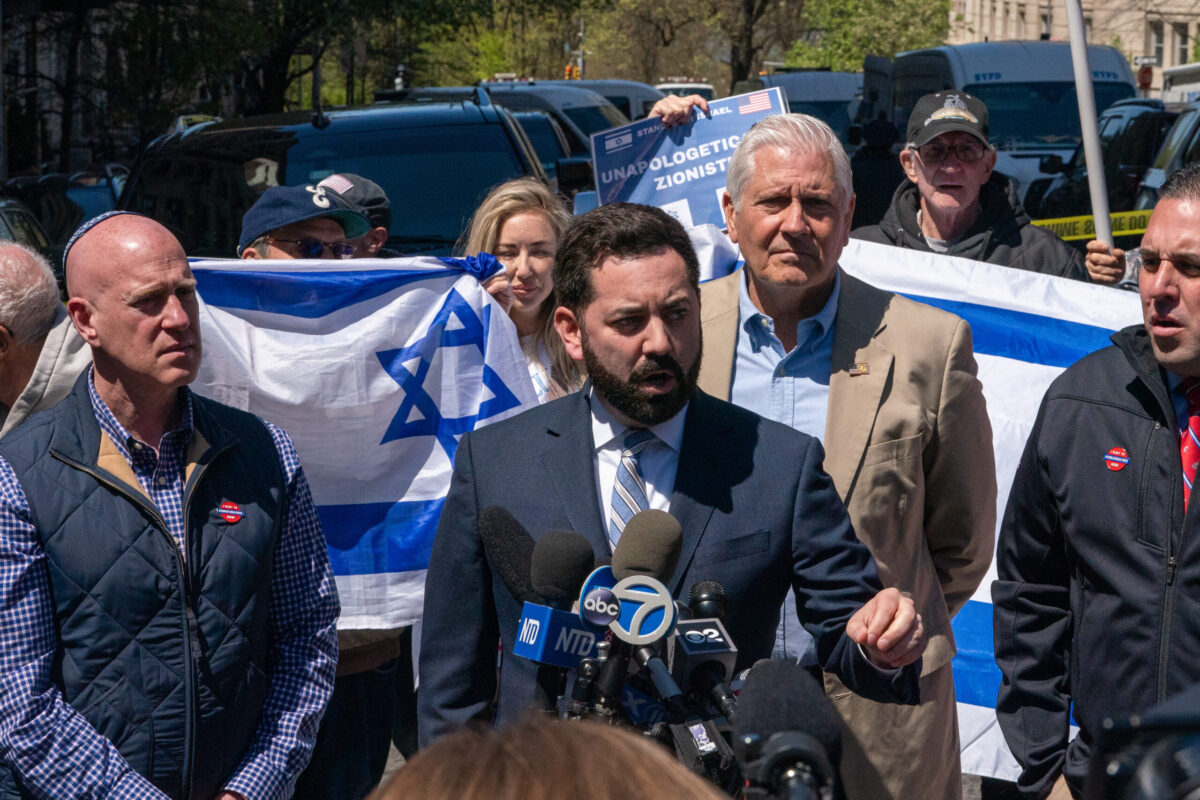
Rep. Mike Lawler (R-NY) introduced legislation on Friday to repeal a decades-old provision in U.S. law relating to the construction of new diplomatic facilities in Israel and the West Bank, Jewish Insider’s Marc Rod reports. The provision, enacted in 1986 as part of a package designed to improve security for U.S. diplomats and combat terrorism, banned funding from that bill from being used for “site acquisition, development, or construction of any facility in Israel, Jerusalem, or the West Bank except for facilities to serve as a chancery or residence within five miles of the Israeli Knesset building and within the boundaries of Israel as they existed before June 1, 1967.”
Lawler’s law: Lawler’s bill, the Keeping Official Territories Eligible for Land-use (KOTEL) Act, named for the Jewish holy site, would repeal the language from the 1986 bill. “Israel is one of America’s closest allies, and this 40-year-old inactive prohibition serves no purpose. The KOTEL Act removes these outdated restrictions so we can continue to ensure the bond between the U.S. and Israel remains ironclad,” Lawler said in a statement. It’s not clear how much impact Lawler’s initiative would have on current efforts to acquire or build new diplomatic facilities — the funding to which the 1986 provision applies has expired. But it could head off future attempts to challenge such construction.
Worthy Reads
Aid Aide: In Foreign Affairs, Jack Lew and David Satterfield, respectively the former U.S. ambassador to Israel and U.S. special envoy for Middle East humanitarian issues during the Biden administration, detail their efforts to send aid into Gaza and suggest how the Trump administration can prevent a worsening humanitarian crisis in the enclave. “When aid was flowing before the cease-fire, it did not arrive by chance. It came one border crossing and one truck convoy at a time, and it required overcoming political and battlefield challenges every step of the way. As the world watches the crisis unfolding today and demands a solution, it is important to learn from what worked and what did not, and to remember that it falls to all parties to find a solution. The stakes are too high to allow the delivery of critical assistance to be derailed by Israeli political dynamics, obstruction by Hamas or armed Gazan gangs, or infighting among aid providers. And Washington must remember that it uniquely has the tools and leverage to avert an escalating catastrophe.” [ForeignAffairs]
Northern Exposure: In The Wall Street Journal, Eugene Kontorovich calls on the Trump administration to use its United Nations Security Council veto power to nix an effort to extend the mandate of UNIFIL, arguing that the U.N. peacekeeping force has long failed in its goals to maintain peace and calm along the Israel-Lebanon border. “The first Trump administration considered nixing Unifil but was persuaded to compromise on a package reducing its size and supposedly introducing reforms. There will be temptations for the U.S. to compromise again. But if Unifil survives, it will eventually regrow under a less vigilant administration. Some in the administration argue the Lebanese army isn’t ready to take over for Unifil. But Unifil doesn’t keep the peace, so there’s nothing to get ready for. … If the U.S. doesn’t veto Unifil, it would undermine the credibility of Washington’s broader demands — both for genuine disarmament of terror groups in Lebanon and Gaza and for broader U.N. reform.” [WSJ]
What ‘Pro-Israel’ Means Now: In the Jerusalem Journal, Halie Soifer, the CEO of the Jewish Democratic Council of America, considers what it means to be a pro-Israel American in a post-Oct. 7 era. “In 2025, being pro-Israel should mean standing with the Israeli people in the aftermath of October 7, supporting Israel’s security as it faces ongoing regional threats, remaining deeply committed to Israel’s future as a Jewish and democratic state, and recognizing there’s no future for Hamas as part of any solution to this conflict. It also means expressing concern about the war — and continued captivity of hostages — which has gone on for too long. Calls to address the acute humanitarian crisis in Gaza don’t make someone anti-Israel. American Jews are also concerned about the crisis in Gaza, though there’s a clear double standard when it comes to assessing support of Israel among Democrats.” [JerusalemJournal]
Fight Club: The Wall Street Journal profiles Mark Shapiro, TKO’s president and chief operating officer, following the $7.7 billion deal between Paramount Skydance and TKO to acquire the distribution rights to TKO subsidiary Ultimate Fighting Championship, which Shapiro orchestrated. “It was on a cross-country flight in 2002 that Shapiro had a chance meeting with [TKO CEO] Ari Emanuel, the Hollywood power broker. Emanuel spotted Shapiro frantically typing with his two index fingers. After watching him for a few hours, Emanuel was mesmerized. ‘I couldn’t take it anymore,’ Emanuel says. He persuaded the person sitting next to Shapiro to switch seats and asked, ‘what the f—k are you doing?’ Shapiro replied he worked at ESPN and was preparing a report for Disney bosses Michael Eiser and Iger. Emanuel and Shapiro, who are from neighboring Chicago suburbs, hit it off. Soon, they were talking regularly. Today, they are joined at the hip. Emanuel is executive chairman and chief executive of TKO and executive chairman of talent agency WME Group.” [WSJ]
Word on the Street
The Trump administration halted the issuance of all visitor visas to Gazans, following a social media post by Laura Loomer citing the entry of families of Palestinian children seeking medical treatment in the U.S….
Members of The Wall Street Journal’s editorial page talk to former U.S. Ambassador to Japan Rahm Emanuel about his opposition to the Democratic Party’s far-left flank as he mulls a 2028 presidential bid…
2020 Democratic congressional candidate Ammar Campa-Najjar is weighing a rematch against Rep. Darrell Issa (R-CA). Read Jewish Insider’s 2020 profile of Campa-Najjar here…
The New York City Parks Department issued an order to vacate to the leaders of a Queens community garden who required prospective members to sign a “statement of values” that opposed Zionism…
New Yorker staff writer Doreen St. Felix deleted a series of social media posts about the Holocaust after coming under fire for calling Sydney Sweeney an “Aryan princess” following the release of a viral American Eagle ad campaign featuring the actress…
An Ohio man pleaded guilty to hate crimes charges connected to the November 2023 assaults of two Jewish students from Ohio State University; according to court documents, Timur Mamatov punched a student wearing a “chai” necklace after asking if the student was Jewish…
The Forward interviews “Bojack Horseman” creator Raphael Bob-Waksberg about his new animated series “Long Story Short,” about a Jewish family…
The World Economic Forum named Larry Fink a co-chair of the group’s board of trustees, alongside Andre Hoffmann; the two replace Peter Brabeck-Letmathe, who served as chairman on an interim basis…
The Wall Street Journal spotlights Camp Social, founded by entrepreneur Liv Schreiber, amid the rise in popularity of adult sleep-away camps…
French President Emmanuel Macron condemned as “antisemitic hatred” the cutting down of a tree planted in a Paris suburb in memory of Ilan Halimi, a French-Jewish man who was tortured and killed in 2006…
Australia canceled the visa of far-right Israeli lawmaker Simcha Rothman hours before he was scheduled to depart for a speaking tour in the country; Australian Foreign Minister Tony Burke confirmed the ban, saying that Canberra “takes a hard line on people who seek to come to our country and spread division”…
Israeli National Security Minister Itamar Ben-Gvir posted a video of himself in an Israeli prison warning Marwan Barghouti, the high-profile Palestinian political leader who is serving five life sentences for his role in the murders of numerous Israelis, “Whoever messes with the people of Israel, whoever murders children and women — we will wipe them out. You need to know this”…
The Wall Street Journal reports on the deepening clean water shortage in the Gaza Strip…
An investment group led by Israel’s Leumi Partners is acquiring the rideshare app Gett for $190 million…
The New York Times looks at Iranian efforts to recruit Israelis to commit espionage and acts of terrorism within Israel…
The Israeli military said it struck a Houthi energy infrastructure site south of the Yemeni capital of Sana’a over the weekend…
South Africa’s Foreign and Defense Ministries distanced themselves from comments by army chief Gen. Rudzani Maphwanya, made during his recent trip to Iran, praising the close ties between Pretoria and Tehran and condemning Israel; South African President Cyril Ramaphosa called Maphwanya’s trip to Iran “ill-advised” and said he planned to meet with the military leader over it…
Historian Rabbi Berel Wein, the founder of Yeshiva Shaarei Torah in Monsey, N.Y., who previously led the Orthodox Union’s kashrut division, died at 91…
Rachel Aliza Nisanov, the 13-year-old daughter of Rabbi Shlomo Nisanov, died in a jet-skiing accident in Florida last Tuesday…
Pic of the Day
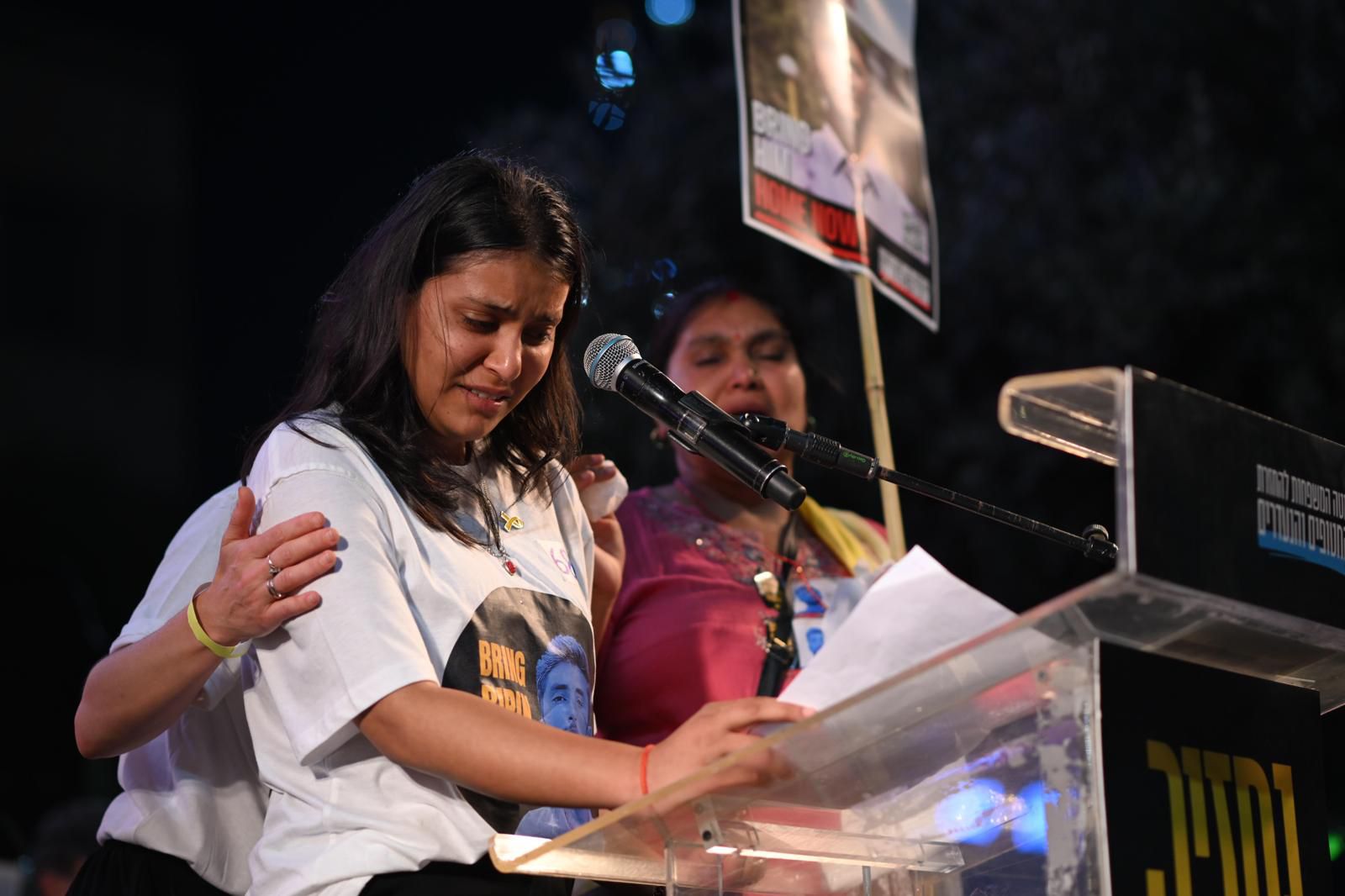
Seventeen-year-old Pushpa Joshi, the sister of Nepali hostage Bipin Joshi, speaks at a hostage rally in Tel Aviv on Saturday night. The Joshi family arrived in Israel last week for the first time as they work to raise awareness about the plight of Bipin, a farming student who was taken hostage on Oct. 7, 2023, from Kibbutz Alumim.
Birthdays

Auctioneer, television personality and sports card collector, he is featured on the Netflix TV series “King of Collectibles: The Goldin Touch,” Kenneth Goldin turns 60…
Art collector, museum trustee in Chicago, Aspen, Colo., and Orange County, Calif. and former member of Cultural Property Advisory Committee to the U.S. State Department, Barbara Bluhm-Kaul turns 85… Baltimore resident, Jerome Seaman… Holocaust survivor, novelist, artist and producer, Sonia Wolff Levitin turns 91… Retired teacher of Talmud at Jerusalem’s Yeshiva Torat Shraga, Rabbi Noam Gordon, Ph.D…. Former two-term mayor of San Diego, the first Jewish mayor of San Diego, Susan G. Golding turns 80… Businessman and former chair of the Jewish Community Federation of San Francisco, John D. Goldman turns 76… Partner in Chazan-Leipzig Consulting, Cindy Chazan… Retired judge of the Montgomery County (Pa.) Court of Common Pleas, Gary S. Silow turns 74… Dramatist, screenwriter and poet, Winnie Holzman turns 71… President at Wyckoff, N.J.-based Benefit Connections, Raphael Schwartz… President of Touro University, Alan H. Kadish, M.D. turns 69… Labor law attorney in the Los Angeles office of Ogletree Deakins, Stuart Douglas Tochner… U.S. Treasury secretary in the Obama administration, now president of Warburg Pincus, Timothy Geithner turns 64… CEO of the Future of Privacy Forum, a D.C.-based think tank and advocacy group focused on issues of data privacy, Jules Polonetsky turns 60… Executive director of the Maccabee Task Force, David Brog turns 59… Criminal defense attorney and media personality in Las Vegas, Dayvid Figler turns 58… Award-winning comic book writer and artist for both Marvel and then DC Comics, Brian Michael Bendis turns 58… Professor at Harvard’s Kennedy School, he served as chairman of the Council of Economic Advisers during the Obama administration, Jason Furman turns 55… Sarah S. Bronson… Conservative political talk radio host on the Sirius XM Patriot channel, Andrew Steven Wilkow turns 53… Greek Orthodox priest, he serves as a judge in Israel’s religious court system and encourages Christians to enlist in the IDF, Gabriel Naddaf turns 52… Best-selling author, her novels have been translated into 35 languages, Nicole Krauss turns 51… Writer, actress and stand-up comedian from NYC, Jessi Ruth Klein turns 50… Washington director of the Reagan Presidential Foundation and Institute, Roger Zakheim… Actor, comedian, writer, producer and musician, David A. J. “Andy” Samberg turns 47… Commissioner of New York City Emergency Management, Zachary Iscol turns 47… Fellow at The Jewish People Policy Institute and managing partner of the Madad website, Noah Slepkov… Editor of Moment Magazine, Sarah Breger… Reporter for The Wall Street Journal covering the Justice Department and federal law enforcement, Sadie Gurman… Co-founder and CEO of Mostly Human, Laurie Segall turns 40… Mixed martial artist, she competes in the bantamweight and featherweight divisions, Olga Rubin turns 36… Israeli judoka who won Olympic bronze medals at the 2016 and 2020 Summer Olympics, Or “Ori” Sasson turns 35…
Slotkin, in an appearance on an anti-Israel podcast: ‘I was the first Jew elected to the Senate that was not endorsed by any Jewish group — AIPAC, J Street’

Paul Sancya/Pool/Getty Images
Sen. Elissa Slotkin (D-MI) rehearses the Democratic response to President Donald Trump's address to a joint session of Congress.
Sen. Elissa Slotkin (D-MI) indicated in an interview on the “Breaking Points” podcast on Tuesday that she’s open to considering cutting off offensive weapons sales to Israel — comments that came a day before the Senate is set to vote on blocking two arms sales to Israel — as well as distanced herself from “Jewish group[s]” like AIPAC and J Street.
At the same time, while offering criticisms of Israel and its operations in Gaza, Slotkin refused to embrace and pushed back on some of the more heated anti-Israel rhetoric offered by the podcast’s hosts. The podcast, which brings together a progressive and a libertarian host, generally takes an isolationist view toward U.S. foreign policy and is opposed to the close U.S.-Israel relationship.
Asked about cutting off offensive aid, Slokin said, “That certainly, to me, would be a place to look, but I’m not going to cut off a blanket next sale on a defensive weapon that comes through, no.”
One of the hosts, the progressive Krystal Ball, pressed Slotkin over the distinction between offensive and defensive systems, arguing that the U.S. does not provide defensive weapons systems to Russia or Iran — malign global actors and longstanding adversaries.
Slotkin responded by noting her support for the U.S.-Israel relationship in the long term, and argued allies should be treated differently than adversaries even in times of disagreement between the two countries.
“Sometimes we have big breaks with allies, right? Sometimes we have difficult moments with allies. Sometimes it goes the wrong way with allies. But an allied relationship is a long-term relationship,” Slotkin told the duo.
“I think about this from the mirror image way because I do not support the things that Donald Trump is doing, right? But I’m an American. So, do I want other countries to look at America and be like, ‘We can’t stand Donald Trump so we’re going to end the long-standing relationship we have with the American people. We’re going to cut off any support we give them on information sharing or intelligence sharing,’” she continued.
Slotkin also distanced herself from “Jewish group[s],” mentioning that she’d declined to seek endorsements from AIPAC and J Street specifically.
Asked if AIPAC should be forced to register as a foreign lobbying organization, Slotkin said she did not have an answer beyond that she knew “plenty of people who think they should” but would “have to look at the definition.”
Accusations from both political fringes that AIPAC — whose members are American citizens — constitutes a foreign influence operation, have often invoked antisemitic dual loyalty tropes.
After being accused of providing a “cop-out answer,” Slotkin replied by saying that she had stopped accepting money from the group over disagreements about policy and overall strategy in 2021, after having support from AIPAC members when she first ran for Congress in 2018. The group did not officially endorse or fundraise for candidates until the 2022 election cycle.
“You’ve got to get your facts straight. I have not been endorsed by AIPAC. I have not, I’m sorry. I was the first Jew elected to the Senate that was not endorsed by any Jewish group — AIPAC, J Street. In 2018, when I first ran [I was endorsed by] people who were [AIPAC] members, yes, but I’ve not been endorsed since then,” Slotkin said. “And I’ve just got to be honest, like I think that this is where facts really matter. I’ve had very, very difficult conversations with my colleagues in that organization and made a choice back in 2021.”
“2021, so that was the first time I was up for reelection. So I understand that there’s a sort of like, again, cornered position, but to me like I call balls and strikes as someone who served in the Middle East,” she added.
Slotkin was endorsed by one Jewish group, the Jewish Democratic Council of America, which maintains a pro-Israel stance, in 2024.
Slotkin, pressed by Ball on the humanitarian situation in Gaza, said she had signed onto a letter accusing Israel of pursuing a “policy of starvation,” adding that, as an “occupying power,” it has a responsibility to ensure food is supplied to Gaza. But she stopped short of endorsing Ball’s framing of Israel’s actions as a “crime against humanity.”
She also did not embrace Ball’s claims that Israel is pursuing “ethnic cleansing” in Gaza, while criticizing plans from the Israeli government for relocating people within or out of Gaza as illegal.
“I’ve been clear about that,” Slotkin said. “So I would ask for a little bit of an open mind.”
Ball responded by accusing Slotkin of failing to take meaningful action on the issue and criticizing her for voting for aid to Israel, for the Antisemitism Awareness Act, for legislation describing anti-Zionism as antisemitic and for sanctioning the International Criminal Court.
Ball told the Michigan senator that her progressive positions on domestic issues like health care and housing policy were irrelevant to her if she was “still supporting a genocide in Gaza.”
“I’m speaking for myself, but I know there are millions of other people who feel the same, that you have to at least cross this sort of moral threshold,” Ball said.
While Ball framed the conflict in the Middle East as a central issue in the New York City mayoral race, Slotkin, looking to her own senatorial race in 2024, argued that its political significance has been overplayed.
“This issue is motivating people in a very visceral and personal way. But it’s not the only issue that my voters in Michigan care about,” she said. “The online world is extremely, extremely focused on this, but that doesn’t always represent the majority.”
She said it’s the top issue in some areas, but outside of the Detroit area, “it’s not in the top 40.”
Slotkin also said she was proud that she had won a majority of both Jewish voters and the three cities with the largest Muslim populations in Michigan during her Senate campaign, which she attributed to “calling balls and strikes” and leaning on her background in Middle East policy.
The Michigan senator also appeared to argue that the pace of anti-Israel protests has dropped off significantly since the end of the Biden administration
“I just think it’s interesting that there were a ton of protests when Democrats were in charge” against the war in Gaza, adding that it’s “fair to say, just to be honest, that … the number of protests that go on now, versus before,” though she was cut off by the show’s hosts.
She generally declined to weigh in on the results of the New York City mayoral race, saying primarily that she believes the results reflect concerns about the cost of living and the need for a new generation of leadership.
“I can have plenty of disagreements with what I’ve heard Mr. [Zohran] Mamdani propose, and I do,” she said. “I am here because we lived the American dream through capitalism. A lot of free stuff to me is not the answer. … But I can have those disagreements. I would be thrilled to have that conversation with him or anyone else.”
Asked about her condemnation of Rep. Rashida Tlaib (D-MI) for using the phrase “from the river to the sea,” and if she would also condemn Rep. Randy Fine (R-FL) for his comments saying Gazans should “starve away,” Slotkin said she did not know who Fine was but had no reservations denouncing such remarks.
“I have no problem condemning Randy Fine, who I don’t know. I don’t, I’m sorry. I don’t know who that person is. I have no problem condemning someone who talks like that,” she told the hosts.
Slotkin was also asked if she believed that financier and convicted pedophile Jeffrey Epstein “had any connections to U.S. or Israeli intelligence agencies.” Slotkin, a former CIA analyst, said she would be “very surprised” if that was the case.
Please log in if you already have a subscription, or subscribe to access the latest updates.
 Continue with Google

 Continue with Apple