













































































As of this week, UDP has reserved $865,000 in ad time for the race and New Democrat Majority has reserved $500,000, ahead of the Aug. 4 primary
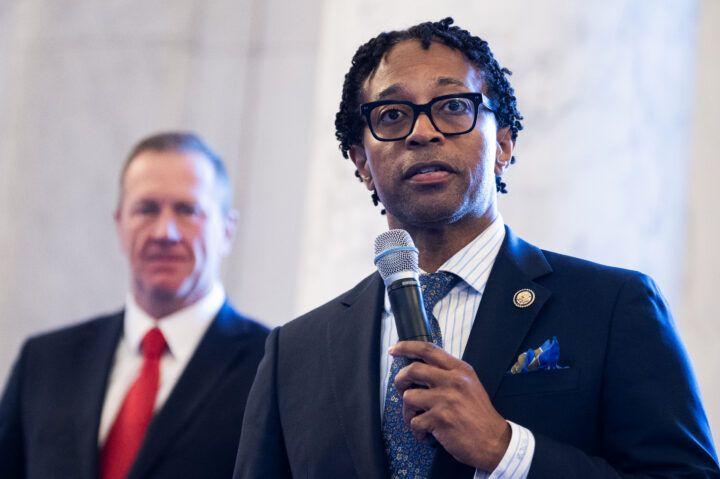
Tom Williams/CQ-Roll Call, Inc via Getty Images
Rep. Wesley Bell (D-MO) right, and Sen. Eric Schmitt (R-MO) attend the Congressional Chess Tournament hosted with the St. Louis Chess Club in Russell building on Wednesday, June 3, 2026.


 Add JewishInsider on Google
A month ahead of Missouri’s primary elections, Rep. Wesley Bell’s (D-MO) campaign is being buoyed by an influx of outside spending from the AIPAC-linked United Democracy Project super PAC and another super PAC affiliated with the moderate New Democrat Coalition.
As of this week, UDP has reserved $865,000 in ad time for the race, while New Democrat Majority has reserved $500,000 ahead of the Aug. 4 primary. In at least one advertisement, UDP is taking a similar approach as it did in its attacks against Rep. Cori Bush (D-MO) in 2024 when the group helped Bell unseat her, hitting her as an absentee and ineffective lawmaker and for voting against the bipartisan infrastructure package in 2021.
UDP’s ad features clips accusing Bush of having betrayed and disappointed organized labor and workers who supported her in her initial campaign.
A source familiar with Bell’s campaign said that it is confident going into the final weeks, but predicted a tight race, adding that the campaign expects a ramp-up in advertising in the final month of the race.
UDP’s attacks complement what the source said will be the main pitch of Bell’s campaign: the congressman’s work delivering for constituents through projects such as delivering funding for a local airport and tornado recovery, and standing up to the Trump administration on issues including immigration enforcement and releasing the Jeffrey Epstein files.
The source said Bell’s campaign also aims to hit Bush as an ineffective lawmaker who failed to deliver for the district and was more focused on own public profile, as well as highlight past campaign finance scandals, which have continued to trail Bush, and Bush’s failure to embrace Vice President Kamala Harris during her 2024 presidential campaign.
The source also emphasized that Bell has sought to remain deeply and frequently engaged in the district, focusing on constituent services and frequent appearances at local events — gaps that hurt Bush’s 2024 campaign.
At the same time, with her campaign focusing on attacking Israel and AIPAC’s support for Bell, Bush is likely to attempt to weaponize the UDP spending against Bell.
Bell has faced some protests and backlash in the district over Israel, though the source said that voters are much more focused on affordability and quality of life issues at home and concerns about the Trump administration than Israel policy or AIPAC.
The source acknowledged that those issues have come up in the community, but argued that Bush is overplaying the extent to which voters in St. Louis are focused on them.
Bell’s campaign in 2024 ran a robust engagement and turnout operation in the Jewish community, bringing together leaders from across the community from various political and religious backgrounds. Stacey Newman, a former state representative, led that effort for Bell’s campaign in 2024 and returned to do so again, after having launched and led a local Jewish advocacy group in the intervening years.
Braxton Payne, a Democratic political strategist in St. Louis, said that the pro-Bell camp was significantly outpacing Bush and her supporters in media buys around the district, while Bush seemed more focused on the grassroots campaign tactics she has used in previous races.
Payne said he still sees Bell as the frontrunner because he hasn’t taken any votes that were considered to be particularly problematic in his relatively short time in office, has stood up against the Trump administration and has strong financial backing and outside support.
“I think that he’s going to be able to out-communicate Cori like he did two years ago, even without outside funding or outside groups,” Payne said. “Now, if Cori is able to get some grassroots money, and if the Justice Democrats [super PAC] or other groups that similarly align to them do decide to weigh in to that, I think that could make a difference.”
With Missouri’s two-week early voting window, early communication is key, Payne added.
One vote that Bush has repeatedly sought to hit Bell for is on a resolution condemning the antisemitic firebombing attack on a hostage awareness march in Boulder, Colo. that killed a Holocaust survivor and injured others. The Republican-led resolution included language expressing gratitude to Immigration and Customs Enforcement, which Democrats who supported the resolution have condemned as a cynical GOP political gambit.
Payne said that the current progressive wave across the country would not necessarily have significant impacts on the St. Louis electorate — “St. Louis has always been a bastion of progressive and left-leaning politics, nothing has really changed there … I would say it’s very similar to people that would have voted two years ago.”
Unlike recent races in New York City and Colorado, Bell is young and still relatively new to Congress, not an old or long-entrenched incumbent. “Those differences of the generational change are just not here in this race,” Payne said.
He said that Bell has generally remained popular among the voters and community leaders who supported him in 2024, as compared to Bush who faced significant defections in that race among voters who had previously supported her.
On the other hand, he said, some progressive voters may be undecided at this point in the race, and, given Democratic outrage at the Trump administration, could be attracted to the more aggressive and confrontational style of politics that Bush has practiced.
And Bush has been working, Payne said, to re-engage with local grassroots groups that she had neglected during her time in office. “A lot of her supporters four years ago that were maybe not as [much] there for her two years ago, or even a year ago — I think they’ve all started to coalesce around her,” he said.
Rep. Adam Smith, ranking member of the House Armed Services Committee, said he recognizes restricting offensive weapons to Israel could ‘embolden Hamas’ but it is ‘time to try something else’
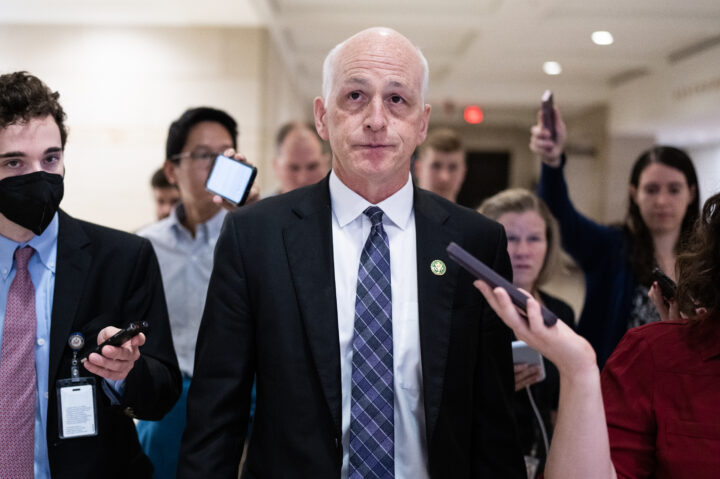
Tom Williams/CQ-Roll Call, Inc via Getty Images
Rep. Adam Smith, (D-WA), is seen in the Capitol Visitor Center after an all members briefing on the attack on Israel on Oct.11, 2023.
Rep. Adam Smith (D-WA), ranking member of the House Armed Services Committee, said in a statement on Tuesday that he “believe[s] it is time for the United States government to stop the sale of some offensive weapons systems to Israel as leverage to pressure Israel” into implementing a ceasefire, increasing humanitarian aid in Gaza and stopping the expansion of West Bank settlements.
Smith, a member of the moderate New Democrat Coalition who has played a leading role in Democratic foreign policy, was careful to emphasize that he supports Israel and “recognize[s] both the threats they face and the reality that the actions of Hamas and their supporters have driven this conflict.”
He also affirmed that, “Yes, the hostages must be returned. It is outrageous that Hamas took the hostages and has continued to hold them.”
“But,” Smith said, “six months of war since the end of the last ceasefire has done nothing to bring the hostages home” and it is “impossible to see how further military action in Gaza could degrade Hamas … further than what has already occurred.”
The Washington state Democrat, who has served his Seattle-area district since 1997, said he changed his position on blocking weapons sales to Israel because the “situation in the Middle East has changed dramatically in recent months.” He acknowledged that the weakening of Hezbollah, Hamas and Iran and the fall of the Assad regime in Syria “might not have happened if the U.S. had reduced its support to Israel prior.”
“But these developments also mean that Israel faces little if any risk to its security if the U.S. blocks the sale of some weapons now,” Smith continued.
He recognized that attempts to pressure Israel into ending the war could “simply embolden Hamas to keep fighting. I believe this has happened throughout the war as various international groups have consistently failed to hold Hamas accountable.”
“I am not naive that this approach is somehow guaranteed to work, but simply continuing the war has clearly failed to completely eliminate Hamas or gain the return of the hostages. It is time to try something else,” Smith said.
He said the world should not “blindly trust” how Hamas conveys the humanitarian situation in Gaza, but the “scale” of the crisis “cannot be denied.
“I also believe that if Israel does not end the war in Gaza, they run the risk of being ostracized globally in a way that is a far greater threat to the long-term security of Israel than anything their adversaries are now capable of doing,” Smith said.
Smith also spoke out against the far-left elements of his party, saying he “remain[s] concerned that so many people advocating for the U.S. to stop supporting Israel believe that Israel does not have the right to exist as a country.
“Opposing the actions of the Israeli government in Gaza to stop the war and end the suffering of the Palestinian people is very different from opposing the Israeli government out of a desire to wipe it off the map,” Smith said.
Please log in if you already have a subscription, or subscribe to access the latest updates.
 Continue with Google

 Continue with Apple