
Lawler said in a letter to Scott Bessent that new discoveries of undisclosed accounts warrant another look into a 1999 settlement between Credit Suisse and Holocaust victims

FABRICE COFFRINI/AFP via Getty Images
A sign of the Credit Suisse reading in German "part of the UBS group" and displayed on a branch of Swiss banking giant UBS in Basel on May 5, 2025.


 Add JewishInsider on Google
Rep. Mike Lawler (R-NY) wrote to Treasury Secretary Scott Bessent this week urging him to reopen an investigation into the Swiss bank Credit Suisse over its ties to the Nazi regime.
Credit Suisse, now a subsidiary of UBS, was part of a $1.25 billion restitution settlement between several Swiss Banks and Holocaust survivors and victims’ families in 1999, after the banks were accused of accepting and profiting from Nazi assets and seizing accounts from Holocaust victims. But recent investigations have found more Nazi-linked accounts that weren’t disclosed at the time of the 1999 settlement.
“Recent findings have identified hundreds of previously undisclosed accounts with potential ties to Nazi entities like, the German Foreign Office, and the SS,” Lawler said in the letter to Bessent. “These discoveries raise serious questions about the completeness of past investigations that led to the 1999 settlement and whether full justice and transparency have been achieved for victims. We now have a moral responsibility to ensure that the settlement reached in 1999 does not serve as a barrier to real accountability.”
Lawler urged Bessent to reopen the 1999 settlement and work with Swiss authorities, UBS, courts and other stakeholders to ensure that all relevant documents are produced.
“This includes supporting efforts that would allow independent investigators full access to pertinent materials so that the American people, victims’ and survivors’ families, and the broader international community can have confidence that the truth has been fully confronted,” Lawler continued.
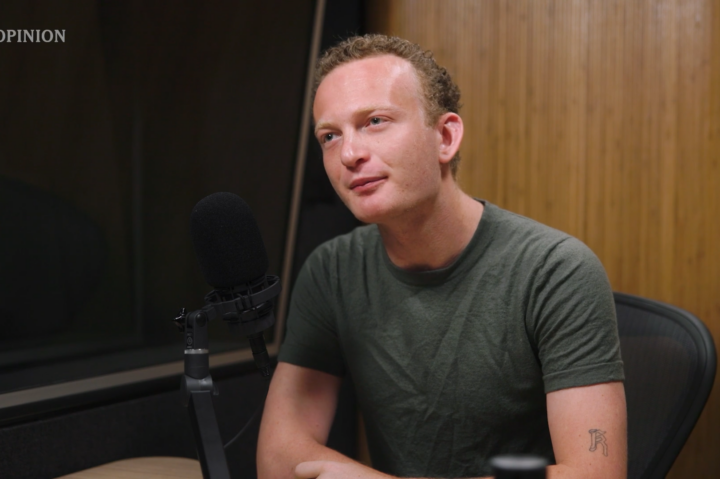
Appearing on 'The Ezra Klein Show,’ Morris Katz admitted he had erred in continuing to champion the failed Senate candidate as he was repeatedly dogged by scandals
Screenshot
Morris Katz appears on "The Ezra Klein Show" on July 24, 2026.
Morris Katz, a close advisor to Graham Platner who stood by the embattled Maine Democrat until the final days of his Senate race, is now adopting a more contrite tone as he looks back on what went wrong in the campaign, one of the most closely watched in the country this year.
“The tattoo should have been enough,” Katz said in an interview on “The Ezra Klein Show” from The New York Times. He was referring to Platner’s tattoo of a Totenkopf, a symbol associated with the Nazi regime’s elite — and brutal — SS unit. Platner denied knowing what the tattoo, a version of a skull and crossbones, represented, though an ex-girlfriend has maintained that he told her and others that he knew what it was. Katz said her account should’ve been taken more seriously when she shared it.
Katz also referenced scores of old social media posts from Platner, a veteran and oyster farmer who was dogged from the start of the Democratic primary by a series of past posts and remarks invoking slurs, promoting violence and making light of sexual assault. “In hindsight, knowing what we know now, the Reddit posts alone probably should have been enough,” he added.
Throughout a steady drip-drip-drip of new revelations, which grew to include allegations that he was sending sexually explicit messages to women other than his wife and that he had a history of being manipulative and intimidating toward ex-girlfriends, Platner emerged with a similar message to voters: that he had changed, and was a better person now. A rape allegation ultimately ended his campaign.
“I think both things can be true: that we need different kinds of candidates running outside of the political arena,” Katz told Klein, “and that it’s the United States Senate, and candidacies should be held to an incredibly high standard.”
The 27-year-old Katz, who played a pivotal role in the election of New York City Mayor Zohran Mamdani, was part of Platner’s campaign even before it began. He helped to recruit the candidate and had reportedly told people he wanted to see Platner run for president in 2028. Platner regularly drew large crowds, even as more reports about his background emerged, and won the Democratic nomination after his top competitor, Maine Gov. Janet Mills, dropped out.
Katz has emerged relatively unscathed from the chaos in Maine. Mamdani and Micah Lasher, the Democratic nominee for an Upper West Side-area congressional district, have both said recently they would continue to work with Katz.
In the interview with Klein, the consultant said he would continue to fight establishment politics in the Democratic Party but that he had erred in his continued support of Platner.
“I think that there are a lot of people who have made mistakes or said controversial things who we want to win the support of, who we need to earn the trust of. But I also think I was wrong,” Katz said in the interview. “There are a lot of incredible people who are not part of the political arena, a lot of incredible working-class Americans across the country, who don’t have those problematic Reddit posts or who don’t have a problematic tattoo or don’t have quite the level of controversy in their past.”
Katz acknowledged that a more thorough vetting process may have found further evidence of Platner’s past social media posts, but insisted that any campaign vetting would not have found evidence of the rape allegation.
“Essentially, there was the inclination that there were problematic posts on Reddit, not the full degree of what later came out,” Katz said. “An even more robust process would have found more of the specific Reddit comments and, potentially, the tattoo. But again, a standard vetting process probably doesn’t uncover most of the things that came after.”
Klein read to Katz one of Platner’s 2013 Reddit posts, which placed blame for sexual assault on women who drink too much.
“I think it should have been a red line,” Katz said. He argued that people should “not be exiled from society and day-to-day life if they’ve changed or are putting in the work to change.” But, Katz added, “that doesn’t mean that they’re entitled to a role in elected office.”
Norman Goda, a Holocaust historian at the University of Florida, said that modern remembrances of the Holocaust that fail to mention Jews are 'a soft form of denial'
Jim Watson - Pool/Getty Images
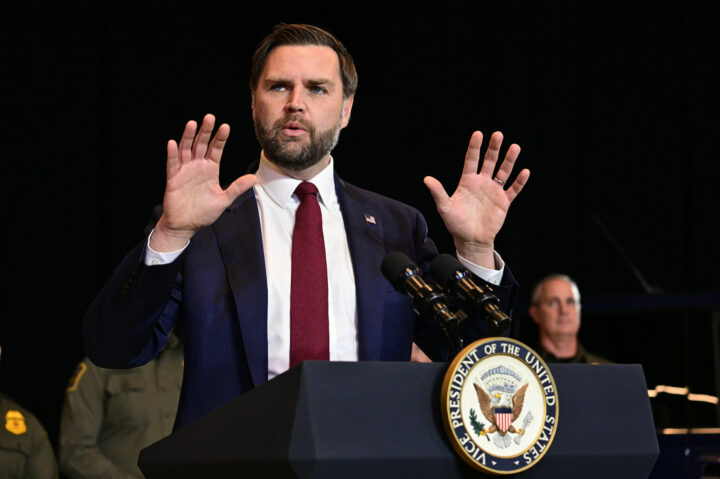
U.S. Vice President JD Vance gives remarks following a roundtable discussion with local leaders and community members amid a surge of federal immigration authorities in the area, at Royalston Square on January 22, 2026 in Minneapolis, Minnesota.
A week after President Donald Trump took office for the first time in 2017, the White House ignited a political and media firestorm by releasing a statement commemorating International Holocaust Remembrance Day that failed to mention Jews.
The omission was covered in major media outlets like CNN and Politico; the Anti-Defamation League called it “puzzling and troubling.”
Nearly a decade later, Trump released another Holocaust Remembrance Day post this week, with a far more specific message: “Today, we pay respect to the blessed memories of the millions of Jewish people, who were murdered at the hands of the Nazi Regime and its collaborators during the Holocaust,” the statement read, “as well as the Slavs and the Roma, people with disabilities, religious leaders, persons targeted based on their sexual orientation, and political prisoners who were also targeted for systematic slaughter.”
Meanwhile, Vice President JD Vance’s post commemorating the day, which marks the anniversary of the 1945 liberation of Auschwitz by Allied Forces, did not mention Jews or antisemitism, leading political rivals on the left to pounce. (Democratic Majority for Israel called it “indefensible.”)
But despite the visibility of Vance’s tweet — which his defenders pointed out included pictures of him and his wife at Dachau, standing in front of a sign that said “Never again” in Yiddish — he was far from the only politician that failed to mention the fact that the Holocaust targeted Jews. Among them were: Sen. Roger Wicker (R-MS) and Rep. James Walkinshaw (D-VA), both of whom pledged to remember the victims of the Holocaust without referring to Nazis’ targeting of Jews.
Multiple presenters at the U.K.’s BBC also failed to mention Jews in their coverage of Holocaust Remembrance Day — drawing backlash and a subsequent apology from the national broadcaster.
Does it matter that these politicians or media don’t reference Jews if they are still highlighting the significance of the Holocaust? It’s possible to argue that, definitionally, the Holocaust was about Jews, so one could assume that any reference to the Holocaust is itself a reference to the killing of Jews and the antisemitism that led to it.
“If I talk about the potato famine, do I have to say Irish? How many other potato famines were there?” asked Deborah Lipstadt, a Holocaust historian who served as President Joe Biden’s antisemitism envoy. “But this is part of a greater whole in an age of rising antisemitism.”
For years, Americans’ knowledge of basic facts about the Holocaust has been declining, particularly as fewer Holocaust survivors are alive each year to share their stories. A 2023 survey conducted by the Claims Conference found that 21% of Americans believed that 2 million Jews or fewer were killed. Eight percent of Americans, and 15% of 18- to 29-year-olds, said the number of Jews who were killed during the Holocaust has been greatly exaggerated.
“Holocaust history has the power to teach vital, timeless lessons about why our choices matter — but only when it is approached with the precision, historical integrity and respect it rightfully deserves,” the U.S. Holocaust Memorial Museum said in a statement this week that called for an end to “the abuse and exploitation of Holocaust memory.”
In the 81 years since the Holocaust, political leaders and movements have exploited the memory of the genocide to serve their own ends, particularly by shifting the focus of who its victims were.
In the former Soviet Union, where more than 2 million Jews were killed during the Holocaust, memorials to those killed called them “peaceful Soviet citizens” — stripping them of their Jewish identity, as if their killers had targeted Russians rather than Jews. Some right-wing politicians in modern Poland have attempted to quash historical scholarship documenting that Poles were involved in Nazis’ killing of Jews, and that the Nazis targeted Jews, in particular, rather than just the Poles (though Poles were targeted, too).
Norman Goda, a Holocaust historian at the University of Florida, said that modern remembrances of the Holocaust that fail to mention Jews are “a soft form of denial.”
“The Nazis certainly knew who they were deporting. The Nazis certainly knew who they were gassing,” Goda told Jewish Insider on Wednesday. “The ignorance is such that you have to remind people that the Nazis called this Die Endlösung der Judenfrage, the final solution of the Jewish question. They weren’t just killing random people.”
The politicians posting about the Holocaust almost surely know that, as do most of their constituents. But rising antisemitism coupled with declining knowledge about a genocide that targeted and killed 6 million Jews means that reminding people of the facts — the specifics — remains crucial.
“Do we do this with any other mass catastrophe? Do we discuss the Armenian Genocide without mentioning the Armenians? Do we discuss slavery in the United States without mentioning who the slaves were?” Goda questioned. “We don’t do it, and anybody who would do that is engaged in an almost willful misunderstanding, either a profound historical ignorance, on the one hand, where you almost have to try to be that ignorant, or something that is simply more nefarious.”
Kelly Neumann is serving as the fundraising co-chair for gubernatorial candidate Jocelyn Benson and Senate candidate Mallory McMorrow and has fundraised for several other Michigan Democrats
Facebook/Kelly Neumann
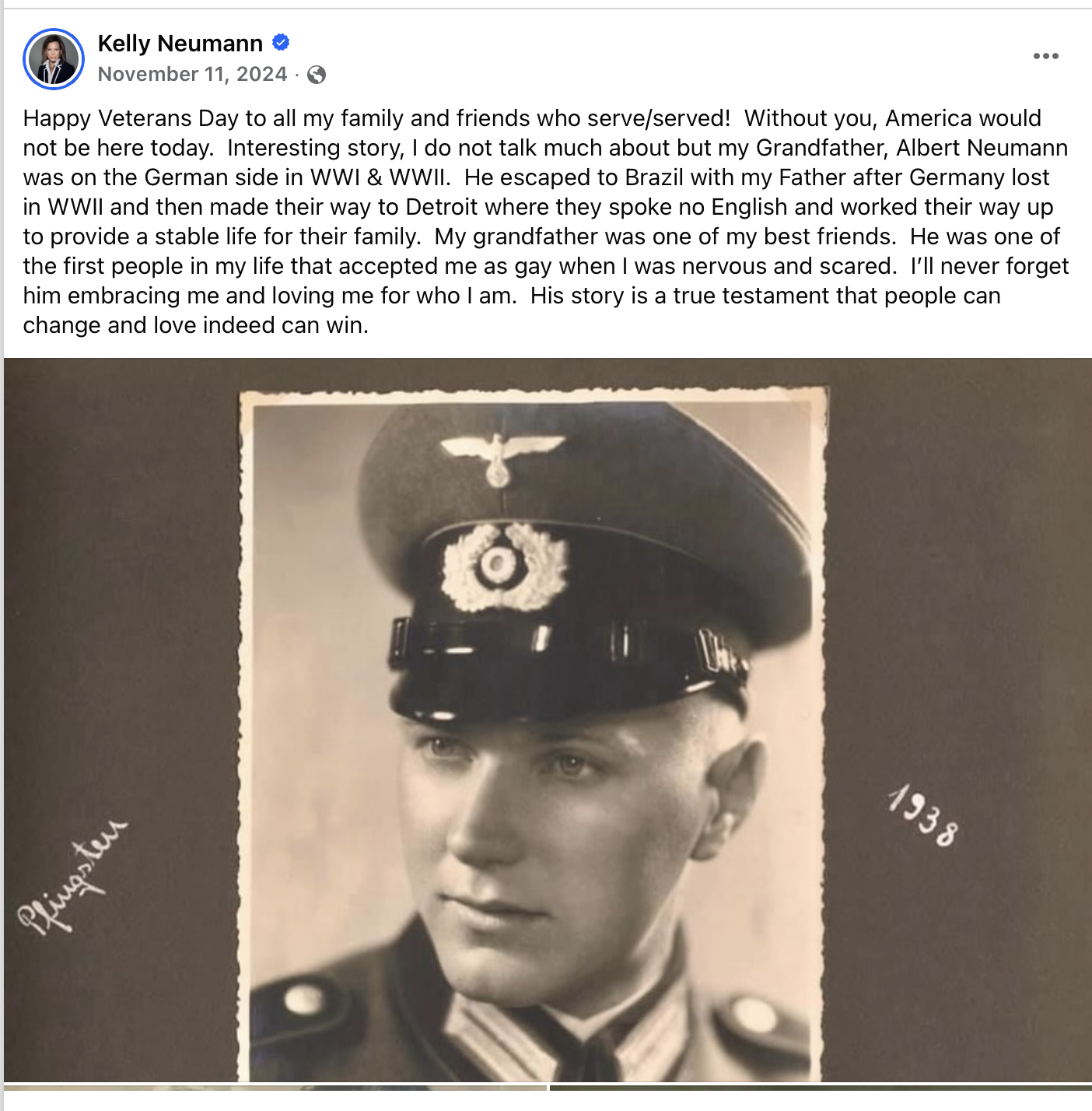
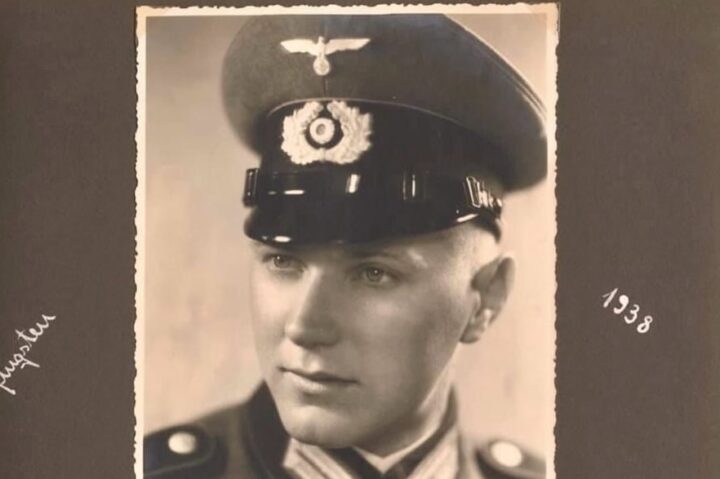
Picture of Kelly Neumann’s grandfather, Albert Neumann, that she shared on Veterans Day in 2024
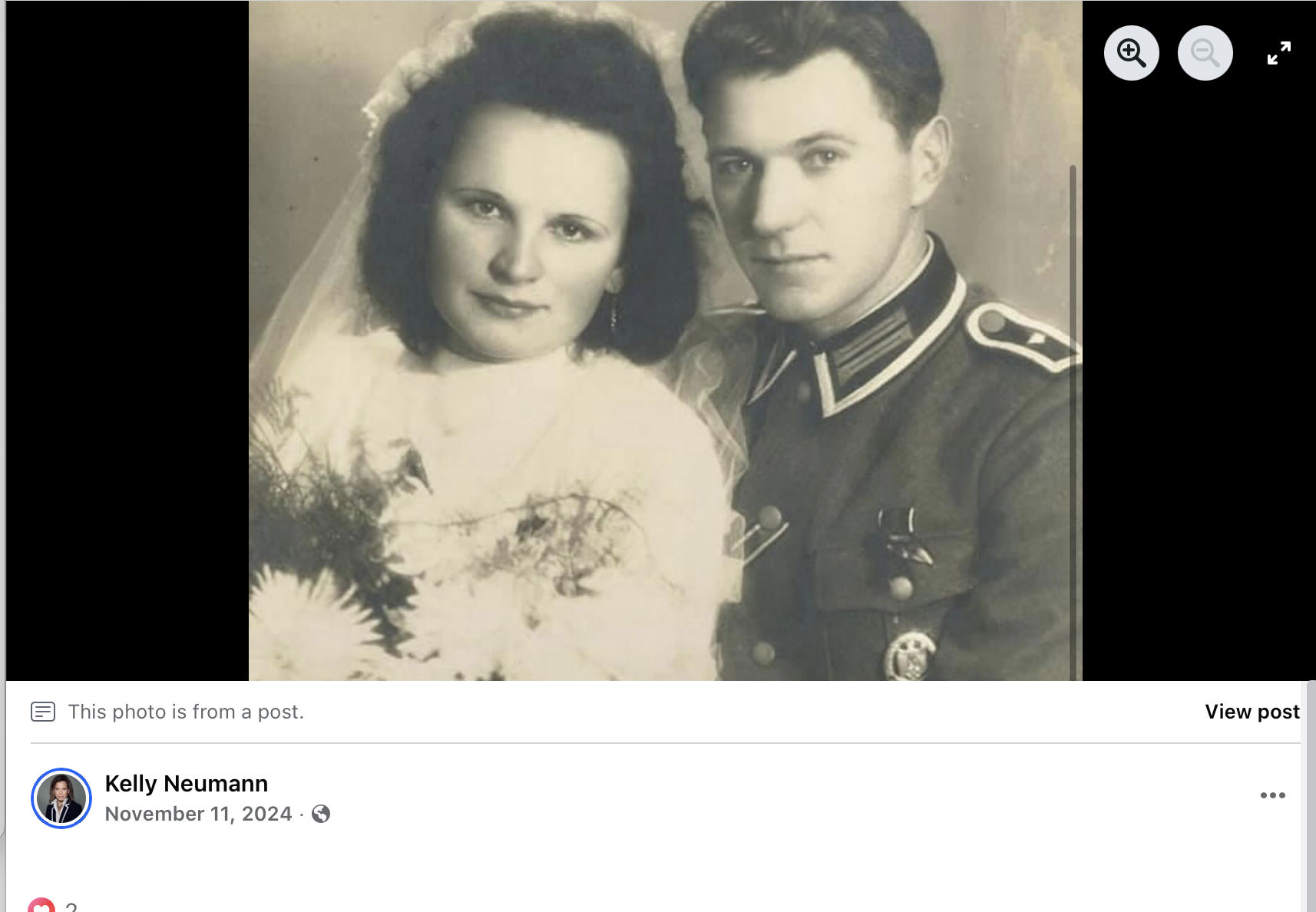
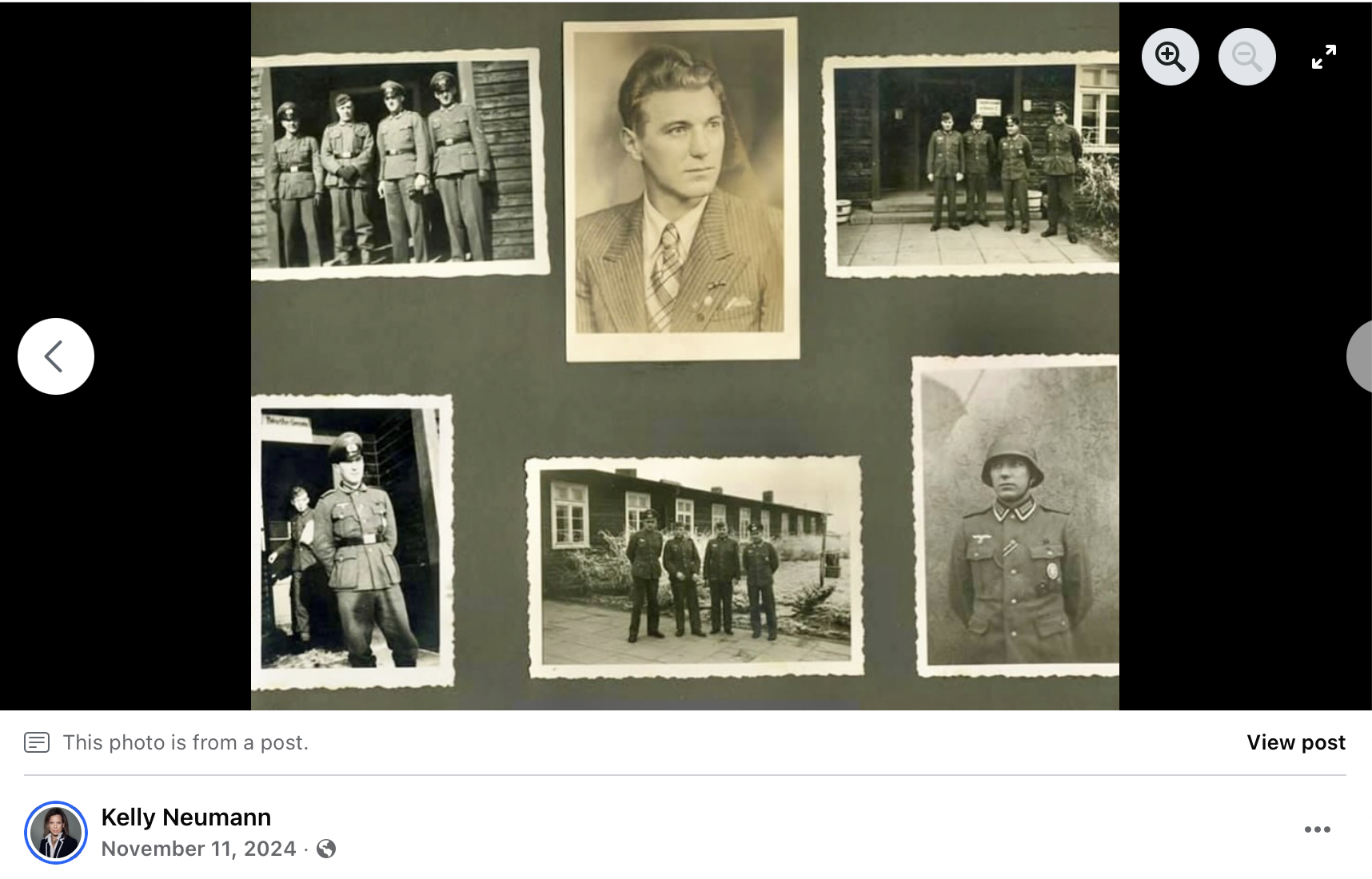
Kelly Neumann, a prominent Michigan Democratic fundraiser who is supporting several major Democratic candidates in the state, shared a social media post on Veterans Day in 2024 honoring her grandfather, who served in the Nazi regime’s army in World War II.
The post includes multiple photos of Neumann’s grandfather in Nazi regalia, including what appears to be an officer’s uniform.
“Happy Veterans Day to all my family and friends who serve/served! Without you, America would not be here today,” the post, shared on Facebook and Instagram by Neumann, a local attorney, reads. The Facebook post, which remained online as of initial publication of this story, was subsequently deleted. “Interesting story, I do not talk much about but my Grandfather, Albert Neumann was on the German side in WWI & WWII. He escaped to Brazil with my Father after Germany lost in WWII and then made their way to Detroit where they spoke no English and worked their way up to provide a stable life for their family.”
Neumann went on to say that her grandfather “was one of my best friends. He was one of the first people in my life that accepted me as gay when I was nervous and scared. I’ll never forget him embracing me and loving me for who I am.”
“His story is a true testament that people can change and love indeed can win,” Neumann concluded.
Neumann is serving as a co-chair of the finance committees for state Sen. Mallory McMorrow, who is running for U.S. Senate, and Secretary of State Jocelyn Benson, who is running for governor. Neumann has co-hosted several fundraisers for McMorrow’s campaign, as recently as last Friday, as well as multiple fundraisers for Benson’s campaign.
In March 2025, Neumann also hosted a $50,000 fundraiser for Rep. Haley Stevens (D-MI), now running for Senate against McMorrow, and is a member of Rep. Kristen McDonald Rivet’s (D-MI) fundraising “cabinet.” She hosted a December fundraiser for state Sen. Jeremy Moss, a Jewish, pro-Israel Democratic candidate for the House.
Neumann appears to be well-connected in Democratic politics¸ having hosted events alongside various other prominent Michigan Democrats. She has also shared photos with former Presidents Barack Obama and Joe Biden and Vice President Kamala Harris and professed to being in personal contact with multiple Democratic senators — albeit prior to the 2024 Veterans Day post.
FEC records indicate she has never personally donated directly to Stevens or Moss’ campaigns, and she’s been critical of Stevens during her Senate candidacy.
Arik Wolk, a spokesperson for Stevens’ campaign, distanced her from Neumann. “Haley rejects antisemitism in all forms, and has spent her career standing up to and calling out hate. Had Haley seen the post celebrating Ms. Neumann’s grandfather’s service to the SS, Ms. Neumann would not have hosted that event,” Wolk said.
Neumann, and the other candidates whom she is supporting this cycle, did not provide comment.
Please log in if you already have a subscription, or subscribe to access the latest updates.
 Continue with Google

 Continue with Apple