














































































If a far-left, anti-Israel wave sweeps over the Democratic Party in tonight’s statewide primaries, it will be a wake-up call for those downplaying the rise of the socialist left
RJ Sangosti/MediaNews Group/The Denver Post via Getty Images
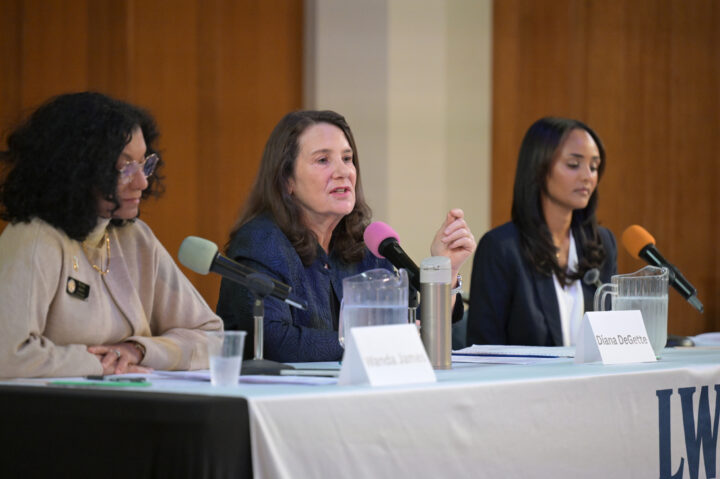
From left, Wanda James, Diana DeGette and Melat Kiros participate in a League of Women Voters Congressional District 1 candidate forum on May 28, 2026, in Denver, Colorado.


 Add JewishInsider on Google
Colorado is a state famous for its moderation, with its governor (Jared Polis) and two senators (Michael Bennet and John Hickenlooper) among the most pragmatic figures in Democratic politics. So if a far-left, anti-Israel wave sweeps over the Democratic Party in tonight’s statewide primaries, it will be a true wake-up call for those downplaying the rise of the socialist left.
The biggest race we’re tracking — and the one where a Democratic incumbent looks most vulnerable — is the primary between longtime Rep. Diana DeGette, 68, an influential progressive who has left an imprint on major legislation in Congress, and Democratic Socialists of America-affiliated 29-year-old doctoral student Melat Kiros, whose deep-seated antagonism against Israel is a top focus of her campaign.
Kiros is the latest example of how radical candidates running for office on their hostility toward Israel are also indulgent of the rising antisemitism around them. Her political awakening came after she was fired from the law firm Sidley Austin for writing a public letter denouncing the hundreds of law firms that signed a petition calling on law schools to do a better job addressing antisemitism on their campuses.
Kiros was angered that the law firms considered those calling for the elimination of Israel as antisemitic. In the last week, she also refused to call the firebombing of a hostage awareness march in Boulder, Colo., antisemitic. Sense a pattern?
As JI’s Marc Rod reported, Kiros’ extreme views have done little to dent her support in a progressive Denver-area district that DeGette has easily held for the last three decades. DeGette barely won the 30% of the vote from party activists necessary to qualify for the primary ballot — in what could be a foreshadowing of the primary results tonight.
The overall landscape in Colorado is looking similarly treacherous for other Democratic moderates, even if they end up prevailing. Sen. John Hickenlooper, once considered a shoo-in to win renomination, is facing a credible challenge from DSA-backed state Sen. Julie Gonzales. If Hickenlooper loses, it would be a political earthquake across the country, but even a close race against a fringe candidate would be a major warning sign for the health of the Democratic Party.
And well outside of Denver, another primary in a swing district is being closely watched for ideological signals of where the party is headed. Early in the cycle, Democratic Majority for Israel’s political arm rallied behind former state Rep. Shannon Bird, a moderate who has been a reliable supporter of Israel and outspoken critic of antisemitism in the state Legislature, in her race against Rep. Gabe Evans (R-CO).
State Rep. Manny Rutinel, a progressive who has attacked Bird as insufficiently liberal on immigration, has been vague on where he stands on Israel policy, but his record as a college student has raised concerns from the broader Jewish community.
As an undergraduate at the University of Florida in 2014, Rutinel attended a demonstration that was co-organized by Students for Justice in Palestine, the extreme anti-Israel group that has expressed alignment with Hamas, according to a local news story covering the event at the time. A Rutinel spokesperson told JI that Rutinel did not have any affiliation with SJP and said the demonstration was focused on police brutality in the U.S.
Neither candidate has focused much on Israel policy — a sign that opposing Israel isn’t a winning message in swing districts like Colorado’s 8th District, which also features a sizable Hispanic population.
The state’s Democratic gubernatorial primary between Bennet and Attorney General Phil Weiser will also be closely watched as a signal of voters’ discontent with Washington. Bennet was viewed by many as an early favorite, but Weiser holds a powerful statewide role that allowed him to position himself in opposition to the Trump administration by filing dozens of lawsuits against federal government policy.
Weiser, who is Jewish and told JI he blocks off Shabbat to spend with his family, is running as the progressive in the race but has kept his focus on campaigning as an anti-Trump candidate and as a Washington outsider.
The DSA chapter in Denver is opposing his gubernatorial campaign because, they write, he “remained a strong supporter of Israel despite the ongoing genocide.” (They also are opposing Bennet because of his votes for military aid to Israel.)
The lawmakers downplayed reports of a serious Gulf rift, with Rep. Brad Sherman calling the increasing disputes between neighbors ‘tactical, not ideological’
BRENDAN SMIALOWSKI/AFP via Getty Images
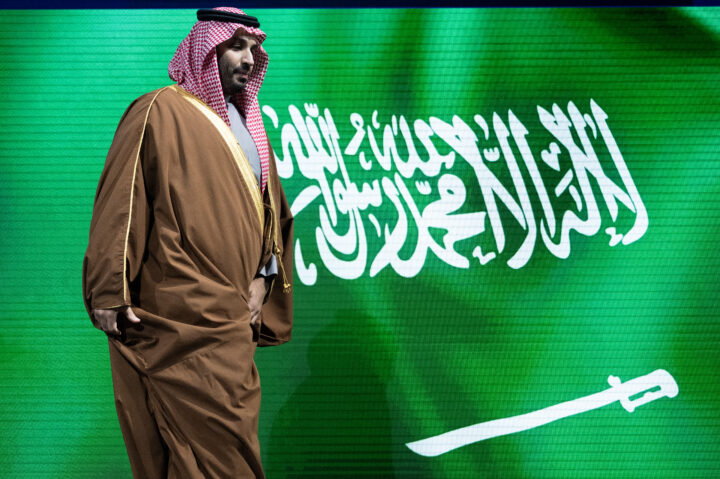
Saudi Arabia Crown Prince Mohammad bin Salman Al Saud walks to his seat after speaking during the US-Saudi Investment Forum at the Kennedy Center November 19, 2025, in Washington, DC.
Lawmakers in Washington are largely downplaying recent developments suggesting that Saudi Arabia is pivoting away from moderation and entertaining more hardline Islamism.
Saudi Arabia and the United Arab Emirates have been at loggerheads in Sudan, Somalia and Yemen — including a recent Saudi airstrike on an Emirati shipment in southern Yemen — prompting questions about Riyadh’s continued interest in acting as a moderating force in the region.
Saudi Arabia has also sided with Muslim Brotherhood-aligned forces in other regional conflicts, is increasing its business ties with Qatar and softening its stance toward other Islamist powers hostile to Israel, among other steps, some analysts say.
Saudi Foreign Minister Prince Faisal bin Farhan Al Saud met with lawmakers on Capitol Hill on Wednesday, who came away from the meeting indicating that potential disputes or shifts in the kingdom had been overstated.
Rep. Brad Sherman (D-CA) — who has been critical of Saudi Arabia in the past — told Jewish Insider that Prince Faisal, in the meeting, sought to directly rebut claims that Saudi Arabia was pivoting away from a position of moderation.
The overall message from Prince Faisal, Sherman said, was “the Saudis claim that they are anti-Brotherhood and that the disputes with the UAE are tactical, not ideological.”
“Just because the Saudis are not Shiite does not mean they’re Zionists. No one should get too carried away. And I’m sure there are elements of the Saudi government that are not nearly anti-[Muslim] Brotherhood as much as they should be,” Sherman said. “That being said, I see a foreign minister who is not Qatar or Turkey.”
“If you’re worried about Israel, you should never put any of the countries we’re talking about here in the ‘don’t worry about it’ category — you’ve got to worry,” he continued. “But the foreign minister went out of his way to say that when it comes to the Brotherhood or Iran, that there’s less reason to worry about Saudi Arabia.”
He said that he expects Saudi Arabia and the UAE to come to an agreement on the anti-Houthi campaign to deconflict the situation — likely one which would see the UAE take a decreased role in Yemen.
Sherman also said he did not see evidence that Saudi Arabia has significantly accelerated or expanded its relationship with Qatar — though he also noted that Saudi-Qatari tensions have gradually eased over the past few years and particularly since the Arab League blockade of Qatar. Saudi Arabia signed a major deal earlier this month to link Riyadh and Doha with a high-speed rail line.
Even so, Sherman said he has other pre-existing concerns about Saudi Arabia, such as its pursuit of a nuclear program and bid to purchase F-35 fighter jets, neither of which was discussed at Wednesday’s meeting.
Rep. Brian Mast (R-FL), the chairman of the House Foreign Affairs Committee, also met with Prince Faisal. He said it was “great” to see the foreign minister and that the group had discussed various issues including Yemen, Sudan and Gaza.
“Saudi Arabia and UAE are very close, right? I mean, that’s an understatement,” Rep. Brian Mast (R-FL), the chairman of the House Foreign Affairs Committee, told JI. “What I’m saying — everybody can have disagreements, spats, misunderstandings about different things, and that relationship is no different, but those two are two very, very close allies.”
“The U.S.-Saudi relationship remains a pillar of U.S. policy in the region,” Mast said in a statement. “I look forward to continuing to build upon our decades-old alliance to help resolve some of the region’s most pressing and complex challenges.”
He dismissed concerns about a potential Saudi repositioning or clash with the UAE.
“Saudi Arabia and UAE are very close, right? I mean, that’s an understatement,” Mast told JI in a brief interview. “What I’m saying — everybody can have disagreements, spats, misunderstandings about different things, and that relationship is no different, but those two are two very, very close allies.”
A congressional source deeply involved in Middle East issues argued that ties between the Sudanese Armed Forces — the faction Saudi Arabia is backing in Sudan — and the Muslim Brotherhood have been overstated and that the Saudi decision to back the SAF is a tactical one rather than an ideological signal of alignment with the Brotherhood. The source said that the Saudis have indicated that they are working to push the Brotherhood elements out of the SAF faction.
And, the source emphasized, both sides in Sudan have committed significant atrocities, further noting that the Trump administration sanctioned the Rapid Support Forces — which successive U.S. governments have found is committing genocide. The source said that Saudi Arabian officials have been clear they do not want the U.S. to sanction the UAE over its alleged support for the RSF, as some in Abu Dhabi heard after Saudi Crown Prince Mohammed bin Salman’s visit.
Regarding the Saudi strike in Yemen, the source said that Saudi Arabia was concerned about anti-Saudi forces approaching its territory and that the shipment the UAE convoy was transporting was being provided to those forces.
Sen. Markwayne Mullin (R-OK) said that there “a lot of concerns” about a Saudi dispute with the UAE in Yemen but that he is not “worried about [the Saudis] repositioning to an extreme point.”
“I don’t think we see that yet. There’s still a lot of conversations going on,” Mullin said. “I think that was just one of those regional things that sometimes we have a lack of understanding — or maybe understand it, but don’t understand it.”
Another lawmaker who has had conversations with individuals in the region said on condition of anonymity that — despite recent headlines — they did not believe that Saudi Arabia was making a fundamental pivot in its posture away from moderation or toward a more extremist Islamist stance.
The lawmaker added that the tensions between the two U.S. partners have been “surprising” but also noted there is a long and complex history between the two countries.
Addressing the Saudi-Emirati tensions, Sen. Pete Ricketts (R-NE), the No. 2 Republican on the Senate Foreign Relations Committee, acknowledged that the two countries had conveyed “different interests,” but did not appear concerned that their differences would alter the Saudis’ view of Iran as the top threat in the region.
“The UAE seems like they’re trying to diversify their sources of support in the region, and that’s a point of some disagreement between the Saudi leadership and UAE leadership,” Sen. John Cornyn (R-TX) told JI.
“I have no insight into what’s going on there, but clearly they’ve got different interests,” Ricketts told JI. “Saudi Arabia’s long-term interest is in a peaceful Middle East where they have allies to offset Iran. Saudi Arabia knows that in the region their worst enemy is Iran, and so they’re going to want allies to push back.”
Sen. John Cornyn (R-TX), who sits on the Senate Intelligence Committee as well as on Foreign Relations, said his primary concern was the UAE’s deepening ties with Russia.
“I mean, the UAE seems like they’re trying to diversify their sources of support in the region, and that’s a point of some disagreement between the Saudi leadership and UAE leadership,” Cornyn told JI.
“What worries me a little bit is UAE talking about allowing the Russians to build a military base there,” he continued. “They seem to be less convinced that they can rely on support from the United States and so they are looking for other friends. That concerns me.”
Sen. John Kennedy (R-LA) attributed the fissures to the situation in Sudan and instability in Yemen that neither country could independently solve, but said he had been informed that the Saudis and Emiratis had addressed their differences.
“Well, Yemen is a mess,” Kennedy said. “The UAE and the Saudis have been allies. Now, they recently got crossways, but I understand they got it worked out. I don’t know what else to say. I mean, Yemen is just, … it’s not a stable country.”
Pressed on the Gulf states having “worked out” their issues, the Louisiana senator responded, “Well, I think that got a lot of it worked out. The Saudis and UAE … they’re crossways in Sudan. They’re not always joined at the hip, so I wasn’t particularly shocked about it, but my understanding is they got it worked out.”
Sen. Mark Warner (D-VA), the ranking member of the Senate Intelligence Committee, said he hadn’t been following all of the developments with Saudi Arabia’s regional posture but had been tracking the conflict in Sudan, where Saudi Arabia and the UAE have been backing opposing sides in the civil war. Warner emphasized that “neither one of them are the good guys,” referring to the UAE-aligned RSF and Saudi-aligned SAF.
“It does bother me, not just where [the Saudis] may be moving, but also just … in terms of bombing [in] Yemen,” Warner added, referring to the Saudi strike.
Warner, who led Intelligence Committee members on a visit to Saudi Arabia to meet with Crown Prince Mohammed bin Salman in 2024, said that the Saudis were, at the time, “anxious to get normalization with Israel,” but the Gaza war interrupted that progress.
And Sen. Richard Blumenthal (D-CT) said the “instability” in the region — including the Saudi-UAE tensions — demonstrates the need for strong congressional oversight of “any agreement that’s reached with any of our potential partners there.
President Donald Trump recently announced a series of deals with Saudi Arabia, including selling the kingdom F-35 fighter jets and naming Riyadh a major non-NATO ally, without making public strides toward Saudi-Israeli normalization.
“And very bluntly, it reemphasizes that our one truly reliable ally in the Middle East is Israel,” Blumenthal continued.
Please log in if you already have a subscription, or subscribe to access the latest updates.
 Continue with Google

 Continue with Apple