













































































Rep. Mike Lawler: ‘Iran and its Houthi proxies have now simultaneously put pressure on two of the world’s most important maritime checkpoints’
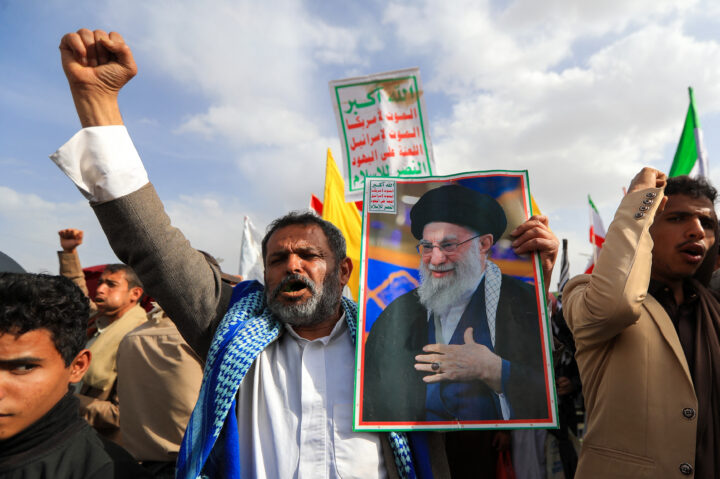
Photo by Mohammed HUWAIS / AFP via Getty Images
A Yemeni supporter of the Iran-backed Houthi movement holds a portrait of Iran's slain supreme leader, Ayatollah Ali Khamenei, during a protest against U.S. strikes on Iran in Sanaa on July 10, 2026.


 Add JewishInsider on Google
Middle East experts urged members of Congress on Tuesday to empower the Yemeni government and resume diplomatic efforts to constrain the Houthis in Yemen, warning that the Trump administration’s bombing campaign against the Houthis and the subsequent ceasefire have failed to deter the group from targeting commercial shipping in the Red Sea.
At a House Foreign Affairs Committee Middle East subcommittee hearing on the threats posed by the Houthis to U.S. interests in the Red Sea, Nadwa Al-Dawsari, an associate fellow at the Middle East Institute, and Allison Minor, the director of the Project for Middle East Integration at the Atlantic Council, testified that the Trump administration’s approach to containing the Iran-backed terror group had not sufficiently weakened or deterred it.
“The United States does not have an ambassador appointed to Yemen, to Saudi Arabia or to the UAE, the countries that are most important to resolving the conflict,” Minor said. “We have career diplomats in place as chargé d’affaires, but unfortunately, it’s not sufficient.”
Asked who is filling that void by Rep. Bill Keating (D-MA), Minor replied: “You have caretaker career diplomatic staff in place. I think there are a handful of envoys this administration has appointed for a series of global conflicts. I don’t think they have the bandwidth currently for Yemen.”
Lawmakers from both parties expressed concern over the negative impact on the economy caused by the Houthis’ repeated disruptions to commercial shipping in the Red Sea, with several connecting the campaign with Iran’s closure of the Strait of Hormuz. (Most recently, the Houthis have been attacking targets in Saudi Arabia, including ships, airports and oil facilities.)
“[The Houthis] have targeted American forces, attacked our partners and threatened commercial vessels transiting one of the world’s most important waterways,” Rep. Mike Lawler (R-NY), who chairs the subcommittee, said.
“Iran transformed a local armed movement into a terrorist organization capable of threatening Americans and disrupting international commerce. … This becomes even more dangerous in Yemen when the Red Sea and the Strait of Hormuz are involved. Iran and its Houthi proxies have now simultaneously put pressure on two of the world’s most important maritime checkpoints.”
Pressed on what Congress could do to protect freedom of navigation and commercial shipping in the Red Sea, Minor warned that, “until we have a durable resolution to this threat, we will continue to see a disruption to commerce that has immediate impacts on global energy markets and long-term consequences for freedom of navigation globally.”
Minor also agreed with Keating’s suggestion that “the closure and the limitation on the Strait [of Hormuz] has given the Houthis even more leverage than before.”
Minor and Al-Dawsari concurred that the Trump administration has failed to develop a durable Yemen policy or provide enough support to the Yemeni government to counter Houthi influence and territorial control.
Both witnesses criticized the ongoing ceasefire between the U.S. and the Houthis as strategically unproductive, pointing to the terrorist group’s increased recruiting numbers and continued attacks on commercial shipping. The two urged the Trump administration to not treat the ceasefire as a long-term strategy.
Al-Dawsari and Minor also rejected the notion that prior U.S. military operations had significantly diminished the Houthis’ ability or willingness to fight.
“U.S. military pressure has imposed real costs on the Houthis, but airstrikes alone will not eliminate the threat,” Al-Dawsari said. “The Houthis have not been degraded.”
“Air strikes have disrupted Houthi operations and … undermined some of their capabilities, but the Houthis have proven that they are able to regenerate some of these capabilities,” she continued. “The Houthis have not engaged in peace negotiations in good faith. They used that time to rebuild their capabilities, recruit more fighters and prepare for the next war.”
Minor argued that, “U.S. airstrikes and Israeli strikes all failed to eliminate Houthi capabilities or alter their strategy. … Each time the Houthis have come under attack from U.S. or Israeli strikes, they have used this to fuel their recruitment.”
Neither witness supported the idea of a U.S. military operation targeting the Houthis involving
ground troops, and both agreed that the Trump administration should fill the vacant U.S. special envoy for Yemen post and surge humanitarian assistance.
But Al-Dawsari and Minor diverged on how to achieve a lasting solution that eliminates the group’s fighting capacity and ensures the Yemeni government can maintain control of the country.
Minor argued that the Trump administration needs to address the lack of a broader American diplomatic apparatus in the region while pursuing a “viable negotiated settlement that can contain Houthi threats while addressing the governance issues that have been fueling this Houthi threat for over a decade.” While Minor did not rule out the viability of military force completely, she urged the U.S. to stop “vacillating between costly U.S. military intervention and disengagement.”
Al-Dawsari, meanwhile, encouraged the Trump administration to partner with Saudi Arabia on a broader effort to provide intelligence and military training, as well as any other assistance, “to support the Yemeni government militarily, politically and economically.” She also urged lawmakers to continue supporting the Houthis’ Foreign Terrorist Organization (FTO) designation.
“The most important source of leverage is territory,” Al-Dawsari said. “The United States needs to do the one thing that it hasn’t done yet: support the Yemeni government to take territory from the Houthis.”
“This is not the United States’ war, and it shouldn’t be,” she argued. “We need to provide [the government] with the necessary military and economic and political support in order to be able to take on the Houthis on their own long-term. That’s the only way to do it. There is no other substitute.”
Plus, GOP lawmakers speak out against WH's Hezbollah stance
Spencer Platt/Getty Images
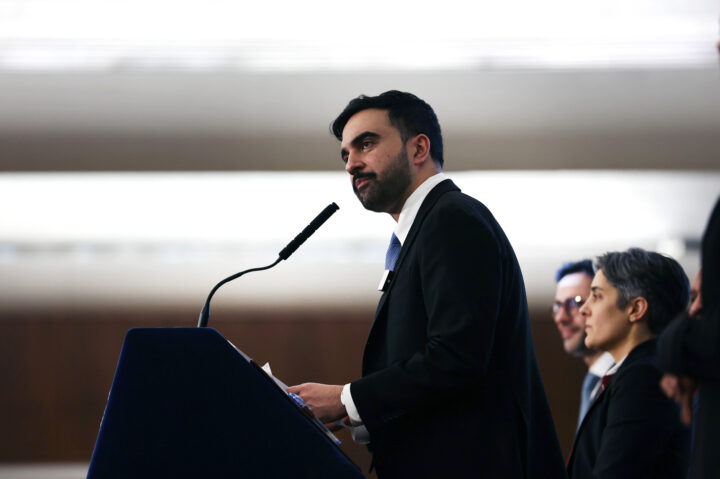
New York City Mayor Zohran Mamdani speaks at a "Rental Ripoff" hearing at Fordham University in the Bronx borough of New York on March 11, 2026, in New York City.
Good Tuesday morning.
In today’s Daily Kickoff, we speak with former White House officials and Middle East experts about the Trump administration’s move to lift sanctions on Iranian oil sales through August, and report on the concerns of Senate Republicans over the U.S. effort to halt Israeli operations against Hezbollah. We report on New York City Mayor Zohran Mamdani’s intervention in today’s New York primaries, as well as the mayor’s comments doubling down on his rhetorical assault on AIPAC. We also report on a highly charged telephone call between President Donald Trump and Israeli Prime Minister Benjamin Netanyahu, as revealed in a new book by Maggie Haberman and Jonathan Swan. Also in today’s Daily Kickoff: Sen. Susan Collins, Rep. Steny Hoyer and Ambassador Yehuda Kaploun.
Today’s Daily Kickoff was curated by JI Israel Editor Tamara Zieve and U.S. Editor Danielle Cohen-Kanik, with an assist from Marc Rod. Have a tip? Email us here.
What We’re Watching
- Voters in Maryland, New York and Utah are heading to the polls for their primaries today. The biggest races to watch are in New York, where New York City Mayor Zohran Mamdani has endorsed three far-left, anti-Israel candidates running against Reps. Dan Goldman (D-NY), Adriano Espaillat (D-NY) and Brooklyn Borough President Antonio Reynoso. We’re also closely watching the hotly contested Democratic primary to succeed retiring Rep. Jerry Nadler (D-NY), in a Manhattan district with the largest Jewish constituency in the country.
- In Maryland, we’re keeping a close eye on the race to replace former House Majority Leader Steny Hoyer (D-MD), where state Del. Adrian Boafo, endorsed by the outgoing congressman and a strong ally of Israel, has emerged as the favorite. See more below.
- Israeli and Lebanese representatives are expected to begin multiday talks in Washington in a continuation of the countries’ direct negotiations, starting with a joint military and political session, days after the U.S. and Iran said they had established a “deconfliction cell” to end military operations in Lebanon without Israel’s involvement.
- Israeli Prime Minister Benjamin Netanyahu asserted multiple times on Monday that the IDF retains the right to act against Hezbollah in southern Lebanon if necessary, as Axios reported that the Israeli government fears the U.S. is limiting its freedom of action through its negotiations with Iran. On Tuesday morning, the IDF said it struck armed terrorists operating close to Israeli soldiers in Ali al-Taher Ridge area in southern Lebanon.
- Secretary of State Marco Rubio is departing for a three-day trip to the United Arab Emirates, Kuwait and Bahrain to discuss issues including the memorandum of understanding with Iran and transit through the Strait of Hormuz.
- Orthodox Union Advocacy will hold its annual lobbying day on the Hill, including a luncheon with senators from both parties.
What You Should Know
A QUICK WORD WITH JI’S matthew kassel
As Rep. Steny Hoyer (D-MD) prepares to step down at the end of his current term, the former Democratic House majority leader is staking his pro-Israel legacy on a little-known candidate who he hopes will uphold his long-standing commitment to maintaining a close relationship with the Jewish state.
In throwing his support behind Adrian Boafo, a 32-year-old Maryland state delegate who is among two dozen Democratic candidates running in Maryland’s 5th Congressional District primary on Tuesday, Hoyer, 87, is using his connections to establishment party leaders and ties with pro-Israel groups to boost his hand-picked choice to the nomination for a safely blue seat.
United Democracy Project, AIPAC’s super PAC, has emerged as the biggest spender in the race, investing more than $5.7 million as part of an aggressive effort to promote Boafo launched by Hoyer and his allies.
The well-funded foray is a useful illustration of the degree to which planning and organization helped put Boafo in contention for the seat Hoyer has held for 45 years, in contrast with recent primaries where UDP and other pro-Israel advocacy groups have been relatively cautious with their engagement while being outflanked by the far left.
A UDP source, granted anonymity to speak candidly about the race, said polling showed Boafo was not in the lead when Hoyer endorsed him in January. “It’s a super close race that could go either way,” the source told Jewish Insider on Monday, stressing a high level of undecided primary voters. “Many candidates are in contention.”
EASY MONEY

Former White House officials and Middle East experts are expressing concern over the Trump administration’s move to lift sanctions on Iranian oil sales through August, warning that Tehran will gain significant revenue it could use for malign activities before it demonstrates concrete progress on its diplomatic commitments, Jewish Insider’s Matthew Shea reports. The move was made in response to Tehran’s agreement to open the Strait of Hormuz and allow international nuclear inspectors into the country following weekend talks in Switzerland, according to Treasury Secretary Scott Bessent, a claim which Iranian officials have denied.
Airing concerns: When asked whether the Iranians could use the profits from oil sales for malign activity, President Donald Trump said “they’re not supposed to be doing that,” and that Tehran is meant to use the income to purchase agricultural goods from the U.S. “Why give them the money to stabilize the regime and start rebuilding their military before they have done anything at all on their nuclear program?” Elliott Abrams, who served as special envoy for Iran during the first Trump administration, asked. “Why do we just get promises while they get billions?”
Talking to terror: Vice President JD Vance on Monday backed Iran’s participation in bringing about the end of the military conflict between Israel and Hezbollah, while talking at a press conference in Switzerland. “Of course, Israel has to respond to that,” he said of Hezbollah attacks on northern Israeli towns, “but … we could actually have a better and more peaceful situation if Israel responds in the context of a conversation that’s ongoing between Hezbollah, Lebanon, Israel and other partners in the region.”
SKEPTICAL SENATORS
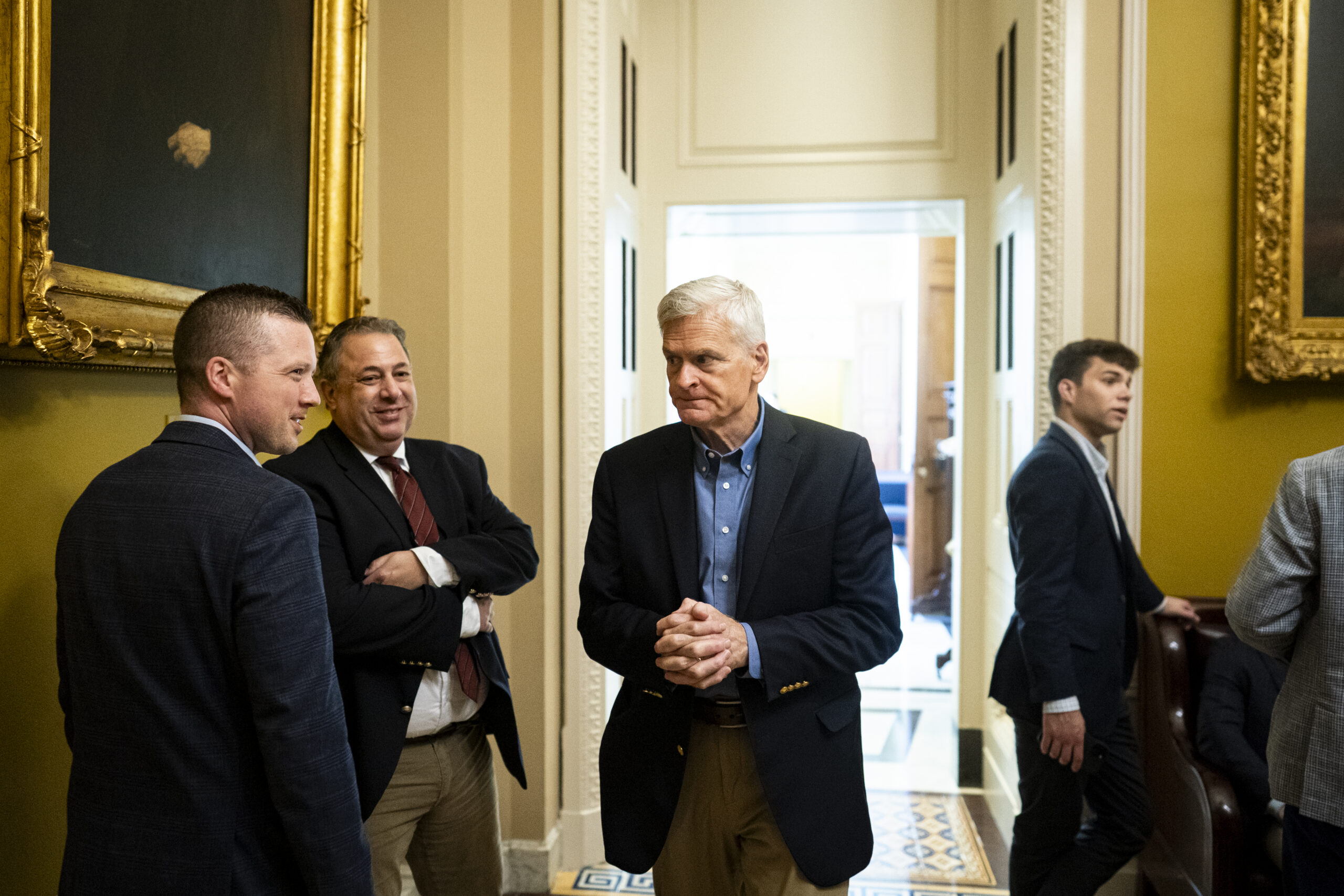
Senate Majority Leader John Thune (R-SD) said that Israel’s right to self-defense must be protected in U.S. talks with Iran, after administration officials publicly urged Israel to cease operations against Hezbollah as part of the recent memorandum of understanding — even though Israel, Hezbollah and Lebanon are not parties to that agreement, Jewish Insider’s Emily Jacobs and Marc Rod report.
Lebanon lens: “I just want to make sure that Israel is able to defend itself, and I think whatever happens as a result of these talks, that is something that needs to be maintained,” Thune said. “Hopefully the U.S.-Israeli relationship will remain such that we fully understand their need to be able to defend themselves, and right now on their northern border, they’re being attacked daily.” Other Senate Republicans also took issue with the administration’s efforts to halt anti-Hezbollah operations, as well as with the lifting of sanctions on Iran.
Read the full story here with additional comments from Sens. John Cornyn (R-TX), James Lankford (R-OK), Bill Cassidy (R-LA), Ted Budd (R-NC), John Kennedy (R-LA), Chris Coons (D-DE) and Tim Kaine (D-VA).
Standing strong: Sen. Susan Collins (R-ME) accused Maine Democratic Senate nominee Graham Platner of antisemitism and defended her support for Israel in a Fox News interview on Monday, JI’s Marc Rod reports. “I remain a very strong supporter of Israel, the one democracy in the Middle East, our true ally in the Middle East,” Collins said when asked about increasing hostility to Israel and AIPAC among the American public.
BOOK BOMBSHELL

President Donald Trump grew so frustrated with Israeli Prime Minister Benjamin Netanyahu during last September’s negotiations over a U.S.-brokered deal to end the Israel-Hamas war in Gaza, that Trump cursed and yelled at Netanyahu in a phone call days before the agreement was announced publicly, according to a new book, Jewish Insider’s Gabby Deutch reports.
Tense talk: “Everybody’s sick of you, Bibi,” Trump said in a phone call with Netanyahu, Jared Kushner and White House Special Envoy Steve Witkoff, according to a book published on Tuesday by New York Times journalists Maggie Haberman and Jonathan Swan chronicling the first year of Trump’s second term. “All the Jews are sick of you. Even the two Jews on this call are sick of you.”
Elsewhere: The White House’s “Rapid Response” X account boosted an Al Jazeera video interview about U.S.-Iran negotiations with Qatari Prime Minister Sheikh Mohammed bin Abdulrahman Al Thani, calling it “the real story from people actually in the room,” JI’s Emily Jacobs reports.
RABBI ROADBLOCK
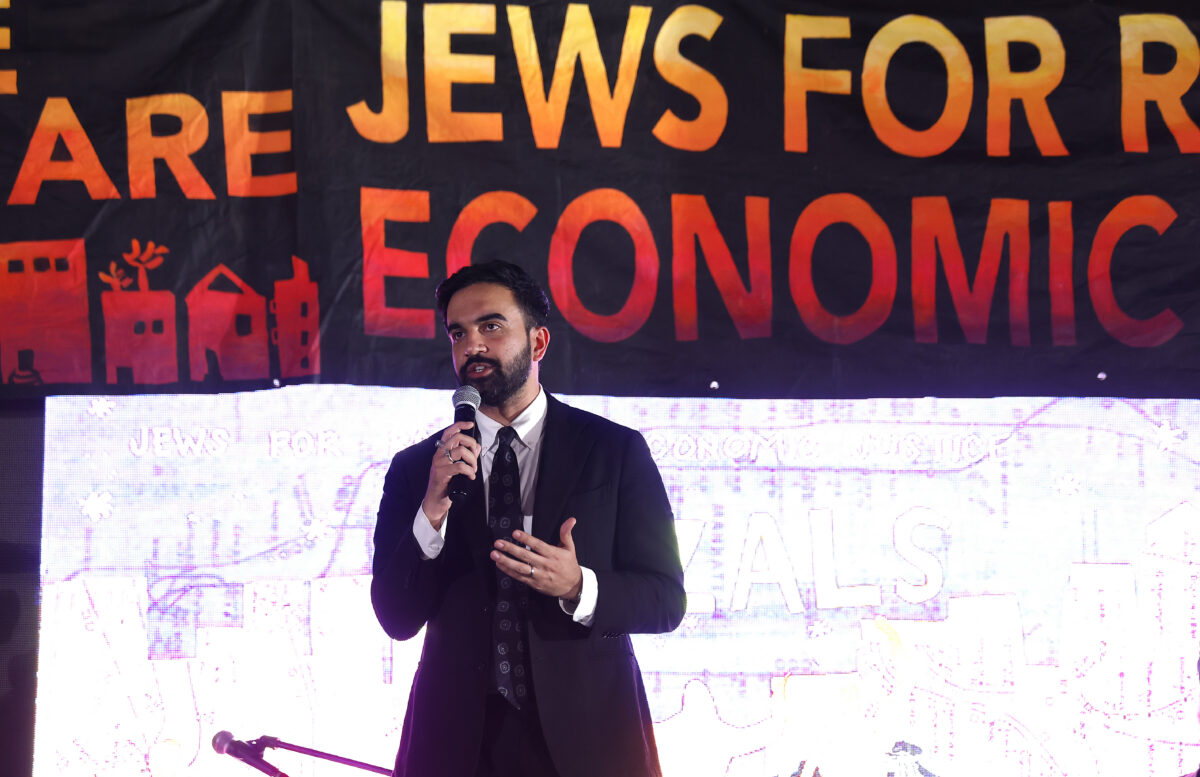
New York City Mayor Zohran Mamdani’s intervention in a state-level race in Manhattan could also reverberate through the city’s Jewish community and beyond. The mayor has inserted himself in the costly fight between Rabbi Stephanie Ruskay and lawyer Eli Northrup for the 69th Assembly District on the Upper West Side, spurning a key Jewish ally in the process, Jewish Insider’s Will Bredderman reports.
Picking sides: Rival left-of-center Jewish factions have lined up behind each candidate: the anti-Zionist Jews for Racial and Economic Justice behind public defender Eli Northrup, and a suite of long-standing Jewish elected officials — including City Comptroller Mark Levine and his predecessor Scott Stringer — with Rabbi Stephanie Ruskay, associate dean of The Rabbinical School at the Jewish Theological Seminary. Ruskay’s prominent backers include her longtime friend and mentor, former Manhattan Borough President Ruth Messinger, one of Mamdani’s most prominent Jewish supporters. Multiple sources told JI that Messinger had personally asked the mayor not to get involved in the race, but Mamdani did so anyway, even releasing one of his signature social media videos featuring Northrup.
Doubling down: Mamdani doubled down on his rhetorical assault on AIPAC on Monday, after Jewish groups over the weekend criticized his comments about the pro-Israel organization at a Thursday rally last week that they argued evoked classic antisemitic tropes.
ACROSS THE POND

British Prime Minister Keir Starmer’s resignation on Monday set up a leadership battle within the Labour Party and raised the question of how his likely successor will deal with one of the issues that brought Starmer to office in the first place: combating antisemitism. Starmer’s successor is likely to be Andy Burnham, a newly sworn-in Labour MP representing a district that includes parts of the Greater Manchester region in the north of England. He spent the last nine years as mayor of Greater Manchester, home to the second-largest Jewish community in the U.K, Jewish Insider’s Gabby Deutch reports.
Community approach: Jewish community leaders in Manchester have close ties with Burnham, whom they view as an ally. He earned praise for strongly supporting the community after a terror attack on Manchester’s Heaton Park Hebrew Congregation last year on Yom Kippur, in which two congregants were murdered. Burnham’s record on Israel is relatively short — he has not brought Middle East politics into his mayoralty in the way that some other local leaders have focused on the issue. “I think he’ll be strong on antisemitism, on Holocaust education and on tackling Jew hatred, but it remains to be seen about Israel. I don’t think he’ll change the government’s position much, if at all,” said Raphi Bloom, director of fundraising and marketing at the Fed, a Jewish social services charity in Manchester.
moco moment
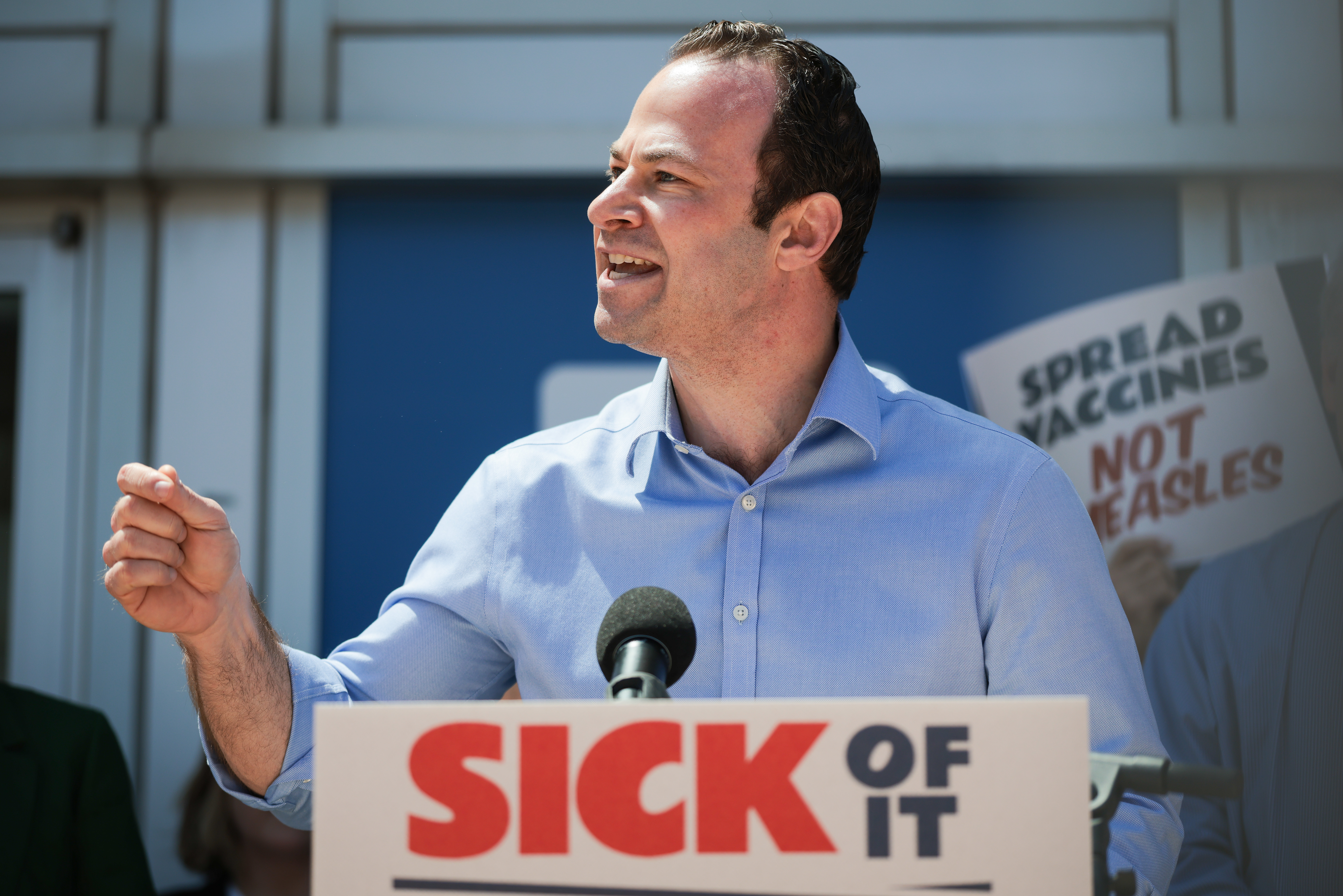
Ahead of Tuesday’s primary election for executive of Montgomery County, Md., progressives have largely broken for Montgomery County Councilmember Will Jawando, leaving the more moderate Councilmembers Andrew Friedson and Evan Glass to jockey for the remaining undecided voters, Jewish Insider’s Christina Sher reports. The vote of the Jewish community — which is, according to a source familiar with the race, expected to account for more than one-fifth of primary turnout in the county with Maryland’s largest Jewish population — could be especially critical.
Eye on antisemitism: Jewish leaders have raised the alarm on antisemitism in the deep-blue county — which saw the highest rate of incidents in the state in 2025 — and the particular issue of antisemitism in the area’s public schools. Ron Halber, CEO of the Jewish Community Relations Council of Greater Washington, told JI that Jawando, Glass and Friedson “have all denounced antisemitism during their eight-year terms in the council” and said he hopes that other community leaders “awake from their slumber” to speak out against hate without needing to be prompted by the Jewish community.
Worthy Reads
AI Accuracy?: ForumAI CEO Campbell Brown writes in The Wall Street Journal about AI models’ limitations in assessing accurate information. “We tested the major AI models on three dimensions this group identified as the foundation of trustworthy information: quality of sources, factual accuracy and whether they present a response with real balance or just the appearance of it. We found serious gaps: The models misstated public opinion on political topics and attributed quotations to people who didn’t say them … The most revealing failures were much subtler. When we asked the major models something as basic as what form of government the U.S. has, one of them, Claude Opus 4.7, cited Global Times, a Chinese state-run tabloid.” [WSJ]
MOU As Rough Draft: In Newsweek, former White House Middle East Special Envoy Jason Greenblatt offers a conflicted but measured assessment of the U.S.-Iran memorandum of understanding, drawing from his diplomatic experience during Trump’s first term. “I read the 14 points of the U.S.-Iran memorandum of understanding (MOU) the way I used to read drafts in the White House and, before that, for two decades at The Trump Organization: pen in hand, marking up every clause … My honest reaction, reading it that way, is that I have serious questions about its structure and its terms … And yet I know how incomplete my reaction is, coming from someone standing outside the room. I spent three years watching the gap between what the public saw and what was actually happening behind closed doors, and I learned that the view from outside the room almost always misses things the people inside knew or were reaching for.” [Newsweek]
Trump’s ‘Surrender’: Former Rep. Kathy Manning (D-NC), now board chair of Democratic Majority for Israel, slams President Donald Trump’s memorandum of understanding with Iran as a mirage obfuscating his negotiation failures. “Like the arsonist who wants credit for putting out the fire he started, Mr. Trump now claims victory with a deal that pauses Iran’s use of a previously unused weapon — a weapon that may be as powerful as its nuclear threat — the closing of the Strait of Hormuz. Add to that the release of hundreds of billions of dollars to Iran and you have the real Art of the Deal: surrender and betrayal of the American people, the Gulf States, Israel, and our NATO allies.” [Substack]
What Greenspan Meant: Greg Ip, The Wall Street Journal’s chief economics commentator, reflects on the impact Alan Greenspan, who died on Monday, left on the country and on Ip personally, after years covering him as he reported on the Federal Reserve. “He was introverted, but came alive when the topic of conversation interested him. Luckily, our interests overlapped. For my fellow journalists and me, Greenspan wasn’t just a news subject but a bottomless well of insight and ideas. And he loved that role. I came away from every meeting with Greenspan smarter. Admonished for not knowing Knut Wicksell’s theory of the natural rate of interest, I quickly brushed up. After a discussion of Keynesian prescriptions for preventing depression in the 1940s, he sent me to read George Terborgh, an obscure economist with a contrarian and bullish view on American potential.” [WSJ]
Word on the Street
The FBI announced the arrest of two more individuals who allegedly plotted to attack members of Congress connected to the “pro-Israel lobby” at the UFC event at the White House last week, joining five other suspects charged with conspiracy to commit murder…
Three people were killed in a shooting attack in Côte-des-Neiges, a heavily Jewish neighborhood in Montreal. A civilian, a police officer and the suspect were confirmed dead by Montreal police, while one other police officer was seriously injured but in stable condition, Jewish Insider’s Haley Cohen and Tamara Zieve report…
The Department of Justice’s Civil Rights Division is investigating a Brooklyn cafe after it banned Rep. Dan Goldman (D-NY) from its store, posting discriminatory messages online that accused the congressman of enabling genocide and tying him to AIPAC, JI’s Haley Cohen reports…
The coffee shop is owned by Parviz Mukhamadkulov, who, the Free Beacon reported, is a donor to scandal-plagued Maine Democratic Senate nominee Graham Platner…
Rep. Ro Khanna (D-CA) announced last week that he had been endorsed by the anti-Israel group TrackAIPAC, which has faced widespread accusations of antisemitism, after becoming the first politician or candidate to sign a new “pledge” promulgated by the group, JI’s Marc Rod reports…
Conservative commentator Ben Shapiro called Vice President JD Vance’s conduct in negotiations with Iran over the weekend “humiliating,” slamming Vance — while continuing to praise President Donald Trump — on his show on Monday for “looking weak in front of the Qataris, the Pakistanis and most of all, the Iranians”…
Three men killed in a small plane crash in Bowie, Md., on Saturday night have been identified as Israeli citizens, JI’s Haley Cohen reports…
Israeli defense contractor Elbit Systems announced it would phase out its use of Chinese-manufactured vehicles, following similar moves by other entities including the IDF and Rafael as the vehicles are increasingly viewed as a security risk by both Jerusalem and Washington…
Shin Bet chief David Zini has instructed officials to prepare for a potential attack in Israel’s southern resort city, warning that “the next October 7 will be in Eilat,” Haaretz reports, citing security sources…
An independent U.N. inquiry found that Israeli forces deliberately targeted Palestinian children, resulting in genocide, crimes against humanity and war crimes in Gaza, and war crimes in the West Bank. The Israeli Foreign Ministry rejected the report as a “libelous sham,” and said it “lacks any credible verification mechanism for its claims” and ignores “Hamas’ cynical use of Palestinian children as human shields”…
A federal investigation found that the condominium collapse in Surfside, Fla., almost exactly five years ago, that killed 98 people began with a structural failure in the building’s garage three weeks earlier…
The New York Times spotlights “Food Network” star Ina Garten’s foray into podcasting with her forthcoming show “Happy Hour With Ina Garten,” after Vox Media secured the in-demand contract in a seven-figure deal…
Alan Greenspan — the influential economist who led the Federal Reserve for 19 years across four presidencies — died on Monday at 100, JI’s Haley Cohen reports…
Music executive Clive Davis, who championed the careers of stars including Whitney Houston, Aretha Franklin and Barry Manilow, died on Monday at 94…
Pic of the Day
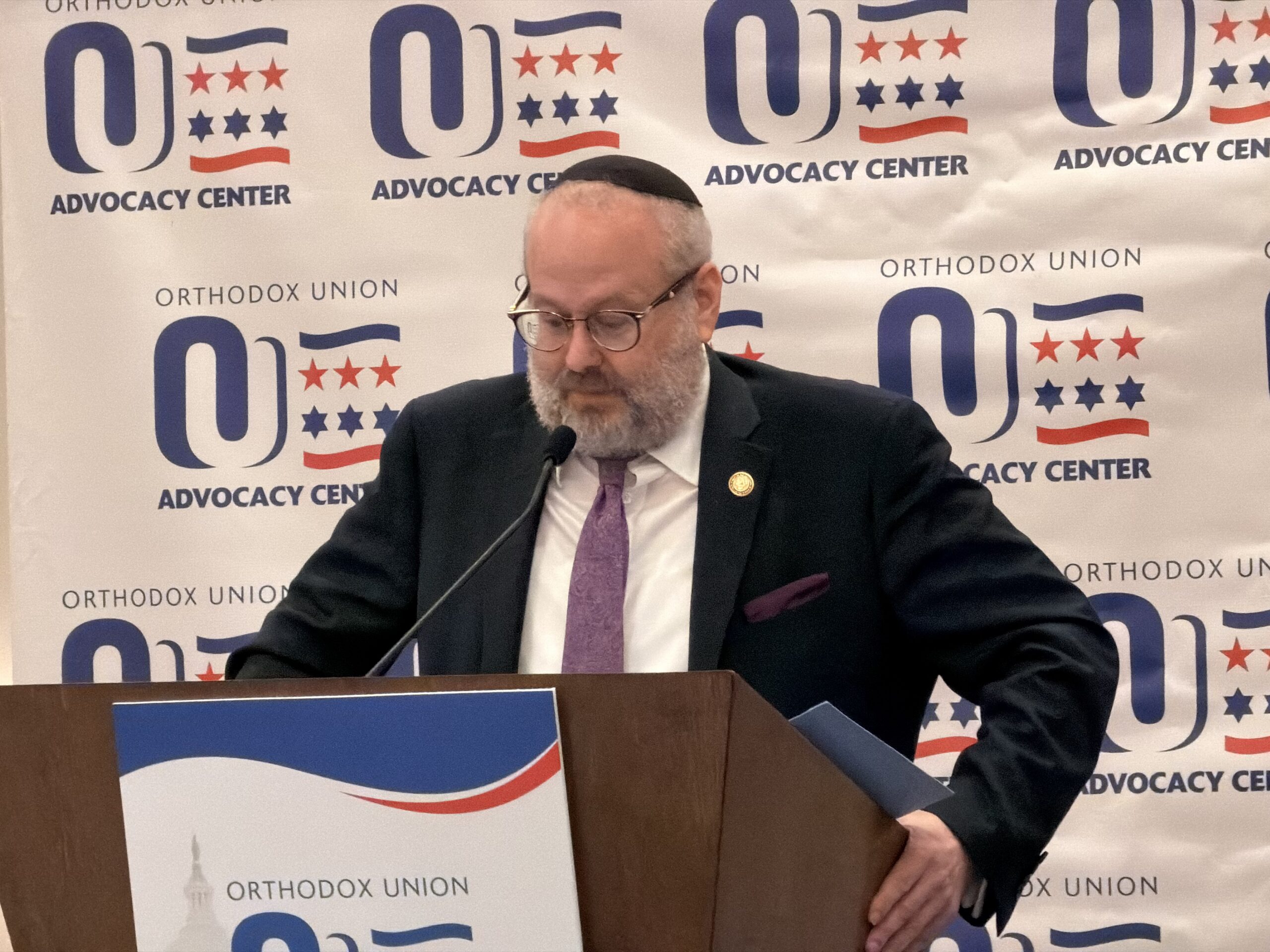
Ambassador Yehuda Kaploun, the Trump administration’s special envoy to monitor and combat antisemitism, said on Monday that his office, under President Donald Trump, had been given a broader remit across the federal government, including assisting in the recent arrest and indictment of an alleged mastermind of attacks on Jewish communities in Europe and the U.S.
Kaploun said at an Orthodox Union conference in Washington that his office had worked with the Department of Justice, FBI, intelligence community and the White House to help bring to justice Mohammed Al-Saadi, an Iranian Iraqi Kata-ib Hizballah operative allegedly involved in more than two dozen attacks and attempted attacks across Europe and the U.S., Jewish Insider’s Marc Rod reports.
Birthdays

Ethiopian-born Israeli model who won the title of Miss Israel in 2013, Yityish “Titi” Aynaw turns 35…
Real estate developer and co-founder of Tishman Speyer, Jerry Speyer turns 86… Associate justice of the Supreme Court of the United States, Justice Clarence Thomas turns 78… Senior advisor at Eurasia Group, a political risk consultancy, he is the author of 24 books on foreign affairs, global politics and travel, Robert D. Kaplan turns 74… Novelist and journalist, Roy Hoffman turns 73… Los Angeles-based socialite, restaurateur and breast cancer fundraiser, a 2008 Lifetime Television movie starring Renée Zellweger portrayed her cancer-fighting efforts, Lilly Tartikoff Karatz turns 73… Klezmer expert, violinist, composer, filmmaker, writer, photographer and playwright, Yale Strom turns 69… Senior director of health policy at the National Consumers League until 2024, Robin Strongin… President of the Harrington Discovery Institute at University Hospitals, Dr. Jonathan Solomon Stamler turns 67… Sports memorabilia marketer, in 2009 his firm sold all of the seats, signs and lockers from the old Yankee Stadium, Brandon Steiner turns 67… Member of the Pennsylvania state Senate until 2020, now president of Cannabis GPO, Daylin Leach turns 65… Editorial director of Ben Yehuda Press, Lawrence Yudelson… Former teacher for 19 years at Golda Och Academy in West Orange, N.J., she is on Hadassah’s 2025 list of 18 American Zionist Women You Should Know, Stephanie Z. Bonder… Israeli-American professor, journalist and filmmaker, Boaz Dvir turns 59… Film and television actor, her Hebrew name is Bat-Sheva, Selma Blair Beitner turns 54… U.S. special envoy for hostage response, Adam Seth Boehler turns 53… EVP and general manager of the NFL’s Philadelphia Eagles, Howie Roseman turns 51… President and COO of D1 Capital Partners, he was deputy director of the White House National Economic Council in the Trump 45 administration, Jeremy Katz… Founder of Innovation: Africa, which uses Israeli solar technology to bring electricity and solar-powered water pumps to impoverished African villages, Sivan Borowich-Ya’ari turns 48… Actor and comedian, best known for playing Dr. Bernadette Rostenkowski-Wolowitz on CBS’ sitcom “The Big Bang Theory,” Melissa Rauch turns 46… Actor, singer and model, Marielle Jaffe turns 37… Executive assistant to the CEO at Jazz, Gila Bublick turns 37… Western regional major gifts director at United Hatzalah of Israel, Ely Benhamo… Recent MBA graduate at Columbia Business School, Josh Lauder…
‘Why do we just get promises while they get billions?’ former Trump Iran envoy Elliott Abrams said

Jonathan Raa/NurPhoto via Getty Images
The Brent crude oil price chart is displayed on a mobile screen on March 2, 2026.
Former White House officials and Middle East experts are expressing concern over the Trump administration’s move to lift sanctions on Iranian oil sales through August, warning that Tehran will gain significant revenue it could use for malign activities before it demonstrates concrete progress on its diplomatic commitments.
On Monday, the U.S. Treasury Department issued a temporary 60-day license authorizing the production, delivery and sale of Iranian oil, lifting decades-old sanctions. The move was made in response to Tehran’s agreement to open the Strait of Hormuz and allow international nuclear inspectors into the country following weekend talks in Switzerland, according to Treasury Secretary Scott Bessent, a claim which Iranian officials have denied.
Under the memorandum of understanding signed last week between Washington and Tehran, the U.S. agreed to authorize waivers allowing the export of Iranian crude oil, petroleum products and related derivatives, as well as associated services such as banking transactions, insurance and transportation.
The temporary license is set to expire on Aug. 21 and represents a historic pivot in U.S. policy. It marks the first time since Washington imposed strict energy sanctions on Iran in the wake of the 1979 Islamic Revolution that Iranian oil can be legally imported into the U.S. and purchased using U.S. dollars. The 2015 Joint Comprehensive Plan of Action suspended certain secondary sanctions, allowing foreign companies to purchase Iranian oil, but it did not authorize imports of Iranian oil into the U.S.
Tehran has previously relied on a “shadow fleet” of aging oil tankers to move its crude abroad, funneling most of it to Chinese refineries. Under the new license, the Treasury Department said Iran may now lawfully sell oil from these previously sanctioned vessels, temporarily legitimizing that clandestine network. The waiver also shields Iranian entities, including the Central Bank of Iran, from nonnuclear sanctions tied to terrorist activity.
When asked whether the Iranians could use the profits from oil sales for malign activity, President Donald Trump said “they’re not supposed to be doing that,” and that Tehran is meant to use the income to purchase agricultural goods from the U.S.
“We’ll see, but they’re supposed to use the money to buy food for their people,” Trump told reporters in the Oval Office on Monday. “They’re buying it exclusively from us … all that money is coming back [to the U.S.] in the form of purchase of food … largely to our farmers.”
Meanwhile, foreign policy experts told Jewish Insider that Iran could use the money for malign activity, also expressing concern that Tehran is receiving revenue before proving it will fulfill its long-term obligations under the deal.
“It doesn’t take a lot of imagination to guess what this oil revenue will be used for,” Dan Shapiro, a former U.S. ambassador to Israel under President Barack Obama, told JI. “It won’t be used to benefit the Iranian people. This early concession is just further evidence of how badly the United States conceded leverage to Iran in Trump’s misguided war. We are paying dearly now just to get the Strait of Hormuz reopened.”
Elliott Abrams, who served as special envoy for Iran during the first Trump administration, similarly indicated that the regime would likely use the funds in ways contrary to U.S. interests.
“Why give them the money to stabilize the regime and start rebuilding their military before they have done anything at all on their nuclear program?” Abrams asked. “Why do we just get promises while they get billions?”
Miad Maleki, a former senior Treasury official, said that the sanctions relief “could be an economic lifeline for the Islamic Republic,” in a post on X on Monday. Maleki said the move “theoretically unlocks” around 67 million barrels of oil that are stranded in the Gulf, which he estimated would be worth roughly $8-9 billion, as well as another $10-15 billion in potential relief through the sale of petrochemical tons.
“The license explicitly allows buyers to pay Iran — including the Iranian government and blacklisted Iranian entities — directly for the oil. This isn’t just permission to sell. It’s permission to get paid,” Maleki wrote. “And the payments can be made in U.S. dollars. The dollar is the backbone of global finance, and Iran has been largely locked out of it for years. Handing the regime dollar revenue restores access that sanctions were specifically designed to deny.”
He also noted that the Treasury Department’s authorization will allow Tehran’s “shadow market” to operate “cheaper, faster, and [be] dollar-denominated.”
“While major Western and new-market buyers won’t be rushing to do business with Iran, the license authorizes far more than Iran can currently produce, and there are more than enough willing buyers in China and across Asia to absorb every barrel and petrochemical ton Iran can move,” he wrote.
Abrams also took issue with Iran appearing to gain notable benefits without yet complying with all the U.S. demands.
“The benefits for Iran in the MOU seem to be frontloaded,” Abrams said. “That’s a mistake because to the extent that they benefit now, they have less and less incentive to comply with what we want.”
Abrams maintained that U.S. sanctions should continue even after the lifting of the U.S. naval blockade and the reopening of the Strait of Hormuz.
Shapiro told JI he held similar concerns, particularly regarding how Iran is securing immediate relief without any concessions on its nuclear program and noted that the agreement “doesn’t even mention Iran’s ballistic missile program or support for terrorist proxies.”
Jonathan Ruhe, a fellow at the Jewish Institute for National Security of America, argued that the move provides Iran “upfront sanctions relief,” while simultaneously requiring “fewer concessions” than the JCPOA signed in 2015 under Obama.
AIPAC similarly compared the agreement to the JCPOA, which the group spearheaded efforts to oppose when it was signed.“This license is broader than the terms detailed in the MOU or what was included in the JCPOA,” AIPAC wrote on X on Monday. “Waiving sanctions on production will allow Iran to increase its output and gain increased revenues under the terms of the MOU.”
Ruhe noted that such a move sidesteps mandatory congressional oversight by granting immediate waivers before lawmakers have had a chance to formally review or vote on the arrangement.
“It also runs afoul of the Iran Nuclear Agreement Review Act (INARA), which prohibits any sanctions relief until Congress can review the deal,” Ruhe said. “Iran’s regime should get sanctions relief only in exchange for meaningful concessions on its nuclear program, which it has not made, and congressional review of the deal, which has not happened.”
Plus, Ms. Rachel’s Capitol cameo
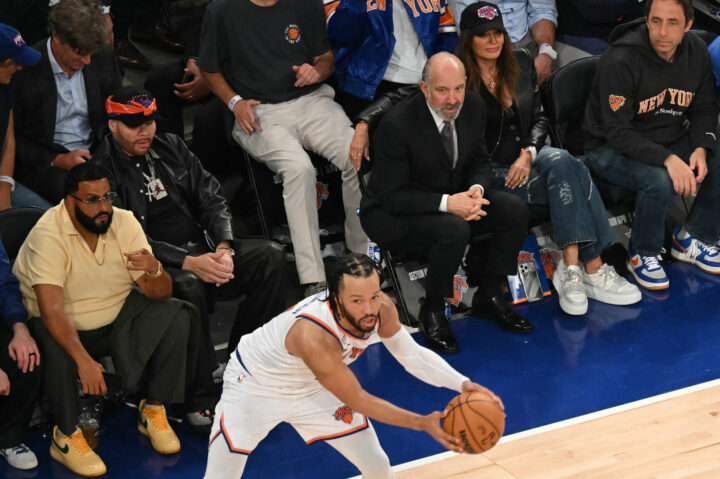
(L/R) US producer DJ Khaled, US rapper Fat Joe, US Secretary of Commerce Howard Lutnick and his wife Allison Lutnick watch Knicks guard Jalen Brunson during Game Three of the NBA Finals between the San Antonio Spurs and the New York Knicks at Madison Square Garden in New York on June 8, 2026. (Photo by SAUL LOEB / AFP via Getty Images)
PRESENTED BY

Good Tuesday morning.
In today’s Daily Kickoff, we talk to Middle East experts about the dynamic between the U.S. and Israel on strategy in the region as President Donald Trump and Prime Minister Benjamin Netanyahu diverge on how to address Iran and its proxies, and have the scoop on the newest additions to the House Foreign Affairs Committee. We report on the who’s who of notables at last night’s NBA Finals game in New York, and talk to friends and colleagues of Tisch family matriarch Billie Tisch, who died on Sunday. Also in today’s Daily Kickoff: Sam Bankman-Fried, Ms. Rachel and Dan Loeb.
Today’s Daily Kickoff was curated by JI Executive Editor Melissa Weiss and Israel Editor Tamara Zieve, with assists from Danielle Cohen-Kanik and Marc Rod. Have a tip? Email us here.

What We’re Watching
- Voters in Maine head to the polls today to cast their ballots in the state’s primary races, including the Democratic primary for Senate, where embattled oyster farmer Graham Platner is expected to win the nomination following Gov. Janet Mills’ suspension of her campaign earlier this spring. We’ll be watching the margin by which Platner, who has been dogged by a series of scandals ranging from a Nazi tattoo to comments supporting Hamas tactics to past volatile romantic relationships, wins tonight — which will indicate his strength going into the general election against one of the Senate’s most moderate Republicans, Sen. Susan Collins (R-ME).
- We’ll also be keeping an eye on primaries in Nevada, North Dakota and South Carolina.
- In the Middle East, Lebanese media reported Israeli airstrikes near Tyre in southern Lebanon on Tuesday morning after the IDF issued an evacuation order to residents of the city. On Monday, Israeli Prime Minister Benjamin Netanyahu said that, though Israel is “holding its fire” against Iran, Jerusalem has “a full right to self-defense” and is “exercising it to the extent necessary.” Two Israeli sources told CNN that Jerusalem planned to continue its operations against Hezbollah targets in southern Lebanon.
- The House Judiciary Committee is holding a hearing on the Southern Poverty Law Center. The hearing comes two months after the Department of Justice charged the group with fraud in connection with now-defunct efforts to spend upwards of $3 million to pay informants at extremist groups.
- The House Appropriations Committee is holding markups this morning on the 2027 budgets for the Department of Homeland Security and the Department of Labor.
- Elsewhere in Washington, Chabad-Lubavitch’s Living Legacy International Conference, which kicked off last night, resumes this morning with a congressional leadership breakfast followed by events at the Library of Congress, a luncheon at the State Department, a roundtable with Jewish leaders from around the world this afternoon and a gala dinner in the evening.
- Agudath Israel of America is holding a dinner to dedicate its new Washington office and pay tribute to Rabbi Abba Cohen, the longtime head of the group’s DC operations.
- The Atlantic Council’s Global Energy Forum kicks off today in Washington. Energy Secretary Chris Wright, Sens. Bill Cassidy (R-LA), Chris Coons (D-DE), Martin Heinrich (D-NM), Alan Armstrong (R-OK); Reps. Ami Bera (D-CA), Young Kim (R-CA); Alaska Gov. Mike Dunleavy, Development Finance Corporation CEO Ben Black and TWG Global’s Amos Hochstein are slated to speak at the two-day gathering.
What You Should Know
A QUICK WORD WITH JI’S JOSH KRAUSHAAR
Domestic politics isn’t always the best lens through which to evaluate foreign policy decisions.
But in assessing why President Donald Trump has gone to significant lengths to prevent Israeli Prime Minister Benjamin Netanyahu from striking back against Iran’s attacks, and why Netanyahu went ahead with the first wave of military strikes before standing down, it’s instructive to understand how the domestic politics in the U.S. and Israel are diverging.
The joint U.S.-Israel military operation against Iran, which began on Feb. 28 and has evolved into a very tenuous ceasefire since April 8, has not achieved many of the military goals outlined by both sides. Iran’s extremist leadership is still in place, it still maintains its nuclear ambitions and retains its nuclear material, and its ballistic missile stockpiles, while damaged, still remain.
On the Lebanese front, Hezbollah continues to threaten Israel’s north and not abide by any of the diplomatic agreements recently negotiated between Israel and the Lebanese government.
As a result of the limited achievements so far, public support for renewing military action against Iran has been low among the American public, and the overall operation is receiving lukewarm backing from Republicans.
Over two-thirds of voters in a recent Economist/YouGov poll said the U.S. “should make a deal to end the war in Iran as quickly as possible,” with just 11% disagreeing. Over half of Republicans shared the same sentiment of ending the war, with just 21% opposing.
Support for the war itself was much higher among Republicans than Democrats or independents, but still less than typical partisan support for Trump’s actions, with 67% of GOP voters backing the war in Iran and 20% opposing. (Among all voters, just 28% said they supported the war against Iran, with 60% opposing.)
These polling numbers explain why Trump, ever cognizant of public opinion especially in the run-up to a consequential midterm election, is trying to avoid reengaging with Iran militarily — even as he desperately seeks for some diplomatic off-ramp that Iran isn’t giving him.
In fact, it’s Trump’s very transparent desperation for a deal with Iran — and apparent unwillingness to go back to war —that’s emboldening Iran to continue its rejectionism to the point where it launched ballistic missiles at Israel over the weekend, feeling confident Trump would constrain Israel from any sustained response (which he did).
WAR AND PEACE
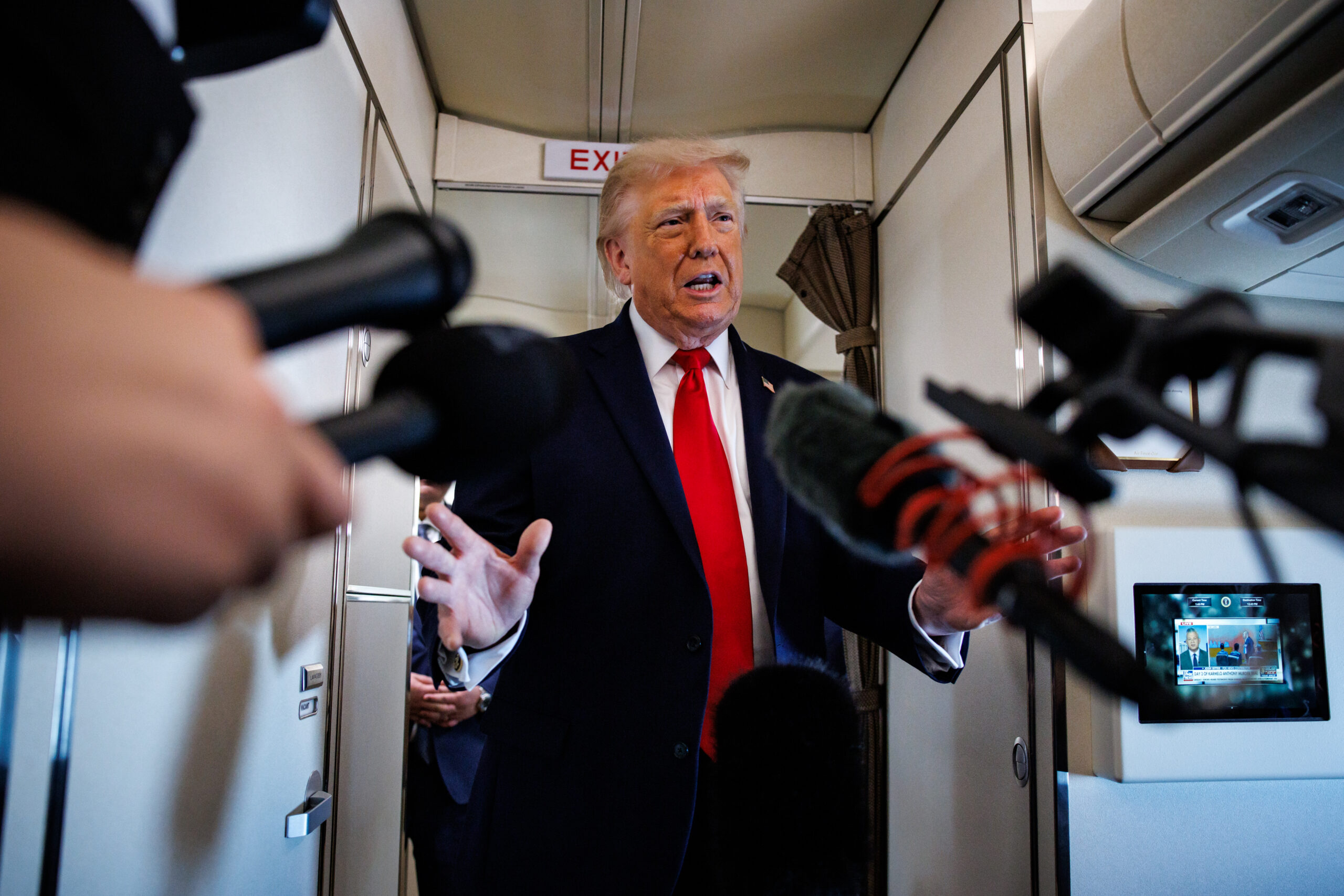
Middle East experts warned on Monday that the Trump administration’s attempts to prevent Israel’s military retaliation against Iran and its pursuit of a swift diplomatic breakthrough with Tehran are exposing a fundamental breakdown in strategic alignment between Washington and Jerusalem. This dynamic is actively undermining American leverage and hardening Tehran’s resolve both at the negotiating table and on the battlefield, the analysts argued, Jewish Insider’s Matthew Shea reports.
Trump and Tehran: Speaking at a webinar hosted by the Jewish Institute for National Security of America, Amb. Eric Edelman, a distinguished fellow at JINSA and former White House official, said that the president’s behavior makes the U.S. appear “desperate for a deal.” Ari Cicurel, an assistant director of foreign policy at JINSA, agreed that the administration’s apparent urgency to reach a deal removes vital military deterrence to back up U.S. diplomacy. “The president has signaled that he is highly prioritizing reaching some deal, and is willing to restrain Israel in order to do that,” Cicurel told JI.
On the Hill: Sen. Roger Wicker (R-MS), the chairman of the Senate Armed Services Committee, said on Monday that he would support President Donald Trump abandoning diplomatic talks with Iran and resuming military operations, JI’s Marc Rod and Emily Jacobs report.
MOUNTING SCRUTINY
Will Avila Chevalier’s ‘beyond the pale’ views sink the DSA challenger’s campaign against Espaillat?
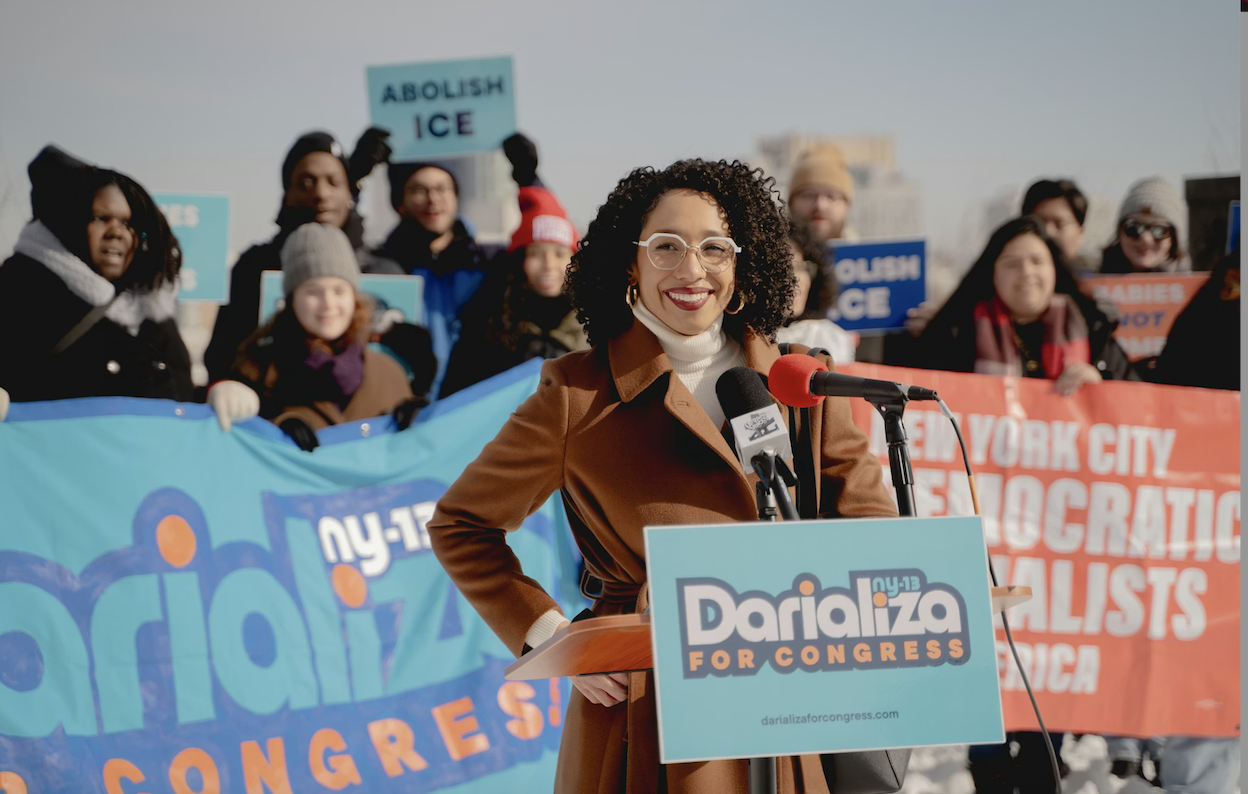
As Darializa Avila Chevalier mounts an insurgent campaign against Rep. Adriano Espaillat (D-NY) in Upper Manhattan, the democratic socialist has faced mounting scrutiny over past controversial posts that have surfaced in recent days, raising questions about whether the negative publicity will blunt her chances in the June 23 primary election. Some strategists suggested that her incendiary views could get overlooked amid a national political landscape favoring extreme, anti-establishment sentiments now fueling the rise of several far-left candidates in Democratic primaries around the country, Jewish Insider’s Matthew Kassel reports.
Sign of the times: “It seems to not matter in a way that it would have been a deal-breaker 15 or 20 years ago,” Chris Coffey, a Democratic strategist in New York City who is not involved in the primary, told JI on Monday. “This race feels like our new outlier, where some of the things she’s said are so far beyond the pale.”
SCOOP
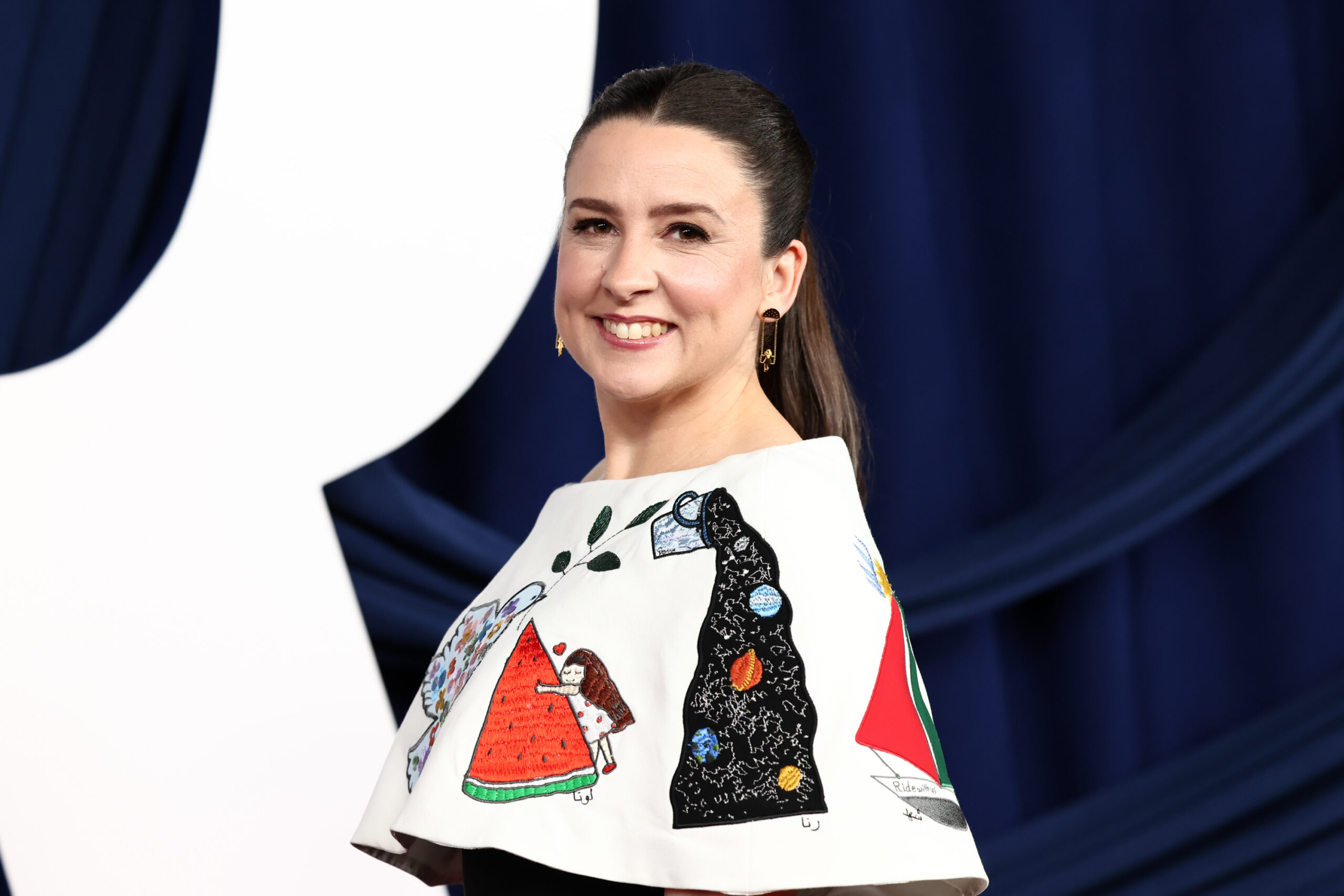
The Congressional Dads Caucus is hosting children’s influencer Rachel Griffin-Accurso, better known as Ms. Rachel, as a featured guest at a reception in Washington on Tuesday, according to an invitation obtained by Jewish Insider’s Marc Rod. Griffin-Accurso has faced scrutiny and criticism over antisemitic activity and for hosting a pro-Hamas Palestinian journalist on her social media accounts.
Background: Griffin-Accurso is one of 10 “special guests,” including “leaders, advocates, creators, entertainers, and changemakers who are helping redefine fatherhood and caregiving in America,” at the Tuesday reception. The reception is co-hosted by the Dads Caucus, founded by Rep. Jimmy Gomez (D-CA), to advocate for policies including childcare affordability and accessibility, paid family leave and the child tax credit, ahead of the group’s Dad Ambassador Awards. The event is co-hosted by Equimundo, which describes itself as a nonprofit focused on promoting gender equality and preventing violence.
SCOOP
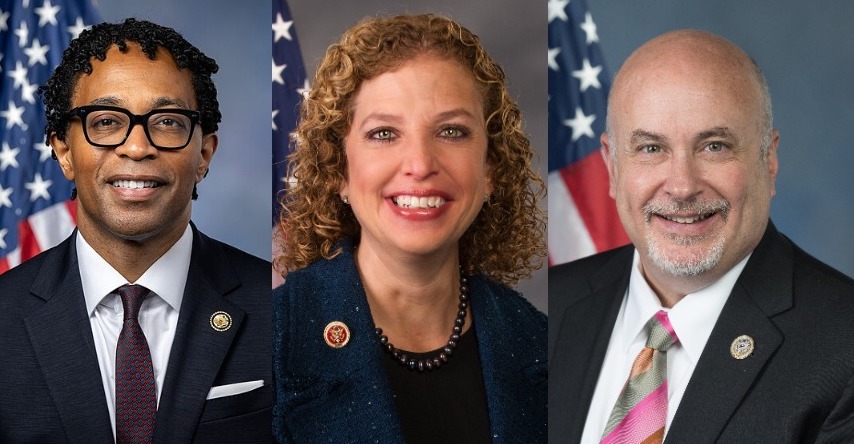
House Democrats are set to name Reps. Wesley Bell (D-MO), Debbie Wasserman Schultz (D-FL) and Mark Pocan (D-WI) to the House Foreign Affairs Committee, Jewish Insider’s Marc Rod has learned.
Lineup changes: Bell and Wasserman Schultz are both strong supporters of Israel, while Pocan is an outspoken critic, joining a panel that features outspoken voices on both sides of the Israel policy debate. None of the three offices responded to requests for comment. Rep. Max Miller (R-OH), a Jewish Republican and strong supporter of Israel, also recently joined the panel.
SPECTATOR SPECTACLE
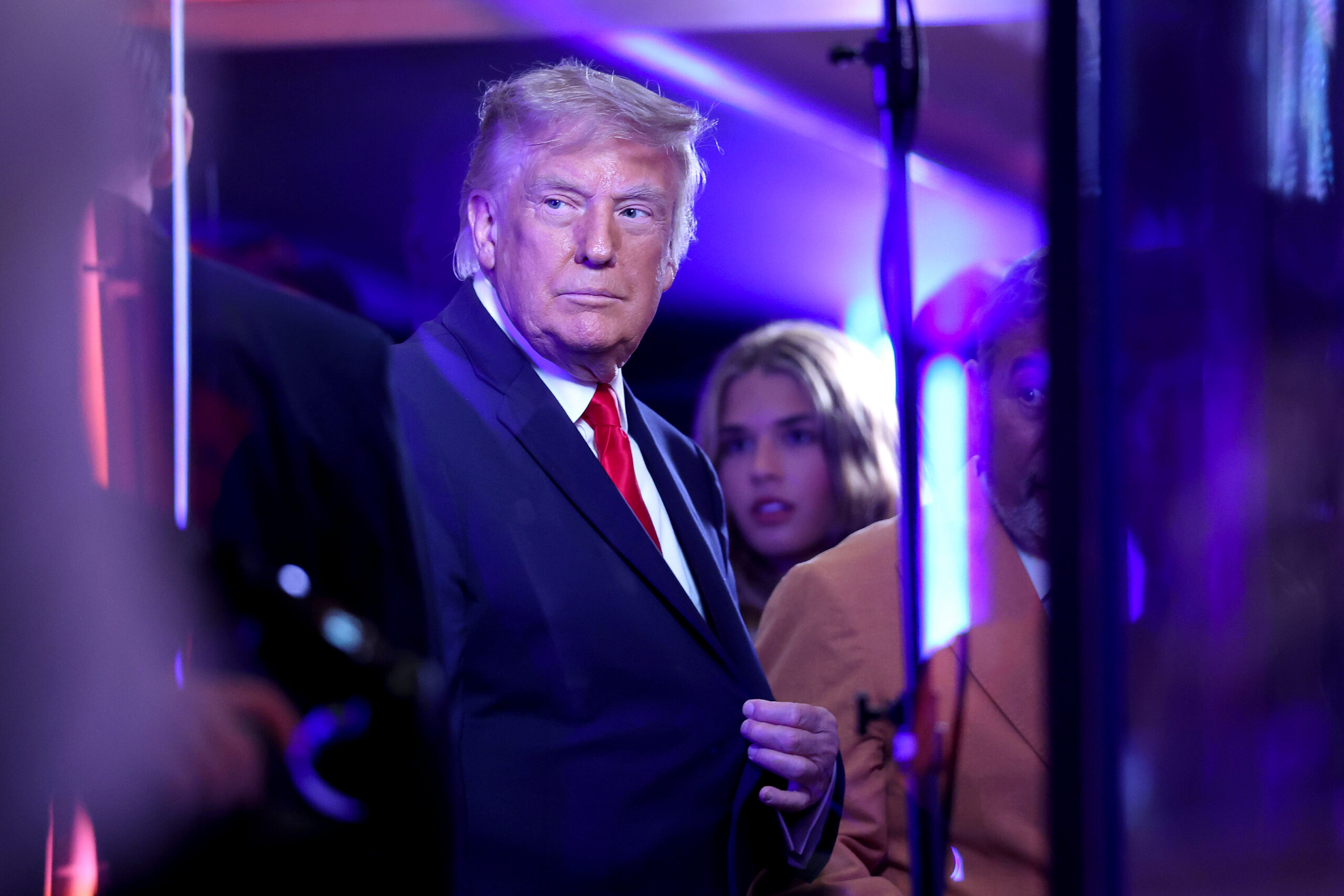
White House Special Envoy Steve Witkoff, EPA Administrator Lee Zeldin and Boris Epshteyn, the personal attorney to President Donald Trump, joined the president in a luxury suite at Madison Square Garden on Monday night for Game 3 of the NBA Finals, where the Knicks lost to the San Antonio Spurs on home turf, 115-111, Jewish Insider’s Melissa Weiss reports.
Spotted: Courtside, Commerce Secretary Howard Lutnick sat with his wife, Allison, across the aisle from rappers Fat Joe and DJ Khaled. Elsewhere at MSG, former U.S. Ambassador to Japan Rahm Emanuel, TKO Group CEO Ari Emanuel, Mark Shapiro, Larry David, David Zaslav and Robert Kraft were seated courtside for the game. Former New York City Mayor Michael Bloomberg also sat courtside — and found himself face-to-face with Jose Alvarado as the Knicks guard crashed into spectators while trying to save the ball from going out of bounds.
‘SMARTEST, NICEST PERSON IN THE ROOM’

When Louise Greilsheimer thinks about Billie Tisch, she thinks about the way a room felt after she left it. “When you walked in a room, she didn’t strike you,” Greilsheimer told eJewishPhilanthropy’s Nira Dayanim, “but when you left, you knew that she was probably the smartest and nicest person in the room.” Tisch — a billionaire philanthropist, matriarch of one of New York’s most prominent Jewish families and the first woman ever elected president of the Federation of Jewish Philanthropies of New York — died on Sunday at her home in Manhattan. She was 98.
Legacy: Tisch was the last surviving member of her family’s original quartet of philanthropists, whose combined legacy is reflected in a wide range of educational, cultural and medical institutions carrying the Tisch name, and in decades of sustained support for Jewish organizations throughout New York City.
Read the full obituary here and sign up for eJewishPhilanthropy’s Your Daily Phil newsletter here.
Worthy Reads
High Seas Hostage Diplomacy: For CNN, Brett McGurk, who served as the White House’s coordinator for the Middle East in the Biden administration, posits that Iran is applying the same tactics to negotiations over reopening the Strait of Hormuz as it did to talks over hostages held in the Islamic Republic. “For Iran, [holding the Strait] is possession. It now has something the US (and for that matter, the rest of the world) wants. And it will not give it up unless and until America pays an exorbitant price. In Tehran’s eyes, the strait has now become the most valuable hostage it has ever possessed. … The question in Washington is when a deal might be concluded following exchanges of texts through mediators. The question in Tehran is simply whether Trump will pay the price they are demanding. It’s the classic dynamic of a hostage negotiation.” [CNN]
Broad Daylight: The Financial Times explores the divide between President Donald Trump and Israeli Prime Minister Benjamin Netanyahu. “Dahlia Scheindlin, a Tel Aviv-based pollster and political analyst, said there was also an element of ‘political theatre’ to the public disagreements. ‘Trump is basically trying to show the American public that he’s trying to keep the war from re-escalating and he’s trying to keep America from getting involved again,’ she said. ‘And Netanyahu looks good to his domestic audience because he’s defying Trump.’” [FT]
Boycotts and Battlefields: In The Washington Post, Aaron Kaplowitz, president of the United States-Israel Business Alliance, argues that efforts to boycott Israeli defense technology, as some European countries have done on the basis of “moral leadership,” risks forgoing technology that is effective on the battlefield. “According to defense officials, governments that have announced boycotts on Israeli weapons makers are placing orders anyway. That is what governing by perception looks like: Speeches for the activist base. Procurement contracts in the back office. European defense ministries understand what they cannot say in public. Israeli systems are battle-tested in real time against adaptive enemies, and there are not many alternatives that perform as well. The defense systems a nation procures depends on what has the best capabilities.” [WashPost]
Word on the Street
Vice President JD Vance was asked by Fox News host Jesse Watters about reports that Israel was spying on the U.S. and engaging in military operations in Lebanon, responding that “The Israelis and I, the Israelis and the United States, we have a lot of shared interests, but we also have some situations where our interests diverge. While Israel obviously has objectives it has, the U.S. main objective in Iran is that Iran doesn’t have a nuclear weapon… We’ve created this space necessary where the president believes, and I think he’s right, that we can get the long-term settlement to an Iran nuclear deal. Israel may like that, they may not like that… this is in the best interest of the United States of America”…
President Donald Trump nominated Todd Blanche to be attorney general; Blanche has been serving in the role in an acting capacity since former AG Pam Bondi departed the position in April…
A State Department report submitted to Congress last month accuses Russia, Iran and China of weaponizing antisemitic imagery and rhetoric “across physical and cyber domains”…
Two crew members of a U.S. Army Apache helicopter were rescued after it went down in the Strait of Hormuz; the cause of the helicopter’s downing remains under investigation…
Thirty-eight Senate Democrats, led by Sens. Adam Schiff (D-CA), Tim Kaine (D-VA) and Senate Minority Leader Chuck Schumer (D-NY), demanded the administration provide Congress with the legal opinion backing its determination that U.S. hostilities against Iran have ended, given the ongoing strikes and U.S. presence in the region…
By voice votes, the House passed legislation requiring the Trump administration to determine whether various Iranian clerics, and other Iranian entities meet the standards to face U.S. sanctions, and requiring the State Department to brief Congress on antisemitism in Europe…
Eighty-five House Democrats led by Reps. Mark Pocan (D-WI) and Jan Schakowsky (D-IL) urged the administration to act to halt construction of the E1 settlement project in the West Bank…
Third Point founder Dan Loeb hosted Treasury Secretary Scott Bessent on Monday at his hedge fund’s Manhattan office, according to a photo posted on Loeb’s Instagram account…
Axios reports that Paramount executives have engaged in preliminary conversations for a business-side counterpart to CBS News Editor-in-Chief Bari Weiss…
Federal officials arrested a New Jersey man on charges of attempting to provide support to the Islamic State; authorities said that Mohamed Sagha had displayed an interest in attacking a Jewish site or National Guard station in the state…
Under the headline “The New York Primary That Is All About Israel,” The Wall Street Journal looks at the degree to which debate over Israel and U.S. policy in the Middle East is “dividing neighbors and consuming” New York’s 10th Congressional District, where Rep. Dan Goldman (D-NY) is facing a tough primary challenge from former New York City Comptroller Brad Lander…
Los Angeles City Councilmember Nithya Raman, a far-left Democrat, edged out Republican Spencer Pratt for the second runoff spot in the race for Los Angeles mayor; Raman will face incumbent Mayor Karen Bass, also a Democrat, in November…
In a Wall Street Journal opinion piece, Meta President Dina Powell McCormick and Mike Rowe, the CEO of the mikeroweWORKS Foundation, announce the launch of America’s Workforce Academy, a partnership between Meta and a number of partner groups to train would-be workers on AI technology…
Meta accused NSO Group of attempting to hack its WhatsApp messaging service in violation of a court order prohibiting the Israeli spyware firm from doing so…
FTX co-founder Sam Bankman-Fried submitted a formal request to the Justice Department’s Pardon Attorney Office seeking a presidential pardon after serving more than two years of a 25-year term for overseeing a fraudulent cryptocurrency empire…
Richmond, Calif., Mayor Eduardo Martinez is expected to lose his bid for reelection after coming under fire for sharing antisemitic conspiracy theories, including a post that the terror attack at a Sydney, Australia, Hanukkah celebration was an Israeli false flag operation; Martinez trails at least two other candidates in the race, leaving him short of the runoff…
In a letter to Canadian Prime Minister Mark Carney, members of the J7 — leading Jewish groups from Argentina, Australia, Canada, France, Germany, the U.K. and the U.S. — raise concerns about rising antisemitism in Canada and call on Ottawa to take a “whole-of-government effort” and address what the body sees as Canada’s “lack of urgency, coordination, and enforcement” as well as “of real action” to address antisemitism…
Karim Khan, the chief prosecutor of the International Criminal Court, was suspended on Monday over allegations of sexual misconduct with a female aide; the ICC’s Assembly of States Parties will hold a special session to determine the future of Khan’s employment by the court…
The Wall Street Journal looks at the precarious situation in Lebanon as Beirut, backed by Washington and amid talks with Israel, seeks to degrade Hezbollah as the Iranian-backed group maintains its deep entrenchment in the country’s military and politics…
Pic of the Day
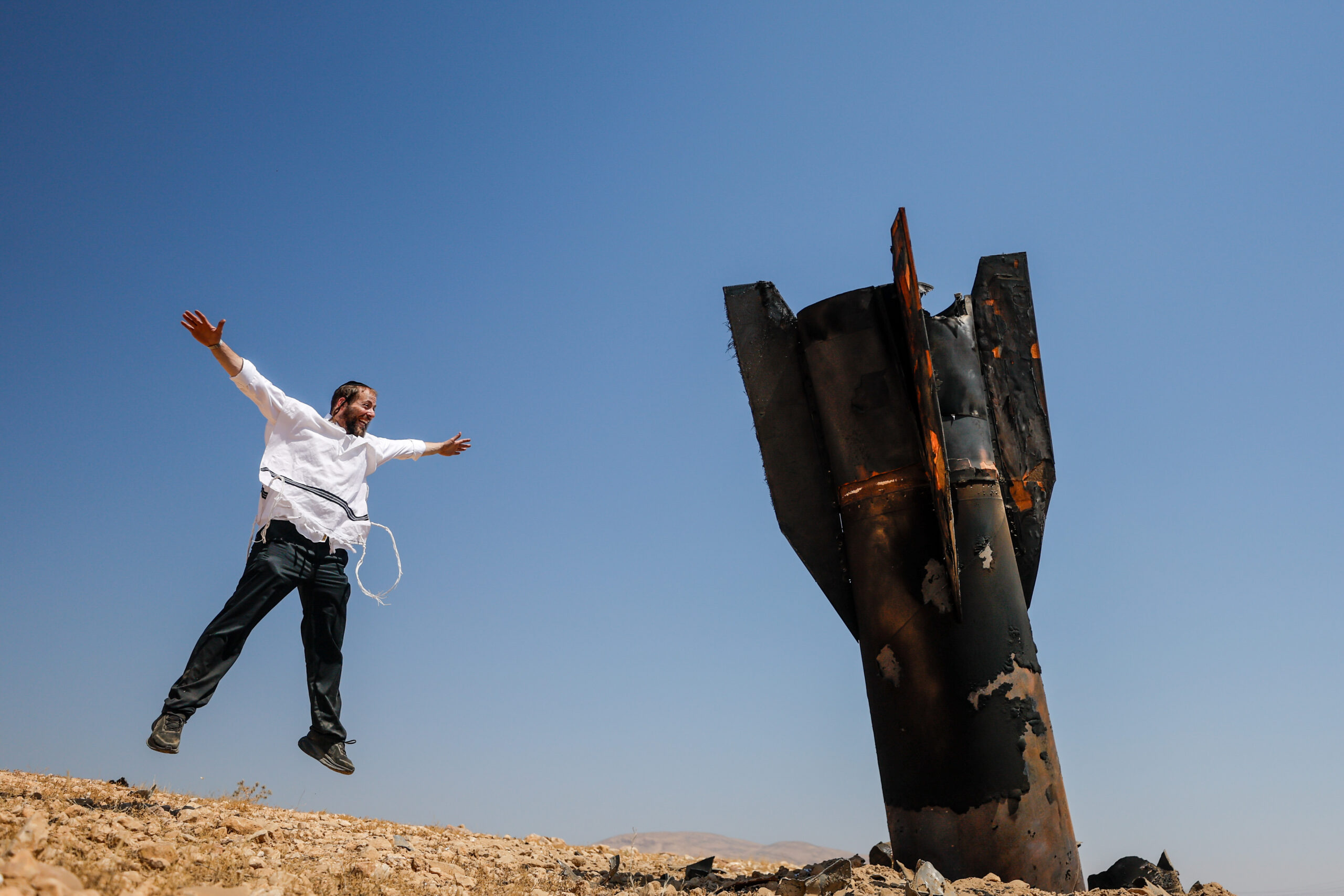
An Israeli man on Monday visited the wreckage of an Iranian missile near the West Bank city of Jericho, following strikes from Iran earlier in the day targeting Israel.
Birthdays

Producer, director, playwright and screenwriter, he has won an Academy Award, five Primetime Emmy Awards and three Golden Globes, Aaron Benjamin Sorkin turns 65…
Former executive director of the Jewish Federation of Greater Dallas, Walter Julius Levy turns 104… Journalist for 30 years at CBS and NBC who then became the founding director of Harvard’s Shorenstein Center, then a fellow at GWU, Marvin Kalb turns 96… Retired Israeli diplomat who served as ambassador to Italy and France and world chairman of Keren Hayesod – United Israel Appeal, Aviezer “Avi” Pazner turns 89… Author of 12 books, journalist, lecturer and social activist, founding editor of Ms. Magazine, Letty Cottin Pogrebin turns 87… British businessman, co-founder with his brother Maurice of advertising agency Saatchi & Saatchi which became the largest in the world, noted for his art collection and for founding Saatchi Gallery, Charles Saatchi turns 83… Diplomat and Shakespeare historian, he was the longtime national editor of Washingtonian magazine, Kenneth Adelman turns 80… Founder of Commonwealth Financial Network (a broker/dealer network) and former chairman of Southworth Development (a golf and leisure business), Joseph Deitch turns 76… Professional mediator, for years she was a syndicated advice columnist in Jewish newspapers, Wendy J. Belzberg… Israel’s former minister of defense and deputy prime minister, Benny Gantz turns 67… Canadian journalist, author, documentary film producer and television personality, Steven Hillel Paikin turns 66… Former lead singer of the Israeli pop rock band Mashina, Yuval Banay turns 64… CEO of Jewish Women’s International, Meredith Jacobs… Managing director at Major, Lindsey & Africa, Craig Appelbaum… EVP of Jewish Funders Network, Rabbi Rebecca Sirbu… Screenwriter, director and producer, Hayden Schlossberg turns 48… Founder and CEO of Delve, an AI platform for public affairs, he was previously a Bush 43 White House Jewish liaison, Jeff Berkowitz… NYC-based writer, actor and entrepreneur, he is a co-founder of Swish Beverages, David Oliver Cohen turns 46… Jerusalem-born Academy Award-winning actor, producer and director, Natalie Portman turns 45… Online producer, writer and director, who together with his brother Benny founded the “React” video series, Rafi Fine turns 43… Multimedia artist known for her work in photography, makeup, hairstyling and textile crafts, Anna Marie Tendler turns 41… Composer and lyricist, in 2024 he became the 20th person to complete the EGOT, an acronym for the Emmy, Grammy, Oscar and Tony Awards, Benj Pasek turns 41… Israeli tech entrepreneur, he is the founder and CEO of A.Team, Raphael Ouzan turns 39… Director of the Yale Journalism Initiative, her book, A Flower Traveled In My Blood, was published last year, Haley Cohen Gilliland… Deputy assistant secretary for strategic communications at the Department of Homeland Security during the Biden administration, Jeff Solnet… Ice hockey player for the NHL’s Edmonton Oilers and best-selling author of children’s books, Zachary Martin Hyman turns 34… Serial entrepreneur, founder and CEO of Setscale, Daniel Fine…
‘Without the credible threat of a military option, Iran is unlikely to make any concessions that would lead to any semblance of a good deal,’ JINSA’s Ari Cicurel told JI
Samuel Corum/Getty Images
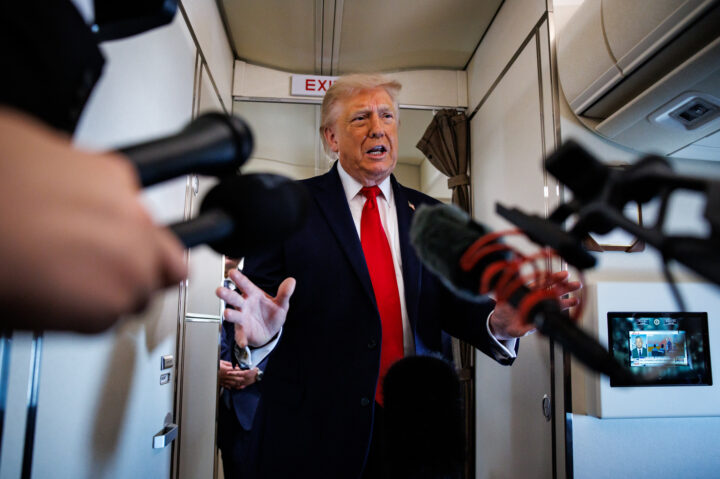
President Donald Trump speaks with reporters while aboard Air Force One on June 5, 2026 en route to Chippewa Falls, Wisconsin.
Middle East experts warned on Monday that the Trump administration’s attempts to prevent Israel’s military retaliation against Iran and its pursuit of a swift diplomatic breakthrough with Tehran are exposing a fundamental breakdown in strategic alignment between Washington and Jerusalem. This dynamic is actively undermining American leverage and hardening Tehran’s resolve both at the negotiating table and on the battlefield, the analysts argued.
Following an exchange of airstrikes on Sunday and Monday between Israel and Iran, Israeli Prime Minister Benjamin Netanyahu abided by a request from President Donald Trump to pause further strikes on Iranian territory. Jerusalem made clear, however, that it will proceed with operations against Hezbollah targets in southern Lebanon.
Analysts argued that Trump’s recent moves to restrain Israel are backfiring by degrading U.S. deterrence, emboldening Iran and showcasing the fundamentally diverging interests between Washington and Jerusalem regarding the ultimate outcome of the war.
Speaking at a webinar hosted by the hawkish Jewish Institute for National Security of America, Amb. Eric Edelman, a distinguished fellow at JINSA and former White House official, said that the president’s behavior makes the U.S. appear “desperate for a deal.”
“The president has, over the course of several weeks, basically signaled to the Iranians in multiple ways that he is very reluctant to return to kinetic military activity,” Edelman said. “I think that just continues this pattern of suggesting to the Iranians that he really is very anxious for a deal, and I think that’s actually undercutting his leverage with them because it only leads them [Iran] to harden their positions and makes it harder, not easier, to get a deal.”
Edelman added that Iran has actively sought to “take advantage” of this perceived diplomatic anxiety, taking a “much more forward position defending their proxies in Lebanon than they did earlier when Israel was reducing Hezbollah very significantly.”
Ari Cicurel, an assistant director of foreign policy at JINSA, agreed that the administration’s apparent urgency to reach a deal removes vital military deterrence to back up U.S. diplomacy.
“The president has signaled that he is highly prioritizing reaching some deal, and is willing to restrain Israel in order to do that,” Cicurel told Jewish Insider. “That’s a dangerous scenario, in terms of Iran’s potential for aggression, as well as undermines his own ability to reach that deal, because without the credible threat of a military option, Iran is unlikely to make any concessions that would lead to any semblance of a good deal.”
Cicurel noted that restraining Israel at this juncture is particularly “dangerous” given what is at stake regarding the “potential for resumption of major combat operations.” He cautioned that the moves by the Trump administration represent “another example of tensions between U.S. and Israeli leaders undermining deterrence,” giving Tehran a distinct operational gap to exploit.
Robert Satloff, executive director of The Washington Institute for Near East Policy, said the recent escalation was similar to April 2024, during which former President Joe Biden “urged Israel to ‘take the win’ of defending against Iranian missiles and not to retaliate.”
“In this instance, as then, Israel politely declined U.S. preferences and responded to the Iranian attack with a carefully calibrated retaliatory strike that quickly led to de-escalation,” he said.
The friction underscores a broadening rift in the wartime goals of the two close partners, experts said. While the White House remains intensely focused on domestic economic issues and regional stability, Jerusalem views the conflict as a historic window to permanently dismantle Iran’s ballistic missile capabilities and regional proxy architecture.
“At this point in the war, Trump and Netanyahu have different interests at play,” Rachel Brandenburg, a senior policy analyst at Israel Policy Forum, told JI. “Trump’s priority is to re-open the Strait of Hormuz to stabilize global energy markets and bring down the price of fuel, and Netanyahu wants to continue degrading Iran’s ballistic missile arsenal and nuclear program.”
Trump, she said, “promised Israel a level of victory over Iran that is far from what has transpired. Trump seems to want the war to end so he can move on, and Netanyahu would prefer the opportunity to finish the job Israel and the U.S. started on Feb. 28.” She added, “Both have election politics in mind, with Israeli elections on the horizon for [the fall] and U.S. midterm elections in November. At the moment the war isn’t helping either of them.”
Brandenburg noted that Trump has aimed to restrain Netanyahu “for some time” across both the Iran and Lebanon fronts, but emphasized that an independent Israeli strike after Iran’s ballistic missile attacks on Israel on Sunday remained necessary, despite Washington’s public calls for a pause. “It would have been too much for Israel to sit tight without responding after Iran targeted Israel directly. Whether Iran continues to strike Israel in retaliation for Israeli strikes against Hezbollah in Lebanon may have more bearing on what the next phase of the war looks like than Trump,” she said.
A central point of contention has emerged over the linkage of fighting with Hezbollah in Lebanon to the broader ceasefire with Iran. Experts warn that Washington has mistakenly tolerated an Iranian strategy designed to shield its primary proxy by tying the fighting in Lebanon directly to the broader U.S.-Iran diplomatic track, even as Trump told NBC’s “Meet the Press” on Sunday that he is “not demanding” Lebanon be part of a deal with Iran despite saying Tehran “would like to see it.”
“Clearly before the attacks, Iran had been seeking to tie the Israel-Hezbollah exchange of fire against one another, as well as the diplomacy between them, with the diplomacy and ceasefire in Iran,” Cicurel noted. “In President Trump seeking to restrain Israel after Iran has attacked it, it unfortunately encourages Iran to continue that linkage and further encourages Iranian aggression.”
Satloff said that the latest round of fighting “was won by those who oppose Iran’s protection-racket scheme to bring Lebanon into its security orbit and under the umbrella of broader U.S.-Iran negotiations.”
“What is different between this round and April 2024 is that Iran has no conceivable legitimate justification to take any action against Israel,” Satloff said. “Iran is trying to claim that Israel’s action against other nationals in another country — Hezbollah in Lebanon — legitimizes its action. This is totally unacceptable and cannot be tolerated.”
Edelman similarly noted that despite Israel’s extensive work to combat the network of Iranian-backed proxies surrounding the country, the administration’s pursuit of a swift ceasefire risks breathing new life into a severely weakened Iranian strategy.
“The Iranian strategy of creating a ring of fire around Israel is in shards,” Edelman said. “And I think as the ceasefire went on, as the Iranians perceived the president’s desire for an agreement, they came to believe that they might be able to rescue something.”
However, Edelman noted that the recent spike in violence does not signal that diplomacy is collapsing, explaining that all sides maintain incentives to pursue a deal.
“I don’t think it’s a signal that negotiations are over,” Edelman observed. He pointed out that “the Iranians actually kind of called a halt to this” round of exchanges to limit the blowback.
Edelman said that with the interior minister of Pakistan currently in Tehran, backchannel diplomatic contacts are actively continuing. He also said that “the Iranians are particularly anxious to get access to frozen funds,” but added that it is “a particular sore point” for Trump.
“I believe he [Trump] wants to try to persuade the American public that whatever deal this ends up being is going to be measurably better than the Joint Comprehensive Plan of Action that President Obama agreed to in 2015,” Edelman said. “In my view that’s going to be a pretty tall order, but not giving the Iranians access to money before they perform whatever obligations they undertake as part of this deal will be a key part of that.”
Former Iran envoy Elliott Abrams: ‘It’s a foolish and damaging failure by the Trump administration, and there’s no excuse for it’

U.S. Department of State
Elliott Abrams
Former U.S. diplomatic officials and Middle East experts called on the Trump administration to fill dozens of ambassador-level Middle East posts, warning that not doing so could carry damaging consequences for U.S. influence and diplomacy in the region, while other former Trump officials argued the administration can manage regional diplomacy in its current format.
The Wall Street Journal first reported that more than 100 U.S. ambassador posts remain vacant under the Trump administration, including several key posts in the Middle East. The U.S. currently has no formal ambassadors in Saudi Arabia, the United Arab Emirates, Qatar, Iraq or Kuwait.
The vacancies stem from a mix of factors: a slower pace of nominations from President Donald Trump, a Senate confirmation process increasingly prone to delays and holds, and Secretary of State Marco Rubio’s December decision to abruptly recall nearly 30 career ambassadors.
The Trump administration has played down the vacancies, arguing that its foreign policy operation is running smoothly despite the empty posts. But several former U.S. officials and Middle East experts told Jewish Insider that leaving the post unfilled could be a serious diplomatic error.
Elliott Abrams, who served as Iran envoy during the first Trump administration and is now a senior fellow at the Council on Foreign Relations, called the vacancies a “huge mistake.”
“It’s a foolish and damaging failure by the Trump administration, and there’s no excuse for it,” Abrams said. “There are top career diplomats, such as the ones the administration has sent to Jordan, Bahrain and Oman, who could be sent, and surely there are potential political appointees who’d love to be in Riyadh or Abu Dhabi.”
Abrams noted that ambassadors often have access to members of royal families that lower-ranking U.S. diplomats do not, a dynamic that he said is especially important in monarchies.
“There’s simply no excuse for this, and no other country leaves such important posts vacant,” he added.
Aaron David Miller, a senior fellow at the Carnegie Endowment for International Peace and former State Department negotiator, expressed similar concern over the vacancies, saying “it would be better if they were filled with people.” He stressed, however, that the openings are more than a “narrow issue,” but rather a “reflection of a broader trend” in how the administration “makes decisions.”
“It’s a lack of priority in diplomacy, and in diplomats,” Miller said. “It reflects a situation where the analytical assessments of how these countries would behave in response to a crisis like the war, what I call the ‘ground truth,’ is not getting to the president because there’s no one out there doing it.”
Miller said he believes the administration does not rely heavily on the advice of career diplomats or ambassadors, with key foreign policy decisions instead shaped by Trump’s inner circle.
“I think this reflects the fact that this administration does not rely on the advice and counsel of probably most of its ambassadors,” he said. “So does this surprise me? No, because part of the issue is that the White House and the president’s political team, including Jared Kushner and [White House Special Envoy] Steve Witkoff, seem to have more say and more influence than a Department of State led by Marco Rubio.”
Still, Miller acknowledged that filling the vacant ambassador posts likely would not have altered Trump’s broader foreign policy or prevented the Iran war.
Dan Shapiro, who served as U.S. ambassador to Israel under President Barack Obama and later as the Biden administration’s special liaison to Israel on Iran, similarly warned that relying on senior officials in Washington rather than ambassadors on the ground could limit U.S. influence and understanding of regional dynamics.
“Senior Trump administration figures may believe they can manage these relationships just fine over the phone from Washington because of their close ties with Arab officials. But there are gaps and bandwidth limits that they cannot always overcome,” Shapiro said.
“Senate-confirmed ambassadors are the only senior U.S. officials who spend all day, every day in dialogue with foreign leaders. So they simply have greater access to key players in their host governments, knowledge of how they reach decisions, and ability to ensure they hear the views of the United States than do more junior diplomats,” he added.
Edmund Fitton-Brown, a senior fellow at the Foundation for Defense of Democracies and a former British diplomat, explained that the vacancies are partly the result of a “downsizing” problem at the State Department, noting that the Bureau of Near Eastern Affairs in particular has suffered “budget cuts and lost over 80 staff since President Trump returned to office.”
“Many of those departing were senior, experienced diplomats who would have been candidates for Chief of Mission posts that were not offered to political appointees,” Fitton-Brown said.
Others who served in Trump’s first administration were less concerned, arguing instead that the White House can still conduct effective regional diplomacy through senior officials and direct relationships with Middle Eastern leaders.
Jason Greenblatt, a former White House Middle East envoy during the first Trump administration, told JI that while ambassadors “play an important role,” he does “not believe the administration is at any disadvantage … because of these vacancies.”
“The leadership and senior diplomats in those countries have strong and trusted relationships with President Trump and with the group doing much of the day-to-day work, including Steve Witkoff, Secretary Rubio, Vice President Vance and Jared Kushner,” Greenblatt said. “Just as important, that group has President Trump’s deep trust and direct access to him. In this region, those trusted relationships, direct lines of communication and confidence from the president are more valuable than having an ambassador in place.”
Alexander Gray, who served as chief of staff to the National Security Council during Trump’s first term, similarly downplayed concerns over the vacancies, and said filling such positions is “one of the most difficult parts of American foreign policy.”
“This stems from multiple causes, including the arcane Senate confirmation process and the frequent holds placed by senators on ambassadorial nominees over unrelated issues,” Gray said. “The approval process for all presidential nominees, including ambassadors, needs a major overhaul by congressional leadership. President Trump has been diligent in nominating high-quality, non-career diplomats for critical posts.”
The State Department did not respond to a request for comment.
U.S.-Iran negotiations scheduled are ‘likely a diplomatic box-checking exercise and smokescreen,’ FDD’s Andrea Stricker said, while JINSA’s Jonathan Ruhe said U.S. military action is ‘unlikely for the moment’
Chip Somodevilla/Getty Images
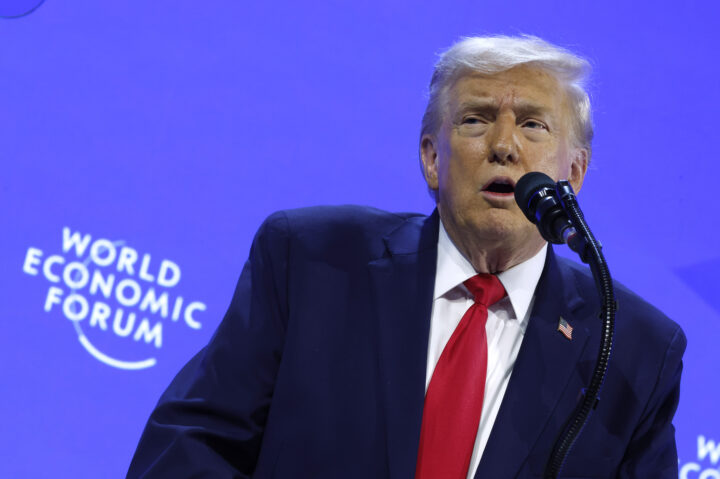
U.S. President Donald Trump gives a speech at the World Economic Forum (WEF) on January 21, 2026 in Davos, Switzerland.
Despite the Trump administration’s willingness to diplomatically engage with Iranian officials, leading Middle East experts told Jewish Insider on Monday that military action against Tehran still remains a very real possibility.
“I can’t tell you what I’m going to do,” President Donald Trump told reporters on Monday evening when asked about the threshold for an Iran strike.
“We have a tremendous force going there [to the Middle East], just like we did in Venezuela,” said Trump. “I’d like to see a deal negotiated. But right now, we’re talking to [Iran] and if we could work something out, that’d be great. If we can’t, probably bad things will happen.”
White House Special Envoy Steve Witkoff and Iranian Foreign Minister Abbas Araghchi are expected to meet in Istanbul on Friday to discuss a potential new nuclear agreement, according to reports. Jared Kushner, who has played a key role in recent high-profile diplomatic negotiations, is also expected to attend, alongside the foreign ministers of Turkey, Qatar, Egypt, Oman, Saudi Arabia and Pakistan, in the first meeting between the U.S. and Iran since U.S. strikes on Iranian nuclear facilities last June.
The planned talks come as the administration continues to exert pressure on Tehran — in response to Iran’s violent crackdown on protesters last month, Trump has publicly weighed the possibility of U.S. military intervention, ordering the movement of additional military assets into the region and issuing a series of stark warnings on social media indicating that U.S. forces are “ready, willing and able to rapidly fulfill [their] mission, with speed and violence” should a deal fail to be made.
While the administration has emphasized diplomacy as its preferred path, analysts caution that negotiations do not necessarily signal that the U.S. will not strike.
“Military intervention remains likely in light of President Trump’s demonstrated willingness to use force and the U.S. military buildup in the region,” said Michael Koplow, chief policy officer at the Israel Policy Forum. “Given the gulf between the American and Iranian positions and the general hard-line position of the Iranian regime on nuclear issues, it is hard to tag a nuclear deal as a likely outcome.”
Andrea Stricker, a research fellow at the Foundation for Defense of Democracies, told JI that a strike does remain on the table. She said that a deal could be difficult to reach and the upcoming meeting in Istanbul is unlikely to yield meaningful results or concessions from Iran.
“The planned meeting is likely a diplomatic box-checking exercise and smokescreen to enable a continued U.S. military buildup before Trump authorizes strikes,” Stricker said. “The administration’s demands that Iran abandon nuclear enrichment, cap its missile program, and halt support for regional proxies and terrorism, as well as stop executing its people, are nonstarters for the regime.”
Koplow said the administration’s “mixed signals” on whether it will seek diplomacy or take military action are likely “not a ruse or a diversion,” but instead a signal that Trump “has not actually made up his mind” and is “unsure what his end goal is.”
Jason Greenblatt, who served as White House Middle East envoy in the first Trump administration, asserted that “there’s no mixed signals,” arguing that the president’s messaging has been clear.
“President Trump has made the choice clear: a real, enforceable deal that ends Iran’s nuclear and missile threats and protects the U.S., our allies, and the Iranian people — or decisive action,” said Greenblatt, who emphasized that while Trump is reluctant to engage in war, the president will not accept an agreement he views as insufficient.
“He is not a war president,” Greenblatt said, “but he will not accept a weak deal. Iran’s leadership should understand by now that President Trump means exactly what he says.”
Stricker also noted that Trump has consistently sought to avoid prolonged conflict, but argued that Iran’s internal repression and continued nuclear advances may push the president toward decisive action. On Saturday, satellite images revealed new activity at Iranian nuclear sites, a potential sign that Tehran is aiming to salvage remaining materials from the June strikes.
“President Trump favors stability and prioritizes ending violence in global affairs,” she said. “After achieving the defanging of Tehran’s nuclear program, the regime has shown it remains a threat — the ongoing massacre is too much for Trump to tolerate as the leader of the free world.” “The president will likely ensure the regime pays a price, but whether the price is regime change remains to be seen,” she added.
When detailing what potential U.S. military intervention could look like, Koplow said that it would likely be “limited” in scope.
“Any U.S. action is likely going to fall short of what the Israelis would like to see, which is a campaign that doesn’t stop until the regime has fallen,” said Koplow. “Trump seems to favor quick strikes, and he is also facing wall-to-wall opposition from Arab states regarding the prospects of a long campaign that destabilizes the region and damages prospects for trade, investment, and growth.”
However, other analysts read the shift to negotiations as a signal that intervention is increasingly unlikely. Jonathan Ruhe, a senior fellow at the Jewish Institute for National Security of America told JI that U.S. military action is “unlikely for the moment.”
“An even bigger concern now is that military action could be off the table indefinitely, in a way it wasn’t just a day or two ago, as renewed talks now seem more likely,” said Ruhe.
Ruhe also noted that a key indicator of Trump’s intentions will be “how long he keeps the ‘armada’ within striking distance,” referring to the U.S. military assets in the region. He added that negotiating with Tehran will likely result in an unfavorable outcome for the U.S.
“Negotiating with Iran is absolutely the worst possible option for the United States now, because Iran’s regime will go from being on the ropes to thinking it prevailed,” said Ruhe, noting that Tehran is unlikely to agree to an “acceptable deal,” instead using the “prospect of talks to stave off military threats.”
“[Iran] is trying to do what it always does, playing for time and seeing what concessions it can wrangle without ever giving up anything itself,” Ruhe added. “This leaves zero upside for the U.S., since Iran is too emboldened to agree to serious concessions. There’s plenty of downside, too, since U.S. credibility would be dangerously eroded in Tehran’s eyes if Trump fails to fulfill his earlier threats.”
Koplow said Jerusalem is also concerned about a potential nuclear deal and is likely to perceive Iran’s willingness to enter talks as a way of “dragging out the process indefinitely.”
“[The Israelis] are concerned that Trump will back off his threats to take action or end up signing a deal that falls short of addressing the entire basket of issues — nuclear, missiles, and proxies,” said Koplow.
Ali Shamkhani, a senior adviser to Iranian Supreme Leader Ali Khamenei, had said Tehran would strike Israel in response to any U.S. military action, in an interview with the Lebanese-based Al Mayadeen.
Stricker warned that any agreement that falls short of dismantling the regime’s power structure and fails to address key issues would be problematic not only for the U.S. and Israel, but for the Iranian public.
“Any deal with the Islamic Republic would represent a historic betrayal of the Iranian people,” Stricker said. “The only negotiation America should entertain with Tehran is the exit of top regime officials from Iran and their relinquishing of power prior to an orderly transition to democracy.”
Please log in if you already have a subscription, or subscribe to access the latest updates.
 Continue with Google

 Continue with Apple