













































































Plus, General Motors’ new anti-Israel hire
Dan Kitwood/Getty Images
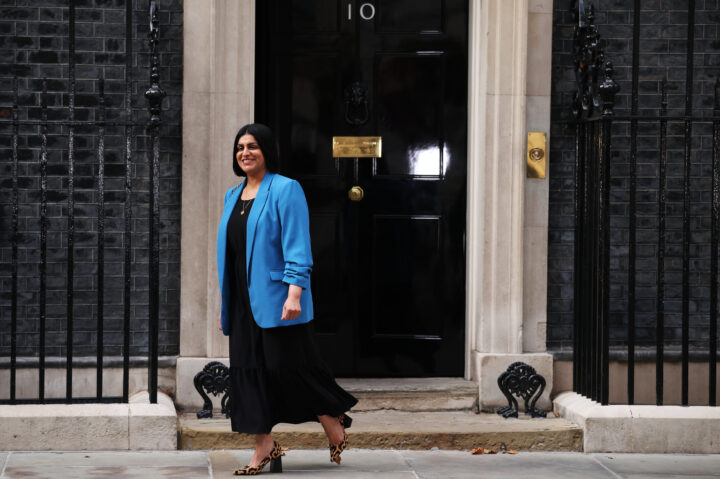
Newly appointed UK Home Secretary Shabana Mahmood leaves Number 10 Downing Street as Keir Starmer holds a cabinet reshuffle after the resignation of Angela Rayner, on September 5, 2025 in London, England.


 Add JewishInsider on Google
Good Monday morning.
In today’s Daily Kickoff, we look at how the U.K. Cabinet shake-up could impact London’s approach to Israel, and report on outgoing Northwestern President Michael Schill’s defense of a recent hire who met with Hamas head Yahya Sinwar. We cover Rep. Seth Magaziner’s co-sponsorship of the “Block the Bombs” legislation halting offensive military sales to Israel, and report on the anti-Israel online activism of General Motors’ newly appointed head of global philanthropy. Also in today’s Daily Kickoff: Mark Levine, Gal Muggia and Vania Heymann.
Today’s Daily Kickoff was curated by Jewish Insider Executive Editor Melissa Weiss and Israel Editor Tamara Zieve, with an assist from Marc Rod. Have a tip? Email us here.
What We’re Watching
- We’re monitoring the situation in Jerusalem, where six people are confirmed killed after a terror attack on a public bus near the Ramot junction entrance to the city. Ten others were wounded in the attack.
- President Donald Trump is delivering remarks this morning to the newly established White House Religious Liberty Commission at the Museum of the Bible in Washington.
- Elsewhere in Washington, the Israel Policy Forum is hosting an event this evening focused on Israel, Palestinian and U.S. perspectives on American foreign policy and the war in Gaza. RAND’s Shira Efron will speak in conversation with Samer Sinijlawi, the Jerusalem Development Fund’s founding chairman, and former U.S. Ambassador to Saudi Arabia Michael Ratney.
- Up the Northeast Corridor, American Friends of Nir Oz is holding a benefit at Baltimore’s Beth Tfiloh featuring writer Douglas Murray and former Israeli hostage Gadi Moses, who was freed earlier this year.
- In New York, the Rabbi Sacks Legacy is holding an event at Fifth Avenue Synagogue to mark the launch of the Magerman Edition of the Koren Shalem Humash. Rachel and Jon Goldberg-Polin, whose son, Hersh, was killed in Hamas captivity last year, will keynote the event. Read more about the new edition of the text here.
- Elsewhere in New York, the Jewish Theological Seminary’s inaugural storytelling festival continues today. Later today, the Sami Rohr Prize for Jewish Literature is hosting an event focused on bearing witness, featuring 2025 Sami Rohr Prize winner Sasha Vasilyuk, as well as Gal Beckerman and Benjamin Balint, who won in 2012 and 2020, respectively.
- French Prime Minister François Bayrou is calling a confidence vote in Paris’ National Assembly this afternoon that The New York Times described as a “suicidal move.” A no-confidence vote in the body — which is all but expected to pass given plans by France’s far-right National Rally party and a group of leftist parties to vote against Bayrou — would topple the government for a fifth time in 20 months.
- The U.N. Human Rights Council begins its 60th session today in Geneva. On the sidelines of the gathering, B’nai B’rith is holding “Seeking Truth, Justice and Reconciliation: Jewish Refugees in the Middle East.”
- The second annual two-day Hili Forum, cohosted by the Emirates Center for Strategic Studies and Research and the Anwar Gargash Diplomatic Academy, kicked off earlier today in Abu Dhabi, United Arab Emirates. Following up on comments made last week on Israeli proposals to annex parts of the West Bank, senior Emirati diplomat Lana Nusseibeh said earlier today at the conference that such a move “would betray the very spirit of the Abraham Accords.”
What You Should Know
A QUICK WORD WITH JI’S LAHAV HARKOV
As tensions rise around antisemitism in the U.K. and questions mount over Britain’s stance on Israel, Prime Minister Keir Starmer’s Cabinet reshuffle has put a spotlight on some familiar concerns. But despite fresh scrutiny — particularly over new Home Secretary Shabana Mahmood’s past involvement in anti-Israel activism — experts tell Jewish Insider that little is likely to shift when it comes to U.K. policy toward Israel.
A 2014 video of Mahmood resurfaced on X over the weekend, where it received millions of views. Mahmood made the selfie video during Operation Protective Edge, launched by Israel in Gaza after Hamas kidnapped three Israeli teenagers, at a protest outside a Sainsbury’s supermarket in Birmingham. Mahmood called on the store to boycott products from Israeli settlements, though the viral post, boosted by Sen. Ted Cruz (R-TX), falsely claimed she called to “globalize the Intifada.” Days after the supermarket protest, Mahmood spoke against Israel at a Palestine Solidarity Campaign rally in London, telling Britons to start “getting involved with the boycott campaign” and accusing Israel of killing children.
The resurfaced footage has reignited debate over Mahmood’s past, especially within the Jewish community. Jonathan Sacerdoti, a British Jewish journalist and columnist for The Spectator, told JI Mahmood “is not inspiring confidence in any Jews I know.” He added, “She appeals to the more antisemitic elements in the country. She is no friend of Israel and has never been shy about that … Her views are aligned with the Muslim electorate and community in the U.K. and beyond.”
But Alex Hearn, a director of Labour Against Antisemitism, said of Mahmood: “I don’t think I’ve ever heard so much misinformation about someone.” Hearn argued that not only was the video of Mahmood at the protest taken during her “pre-government, pre-political life,” but noted she has taken a more nuanced approach as a member of parliament and has “no red flags” in her record on Israel.
Meanwhile, a new YouGov poll commissioned by the Campaign Against Antisemitism was released yesterday, finding that the Jewish community is currently experiencing “the worst antisemitism in the U.K. in living memory”: One in five Britons holds antisemitic views and 45% believe Israel treats Palestinians like Nazis treated Jews.
Some 70,000 people took to the streets on Sunday to take part in London’s March Against Antisemitism, organized by the Campaign Against Antisemitism. Protesters marched from the BBC headquarters — selected due to perceived anti-Israel bias in its reporting — to Parliament Square.
Absent from the gathering was any senior representative from Labour, a party whose previous leader, Jeremy Corbyn, had a history of antisemitic remarks and supporting antisemites, Campaign Against Antisemitism said.
CAMPUS BEAT

Michael Schill, the Northwestern University president who announced his resignation last week amid widespread controversy over his tenure, appeared unfazed to hear that a Palestinian professor he hired as part of a deal with encampment protestors had once met with the late Hamas leader Yahya Sinwar, an interview with the House Committee on Education and Workforce, released on Thursday, reveals. In the Aug. 5 interview, which was released as a response to Schill’s resignation announcement on Thursday, House investigators pressed Schill on the hiring of Mkhaimar Abusada as a visiting associate professor of political science, Jewish Insider’s Haley Cohen reports.
What he said: Abusada, who Schill described as “someone who is regularly quoted as an authority on Palestine governance and politics,” published a piece in Haaretz last year about his 2018 meeting with Sinwar. “Hypothetically, if somebody, you know, 4 years, 5 years before Oct. 7 has met with someone who — and, I mean, I’m not sure — my guess is — I’ve never been to Gaza, but it’s a pretty small place, and that you are going to meet people and talk to people,” said Schill, who claimed to not be aware of that meeting when he hired Abusada but noted in the interview that the professor’s position had been extended to August 2026. “I don’t know whether a seasoned professor who is doing the politics of Gaza could avoid getting to know some of these people, or whether that would be not doing his job right.”
Bonus: The New York Times reports that talks between the Trump administration and Northwestern, Harvard and Cornell have stalled in recent weeks.
ONLINE FOOTPRINT
Sirene Abou-Chakra, the newly appointed head of global philanthropy for General Motors, has a lengthy history of anti-Israel tweets on her public X account. A native of Dearborn, Mich., Abou-Chakra, who took over the auto company’s mammoth philanthropy arm in June, previously served as the chief development officer for the city of Detroit and also spent a decade with Google as an account executive, Jewish Insider’s Emily Jacobs reports.
X archive: But it’s her extensive anti-Israel social media history that raises questions about how her hiring will impact GM’s relationship with the Detroit-area Jewish community, in addition to its extensive business relationships with the Jewish state. “The country was built on lies and justifies its ongoing savagery on continued lies,” Abou-Chakra wrote of Israel in a since-deleted post on X in September 2022.
ARMS ARGUMENT

Rep. Seth Magaziner (D-RI) announced Friday that he is co-sponsoring a bill, pushed by far-left House members, to place strict restrictions on U.S. weapons sales to Israel, which critics have described as an effective arms embargo on the Jewish state, Jewish Insider’s Marc Rod reports.
Why it matters: The move comes as a surprise from the relatively moderate Magaziner, who has maintained a largely pro-Israel record during his time in office and has not joined in prominent previous calls to suspend weapons shipments to Israel. “I have taken this action to do my part to pressure Prime Minister Netanyahu to implement a ceasefire in Gaza, allow significantly increased humanitarian aid into Gaza, and to stop the expansion of settlements in the West Bank,” Magaziner, a member of the House Jewish Caucus, said in a statement.
CANDIDATE CRITIQUE
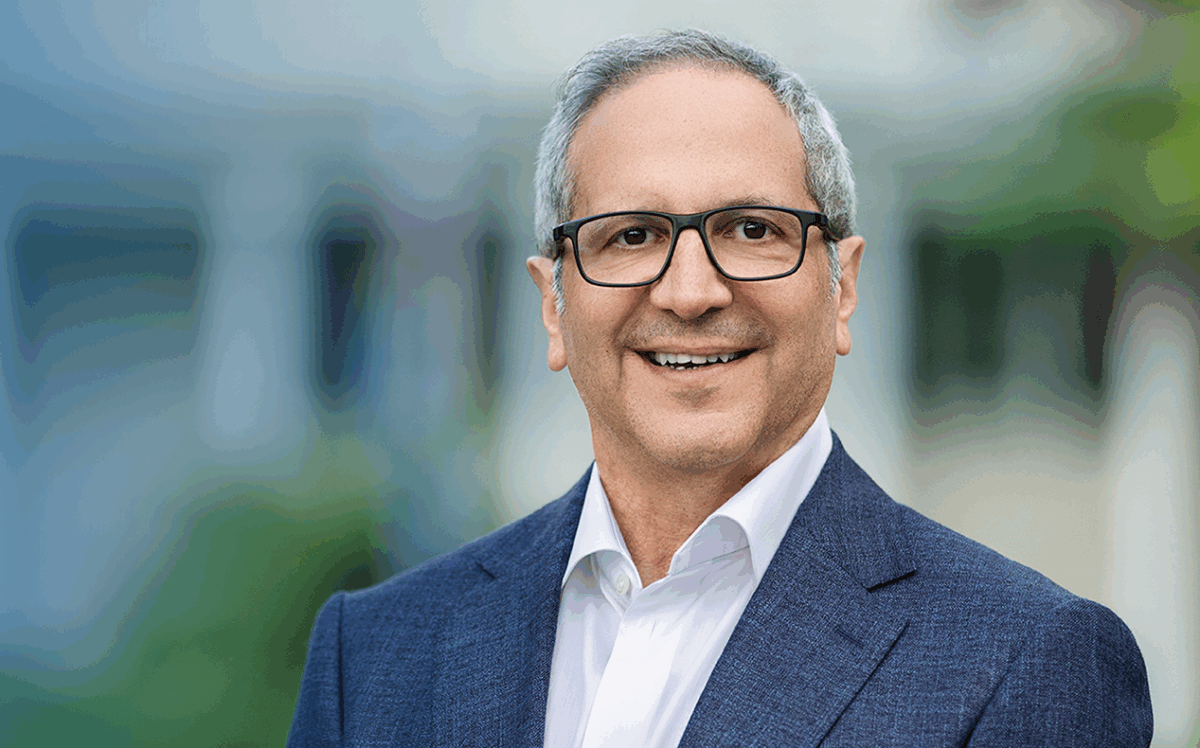
Peter Chatzky, the deputy mayor of Briarcliff Manor, N.Y., and the latest of seven candidates to join the field of Democrats hoping to unseat Rep. Mike Lawler (R-NY) in New York’s Hudson Valley region, is standing out from the field with the comparatively critical stance he’s taking toward the U.S.-Israel relationship, Jewish Insider’s Marc Rod reports.
Standing apart: Though Chatzky called Israel a “critical ally of the United States,” he told JI in a recent interview that he believes, from public information and reports he has seen, that Israel is violating conditions in U.S. arms sales law relating to humanitarian aid and international law — requiring the suspension of arms sales. The district, New York’s 17th, has one of the largest Jewish constituencies in the country. Lawler has made his support for Israel a centerpiece of his time in Congress, and most of the Democratic candidates in the race are showcasing their pro-Israel bona fides.
Worthy Reads
The JD Doctrine: In Israel Hayom, Israeli journalist Amit Segal compares Vice President JD Vance’s approach to Israel and the Middle East to that of former President Barack Obama, and considers what that portends for the future of the U.S.-Israel relationship. “And while Vance’s book [Hillbilly Elegy] barely touches on foreign policy, it still offers lessons about the new Republican Party. It supports Israel, but the warmth is largely platonic. The prevailing view is this: every spare dollar belongs at home, not in grand projects abroad. There is respect for strength and a deep distrust of radical Islam (don’t forget Vance’s suggestion that Britain is ‘the first truly Islamist country to get a nuclear weapon’), but no appetite for blank checks or an endless supply of weapons. Israel’s challenge with the new Republicans is not hostility, it’s indifference, and Jerusalem needs to prepare for that reality now, perhaps by phasing out American security aid, just as Netanyahu ended civilian aid three decades ago.” [IsraelHayom]
Yom Kippur This Year: In The Times of Israel, Yossi Klein Halevi suggests that Israel is at a “moral crossroads” in the weeks leading up to the Jewish High Holidays. “How then, in this poisoned atmosphere, are we to subject ourselves to moral self-critique? How dare we risk inadvertently reinforcing the campaign of hatred and lies? Because we have no choice. Because preserving our moral credibility is essential for our strength. Because we cannot let the haters determine the inner life of the Jewish people. Because engaging in moral introspection reminds us that Zionism has won and that, even though we are vulnerable, we are no longer victims. Because we owe an accounting of our actions to our friends who have stood with us. Most of all, because Judaism demands it. This season of self-reckoning that begins with the Hebrew month of Elul and culminates on Yom Kippur is intended not only for individual Jews but also – in fact primarily – for the Jewish collective. Undergoing this process as a people doesn’t weaken us. It provides spiritual protection.” [TOI]
The Final Mitzvah: In The Forward, Austin Albanese reflects on his chevra kadisha volunteer work, in which he prepares bodies for Jewish burials. “Despite the sacred nature of this work, one thing has always stood out to me: the scarcity of younger volunteers. I’m in my late 20s, and in nearly nine years of participating in taharah, I’ve only once worked with someone close to my age. That person was also a convert. The work of the burial society is too meaningful, too vital, to be left only to older generations. For those who might hesitate to participate, I can only say this: Try it. You don’t need to be particularly religious. You don’t need to have all the answers about faith or tradition — this work welcomes anyone willing to honor and respect those who came before us. For me, the work of the chevra kadisha has been a profound reminder of some of Judaism’s central values: humility, equality before God, and the sanctity of memory.” [TheForward]
Word on the Street
President Donald Trump, while attending the U.S. Open finals in New York on Sunday, where he was photographed sitting with Middle East envoy Steve Witkoff and Jared Kushner, posted on his Truth Social site that it was “time for Hamas to accept” the terms of a ceasefire proposal he said Israel had already accepted; Witkoff had last week sent a ceasefire and hostage-release proposal to Hamas through peace activist Gershon Baskin…
Trump signed an executive order cracking down on countries that unlawfully detain U.S. nationals…
Maryland Gov. Wes Moore told NBC’s “Meet the Press” that he “is not running for president” in 2028…
New York City Democratic mayoral candidate Zohran Mamdani said he backs City Comptroller Brad Lander’s decision to divest the city from Israel Bonds; Mark Levine, the Democratic candidate to succeed Lander, has said he will restore the city’s investments in Israel Bonds if elected…
Jack Schlossberg, who has been floated as a potential candidate in New York’s 12th Congressional District following Rep. Jerry Nadler’s announcement that he won’t seek reelection in 2026, said he is forming an exploratory committee…
As part of its agreement with the Trump administration, Columbia University will establish a $21 million claims fund for Jewish employees who experienced antisemitism at the school…
The Wall Street Journal looks at how the Trump administration’s crackdown on college campuses is affecting radical student activism that could attract the attention of administration officials…
Singer Sabrina Carpenter’s “Manchild” music video, which was directed by Israelis Gal Muggia and Vania Heymann, won the MTV Video Music Award for Best Visual Effects…
Israel’s Supreme Court ordered that Palestinian prisoners receive increased and improved rations, saying that the current food offered falls below dietary standards…
A Gaza-bound flotilla carrying climate activist Greta Thunberg docked in Tunisia on Sunday; the boat will continue toward Gaza on Wednesday…
A Houthi drone struck the arrivals terminal of Ramon Airport outside Eilat, Israel, on Sunday, injuring two people; an investigation is underway into why the drone did not trigger an Israeli siren notifying of an impending attack…
Israeli Prime Minister Benjamin Netanyahu confirmed that a Hamas terrorist who was recorded on Oct. 7, 2023, calling his parents and boasting about killing Jews was killed in an IDF operation in Gaza City…
Israel’s basketball team fell short, 84-79, in its Round of 16 match against Greece in the FIBA EuroBasket tournament…
Iran paved over a burial ground containing the remains of people executed during the country’s Islamic Revolution in 1979…
Barbara Jakobson, art aficionado and longtime trustee of the Museum of Modern Art, died at 92…
Sports photographer Art Seitz, who rose to prominence for his images of tennis players and matches, died at 82…
Pic of the Day

President Donald Trump and Middle East envoy Steve Witkoff huddled at the U.S. Open men’s singles final in New York on Sunday between Carlos Alcaraz and Jannik Sinner.
Birthdays
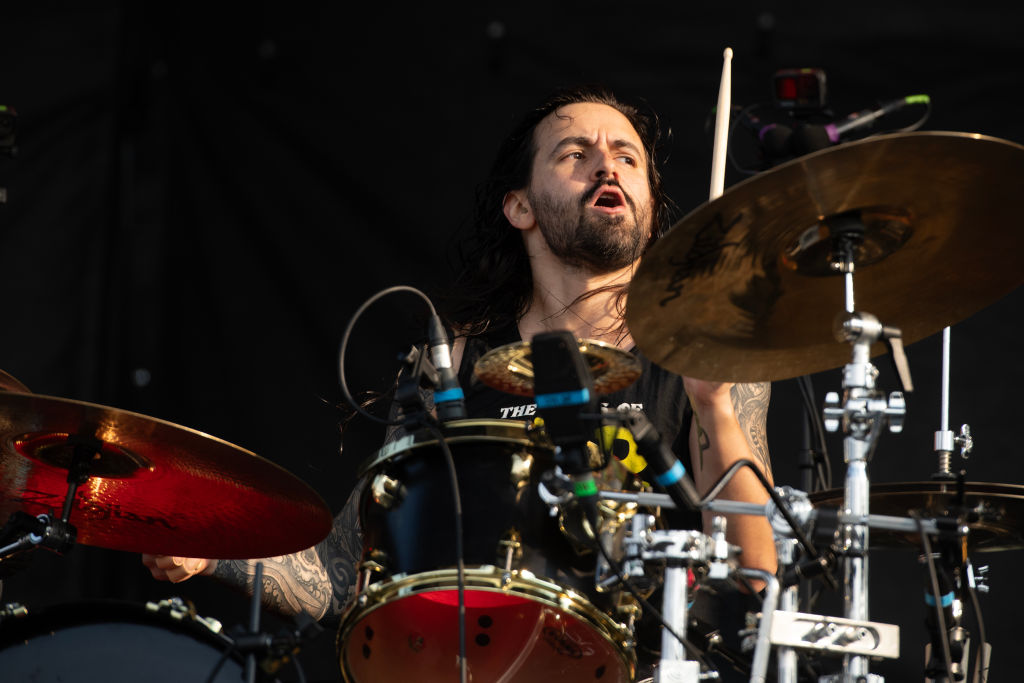
Drummer for the funk metal band Infectious Grooves, he is the son of Bruce Springsteen drummer Max Weinberg, Jay Weinberg turns 35…
Chair emeritus of Bath & Body Works, Leslie H. “Les” Wexner turns 88… U.S. senator from Vermont, he was a 2016 and 2020 presidential candidate, Bernie Sanders turns 84… Labour party member of the U.K. House of Commons, Dame Margaret Eve Hodge (née Oppenheimer) turns 81… Pharma executive, Samuel D. Waksal turns 78… Chairman of Douglas Elliman and its parent company, NYSE listed Vector Group, he is also chairman of Nathan’s Famous, Howard Mark Lorber turns 77… Owner of the NFL’s Philadelphia Eagles, Jeffrey Lurie turns 74… Former co-chair of the Jewish National Fund, he was previously a member of Knesset, Eli Aflalo turns 73… CEO of Weight Watchers until early 2022, Mindy Grossman turns 68… Owner of Sam’s Fine Wines & Spirits in Walpole, Mass., for 41 years until 2022, Jay W. Abarbanel… British physician and professor of neuroscience at Columbia University, Daniel Mark Wolpert turns 62… Professional wrestler, known by his ring name, Raven, Scott Levy turns 61… Founder and president of Cedille Records, a classical music label, he is the son of the late Justice Ruth Bader Ginsburg, James Steven Ginsburg turns 60… Real estate developer in Russia owning 14 million square feet of retail as well as many luxury hotels and shopping centers, Zarakh Iliev turns 59… Australian businessman, James Douglas Packer turns 58… Senior rabbi of the Jewish Center of Princeton, Rabbi Andrea Merow… Aspen, Colo., resident, Adam Goldsmith… Actress, model and television personality, she is the host of “Penn & Teller: Fool Us,” Brooke Burke turns 54… Founder and executive education consultant at Atlanta-based JewishGPS, Robyn Faintich… Classical music composer and professor of music at Towson University, titles to his works include “Zohar,” “Nekudim” and “Heichalos,” Jonathan Leshnoff turns 52… CEO and co-founder of BerlinRosen, now known as Orchestra, Jonathan Rosen… One of the world’s best-selling music artists, known professionally as Pink, Alecia Beth Moore turns 46… Head coach for the University of Hawaii men’s basketball team, Eran Ganot… and his twin brother, the creative director of an eponymous clothing line, Asaf Ganot, both turn 44… Founder and CEO at SPARK Neuro, Spencer Gerrol… Director of corporate communications at Related Companies, Andrei Berman… Senior national correspondent for Jewish Insider, Gabby Deutch… and her twin sister, an MBA candidate at Tulane, Serena Deutch… Director of education at Itrek, Gilad Peled… Philip Ehrensaft…
Michael Schill said no Northwestern students have been disciplined for anti-Israel behavior

Valerie Plesch for The Washington Post via Getty Images
Michael Schill, president of Northwestern University, before a House Committee on Education and the Workforce hearing, "Calling for Accountability: Stopping Antisemitic College Chaos" on Capitol Hill on May 23, 2024.
Michael Schill, the Northwestern University president who announced his resignation last week amid widespread controversy over his tenure, appeared unfazed to hear that a Palestinian professor he hired as part of a deal with encampment protestors had once met with the late Hamas leader Yahya Sinwar, an interview with the House Committee on Education and Workforce, released on Thursday, reveals.
In the Aug. 5 interview, which was released as a response to Schill’s resignation announcement on Thursday, House investigators pressed Schill on the hiring of Mkhaimar Abusada as a visiting associate professor of political science.
Abusada, who Schill described as “someone who is regularly quoted as an authority on Palestine governance and politics,” published a piece in Haaretz last year about his 2018 meeting with Sinwar.
“Hypothetically, if somebody, you know, 4 years, 5 years before Oct. 7 has met with someone who — and, I mean, I’m not sure — my guess is — I’ve never been to Gaza, but it’s a pretty small place, and that you are going to meet people and talk to people,” said Schill, who claimed to not be aware of that meeting when he hired Abusada but noted in the interview that the professor’s position had been extended to August 2026. “I don’t know whether a seasoned professor who is doing the politics of Gaza could avoid getting to know some of these people, or whether that would be not doing his job right.”
Schill, who will remain as president in an interim role until his successor is chosen, oversaw a period of antisemitic turmoil on the Chicago-area campus after the Oct. 7, 2023, terrorist attacks and was accused of failing to respond in an adequate manner, leading some lawmakers to call for his resignation.
The 135-page interview transcript provides new, detailed information on Schill’s response to years of campus turbulence, including his controversial handling of a violent anti-Israel encampment in spring 2024 and the university’s close ties to Hamas-allied Qatar.
The interview comes as Northwestern is in talks with the Trump administration to restore $790 million in funding for the university that was pulled by the federal government over an alleged failure to protect Jewish students.
Jewish alumni expressed optimism that Schill’s resignation, and the interview being made public, would lead to Northwestern leaders making necessary reforms.
“Northwestern’s board needs to take control of the situation in a way they have declined to until now [and] clear out all other administrators who have been part of this culture of enabling antisemitism on campus,” Rich Goldberg, a senior advisor at Foundation for Defense of Democracies who holds bachelor’s and master’s degrees from Northwestern, told Jewish Insider.
“Those who are negotiating on behalf of the Trump administration, now seeing this transcript, will need to review any additional information that’s come to light, additional questions that they might have for the university, see if this changes anything that’s been under negotiation to date, and with Schill stepping down, hopefully signaling the board of the university wanting to see real changes made,” Goldberg continued.
Michael Teplitsky, president of the Coalition Against Antisemitism At Northwestern, said that Abusada “should never have been at Northwestern.”
“There must be a massive turnaround and restructuring at the university and they have to make meaningful changes,” said Teplitsky.
When anti-Israel encampments emerged on college campuses across the country in spring 2024, Schill, who is Jewish, became the first university president to strike a deal with demonstrators. The deal included no disciplinary action taken against students and acceded to several demands of the protesters, which drew strong condemnation from many Jewish leaders. Among other concessions, Schill committed to hire two Palestinian professors, which would include Abusada, and offer full scholarships to five students from Gaza.
Schill acknowledged in the interview that — despite telling Congress that “discipline has been meted out to many of those students” who participated in the encampment and other antisemitic incidents on campus — no students had actually faced disciplinary action for anti-Israel activity on campus. Schill said that the university had reason to believe some demonstrators could be armed and claimed that university leadership had no option but to negotiate with the encampment organizers because they were dangerous. The university was afraid to send in the police to remove them, he said.
“We didn’t think our students were armed, but we didn’t know,” Schill told the House committee. “There was a suspicious tent off to the side, and we knew that our students were trying to avoid the people in that tent, and we didn’t know what was inside the tent. And so we were concerned about that.”
The released testimony also puts a spotlight on Northwestern Provost Kathleen Hagerty’s support for the encampment and BDS activism on campus, which Schill argued she may have viewed as a “teachable moment.”
In a series of exposed text messages, Hagerty wrote that “if the students really cared about actual divestment, then they need the patience to do the work to actually make it happen.”
In an April 27 text exchange with a professor, Hagerty wrote that for Northwestern to boycott Sabra, an Israeli hummus company that is sold at the university, it would “probably be pretty easy,” adding that she is “all for making a deal.”
Schill responded to the text messages by highlighting his support for the Jewish state. “I view Israel as our number one strategic partner in the world,” he said.
“I don’t think [Schill] is the only administrator that needs to go,” said Goldberg. “Clearly the provost needs to follow him out the door as someone who is also chiefly responsible for the culture of enabling antisemitism at the university and implementing the encampment appeasement.”
The interview also raised new questions around Northwestern’s relationship with Qatar. Schill said that students on Northwestern’s Qatar campus are exempted from completing the university’s mandatory antisemitism training and acknowledged several examples of professors on the Qatar campus engaging in extreme pro-terrorism and antisemitic activism and speech on social media.
He said that Northwestern’s contract with Qatar prevents it or its affiliates from criticizing the country. “NU, NU-Q, and their respective employees, students, faculty, families, contractors and agents, shall be subject to the applicable laws and regulations of the State of Qatar, and shall respect the cultural, religious and social customs of the State of Qatar,” said Schill. He said that Qatar has given Northwestern $737 million since 2008.
“The initial deal to put a campus out in Qatar was put together, it was in the era after 9/11,” Teplitsky told JI. “I think people had hopes and ambitions to build bridges in the Middle East, in Qatar. It had wonderful intentions. I think now looking back and looking at it specifically through the lens of Northwestern University… looking at it from a perspective of … values that Northwestern lists on its website, that relationship has not been a good one. It’s been one of failure.
Teplitsky continued, “Should Northwestern be registered, as long as they continue to have this campus, with the Department of Justice as a foreign agent? I believe that they should have to register as a foreign agent if they choose to continue to have this campus.”
Jewish Insider Senior Congressional Correspondent Marc Rod contributed reporting.
The shift has been attributed to a mix of factors: stricter consequences from university leaders, fear of running afoul of Trump’s pledge to deport pro-Hamas foreign students and the issue generally losing steam among easily distracted students
Grace Yoon/Anadolu via Getty Images
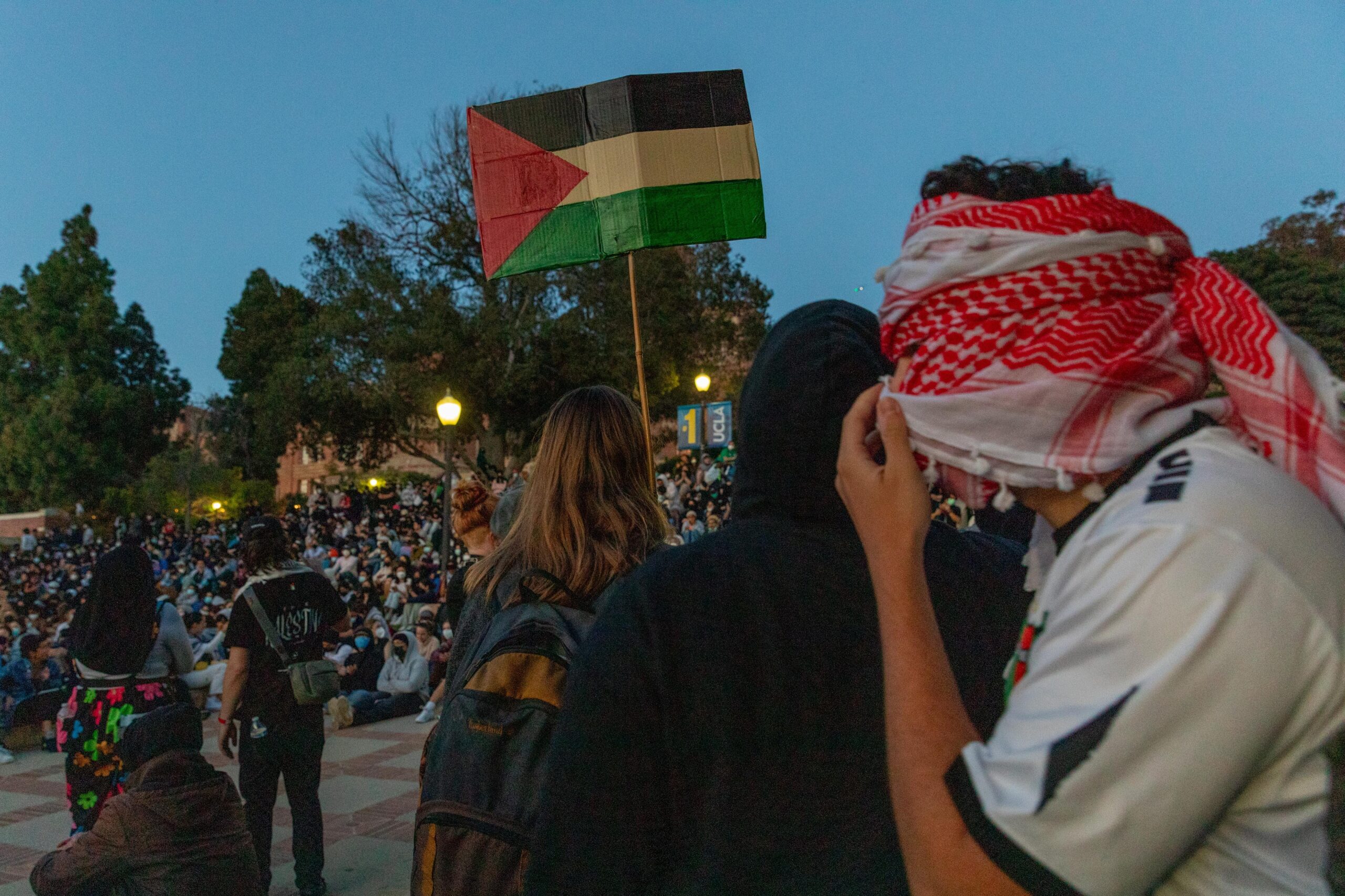
Pro-Palestinian students at UCLA campus set up encampment in support of Gaza and protest the Israeli attacks in Los Angeles, California, United States on May 01, 2024.
For a brief moment, it looked like 2024 all over again: Tents were erected at Yale University’s central plaza on Tuesday night, with anti-Israel activists hoping to loudly protest the visit of far-right Israeli National Security Minister Itamar Ben-Gvir to campus. Videos of students in keffiyehs, shouting protest slogans, started to spread online on Tuesday night.
But then something unexpected happened. University administrators showed up, threatening disciplinary action, and the protesters were told to leave — or face consequences. So they left. The new encampment didn’t last a couple hours, let alone overnight. The next day, Yale announced that it had revoked its recognition of Yalies4Palestine, the student group that organized the protest. (On Wednesday night, a large protest occurred outside the off-campus building where Ben-Gvir was speaking.)
Meanwhile, at Cornell University, President Michael Kotlikoff announced on Wednesday that he had canceled an upcoming campus performance by R&B singer Kehlani because of her history of anti-Israel social media posts. He wrote in an email to Cornell affiliates that he had heard from many people who were “angry, hurt and confused” that the school’s annual spring music festival “would feature a performer who has espoused antisemitic, anti-Israel sentiments in performances, videos and on social media.”
The quick decisions from administrators at Yale and Cornell to shut down anti-Israel activity reflect something of a vibe shift on American campuses. One year ago, anti-Israel encampments were, for a few weeks, de rigueur on campus quads across the nation. University leaders seemed paralyzed, unsure of how to handle protests that in many cases explicitly excluded Jewish or Zionist students and at times became violent. That’s a markedly different environment from what’s happening at those same schools so far this spring.
“In general, protest activity is way down this year as compared to last year,” Hillel International CEO Adam Lehman told Jewish Insider.
There is no single reason that protests have subsided. Jewish students, campus Jewish leaders and professionals at Jewish advocacy organizations attribute the change to a mix of factors: stricter consequences from university leaders, fear of running afoul of President Donald Trump’s pledge to deport pro-Hamas foreign students and the issue generally losing steam and cachet among easily distracted students.
Last spring, an encampment at The George Washington University was only dismantled after the university faced threats from Congress. Now, no such protest is taking place — which Daniel Schwartz, a Jewish history professor, said was likely due in part to the “sense that the university was going to be responding much more fiercely to anything resembling what happened last year.”
“For the most part, the enforcement of rules, the understanding of what the rules are, what you can do, what you can’t do, requiring people to get permits for protests, has really calmed things down [from] the sort of violence that we saw last year,” said Jordan Acker, a member of the Board of Regents of the University of Michigan, who has faced antisemitic vandalism and targeted, personal protests from Michigan students.
Michael Simon, the executive director at Northwestern Hillel, came into the school year with a “big question mark” of how the school’s new policies, which provide strict guidance for student protests and the type of behavior allowed at them, would be applied. “I’m going to say it with a real hedging: at least up until now, I would say we’ve seen the lower end of what I would have expected,” he said of campus anti-Israel protests.
Many major universities like Northwestern spent last summer honing their campus codes of conduct and their regulations for student protests, making clear at the start of the school year that similar actions would not be tolerated again. In February, for instance, Barnard College expelled two students who loudly disrupted an Israeli history class at Columbia,.
“For the most part, the enforcement of rules, the understanding of what the rules are, what you can do, what you can’t do, requiring people to get permits for protests, has really calmed things down [from] the sort of violence that we saw last year,” said Jordan Acker, a member of the Board of Regents of the University of Michigan, who has faced antisemitic vandalism and targeted, personal protests from Michigan students.
In recent weeks, the Trump administration has pressured top universities to crack down on antisemitic activity. The president’s threats to revoke federal funding if universities don’t get antisemitism under control has drawn pushback — Harvard is suing the Trump administration over its decision to withhold $2.2 billion in federal funds from the school — but it has also led universities to take action to address the problem.
Sharon Nazarian, an adjunct professor at UCLA and the vice chair of the Anti-Defamation League’s board of directors, said there is “no question” that “the national atmosphere of fear among university administrators for castigation and targeting by the [Trump] administration is also present” at UCLA and other University of California campuses.
“My sense is that being anti-Israel is not as much of the popular thing anymore,” Evan Cohen, a senior at the University of Michigan, said at a Wednesday webinar hosted by Hillel International for Jewish high school seniors. “On my campus, there are other hot topic issues. There might be more focus on what’s happening with U.S. domestic politics.”
Rule-breaking student activists also face a heightened risk of law enforcement action. A dozen anti-Israel student protesters were charged with felonies this month for vandalizing the Stanford University president’s office last June. On Wednesday, local, state and federal law enforcement officials in Michigan raided the homes of three people connected to anti-Israel protests at the University of Michigan. Protesters’ extreme tactics have scared off some would-be allies.
“I think some of the most activist students went too far at the end of last year with the takeover of the president’s office and a lot of pretty intense graffiti in important places on campus,” said Rabbi Jessica Kirschner, the executive director of Hillel at Stanford. “I think a lot of other students looked at that and said, ‘Oh, this is perhaps not where we want to be.’”
Students’ priorities shift each year, and other issues beyond Israel are also vying for their attention. Trump’s policies targeting foreign students are drawing ire from students at liberal universities, many of which have large populations of international students.
“My sense is that being anti-Israel is not as much of the popular thing anymore,” Evan Cohen, a senior at the University of Michigan, said at a Wednesday webinar hosted by Hillel International for Jewish high school seniors. “On my campus, there are other hot topic issues. There might be more focus on what’s happening with U.S. domestic politics.”
But the lack of protests does not mean that campus life has returned to normal for Jewish students, many of whom still fear — and face — opprobrium for their pro-Israel views.
“It’s easy to avoid the protests but if you are an Israeli student or a Jewish student perceived to be a Zionist, you should expect to be discriminated against in social spaces at the university,” Rabbi Jason Rubenstein, executive director of Harvard Hillel, told JI. “That is the most powerful way students are impacted by all of this.”
Ken Marcus, founder and chairman of the Louis D. Brandeis Center for Human Rights Under Law, which since Oct. 7 has represented dozens of Jewish students in Title VI civil rights cases against their universities, said that campus-related lawsuits are only faintly slowing down this semester.
“A lot of the staff and the administration think that, ‘OK, since there’s no protest outside, all the Jewish students must feel OK, and let’s put all this stuff that happened in the spring behind us.’ It’s really not the case,” said Or Yahalom, a senior at Northwestern University who was born in Israel. “That doesn’t mean that it’s all better for students. Jewish students are increasingly afraid to speak openly about their identity or connection to Israel, except in private, safe Jewish spaces.”
“Some campuses have been less intense than during last year’s historically awful period, but others have been bad enough,” Marcus told JI. “I believe that the federal crackdown, coupled with the impact of lawsuits and Title VI cases, has had a favorable impact at many campuses, but the problems have hardly gone away.”
Or Yahalom, a senior at Northwestern University who was born in Israel, recently attended a dinner with Northwestern President Michael Schill, who has faced criticism from Jewish Northwestern affiliates — including several members of its antisemitism advisory committee — for what they saw as the administration’s failure to adequately address antisemitism.
“A lot of the staff and the administration think that, ‘OK, since there’s no protest outside, all the Jewish students must feel OK, and let’s put all this stuff that happened in the spring behind us.’ It’s really not the case,” said Yahalom. “That doesn’t mean that it’s all better for students. Jewish students are increasingly afraid to speak openly about their identity or connection to Israel, except in private, safe Jewish spaces.”
Even without massive encampments, disruptive anti-Israel protests and campus actions have not gone away entirely, though they have been more infrequent this academic year. A Northwestern academic building housing the school’s Holocaust center was vandalized with “DEATH TO ISRAEL” graffiti last week. The office of Joseph Pelzman, an economist at The George Washington University who authored a plan calling for the U.S. to relocate Palestinians in the Gaza Strip and redevelop the enclave, was vandalized in February. The Georgetown University Student Government Association is slated to hold a campus-wide referendum on university divestment from companies and academic institutions with ties to Israel at the end of the month. Smaller-scale protests continue at Columbia, with students chaining themselves to the Manhattan university’s main gate this week to protest the ICE detention of Mohsen Mahdawi and Mahmoud Khalil, two foreign students who had led protests last year.
Leaders of the University of Michigan’s anti-Israel coalition held a sham trial for the university president and Board of Regents members in the middle of the Diag, the main campus quad, this week. The event took place without issue, and the activists left when it ended.
“I wouldn’t want to say that it’s perfect,” said Acker, the Board of Regents member. “But it’s certainly much better than a year ago.”
The school year isn’t over. Some students at Columbia are planning to erect another encampment this month, NBC News reported on Wednesday.
But they’ll be doing so at an institution with new leadership, weeks after Columbia reached an agreement with the Trump administration, where the Ivy League university pledged to take stronger action against antisemitism to avoid a massive funding cut. The pressure on Columbia to crack down on any encampment will be massive.
Please log in if you already have a subscription, or subscribe to access the latest updates.
 Continue with Google

 Continue with Apple