













































































If approved, the move would make the Weitzman National Museum of American Jewish History a part of the Smithsonian Institution

Courtesy
The National Museum of American Jewish History


 Add JewishInsider on Google
A congressionally created commission studying the potential transfer of the Weitzman National Museum of American Jewish History in Philadelphia to the Smithsonian Institution held its first meeting on Tuesday, the start of a two-year process to produce recommendations for Congress and the Trump administration on whether to move forward with the merger.
The commission, appointed by congressional leaders, includes Weitzman Chairman Emeritus Philip M. Darivoff, author and historian Dara Horn, Washington Free Beacon publisher Michael Goldfarb, former University of Pennsylvania President Amy Gutmann, former Rep. Kathy Manning (D-NC), The New York Historical President Louise Mirrer, former chairman of the U.S. Commission for the Preservation of America’s Heritage Abroad Paul Packer and presidential historian Tevi Troy.
Darivoff, appointed by House Minority Leader Hakeem Jeffries (D-NY), and Horn, appointed by Senate Majority Leader John Thune (R-SD), serve as chair and vice chair of the commission, respectively.
Commissioners were sworn in on Tuesday by Sens. David McCormick (R-PA) and John Fetterman (D-PA).
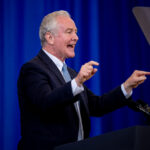
“Jewish American history is American history. It should absolutely be shared now and for generations to come,” Fetterman said. “I’m proud to support this commission in its efforts to bring the Weitzman into the Smithsonian and as the first Pennsylvania-based museum in this iconic American institution.”
Darivoff told Jewish Insider in a joint interview with Horn last week that the Weitzman is the only museum that “seeks to tell the full story of American Jews, the history of American Jews, and their broad contribution to America and to inform the visitors on Jewish history and culture.”
Horn agreed that “this is a time when there’s a new urgency to this topic,” given the “ignorance” about American Jewish history and American Jews today. “I am excited to be part of this process and also delighted that this is a possibility that Congress is taking seriously.”
While the United States Holocaust Memorial Museum in Washington is a federal entity, it is not a part of the Smithsonian Institution and, Horn emphasized, there’s more to Jewish life and culture than the Holocaust. The Weitzman, she said, can help change the conversation around the American Jewish story.
“This is about America … and this is an important part of American history that has been very neglected, and also this is about a living Jewish culture and civilization,” Horn continued. “It’s a story that not a lot of Americans have access to.”
Both Horn and Darivoff emphasized that Jewish culture and civilization are deeply entwined through American history over the course of hundreds of years.
The commission is charged with examining whether the Weitzman’s collection would enhance the Smithsonian’s collection — something Darivoff said will require hiring experts to conduct research — whether the Weitzman would be a financial burden or benefit for the Smithsonian and how governance of the museum would be handled if a transfer were completed. Darivoff and Horn emphasized that the commission is not prejudging the process.
Becoming part of the Smithsonian would make the Weitzman’s mission to educate people about Jewish culture, history and contributions to the country and the world part of the federal government’s mission, Darivoff explained, “and that’s a huge injection of momentum and an elevation on the project that the mission is dedicated to.”
He said that becoming part of the Smithsonian can also make the Weitzman a more attractive institution for potential donors of precious artifacts, given the prestige that the Smithsonian carries.
“We’re living in an era where you have a crisis of credibility in institutions, and the Smithsonian is an institution that is associated with serious scholarship, serious history, finding ways to translate that history to be accessible to the public, to be accessible to students,” Horn added. “People who are looking for resources about American Jewish history, people who are looking for ways to make this accessible to a broader audience — it would be a way of putting that history in that place.”
The study comes at a time of turmoil for the Smithsonian as a whole. The Smithsonian’s secretary, Lonnie G. Bunch III, is set to resign at the end of the year as President Donald Trump attempts to assert authority over the historically independent institution.
The administration is reportedly attempting to condition funding to the institution on its compliance with the Trump administration’s priorities and preferred narratives.
Asked whether those developments might factor into the commission’s considerations, Darivoff and Horn emphasized that the commission was appointed in a bipartisan fashion and that the questions it is examining are bigger than any political moment.
Darivoff described the Smithsonian as “one of the great and important cultural and educational institutions in our country” and said it will remain so into the future.
“These are things that come and go in our political life,” Horn said. “Regardless of whether it becomes a Smithsonian institution, the Weitzman is going to continue to be here, and this opportunity to examine this as part of the Smithsonian is really something that’s above the fray because it is a generational opportunity.”
With Holocaust affairs envoy Ellen Germain expected to retire, Jewish organizations are split over whether the two diplomatic posts should be consolidated

Courtesy
Ellen Germain speaking at the Rumbach synagogue in Budapest, Hungary, in November 2022.
Jewish communal groups are at loggerheads over the possibility of merging two related but distinct State Department offices: the special envoy to monitor and combat antisemitism and special envoy for Holocaust issues.
Some Jewish groups recently sent a letter to Secretary of State Marco Rubio in support of the concept of merging the two offices, while others have sent letters in recent months opposing such a move.
Proponents of combining the two offices say that doing so consolidates linked issues under the authority of one envoy with ambassador-rank status, while maintaining the work of both offices. Opponents say that combining the two teams would undermine and diminish the work of the Holocaust affairs envoy and risk politicizing critical work on Holocaust restitution.
The reexamination of the two roles comes ahead of the expected retirement of Ellen Germain, who has served as special envoy for Holocaust issues since 2021. Advocates on both sides of the debate said they understand the State Department is considering whether to merge the two offices, though no final decision has yet been made. Multiple communal letters reference rumors about the possibility of a merger of the two offices.
The antisemitism envoy office focuses on combating antisemitism globally, and is led by a political appointee chosen by the president and confirmed by the Senate, who has typically changed with each administration. The Holocaust affairs envoy office focuses on Holocaust restitution and education issues, as well as combating Holocaust denial and distortion, and is led by an apolitical career Foreign Service Officer, often maintaining their role across multiple administrations.
The Department of State did not provide comment.
In a June 10 letter, groups and leaders including the Combat Antisemitism Movement, American Association of Jewish Lawyers and Jurists, Chabad-Lubavitch World Headquarters, Coalition for Jewish Values, Institute for the Study of Global Antisemitism and Policy, Orthodox Union, World Jewish Congress, Zionist Organization of America, former U.S. Ambassador to Israel David Friedman, former antisemitism envoy Elan Carr, former deputy antisemitism envoy Ellie Cohanim and former deputy antisemitism envoy Karen Barall, wrote to Rubio urging him to merge the two positions.
“The historical realities of global antisemitism and the preservation of Holocaust memory are inextricably linked. Today, we are witnessing an unprecedented and sophisticated surge in global anti-Jewish hostility, which frequently weaponizes Holocaust denial, historical revisionism, and the distortion of Nazi-era atrocities to fuel modern hatred,” the groups wrote. “Fragmenting our diplomatic response across two distinct offices dilutes administrative efficiency, risks duplicative efforts, and underutilizes vital Department resources at a time when maximum strategic impact is required.”
The groups said that combining the two offices “will streamline U.S. foreign policy implementation and provide foreign governments and international bodies with a singular, high- level point of contact in the form of [current antisemitism envoy] Ambassador [Yehuda] Kaploun, elevating the visibility and diplomatic weight of the SEHI portfolio” and help facilitate the adoption of the International Holocaust Remembrance Alliance’s working definition of antisemitism worldwide.
The Holocaust issues office currently falls within the State Department’s Europe portfolio, while the antisemitism office has a global mandate.
Groups including the American Jewish Committee, American Joint Distribution Committee, Agudath Israel of America, Anti-Defamation League, B’nai B’rith International, Conference on Jewish Material Claims Against Germany, The National Coalition Supporting Eurasian Jewry and the World Jewish Restitution Organization — many of which deal directly with post-Holocaust and restitution issues — are opposing the move.
The Holocaust issues office “serves as a critical statement to the world of American values and moral leadership and of the singular significance that the United States attributes to commemoration, research and remembrance of the Holocaust, as well as the commitment of the United States in seeking justice for Holocaust survivors,” they said in a joint letter to Rubio in late April, a draft of which was obtained by JI.
The groups described the office as a critical resource for the Jewish community, which has received strong support from Congress. “In a world where there is less and less knowledge of the horrors of the Holocaust, and there are fewer and fewer Holocaust survivors, it is imperative that this office which is dedicated solely to these goals, continue to stand as a beacon showing the special commitment of the United States government to education about the Holocaust and the United States’ role in leading the quest for justice for the victims and their families internationally.”
The groups urged Rubio to appoint a “senior diplomat” to fill Germain’s role upon her retirement.
Numerous Jewish organizations have also weighed in individually, on each side of the issue.
In favor of a merger, Rabbi Abraham Cooper, the associate dean of the Simon Wiesenthal Center, also wrote to Rubio this month in favor of combining the two offices. He said that combining the offices under a Senate-confirmed ambassador will “elevate the issue set; strengthen U.S. representation on key international fora like the International Holocaust Remembrance Alliance; and send a clear signal to foreign counterparts that the United States remains committed to these issues.”
“Ambassador Kaploun has made clear that the status quo must be broken if we are to finally achieve a small measure of justice. This means strengthening accountability, working with Jewish communities, and seeking results, not conferences and photo-ops,” Cooper said. “I look forward to supporting him in those efforts.”
The World Jewish Congress also expressed support for merging the two offices, arguing in a May letter to Rubio that the “Holocaust issues today differ from those of the postwar and restitution eras.”
“The central challenges now concern Holocaust denial and distortion, the erosion of historical memory, and the exploitation of Holocaust revisionism in service of contemporary antisemitism and extremism,” the WJC letter reads, adding that the issues are now far larger than Europe.
But that’s far from a consensus view within the Jewish community.
Opposing a merger, AJC CEO Ted Deutch separately wrote to Rubio in March to “respectfully underscore the critical importance of maintaining the U.S. Department of State’s Office of the Special Envoy for Holocaust Issues as a separate, prominent, and fully empowered office within the Department, and to urge that the process of selecting a qualified Special Envoy be set in motion without delay.”
“Maintaining a dedicated and empowered Special Envoy ensures that the United States can continue to press governments to meet their commitments, resolve outstanding restitution matters, combat Holocaust distortion and antisemitism, and uphold justice for survivors and their families while it is still possible to do so,” Deutch said, particularly at a time of rising Holocaust denial, distortion and inversion, including by public figures and leaders, and when many Holocaust restitution claims remain unresolved.
Robert Williams, the USC Shoah Foundation’s chair and CEO, also urged Rubio, in a letter in late May, to keep the two positions separate.
“Merging these offices risks diluting their effectiveness. This is something we can ill afford in our trans-Atlantic relations or in our work in North America,” Williams said, particularly after Canada eliminated its own antisemitism envoy. “Respecting the relevance of the Holocaust and justice for the survivors, while simultaneously focusing the fight against antisemitism is only possible if State maintain[s] both offices with their complementary yet different strengths and areas of expertise.”
A source familiar with the situation said that some in the Jewish community feel that having a senior FSO in the Holocaust affairs envoy role has historically served the office well, insulating the position and the issues from politics.
The source said that some in the community see the move to combine the offices as driven by Kaploun, and believe it to be an effort by the antisemitism envoy to expand his influence over various issues relating to the Jewish community.
At the same time, the source acknowledged that there could be value in placing the Holocaust affairs envoy’s responsibilities in the hands of someone such as Kaploun, who has the ear of President Donald Trump, in addition to other senior officials.
Barall, who serves as the chief policy officer for the Louis D. Brandeis Center for Human Rights Under Law, said that discussions about combining the two offices are longstanding, dating back to the Bush administration, when the antisemitism office was first established.
“We’re at a time where resources are limited, and combining expertise and budgets under a unified strategy can create greater impact without sacrificing the mission,” Barall said. “When you have two different offices working independently and in parallel of each other, it doesn’t benefit anybody.”
She said that it’s not helpful for the Jewish community and is confusing to foreign interlocutors to have two separate offices, which sometimes are undertaking duplicative or contradictory efforts.
Alyza Lewin, the president of U.S. affairs at CAM, echoed that argument, calling the current separation “awkward and inefficient” for interlocutors with the offices.
“It makes sense for the two offices to be combined, so that the issues are addressed together with one voice, with consistency, and it also, quite frankly, elevates the Holocaust issues today” under the supervision of a Senate-confirmed official reporting directly to the secretary of state, Lewin said.
She said that her understanding is that there would be no reduction in staff or resources to either office, and that the Holocaust affairs envoy’s staff would move to the antisemitism envoy’s team, ensuring no loss of expertise or capacity to work on Holocaust issues.
Lewin also argued that, with the shrinking number of Holocaust survivors, the work of the Holocaust affairs envoy is shifting toward a greater emphasis on issues like Holocaust memory, Holocaust denial and Holocaust education, which she said are a “key part” of modern antisemitism.
Opponents of a merger say that the extent of that shift is overstated, and that the issues of the Holocaust affairs envoy remain critical, and distinct, from those of the antisemitism envoy.
“I worry … that a merger brings with it a risk that these offices’ individual tasks will be harder to accomplish, and at least in the short term, and that could inhibit our ability to, A, push back against the world’s oldest hatred, and B, as the head of a Holocaust institution, ensure that we have a future that remembers, learns from, and respects the history of the Holocaust and its contemporary relevance over the long term,” Williams, the USC Shoah Foundation CEO, said.
He also argued that Holocaust restitution issues remain a critical and ongoing task and will not disappear in the near future — pointing to Congress’ recent passage of a new law relating to restitution issues and some countries that continue to resist restitution efforts.
Williams further argued that Holocaust education and antisemitism are related but ultimately distinct issues. And, he said, the U.S. should not necessarily model its own approach on other countries’ decisions to combine antisemitism and Holocaust issues into a singular role, though he said he did not doubt Kaploun’s personal capabilities and effectiveness.
“None of these countries have been as effective as morally clear and as useful in ensuring a future for the fight against antisemitism and a future that remembers and respects the Holocaust, as has the United States, and I think a major factor in that has been because we have divided labor effectively,” Williams said. He warned that consolidating the positions could ultimately open the door to antisemitism and Holocaust work being subsumed into a broader portfolio in some future administration.
Menachem Rosensaft, a Cornell University adjunct law professor involved for years in post-Holocaust issues and fighting antisemitism who has worked with multiple envoys in both offices, said that combining the two teams “risks undermining the effectiveness and the professionalism of the Holocaust-era office.”
“I think both are important offices, both are important areas, but they’re also different,” Rosensaft said. “One of them is a politically oriented office looking at contemporary manifestations of antisemitism abroad, and the other is an office whose purpose… is to effectively assist in Holocaust-era restitution, mostly benefiting Holocaust survivors and their heirs, and those are two very different functions.”
He emphasized that the Holocaust affairs envoy position is in some ways “much more sensitive and delicate” because it requires navigating complex bureaucracies in Europe, a task which he said is best left to an apolitical career official rather than a political appointee — even as he praised Kaploun’s credibility on the issue of antisemitism.
Judging by polls published by six Hebrew-language media outlets after the merger on Sunday, not much has changed since the announcement that Bennett and Lapid were joining forces
Chaim Goldberg/Flash90
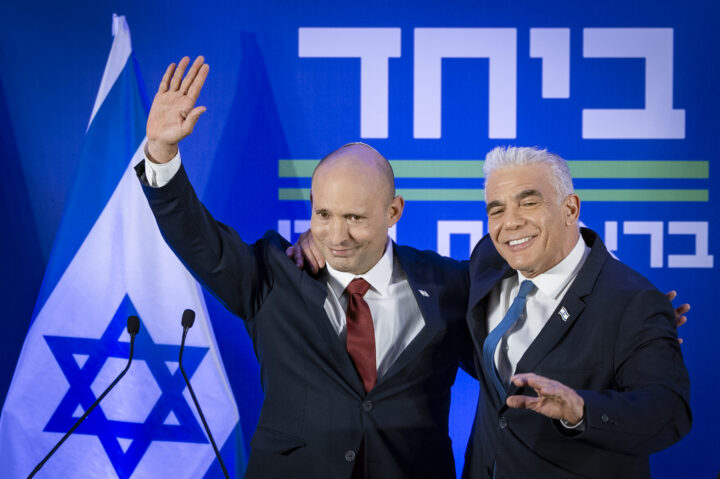
Opposition Leader and Head of the Yesh Atid party Yair Lapid and former Prime Minister Naftali Bennett speak during a press conference announcing a joint list named “Together” ahead of upcoming elections, to be led by Bennett, in Herzliya, central Israel, April 26, 2026.
The near-consensus among Israeli political pundits is that the merger of the parties led by former Prime Ministers Naftali Bennett and Yair Lapid is a huge moment in the campaign ahead of the next Knesset election, scheduled for Oct. 27.
However, judging by polls published by six major Hebrew-language media outlets after the merger on Sunday, not much has changed since the announcement that Bennett and Lapid were joining forces.
The newly formed “Together” opposition party polled around 24 seats — nearly the same number of seats as the two parties combined before the merger. Israeli Prime Minister Benjamin Netanyahu’s Likud party is, according to the average of the latest polls, still the largest party at 29.
According to the latest polling, it would be difficult for either side to build a governing coalition. The opposition Zionist parties did not get a 61-seat majority in any of the six polls. The most favorable poll for the opposition showed the anti-Netanyahu Zionist parties at 60 seats in the 120-seat Knesset, while the current coalition received over 61 seats in two polls (from those commissioned by Channel 14 and I24NEWS, which are more sympathetic to Netanyahu than the other media outlets).
To be sure, polls taken within 24 hours of an event are not the most reliable, and much can change in the six months until the election.
The key question after the Bennett and Lapid merger is whether they are fighting other opposition candidates for dominance within their bloc – in which case, Bennett has likely solidified his status as Netanyahu’s main competition for the premiership – or to broaden the bloc’s appeal to win a majority in the Knesset.
Netanyahu famously said in 2018 and many times since, in reference to shifts in the opposition: “I don’t intervene in how the left divides up its votes.” That quip, made when Bennett was still in the pro-Netanyahu camp, is now reflective of Bennett’s weakness.
So far, the polling has shown that Bennett, who was solidly on the right for the first eight years of his political career, will struggle to peel off voters from the right-wing pro-Netanyahu bloc into his camp.
In his last election campaign in 2021, Bennett ran primarily on right-wing messages but ended up leading a coalition of mostly center and left parties, together with an Arab party in the government, something many right-wing voters, as well as two Knesset members who jumped ship, viewed as a betrayal.
Add to that the fact that Lapid is to Bennett’s left — something both acknowledged several times in their Sunday night press conference, referring to their “differences” – likely referring to Bennett’s support for settlements and opposition to a two-state solution, which Lapid supports. Both candidates emphasized their shared views on domestic policy in response.
Netanyahu has kept mostly quiet about the Bennett-Lapid merger, but his one response shows that he will try to widen the wedge between Bennett and the right.
Netanyahu’s social media accounts posted an image from 2021 showing Lapid and Bennett sitting with Mansour Abbas, head of Ra’am, the Islamist party in their governing coalition. Ominous music plays in the background, and the words “they already did it once; they will do it again” are splashed across the picture.
The Ra’am factor will also likely be key after the election. The Zionist opposition parties have said mixed things about whether they would be willing to have an Arab non-Zionist party in their coalition in a post-Oct. 7 Israel. Revelations about the Ra’am party’s financial and historic ties to Hamas will also likely come up in the campaign.
As of now, the Knesset’s three Arab parties have said they will run in a single Joint List this year, as they did in 2015-2021, increasing Arab voter turnout and their representation in the Knesset. Ra’am is the only one of the parties that has to date been willing to sit in a coalition, and unlike Abbas, the other party leaders, Ayman Odeh and Ahmed Tibi, do not accept Israel as a Jewish state.
Because of those realities, Bennett and Lapid’s Together party will likely have to make a concerted – and perhaps quixotic – effort to win over right-leaning voters if it wants to increase its bloc and unseat Netanyahu. That task will be easier said than done.
Plus, a publisher's nutty smear targeting Jews

According to reports, President (Andrew Harnik/Getty Images)
Health and Human Services Secretary Robert F. Kennedy Jr. (C) is taken out of the ballroom by security agents during a shooting incident at the annual White House Correspondents Association Dinner at the Washington Hilton on April 25, 2026 in Washington, DC.
👋 Good Monday morning!
In today’s Daily Kickoff, JI’s Marc Rod gives a first-person account from inside the chaos of the White House Correspondents’ Dinner after an assassination attempt on Trump administration officials. We report on the merger between former Israeli Prime Ministers Naftali Bennett and Yair Lapid as they seek to oust Benjamin Netanyahu, and talk to University of California regent Jay Sures about the UCLA student government’s recent condemnation of an event with a former Israeli hostage. Also in today’s Daily Kickoff: Daniel Shapero, Josh Kushner and Tzipi Hotovely.
Today’s Daily Kickoff was curated by JI Executive Editor Melissa Weiss and Israel Editor Tamara Zieve, with an assist from Danielle Cohen-Kanik. Have a tip? Email us here.
What We’re Watching
- King Charles III and Queen Camilla land in Washington today for their first state visit to the U.S. since assuming the throne. They’ll arrive to a city reeling from this weekend’s attempted attack on Trump administration officials at the White House Correspondents’ Dinner. More below from JI’s Marc Rod, who was attending the event at the Washington Hilton on Saturday night.
- The king and queen will be welcomed by President Donald Trump and First Lady Melania Trump, and will have afternoon tea before attending a White House garden party.
- Trump is expected to convene a Situation Room meeting — sans King Charles — on Iran as the countries remain at an impasse amid stalled talks. The meeting comes days after plans for White House Special Envoy Steve Witkoff and Jared Kushner to go to Islamabad for a second round of talks were scrapped, with Trump telling Fox News on Sunday, “If they want to talk, they can come to us or they can call us.” Tehran has reportedly offered to reopen the Strait of Hormuz and end the war without resolving its disputes with Washington over the future of the Iranian nuclear program.
- Iranian Foreign Minister Abbas Araghchi is in Moscow today, where he is slated to meet with Russian President Vladimir Putin.
- Israeli President Isaac Herzog is in Kazakhstan today, where he is slated to meet with President Qasym-Jomart Toqayev.
- Israel Tech Week kicks off today in Miami. Speakers include Daniel Flesch, Phil Goldfeder and Gabe Groisman.
What You Should Know
A QUICK WORD WITH JI’S MARC ROD
The White House Correspondents’ Dinner on Saturday night began normally enough — a bustle of reporters, administration officials and members of Congress among other A-listers streaming from the packed lobby of the Washington Hilton down into the basement ballroom.
White House Correspondents’ Association President Weija Jiang, a CBS News White House reporter, finished her introductory remarks, and the thousands of guests packed into the ballroom tucked into their salads.
Then, a loud, shattering bang rang out from the other side of the ballroom. Initially, I didn’t think anything of it — I thought someone had dropped a large tray of food (as President Donald Trump said later, he thought the same thing).
Videos and other accounts of the evening indicate that someone from the security staff shouted from the front of the room that guests should get down. I didn’t hear it. My first indication that something was wrong was when I started seeing other guests ducking under the tables and security officers drawing their guns.
I tried to duck under the tablecloth, but no luck — another occupant of the table was already underneath, and there was no room. My heart pounding, I was forced to do my best to stay low — but I was in the backmost row of tables, right by a door, sitting directly in the aisle.
If a shooter came into the ballroom from behind me, I was a sitting duck. I was completely helpless and exposed.
Two thoughts ran through my head. The main one: I’m getting married in six days. I can’t die now. The second: I can’t believe this is happening to me again. (For those readers who are newer to Jewish Insider — I was also on scene for the Jan. 6, 2021, attack on the U.S. Capitol.)
JOINING FORCES
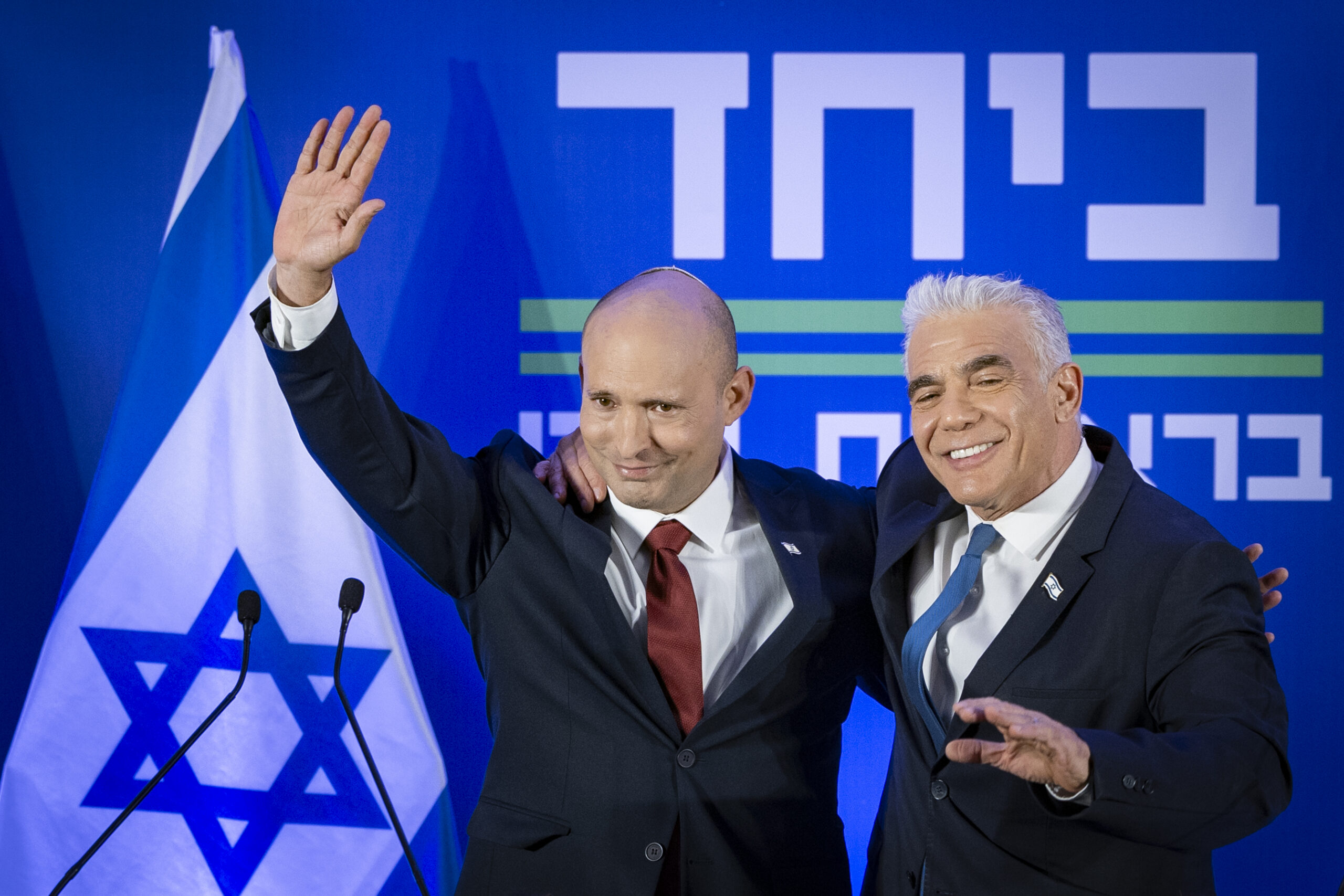
Former Israeli Prime Ministers Naftali Bennett and Yair Lapid will run in this year’s Knesset election as a joint party called “Together,” led by Bennett, they announced on Sunday. The move comes as the bloc of Zionist parties running against Prime Minister Benjamin Netanyahu’s bloc has recently polled higher than the parties in Netanyahu’s coalition, but with fewer than the 61-seat majority needed to form a government, Jewish Insider’s Lahav Harkov reports.
Behind the scenes: Sources close to both party leaders told JI that they began discussing a joint run a week ago, and reached the final decision on Saturday night. Bennett will lead the party after having a consistently stronger showing in polls in recent months. Bennett, a former IDF combat officer, described the merger as “the most Zionist and most patriotic thing we have ever done for our country.” Lapid said that the country “needs unity like air to breathe.”
Survey says: A poll conducted for Israel’s Walla news site on Monday found that Lapid and Bennett would lose seats if an election were held today, in comparison to previous polls when they were running separately.
EXCLUSIVE
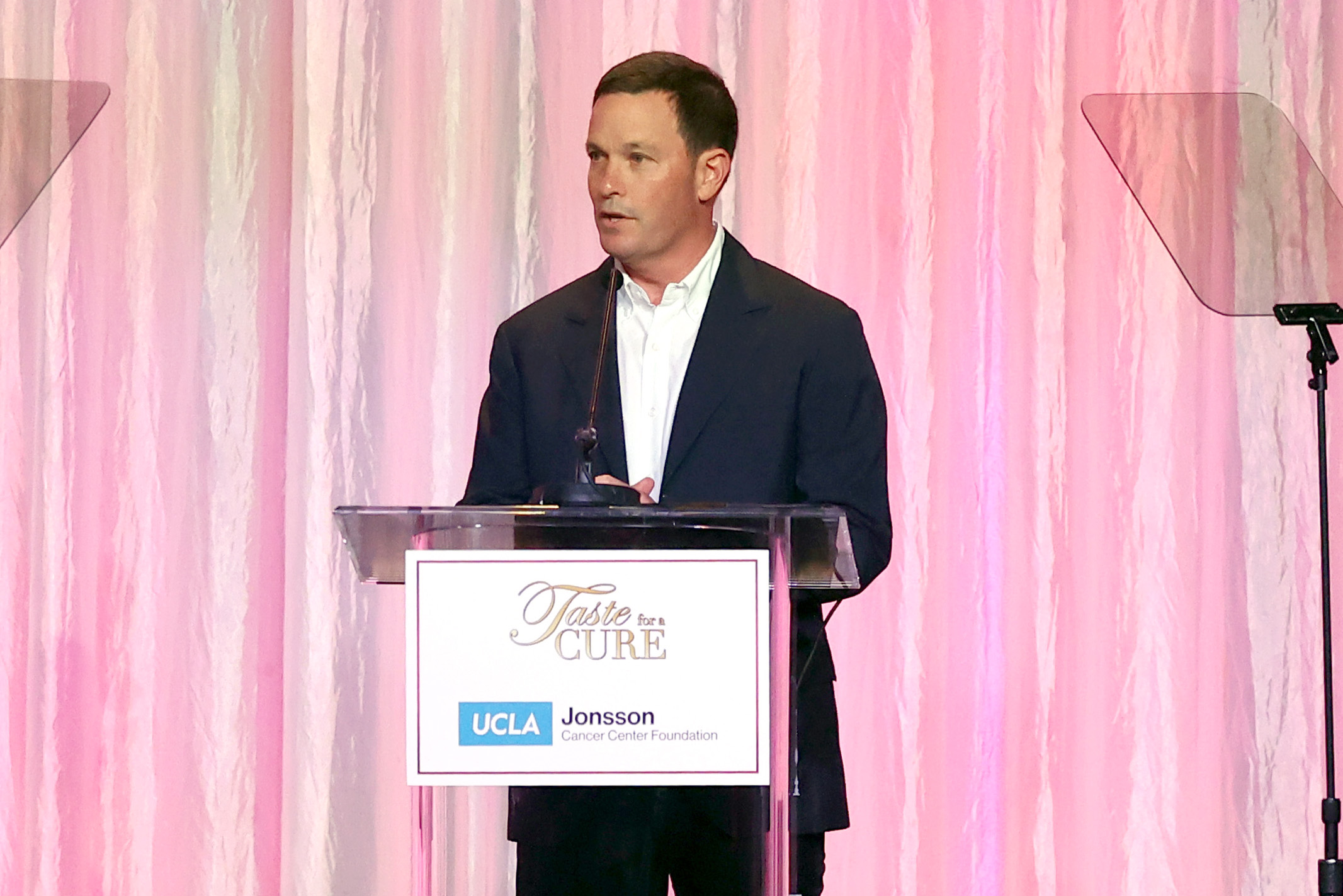
Jay Sures, vice chairman of United Talent Agency and a regent of the University of California system, slammed the members of UCLA’s Undergraduate Student Association who authored a letter condemning former Israeli hostage Omer Shem Tov’s recent campus appearance as “shortsighted, antisemitic or both,” in an interview with Jewish Insider’s Haley Cohen.
What he said: “Why would anybody send out a letter condemning a hostage who is a student who was held in captivity for over 500 days? You have to be a complete lunatic to sign on to that letter,” Sures told JI on Friday, shortly after he issued a letter to the body stating he was “disgusted and appalled” by its condemnation.
SHELL GAME
Publisher of Drop Site News pushes conspiracy theory about a California Jewish family-owned business

Nika Soon-Shiong, the publisher of Drop Site News who is also the daughter of Los Angeles Times owner Patrick Soon-Shiong, is circulating conspiracy theories seeking to tie a California-based Jewish couple behind a major pistachio processor to the recent U.S.-Israeli military strikes in Iran, Jewish Insider’s Matthew Kassel reports.
Singled out: In a recent social media post that drew more than 1 million views, Soon-Shiong, citing unverified online claims that the United States and Israel had targeted pistachio warehouses in Iran this month, singled out Stewart and Lynda Resnick, the billionaire owners of the Wonderful Company, which grows and processes a large percentage of California’s pistachios as well as other products including almonds and mandarin oranges.
ON THE TRAIL
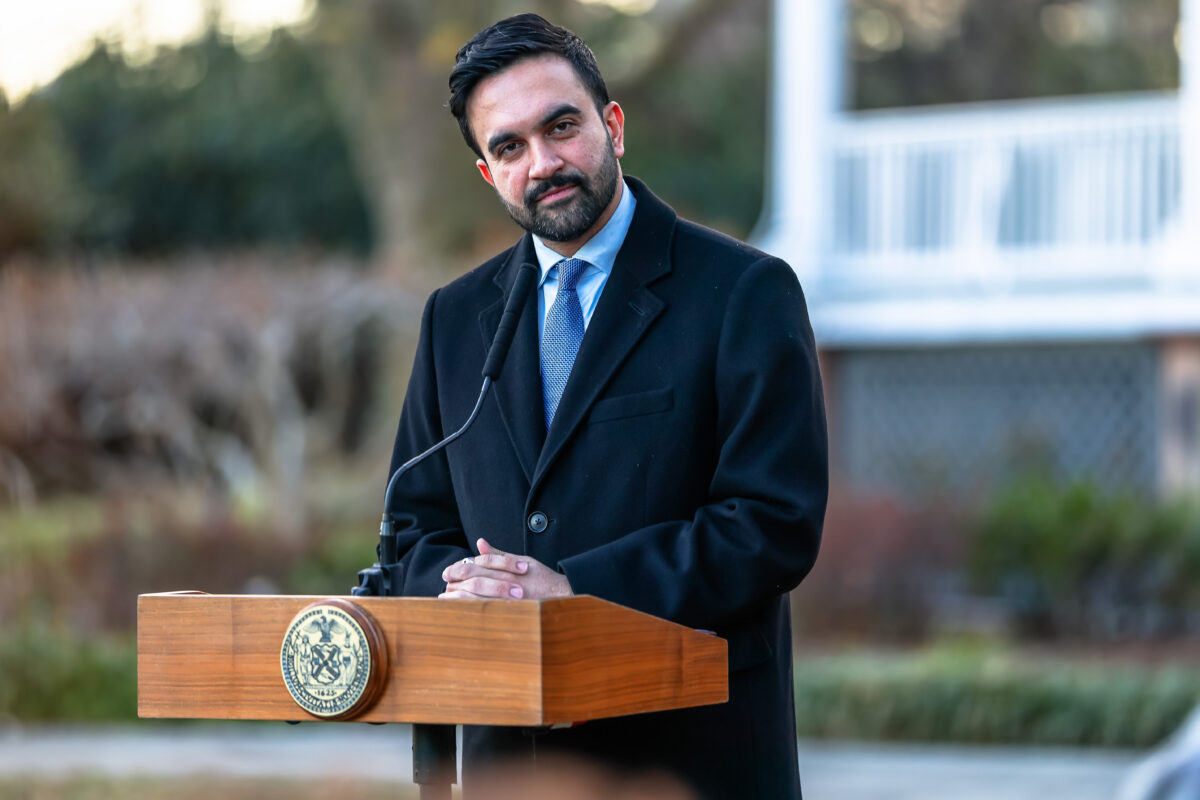
New York City Mayor Zohran Mamdani exercised his veto power for the first time since entering office on Friday to block a bill that would standardize NYPD policy around protests at educational institutions, Jewish Insider’s Will Bredderman reports.
What they said: “We are deeply disappointed by Mayor Mamdani’s decision,” said the UJA-Federation of New York, the Anti-Defamation League of New York/New Jersey, Jewish Community Relations Council of New York, American Jewish Committee New York, the Conference of Presidents of Major American Jewish Organizations, the New York Board of Rabbis, Orthodox Union, The Rabbinical Assembly, StandWithUs and Teach NYS, in a rare united response. “This veto is a profound failure of City Hall to demonstrate to all New Yorkers that our safety is a priority.”
STAYING PUT
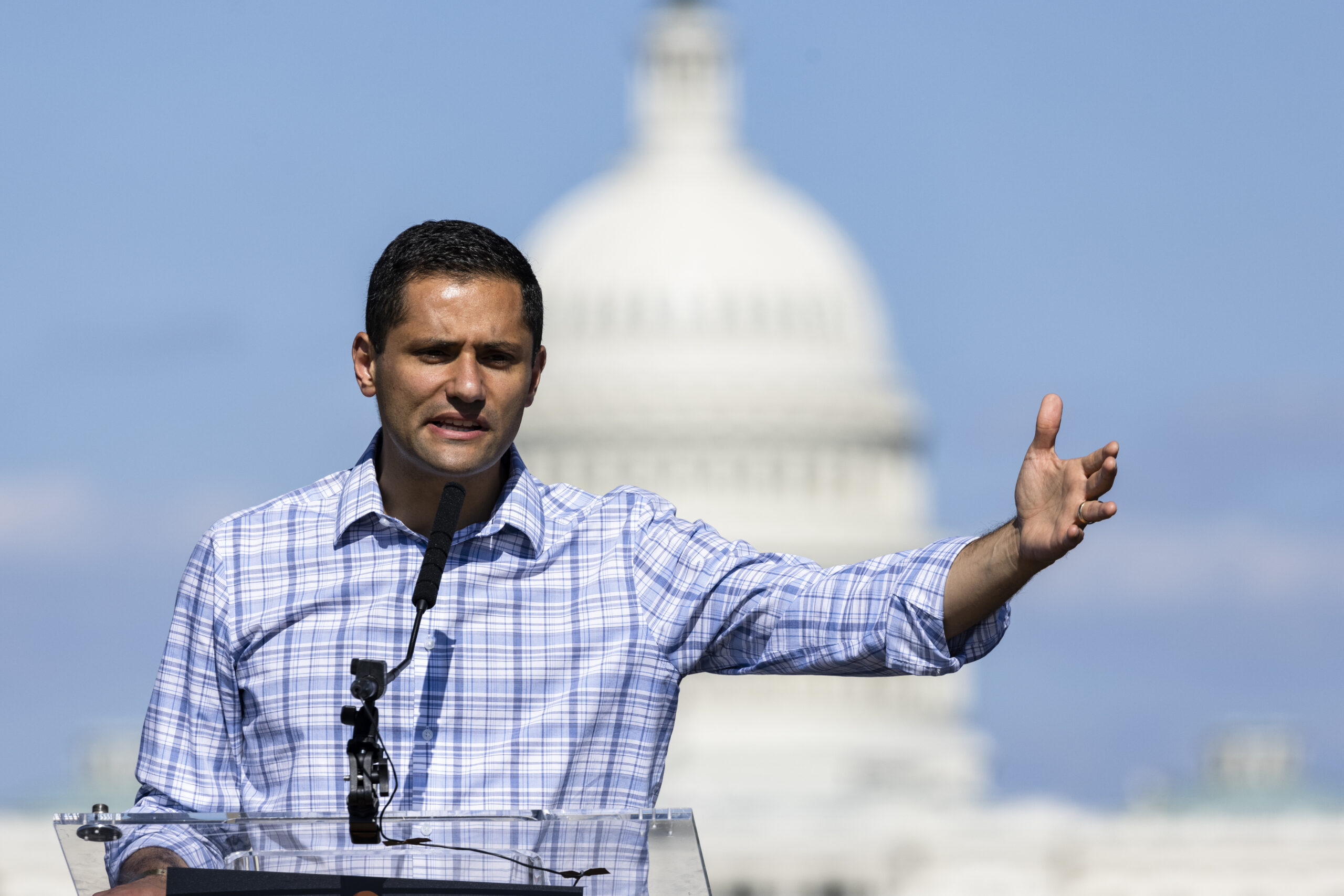
A Virginia state lawmaker with a history of inflammatory anti-Israel rhetoric who had been exploring a congressional run announced on Friday that he would instead remain in the state’s House of Delegates. Sam Rasoul, a Roanoke Democrat who is the son of Palestinian immigrants, said he would hold onto his seat in the state Legislature to continue focusing on his work chairing the Education Committee, a role that has garnered concern from the state’s Jewish community due to his heated comments, Jewish Insider’s Gabby Deutch reports.
Zoom out: The decision comes days after Virginia voters approved a new congressional map that is likely to deliver four additional House seats to Democrats, prompting a reshuffling as politicians in the state opt to run — or not to run — for the newly drawn Democratic-friendly seats.
LINKEDIN LEADER
Microsoft, the parent company of LinkedIn, has tapped Daniel Shapero, the professional networking site’s current chief operating officer, as its next CEO, current chief executive Ryan Roslansky announced earlier this week, Jewish Insider’s Haley Cohen reports.
Announcement: Shapero, who has been serving as COO since 2021, wrote on the platform Wednesday, “Today, I’m taking on the role as CEO of Linkedin. I joined Linkedin in May 2008 as employee #300ish, and it’s easy to say that my time at the company has been one of the most meaningful experiences of my life.” The network has close to 1.5 billion users worldwide.
Worthy Reads
Riyadh’s Reluctance: Foreign Policy’s Steven Cook considers why Saudi Arabia is not playing a more central role in the U.S. and Israeli conflict with Iran. “This is not to suggest that Saudi Arabia should get into the fight, but it is revealing that a country that billed itself as a rising power and the most important country in the Middle East is betwixt and between when its neighborhood is burning down. The Saudis clearly have interests at stake, but rather than taking action, they have been issuing strongly worded statements while others, including their adversaries, are shaping the region. It seems that Riyadh would be better off taking concrete steps to protect its interests. What is the saying about it’s better to be at the table than be the meal?” [FP]
Feeding Israel to the Left: In his Substack “The Abrahamic Metacritique,” Hussein Aboubakr Mansour raises concerns about the willingness of Democratic leaders to shift leftward on issues related to Israel amid pressure from the activist left. “The establishment’s reasoning is basic strategic calculation: the left will not relent on Israel; a civil war inside the party over the Jewish state would destroy the coalition; therefore, the rational move is to concede this issue, preserve party unity, and proceed with the moderate agenda on everything else: affordability, climate, migration, AI, etc. Feed this one thing to the beast, and the beast will be satisfied. It is an intelligent calculation, a genius one, really, but it is also a catastrophic one, because it rests on a complete misapprehension of what is being conceded and to whom.” [AbrahamicMetacritique]
Battle Royal: For Fox News, presidential historian Tevi Troy does a deep dive into the history of visits to the U.S. from U.K. royals. “When [Queen Elizabeth II] visited Eisenhower in 1957, she helped smooth over tensions that had emerged between Britain and the U.S. as a result of the Suez Crisis. … And now, as King Charles embarks on his first visit to the U.S. in President Donald Trump’s second term, the U.S. and Britain are in the midst of a disagreement over the war with Iran. Charles is not a political ruler, but perhaps his visit, like his mother’s in 1957, can smooth over tensions and help maintain the special relationship America has long had with the United Kingdom.” [FoxNews]
Word on the Street
Axios reports that during the active conflict with Iran in March, Israel sent the United Arab Emirates an Iron Dome battery, interceptors and several dozen IDF troops to operate the missile-defense system; a senior Emirati official told Axios, “We are not going to forget it,” while a second official said, “It was a real eye-opening moment. To see who our real friends are”…
A new memo from the State Department acknowledges that the U.S.’ decision to launch Operation Epic Fury against Iran came — at least in part — at Israel’s request, Jewish Insider’s Gabby Deutch reports…
An 11-year-old Israeli girl who was critically wounded in an Iranian cluster bomb attack on her home in Bnei Brak earlier this month died of her injuries…
In an interview with The Wall Street Journal, Tucker Carlson suggested that he was given advance notice of the joint U.S.-Israel operation targeting Iran in late February, saying he received a text message at 10 p.m. ET on Feb. 27 — hours before the start of the operation — that read, “We’re going”; Carlson did not say who sent the message, acknowledging only that it was not President Donald Trump or Vice President JD Vance…
The WSJ notes that at the last meeting between Trump and Carlson, the president displayed a letter from evangelical leader Franklin Graham calling Carlson an antisemite…
The Treasury Department announced sanctions on a Chinese oil refinery and more than three dozen shipping firms and vessels tied to Iran’s oil export industry…
The New York Times examines the Trump administration’s “haphazard” approach to sanctions on Russia and Iran as Moscow and Tehran leverage their oil reserves amid a volatile market…
The Financial Times looks at the United Arab Emirates’ recent request that Pakistan repay $3.5 billion in loans, citing Islamabad’s deepening ties with Saudi Arabia and what the UAE “considers Pakistan’s meek response to Iranian attacks on the Gulf”…
UAE President Mohamed bin Zayed’s son-in-law Mohammed bin Hamad Al Nahyan and EDGE Group CEO Faisal Al Bannai — both of whom advise MBZ — visited Trump at Mar-a-Lago in Palm Beach, Fla., and made a swing through the U.S. to meet with SpaceX founder Elon Musk, Jared Kushner, investors Marc Andreessen and Ben Horowitz and defense firm Anduril, The Circuit’s Jonathan Ferziger reports…
Talks between the U.S. and Israel on the next 10-year memorandum of understanding are expected to begin next month, and will include Maj. Gen. (res.) Amir Baram, the director-general of Israel’s Defense Ministry, and Israeli Ambassador to the U.S. Michael Leiter representing Israel and Secretary of State Marco Rubio, U.S. Ambassador to Israel Mike Huckabee and State Department senior advisor Michael Needham…
Sen. Thom Tillis (R-NC) dropped his opposition to Kevin Warsh’s nomination to be chairman of the Federal Reserve, clearing the way for Warsh to assume the role when Jerome Powell’s term ends next month…
A federal judge in Texas halted the deportations of six family members of an Egyptian man who firebombed demonstrators, killing an elderly woman, at a Boulder, Colo., march last year raising awareness about the Israeli hostages in captivity in Gaza…
Thrive Capital founder Joshua Kushner announced on Friday the launch of Thrive Eternal, a capital holding company that will acquire a minority, non-controlling stake in the San Francisco Giants as its first major partnership, Jewish Insider’s Melissa Weiss reports…
The New York Times interviews Hollywood agent Michael Glantz, who went viral after being filmed eating his burrata salad at the White House Correspondents’ Dinner on Saturday as other guests around him ducked for cover…
Counterterrorism authorities investigating a string of antisemitic attacks in London arrested a 37-year-old man on suspicion of preparing to carry out terrorist acts; more than two dozen people have been arrested in connection with attacks against the country’s Jewish community since late March…
The Telegraph goes behind the scenes of the Met Police’s effort to track down arsonists targeting synagogues in the London area…
Israeli President Isaac Herzog is expected to push for a mediated resolution to reach a plea deal in Prime Minister Benjamin Netanyahu’s ongoing corruption trial, bucking pressure from the White House to pardon the prime minister…
Israel’s Cabinet signed off on the nomination of Michael Lotam to be the country’s first ambassador to Somaliland, four months after Jerusalem recognized the sovereignty of the East African nation…
The Cabinet also approved the appointment of former Israeli Ambassador to the U.K. Tzipi Hotovely to serve as the head of the National Public Diplomacy Directorate within the Prime Minister’s Office, which has been vacant for more than two years…
Israel launched a wide-scale, multimillion-dollar campaign – led by former Trump administration official Brad Parscale — to create pro-Israel web content that would be picked up by AI platforms…
Cardiologist Eugene Braunwald, who as a child fled Nazi Europe and went on to reshape how modern medicine approaches heart attacks, died at 96…
Diplomat Lionel Rosenblatt, whose experiences living in Haifa, Israel, as a child inspired him to join the U.S. Foreign Service and later lead Refugees International, died at 82…
Pic of the Day

Stars of the upcoming Keshet 12 series “Unconditional” attended the world premiere screening of the drama, about a mother-daughter pair stranded in Russia, ahead of its broadcast tonight, at the Cinematheque in Tel Aviv, Israel.
Birthdays
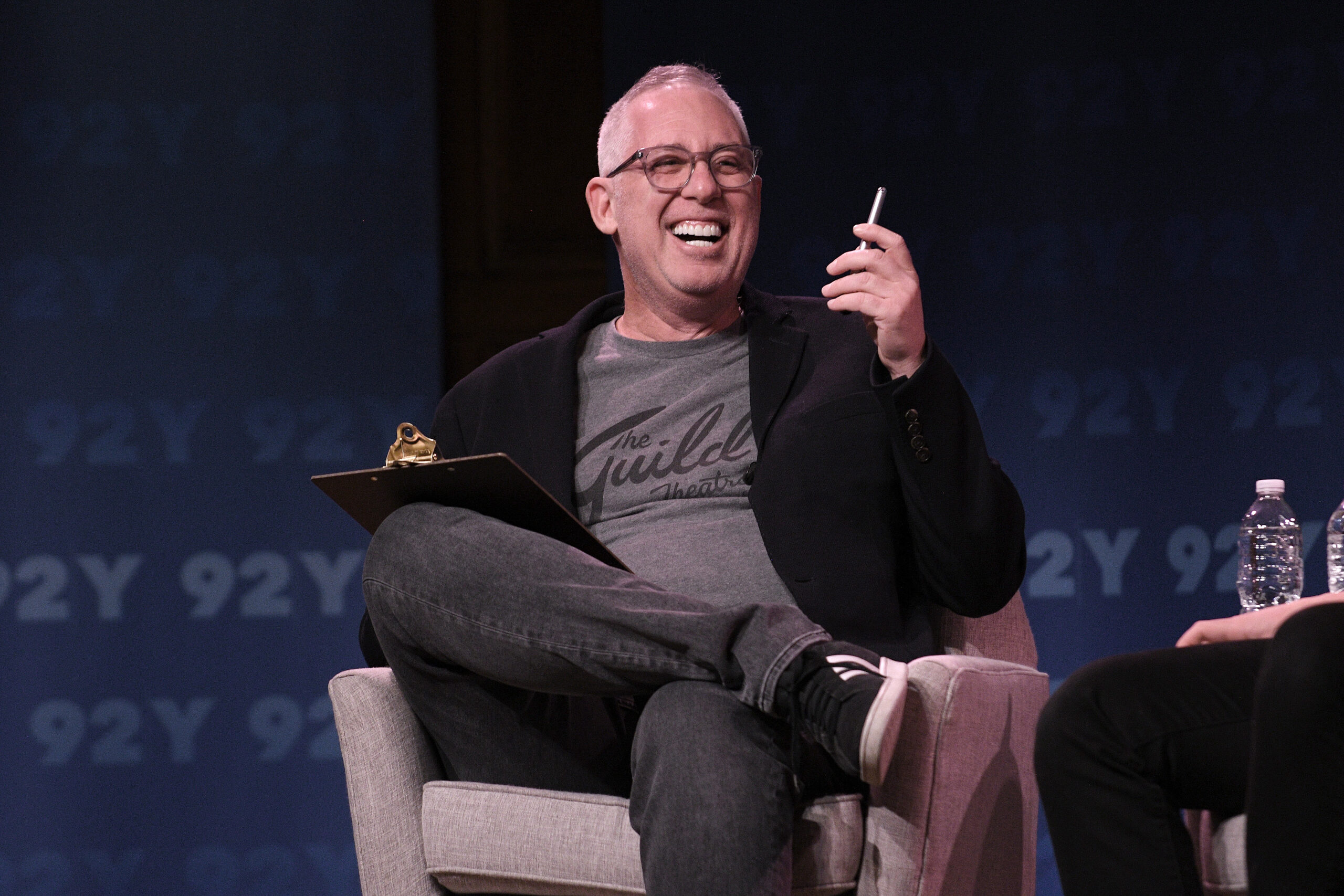
Showrunner, director, screenwriter and producer, Brian Koppelman turns 60…
Financial executive, he retired in 2014 as head of marketing for money manager Van Eck Global, Harvey Hirsch turns 85… Nonprofit executive who has managed the 92nd Street Y, the Robin Hood Foundation, the AT&T Foundation and Lincoln Center, Reynold Levy turns 81… U.S. senator (R-WV), Jim Justice turns 75… Physician and a former NASA astronaut, she is a veteran of three shuttle flights with more than 686 hours in space, Ellen Louise Shulman Baker, M.D., M.P.H. turns 73… Director-general of the Israel Antiquities Authority until 2020, he was previously a member of Knesset and deputy director of the Shin Bet, Yisrael Hasson turns 71… VP at Covington Fabric & Design, Donald Rifkin… Biologist and professor of pathology and genetics at Stanford University School of Medicine, he won the 2006 Nobel Prize in medicine, Andrew Zachary Fire turns 67… Co-founder of Casamigos Tequila and owner of restaurants, bars and lounges worldwide, Rande Gerber turns 64… Former member of the Knesset for the Shinui party, Yigal Yasinov turns 60… CEO of ZAM Asset Management, Elliot Mayerhoff… Founder and CEO of NYC-based Gotham Ghostwriters, he served as a senior advisor for Sen. Joseph Lieberman in his vice presidential and presidential campaigns, Daniel Gerstein turns 59… Israeli actor, entertainer and television host, Yitzhak “Aki” Avni turns 59… Attorney and journalist, she is a contributing editor at Newsweek and senior editor at Slate, Dahlia Lithwick turns 59… Author, political analyst and nationally syndicated op-ed columnist for The Washington Post, Dana Milbank turns 58… U.S. senator (D-NJ) since 2013, he was previously the mayor of Newark, Cory Booker turns 57… Israeli television and radio journalist and former member of the Knesset for the Jewish Home party, Yinon Magal turns 57… Professor of science writing at Massachusetts Institute of Technology, Seth Mnookin turns 54… Cinematographer and director, Rachel Morrison turns 48… Identical twin brothers, between the two of them they won 11 Israeli championships in the triathlon between 2001 and 2012, Dan and Ran Alterman both turn 46… Israeli screenwriter and producer, she has written numerous advertisements and screenplays, Savion Einstein turns 44… VP of AIPAC’s mid-Atlantic region, Leah Berry… Television and film actress, Ariel Geltman “Ari” Graynor turns 43… Basketball coach, analyst and writer, Benjamin Falk turns 38… Senior creative director at Trilogy Interactive, Jessica Ruby… Head of climate data at Watershed, Jonathan H. Glidden… Research fellow at Emory University law school, David Jonathan Benger… Entrepreneurial investor, Noah Swartz turns 33… Medical resident at UCLA Health, Amir Kashfi…
Please log in if you already have a subscription, or subscribe to access the latest updates.
 Continue with Google

 Continue with Apple