




















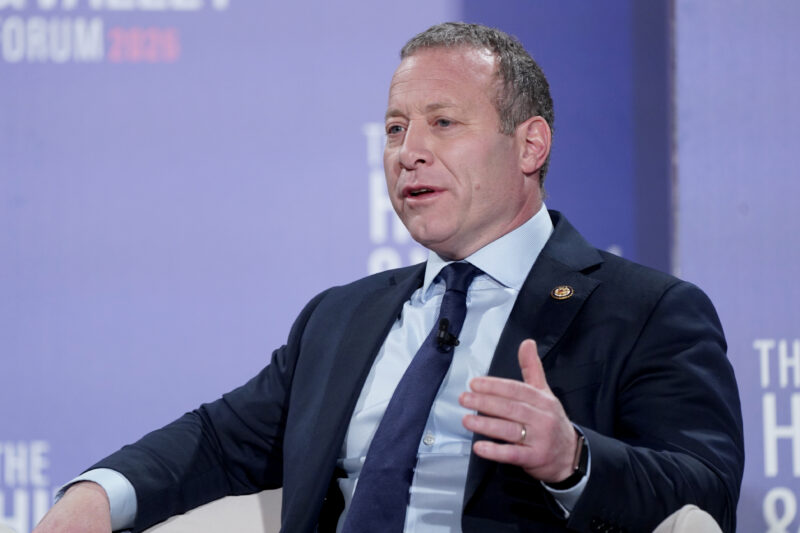



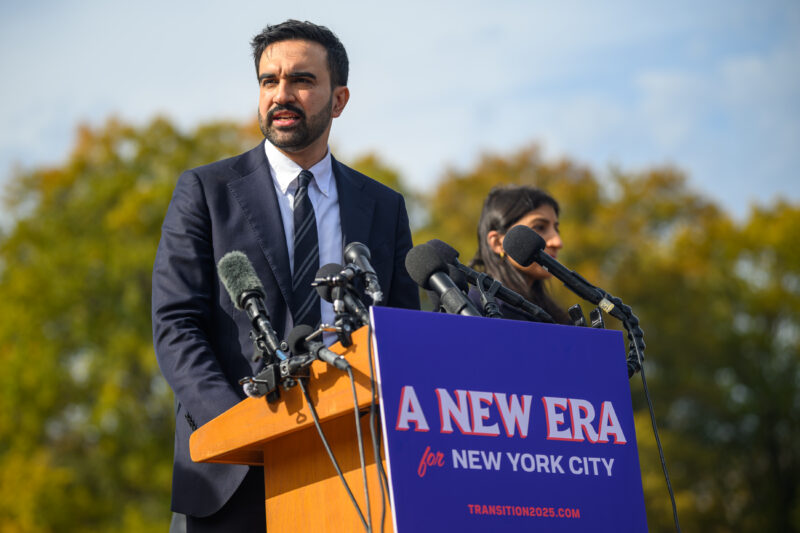


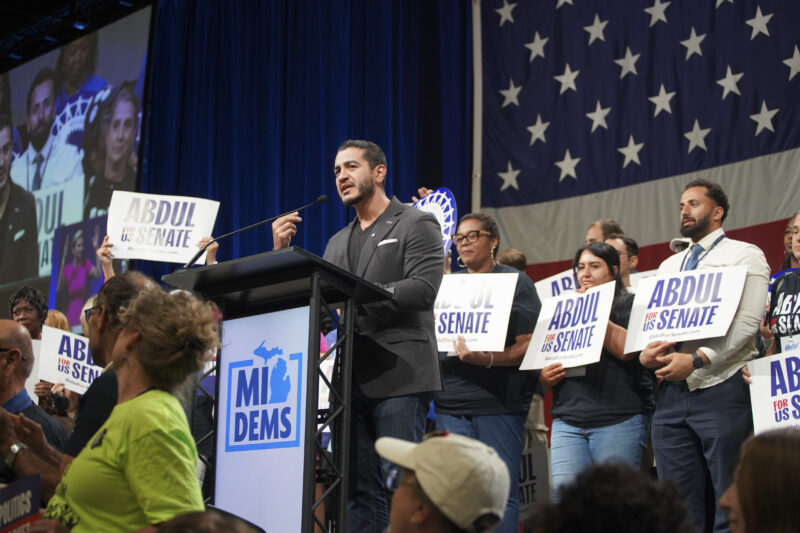






















A prominent Jewish Democratic fundraiser in the state said he’s not currently prepared to vote for El-Sayed without changes to the nominee’s stances
Bill Pugliano/Getty Images
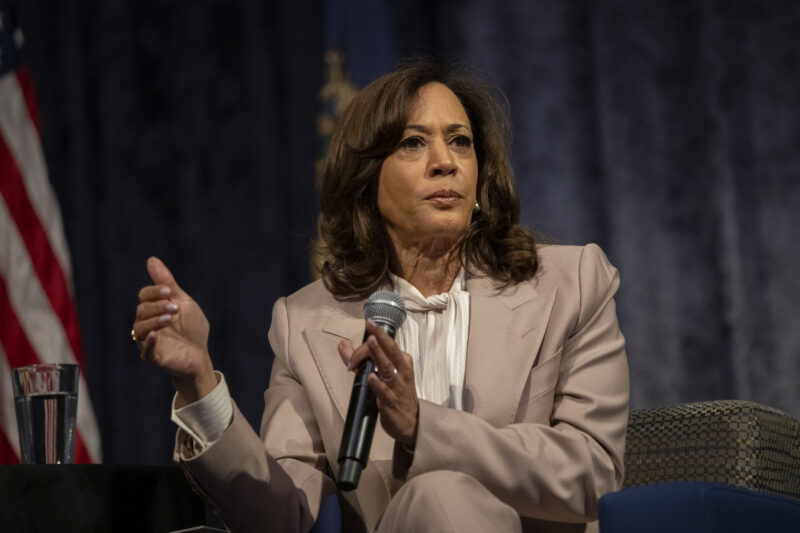
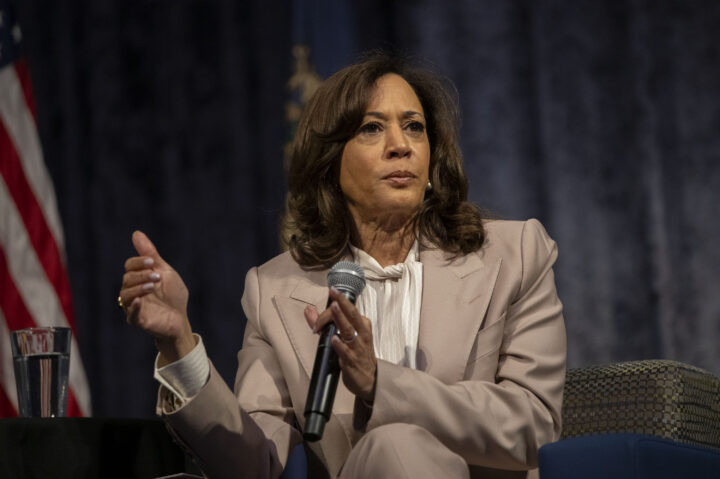
Former Vice President Kamala Harris speaks at the 38th Annual Michigan Democratic Women's Caucus Legacy Luncheon on April 18, 2026 in Detroit, Michigan.


 Add JewishInsider on Google
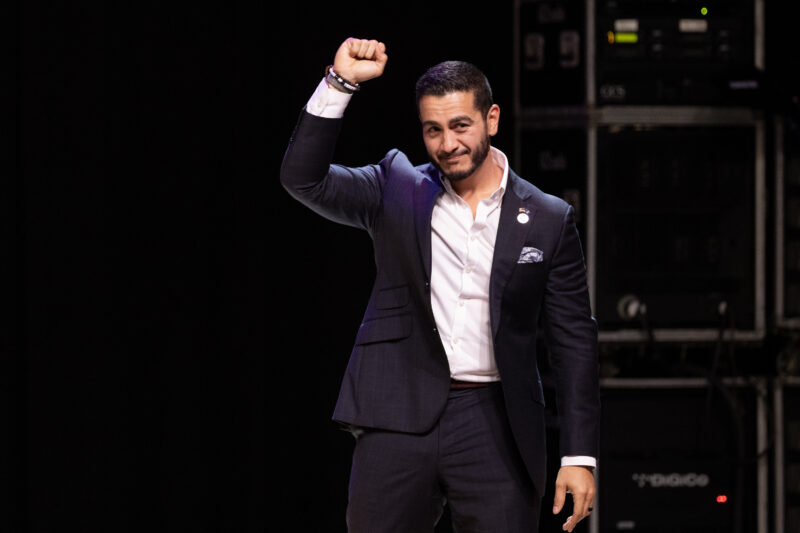
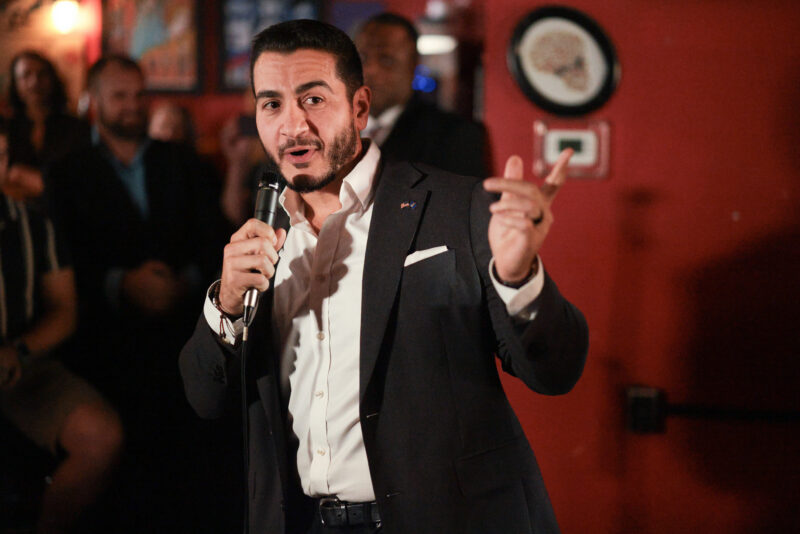
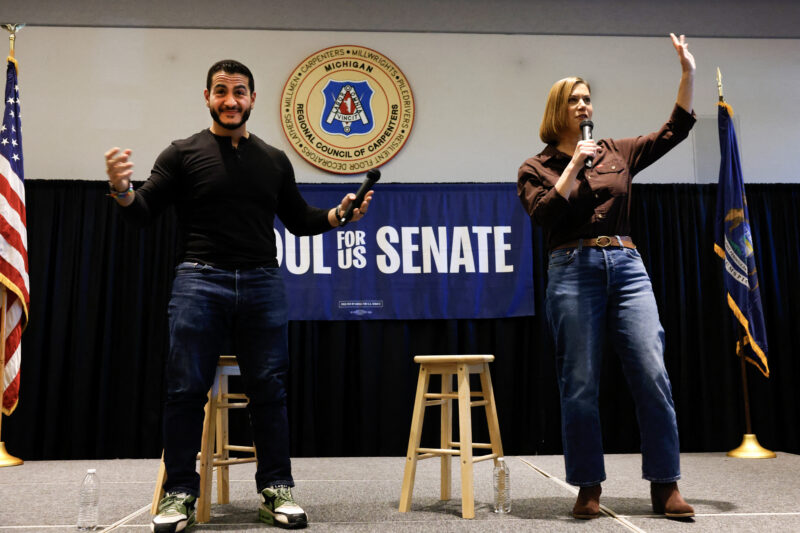
Michigan Jewish leaders on Tuesday urged former Vice President Kamala Harris — who is set to campaign with the party’s Senate nominee, Abdul El-Sayed, in Michigan this week — to appeal to El-Sayed on issues related to antisemitism and Israel.
Meanwhile, one prominent Jewish Democratic leader and fundraiser in the state said that, without seeing significant changes in rhetoric from El-Sayed, he’s not willing to vote for him, even as the state’s Jewish attorney general, Dana Nessel, said this week that she plans to support El-Sayed.
The group of Jewish leaders, writing to Harris under the banner of the Nonnegotiable Michigan campaign, said that they are longtime supporters of her and the Democratic Party, and called on her to press El-Sayed to accept the five demands on Jewish issues and Israel that the Nonnegotiable campaign has presented.
The leaders highlighted Harris’ own history of fighting antisemitism and standing with the Jewish community, including hosting a Hanukkah celebration at the vice president’s residence and working with her Jewish husband, Doug Emhoff, on the national antisemitism strategy.
“As Vice President, you told us plainly that antisemitism ‘must be condemned unequivocally’ — no caveats, no context, no hesitation,” the letter reads. “When you accepted the Democratic nomination –– with many of us in Chicago cheering you on –– you proudly affirmed your commitment to Israel’s sovereignty and safety; you knew that promise did not contradict Palestinian dignity, security, freedom or self-determination, which you called for in the very same breath.”
The leaders said that Harris’ own stance and her understanding of antisemitism is clear, while El-Sayed “has had every opportunity to meet our request to support our basic needs. So far, he has declined even to respond” while employing antisemitic tropes and rejecting Israel’s existence as a Jewish state.
“When you stand beside Dr. El-Sayed on September 22nd, we urge you to call on him to say what he has thus far been unwilling to say: that Jewish safety, including for Zionists, is nonnegotiable,” the leaders said. “That our right to define our own identity is nonnegotiable. That Jewish statehood and self-determination in our ancestral homeland is nonnegotiable. That our full, proud participation in the Democratic Party is nonnegotiable.”
During a press call on Tuesday morning, David Kramer, a prominent Jewish donor and top Democratic official, said he was still uncomfortable supporting El-Sayed unless he agreed to a set of conditions the Jewish community laid out earlier this month. Kramer served as finance chair for Sen. Elissa Slotkin’s (D-MI) 2024 campaign and was campaign chair for Rep. Haley Stevens’ (D-MI) 2026 Senate campaign. He was also a prominent member of the Jewish Democratic effort supporting Harris in Michigan in 2024.
“I was involved with Michigan Jews for Harris. We had a pretty significant group that was, and we were proud to stand with her, and particularly proud of the work that she did with Doug Emhoff to combat antisemitism, and felt that she was a stalwart supporter of our community and the U.S.-Israel relationship,” Kramer told Jewish Insider. “We think that she’s particularly well-suited to raise non-negotiables with Abdul, given her support of our community and her unique understanding of our issues and the need for our security.”
Kramer told reporters that, if El-Sayed does not embrace the five conditions laid out by the Nonnegotiable campaign, “I’m not comfortable, at this point, voting for him.” Other Jewish leaders on the call, largely clergy who said that they were not willing to disclose who they were voting for, stopped short of explicitly making such a commitment.
Cantor Regina Lambert-Hayut added that Harris has a “very particular bird’s-eye view of what it means to be on the receiving end of a constituency feeling unheard or unsupported,” referencing the Uncommitted Campaign — which El-Sayed helped lead in 2024.
That campaign “cost — maybe fully or maybe in part — Democrats the election,” Lambert-Hayut said.
“I feel that she really understands this, and maybe she, someone with her integrity and her wisdom, could help appeal to Dr. El-Sayed to understand that every constituent matters, and to completely ignore the Jewish constituency, especially those of us who want to be able to support him, is something that I hope that she would be able to help him understand better,” she continued.
Rabbi Michael Moskowitz also emphasized that the Nonnegotiable campaign’s message extends beyond El-Sayed and Michigan. “It’s a national message we need to get out there to any candidate to understand how we feel as a Jewish community, and if that our votes count, and they need to help us in the midst of these concerns.”
El-Sayed responded dismissively when pressed on his support for the Uncommitted campaign on Tuesday, ahead of his appearance with Harris, arguing that the campaign was only designed to oppose President Joe Biden, not Harris, though many prominent Uncommitted leaders continued to pressure and protest Harris through the general election.
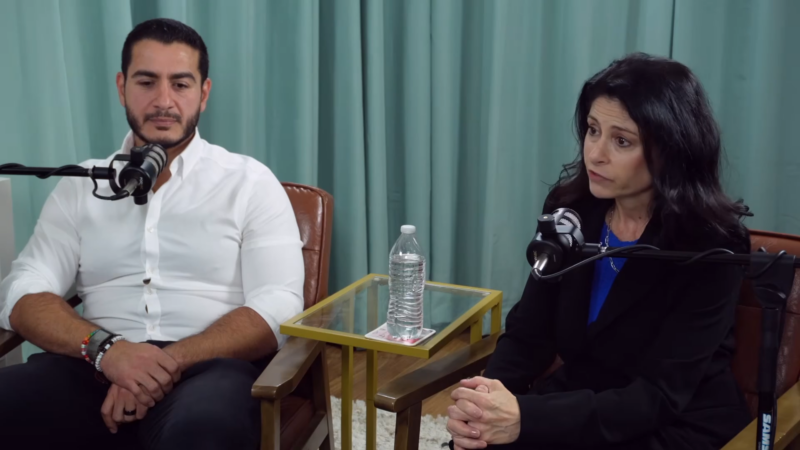
Kramer’s comment that he is not currently prepared to vote El-Sayed stands in contrast with Nessel, the Democratic AG, who endorsed him on Tuesday. Nessel made the endorsement alongside El-Sayed on the “For the Sake of Argument” podcast hosted by progressive activist Lori Goldman.
Nessel had previously been critical of El-Sayed and the Michigan Democratic Party more broadly, saying that she felt unsafe attending the party convention, but subsequently told Jewish Democrats in the state that they should put the “needs of the world above even our own self-interest and, yes, even our own survival.”
Kramer praised the Michigan Democratic Party and elected officials for their prompt condemnation of an incident last week in which an activist harassed and threatened Stevenson Capitol Hill for her support for Israel.
The activist involved is an officer of the Michigan Democratic Party, but the party is undertaking removal procedures. He also signed onto a letter of Jews supporting El-Sayed’s campaign, though El-Sayed also condemned his actions.
“It’s of great concern when any leader is accosted that way and things are thrown at them that are so damaging and alarming,” Moskowitz said on the press call.
Plus, Witkoff calls for indefinite Iran nuclear deal

Mario Tama/Getty Images
An attendee wears a jacket at an Iowa caucus watch party organized by Metro D.C. Democratic Socialists of America, on February 3, 2020 in Washington, DC.
Good Wednesday afternoon!
This P.M. edition is reserved for our premium subscribers — offering a forward-focused read on what we’re tracking now and what’s coming next.
It’s me again — Danielle Cohen-Kanik, U.S. editor at Jewish Insider and curator, along with assists from my colleagues, of the Daily Overtime. Please don’t hesitate to share your thoughts and feedback by replying to this email.
📡On Our Radar
Notable developments and interesting tidbits we’re tracking
Ahead of the third round of U.S.-Iran negotiations taking place in Geneva tomorrow, Vice President JD Vance told Fox News that President Donald Trump “has a number of other tools at his disposal” besides diplomacy to ensure “the craziest and worst regime in the world” does not obtain nuclear weapons, following on the president’s remarks during last night’s State of the Union calling Iran “the world’s No. 1 sponsor of terror”…
In response to Trump’s comments, where he also said Iran was developing advanced ballistic missiles and had killed 32,000 protesters, Iranian Foreign Ministry spokesperson Esmail Baghaei tied Trump to the “law of propaganda coined by Nazi [chief propagandist] Joseph Goebbels.”
“This is now systematically used by the U.S. administration and the war profiteers encircling it, particularly the genocidal Israeli regime … Whatever they’re alleging in regards to Iran’s nuclear program, Iran’s ballistic missiles, and the number of casualties during January’s unrest is simply the repetition of ‘big lies,’” Baghaei wrote on X…
White House Special Envoy Steve Witkoff, who is leading Iran negotiations alongside Jared Kushner, reportedly told AIPAC members at the group’s summit in Washington yesterday that any deal reached with Iran should not have a “sunset clause,” as the 2015 Joint Comprehensive Plan of Action was criticized for.
“We start with the Iranians with the premise that there is no sunset provision. Whether we get a deal or not, our premise is: you have to behave for the rest of your lives,” Witkoff told the group, according to Axios. He said talks are currently focused only on the nuclear issue, but if they are successful, the administration would look to hold additional talks on Tehran’s missile program and support for terror proxies…
Satellite photos analyzed by the Associated Press appear to show U.S. ships that typically dock in Bahrain as part of the U.S. Navy’s 5th Fleet have moved out to sea. The 5th Fleet similarly scattered its ships during the U.S. strikes in Iran last June…
Dutch airline KLM announced a suspension of flights between its hub in Amsterdam and Israel’s Ben Gurion Airport starting March 1 until further notice, saying in a statement that it is currently “not commercially or operationally feasible for KLM to operate flights to Tel Aviv.” It’s the first airline to pause flights amid the current unrest with Iran…
On the campaign trail, Washington, D.C., mayoral candidate Janeese Lewis George vowed to reject the “Zionist lobby” in a questionnaire seeking the endorsement of the Metro D.C. chapter of the Democratic Socialists of America, Jewish Insider’s Gabby Deutch reports, a category that the DSA said includes AIPAC, Democratic Majority for Israel, Christians United for Israel and J Street.
Referencing her appearance at an event with the Jewish Community Relations Council of Greater Washington in December, Lewis George assured the DSA she “disagree[s] with the JCRC on a number of issues,” including its opposition to describing Israel’s actions in Gaza as a genocide and its “definition of antisemitism that criminalizes dissent, and their attacks on activists.”
Ron Halber, CEO of the JCRC, told JI, “As far as I’m concerned, [the DSA’s questionnaire] is an antisemitic manifesto. They are making the price of their endorsement the social exclusion of Jews”…
Illinois state Sen. Laura Fine, a Democrat running for an open Illinois House seat, unapologetically championed her backing for Israel in a position paper obtained by JI’s Marc Rod, amid attacks from anti-Israel activists and groups over her support for the Jewish state and backing from pro-Israel supporters.
Fine described Israel in the paper as “more than just a strategic ally, it is a beacon of democracy in one of the world’s most volatile regions,” as she and some of her primary opponents, including Evanston Mayor Daniel Biss and far-left activist Kat Abughazaleh, are set to participate in a televised debate tonight…
The U.S.-led Board of Peace released a video today laying out its vision for Gaza. The board’s goal by Year 3 is to fully rebuild the southern Gazan city of Rafah and have Gaza “connected to the world through an Abrahamic gateway, linking it with Egypt, Israel, Jordan, Saudi Arabia, the UAE and extending to India and Europe.” By the board’s 10th year, it said, Gaza will be “self-governed,” without specifying who will oversee the enclave and how Hamas will be removed from power…
Knesset Speaker Amir Ohana awarded Indian Prime Minister Narendra Modi the newly established Medal of the Knesset, the highest honor of the body, after Modi’s address there today. His remarks were warmly received by members of Knesset and Israeli Prime Minister Benjamin Netanyahu, who was also in the chamber…
Following Israel’s recognition of Somaliland’s independence in December, Jerusalem accepted the appointment of Mohamed Hagi as the first Somaliland ambassador to the Jewish state (and its first fully accredited ambassador anywhere in the world). Hagi “was a member of the inner circle of officials who promoted the establishment of relations between Israel and Somaliland,” the Israeli Foreign Ministry said, and vowed that a reciprocal Israeli ambassador “will soon be appointed”…
Former Harvard President Larry Summers will remain on leave from his teaching position at the Ivy League school for the duration of the academic year, at which point he will retire, Harvard announced today, after files released by the Department of Justice showed Summers maintained a relationship with sex trafficker Jeffrey Epstein after the financier had been convicted of prostitution involving a minor…
⏩ Tomorrow’s Agenda, Today
An early look at tomorrow’s storylines and schedule to keep you a step ahead
Keep an eye out in Jewish Insider for a preview of Fox Nation’s new docudrama on King David, offering a dramatic reenactment of the biblical coming-of-age story of the Jewish leader.
White House Special Envoy Steve Witkoff and Jared Kushner will hold discussions with Iranian Foreign Minister Abbas Araghchi in Geneva, mediated by Omani Foreign Minister Badr Albusaidi.
California Jewish groups including the JCRC Bay Area, the Jewish Federation of Los Angeles and Jewish California, which rebranded today from its previous name of JPAC, are hosting a forum for candidates running for governor, as Gov. Gavin Newsom reaches his term limit. Participating candidates include former presidential contender Tom Steyer, Rep. Eric Swalwell (D-CA), San Jose Mayor Matt Mahan and former Los Angeles Mayor Antonio Villaraigosa, all of whom are Democrats, as well as Republican commentator Steve Hilton.
Stories You May Have Missed
PUSHING BACK
Rep. Jared Moskowitz, representing a swing district: ‘The idea that the vice president lost every swing state because she wasn’t more extreme on this issue is laughable’
CAPPELLO’S CAMPAIGN
The Air Force veteran, who served for six years at the U.S. Embassy in Israel, said Israel should continue to make efforts toward peace
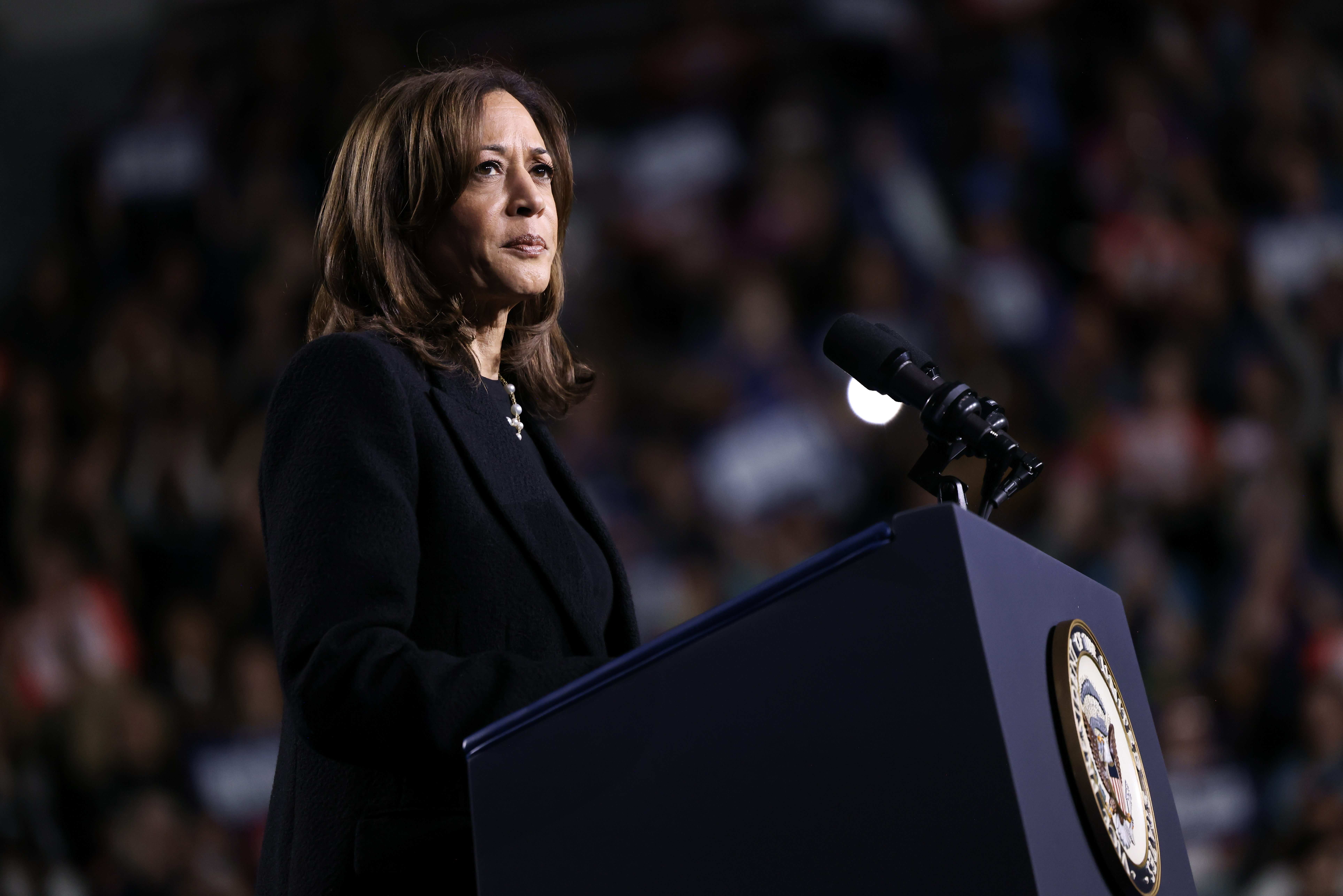
Rep. Jared Moskowitz, representing a swing district: ‘The idea that the vice president lost every swing state because she wasn’t more extreme on this issue is laughable’
Michael M. Santiago/Getty Images
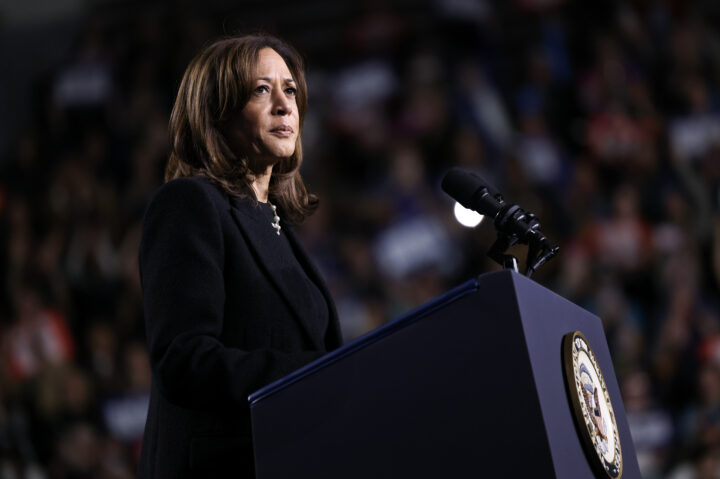
Vice President Kamala Harris speaks at a campaign rally on November 04, 2024 in Allentown, Pennsylvania.
Moderate congressional Democrats are pushing back against claims from anti-Israel activists, sparked by recriminations over an unreleased Democratic National Committee post-2024 election analysis, that the party’s position on Israel during the war in Gaza was a decisive factor in Vice President Kamala Harris’ election loss.
Speaking to Jewish Insider, the lawmakers rejected the notion that the Biden administration and Harris campaign’s approach to Israel was the decisive factor in the defeat, instead pointing to broader political dynamics.
They also called on the DNC to release the post-election autopsy, expressing confidence that the findings wouldn’t indicate that taking a stronger anti-Israel line would have helped Harris win more votes.
“I don’t think that was the issue in the election. I disagree with that conclusion,” Rep. Brad Schneider (D-IL) told JI. “Israel is our country’s strongest ally in the Middle East, one of the strongest allies in the world, and I can tell you that my colleagues here overwhelmingly support a strong U.S.-Israel relationship.”
Rep. Jared Moskowitz (D-FL) echoed those sentiments, telling JI that “the idea that the vice president lost every swing state because she wasn’t more extreme on this issue is laughable.” He called on Democratic officials to “release the report.”
“I mean, this is ridiculous,” said Moskowitz. “You got Democrats talking about how we should release the report on Epstein … now they should release [the DNC autopsy report].”
Rep. Greg Landsman (D-OH), who represents a swing district in Ohio, also called for transparency, but cautioned against narrowing the post-election analysis to a single issue.
“That’s what the party should do,” Landsman said of releasing the report. “The country, they want us to focus entirely on the voters … which means that it’s going to be about their economic conditions, it’s going to be about their safety, it’s going to be about how we invest in their communities, it’s going to be about how we make their lives better. That’s the winning formula.”
Sen. Richard Blumenthal (D-CT) told JI he had not heard of the autopsy, however, he stated that he questions “the veracity of that report,” adding that he “strongly disagrees” with the assertion that Harris lost due to her stance on Israel.
“There were a number of reasons why she lost,” said Blumenthal. “I have not spoken with anybody associated with the DNC about this report. I have no idea what the report says, but it may be wise to release the report.”
Senior congressional correspondent Marc Rod contributed reporting.
Rep. Jared Moskowitz told JI that Kamala Harris’ team asking Shapiro if he’d ever been an agent for Israel, as Shapiro alleges, is ‘totally insane. I don’t know how else to describe insanity’
Andrew Mordzynski/Icon Sportswire via Getty Images
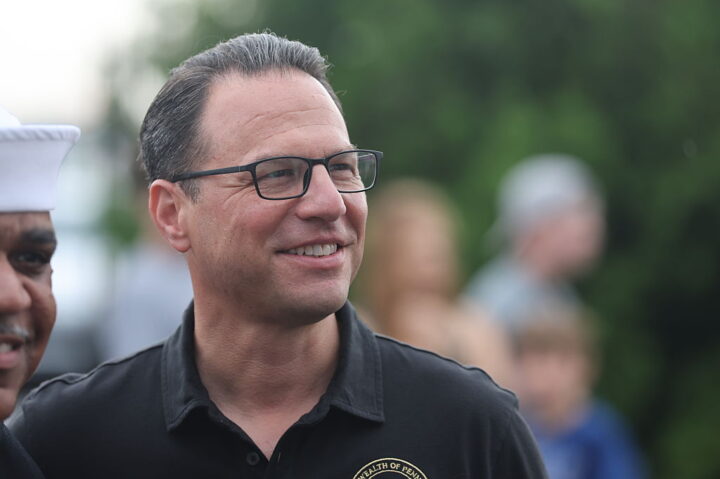
Pennsylvania Gov. Josh Shapiro looks on during the NASCAR Cup Series at The Great American Getaway 400 on June 22, 2025, at Pocono Raceway.
Several moderate House Democrats said they were concerned and frustrated by Pennsylvania Gov. Josh Shapiro’s account, which emerged over the weekend, of being questioned by Vice President Kamala Harris’ presidential campaign, as part of his vetting as her potential running mate, about whether he had ever been an agent of Israel.
Some progressives have defended the questioning by pointing to a subsequent report that the campaign had asked Minnesota Gov. Tim Walz, the eventual vice presidential nominee, about whether he had served as an agent for China, where he once lived.
But Shapiro, who volunteered on a kibbutz and briefly on an Israeli army base while in high school, also said that the campaign had pressured him to walk back condemnations of antisemitism on college campuses, and emphasized that he took offense to the scope and persistence of the questioning he faced about Israel.
“Totally insane,” Rep. Jared Moskowitz (D-FL) told Jewish Insider. “I don’t know how else to describe insanity. Literally insane.”
Rep. Greg Landsman (D-OH) said the questioning was “concerning” and that he was “glad Josh had the courage to say what happened.”
“Hopefully people will appreciate that you shouldn’t do that. … It’s a longstanding antisemitic trope that we’re all agents of the Israeli government, that we’re all working for this global Jewish cabal. And so that’s problematic,” Landsman, who is Jewish, continued. “Antisemitism is complicated. There’s a lot of pieces to it. They all get very dangerous for us. I do think that people should be open to say, if Jews say it’s antisemitic — even if some say it’s not — let’s just assume it is and be done and not do it.”
Rep. Debbie Wasserman Schultz (D-FL) called the revelations “incredibly disturbing,” while saying she didn’t believe Harris would have approved the line of questioning.
“The process that allowed for those kinds of questions to be asked is disturbing to me. I’ve known Josh Shapiro for a really long time, and I understand how he felt and would have felt the same way,” Wasserman Schultz, a former chair of the Democratic National committee, told JI. “It’s a little bewildering that that would be the kind of question line that they would take, given that Vice President Harris’ husband is Jewish. From what I know and experienced of both she and he, separately and together, that doesn’t seem like a line of questioning that she would have approved of. Hopefully it was a rogue question, rather than something that was sanctioned.”
Rep. Brad Schneider (D-IL) praised Shapiro personally and said he took issue with the questions he faced in the vetting process.
“I’ll give you my reaction to Josh Shapiro: This is someone who knows who he is, he’s confident in his identity and proud of where he comes from and strong in what he believes. I think he gave the right answers, and I think it was wrong that those questions were even raised.”
Rep. Tom Suozzi (D-NY) said that the questioning of Shapiro was not appropriate, calling it “very disturbing” and “unfair.”
Rep. Josh Gottheimer (D-NJ) said in a statement over the weekend that Shapiro’s account was “nothing short of outrageous, and, if true, demand[s] an immediate explanation from the Harris campaign.
“That kind of insinuation and targeting is antisemitism, plain and simple. No one should be judged or discriminated against because of their faith. We must do better,” Gottheimer continued.
Rep. James Walkinshaw (D-VA) said on CNN over the weekend, “If that question was asked of Governor Shapiro, it should have been asked to every other candidate who was vetted.”
Others largely withheld criticism of the Harris campaign.
Rep. Jerry Nadler (D-NY), a co-chair of the Congressional Jewish Caucus, said that it sounded like other potential nominees had also been asked about foreign ties, but described the line of questioning as “bizarre.”
Rep. Brad Sherman (D-CA) withheld judgment when asked about Shapiro’s revelations, telling JI, “It’s obviously very interesting. I don’t know whether the person asking the vetting questions really reflected Kamala Harris’ personal opinions at all, so I’ve got to read more about it.”
Rep. Madeliene Dean (D-PA) said she didn’t want to comment on the situation without having read Shapiro’s book coming out next week, in which he describes the encounter, or having been present for the conversations in question, but said that she has known Shapiro for a long time and praised him as a man of “[faith], family and a belief in the American system.”
Shapiro’s decision to go public with allegations that the last presidential nominee’s team exhibited bigotry underscores just how deep the divisions are within the party

RYAN COLLERD/AFP via Getty Images
Vice President Kamala Harris and Pennsylvania Governor Josh Shapiro (L) speak to the press while making a stop at the Reading Terminal Market in Philadelphia, Pennsylvania, July 13, 2024.
Concerns over rising antisemitism and growing hostility toward Israel within the Democratic Party have long been on a slow boil.
Pennsylvania Gov. Josh Shapiro’s blockbuster revelation in his upcoming memoir that he was asked by Kamala Harris’ presidential campaign during the VP vetting process if he was ever an agent of the Israeli government underscores just how fraught the political environment has gotten for Jewish Democrats who support Israel.
Shapiro’s decision to go public with allegations that the last presidential nominee’s team exhibited bigotry underscores just how deep the divisions are within the party, especially as he considers a 2028 presidential run. These rifts pit the party’s moderate wing — which is generally supportive of Israel and harbors zero tolerance for antisemitism — against an ascendant left wing, exemplified by the disruptive anti-Israel protesters that Harris was pandering to at the time of her veepstakes deliberations.
Shapiro, if he runs for national office, is planting his flag in the mainstream wing of the Democratic Party, willing to call out antisemitism when he sees it, including on college campuses in his state, and supporting Israel — even while strongly criticizing some policies of the Netanyahu government. In his book, he proudly discusses his personal connections to Israel and the role Judaism plays in his life.
These were uncontroversial views within the Democratic Party, until the Oct. 7, 2023, Hamas terror attacks against the Jewish state emboldened an ugly strain of extremism that has, all too often, been accommodated by party leaders. (Shapiro also revealed that Harris insisted he apologize for his condemnation of intimidation targeting Jewish students at the University of Pennsylvania by anti-Israel protesters, which he refused to do.)
Anyone documenting the evolution of Democratic Party politics over the last few years can see the red flags. New York City, the epicenter of Jewish life in the United States, elected a mayor who refuses to recognize Israel as a Jewish state. Jewish Democrats running for office in progressive constituencies buckle under pressure to call Israel’s war against Hamas a “genocide” or decide to suddenly condemn AIPAC to showcase their progressive bona fides. A majority of Democratic voters, according to recent polls, now have an unfavorable view of Israel.
Indeed, Harris’ decision to pick Minnesota Gov. Tim Walz over Shapiro as her running mate — amid concern about backlash from anti-Israel forces within the party — is an example of how politically damaging it can be for Democrats to indulge such far-left activism. Outside of his folksy demeanor, Walz offered little for the national ticket and now is enmeshed in scandal in his home state. If he was tapped, Shapiro boasted the moderate record and swing-state success that at least could have moved the needle a bit more.
A Shapiro presidential candidacy would be a bet on a return to normalcy within the Democratic Party electorate. By calling out the Harris campaign’s behavior during the veepstakes vetting, Shapiro is drawing a red line between those who would tolerate bigotry in favor of those prioritizing electability by appealing to a middle-of-the-road normie voters. (He’s also reminding Democratic voters about the vulnerabilities Harris would bring to the table as a repeat presidential candidate as she mulls over another national campaign.)
For a short time after President Donald Trump’s decisive victory over Harris last November, it seemed like the moderates held the momentum within the party — and that a candidate with a proven record of winning over independents, like Shapiro, would be most appealing for a party desperate to win.
But as the resistance reasserted itself amid Trump’s governing excesses, and Mayor Zohran Mamdani’s brand of far-left, anti-Israel populism proved successful in New York City, the energy has shifted squarely to the left, to the point where it’s difficult for the silent majority to fight back.
It feels like ages ago that former Sen. Joe Lieberman, a proudly observant Jew and pro-Israel stalwart, was embraced by the Democratic Party at all levels and proved an asset to the party’s presidential ticket. Just two decades later, it’s an open question whether another pro-Israel moderate Jewish Democrat will receive the same warm reception.
Shapiro writes in his new book that the Harris team asked if he had ever been a ‘double agent for Israel’

ANDREW CABALLERO-REYNOLDS/AFP via Getty Images
Pennsylvania Gov. Josh Shapiro (L) greets former Vice President Kamala Harris as she arrives at Pittsburgh International Airport in Pittsburgh, Pennsylvania on September 2, 2024.
In the summer of 2024, when Vice President Kamala Harris was vetting potential running mates for her expedited campaign for president, a senior member of her team asked Pennsylvania Gov. Josh Shapiro whether he had ever been a “double agent for Israel,” Shapiro writes in a new book that will be published later this month. “Was she kidding? I told her how offensive the question was,” Shapiro recounts in the book.
The exchange — which Shapiro describes in an outraged tone — has prompted sharp criticism from Jewish leaders, including some who served in the Biden-Harris administration.
“The more I read about [Shapiro’s] treatment in the vetting process, the more disturbed I become,” Deborah Lipstadt, who served as the State Department’s antisemitism envoy under President Joe Biden, said in a post on X. “These questions were classic antisemitism.”
Shapiro suggests in the book that he was being treated unfairly as a Jewish contender for the role of vice president: “I wondered whether these questions were being posed to just me — the only Jewish guy in the running — or if everyone who had not held a federal office was being grilled about Israel in the same way,” he writes.
Anti-Defamation League CEO Jonathan Greenblatt called the line of questioning “barely veiled bigotry,” and said it is “a textbook invocation of one of the oldest antisemitic canards in politics: the smear of dual loyalty.”
The comments also earned criticism from Rep. Josh Gottheimer (D-NJ), who said in a statement that “that kind of insinuation and targeting is antisemitism, plain and simple. No one should be judged or discriminated against because of their faith.”
Shapiro’s Jewish faith and his support for Israel became the object of criticism among far-left activists, who agitated against his selection as Harris’ running mate. Harris has maintained that antisemitism played no role in her decision not to pick Shapiro.
Shapiro’s account of his interactions with Harris’ campaign suggests that his views on Israel did present a problem for Harris. According to Shapiro, Harris asked him to apologize for comments he had made denouncing the actions of some anti-Israel protesters at the University of Pennsylvania. He refused, writing in his book that he felt Harris wanted him to align “perfectly” with her on all issues.
“It nagged at me that their questions weren’t really about substance,” Shapiro writes. “Rather, they were questioning my ideology, my approach, my world view.”
Abraham Foxman, the former longtime leader of the Anti-Defamation League, called it “very disturbing” that Shapiro was asked about being an Israeli double agent. “Aides focused on Israel to the extent he found it offensive. Something very troubling about our current political culture,” Foxman wrote in a post on X.
Shapiro was not the first Jewish official to face a “double standard” during the vetting process, Aaron Keyak, the Jewish outreach director on Biden’s 2020 campaign who later served as Lipstadt’s deputy at the State Department, said in a statement.
“During my vetting process I faced questions in a classified setting that my fellow non-Jewish political appointees did not,” Keyak said. “These sort of antisemitic questions are anti-American and do not represent the best that the Democratic Party offers. Now and especially during the next Presidential campaign we must demand better.”
Minnesota Gov. Tim Walz, who was chosen as Harris’ running mate, was also asked a question about his own ties to foreign nations. The Harris campaign asked Walz — who had previously lived and worked in China — if he had ever been an agent of China, CNN reported.
The adversarial nature of Harris and Shapiro’s relationship during the 2024 campaign was the source of a great deal of speculation. Harris took aim at Shapiro, too, in a book she published in 2025, writing that before they even met, he was asking questions about furnishing and decorating the Naval Observatory, where the vice president resides, should he be selected.
A spokesperson for Harris did not respond to a request for comment.
This story was updated on Jan. 20 with additional comments.
The GOP nominee said one key to victory is winning over independents and moderate Dems in Rep. Josh Gottheimer’s home base of Bergen County
Mark Kauzlarich/Bloomberg via Getty Images
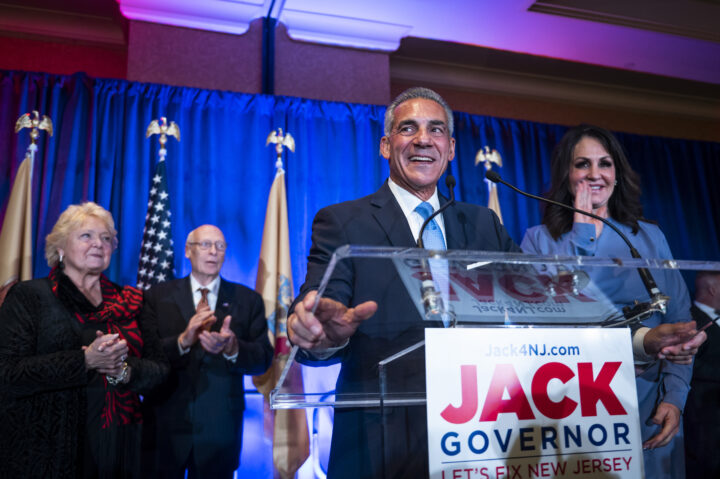
Jack Ciattarelli, Republican candidate for governor of New Jersey, speaks during an election night event in Bridgewater Township, N.J. on Wednesday, Nov. 3, 2021.
Ever since President Donald Trump ran surprisingly close to Vice President Kamala Harris in New Jersey during last year’s presidential race, Republicans have been looking at the state’s gubernatorial race as a chance to capitalize on the party’s momentum in the blue state.
Jack Ciattarelli, the GOP’s nominee for governor, also came tantalizingly close to defeating Gov. Phil Murphy in the state’s last gubernatorial race. He’s running again, and hoping to get over the finish line against Rep. Mikie Sherrill (D-NJ), in part by courting the state’s sizable Jewish community, which has swung to the right in recent elections.
“People now know, because of the closeness of my race, that we can win. There’s just an attitude change because they feel like the Democrats have really failed them on a number of issues, and antisemitism is one of them,” Ciattarelli told Jewish Insider in an interview ahead of his visit to Israel this week.
Ciattarelli, 63, who built two medical publishing companies in New Jersey while serving as a state lawmaker, said, “I see myself not so much as a politician, but a successful CEO who is looking to be the CEO hands-on governor that we need.”
As part of his Jewish communal outreach, Ciattarelli traveled to Israel on Sunday for a five-day visit, which he organized in a show of solidarity. He also spent time on his visit pursuing opportunities for economic investment from leading Israeli companies in the technology and medical sectors.
“Any students in violation of university policy, I think, should be expelled. Any student that’s broken the law should be arrested, and any student here on an academic visa from another country should be sent back to where they came from if they’re going to engage in that kind of behavior,” Ciattarelli said. “I will pressure our college and university presidents to be working in partnership with me to make sure that kind of behavior isn’t tolerated.”
He told JI that one of his goals with the visit was to boost the state’s economy “by forging a closer economic relationship with a number of nations” that are close U.S. allies. “Israel is first and foremost on the list, but as governor, I will certainly look to Canada, Mexico and India as well to increase our bilateral trade,” Ciattarelli said.
Fighting antisemitism, Ciattarelli said, will be a priority of his if he’s elected. Ciattarelli said he has “made very, very clear” that he supports codifying the International Holocaust Remembrance Alliance’s working definition of antisemitism into state law, will “appoint an attorney general and a superintendent of state police that are both sensitive to the needs and worries of New Jersey’s Jewish community” and will establish an Advisory Council on Jewish Relations to guide him on ways to the best support the community.
“Any students in violation of university policy, I think, should be expelled. Any student that’s broken the law should be arrested, and any student here on an academic visa from another country should be sent back to where they came from if they’re going to engage in that kind of behavior,” Ciattarelli said. “I will pressure our college and university presidents to be working in partnership with me to make sure that kind of behavior isn’t tolerated.”
Ciattarelli described the December 2023 House Education and Workforce Committee hearing, where the presidents of Harvard University, University of Pennsylvania and the Massachusetts Institute of Technology declined to say that calling for the genocide of Jews qualified as bullying and harrassment, as a “watershed moment” that brought the issue of antisemitism to the forefront of Jewish voters’ minds.
“I will do what others have done, including Democratic leaders, and that’s condemning Mamdani, condemning his candidacy, and doing all they can to make sure that a threat to communities such as this is not elected,” Ciattarelli told JI. “There is no space for someone like this in the public sphere, let alone in public office, and I’m going to do everything in my power to protect all 9.3 million citizens here in New Jersey, and particularly members of the Jewish community who feel threatened by a person such as this.”
“They want to see a governor who’s going to demonstrate zero tolerance for antisemitism and call it out for what it is when we see it and hear it,” Ciattarelli said of Jewish voters in the Garden State.
The New Jersey Republican has also sought to tie Sherrill to Zohran Mamdani, the far-left Democratic nominee in New York City’s mayoral race who has resisted condemning “globalize the intifada” rhetoric. Ciattarelli’s campaign cut a digital ad highlighting Sherrill’s nationally televised indecision on whether she would support Mamdani’s mayoral campaign.
“I will do what others have done, including Democratic leaders, and that’s condemning Mamdani, condemning his candidacy, and doing all they can to make sure that a threat to communities such as this is not elected,” Ciattarelli told JI. “There is no space for someone like this in the public sphere, let alone in public office, and I’m going to do everything in my power to protect all 9.3 million citizens here in New Jersey, and particularly members of the Jewish community who feel threatened by a person such as this.”
The race is competitive, with Jewish voters (who make up about 6% of the state’s population) potentially emerging as a swing voting bloc.
“This race is shaping up to be fairly tight, with both candidates making notable outreach efforts to the Jewish community. Jack’s visit to Israel and his strong support for IHRA have had a particularly positive impact,” one Jewish leader in the state told JI.
“Mikie has also engaged significantly, and that effort has been noticed, but concerns remain based on her support of Mamdani in the city and the way she recently framed the call for a ceasefire in Gaza. She still retains goodwill within the Jewish community, but has a long way to go in strengthening trust and confidence,” the leader explained.
A Jewish community leader in Central Jersey, also granted anonymity to speak freely, offered a similar take.
“It’s definitely a race that’s very closely watched in the Jewish community, more than any time in the past, I would say. I think seeing Jack going to Israel, out of all places, just three months before the general election, I think that shows you how important the Jewish vote is going to be this time around, and Jack is losing no time and trying to get the Jewish vote on his side,” the source said.
“I often say that in New Jersey, you have to run for governor as though you’re running for mayor,” Ciattarelli said, adding of his outreach to Democratic and unaffiliated voters, “The biggest compliment I get is when I can come down off a platform or stage, if somebody comes up to me and says, ‘Are you Republican? Are you Democrat?’”
Ciattarelli told JI that he views Bergen County, the state’s most populous county, as a must-win area for his campaign, making the support of Democratic and independent voters necessary in his path to victory. The area, which is represented by Gottheimer in Congress, is also home to around 100,000 Jewish residents, a majority of whom are registered Democrats or independents.
“Bergen County has a greater population than eight states and it’s the key to winning a statewide election. I did very well, just coming a little short in ‘21, but I do sense a change amongst a great number of people who may not have considered me last time, may not have voted last time that are looking to make a change here in New Jersey,” Ciattarelli said.
“I often say that in New Jersey, you have to run for governor as though you’re running for mayor,” he continued, adding of his outreach to Democratic and unaffiliated voters, “The biggest compliment I get is when I can come down off a platform or stage, if somebody comes up to me and says, ‘Are you Republican? Are you Democrat?’”
Since narrowly losing his first campaign for governor, Ciattarelli worked hard to unify the party around his repeat bid, making particular effort to secure support from the MAGA wing of the Republican Party. His efforts paid off in the primary, which he won without much serious GOP opposition.
For her part, Sherrill handily defeated five other Democrats, including Gottheimer, Newark Mayor Ras Baraka,and Jersey City Mayor Steve Fulop, in the Democratic primary.
With that backdrop, both parties are watching the November gubernatorial contest closely to see if the rightward shift in the Garden State has held since Trump took office in January. For his part, Ciattarelli says that while the issues animating New Jersey voters have not changed since his 2021 race, he believes “what is different is the political landscape.”
“The issues I was talking about in ‘21, including antisemitism, have now come to a complete boil. They were simmering back then,” Ciattarelli told JI. “I’m not competing with a pandemic this time around. It’s not easy to campaign when there’s a shelter-in-place order. I’m not running against an incumbent. There’s a lot less indifference.”
As part of his strategy to encourage voters to hit the polls in November, he said he was focusing his messaging around “four issues across the state that are raging that apply to all people”: the affordability crisis, affecting housing and energy costs; public education; public safety; and the overdevelopment of the interior of the state, where suburbs without the infrastructure to become a city are being overinvested in at the expense of New Jersey’s cities.
Regardless of which community he’s engaging with, the New Jersey Republican says the voters he’s spoken to have been more concerned with “how it is I go about solving issues” than national political matters.
“People get excited by ideas. They don’t want to hear the use of polarizing rhetoric. I think they find it a breath of fresh air when somebody stands up and is speaking to the issues and how they’re going to solve them,” Ciattarelli explained, describing this approach as “the secret to the sauce for me in the seven elections I won prior to November ‘21.”
Both parties are also investing heavily as the race emerges as one of the most competitive statewide elections of 2025.
The Democratic National Committee said earlier this month that it would provide more than $1.5 million for Sherrill’s campaign to devote to field staffing and ground game efforts. Greater Garden State, a super PAC connected to the Democratic Governors Association, announced plans in July to spend $20 million on ads for Sherrill. That dollar amount is greater than Murphy and outside groups supporting him spent on ad buys during the entire 2021 general election.
Georgia Gov. Brian Kemp, the chairman of the Republican Governors Association, visited North Jersey earlier this month for a series of fundraising events for Ciattarelli that brought in $1 million.
Memos from former Christie and Cuomo aide Maria Comella urged the former VP to more vocally call out the far-left elements of her party to win the election

Anna Moneymaker/Getty Images
Vice President Kamala Harris speaks alongside Democratic vice presidential candidate Minnesota Gov. Tim Walz at a campaign rally at the Fiserv Forum on August 20, 2024 in Milwaukee, Wisconsin.
In the closing weeks of former Vice President Kamala Harris’ presidential run last year, her campaign solicited guidance on how to win over the moderate and persuadable Republican voters she would need to defeat Donald Trump.
One of the chief ways she could do that, according to a memo from political strategist Maria Comella, would be to tout her support for Israel — and make clear she disagreed with people in the Democratic Party who compared Israel to Hamas.
“It is wrong to draw moral equivalency between a terrorist organization in Hamas and the State of Israel. No terrorist organization should be celebrated. Our support for Israel and her right to self defense should not be questioned,” Comella, a close advisor to former New Jersey Gov. Chris Christie, a Republican, and a onetime chief of staff to former New York Gov. Andrew Cuomo, a Democrat, wrote in one of four memos she sent to the Harris campaign in the fall.
The memos were published by Politico and reported in a new book about the 2024 race by the political journalists Josh Dawsey, Tyler Pager and Isaac Arnsdorf. The authors wrote that Comella did not feel her ideas were taken seriously. (Comella did not respond to a request for comment on Tuesday.)
The messaging on Israel was part of a broader pitch by Comella for Harris to gain legitimacy with moderate swing voters by demonstrating a willingness to “call out your own party when it matters.”
She could also do this, Comella argued, by drawing a contrast with the far left about the importance of America’s role in the world.
“Trump wants us to act like just any other country with no special role in the world while too many on the far left don’t want to acknowledge the fundamental goodness of our country and its people,” wrote Comella, who also advised Harris to make clear that Democrats who use hateful language to describe Trump voters are not being helpful.
In another memo, Comella described a “persuasion campaign that needs to be waged” to win over anti-Trump Republicans, anti-incumbent independents and Republicans who are “soft or still skeptical” of Trump. She advised Harris to draw a greater distinction between herself and former President Joe Biden.
Harris national security adviser Phil Gordon: ‘I would have found it too risky to initiate military force with all that that could unleash’

JIM WATSON/AFP via Getty Images
Vice President Kamala Harris speaks with Phil Gordon during a meeting with Caribbean leaders in Los Angeles, California, June 9, 2022.
Among the more surprising cheerleaders for President Donald Trump’s diplomacy with Iran were several progressive foreign policy analysts who had advised former President Barack Obama and former Vice President Kamala Harris.
Now, many of those same voices — including Phil Gordon, Harris’ national security advisor who would likely have stayed in the role if she had been elected president last year — are expressing skepticism about Israel’s preemptive strikes on Iranian military and nuclear sites, and urging Trump to pressure Israeli Prime Minister Benjamin Netanyahu to cool it.
“I would have found it too risky to initiate military force with all that that could unleash,” Gordon told Jewish Insider on Friday. His approach would have been “to try to get an enduring, diplomatically-negotiated nuclear arrangement that prevented Iran from being able to get a nuclear weapon.”
If he were advising Harris, or another Democratic president, Gordon would’ve wanted “to try to get that accomplished without having used this military action,” he said.
Gordon also argued that Trump was manipulated into supporting Israel’s strikes by Netanyahu, even as Trump celebrated Israel’s killing of Iranian hardliners, noting that several of Trump’s senior advisors have urged restraint rather than intervention.
“His supporters did not put him in place to get involved in the conflict in the Middle East,” Gordon said. “A lot of his advisors … served in Iraq or are against U.S. military interventions in the Middle East. We know where Vance is in terms of intervention. The Tucker Carlson view, Don Jr. I think Trump really wanted to avoid military conflict and negotiate a deal and be the guy who got a better deal than Obama.”
Ilan Goldenberg, who served as an Iran advisor at the Pentagon in the Obama administration and who advised Harris on Middle East issues during her 2024 campaign, told JI that Trump should try to encourage parties in the region to tone it down.
“I think the appropriate position for the United States to be in now is the role of de-escalator,” said Goldenberg, now the senior vice president and chief policy officer at J Street. “The better option, the less risky option that had more good outcomes, was the diplomatic option. Unfortunately, it’s not the way it went. So now we have to see.”
J Street released a statement on Friday calling for an end to the “cycle of retaliation and escalation,” and for a return to diplomacy between the U.S. and Iran.
Both Gordon and Goldenberg questioned Israel’s end game in the strikes, which killed several senior Iranian military leaders and destroyed an above-ground uranium enrichment site at Natanz.
“It definitely has set back the timetable for Iran’s nuclear capacity, but it hasn’t eliminated it, and we also don’t know what happens in terms of retaliation. We’d like to think and hope that Iran has been deterred and won’t respond in a way that we can’t handle,” Gordon said. “So far, so good, but we’re only on the first day, so there were real risks of doing it this way. And that’s why I would have sought, if at all possible, to do it a different way.”
Goldenberg, who said the most important next step in stopping the violence is for the U.S. to help Israel defend against Iran’s retaliation, said he is unsure whether the Israeli success will turn into a long-term victory.
“The Israelis are incredibly good operationally, but they have challenges sometimes translating that into a strategic kind of sustainable victory, as opposed to just continuing to fight,” said Goldenberg. “What’s the end state here? What are you trying to do? Or is the objective to just be in constant conflict?”
Still, even as they said a return to diplomacy is the best way to move forward, both Gordon and Goldenberg acknowledged that Israel’s Friday attack on Iran had so far gone well for Israel.
“It is a remarkable display of Israeli military and intelligence capabilities,” said Gordon.
“I think in the immediate [term], it had a lot of success. Very impressive operationally,” Goldenberg noted.
Trump said in Truth Social posts on Friday that Iran could have a “second chance” at a deal, and that they should return to the negotiating table “before there is nothing left.”
Goldenberg agrees — and he thinks Israel needs to hear from Trump that they can’t attack Iran forever.
“Make clear to the Iranians that there’s still a deal on the table. We’re willing to negotiate,” Goldenberg said. “And at the same time, make clear to the Israelis, there are limits to this. We can’t see this get out of control.”
At tonight’s debate, candidates will once again take aim at frontrunner Biden

Wilfredo Lee
Democratic presidential candidates listen to a question during the Democratic primary debate hosted by NBC News at the Adrienne Arsht Center for the Performing Arts, Wednesday, June 26, 2019, in Miami.
HOUSTON — At long last, the Democratic presidential primary debate is scheduled to be just a one-night affair. But with 10 candidates taking the stage in Houston for three full hours, it may seem much longer to viewers.
The criteria imposed by the Democratic National Committee have thinned the herd for the third debate. A number of candidates with serious resumes — including a purple-state senator, a red-state governor and the mayor of the largest city in the nation — will not be on stage. But, finally, all of the top-tier candidates will be together in one room, instead of spread out over two nights during the first two debates.
Tonight the leading candidate, former Vice President Joe Biden, will take the stage flanked by his two strongest rivals, Senators Elizabeth Warren (D-MA) and Bernie Sanders (I-VT). The three top-tier candidates will be joined by South Bend, Indiana Mayor Pete Buttigieg and Senator Kamala Harris (D-CA) at center stage, bringing together the five candidates who have consistently polled above the five percent mark since the spring.
Further out, businessman Andrew Yang, who has mounted an astonishing campaign to achieve national relevance, will appear along with two candidates formerly hyped as potential front-runners, Senator Cory Booker (D-NJ) and former Congressman Beto O’Rourke (D-TX). At the far edges of the stage, former HUD secretary Julian Castro and Senator Amy Klobuchar (D-MN) will vie for the moderators’ attention.
Will the debate’s contours change now that many of the lower-tier candidates have been weeded out? The first two debates featured moderate candidates who polled at roughly the margin of error taking wild jabs at leading contenders. But the moderate at the edge of the stage in this debate isn’t former governor John Hickenlooper or former Congressman John Delaney (D-MD) — it’s Klobuchar, a three-term senator who is still in a far stronger position than either of those two candidates were over the summer.
Some things, however, will stay the same. Biden will remain at center stage and still have a target on his back. Although the former vice president has been bloodied in past debates — most notably when Kamala Harris attacked his past opposition to busing — he has not sustained any lasting damage. The question for those seeking to take him down is whether the third debate will finally be the charm.
The debate will air on ABC from 8 p.m. to 11 p.m. EDT on Thursday.
Please log in if you already have a subscription, or subscribe to access the latest updates.
 Continue with Google

 Continue with Apple