














































































Plus, Jason Zengerle on Tucker's transformation

Chesnot/Getty Images
PARIS, FRANCE - JUNE 16: Saudi Arabia's Crown Prince Mohammed bin Salman (MBS) poses prior to a working lunch with French President Emmanuel Macron at the Elysee Presidential Palace on June 16, 2023 in Paris, France.


 Add JewishInsider on Google
👋 Good Monday morning!
In today’s Daily Kickoff, we talk to journalist Jason Zengerle about his new book about Tucker Carlson’s political evolution, and look at the wave of antisemitic and anti-Israel messaging coming from Saudi Arabia in recent weeks. We spotlight White House advisor Josh Gruenbaum’s position as a key player in U.S. diplomacy, and look at the role that the United Auto Workers union is playing in anti-Israel activist efforts. Also in today’s Daily Kickoff: Jennifer Mnookin, Morris Katz and Marc Shaiman.
Today’s Daily Kickoff was curated by JI Executive Editor Melissa Weiss and Israel Editor Tamara Zieve, with assists from Danielle Cohen-Kanik and Marc Rod. Have a tip? Email us here.
What We’re Watching
- Ahead of International Holocaust Remembrance Day tomorrow, Meta, UNESCO and the World Jewish Congress are convening a discussion at the U.N. today in New York focused on the role that technology can play in Holocaust preservation efforts.
- Israel’s Ministry of Diaspora Affairs is hosting the second annual International Conference on Combating Antisemitism in Jerusalem. Speakers at the two-day confab include Diaspora Affairs Minister Amichai Chikli, the Department of Justice’s Leo Terrell, Albanian Prime Minister Edi Rama, former New York City Mayor Eric Adams and Jewish Federations of North America CEO Eric Fingerhut.
- Elsewhere in Jerusalem, Israeli President Isaac Herzog will host the annual lecture of the Jabotinsky Institute at the President’s Residence tonight, delivered this year by U.S. Ambassador to Israel Mike Huckabee.
- The IDF, acting on new information from Hamas, is conducting an operation in northern Gaza to locate the remains of Ran Gvili, who was killed during the Oct. 7, 2023, attacks.
- The Saudi Real Estate Future Forum kicks off today in Riyadh. Former Secretaries of State Hillary Clinton and John Kerry are slated to speak, as is far-right commentator Tucker Carlson.
What You Should Know
A QUICK WORD WITH JI’S LAHAV HARKOV
Anti-Israel and antisemitic messages from Saudi regime mouthpieces and state-sanctioned media have increased in recent weeks, as Riyadh has pivoted away from a more moderate posture to an alignment with Islamist forces, such as Qatar and Turkey.
Over the weekend, prominent Saudi columnist Dr. Ahmed bin Othman Al-Tuwaijri wrote an article in a Saudi news site attacking the United Arab Emirates, with whom Saudi Arabia has been at odds in recent weeks, as “an Israeli Trojan horse in the Arab world … in betrayal of God, His Messenger and the entire nation.” He also wrote that “Israel is on a path to a rapid downfall and the umma [community of Muslims] will remain, God willing.” The column, published after weeks of anti-Israel and antisemitic messaging from Saudi-backed channels, sparked an uproar from Western voices, including the Anti-Defamation League, which condemned “the increasing frequency and volume of prominent Saudi voices … using openly antisemitic dog whistles.”
Hussain Abdul-Hussain, a research fellow at the Foundation for Defense of Democracies, said on the “Ask A Jew” podcast earlier this month that the Trump administration needs “to have a serious talk with” the Saudis. “I’m ringing the alarm; I’m breaking the glass,” he said. “I’m saying, listen, these guys are changing.”
In the past, “you only got these crazy terrorist clerics, the al-Qaida types … would be inciting against the Jews,” Abdul-Hussain said. “But this week, the [Saudi] state-owned media was inciting against the Zionist plan to partition the region and to divide the region. This is very new.”
One possible reason for the turn in Saudi messaging is that Riyadh is “very afraid of Israel,” Edy Cohen, a research fellow at the Israel Center for Grand Strategy, told Jewish Insider, noting that it views recent Israeli actions as going against Saudi interests.
Cohen noted that “the Saudis and the Qataris led a campaign for Trump not to strike Iran. …[The Saudi leadership] heard [exiled Iranian Crown Prince Reza Pahlavi] said the new Iran will normalize relations with Israel, and this drove the leadership crazy. Imagine Iran and Israel together … It’s their biggest nightmare.” Riyadh and Jerusalem are also at odds on Syria and Somaliland.
NEW ON THE SCENE
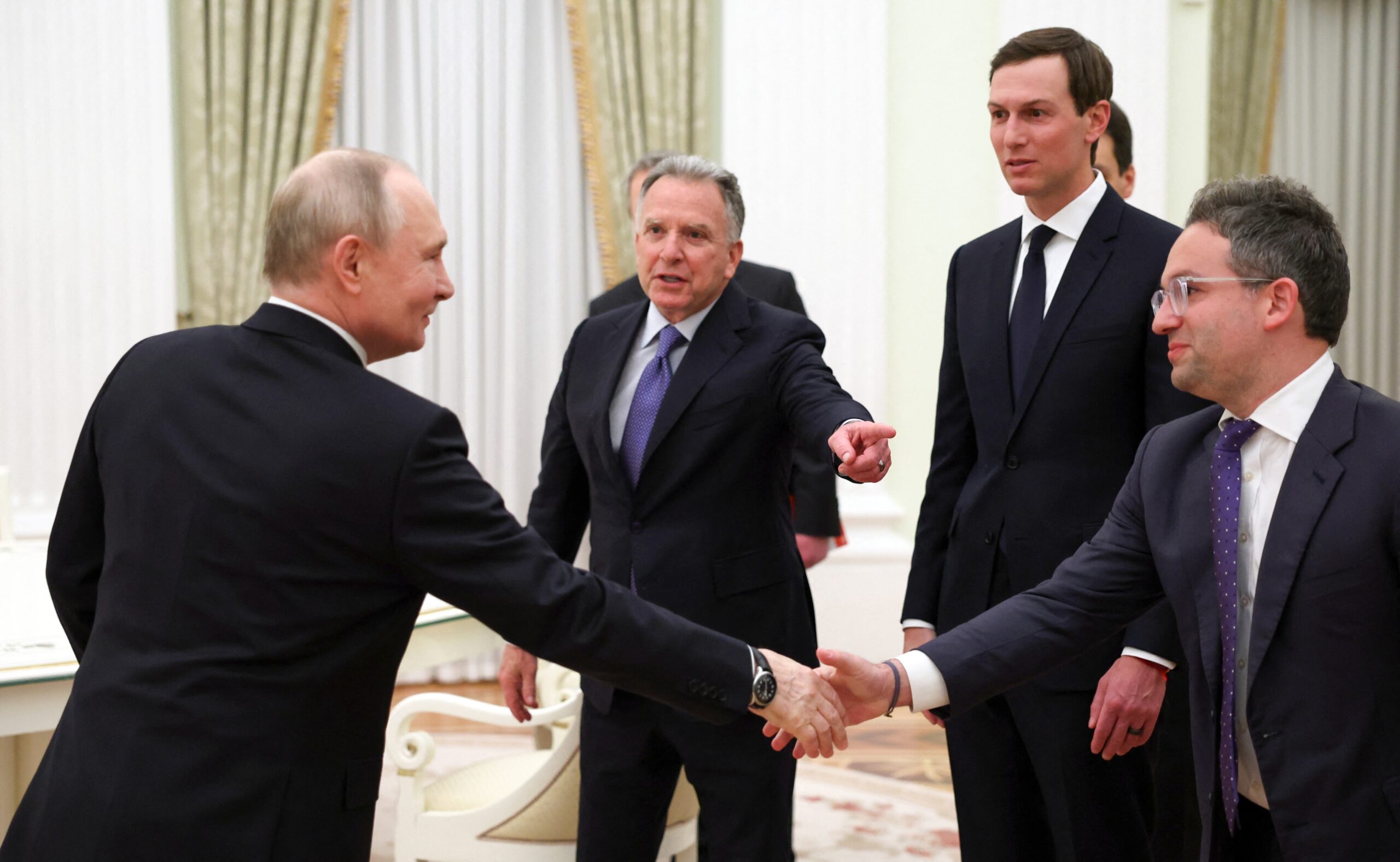
Josh Gruenbaum’s Thursday started in Davos, Switzerland, at the signing ceremony to inaugurate President Donald Trump’s Board of Peace. Gruenbaum walked onto the World Economic Forum stage where Trump sat, surrounded by world leaders, to hand the president the board’s first resolution — focused on the demilitarization and reconstruction of Gaza — for him to sign. Hours later, Gruenbaum’s day ended at the Kremlin in Moscow, alongside White House Special Envoy Steve Witkoff and advisor Jared Kushner. Gruenbaum is a relatively new figure on the diplomatic scene. He started working with Witkoff and Kushner soon after the ceasefire between Israel and Hamas took effect in October, Jewish Insider’s Gabby Deutch reports.
Trajectory: Since then, Gruenbaum has been spotted in meetings with Israeli Prime Minister Benjamin Netanyahu and Ukrainian President Volodymyr Zelensky. Earlier this month, hewas named a diplomatic advisor to the new Board of Peace, which the Trump administration is reportedly envisioning as a replacement to the United Nations. It’s a somewhat surprising turn for Gruenbaum, whose expertise is not diplomacy or foreign policy but investment banking. But with his business background, Gruenbaum fits in with Witkoff and Kushner, both of whom come from the real estate world. His rise underscores how the Trump administration is reshaping the machinery of government by elevating loyalists with private-sector backgrounds and expanding their portfolios far beyond traditional lanes.
HER WAY
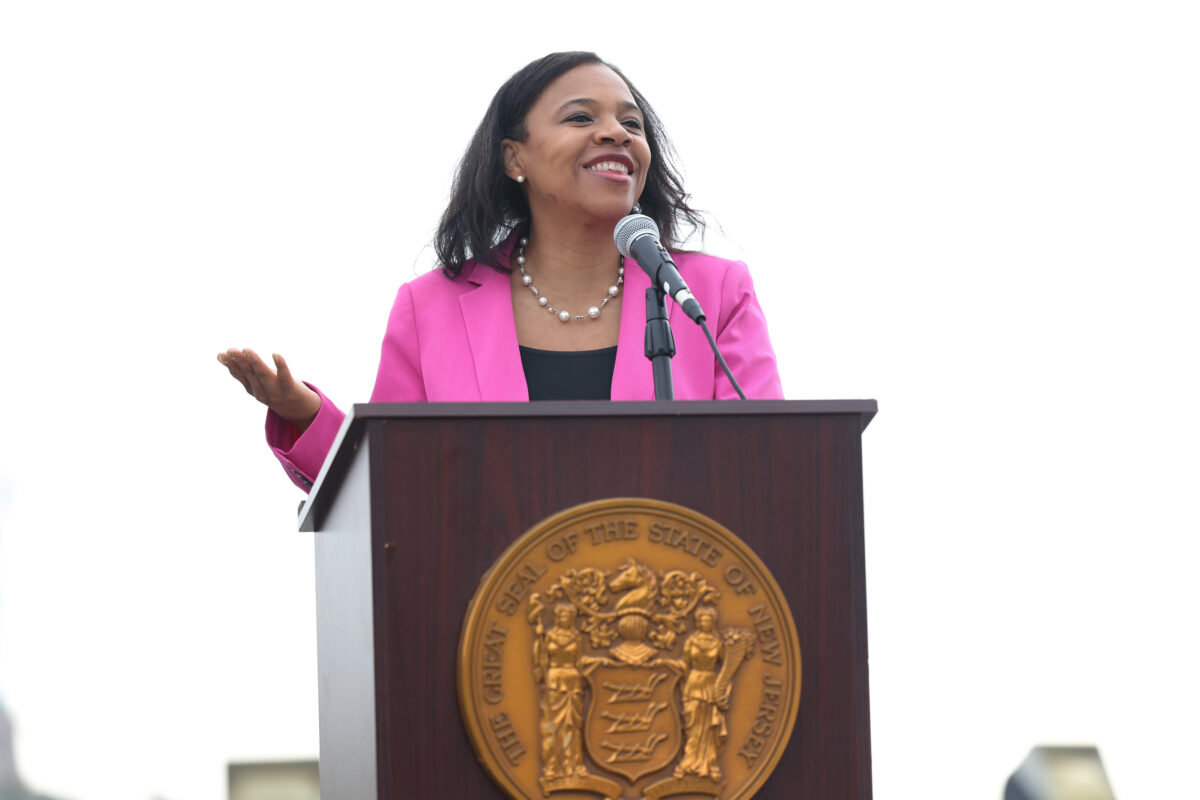
Campaigning in a crowded field for the New Jersey House seat recently vacated by newly inaugurated Gov. Mikie Sherrill, former New Jersey Lt. Gov. Tahesha Way is leaning strongly into her support for Israel and the state’s Jewish community, Jewish Insider’s Marc Rod reports.
What she said: Speaking to JI last week, Way cited the rise in antisemitism that is leaving Jewish voters “terrified” as one of the reasons she’s running for office, alongside her concern about attacks on civil liberties, health-care access, the economy and immigration raids. She said that, going forward, it’s “really my fervor and my hope to continue my work on behalf of the Jewish community,” highlighting the work of the New Jersey-Israel Commission — which fell under her purview when she served as secretary of state — to increase trade between Israel and New Jersey as well as push back on antisemitism.
BISS’ BACKTRACK
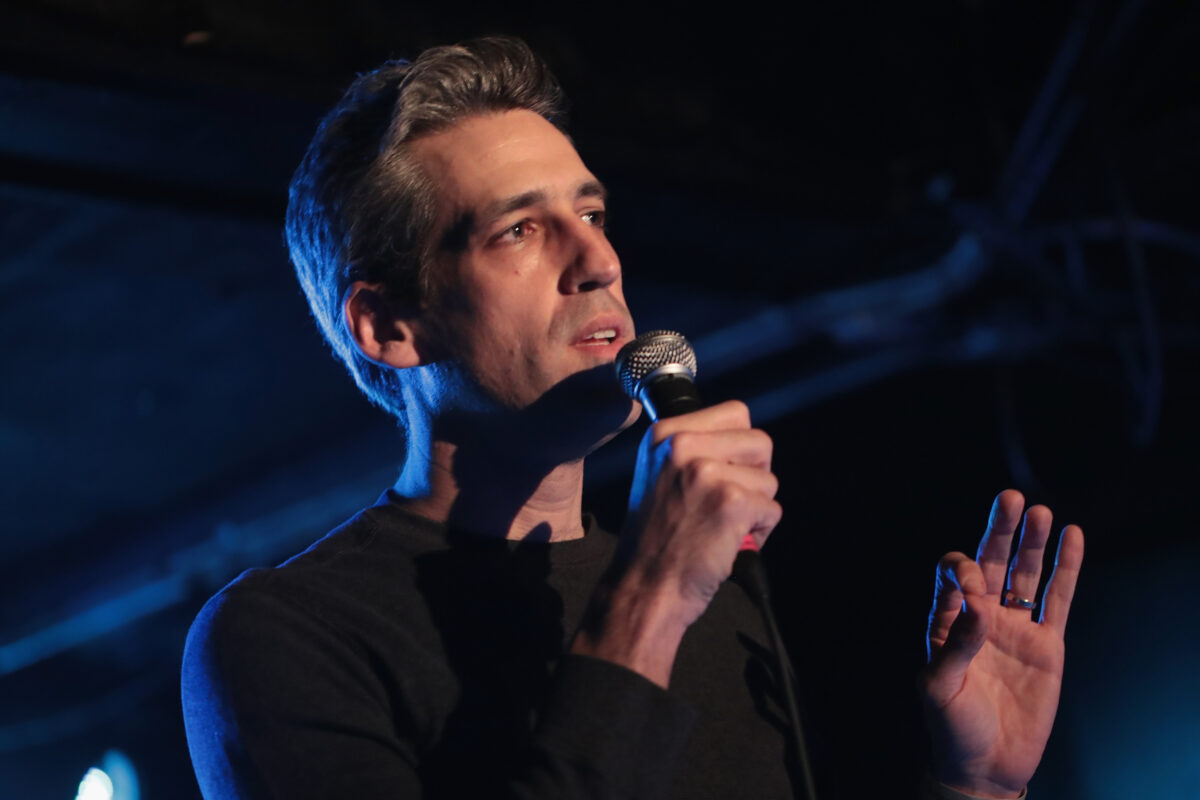
Evanston, Ill., Mayor Daniel Biss, who has expressed support for cutting off some military aid to Israel during his campaign for Congress in the Chicago suburbs, had expressed support for continued aid to Israel earlier in the campaign, according to a position paper Biss himself released Friday amid scrutiny of his past communications with AIPAC, Jewish Insider’s Marc Rod reports.
What it says: Biss said Friday that he had met with local AIPAC representatives to lay out his positions, but that he does not share AIPAC’s views and met with the group in the interest of open communication and in hopes “they might decide not to direct [their] MAGA donors to support [his primary opponent, state Sen.] Laura Fine.” The paper Biss released — which includes stances largely in line with those of other candidates AIPAC has endorsed — stated that Biss supports continued aid to Israel under the terms of the current U.S.-Israel memorandum of understanding, and that he would support another MOU in the future. Biss now supports efforts to impose an offensive weapons ban on Israel — a direct contradiction to the MOU.
Texas turnaround: Texas state Rep. James Talarico, a Democratic candidate for Senate in the state, has disavowed AIPAC and pledged not to take support from the group on the campaign trail. But in late 2019, he attended an AIPAC event alongside a major donor to his campaign, according to a contemporaneous Instagram post about the event posted by an AIPAC supporter, JI’s Marc Rod reports.
UNSEALED
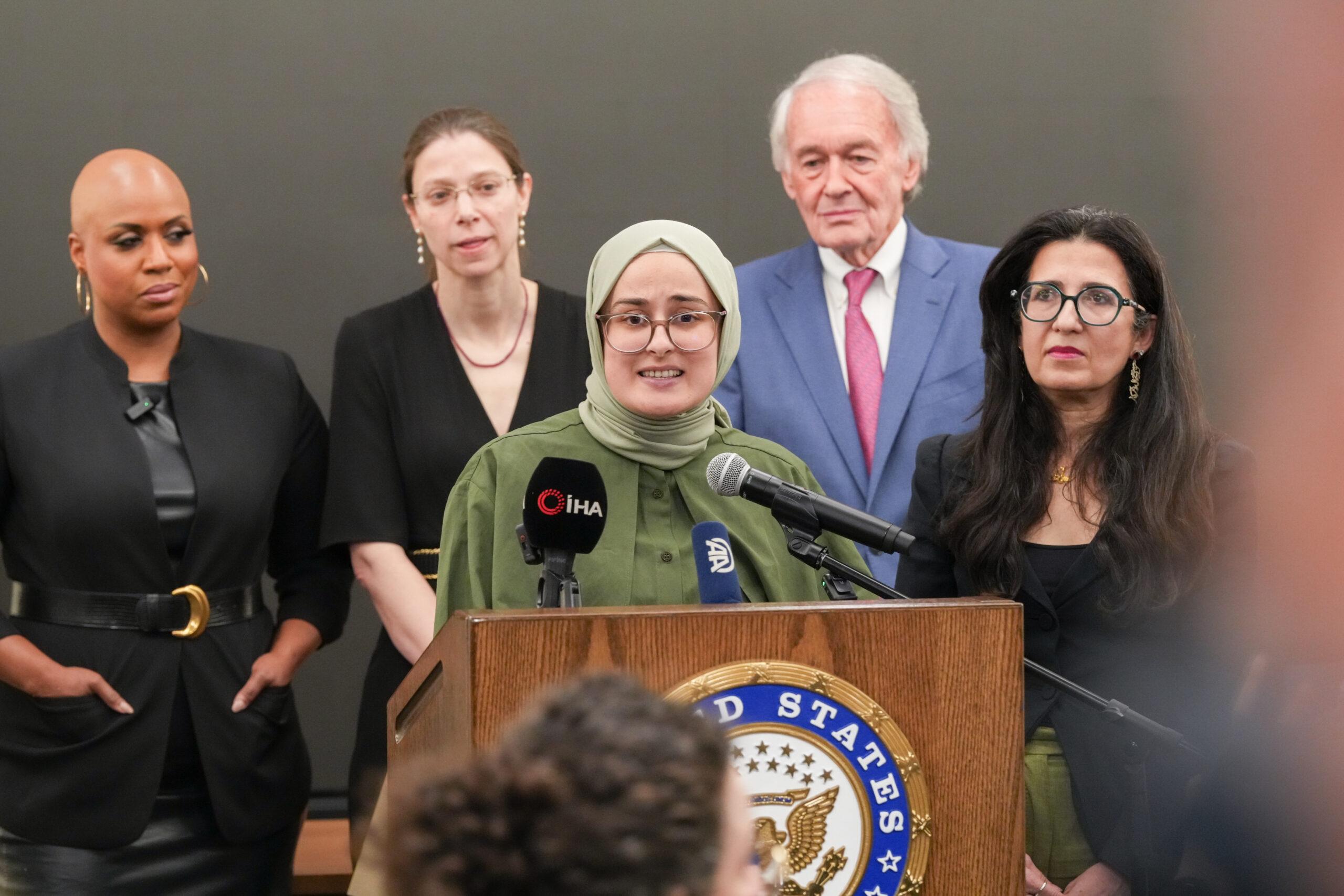
State Department officials who were tasked with deporting foreign students accused of antisemitism and threatening American national security warned that the efforts may present free speech concerns, according to government documents that a federal judge released last week. The several hundred pages of previously sealed federal documents are connected to the ongoing deportation cases against Mahmoud Khalil, Rümeysa Öztürk, Mohsen Mahdawi, Yunseo Chung and Badar Khan Suri, each of whom U.S. immigration authorities targeted because of their involvement in anti-Israel activity at American universities, Jewish Insider’s Gabby Deutch reports.
Scant evidence: One case concerned the visa status of Öztürk, a Turkish student at Tufts University who was ordered to be deported last March and was arrested by federal agents on her way to a Ramadan event. A senior Department of Homeland Security official told JI last year that federal investigators “found Öztürk engaged in activities in support of Hamas, a foreign terrorist organization that relishes the killing of Americans.” The only public evidence at the time connecting her to the anti-Israel protest movement was a 2024 op-ed in Tufts’ student newspaper that she penned with three other students calling for the university to divest from Israel. One of the State Department memos unsealed last week revealed that this op-ed was the sole basis for the effort to deport her — and that department officials recognized it might face legal challenges.
UNION LABEL
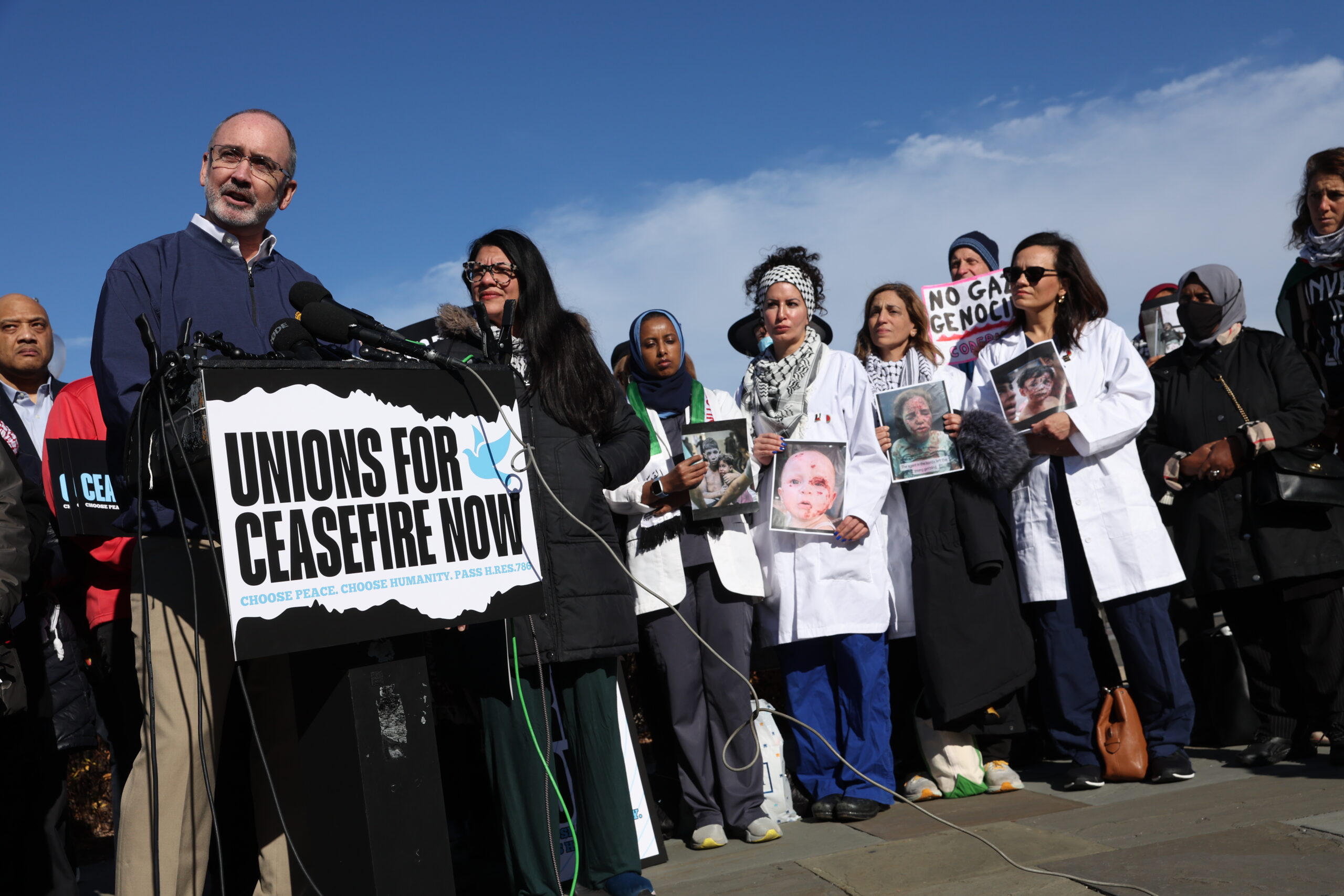
The United Auto Workers, one of the largest unions in the country, has increasingly drifted away from its core mission of representing autoworkers in the workplace, driven by individuals pushing an extreme anti-Israel political agenda that leaves critics questioning the relevance to workplace issues. The most recent example came earlier this month, when 30% of the 275 employees of the Israeli-owned Breads Bakery signed union authorization cards for UAW Local 2179, the percentage necessary to petition the National Labor Relations Board for a union election. The group’s demands include that the management of the New York-based bakery chain, CEO Yonatan Floman and founder Gadi Peleg, “halt use of bakery profit to materially support the Israeli occupation,” Jewish Insider’s Haley Cohen reports.
Behind the push: Deborah Lipstadt, who served as the State Department’s antisemitism envoy under President Joe Biden, told JI that “many institutions and organizations, whether they be universities, unions [or] city councils, a small group is able to go in and organize, and with the minority of members, push a policy.” Lipstadt, a historian who has served on Emory University faculty for more than 30 years, said she has “seen similar situation[s] on university campuses and [within] professional academic organizations where a small group, sometimes just a few individuals, is able to gain control and push the organization in a certain direction, even if the vast majority of members don’t agree. I wonder if that is the same thing happening” with the Breads unionization push, she said.
Worthy Reads
Hatred, Then and Now: In The Telegraph, Deborah Lipstadt, who served as the Biden administration’s antisemitism envoy, distances modern-day antisemitism from that of prewar Europe, but warns that similar sentiments can erode society if not properly addressed. “There are no shortages of historical examples of anti-Semitism. And probably each generation that faced these disasters wondered if their experience paralleled that of a previous generation. While we do not want to forget or ignore the past – something I have spent my whole life studying and teaching – or ignore what might be the consequences of this cosmic hatred, we also must avoid finding or inventing simple continuities. Every situation and era has unique characteristics. While the past can remind us just how bad things can get, we must avoid using it as a template for predicting the future. … Today we find anti-Semitism on the Right and the Left. We find it among Christian nationalists and Islamist radicals. We find it among white supremacists and multiculturalists. We even find it among Jews. Too many people, who do not share these views, remain silent when those next to them, their political allies, engage in overt anti-Semitism.” [Telegraph]
Limits of the Law: In The Atlantic, John Yoo argues that the present-day interpretation of international law does not defend against malign actors and should be revamped accordingly. “If critics correctly argue that the attack on Venezuela violates international law, they have unintentionally revealed that international law — not the United States — must change. Removing Maduro was just: The dictatorship has killed tens, if not hundreds of thousands, of Venezuelans, destroyed the country’s economy, and denied the electoral wishes of the Venezuelan people for new leadership. But international law did nothing about this crisis, and countenanced no solution. Because it prevents Western democracies from using force to preempt grave threats from disruptive nations, such as Venezuela or Iran, while posing little obstacle to the designs of our rivals in Beijing or Moscow, international law no longer serves as an instrument of global stability.” [TheAtlantic]
Peace Board Problems: On X, Palestinian American analyst and Gaza native Ahmed Fouad Alkhatib raises concerns about the degree to which the Trump administration’s newly created Board of Peace can be effective given on-the-ground constraints. “There are no perfect answers, solutions, or scenarios to address the myriad of terrible circumstances that require tough choices, strategic patience, and some trial and error. That said, what has been unfolding reeks of a horrendous disaster in the making and a five-alarm fire that may ensure the failure of Gaza’s future trajectory and prospects especially as it relates to the post war era, de-Hamasification, demilitarization, and deradicalization – all of which are core necessities for any hope that the coastal enclave will no longer be a battle field for Islamist jihadi terrorism or meaningless regional proxy battles which lead to squandered potential, needless deaths, and wasted opportunities.” [X]
Word on the Street
Israeli Prime Minister Benjamin Netanyahu reportedly rejected a request from the White House for Israeli President Isaac Herzog to attend last week’s Board of Peace signing ceremony on the sidelines of the World Economic Forum in Davos, Switzerland…
Axios obtained two audio recordings of Sen. Ted Cruz (R-TX) speaking to donors last year, during which the potential 2028 presidential candidate suggested that Vice President JD Vance was “created” by his “protégé” Tucker Carlson, calling the two “one and the same”; Cruz also assailed the Trump administration’s economic policies and warned that Republicans could face a “bloodbath” in the 2026 midterms…
The New York Times spotlights political strategist Morris Katz, who was a key player in New York City Mayor Zohran Mamdani’s campaign; Katz is also working for Maine Senate candidate Graham Platner, who has come under fire for having previously bragged about having tattoos of Nazi imagery…
The U.S. is reportedly pushing Bolivia to expel suspected Iranian spies from the South American country and to designate Iran’s Islamic Revolutionary Guard Corps, Hezbollah and Hamas as terror groups…
Columbia University’s Board of Trustees unanimously selected University of Wisconsin-Madison Chancellor Jennifer Mnookin to be the school’s next president; Mnookin, who will be the school’s fifth president in four years when she assumes the role at the end of the academic year, has led UW-Madison since 2022…
The New York City Council is investigating a recent fundraiser in Brooklyn hosted by the Muslim American Society in which merchandise supporting U.S.-designated terror groups including Hamas and Hezbollah were available for purchase…
Robert Kraft’s New England Patriots are heading to next month’s Super Bowl, where they’ll face off against the Seattle Seahawks; the Patriots are making their 12th Super Bowl appearance, the most by any NFL team in history…
The New York Times profiles Broadway songwriter Marc Shaiman, the co-lyricist behind “Hairspray,” ahead of the release of his memoir, Never Mind the Happy: Showbiz Stories From a Sore Winner…
Police in London arrested 86 people who breached the grounds of a West London prison during a protest in support of a Palestine Action activist taking part in a hunger strike in the prison…
Australia canceled the visa of Sammy Yahood hours before the British-Israeli comedian was set to travel to the country for several speaking engagements; Yahood had in recent months called for the banning of Islam, which he had called a “murderous” and “disgusting” ideology…
Le Monde spotlights Israel’s Route 1 highway as a tourist destination, recommending that travelers make a stop at Neve Ilan’s Elvis American Diner…
Paypal acquired Israeli commerce technology startup Cymbio in a deal estimated to be worth hundreds of millions of dollars…
The Wall Street Journal looks at efforts by Israel to work with Palestinian militias in Gaza that are fighting against Hamas in areas of the enclave still controlled by the terror group and unable to be accessed by Israeli forces…
Israeli airlines El Al, Israair and Arkia are loosening ticket cancellation policies amid concerns over conflict between Israel and Iran…
The New York Times does a deep dive into Iran’s violent crackdown on anti-government protesters, as The Washington Post reports on an attack by Iranian forces on people fleeing a fire at an open air market in which dozens of people were gunned down…
Meanwhile, two senior Iranian Health Ministry officials told Time that as many as 30,000 people have been killed since the protests began last month…
In Tehran, officials unveiled a mural over the weekend depicting a damaged aircraft carrier strewn with bodies with the message “If you sow the wind, you will reap the whirlwind,” ostensibly a warning to the U.S. as an American aircraft carrier makes its way to the Gulf…
Saudi Arabia is scaling back its Neom project as the endeavor faces delays and funding issues…
The head of Iraq’s intelligence agency warned of a resurgence in Islamic State fighters in Syria, whose numbers have more than quintupled in the last year since President Ahmad al-Sharaa assumed power…
New York City art dealer Marian Goodman, who helped garner interest in avant-garde European art in the 1980s, died at 97…
Pic of the Day

Israeli Foreign Minister Gideon Sa’ar (left) met with Azerbaijani Foreign Minister Jeyhun Bayramov in Baku earlier today. Sa’ar traveled to the Caucasus country with a delegation of Israeli businessmen for conversations focused on advancing bilateral economic ties.
Birthdays
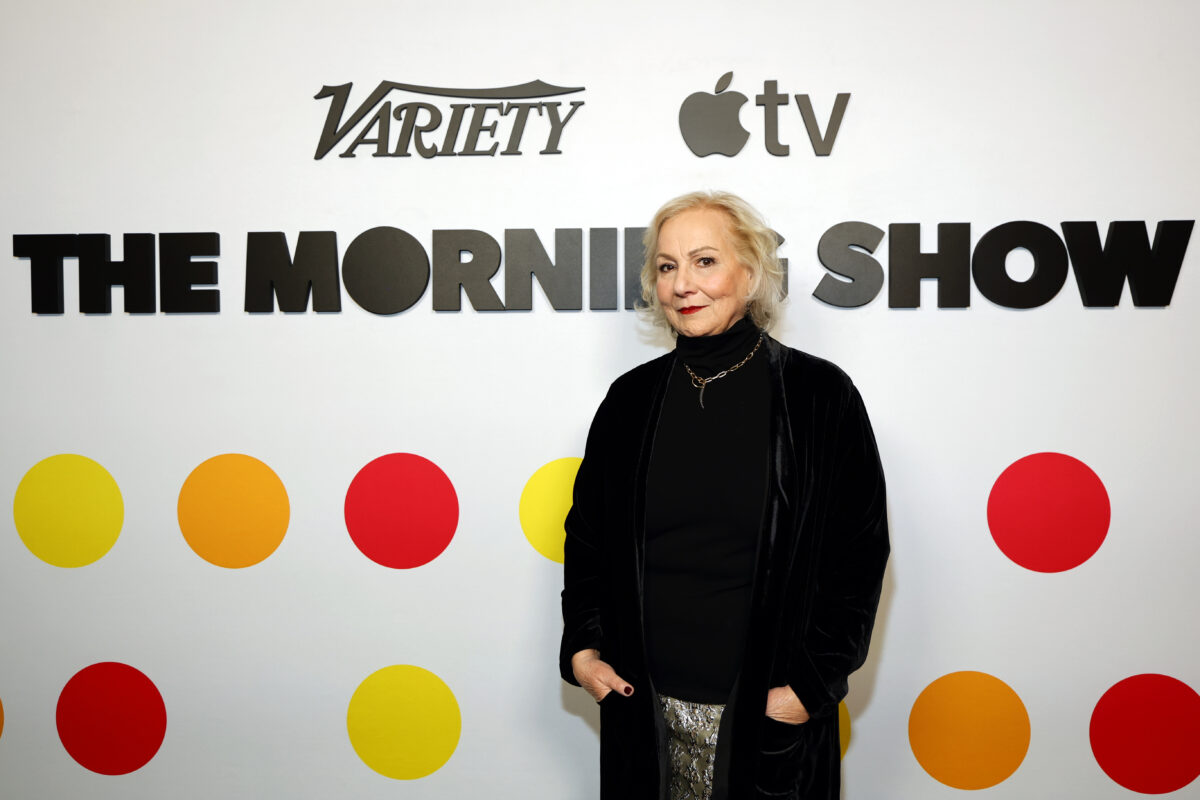
Two-time Emmy Award-winning film and television director, her 2018 film is a biographical legal drama based on the life of Justice Ruth Bader Ginsburg, Mimi Leder turns 74…
Pioneering computer scientist, Barbara Bluestein Simons, Ph.D. turns 85… Singer-songwriter, socialite and political fundraiser, Denise Eisenberg Rich turns 82… Economic and social theorist, author of 23 books, Jeremy Rifkin turns 81… New Haven, Conn.-based personal injury attorney, Herbert Ira Mendelsohn… Publishing professional, Agnes F. Holland… Professor emeritus of modern Judaic studies at the University of Virginia, Peter W. Ochs turns 76… President of The Foundation for Ethnic Understanding, Rabbi Marc Schneier turns 67… Senior rabbi of Manhattan’s Stephen Wise Free Synagogue, Ammiel Hirsch turns 67… Argentina’s largest real estate developer, president of Chabad Argentina, president of Hillel Argentina and president of Taglit Birthright Argentina, Eduardo Elsztain turns 66… Co-founder of the Laura and Gary Lauder Family Venture Philanthropy Fund, Laura Heller Lauder… President of HSK Consulting focused on strategic planning and fundraising services, Hilary Smith Kapner… Former CNN anchor and correspondent for 12 years, author of two books, she runs a website and newsletter focused on uplifting and positive news, Daryn Kagan turns 63… Co-founder of Boardroom One, Brent Cohen… Actress, comedian and television screenwriter, Claudia Lonow turns 63… Former speaker of the U.S. House of Representatives, Kevin McCarthy turns 61… Chief of the general staff of the IDF, previously director-general of the Ministry of Defense, Eyal Zamir turns 60… Senior strategist and consultant at Hillel of Broward and Palm Beach, Fla., Jill Weinstock Deutch… Oakland County (Michigan) clerk and register of deeds, she served on the board of the Jewish Association for Residential Care, Lisa Brown turns 59… Inaugural director of the Pava Center for Women’s Torah Scholarship at Yeshiva University, Raizi Chechik… Former middleweight boxing champion, he retired in 2003 with a 37–1–1 record, now a credit union loan officer, Dana Rosenblatt turns 54… Retired tennis player who was the top-ranked player in his age group at the ages of 12, 14, 16 and 18, then as an adult he won 15 doubles championships, Justin Gimelstob turns 49… Actress, she hosted The CW reality series “Shedding for the Wedding,” Sara Rue (born Sara Schlackman) turns 47… Policy director and counsel at Morrison Cohen LLP, he was previously an Obama White House Jewish liaison, Jarrod Neal Bernstein turns 46… Senior advisor at the Harold Grinspoon Foundation and president of the Palm Collective, Tamar Remz… Former Olympic figure skater, now in business operations at Figma, Emily Hughes turns 37… Blues and jazz musician, he describes himself as “sporadically shomer Shabbos,” Jerron “Blind Boy” Paxton turns 37… Member of the Rhode Island House of Representatives from 2015-2019, Jonathan Aaron Regunberg turns 36… Co-founder and CEO of Bardin, Fay Goldstein…
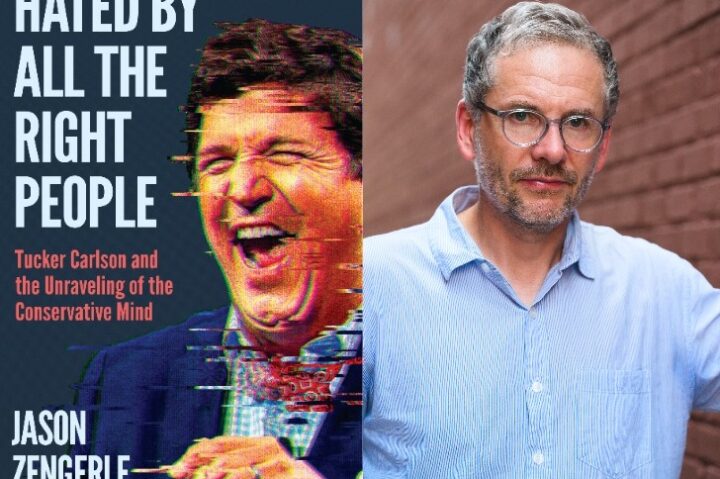
New Yorker reporter Jason Zengerle’s book, ‘Hated By All the Right People: Tucker Carlson and the Unraveling on the Conservative Mind,’ comes out Tuesday
Courtesy/Andrew Kornylak
Book cover/Jason Zengerle
In his richly reported new book, Hated by All the Right People: Tucker Carlson and the Unraveling of the Conservative Mind, Jason Zengerle tracks the evolution of the mainstream conservative journalist for The Weekly Standard, CNN and FOX News into a prominent figure in the far-right media ecosystem whose commentary increasingly descends into open antisemitism.
Zengerle, a veteran political reporter, ruminates over Carlson’s troubling transition from magazine writer to cable news pundit to his current position as a widely followed podcast host whose credulous interviews with Nazi sympathizers and Holocaust deniers, among others, have done little to dampen his influence in the MAGA movement he helped build.
In a recent interview with Jewish Insider, Zengerle, whose book will be published Tuesday, warned that Carlson’s efforts to smuggle antisemitic views into mainstream discourse should not be taken lightly.
“Tucker has credibility, and he comes across as a credible person,” Zengerle said. “That he’s giving voice to these really pretty fringe and dangerous sentiments is not to be underestimated, because people trust him.”
Whether Carlson personally believes the “awful things” he promotes, Zengerle writes in his book, “matters less than that he says them at all, and that millions of people — members of Congress, titans of industry, the president and just everyday Americans — listen to and take their cues from him.”
“What matters is that by saying these things, Carlson has finally achieved the fame, power and influence that for so long eluded him,” he adds.
Zengerle, 52, was recently hired as a staff writer for The New Yorker, and has previously contributed to The New York Times Magazine, GQ and The New Republic, among other publications. His book on Carlson is his first.
Speaking with JI last week, Zengerle discussed Carlson’s professional ascent, his motivations for demonizing Israel and why conservative Jews are so frightened by his potential role in shaping the future direction of the Republican Party after President Donald Trump leaves office, among other topics.
The conversation has been edited and condensed for clarity.
Jewish Insider: This book has been in the works for a while. How did the idea initially come about?
Jason Zengerle: It’s been a bit of a roller coaster. The initial idea sort of came from a conversation I was having with my agent about a book I didn’t want to write, about the Republican civil war that was about to unfold. This is not long after [the] Jan. 6 [2021 Capitol riot]. The people who are going to be vying to inherit Trump supporters, because Trump was obviously a finished product, would never be coming back. And I was sort of talking to my agent about the various characters, and explaining why I didn’t think, no matter how many positions [Sens.] Josh Hawley (R-MO) or Ted Cruz (R-TX) or Tom Cotton (R-AR) took that would seem to appeal to Trump’s base, there was no way they’re ever going to inherit those voters, because they just lacked the charisma and entertainment value that Trump obviously has.
Offhandedly, I said something like, ‘You know, the only guy who really can do that is Tucker Carlson.’ That was the genesis of the idea. Then, obviously, when I started the book, Tucker was at the height of his powers. He had the highest-rated show on Fox. Trump had kind of exited the stage. And Tucker, in a lot of ways, had sort of replaced Trump, just in terms of the headspace he was occupying among both liberals and conservatives. You had this weird Tucker economy of liberal journalists and people on Twitter who would clip his show, sort of like outrage bait.
For the first couple years I was working on the book, Tucker was sort of occupying that space. And then he got fired from Fox, and everyone was predicting that he would basically suffer the same fate all Fox stars suffer when they leave Fox, which is irrelevance. Like, who thinks about Bill O’Reilly these days, right? But I thought that wasn’t going to happen. I thought Tucker was going to stay in the picture. That might have been some motivated self-reasoning on my part, because I wanted the book to be relevant. My original publisher definitely thought he was going to fade away because they canceled my contract.
JI: It certainly seems you were right in suspecting that he would continue to be not only relevant, but extremely influential during the campaign and in influencing hiring decisions for key roles in the Trump administration, as you detail in the book. He’s had a circuitous and occasionally rocky career from print journalism to cable news and now to an independent podcast. How do you view his evolution? Is there a moment where you see a clear turning point toward the type of demagogic commentator he would become, or do you think it was more gradual?
JZ: I think there are definitely inflection points in his career, and you can point to a number of them. I think one was certainly the war in Iraq. I think that had a pretty profound impact on his thinking. You know, I think he harbored some private doubts about the wisdom of going to war there, but was not really comfortable expressing them publicly, for a couple of reasons. Today, he talks a lot about how Bill Kristol and all these guys kind of misled him, and that’s why he hates them so much. At the same time, his best friend and now business partner was Neil Patel, who was working for Scooter Libby [chief of staff to former Vice President Dick Cheney]. And if you want to look at the disinformation that was put out into the world that supported going into Iraq, that was coming from Dick Cheney’s office. And I think Neil played a role in that. The fact that his best friend was sort of making the case for war, I think, made it difficult for him to oppose it. Two, the job he had at CNN at the time, on “Crossfire,” was to represent the right and the Bush administration — so just from a practical standpoint, he had to kind of support the war.
But anyway, the fact that things went so badly for Tucker at CNN, I think, made him reexamine a number of his priors and a lot of his time in his early career, when he was at The Weekly Standard and even after he had started writing for Talk and Esquire. There was such an effort among people like Kristol to excommunicate Pat Buchanan from the conservative movement. I think what happened with Iraq made Tucker reconsider Buchanan a bit, and he sort of saw that, ‘OK, well, I actually think this guy was right about foreign policy, and maybe he’s right about some other stuff as well.’ I think that led him to become much more hawkish on immigration.
I think that what happened with Jon Stewart and CNN was a pretty big inflection point in the sense that the public humiliation he suffered, obviously, was difficult for him. But I also think he felt that his friends in the elite D.C. political and media circles didn’t come to his aid the way he would have liked. That started to breed a certain resentment he felt toward them that really grew as his career limped along. It made it a lot easier for him, when Trump came on the stage and started attacking the swamp and D.C. elites, to join in on those attacks, because I think he still nursed a grudge. So you can see things gradually, but you can also point to these crossroads moments, as well.
JI: You write that, while you didn’t know Carlson well, he often served as an “eager interview” subject and source for your stories over the years. Still, he didn’t agree to any interviews for your book. Why do you think that was?
JZ: I think it really is that Robert Novak expression: “a source, not a target.” I think he plays that game.
JI: There’s an interesting recollection in the prologue about your occasional interactions with Carlson when he would stop by the New Republic offices back in the late ’90s during your time as an intern there. You describe him then as a “hotshot young writer for The Weekly Standard,” and say he “seemed so much older, wiser and worldlier than we were.”
JZ: Maybe it didn’t take much to impress me. But the thing about him back then — and the thing I think others admired about him and looked up to him for — was that he was really courageous. The targets he picked, whether it was Grover Norquist or George W. Bush — it took guts to do that as a conservative journalist, and that was admirable.
JI: You write in the book that Carlson has “come a long way from the days when he described himself as a pro-Israel, Episcopalian neocon.” On his show now, he regularly promotes antisemitic tropes and conspiracy theories, incessantly attacks Israel and hosts neo-Nazis and Holocaust deniers for friendly interviews. Do you have insight into what sparked this openly antisemitic streak?
JZ: It’s funny, someone who’s close to him was telling me that they thought this basically started with his conclusion that all the people who were opposed to him and Trump, post-2016, were big Israel supporters. So Tucker’s like, ‘Alright, I’m just going to piss these people off by going after Israel,’ and that’s kind of where it started. I don’t know if that’s the case.
I mean, Bill Kristol looms so large in his mind and in his own story. The story that he tells people, and the story I think he tells himself, is he was misled and used and kind of exploited by the neocons, that he was this young, naive, innocent writer who got just basically used to get us into a war and support free trade deals and do all these things that hurt the white working class in America, and that what he’s doing now is his penance. And I think that’s not a true story. I don’t think that’s what happened.
Kristol is just such a huge figure in his own mythology. Even before Tucker went in this direction, he was really close to Kristol. He really looked up to him. He was his first boss, and I think he had a real impact on Tucker’s career. But now, Tucker wants that all to be a negative impact. He did an interview recently with his brother, Buckley Carlson, where he talked about how Kristol hates Christians. Bill Kristol, who hired Fred Barnes and took vacations with Gary Bauer. He’s recast all this stuff.
JI: Do you think Carlson’s hostility toward Israel and descent into nakedly antisemitic vitriol, such as when he called Ukrainian President Volodymyr Zelensky “ratlike” and “a persecutor of Christians,” is motivated by more than just resentment of those he believes have spurned him? There’s been a lot of attention recently about a generational turn away from Israel on the right, which raises a question of whether he’s opportunistically tapping into that or directly influencing it.
JZ: I guess it’s both. I do think he’s making the calculation that that is where the energy is, and therefore he wants to make sure he stays out in front of it. He has a very good political radar and good professional radar. I think the Nick Fuentes episode was him recognizing he was in this feud with this guy, and he was losing, and him sort of deciding you cannot be successful in conservative media or conservative politics these days unless you have the support of these neo-Nazis. Unfortunately, it’s not going to work for you, and so he needed to get back on their good side. I think that’s part of the calculus.
At the same time, I think he is influencing some of these people, maybe not the hardcore Nick Fuentes supporters, but young conservatives who, you look at what happened or what’s happening in Gaza and had questions and qualms and concerns. And then Tucker is out there — and Fuentes is out there as well — making the argument about how Gaza is wrong, but taking it so much further than that, and going into these really ugly corners of anti-Israel sentiment and taking them to those places.
Now, I don’t want to get too far afield here, but that JD Vance talk at Ole Miss, where the frat boy asked that question about Israel persecuting Christians — that was a real light bulb moment for me. That this stuff had penetrated that deep that you have this guy who appears to be your regular old SEC frat boy saying this stuff. And I think Tucker is responsible for a lot of that, because that’s something he did at Fox, and he continues to do. He’s really good at taking ideas and arguments and even just stories from extreme, far-right fringy areas, often on the internet, and smuggling them into the mainstream. I think he’s doing that with the Israel stuff and with the Jewish stuff.
JI: His interview in 2024 with Darryl Cooper, the self-proclaimed podcast historian and Holocaust revisionist who has described Winston Churchill as the “chief villain” of World War II, seems an early instance of that effort.
JZ: That’s a perfect example. You have to be really steeped in this stuff to see what this individual is saying and doing and the rhetorical tricks they’re playing. Tucker just brings and vouches for these people, and I think that’s pretty dangerous. Tucker has credibility, and he comes across as a credible person. The fact that he’s giving voice to these really pretty fringe and dangerous sentiments is not to be underestimated, because people trust him, and it validates them.
JI: There’s been some intermittent speculation about whether Carlson will run for president. Do you have any thoughts on that?
JZ: I don’t think he just wants to be a podcaster. I don’t think that’s his goal here. I think he has a real vision for what he wants this country to be, and he wants to achieve that vision, and if it turned out that running for office was the way to do that, I could see him doing it. I don’t think it’d be his first choice. I think right now, he has a nice, nice setup where he obviously has a president who listens to him. Maybe even more importantly, he has a vice president who I think he’s even closer to and more in alignment with. Just sort of thinking through the steps, as long as he thinks JD Vance and he are on the same page ideologically, and as long as he thinks JD Vance is capable of being elected president, that he has the political talent to pull that off, I can’t imagine him doing anything on his own.
But if one of those two things changes, and I think it’s quite possible that the latter becomes a sticking point — if Tucker at some point were to conclude that JD Vance actually isn’t capable of being elected president and that his his ideological project is in jeopardy — I could certainly see him taking a shot at it. The way you would run for president now, it’s so different from how you had to do it before. He could probably do a lot of it from his podcast studio. But I think what’s more important is just understanding why he would do it, which is sort of the bigger point. He really does have a project he’s working on, and I think he’ll do what he thinks is necessary in order to bring that project to fruition.
JI: How would you characterize that project?
JZ: He wants the United States to look like it did in the 1950s. I think he’s very much in alignment with Stephen Miller. Beyond the immigration stuff and us being a much whiter country, I think he wants to return to traditional gender roles.
JI: While some Republican lawmakers have spoken out against Carlson, it seems notable that Trump and Vance have both so far refrained from explicitly distancing themselves from him.
JZ: There’s this weird thing going on where certain Jewish conservatives feel like, as long as Trump’s there, everything’s going to be fine. You know, his grandchildren are Jewish, he might say some stuff, he might do some things, but at the end of the day, the worst-case scenario will never occur. They view Tucker as this bad influence on Vance, and if they can just get rid of the bad influence, Vance will be OK. But they’re really terrified of Tucker. They’re really terrified of what comes after Trump. And they’re terrified that Tucker will have a major influence on whatever comes after Trump. They’re worried about the influence he has on Vance. They want to believe that Vance would be OK, left to his own devices. They think Tucker is leading him in a bad direction, and therefore they need to take out Tucker.
I think it goes beyond Israel. I think it’s genuine fear about what it would mean to be Jewish in the United States. I’ve been talking to some of these folks recently. I think it’s a real, deep-seated fear about, in Tucker Carlson’s America, what would it be like to be Jewish here?
Please log in if you already have a subscription, or subscribe to access the latest updates.
 Continue with Google

 Continue with Apple