














































































Assistant Attorney General Harmeet Dhillon warned last week that countries participating in boycotts of Israel could face U.S. retaliation
Andrew Harnik/Getty Images
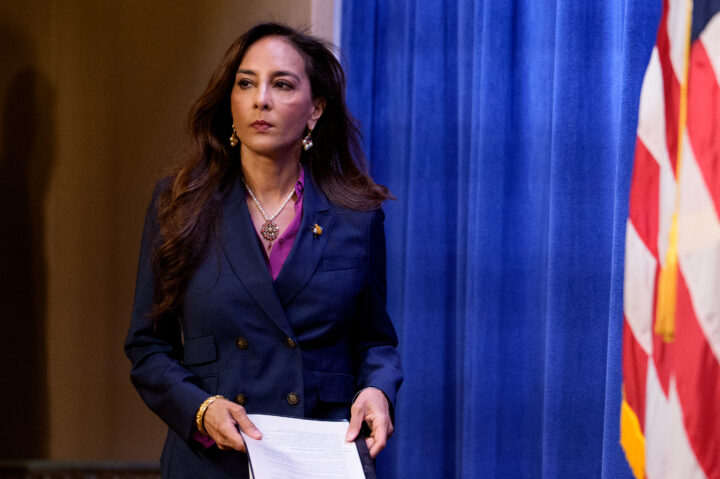
Assistant Attorney General for Civil Rights Harmeet Dhillon arrives for a news conference at the Justice Department on September 29, 2025 in Washington, DC.


 Add JewishInsider on Google
The assistant attorney general for civil rights, Harmeet Dhillon, warned last week that countries participating in boycotts of Israel could face U.S. retaliation, raising the prospect of sanctions against Britain and other European governments.
But Washington still has yet to clarify its policy, and it remains unclear whether the Trump administration plans to move forward with retaliatory measures.
Speaking in Washington last week, Dhillon sharply criticized the measures taken by European countries, describing the actions as involvement in BDS and a form of antisemitism. European officials, however, have argued that the sanctions are different from the BDS movement.
“What we call this in the United States is the BDS movement. It is antisemitism,” Dhillon said while speaking in D.C. on Oct. 6. “And I think every country that is doing that is going to risk, while President Trump is in power, retaliatory or corresponding sanctions potentially.”
One Republican congressional source told Jewish Insider that Treasury Department and Commerce Department officials had told their office that the departments were prepared to add those countries that announced sanctions targeting Israeli settlements last month to the Treasury’s international boycott list, but the State Department was refusing to grant the clearance necessary to do so.
Reached for comment, a State Department spokesperson told JI: “We are not going to comment on internal deliberations speculated on by an anonymous source.”
The U.K. announced an import ban on settlement goods and sanctions on related entities on Sept. 9.
The Netherlands introduced stricter measures on Sept. 22, including penalties of up to six years in prison for violations. Israel responded by revoking the diplomatic credentials of Dutch envoys in Ramallah.
France, Canada and other countries have also enacted or pledged similar restrictions involving the West Bank, east Jerusalem and the Golan Heights. The measures have drawn condemnation in Israel. U.S. Ambassador to Israel Mike Huckabee has warned that Britain could face economic repercussions.
Secretary of State Marco Rubio had previously indicated that the U.S. would not join the sanctions. Republicans in Congress have also told JI they oppose them. Before Dhillon’s remarks, the administration had not publicly condemned the measures.
A former U.S. administration official, speaking on background, confirmed the sanctions are not yet “settled administration policy” and noted that Dhillon’s comments could be strategic.
“Dhillon’s comment does not necessarily reflect settled administration policy. A decision to impose such sanctions would need consideration by Treasury, State, USTR, and above all the President; it’s not a DOJ decision,” the former official said. “It may reflect a decision to sanction the UK, or a warning shot meant to deter others from following the UK, or her view but not a final policy decision.”
The distinction between the European measures and the broader BDS movement could also become significant as the administration determines how to respond. European governments have presented their restrictions as measures targeting Israeli settlements rather than participation in the broader BDS campaign against Israel.
Jonathan Ruhe, a fellow at the Jewish Institute for National Security of America, said the uncertainty comes against a complicated history of U.S. policy toward Israeli settlements and BDS.
“Israeli settlements have always existed in a gray area when it comes to U.S. opposition to BDS. President Obama excepted West Bank settlements from his enforcement of anti-BDS laws, and Biden sanctioned certain settler activities while officially opposing BDS.”
He said that ambiguity appears to have carried into the Trump administration as tensions between Israel and European governments over settlement policy have increased.
“This gray area now seems to be carrying over to the Trump administration, where coherent and consistent policymaking has never been a strong suit, precisely as the West Bank and U.S.-European ties become particularly tense more generally,” Ruhe said.
Ruhe also pointed to the administration’s previous responses to European actions targeting Israel as a possible indication of how Washington could respond to the latest measures.
“Though Amb. Huckabee repeatedly called settler violence ‘acts of terror’ and ‘criminal activity’ over the summer, Europe’s latest threats follow a pattern where the administration jumps at the opportunity to retaliate for sanctions, embargoes, and arrest warrants aimed at Israel from Europe,” Ruhe said.
Jason Greenblatt, who served as White House Middle East envoy in the first Trump administration, did not clarify whether he expects the policy to be officially implemented, however he noted that he would “strongly support such a policy.”
“Countries that do that should understand there can be consequences, even if they are long standing friends of the United States,” Greenblatt said. “When governments turn the BDS movement’s anti-Israel agenda and antisemitic ideology into policy, the United States has every reason to respond.”
Greenblatt further argued that just because certain countries are U.S. allies, it should not shield them from consequences when acting against Washington’s interests.
“Ambassador Huckabee publicly warned of consequences before Britain announced these measures last month, and Britain proceeded anyway,” he continued. “Friendship and history should not provide immunity when a government acts against U.S. interests and principles, and against one of our closest and most important allies.”
Sen. Josh Hawley: ‘The European states have been anti-Israel forever, and I just think this is the latest iteration of that’

Amir Levy/Getty Images
A view over the Jewish settlement of Kedumim in the West Bank on Sept. 8, 2026 in Kedumim, West Bank.
Republican lawmakers are speaking up against recent moves by European countries to impose new sanctions and trade restrictions on Israeli settlements in the West Bank, east Jerusalem and the Golan Heights.
The latest restrictions took effect in the Netherlands on Sept. 22, when the country began barring goods obtained or produced wholly or partly in Israeli settlements from entering the country, including products carried by private travelers. Violations can carry a maximum sentence of six years in prison. Israel has since revoked the diplomatic status of Dutch diplomats serving in Ramallah.
On Sept. 9, the United Kingdom announced that it would ban imports produced in Israeli settlements in the West Bank and impose sanctions on companies and individuals involved in settlement construction, financing and related services, while also prohibiting the advertising of settlement properties and goods. France, Canada and other European countries have also committed to — or have already implemented — restrictions involving goods from Israeli settlements, the West Bank, East Jerusalem and the Golan Heights.
Sen. Rick Scott (R-FL) told Jewish Insider he was “disappointed” by the European measures and argued that Israel should be receiving greater support from those governments.
“First off, I’m disappointed. We ought to be supporting the only democracy in the Middle East, somebody that is part of making sure Europe is safe because Iran doesn’t have a nuclear weapon,” Scott said. “I think they ought to be thanking Israel rather than targeting them.”
Asked whether the Trump administration should respond to the European measures, Scott said he believes the White House is already working to address them.
“I think they are, they’re working hard,” he said.
Sen. Josh Hawley (R-MO) likewise criticized the sanctions, arguing that they represent another effort by European governments to pressure Israel over its settlement policy.
“That sounds anti-Israel to me. I don’t support it. I think that’s a bad deal,” Hawley said. “The European states have been anti-Israel forever, and I just think this is the latest iteration of that. It sounds a lot like the BDS movement just sort of laundered now into a different form. So no, I don’t like that at all.”
Hawley also said he expects the Trump administration to retaliate in some form against the European measures, pointing to the president’s previous statements on the issue.
“Well, I assume they will. The president has been very vocal about this, so I hope we’ll continue [to be],” Hawley said.
Rep. Claudia Tenney (R-NY) focused specifically on reports that Dutch customs officials had inspected the luggage of passengers arriving from Israel, calling the reported searches “intrusive” and “unconscionable.”
“The new Dutch BDS law forces Americans and American companies to undergo intrusive searches and prove that they do not possess any goods from Jerusalem or Judea and Samaria,” Tenney wrote on social media. “This is absolutely unconscionable and @USTreasury should IMMEDIATELY add the Netherlands to the list of countries requiring cooperation with a boycott under Section 999 of the Internal Revenue Code.”
Reports provided indicate that passengers were not searched writ large and that some goods were confiscated during routine customs searches.
Scott acknowledged the possibility that Democrats could pursue similar policies in the U.S. if they regain control of Congress. JI has previously reported that should Democrats retake one or both chambers, they could bring up legislation targeting Israeli settlement activity and settler violence.
“Democrats don’t support Israel. They don’t. They don’t fight antisemitism. If you care about stopping hatred in this country, you’re clearly not going to vote for a Democrat,” Scott said.
Several Democratic lawmakers said they were not yet familiar with the European measures and declined to comment.
Sen. Chris Coons (D-DE), the sponsor of legislation targeting companies and Israeli officials involved in settlement construction in the E1 area of the West Bank, drew a distinction between the European restrictions and his bill.
“Look, I think there’s a lot of concern here about settlement expansion and how to send a strong signal to discourage significant settlement expansion, particularly the E1 block,” Coons said. “I recognize that is distinct from some position blocking exports from settlements. I do think after our elections and the Israeli elections, there’s going to be some serious conversations about our long-term relationship and how to ensure that the West Bank continues to be a place in which there may be a viable future for a Palestinian territory.”
The wide-reaching sanctions would target financial institutions and government officials and entities involved in supporting or facilitating E1 settlement construction
Eric Lee/Getty Images
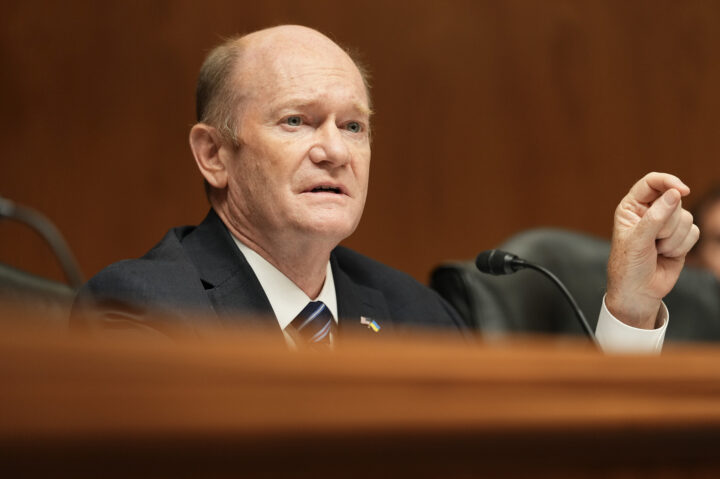
Sen. Chris Coons (D-DE) speaks at the Senate Appropriations Committee on Capitol Hill on July 14, 2026 in Washington, DC.
Nineteen Senate Democrats, led by Sen. Chris Coons (D-DE), introduced a bill on Wednesday that would impose sanctions on companies, individuals and others involved in the construction and development of Israeli settlements in the E1 area of the West Bank, which the lawmakers argue would be a severe blow to the viability of a Palestinian state.
The far-reaching sanctions would also target financial institutions and government officials and entities involved in supporting or facilitating E1 settlement construction.
Coons’ leadership on the legislation is especially notable because he has historically been seen as one of Israel’s strongest allies on Capitol Hill and he’s in line to be the top Democrat on the Senate Foreign Relations Committee in the next Congress — potentially chairing the influential panel if Democrats take the majority, where he’d have significant latitude to work to advance the bill and other similar measures.
The bill would place mandatory sanctions on anyone “responsible for or complicit in, or [found] to have directly or indirectly engaged in or attempted to engage in” the construction of settlements or related structures in the E1 area; investing in or constructing infrastructure designed to serve the settlements including roads and utilities; or organizing or financing the transfer of Israeli settlers into such settlements.
The sanctions would also apply to those who “knowingly facilitated financial transactions related” to such settlement activity — targeting Israeli or international banks involved in the settlement construction — as well as government entities and leaders involved in E1 settlement construction.
The bill also allows for discretionary sanctions on individuals or entities providing support to those who are sanctioned, and on entities owned or controlled by those sanctioned.
The sanctions authorities would terminate after seven years unless renewed.
Alongside Coons, the bill is being co-led by Sens. Elizabeth Warren (D-MA), Ron Wyden (D-OR) and Ruben Gallego (D-AZ), and is cosponsored by Sens. Michael Bennet (D-CO), Tammy Duckworth (D-IL), Martin Heinrich (D-NM), Tim Kaine (D-VA), Mark Kelly (D-AZ), Andy Kim (D-NJ), Jeff Merkley (D-OR), Chris Murphy (D-CT), Patty Murray (D-WA), Jack Reed (D-RI), Brian Schatz (D-HI), Adam Schiff (D-CA), Elissa Slotkin (D-MI), Chris Van Hollen (D-MD) and Peter Welch (D-VT).
“For decades, American presidents from both parties have warned successive Israeli governments that construction in E1 threatened the viability of a Palestinian state and was unacceptable to the United States,” Coons said in a statement. “As Palestinian civilians face a campaign of devastation and fear from violent extremist settlers, the United States must send a strong message that this behavior is unacceptable and that it remains committed to freedom, security, prosperity, and self-determination for all Israelis and Palestinians.”
Warren described the E1 project as “a move towards de facto annexation of the West Bank, and those who choose to facilitate settlement construction should understand that they risk losing access to the U.S. financial system.”
Wyden said that the expansion of West Bank settlements “crosses a clear red line and makes Palestinian statehood and lasting peace even more difficult” and said the U.S. must “must stand up against [Israeli Prime Minister Benjamin] Netanyahu’s campaign of violence and aggression against Palestinian civilians.”
Gallego said that, by severing east Jerusalem from the West Bank, E1 construction would “threaten a viable Palestinian state” and is a “step in the wrong direction.”
“This legislation sends a clear message to Prime Minister Netanyahu: the United States stands firmly behind a two-state solution as the only path to real peace and security for all,” he said.
The bill follows the announcement of sanctions by the U.K. and other U.S. allies targeting Israeli settlements broadly, including both the West Bank and the Golan Heights.
J Street praised the bill, saying, “The era in which right-wing Israeli governments could ignore US demands to halt settlement expansion and expect American politicians to fall in line is over.”
Phil Gordon, who served as national security advisor to former Vice President Kamala Harris, also expressed support, saying, “If [President Donald’ Trump actually cared about addressing settlements or settler violence he could support that; if not his ‘mild’ response to UK means little.”
Plus, Trump predicts war ends after Election Day
Saul Loeb-Pool/Getty Images
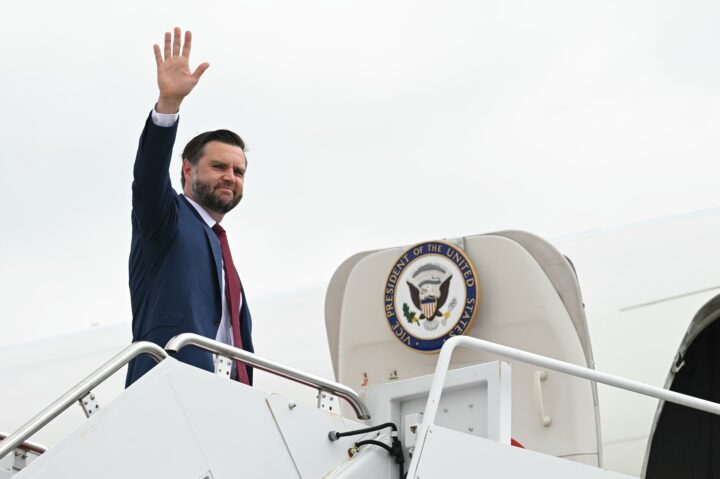
Vice President JD Vance boards Air Force Two on August 31, 2026, at Joint Base Andrews, Maryland.
Good Wednesday afternoon.
This P.M. briefing is reserved for our premium subscribers like you — offering a forward-focused read on what we’re tracking now and what’s coming next.
Today’s Daily Overtime was curated by JI U.S. Editor Danielle Cohen-Kanik.
📡On Our Radar
Notable developments and interesting tidbits we’re tracking
Asked about the U.K., France and Canada enacting sanctions against Israeli settlements in the West Bank, President Donald Trump told reporters this afternoon on his way to Dallas for the GOP midterm convention that he’ll be “speaking to Israel” about the issue. “I understand exactly what’s going on, but I want to find out why all of a sudden does that happen,” he added…
Trump also predicted the Iran war “will end immediately after” the midterm elections because the Iranian regime is “desperate to affect the election”…
White House officials and GOP elected officials told Axios that they’ve stopped trying to persuade Trump on anything and find it futile to push back on his decisions, with one longtime advisor telling the outlet, “Why bother? He’s the boss”…
A new poll of American Jewish voters commissioned by the nonpartisan Jewish Voters Resource Center found that Vice President JD Vance is viewed negatively by 82% of Jewish voters, including 39% of Jewish Republicans, Jewish Insider’s Matthew Shea reports. Vance’s approval numbers are markedly lower than those of Trump — who is viewed positively by 89% of Jewish Republicans — and Secretary of State Marco Rubio, at 93%…
A new CNN poll of the Senate races in Michigan and Maine found the Democratic candidates leading, though both were within the margin of error, indicating the races remain neck-and-neck in the lead-up to November. In Michigan, Democratic nominee Abdul El-Sayed led former Rep. Mike Rogers (R-MI) 47%-44%, while in Maine, Democratic nominee Troy Jackson led Sen. Susan Collins (R-ME) 48%-45%…
Trump has begun tapping his super PAC’s $400 million war chest through a new group, No Going Back PAC — financially backed by his main super PAC, MAGA Inc. — which has reserved at least $47 million in ads across six contested Senate races and one House race, The New York Times reports. The PAC’s top investments include nearly $15 million in Michigan, $11 million in Ohio and $9.6 million in New Hampshire…
Pakistan transmitted a warning from Saudi Arabia to Iran to rein in its Houthi proxies in Yemen amid an escalation in hostilities between the terror group and Riyadh, Reuters reports. Pakistani Defense Minister Khawaja Asif also sounded a cautionary note in an interview reminding global actors that attacks on Saudi Arabia could now trigger its mutual defense pact with Pakistan and Turkey…
The International Atomic Energy Agency’s board of governors voted today for the first time in two decades to report Iran to the U.N. Security Council for violating its nuclear nonproliferation obligations, diplomats told Reuters. The move marks an escalation that opens Iran to possible U.N. sanctions, though Russia and China’s vetoes on the UNSC make actual punitive action unlikely…
Israeli Foreign Minister Gideon Sa’ar inaugurated the first Israeli Embassy in the Slovenian capital of Ljubljana…
Israel and the Palestinian technocratic committee governing Gaza have successfully vetted roughly 16,500 Palestinians to serve in the Board of Peace’s new police force, though Jerusalem has not yet given its approval for the recruits to leave the Gaza Strip for training, two Board of Peace officials told The Times of Israel…
Reps. Brad Schneider (D-IL), Craig Goldman (R-TX), Ann Wagner (R-MO), Debbie Wasserman Schultz (D-FL), Jimmy Panetta (D-CA) and Gus Bilirakis (R-FL) urged Rubio and Treasury Secretary Scott Bessent to take steps to ensure Hamas cannot “exploit” economic instability in the West Bank, raising concerns about Israel’s decision to withhold tax revenues from the Palestinian Authority…
Former Secretary of State Tony Blinken rejected as “complete fiction” a Haaretz report that he delayed an offer by Hamas immediately after the Oct. 7, 2023, attacks to release some of the hostages it had captured…
White House Special Envoy Steve Witkoff earned more than $100 million — including nearly $69 million in cash and $38 million in crypto — from the trust that owns his stake in World Liberty Financial, the cryptocurrency venture he co-founded with Trump and his family in 2024, according to a new financial disclosure…
⏩ Tomorrow’s Agenda, Today
An early look at tomorrow’s storylines and schedule to keep you a step ahead
Keep an eye on Jewish Insider for reactions from Texas officials and Jewish leaders to the decision by the University of Texas’ Democratic student group to host far-left streamer Hasan Piker on campus later this month.
The GOP midterm convention, which offers a test of whether President Donald Trump can boost the prospects of Republicans in competitive general election races, concludes tomorrow with closing remarks from the president and a keynote address from Vice President JD Vance.
Also speaking at the summit tomorrow are Sen. Ted Cruz (R-TX), House Speaker Mike Johnson (R-LA), Michigan GOP Senate nominee Mike Rogers, Texas Gov. Greg Abbott, Rep. Mike Lawler (R-NY), Health and Human Services Secretary Robert F. Kennedy Jr., former White House Press Secretary Karoline Leavitt and Donald Trump Jr.
A FATHER’S LOVE
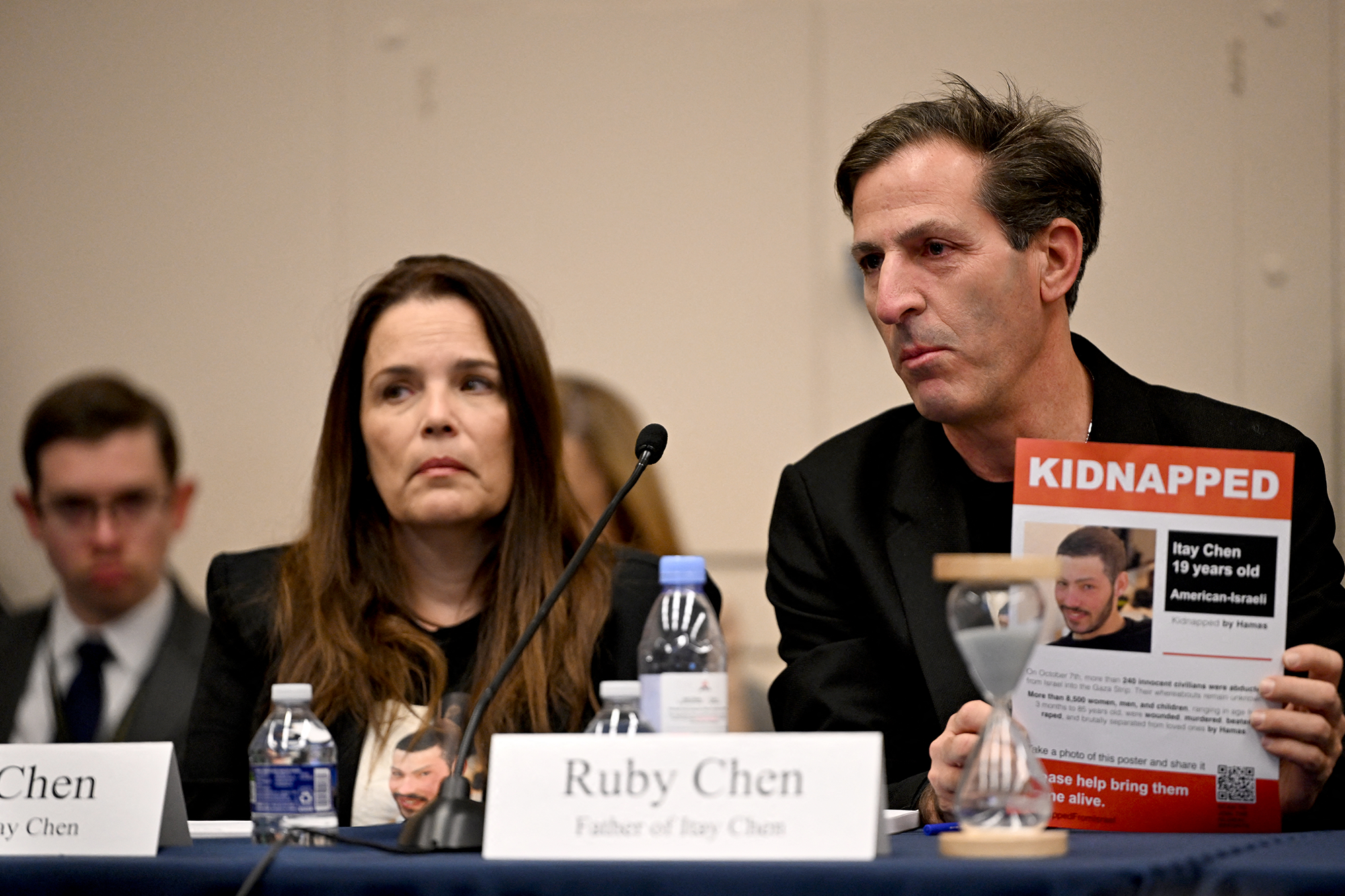
Chen — father of Itay Chen, whose body was held by Hamas for more than two years — is continuing to advocate to ensure that American victims of Oct. 7 are remembered, and that his son’s ‘sacrifice was not in vain’
BOOKSHELF
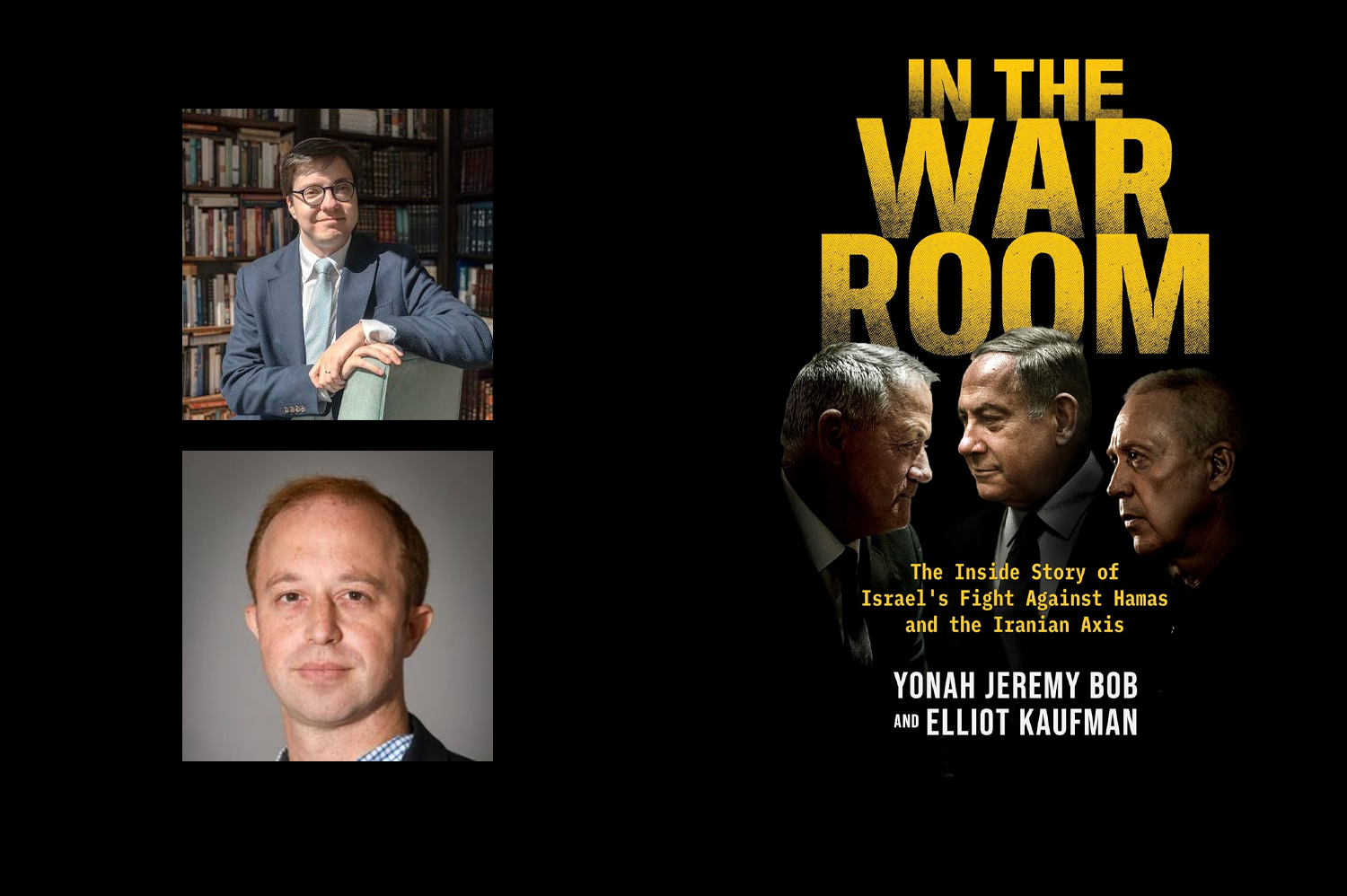
Jerusalem Post military correspondent Yonah Jeremy Bob and Wall Street Journal editorial writer Elliot Kaufman draw on years of interviews with top Israeli leadership
Most analysts agreed that the British sanctions against Israeli settlements were imposed as a result of pressure from Labour’s left-wing base
Leon Neal/Getty Images
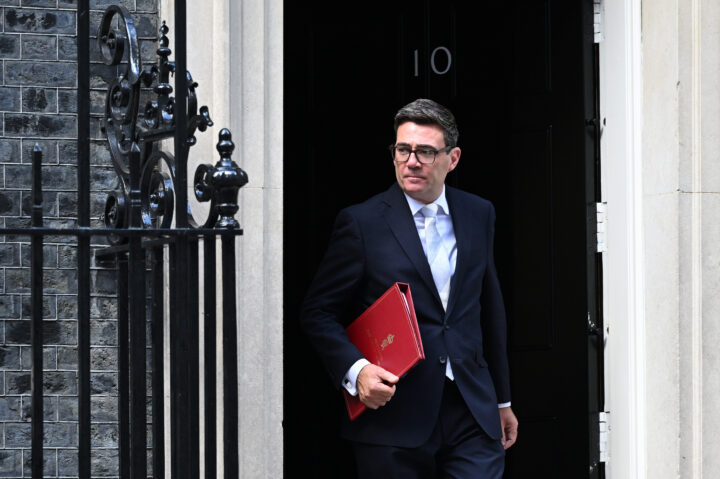
Prime Minister Andy Burnham departs 10 Downing Street to address the House of Commons on Sept. 1, 2026 in London, England.
Former White House officials and diplomats say the U.K. government’s decision to slap sweeping new sanctions on Israeli West Bank settlements is primarily a bid to appease far-left political factions in Britain, warning that while the move is unlikely to alter Israeli behavior on the ground, it risks increasing diplomatic friction between London, Jerusalem and Washington.
On Tuesday, U.K. Foreign Secretary Ed Miliband announced the U.K. would institute an import ban on goods produced in settlements, targeted sanctions against individuals and corporate entities involved in constructing, advertising or financing settlement expansion and a ban on events held in the U.K. that promote West Bank real estate.
Israeli Foreign Minister Gideon Sa’ar denounced the step as a “hostile sanctions package” and announced that Israel in response would close the British Consulate in Jerusalem, expel British representatives from the U.S.-backed International Gaza Support Center, terminate the British Support Team in Ramallah tasked with training Palestinian Authority Security Forces and bar 12 British officials, including MP Jeremy Corbyn, accused of “antisemitic and anti-Israel activity.”
While the U.S. has not issued an official response, Secretary of State Marco Rubio indicated that Washington will not follow suit, though he refrained from offering explicit condemnation of London’s new policy.
Experts told Jewish Insider that London’s move was predictable given global sentiment toward Israeli settlements, though it’s unlikely to shift Israeli policy. Analysts argued the decision was primarily driven by U.K. domestic politics and warned it could strain relations between Washington and London.
“The poor timing of the U.K. action — days before the Jewish holy days and a few weeks before Israel’s election — shows that this move is largely a matter of British domestic politics,” Elliott Abrams, former U.S. special envoy during the first Trump administration, told JI. “The Labour Party conference is coming, and that was the primary consideration for the British government. This action, and wider European support for it, will not change Israeli conduct, but it will render Europeans even less relevant in Middle Eastern affairs.”
Abrams added that the sanctions fail to deliver tangible support to Palestinians while actively damaging Western diplomatic ties.
The U.K. “seem[s] intent on sacrificing their relationship with Israel without doing anything that actually helps Palestinians,” Abrams said. “This action will hurt U.S.-U.K. relations in one important way: it demonstrates to U.S. policymakers that Britain’s current leadership is not a serious partner.”
Jason Greenblatt, former White House Middle East envoy in the first Trump administration, told JI that the U.K. is prioritizing “domestic politics ahead of its own security” and warned the decision “helps no one.” He predicted the Trump administration is “carefully weighing its response to a badly timed and poorly reasoned decision aimed at an important American ally.”
“Punishing Jews for living and trading in the land where Jewish history began more than 3,000 years ago is a terrible decision, and calling it a legal opinion is a farce,” Greenblatt said. “No Palestinian will be better off for it, and it will not move the Israeli-Palestinian conflict one inch. What it does is weaken an important intelligence partner of the United Kingdom in the middle of the war against the Iranian regime.”
“Tehran, Hamas, Hezbollah, and the Houthis could not have asked for a better gift,” he continued. “Washington raised its concerns before London acted, and London dismissed them.”
Edmund Fitton-Brown, a former British diplomat and senior fellow at the Foundation for Defense of Democracies, similarly characterized the move as “political opportunism” framed by domestic electoral pressures.
“It reflects primarily political opportunism on the eve of an important by-election and in the run-up to the Labour Party conference this fall,” Fitton-Brown said. “Miliband and Burnham are pandering to nervous backbench MPs and to the red-green alliance within the party. They are afraid of losing votes to the Green Party and ‘Gaza-first’ independents.”
Fitton-Brown noted that the decision marks a sharp escalation from previous Labour policy and carries internal risks for the U.K.
“It is an acceleration of poor choices made by the Starmer government, such as recognizing a Palestinian state last year. It indicates that [British Prime Minister Andy] Burnham and Miliband will take a more hostile stance toward Israel than Starmer did,” Fitton-Brown said. “Miliband’s public comments leading up to this were particularly aggressive, and the near-unanimous assessment among British Jews is that this makes them less safe.”
He added that the sanctions will likely damage U.S.-U.K. relations, referencing criticism from Huckabee and warnings from U.S. lawmakers — such as Rep. Randy Fine (R-FL) — regarding potential state-level boycotts against the U.K., which other states may replicate.
“The U.K. is damaging its own security — Israel has helped prevent terrorist attacks on British soil over recent years,” Fitton-Brown said. “The U.K. should be concerned about this, as well as facing renewed Argentinian ambitions in the Falklands, where current U.K. capabilities will struggle to defend the islands without support from key allies, particularly given President Trump’s past equivocation on the issue.”
Simon Henderson, a senior fellow at the Washington Institute for Near East Policy, called the decision “entirely predictable” given international sentiment on the issue.
“Concern about the activities of settler activists whom US Ambassador Huckabee has called terrorists has been widespread in the world,” Henderson said. “We await the responses to the action from London, Europe and Canada by President Trump and Prime Minister Netanyahu.”
The secretary of state said the U.S. wasn’t going to support the policy, but added that the U.S. doesn’t want destabilizing activity taking place in the West Bank
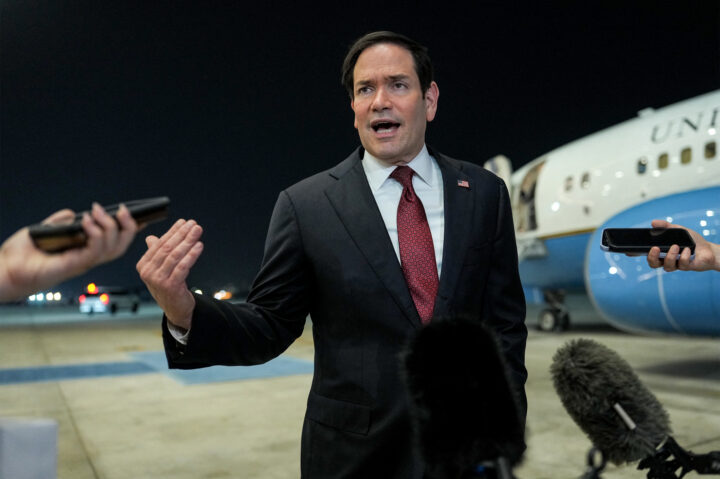
Photo by Eric Lee / POOL / AFP via Getty Images
Secretary of State Marco Rubio speaks to the media upon arrival at al-Bateen Executive Airport in Abu Dhabi on June 23, 2026.
Secretary of State Marco Rubio offered a tepid response on Tuesday to the United Kingdom’s new sanctions regime against Israeli settlements in the West Bank.
“Obviously, we’re not going to do what the U.K. did,” Rubio told reporters during a trip to Colombia when asked about U.K. Foreign Secretary Ed Miliband’s announcement, but said he didn’t have anything to add further.
“Obviously, these are decisions that they make,” he said. “And we — and the president has expressed this in the past — don’t want to see anything destabilizing going on right now in the West Bank with so much going on in the region. We think it has implications as well on our ability to make progress with regards to Gaza and the 20-point plan and Board of Peace that we’re very committed to.”
Rubio’s remarks followed an announcement earlier Tuesday by U.K. Foreign Secretary Ed Miliband, who unveiled a sweeping new sanctions regime targeting West Bank settlements. The British policy includes an import ban on goods produced in settlements alongside targeted sanctions against individuals and businesses involved in constructing, advertising or financing settlement expansion.
Prior to the formal announcement in London, U.S. Ambassador to Israel Mike Huckabee warned that Britain could face retaliatory “repercussions” from Washington over the policy shift.
Asked about Huckabee’s comment, Rubio noted that neither he nor President Donald Trump had issued an official response yet, but acknowledged that the administration was “made aware that [the U.K. was] going to make this decision.”
“We heard their arguments as to why,” Rubio said. “But look, we share the goal of stability. We don’t want to see some uptick in violence or an uptick in conflict or tensions in the West Bank at a very tenuous time in the region. But beyond that, as of this moment, we don’t have any further comment.”
The move was roundly criticized by British Jewish leaders, along with the conservative opposition parties in Parliament
Wiktor Szymanowicz/Future Publishing via Getty Images
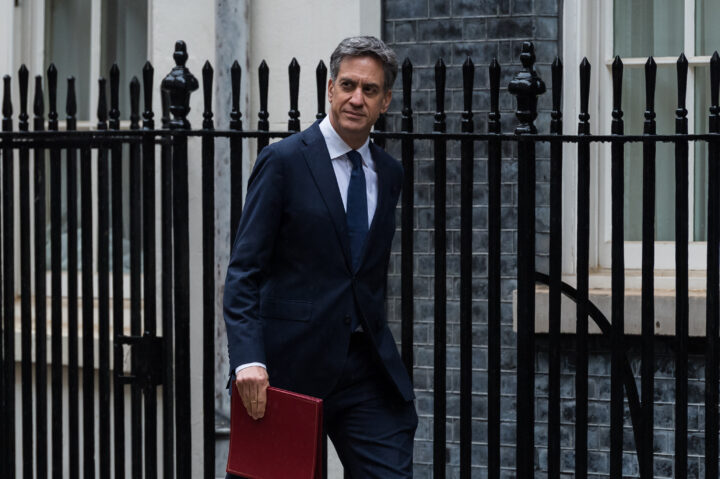
U.K. Foreign Secretary Ed Miliband arrives in Downing Street to attend weekly Cabinet meeting in London, U.K. on Sept. 8, 2026.
U.K. Foreign Secretary Ed Miliband announced a sweeping new sanctions regime targeting Israeli settlements in the West Bank on Tuesday, marking a major escalation in Britain’s diplomatic stance toward Israel.
Addressing the House of Commons, Miliband unveiled an import ban on goods produced in settlements alongside targeted sanctions against individuals and corporate entities involved in constructing, advertising or financing settlement expansion.
The secretary also announced a ban on real estate events in the U.K. promoting the purchase of homes in West Bank settlements. Miliband went further than any previous British official in accusing extremist Israeli settlers of carrying out “ethnic cleansing” of Palestinians in the West Bank and calling them “terrorists” with the tacit backing of the Israeli government.
“My parents came here as Jewish refugees and found sanctuary and a country that stood up for the law, freedom and self-determination,” said Miliband, describing himself as a proud British Jew. Expressing a “deep sense of shame” over the actions and policies of the Israeli government in Gaza, he insisted the policy is intended to target illegal settlements — not Israel or the Jewish community — and is distinct from the Boycott, Divestment and Sanctions movement.
“We absolutely oppose the BDS movement against Israel. This is about the Occupied Territories, settlements in the Occupied Territories,” Miliband said. “[It takes] six to nine months precisely so that we get this regime right so it does not affect, so it does not impinge, on Green Line Israel,” he continued, referring to the Israeli borders established in the aftermath of the 1948 war.
Miliband also announced that the U.K. would be reimposing strict economic sanctions on Iran, as well as sanctions on Al-Qard al-Hassan, a Hezbollah-run financial institution.
The measures, triggered in part by Israel’s plans to expand the contentious E1 settlement zone east of Jerusalem, were coordinated with France and Canada. Denmark, Finland, Iceland and Poland joined the countries in announcing they would enact similar sanctions in a joint statement alongside countries that have already taken similar measures — such as Ireland, Spain, Netherlands, Norway and Belgium.
The countries reaffirmed their commitment to a two-state solution, firmly opposing “actions tantamount to the annexation of Palestinian land and forcible displacement” while reiterating Israel’s legitimate security needs and condemning the Oct. 7, 2023, Hamas terrorist attacks.
Denouncing what he described as a “hostile sanctions package,” Israeli Foreign Minister Gideon Sa’ar announced on Tuesday that Israel would be taking swift retaliatory measures, such as closing the British Consulate in Jerusalem, expelling British representatives from the U.S.-backed International Gaza Support Center, terminating the British Support Team in Ramallah tasked with training members of the Palestinian Authority Security Forces and barring 12 British officials “involved in antisemitic and anti-Israel activity.”
U.S. Ambassador to Israel Mike Huckabee suggested that Britain will face “repercussions” and accused the U.K. of “discrimination against the Israeli government.” The U.S. is expected to release a statement about the sanctions later today.
Despite gaining support within the Labour Party the government’s announcement triggered immediate pushback from the political opposition and British Jewish organizations, who warned the policy could inflame tensions at home.
Speaking to Miliband in the House of Commons, Reform U.K. Deputy Leader Richard Tice condemned the sanctions as a “grave mistake” that risks fueling anti-Jewish hostility. The U.K. has seen a spate of violent attacks against its Jewish communities in recent months.
“We all deplore settler violence, but the simple reality is these sanctions are a grave mistake,” Tice said, questioning whether the policy would “embolden the scourge of antisemitism against British Jews on British streets.” He added that the move risks damaging relations with the U.S., harming U.K. security and inviting retaliatory sanctions from Israel.
Conservative leader Kemi Badenoch similarly criticized the measures, accusing the Labour Party of being driven by domestic political motives rather than Middle East diplomacy.
“Labour’s obsession with Israel is rooted in U.K. politics — it’s got less to do with peace in the Middle East and more to do with trying to keep the peace in the Labour Party,” Badenoch said, warning that British Jews should not have to watch politicians condemn antisemitism while ignoring the ideologies that drive it.
Jewish community groups also raised alarms over the diplomatic fallout. The Board of Deputies of British Jews, the leading representative body of British Jews, cautioned against prioritizing party politics over national interests, warning that eroding ties between London and Jerusalem could undermine economic security, damage national security ties and heighten community friction within the U.K.
“As we have told both governments over recent weeks, the deteriorating relationship between the U.K. and Israel has the potential to negatively impact the two countries’ security and their economies and further inflame community tensions here too,” the statement read.
Meanwhile, the Jewish Labour Movement, while acknowledging that curbing settlement expansion and opposing Israeli Prime Minister Benjamin Netanyahu’s policies were worthy goals, voiced serious misgivings regarding the government’s timing and execution of the policy.
“Action against settlement expansion and settler violence is absolutely necessary, as well as the increased opposition to Netanyahu’s ruinous ideology, but many in our community and our membership will hold questions and voice concerns about the timing and specifics of the policy.”
Please log in if you already have a subscription, or subscribe to access the latest updates.
 Continue with Google

 Continue with Apple