





































































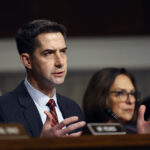





Accepting Chabad's Lamplighter award, the Texas senator warned that pastors don't see the drift on the right

Yisroel Teitelbaum
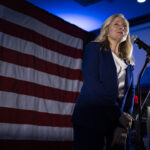
Sen. Ted Cruz receives Chabad's Lamplighter Award on Sept. 23, 2026.


 Add JewishInsider on Google
Sen. Ted Cruz (R-TX) warned on Wednesday that Christian leaders are “asleep” and failing to recognize the degree to which antisemitism and anti-Israel sentiment have spread among Christian youth.
The Texas senator made the comments while accepting the leadership award at the American Friends of Lubavitch (Chabad) annual Lamplighter Awards in Washington. Cruz voiced concern that older Christian leaders, specifically evangelicals, were not acknowledging that younger adherents have ideologically drifted from previous generations. “If you look at the polling, young evangelicals are turning systematically against Israel, and there are millions of dollars that are being spent to turn them against Israel,” he said.
“There has been no community in America that is more passionately pro-Israel than evangelical Christians in America, but all is not well,” Cruz said. “I think the Christian Church is asleep. I think a great many Christian pastors are asleep. I’ve spoken with a lot of pastors, particularly older pastors who are 60 or 70 or 80, and I get that that doesn’t sound all that old, but they say to me, ‘Ted, what are you talking about? I don’t see antisemitism on the right.’ If you’re not online, you’re sitting there serenely unaware of what has happened.”
Cruz argued that this shift marks an “existential” crisis because it could cause Americans “to wake up in five years and find ourselves in a country where both major parties are unambiguously anti-Israel and unapologetically antisemitic.”
“If we do not fight back, if we do not wake up leaders of the Christian Church to take on these lies … if we don’t stop this now, that’s where this could lead,” he said. “This cancer does not end, and I will tell you it is penetrating especially among young people, among teenagers, and 20-somethings on the right. Somewhere between a third and a half are listening to this poison. The only answer to lies is truth. We’ve got to engage. We’ve got to fight it.”
Cruz was honored at the Chabad gala alongside Jeff Miller, a leading Republican lobbyist and the board chair of the U.S. Holocaust Memorial Council.
Miller, who also serves on the Republican Jewish Coalition’s board, called for “a new strategy for a new kind of threat” facing the Jewish people while describing how antisemitism has surged in the digital age.
“The world’s oldest hatred has returned with new slogans, new accusations, and new platforms. It is the same ancient manipulation — delivered, amplified, and weaponized in new ways,” Miller said. “The delivery system is social media. These platforms are engineered to maximize engagement. Controversy drives engagement. Antisemitism drives controversy, and so the platforms amplify it. Antisemitism, it turns out, unfortunately, is good content. Hate used to need a mob to spread. Now it only needs an iPhone.”
“In the past, antisemitism often rose within societies during times of trouble. Today, foreign adversaries are deliberately injecting it into our society and weaponizing it against America to weaken us, confuse us and divide us, and it is working,” he continued. “We need a new strategy for a new kind of threat — one that protects free speech while exposing manipulation, demanding transparency, and confronting the foreign actors who are deliberately using antisemitism to divide our country.”
Miller urged Jewish Americans of all political stripes to look past partisan disagreements and come together, “because the scourge of antisemitism is not a Republican fight or a Democrat fight.”
“This is not a partisan fight, nor should it ever become one. We may disagree about politics, but tonight, in this room and in this fight, we must be one,” Miller said. “Whether antisemitism comes from Hasan Piker or Tucker Carlson, we must call it for what it is. Anyone who condemns antisemitism from the other side while excusing it from their own is not fighting hatred. They are exploiting it.”
Miller also called on Jewish leaders and organizations to join forces on their efforts to combat antisemitism, arguing that more unity was needed to effectively respond to the problem.
“This room is filled with people who fund and power the fight against antisemitism every day. That commitment matters, but we must also confront an uncomfortable truth: We have hundreds of organizations fighting the same enemy — and too often, we are fighting separately,” Miller said. “Antisemitism is coming at us with a baseball bat. We cannot continue fighting back with a thousand toothpicks.”
“We do not need less commitment, we need greater coordination. We do not need fewer voices, we need those voices speaking together,” he continued. “Antisemitism does not care which organization gets the credit. Neither can we. We need one strategy. One coalition. One united front.”
Miller was introduced on stage by Commerce Secretary Howard Lutnick and through video addresses from President Donald Trump and former California Gov. Arnold Schwarzenegger.
Schwarzenegger credited Miller with helping propel his 2006 campaign to victory and with fundraising “for project after project” once in office, adding that “what makes Jeff special is that he doesn’t just show up when it is easy or when someone is watching. He’s always determined. He’s determined to help the Jewish community.”
The event was co-chaired by former House Speaker Kevin McCarthy (R-CA); Eli Miller, a Republican operative in the private equity space; and Norm Brownstein, a veteran Washington lobbyist and a founding member and chairman of Brownstein Hyatt Farber Schreck LLP.
Among those in attendance were Will Scharf, who took over as White House counsel this month; acting Labor Secretary Keith Sonderling; Jacob Reses, Vice President JD Vance’s outgoing chief of staff; Mark Isakowitz, chief of staff to Sen. Dave McCormick (R-PA); White House Jewish liaison Martin Marks; Punchbowl News founder Jake Sherman; Jonathan Burkan, a member of the U.S. Holocaust Memorial Council; and Real Estate Roundtable President and CEO Jeff DeBoer.
Sens. John Fetterman (D-PA), John Barrasso (R-WY), Bill Hagerty (R-TN) and James Lankford (R-OK) also stopped by, as did Reps. Craig Goldman (R-TX) and John James (R-MI) and former Rep. Trey Gowdy (R-SC).
Dahlia Scheindlin also said polling shows both the Israeli government and the opposition face political challenges in the upcoming elections
Screenshot
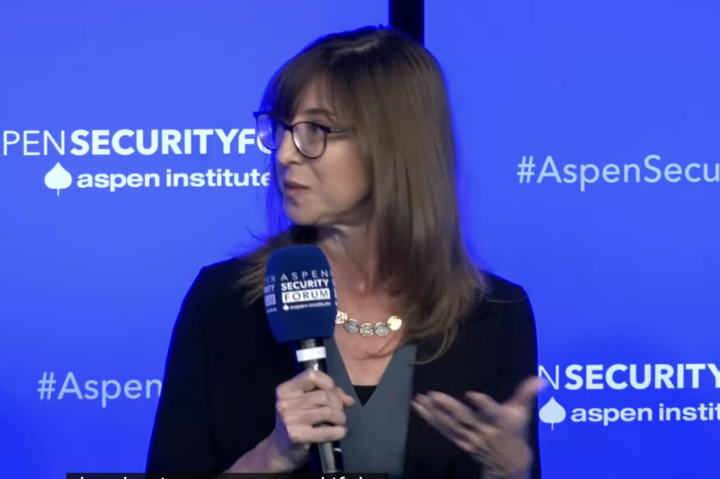
Dahlia Scheindlin speaks at Aspen Security Forum, July 17, 2026
ASPEN, Colo. — Israelis generally don’t grasp the extent of the growing anti-Israel sentiment in the United States, Dahlia Scheindlin, an Israeli public opinion researcher and columnist, told Jewish Insider.
Speaking on the sidelines of the Aspen Security Forum this month hours before more than 100 House Democrats voted to cut U.S. military aid to Israel, Scheindlin said that most Israelis feel that warnings of slipping U.S. support have been repeated for years but haven’t come to fruition.
“Israelis for a long time have been told ‘you have to worry about the America-Israel relationship’ and nothing ever really happened — they sort of took it for granted that the relationship would always be there, and in many ways they still do,” Scheindlin said. “From the Israeli perspective, there’s a little bit of a sense of crying wolf. We see that in the 53% who still think that the relationship will be fine.”
She said most Israelis today view Republicans as pro-Israel and Democrats as anti-Israel and have little understanding of the range of views within both parties. And she said they don’t believe Israel’s own actions have any bearing on U.S. criticism of Israel.
Supporters of opposition parties, she continued, believe that Israeli Prime Minister Benjamin Netanyahu “personally has undermined the relationship” — but that the issues in the relationship largely end with Netanyahu.
She said that the strong support in Israel for President Donald Trump took a nosedive with the ceasefires in Iran and Lebanon, with many Jewish Israelis feeling that Trump had forced a premature end to the wars and didn’t let the U.S. and Israel carry them to their conclusion or fulfill their main objectives.
But she said that most Israelis still see issues in the relationship as a “disagreement that will pass” rather than a true crisis or turning point. She said a majority of Israelis still feel the U.S.-Israel relationship will survive — and many are too concerned with their own daily lives and the ongoing impacts of the wars in Gaza and Lebanon to give the relationship much thought.
“When you ask about the U.S.-Israel relationship, it’s somewhere between repressing it and complacent and fearful — but also they have been told year after year for quite a long time, ‘Watch out for this relationship,’ and then America continues to come through in so many ways,” she said.
Ahead of the Israeli elections in October, Scheindlin said that Israeli public opinion polling has been relatively consistent for several years, with the current governing coalition lacking a majority of 61 Knesset seats. At the same time, the coalition has recovered from its post-Oct. 7, 2023, nadir of support, and has sat consistently in most surveys between 49 and 55 seats.
“There’s some instability right now, but the basic breakdown that I just said between opposition and coalition has been really extraordinarily stable for almost two years now,” Scheindlin said. “The basic breakdown, where the current coalition has a minority and the opposition has a majority, but can’t form a coalition of only Zionist parties — those basic contours were in place before Oct. 7.”
Even through the popular 2025 war with Iran and the less-popular 2026 war with Iran and killing of Hezbollah’s leadership, the coalition’s polling has changed little, she continued.
“I don’t know what could happen between now and the elections that would give this coalition the additional six to 10% it would need to make up in order to actually win an outright majority of seats,” she said.
At the same time, given the reluctance of opposition parties to create a coalition with Arab parties, they have “constrained their own options,” she said. “It’s a strange situation where the opposition has such a firm majority in all surveys between 65 and 70 seats, mostly, and yet so much of Israeli society has conditioned itself to look only at the Zionist parties in forming a coalition that they don’t have a majority either in most surveys.”
She noted, however, that Gadi Eisenkot, currently the leading opposition candidate, has seemed to leave the door open to partnering with Arab parties.
The much-hyped merger of the parties led by former Prime Ministers Naftali Bennett and Yair Lapid hasn’t expanded the size of their bloc nor brought them significant new support.
“It was a small boost in the beginning and then it went back down and now it’s heading closer to where Lapid was polling in surveys even before, which means that most of their supporters are probably Lapid supporters,” Scheindlin said. “Bennett didn’t actually bring very much.”
Scheindlin said that the traditional Bennett constituency — center-right or right-leaning voters who oppose Netanyahu — are now supporting Eisenkot instead.
Scheindlin also told JI that she sees parallels between Israel’s current security strategy of fighting enemies on its own turf as similar to Iran’s own strategy of “forward defense” — comments she repeated on an Aspen panel about the U.S.-Israel relationship, to pushback from fellow panelists.
“The issue of reaching agreements or diplomacy has been so diminished, completely gutted for a long time that even now, when we have the beginnings of a negotiating process with Lebanon … Israelis are very skeptical that that can yield anything,” she said.
She called the oft-repeated idea that Israel is surrounded on all sides by enemies “demonstrably untrue,” noting that the country has had peace with both Egypt and Jordan for decades, that Iraq, Lebanon and Syria no longer harbor the same animosity or capability to threaten Israel and that Israel has forged new peace deals with Gulf states.
“Are there militias? Are there terror groups? Absolutely. Those are very real,” Scheindlin continued. “But the idea that Israel is surrounded by enemy states that want to destroy it factually, and yet when that’s what you’re being socialized into all the time, then you come to the conclusion that only war is the way to deal with it — which, after Oct. 7, it’s not hard to convince people that the threat is very material and not theoretical.”
Asked about Israeli views on the path forward in the Israeli-Palestinian conflict, Scheindlin emphasized that there is no clear consensus view among the Israeli public with “minority support” for a two-state solution, a democratic one-state solution, a Jewish-dominated one-state solution or a continuation of the status quo.
She said the dilemma has been exacerbated by the failure of Israeli political leaders to articulate a clear plan or solution of their own. Even though the current government has been open about its interest in annexing the West Bank, she said that leaders have not been clear about what that would mean for the Palestinians living there.
JI looked into how ascendant anti-Israel candidates raised and spent money just before and after their primaries

Getty Images
Illustrative
Left-wing candidates, including several members of the Democratic Socialists of America, rode a wave of anti-Israel sentiment — and donor cash — to victory in primaries in New York and New Jersey in June.
The latest fundraising filing period highlighted the diverse donor bases backing some of the most outspoken critics of Israel and capitalism, with candidates raking in hundreds of thousands from executives and entrepreneurs in tech, medicine and finance:
Here’s a round-up of how some of the most prominent figures got that windfall — and what they did with it:
- Darializa Avila Chevalier, the radical grad student who defeated Rep. Adriano Espaillat (D-NY), reported nearly $350,000 in donations in the last three weeks of June. Among the many medical professionals to cut checks to Avila Chevalier was Dr. Mohammed Hadi, a Long Island-based physician charged in 2015 with conspiring to defraud Medicare and distribute oxycodone. Hadi ultimately pleaded guilty in 2024 to misdemeanor theft of government funds. Another filing the former Columbia encampment leader submitted on Wednesday lists among the campaign’s expenses $7,000 in compensation to Avila Chevalier herself on June 1. Federal law allows for candidates to pay themselves salaries out of their donor dollars.
- Another candidate getting revenue from their campaign is Adam Hamawy, who in early June became the Democratic nominee to succeed Rep. Bonnie Watson Coleman (D-NJ). The candidate paid $23,700 of the $504,855 his campaign brought in during the latest filing period to his own plastic surgery practice, continuing a pattern Jewish Insider first reported on in May. The Federal Election Commission also allows candidates to purchase goods, services and working space from themselves and family members so long as the transactions are market-rate. The Hamawy campaign — which has leaned into the candidate’s military record and fierce criticism of Israel while downplaying his past ties to Islamist figures — told JI in May that an outside consulting firm arrived at the $7,900 monthly rent paid to Princeton Plastic Surgeons.
- Assemblymember Claire Valdez reported just shy of $293,000 in campaign contributions for her bid to succeed Rep. Nydia Velazquez (D-NY). One of her most notable donors was Shanti Singham, the sister of Shanghai-based Maoist tech mogul Neville “Roy” Singham, currently under federal investigation in connection to his bankrolling of far-left nonprofits that promote pro-Iran, pro-Russia and pro-Chinese propaganda. Shanti Singham — who gave Valdez $2,000 in the most recent filing period, bringing her total contributions to her fellow DSA member to $3,500 — has her own ties to China, having held a post at state-run East China Normal University and promoted the country’s controversial Confucius Institutes in Africa. The Marxist academic’s daughter, Alicia Singham Goodwin, served as political director for the anti-Zionist group Jews for Racial and Economic Justice and is a leading activist in DSA’s electoral efforts, having even helped shape New York City Mayor Zohran Mamdani’s platform in 2025.
- A key cash-raising tool for both Avila Chevalier and Valdez has been their joint fundraising committee, which raised $165,551 in less than a month, and disbursed most of it to their campaigns. One of its largest contributors was prominent Jewish Democratic donor Morris Pearl, chairman of Patriotic Millionaires, a group that advocates heavier taxes on high earners such as himself. The former BlackRock managing director, who has in past years advocated for peace processes in the Middle East, donated $7,000 to the fundraising committee.
- The biggest winner of all this cycle may be Mamdani himself: not just for getting his slate of House candidates elected, but for raising more than $300,000 for his reelection campaign, even though he is three years away from a reelection bid. The haul was big enough that the campaign told local outlet City & State that it will abstain from the city’s matching funds program, which provides public cash to amplify small-dollar donations but caps donation size and spending. And Mamdani is already spending his war chest, contributors to which include tech investor Omer Hasan, who also underwrote his 2025 super PAC and new anti-AIPAC super PAC American Priorities. On July 10, the campaign paid more than $9,500 to longtime DSA activist Nadia Tykulsker. In 2023, it fell to Tykulsker to defend her organization’s decision to promote a celebratory rally in Times Square one day after Hamas’ Oct. 7 attacks — a gathering even Mamdani, then a state lawmaker, condemned.
Former Democratic Rep. Kathy Manning: ‘There is no doubt that we are living through very difficult times for American Jews’
Matt Rourke/(AP
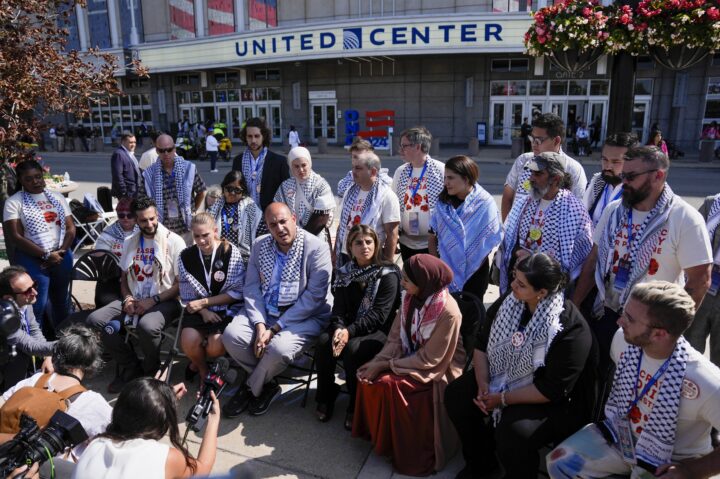
Uncommitted delegates hold a press conference outside the United Center before the Democratic National Convention Thursday, Aug. 22, 2024, in Chicago.
The debate over Israel within the Democratic Party has long been a particularly acute source of tension, in the wake of a protracted war in Gaza that deepened internal divisions over America’s increasingly contested relationship with one of its closest allies.
Recently, however, many Jewish and pro-Israel Democrats say they have observed a distinct and troubling new shift in that debate, as the range of politically acceptable opinions on Israel has strayed far outside the mainstream, with little pushback from party leaders.
Amid growing claims of Israel committing genocide as settled fact, openly pro-Hamas demonstrations, ongoing efforts to demonize pro-Israel engagement in Democratic primaries and rejections of Israel’s right to exist as a Jewish state, the political atmosphere is raising questions about whether the party is willing to collectively draw red lines around creeping extremism or if it is now accommodating anti-Israel sentiment that until not long ago had been more commonly viewed as off-limits.
While hostility toward Israel has been building for some time over its military assault in Gaza sparked by Hamas’ Oct. 7, 2023, attacks, Jewish Democrats warn that the party’s acquiescence to its anti-Israel wing risks alienating a core constituency that could have negative consequences in the midterms as well as the upcoming 2028 presidential election.
Their worries have dovetailed with a sharp rise in anti-Israel and antisemitic invective from the right that some Jewish Democrats contend is inseparable from a deeper antipathy that transcends traditional party lines.
“For those of us who care about a strong U.S-Israel relationship, there is reason to be concerned,” said Howard Wolfson, a longtime advisor to former New York City Mayor Michael Bloomberg. “The challenge is profound.”
Even as he said that challenge also extends to the right, Wolfson voiced apprehension that in his own party, “there are Democrats thinking of running for president who have said that they won’t take money from pro-Israel” political donors “and have thrown around the word genocide” while describing Israel’s conduct in Gaza. The Jewish community “has a real problem,” he lamented to Jewish Insider in a recent interview. “It is a subject of considerable angst and debate.”
Sara Forman, the former executive director of the New York Solidarity Network, an advocacy group that backs pro-Israel Democrats for state and local office, said, “The willingness to accommodate absurd assertions about Israel is a cancer that is spreading unchecked” within “the left ranks of the Democratic coalition” in addition to “factions of the Republican right wing,” a dynamic she and others attributed, in part, to the polarizing influence of online algorithms that frequently reward incendiary content.
“Right now,” she added, “I hate to say we are in an extremely frustrating situation where the identity of the Democratic Party is being redefined, and where a majority of center-left traditional liberal Jews are left somewhere in the wilderness.”
“To me,” she concluded, “it’s depressing.”
“It is very troubling for American Jews that we are even having to have this conversation,” Jon Reinish, a Democratic strategist often involved in Jewish and pro-Israel causes, told JI. “Putting aside what one thinks” about Israel, he added, “to see it become a flashpoint in politics feels pretty shitty, to be sure.”
The Jewish state, he told JI last week, “is something that transcends language in a political primary and goes back to something deep within us emotionally, in terms of our family and how we think of our own history.”
“In the last presidential election we saw Jews, especially in the suburbs, swing more toward the Republican candidate than they had since” Ronald Reagan in 1980, Reinish noted. “If I’m Democratic leadership, I would be looking very closely at that.”
Over just the past few weeks, the scope of tolerable views on Israel has slid into markedly antagonistic territory, according to interviews with more than a dozen Jewish and pro-Isrsel Democrats who voiced a growing sense of alarm over the party’s direction.
Earlier this month, for instance, Rep. Alexandria Ocasio-Cortez (D-NY) used her first appearance at the Munich Security Conference to not only repeat calls for conditioning U.S. aid to Israel but also to suggest that such support had enabled a genocide in Gaza. Though her comments were not new, that she had made them on one of the world’s most high-profile foreign policy stages underscored how her positions are continuing to gain greater currency in the party.
Some observers were also unnerved by Ocasio-Cortez’s decision to level an accusation toward Israel of genocide while in Germany, seen as insensitive to the history of the Holocaust.
Jewish Democrats say they have been unsettled by the growing ease with which anti-Israel critics have invoked charged claims of genocide without understanding its meaning or historical significance. “The genocide conversation,” according to Steve Fulop, the former mayor of Jersey City who now leads the Partnership for New York City, an influential business advocacy group, “has unfortunately monopolized the left and has become more commonplace and accepted.”
Fulop, a grandson of Holocaust survivors, said the issue was not a major focus of conversation when he ran an unsuccessful primary campaign for governor of New Jersey last year. “In the last six months,” he told JI last week, “it has become more prevalent and more of a talking point.”
This month, the subject emerged in a special election for a House seat in a wealthy northern New Jersey suburb, where a far-left candidate, Analilia Mejia, clinched the Democratic nomination — beating a former congressman, Tom Malinowski, who had faced outside spending from AIPAC due to his support for conditioning aid to Israel.
While AIPAC drew widespread backlash for its role seen as unwittingly helping to elevate a harsher critic of Israel to the House in Mejia, many pro-Israel Democratic elected officials in the state have since coalesced behind the nominee, suggesting her staunchly anti-Israel views are little impediment to winning the party’s broad support. In addition to accusing Israel of genocide, the only candidate in the primary to do so, Mejia, a progressive activist, denounced Israel after the Oct. 7, 2023, attacks without mentioning Hamas and expressed “incredible discomfort” with Israel’s existence as a Jewish state.
Even as Malinowski, for his part, disagreed with Mejia’s anti-Zionist sentiments, he echoed other Democrats who chose to endorse Mejia in the April special general election because, he wrote last week, he “strongly” believes that the “seat must remain in Democratic hands.”
Speaking broadly about anti-Israel currents now shaping the party, one Jewish Democratic member of the House said they have been unnerved by what they called an “obsession” with Israel among many far-left activists and candidates that reflects “litmus tests” not evenly applied to other key foreign policy issues.
“The line of what’s acceptable has shifted massively, especially since Oct. 7,” the House member, granted anonymity to speak candidly about the party, told JI last week.
“What I’m watching right now, in 2026, is a breakdown in respectful language toward the Jewish community,” Joel Rubin, a progressive strategist and former State Department official, explained in an interview with JI last week. “It is very troubling and implies hostility that is undeserved — considering nobody should be treated to that kind of language. But it is also really dangerous for the Democratic Party and our electoral prospects to have this internal hostility and disunity.”
In New York City, which elected a fierce critic of Israel as mayor last November, Jewish Democrats say that line has moved in a particularly troubling direction. More recently, for example, Brad Lander, a former city comptroller now challenging Rep. Dan Goldman (D-NY) in a heavily Jewish House district, drew scrutiny for hiring a campaign consultant who had boosted antisemitic conspiracy theories using a pseudonymous X account that also celebrated Iran and Hamas, among other controversial social media posts.
Even as Lander fired the consultant, Kaif Gilani, after his online activity was uncovered by JI earlier this month, the episode still fueled questions about whether he was adequately vetted, given that the consultant had established a profile as a well-known promoter of New York City Mayor Zohran Mamdani during the recent election. It also underscored just how common such extremism has now become in New York City — where protesters have in recent months openly chanted their support for Hamas outside synagogues.
Meanwhile, leading progressive lawmakers such as Ocasio-Cortez and Rep. Ro Khanna (D-CA), both of whom are seen as potential presidential contenders, have avoided publicly distancing themselves from a popular far-left streamer, Hasan Piker, who recently sided with Hamas while sharing his views on one of those protests, near a synagogue in Queens hosting an event promoting Israeli real estate investment.
Joel Rubin, a progressive strategist and former State Department official now at work on a book about Democratic foreign policy, said he interprets such rhetoric as part of a broader “political tactic by some folks in the base to try to silence Jewish voices and to intimidate them into not advocating on these issues.”
“What I’m watching right now, in 2026, is a breakdown in respectful language toward the Jewish community,” he explained in an interview with JI last week. “It is very troubling and implies hostility that is undeserved — considering nobody should be treated to that kind of language. But it is also really dangerous for the Democratic Party and our electoral prospects to have this internal hostility and disunity.”
“There has always been this struggle within the Democratic Party of the argument, on every issue, of what is acceptable and what is not,” Sam Lauter, a political consultant and pro-Israel activist in the Bay Area, told JI. “With regard to Israel, that argument is not new, but what is new is how much it’s increased and what has become acceptable and what has been just dismissed.”
The increasingly charged tenor of conversation around Israel “is not the way Democrats should be thinking about communicating to voters if we want to win elections outside of deep blue areas,” Rubin suggested. “My biggest fear is that people are afraid to stand up and speak out.”
Kenneth Baer, a former Obama administration official who now directs a communications firm, sounded a similar note of caution. “Democrats are running to outdo each other to criticize Israel to curry favor with the massively online left and the interest groups that constitute the party,” he told JI recently. “The political dynamics of 2026 may mean this doesn’t matter in November, but in 2028 and beyond, running to the extremes is not a political winner.”
“There has always been this struggle within the Democratic Party of the argument, on every issue, of what is acceptable and what is not,” Sam Lauter, a political consultant and pro-Israel activist in the Bay Area, told JI. “With regard to Israel, that argument is not new, but what is new is how much it’s increased and what has become acceptable and what has been just dismissed.”
Still, he argued, pro-Israel Democrats have also “missed out” on the opportunity to forcefully defend their positions. “It has been very clear for years that people who disagree with us have been organizing at a grassroots level while building up support and making their viewpoint a part of the party mainstream,” he said. “And our community stopped engaging at that level years ago, which is why many of us have been screaming that this is a huge problem.”
Former Rep. Steve Israel (D-NY), who previously helmed the Democratic Congressional Campaign Committee, attributed the changing landscape in large part to what he views as a demographic shift driven by younger voters “generations away from romantic images of Israel” that are now “replaced by algorithm-fueled social media portraying Israel dropping bombs on schools and hospitals in Gaza.”
“In politics, perception is reality, and the reality for younger people is that Israel is wrong,” he told JI.
But he said it would be a miscalculation to disengage from that conversation. “Pro-Israel activists who don’t understand the need to push back proceed at their own peril,” he said. “You can’t surrender the narrative, which means supporters of Israel on both sides of the aisle need to find a much more effective narrative, particularly toward young voters.”
Many pro-Israel activists are at a loss, however, for how to recapture the debate, as Middle East policy now appears likely to be a focus of the next presidential election.
“It’s easy to observe a problem and then not have specific ideas on the solution,” Israel told JI. “That is a fundamental question now.”
“I don’t have a great answer, to be honest with you,” said Wolfson, the Bloomberg advisor. “I find it is far easier to identify the breadth of the problem than to identify a solution.”
According to Lauter, “the Overton Window has shifted” for Democrats, “and what needs to also shift is our community’s understanding of how to deal with it and approach it.”
“Let’s see how the midterms go and which candidates jump in,” said Aaron Keyak, the deputy special envoy to monitor and combat antisemitism in the Biden administration who now serves on the board of Combat Antisemitism Movement. “But in the lead-up to 2028,” he told JI, “the Middle East policy discussion will certainly be more prominent.”
“Regardless of what we think or say today, the particular policy conversation leading up to 2028 is going to be driven by the candidates, so until we can fill out the answer to the ‘what’ and ‘why’ questions, we need to be able to answer the ‘who’ one,” Keyak added.
In the meantime, said former Rep. Kathy Manning (D-NC), who is now the board chair of Democratic Majority for Israel, the party still boasts a number of pro-Israel elected officials as well as candidates, including some her group recently announced it is endorsing in a range of contested House primaries.
“There is no doubt that we are living through very difficult times for American Jews,” she told JI in a recent interview, pointing to what she described as “unprecedented condemnation” of the U.S. alliance with Israel from both sides of the aisle. “What gives me hope,” she said, “is I know from my experience campaigning in a purple state in a competitive seat that the vast majority of Democrats still believe that Israel has the right to exist as a Jewish state and has the right to defend itself and its people.”
“We don’t have to love Israel,” but voters should understand the strategic benefits of working with a key Middle East ally, Hank Sheinkopf, a veteran Democratic strategist in New York City, said. “It ain’t about Jews,” he told JI. “It’s about the future of the United States of America.”
As the midterms near, Manning maintained that nominating pro-Israel Democrats will be a crucial step toward reclaiming the House. “The seats that are going to make the difference to taking back the majority are seats where candidates have to appeal not just to Democrats but also to independents and Republicans,” she said. “I think that it’s important for us to understand where voters are, regardless of what the loudest voices online or on the stage might be saying.”
Hank Sheinkopf, a veteran Democratic strategist in New York City, agreed with that sentiment, arguing that pro-Israel party members should be seeking to push the debate “back to the middle” and pressing a “straightforward geopolitical argument” to highlight the advantages of the U.S.-Israel relationship rather than relying on expenditures that have proven to be divisive in primaries.
“We don’t have to love Israel,” but voters should understand the strategic benefits of working with a key Middle East ally, Sheinkopf said. “It ain’t about Jews,” he told JI. “It’s about the future of the United States of America.”
Lander has been criticizing Goldman for not fighting against Trump, even though he led impeachment efforts against the president

Mary Altaffer/AP
Rep. Dan Goldman (D-NY), left, is joined by New York City Comptroller Brad Lander during a news conference outside the Metropolitan Detention Center in the Sunset Park neighborhood of Brooklyn on Tuesday, Aug. 16, 2022.
The hotly anticipated primary matchup between outgoing New York City Comptroller Brad Lander and Rep. Dan Goldman (D-NY) was widely expected to be a bellwether race that would test the strength of pro-Israel sentiment within the Democratic Party.
Featuring two prominent Jewish New Yorkers with sharply opposing views on the Middle East, the race notably pits Lander, an outspoken critic of Israel and its war in Gaza, against Goldman, a more moderate incumbent viewed as a strong defender of the Jewish state.
But nearly a week after announcing his challenge, Lander, the progressive New York City comptroller, is so far tiptoeing around such differences, even as they are arguably the driving contrast in the primary. Instead, he has more actively emphasized a message that is casting Goldman as ineffective in countering President Donald Trump — declaring it is “time for fighters” and “not folders” in Congress.
His top surrogates — including a range of vocal Israel critics including Sens. Elizabeth Warren (D-MA) and Bernie Sanders (I-VT) and Zohran Mamdani, the mayor-elect of New York City — have made no mention of Middle East policy in their statements endorsing his campaign to represent New York’s 10th Congressional District, which covers Lower Manhattan and a swath of northwest Brooklyn.
“We need more fighters in Washington now more than ever, and Brad is a fighter,” Warren said last week, adding that Lander has “the grit to not just win this race, but deliver for working families.”
Such comments, however, have failed to note that Goldman, who was elected to Congress in 2022, is recognized as a leading Trump antagonist, having served as the top prosecutor in the president’s first impeachment case. Like Lander, he has frequently confronted the Trump administration on a range of issues including its immigration agenda. Last week, for instance, Goldman seized the spotlight during a fiery House hearing in which he clashed with Kristi Noem, the Homeland Security secretary — accusing her of illegally deporting asylum seekers in a grilling that drew headlines and social media virality.
Warren’s team did not respond to a request for comment when asked why she was not satisfied with Goldman’s record opposing Trump and his administration’s policies.
The early effort by Lander and some of his allies to employ rhetoric focused largely on fighting Trump has obscured how Israel is the clearest dividing line in the race — raising questions about Lander’s strategy as he seeks to shape a narrative Goldman’s supporters have dismissed as a misdirection. Rep. Nancy Pelosi (D-CA), in a statement last week, countered that her colleague is one of the “best members” she has “ever served with” and said he “is exactly the right fighter for this moment.”
With opposition to Trump likely a major motivating force for midterm voters, Lander is now facing scrutiny over his attacks targeting a two-term incumbent who has long staked his reputation on effectively battling the president. Meanwhile, in the wake of Israel’s recent ceasefire with Hamas, it remains to be seen if Gaza will continue to be an animating issue heading into the June primary election that is already shaping up to be a heated and expensive race.
Goldman, a Levi Strauss heir whose estimated net worth is up to $250 million, spent nearly $5 million of his own money during his first primary bid three years ago, when he narrowly prevailed in a crowded field of progressive rivals who split the vote. Lander has also targeted Goldman’s personal wealth, saying that the “oligarchy” should not “be able to buy a seat in Congress.”
Even as Lander, a former longtime city councilman from Brooklyn, touts high-profile support from the Senate, House progressives have for their part so far stayed on the sidelines.
Rep. Alexandria Ocasio-Cortez (D-NY), an Israel critic who backed Lander’s comptroller bid in 2021 and called him a “talented hero” after his arrest by federal agents at an immigration courthouse last June, said she is “not weighing into that race right now,” echoing other like-minded lawmakers who also declined to take sides in the looming primary.
While Lander has long identified as a progressive Zionist, he has been outspoken in criticizing Israel’s conduct in Gaza, accusing the country of war crimes and ethnic cleansing. He has additionally called for conditioning U.S. aid to Israel, a measure Goldman has rejected.
“What Lander is counting on now is the sentiment of the moment, which is further to the left and more anti-Israel,” Hank Sheinkopf, a veteran Democratic consultant in New York City, told Jewish Insider in a recent interview.
In a speech before the mayoral election, where he rose to prominence as a top surrogate for Mamdani after losing his own primary bid, Lander advocated for building a “coalition of anti-Zionists and liberal Zionists,” seeking to unify opposing factions to end “the horrors in Gaza.”
Goldman, for his part, chose not to endorse Mamdani, citing concerns about his approach to Israel and rising antisemitism, but he has said he looks forward to working with the mayor-elect on promoting his affordability agenda.
“What Lander is counting on now is the sentiment of the moment, which is further to the left and more anti-Israel,” Hank Sheinkopf, a veteran Democratic consultant in New York City, told Jewish Insider in a recent interview.
Still, in the days after launching his campaign, Lander has sent mixed signals about how he plans to highlight differences with his opponent on Israel.
In his campaign announcement video released last Wednesday, for example, he took a thinly veiled jab at Goldman in vowing not to do “AIPAC’s bidding,” referring to the increasingly demonized pro-Israel group, but did not mention the incumbent by name.
Lander told The New York Daily News in an interview last week that he views contrasts over Gaza as ancillary to their approaches to confronting the Trump administration, drawing raised eyebrows from observers who noted that hitting Goldman on his strongest issue avoids addressing a more salient tension over Middle East policy.
“On this issue, we have some disagreements,” he said of Israel, “but the core rationale is because it’s time for fighters not folders,” Lander elaborated on his approach to the race.
One Jewish community leader supportive of Goldman expressed frustration at the logic behind Lander’s challenge. “I’m just pissed that there’s not a single thing they can point to what Goldman isn’t doing right other than being pro-Israel,” he told JI, speaking on the condition of anonymity to address a sensitive subject.
During a campaign kickoff event in Brooklyn last week, Lander accused Goldman of failing to hold Israel accountable for its behavior in Gaza, saying “only I, of the two of us, recognize that Netanyahu’s leveling of schools and hospitals and the destruction of Gaza was a war crime,” in reference to the Israeli prime minister. He also reiterated that New Yorkers “don’t want elected officials who do AIPAC bidding in a district that recognizes that our safety and our freedom is bound up together.”
Lauren Hitt, a spokesperson for Lander’s campaign, disputed criticism that he is avoiding Israel as a top issue. “Brad literally called out AIPAC in his launch video, so safe to say he will continue to spend quite a bit of time discussing Israel in this race,” she said in a statement to JI on Friday.
On Friday, Lander also said on social media that, if he were a member of Congress, he would introduce a resolution censuring Rep. Randy Fine (R-FL) over his recent incendiary comments calling for Muslims to be “destroyed.” Lander, without directly citing his opponent, also noted he would “not have voted with Republicans” to censure Rep. Rashida Tlaib (D-MI) over incendiary comments against Israel during the Israel-Hamas war in 2023, as Goldman himself had done.
Hours later, Goldman also denounced Fine in an X post for remarks assailing Muslims as “barbarians,” calling the statement “despicable and unacceptable” and saying he “must apologize and retract this tweet immediately.”
Lauren Hitt, a spokesperson for Lander’s campaign, disputed criticism that he is avoiding Israel as a top issue. “Brad literally called out AIPAC in his launch video, so safe to say he will continue to spend quite a bit of time discussing Israel in this race,” she said in a statement to JI on Friday.
“Brad will also speak to the other issues concerning NY-10 voters, including affordability — another topic where the heir to the Levi Strauss fortune is out of step with the district’s experience. NY-10 voters don’t need a representative that’s palling around with Don[ald Trump] Jr. in the Bahamas, they need someone who understands and represents their views,” Hitt added, referring to an October social media post in which Trump’s son sarcastically thanked Goldman for his “kind words” about the president’s ceasefire and hostage deal during the government shutdown.
For now, it is unclear how AIPAC and pro-Israel groups more broadly are assessing the matchup — and if they will choose to engage in the primary. A spokesperson for AIPAC declined to weigh in.
In 2022, AIPAC disclosed after Goldman had won his primary that its super PAC, United Democracy Project, had quietly contributed at least $350,000 to a separate group established near the end of the race to fund a series of attack ads against Yuh-Line Niou, a far-left rival who had drawn controversy for voicing alignment with the Boycott, Divestment and Sanctions movement targeting Israel.
One pro-Israel consultant, who was granted anonymity to address a sensitive topic, suggested “AIPAC’s involvement in the race would probably be a negative against Goldman.” Mamdani, an ally of Lander who has long been a fierce critic of Israel, performed well in the district — where Goldman’s views on Israel have faced backlash from left-wing voters.
Democratic Majority for Israel, which is backing Goldman, had been wary of a one-on-one contest with Lander, whom polling has shown is a strong opponent, according to a person familiar with the group’s discussions. Lander’s early consolidation of progressive support helped to push two other rivals on the left not to run in the race, effectively clearing the field for the outgoing comptroller. A spokesperson for DMFI did not respond to requests for comment regarding its plans.
Goldman, meanwhile, said in an interview with a local news outlet last week he welcomes Lander’s challenge but is “not really thinking about” the race “right now.” A campaign spokesperson said that he is “focused on stopping” Trump and “will deal with Brad and other challengers in the new year,” when he is “planning to roll out a flood of” endorsements from fellow House members.
Despite differences over Israel, Goldman is also endorsed by J Street, a progressive Israel advocacy group that has long been close to Lander. A spokesperson for J Street told JI in a statement the group is “proud” to back Goldman and “we deeply value his pro-Israel, pro-peace and pro-democracy leadership.”
“Dan has a progressive record,” said Chris Coffey, a Democratic strategist. “It’s not always as far left on Israel as Brad, for sure, and that is one of the things that differentiates them on policy.” Israel, he added, “could be a defining issue in this race,” regardless of Lander’s messaging efforts to prioritize Trump.
“We are also grateful for our years-long friendship with Brad Lander, who is a vocal leader for our values. We know that the issue of peace is close to both of their hearts,” the spokesperson continued. “Ultimately, it is up to the district to determine who they want to represent them in Congress, and we are glad to see two J Street-aligned voices in this race.”
A top J Street official, speaking on background to address the primary, confirmed the group will not be engaging materially in the race as it is satisfied with both candidates’ records. “I expect our donor base will give to both,” the official told JI. “There’s definitely a split of opinion on this race, to say the least.”
“Dan has a progressive record,” said Chris Coffey, a Democratic strategist. “It’s not always as far left on Israel as Brad, for sure, and that is one of the things that differentiates them on policy.” Israel, he added, “could be a defining issue in this race,” regardless of Lander’s messaging efforts to prioritize Trump.
Lander, for his part, could also face backlash from far-left activists in the district who have bristled at his identification as a progressive Zionist and have taken issue with his investments in an Israeli arms producer as comptroller, even as he chose to cease holdings of Israel bonds during his four years in office.
The Democratic Congressional Campaign Committee, which is focused largely on winning back the House in next year’s midterms, declined to comment on the primary, though it has traditionally backed incumbents.
Locally, a political advocacy group in the district called Brooklyn BridgeBuilders, which is dedicated to fighting antisemitism and anti-Israel sentiment, is planning to support Goldman and is currently in the process of formalizing its strategy, according to Ramon Maislen, its CEO.
“The decision to challenge a highly effective liberal Jewish incumbent is incredibly fraught,” Maislen, a Jewish community activist who lives in Park Slope, told JI. “Dan is someone who has been unwavering in taking on Trump, defending our democracy and standing with the Jewish community.”
Please log in if you already have a subscription, or subscribe to access the latest updates.
 Continue with Google

 Continue with Apple