














































































The debate comes amid a yearslong campaign by the Trump administration to pressure universities to crack down on antisemitism — an effort that has included federal funding cuts affecting dozens of schools

Israel on Campus Coalition
From left: Jonathan Rauch, Noah Pollak and moderator Aviva Klompas at the Israel on Campus Coalition's National Leadership Summit on Monday, Aug. 3, 2026.


 Add JewishInsider on Google
A senior Trump administration official and a journalist clashed during a Monday debate over whether the White House’s crackdown on campus antisemitism protects or threatens America’s liberal norms.
The debate — sponsored by SAPIR and held at the Israel on Campus Coalition’s National Leadership Summit in Washington — featured Noah Pollak, a senior advisor at the Education Department, who argued that the controversial crackdown is good for the country, and Jonathan Rauch, a senior fellow at the Brookings Institution and contributing writer for The Atlantic, who made the counterargument.
Some of the college students in attendance shifted their views on whether the Trump administration’s crackdown is good for America. Voting was conducted through scanning a QR code. At the start, 69% of students agreed the crackdowns were good for America and 31% disagreed; by the end, 57% of participating students said the crackdowns were good, while 43% said they were not.
After the Oct. 7, 2023, Hamas terror attacks in Israel, “university leaders chose not to enforce the rules for one group of people,” said Pollak. “As long as it was leftists and pro-Palestine people [leading protests], it was considered fine. I don’t want any special treatment for Jews or anyone … The problem is we have had a fundamental breach on the part of a lot of universities with the basic bargain that should govern how a university functions in the United States.”
“The situation was very dire so we felt our response had to be strong. The leadership of those schools have shown over and over again unwillingness to govern the institution they led,” said Pollak. “Those institutions are very intertwined with the federal government.”
The debate comes amid a yearslong campaign by the Trump administration to pressure universities to crack down on antisemitism — an effort that has included federal funding cuts affecting dozens of schools. Most of the Ivy League schools targeted by the government, including Columbia University, entered settlement negotiations with the administration last year, issuing reforms and paying millions of dollars to the government.
Federal judges have ruled that parts of the administration’s actions, including funding freezes, violated the First Amendment and federal law. However, schools have experienced much quieter semesters since the oversight began, though some attribute the calmer climate to fatigue from protesters and the Israel-Hamas war ending.
“Noah and I agree on the use of legitimate legal process by this or any administration to ensure that everyone’s civil rights are protected,” said Rauch. “Where we disagree is that the line has got to be due process. They must not go beyond that. It’s bad for Jews because we of all people know the importance of law. Second, it’s bad for America because a lawless country is first and foremost bad for Jews, but bad for everyone. Finally, I’m going to argue we Jews need to be very careful about running to the government for help, because it shows weakness … the government can never protect us from antisemitism, we must protect ourselves.”
Rauch argued that the Trump administration had crossed a line from oversight into overreach, and that while campus antisemitism is real, it has been overblown.
“It is dangerous to give this administration, or any administration, the leeway to decide that private sector institutions, like businesses, law firms and universities, are ‘out of control,’” he said. He asserted that universities, especially elite ones, have work to do to improve viewpoint diversity and get rid of “oppressive” diversity, equity and inclusion rules. But claims made by the government to describe the overall state of campuses are “a wild exaggeration,” he said.
“A lot of places are real problems, we found that out on Oct. 8. [But] most academics in most departments are still trying to do good research and it is still the case that America’s university system is the crown jewel of research in the entire world… it is advancing science at a rate that has never been seen before, and the federal government should not be used as a cajole to shut that down,” said Rauch.
“We have work to do but that work should be limited to working within the rule of law,” he continued. That includes allowing speech such as “globalize the intifada,” depending on the context, he added.
Pollak argued that the government did not overreach because if it had, there would be more significant changes on campuses following settlements.
“Other than the absence of tent encampments, most of these campuses are largely unchanged. Columbia remains largely undedicated to any substantive reforms. Their Middle East studies department is chock-full of Hamas supporters just like it was three or four years ago,” he said. “If it was true we were these big bullies dropping sledgehammers on these campuses, you would see big changes on these campuses.
Pollak lauded some “good policy reforms that will take time,” but he dismissed the notion “that we’ve set off nuclear bombs on campuses, campuses look just like they did several years ago.”
Pollak also asserted that the solution to campus antisemitism is “not speech regulation” in most cases, but “the restoration of basic liberal norms.”
“That is a bigger reform challenge that the schools themselves have to take when they consider hiring and admissions,” said Pollak. “One of the big problems with the protest climate on campus after Oct. 7 was the type of students that universities have [admitted]… far-left political activists so you had this disproportionate presence of those students.”
Addressing Harvard, the only school that chose to litigate the cuts instead of negotiating — and remains in litigation — “all Harvard needed to do to not have those grants threatened was bring itself in compliance with civil rights law,” said Pollak.
“Maintaining Harvard’s ability to continue to engage in racial discrimination, to continue allowing its radical faculty and students to harass Jews on campus, was so important to Harvard that they were willing to risk funding for cancer research in order to allow that stuff to continue. I was shocked at this,” he said.
Even after many elite universities agreed to the administration’s reforms and paid settlements, some Jewish students say that while protests have dissipated, a quieter pressure remains on campus — a lingering sense of exclusion.
The debate concluded asking what universities can do to address this.
Rauch said it’s up to student activists, including the ones in the room, to make the difference. “You guys are doing the work. The work of changing hearts and minds is the work of Jews on campus being visible, kind and outspoken. By forcing yourselves to be heard and telling our story of the Jewish people and what we stand for, you are the ones who can solve the problem.” Other than enforcing safety, he said universities can’t make the change.
Pollak said that while he appreciates that sentiment, he has a “darker view of what is going on on campuses.”
While the severity of campus antisemitism has eased — something Pollak attributes to the Trump administration — “the problem is that the system is basically rigged,” he said.
“As part of these negotiations with schools you have the opportunity to really go deep on the professors who are in different departments and administrators. The schools have made a choice. [Leaders] make a decision everyday about what kind of campus their school is going to look like, and they defer to radical faculty.”
“Where we are right now,” continued Pollak, “is at the culmination of decades of all of those small decisions, which have turned many of our campuses, especially the elite ones, into political monocultures that are incredibly radical.”
“That’s the true source of antisemitism on campus, you have intentional choices by schools to make political environments that are radical… students hear over and over again that Israel is evil, that Zionism is racist. Until the schools undergo serious reform in how they operate, the kind of people they hire, the kind of classes they teach, the kind of departments they have, this problem is not going to get better.”
‘The assumption is that it’s better by virtue of there being no encampments right now, there's no buildings being sieged. But that being the bar is ridiculous,’ Columbia student Noah Lederman said of the challenges on campus
Mostafa Bassim/Anadolu via Getty Images
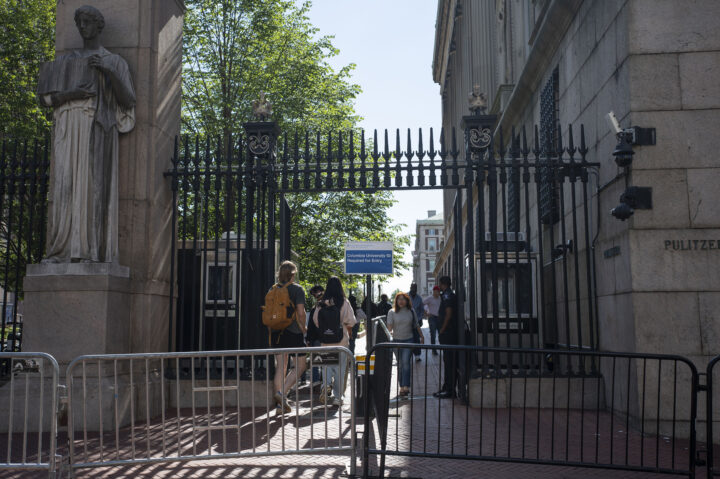
Students enter campus on the first day of the fall semester at Columbia University in New York City, United States on September 2, 2025.
As close to 1,000 pro-Israel students from around the country gather in the nation’s capital for the Israel on Campus Coalition’s annual National Leadership Summit, they’ll do so against a backdrop of seemingly quieter campus antisemitism than in the years immediately following the Oct. 7, 2023, terrorist attacks in Israel. But students are still seeking tools to navigate a campus climate they’ve come to see as permanently changed.
“My main concern [on campus today] is every time I sit down with a classmate I have to wonder whether the person next to me was at the [anti-Israel] encampment,” Noah Lederman, an incoming senior at Columbia University majoring in philosophy and Jewish ethics, told Jewish Insider. In February 2024, Lederman said he was shoved and pinned against a wall by an anti-Israel protester as he donned a shirt with an Israeli flag on it during a pro-Israel demonstration right outside of the Morningside Heights campus.
More than two years later, Lederman still feels wary on campus. “Did the person sitting next to me siege Hamilton Hall?” he said, referring to the April 2024 occupation of the academic building at Columbia by anti-Israel student demonstrators, who barricaded the doors. “Because those students have yet to receive consequences or be identified because they wore masks to cover their faces. Are they the person who pushed me up against a wall?” he said.
“Campus is not better, it’s just different,” said Lederman. “The assumption is that it’s better by virtue of there being no encampments right now, there’s no buildings being sieged. But that being the bar is ridiculous. What we saw my freshman year was so beyond the pale that people are inclined to say campus is better just because we don’t have people storming buildings, disrupting classes and Jewish students being told to go home because campus isn’t safe.”
He views the ICC conference as a place to help “further my skills in having civil dialogue” before returning to Columbia in the coming weeks.
The program spans a wide range of topics, from making sense of Middle East tensions to addressing antisemitism at home.
The summit opened Sunday with a moderated conversation featuring former Israeli Defense Minister Yoav Gallant about the future of the region. It was followed by a security update by IDF Col. (ret.) Miri Eisin; former Knesset member Ruth Wasserman Lande and Jonathan Schanzer, executive director of the Foundation for the Defense of Democracies. The panel was moderated by JI Executive Editor Melissa Weiss.
Last year’s conference came at the height of the Trump administration’s pressure campaign on universities to crack down on antisemitism, which has included federal funding cuts from dozens of schools.
Monday’s opening session will address the implications of those cuts, when Noah Pollak, a senior advisor at the Education Department, and Jonathan Rauch, a senior fellow of the Brookings Institution, debate whether the federal government’s campus crackdown is good for America.
Other speakers scheduled to address the gathering throughout the three-day conference include Rachel Goldberg-Polin and Jon Polin, parents of the late Israeli hostage Hersh Goldberg-Polin; former hostage Omer Shem Tov; Sen. John Fetterman (D-PA); Rep. Elise Stefanik (R-NY); and Harmeet Dhillon, assistant attorney general for civil rights at the Department of Justice.
“With respect to [campus] antisemitism, we’ve seen improvements over the last year,” Ken Marcus, founder and chairman of the Louis D. Brandeis Center for Human Rights Under Law and a former Education Department official, told JI. “[That is] thanks, in part, to the efforts of many different organizations and government agencies.”
“But we’re still seeing a level of challenge that is near historic levels,” said Marcus. “In other words, we don’t have encampments and similar problems to the extent of previous semesters, but we are receiving intake calls that are significantly higher in number and severity than we had in all the worst of the last few years.” The Brandeis Center has filed numerous lawsuits and federal complaints against universities on behalf of Jewish students alleging a failure to address antisemitism since Oct. 7.
“There’s no sugarcoating what Jewish students are living through,” Jacob Baime, CEO of ICC, told JI. “Campus life has grown more hostile, and the antisemitism more brazen, than at any point in memory: it’s on the quad, in the classroom, and online. But something profound is happening at the same time. This generation refuses to hide. They are prouder, better organized and more determined than any pro-Israel student cohort in history.”
The goal of the conference, Baime said, is “to train them, connect them and send them back to school ready to stand tall and proud.”
One of the most profound changes since Oct. 7, Lederman said, is a shift in how professors behave. Before the attacks, he said, “antisemitism was subtle and professors were afraid.”
“Now they are brazenly antisemitic under the guise of anti-Zionism,” he continued. The biggest difference, Lederman added, is that professors “are no longer afraid to incite Jew hatred in their classes.”
Lederman said he expects the conference to give students tools to deal with that shift. “We are not going to run away and hide,” he said. “[ICC] teaches students to be unashamedly Zionist and Jewish. They teach them how to advocate for Israel, while also thinking for themselves.”
At the Israel on Campus Coalition’s conference, some students praised Trump’s campus crackdowns — but want lasting changes over financial settlements
Spencer Platt/Getty Images
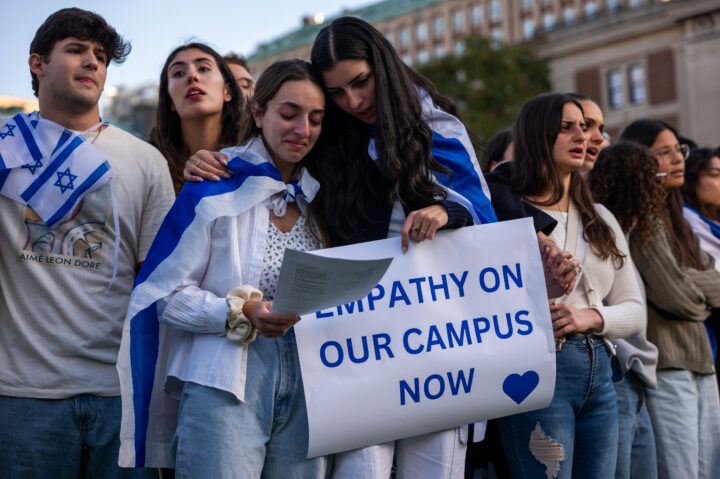
Columbia students participate in a rally and vigil in support of Israel in response to a neighboring student rally in support of the Palestinians at the university on October 12, 2023 in New York City.
WASHINGTON — When hundreds of pro-Israel college students from around the country gathered in the nation’s capital earlier this week for the Israel on Campus Coalition’s three-day annual national leadership summit, the rise of antisemitism on campuses sparked by the aftermath of the Oct. 7th terrorist attacks nearly two years ago was still a topic of conversation throughout panels and hallways.
This year, however, some students also said that antisemitism is lessening — though they offered mixed views about what is leading to the improved campus climate.
Some attributed it to the Trump administration’s ongoing pressure campaign on universities to crack down on antisemitic behavior, which has included federal funding cuts from dozens of schools. Others said their campuses started to take a serious approach to antisemitism, before President Donald Trump was reelected, in the fall semester following the wave of anti-Israel encampments from the previous spring.
But many student leaders from universities that have been targeted by the Trump administration — facing billions of dollars in slashed funds — said that if their school enters into negotiations to restore the money, they would like a deal to include structural reforms, unlike the one made last week between the federal government and Columbia University.
The penalties under that deal were largely financial, with Columbia agreeing to pay a $200 million settlement over three years to the government.
Harvard University has signaled a willingness to settle next, The New York Times reported this week, which could see the school agree to the Trump administration’s demand for as much as $500 million to end its clash.
“If there is a settlement in the coming days, I don’t think that Harvard paying a fine would be helpful,” Kyra Esrig, an incoming sophomore at Harvard, told Jewish Insider at the ICC summit. Instead, Esrig hopes to see “more of a focus on antisemitism itself without this maneuvering to get it to be a DEI incentive that every time they talk about antisemitism they have to add that they’re not anti-Muslim as well.”
“I want to see something specific in writing — [outlining] the steps the university will take to change antisemitism. I want to see an action-specific type of agreement. If the university treads more carefully around the issue, if the university is at least a little more responsive to people’s concerns around antisemitism, I think that will be a good thing.”
Esrig does not believe antisemitism has improved on campus since the Trump administration slashed $2.6 billion in funding from the university in the spring.
“It’s not like the Trump administration came into power and then there was sweeping change. For Harvard to change its culture, that’s an incredibly difficult thing to do and I don’t know that the Trump administration can go about issuing that.”
“I’m not entirely sure what the Trump administration is trying to gain,” Ezra Galperin, an incoming junior at the Ithaca, N.Y. school, told JI. “I think Cornell’s administration has been pretty effective in combating antisemitism — before there were threats from the Trump administration — with President Kotlikoff coming on. [Kotlikoff] makes a point of listening to Jewish students.”
Rather, “a lot of the positive changes are coming from the original backlash after Oct. 7,” she said, pointing to the university expanding its kosher lunch options in August 2024.
“That’s a result of the powerful force of Jewish students at Harvard saying that we need certain resources,” Esrig said.
Cornell University faced a $1 billion funding cut in April from the federal government amid a civil rights investigation into its handling of antisemitism. Ezra Galperin, an incoming junior at the Ithaca, N.Y., school studying government, noted an improvement in campus antisemitism this year compared to last.
But he attributes the shift to the university’s new president, Michael Kotlikoff, who stepped into the role in March.
“I’m not entirely sure what the Trump administration is trying to gain,” Galperin told JI. “I think Cornell’s administration has been pretty effective in combating antisemitism — before there were threats from the Trump administration — with President Kotlikoff coming on. [Kotlikoff] makes a point of listening to Jewish students.”
“There’s progress to be made, but I don’t think it warrants a millions of dollars fine,” Galperin said.
If Cornell does enter into a settlement with the government, there are two reforms Galperin hopes to see. “I want to make sure organizations like Students for Justice in Palestine that stir things up on campus are held accountable,” he said. “I want to see accountability for the grad students union who is seemingly selective in the students they choose to represent, alienating those who are pro-Israel. That’s my main hope for the year.” (Cornell SJP was suspended in March for disrupting the “Pathways to Peace” event where former Israeli Foreign Minister Tzipi Livni, former U.S. Ambassador to Israel Dan Shapiro and former Palestinian Prime Minister Salam Fayyad spoke.)
“What I would like to see, in light of the cuts, is a deal to be made which would include a mask ban imposed and enforced, for regulations to be actually written down more clearly and then enforced and then for punishments to be enforced on those who have breached the regulations that are made,” said Maximillian Meyer, a rising junior at Princeton University and student president of the campus group Princeton’s Tigers for Israel.
“If a deal is to be struck, I do hope it’s something tangible,” Galperin continued. “There is a sense that the Columbia deal was insufficient and a bit of a ploy.”
Maximillian Meyer, a rising junior at Princeton University and student president of the campus group Princeton’s Tigers for Israel, said he is taking a wait-and-see approach to the government’s crackdown on his campus, which also faced a funding freeze in April.
“I would be in support of a settlement — but not just any settlement,” Meyer told JI.
“What I would hope the Trump administration’s cuts would do, at a minimum, is to compel the university administration to enforce its own regulations. Even since the Trump administration made its cuts, the Princeton administration has not enforced its policies on time, place and manner restrictions.
“What I would like to see, in light of the cuts, is a deal to be made which would include a mask ban imposed and enforced, for regulations to be actually written down more clearly and then enforced and then for punishments to be enforced on those who have breached the regulations that are made,” Meyer continued, pointing to anti-Israel demonstrators repeatedly disrupting former Israeli Prime Minister Naftali Bennett’s speech at the university — including pulling a fire alarm — just days after the Trump administration slashed funding.
“The university should have been prepared for disruptions, but was undeterred by Trump’s funding cuts,” Meyer said. He called on Princeton to “work with the Trump administration to do something about [antisemitism]” rather than “the university’s current posture which is fighting against the administration.”
But Uriel Alvin, a student at City College of the City University of New York, expressed concern that any government intervention does more harm than good on campus.
“After the [Gaza solidarity] encampments [in spring 2024], we saw protests afterwards because of NYPD’s involvement shutting down the encampments,” said Uriel Alvin, a student at City College of the City University of New York. “I think having intervention causes more problems — adds to the flame more than it puts it out. I don’t think it was helpful for Columbia either.”
Alvin said he has worried about wearing a kippah on campus since Oct. 7, and that he “hasn’t felt any better this year.”
Earlier this month, Félix Matos Rodríguez, chancellor of CUNY, was called to testify during a House Committee on Education and Workforce hearing over his alleged failure to address campus antisemitism. That hearing, or any approach that involves the government, “wouldn’t help things,” Alvin said.
“After the [Gaza solidarity] encampments [in spring 2024], we saw protests afterwards because of NYPD’s involvement shutting down the encampments,” he said.
“I think having intervention causes more problems — adds to the flame more than it puts it out. I don’t think it was helpful for Columbia either.”
Good Tuesday afternoon,
This P.M. briefing is reserved for our premium subscribers like you — offering a forward-focused read on what we’re tracking now and what’s coming next.
I’m Danielle Cohen-Kanik, U.S. editor at Jewish Insider. I’ll be curating the Daily Overtime for you, along with assists from my colleagues. We hope you enjoy the inaugural edition and would love to hear your thoughts and feedback. Please don’t hesitate to drop us a line by replying to this email.
📡On Our Radar
Notable developments and interesting tidbits we’re tracking
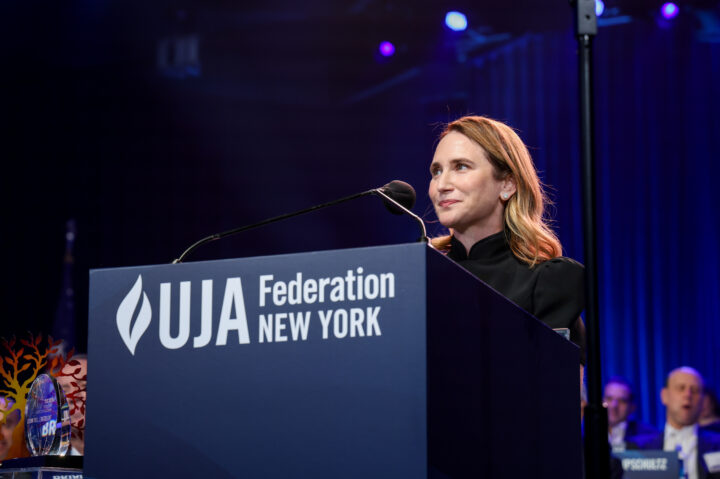
Today, we remember Wesley LePatner, a Jewish philanthropist and Blackstone executive killed in Monday’s shooting at the firm’s Manhattan headquarters. LePatner, 43, served on the boards of the pluralistic Abraham Joshua Heschel School and the UJA-Federation of New York. The federation called LePatner “extraordinary in every way” in a statement, saying she “lived with courage and conviction, instilling in her two children a deep love for Judaism and the Jewish people.” Hindy Poupko, deputy chief planning officer at UJA, said in remarks at the Israel on Campus Coalition’s National Leadership Summit in Washington today that there was a second Jewish victim of the shooting, Julia Hyman. Hyman, a Cornell graduate, worked for Rudin Management in the Midtown skyscraper…
Concerns among Democrats about the humanitarian situation in Gaza and Israel’s role in it are intensifying. On Capitol Hill, the majority of Senate Democrats, led by a group including Senate Minority Leader Chuck Schumer (D-NY) and Sen. Jacky Rosen (D-NV), sent a letter to Secretary of State Marco Rubio and Middle East envoy Steve Witkoff calling the humanitarian crisis in Gaza “unsustainable” and saying that the Israeli- and American-backed Gaza Humanitarian Foundation has “failed” to properly deliver aid…
One Democrat standing up for Israel is Rep. Ritchie Torres (D-NY), who said at the ICC summit today, “We have to remind the world that, despite the amnesia, Hamas was the central cause of the war in Gaza. … Hamas is morally responsible, principally responsible for the war in Gaza.” Read more on Torres’ speech in JI’s Daily Kickoff tomorrow…
Sen. Bernie Sanders (I-VT), who did not sign the Senate Democrats’ letter, jumped into the fray by introducing another resolution to block an arms transfer to Israel — his third since November 2024. In a novel twist, this resolution would block the sale of $1 million worth of assault rifles to Israel’s police force overseen by far-right Minister of National Security Itamar Ben-Gvir, potentially opening the door for more Democrats to vote in favor, given Ben-Gvir’s less-than-favorable reputation within the party…
British Prime Minister Keir Starmer, applying pressure of his own, announced today that the U.K. will recognize a Palestinian state at the U.N. General Assembly in September — matching France’s timeline, announced last week — unless Israel takes “substantive steps to end the appalling situation” in Gaza, reaches a ceasefire with Hamas and commits to reviving the possibility of a two-state solution and not annexing the West Bank. President Donald Trump, who met with Starmer in Scotland yesterday, told reporters that the British PM didn’t discuss the move with him and that he has no view on it, but that the U.S. is “not in that camp”…
On the home front, UCLA settled a lawsuit with Jewish students who alleged that the university permitted antisemitic conduct during the campus’ anti-Israel encampments in spring 2024. According to the agreement announced today, the university cannot allow or facilitate the exclusion of Jewish students, faculty or staff from UCLA programs or campus areas. Notably, the agreement specifies that Jews cannot be excluded “based on religious beliefs concerning the Jewish state of Israel.” Also getting a windfall in the settlement: UCLA agreed to pay over $2.3 million combined to UCLA Hillel and Chabad, the Anti-Defamation League, the Academic Engagement Network and other Jewish organizations combating antisemitism on campus…
⏩ Tomorrow’s Agenda, Today
An early look at tomorrow’s storylines and schedule to keep you a step ahead
Keep an eye on Jewish Insider later this week where we’ll feature an interview with Jeanine Pirro, interim U.S. attorney for D.C., who spoke with JI about the ongoing prosecution of the assailant responsible for the deadly May shooting at the Capital Jewish Museum. We’ll also cover Rep. Mike Collins’ (R-GA) record on antisemitism as he jumps in the race to challenge Sen. Jon Ossoff (D-GA), and report on Harvard’s overtures to the Jewish community while it gears up for a settlement with the federal government.
We’re staying tuned for how President Donald Trump may react as some of the U.S.’ closest allies gear up to recognize a Palestinian state, a policy the U.S. has rejected as unhelpful to peace efforts for decades. Though he said today he has “no view” on the matter, as the U.N. General Assembly nears, will Trump take a tougher line on his European partners?
WAIT-AND-SEE APPROACH
One Jewish political leader: ‘No one thinks it’s going to be good for the Jewish community to be hostile and to be in constant war with the next mayor’
PODCAST POLITICS

Ben Rhodes and Tommy Vietor shaped the story of the Iran nuclear deal. Now they’re trying to turn Democrats away from Israel
Plus: TikTok hires a hate speech manager

GAZA CITY, GAZA - JULY 27: An aircraft from the United Arab Emirates drops humanitarian aid balloons over the al-Sudaniyya area of Gaza City, Gaza on July 27, 2025 following Israeli army's announcement of a 'tactical suspension' of military operations in 3 parts of Gaza Strip. Suspension began at 0700GMT and applies to 3 key areas, including Al-Mawasi, Deir al-Balah, and Gaza City, according to Israeli army spokesman. Aid packages were collected by Palestinians struggling to access food. (Photo by Khames Alrefi/Anadolu via Getty Images)
Good Monday morning.
In today’s Daily Kickoff, we report on the mounting international pressure on Israel — including among some pro-Israel Democrats — to resolve the humanitarian crisis in Gaza, the subsequent measures taken by Israel and how they are expected to impact diplomatic ties with European allies. We report on DoJ senior counsel Leo Terrell’s comments yesterday at the Israel on Campus Coalition National Leadership Summit and report on the new TikTok hire with professional roots in the Jewish world who was brought on board to tackle hate speech on the platform. Also in today’s Daily Kickoff: Rep. Ritchie Torres, Ofer Calderon and Penny Pritzker.
What We’re Watching
- Today in New York, France and Saudi Arabia are co-hosting a conference focused on reviving two-state solution talks. The gathering, initially scheduled for June, now comes days after French President Emmanuel Macron said he planned to recognize a Palestinian state at this year’s U.N. General Assembly. Macron is skipping the conference, but his foreign minister, Jean-Noël Barrot, is expected to, per The Economist, “formally present” Paris’ U.N. plans. Barrot, for his part, attempted to meet with Jewish groups while in New York, but was shut down after Macron’s announcement last week. More below.
- The Israel on Campus Coalition’s National Leadership Summit continues today in Washington. Former Israeli Prime Minister Naftali Bennett and Leo Terrell, senior counsel at the Department of Justice, addressed the gathering of more than 600 students yesterday. More below.
- In North Carolina, former Gov. Roy Cooper, a Democrat, is expected to announce his bid for the Senate seat being vacated by Sen. Thom Tillis (R-NC). Cooper’s upcoming announcement comes as former Rep. Wiley Nickel (D-NC) plans to step aside from the race and endorse Cooper, consolidating Democratic support around the former governor. On the GOP side, Republican National Committee Chairman Michael Whatley is expected to announce his bid for the seat in the coming days, setting up what is likely to be one of the most expensive Senate races of the upcoming cycle.
What You Should Know
A QUICK WORD WITH ji’S melissa Weiss and Tamara zIEVE
In Israel’s effort to conduct a pressure campaign on Hamas to oust the terror group and release the remaining hostages held in Gaza, it has found itself instead on the receiving end of another global pressure campaign.
Facing mounting pressure amid a worsening humanitarian crisis in Gaza, Israel over the weekend announced a series of measures aimed at alleviating the widespread malnutrition and security issues in the enclave, including temporary ceasefires, aid airdrops, facilitating a massive increase in Gaza’s water supply and establishing designated humanitarian corridors — even as the IDF called claims of starvation in Gaza “a false campaign promoted by Hamas” and Israeli Prime Minister Benjamin Netanyahu denied that there was starvation in Gaza.
The crisis hit a fever pitch over the weekend as opposition to Israel’s efforts and limits on aid — first put into place in March as a pressure tactic to push Hamas to release the remaining hostages — surged to the highest levels of government around the world.
Dozens of countries called for an end to the war, a restoration of the flow of humanitarian aid into Gaza and the immediate release of the hostages. The shift in the political dynamic extended to Capitol Hill, where Democratic legislators, including many who have been strong supporters of Israel, expressed their concerns over Israel’s approach to the worsening humanitarian crisis in Gaza.
SPEAKING UP
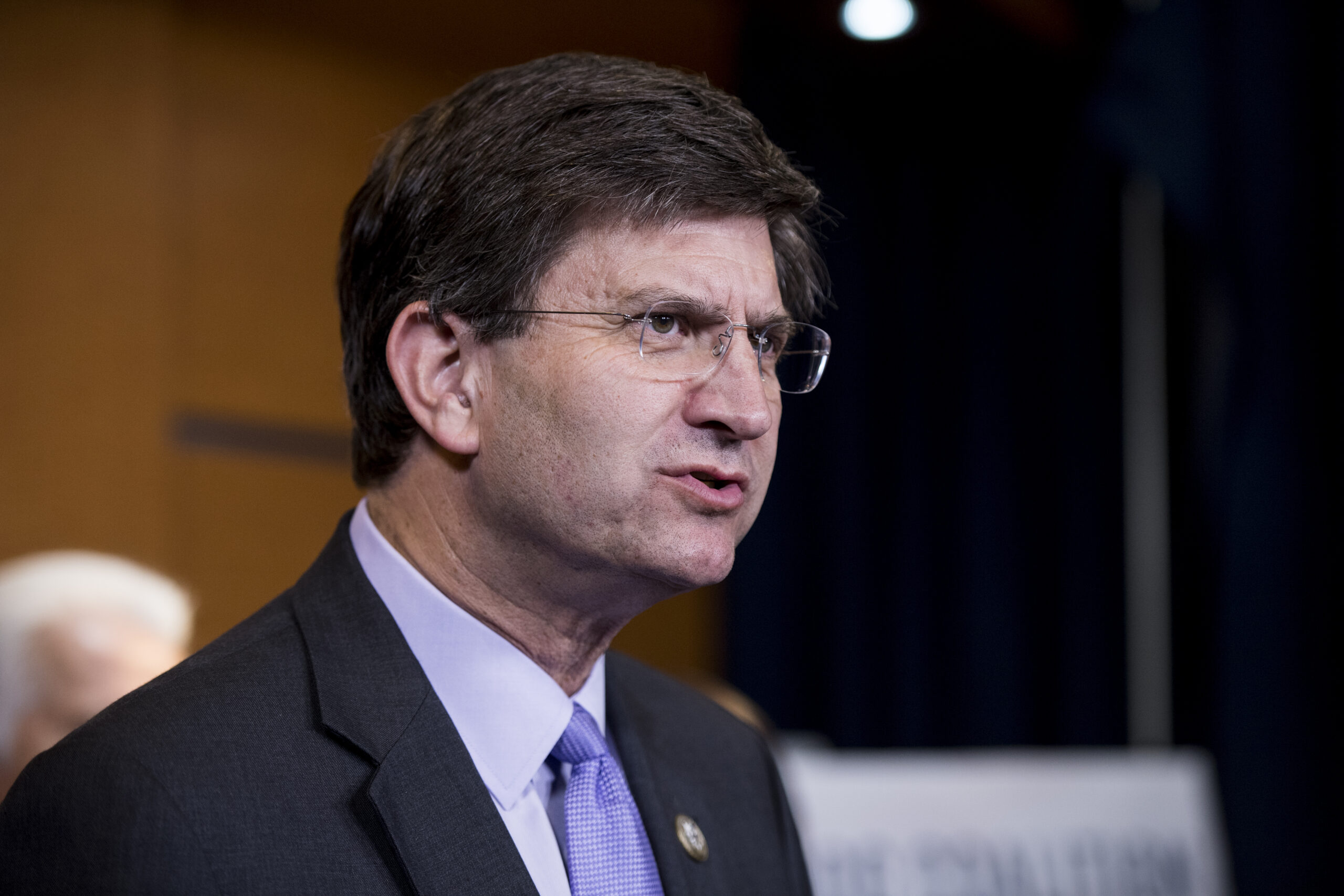
Amid reports of a mounting hunger crisis in Gaza, some of Israel’s staunchest defenders in the Democratic Party are now calling for Israel to do more to get humanitarian aid to Gazans — a signal that deteriorating conditions in the enclave are shifting public opinion even among those firmly in the pro-Israel camp. In a series of Friday statements, two major pro-Israel Democratic groups and a top Jewish Democrat in Congress raised concerns about what Rep. Brad Schneider (D-IL) described as “undeniably dire” circumstances in Gaza, Jewish Insider’s Gabby Deutch reports.
A matter of responsibility: “Israel must take immediate action to ensure sufficient food gets into the territory and to the people in desperate need. The world must not turn a blind eye to the fact that children are starving because of this war,” Schneider said in a statement. “It is Israel’s responsibility, and within its capacity, to address and resolve the situation.” Democratic Majority for Israel CEO Brian Romick said Friday that even though Hamas has no interest in mitigating human suffering in Gaza, Israel still has a responsibility to help starving children. “Even as Hamas works to prolong this war and prevent food from getting to people in need, Israel — along with the United States, Egypt, Qatar, and the rest of the international community — must continue to work to get food to innocent children in Gaza,” Romick said in a statement.
TORRES’ TAKE

Rep. Ritchie Torres (D-NY), a vocal Democratic supporter of Israel in Congress, said in an interview with journalist Chuck Todd on Sunday that Israeli Prime Minister Benjamin Netanyahu had done “irreparable damage” to Israel’s relationship with and support among Democrats, Jewish Insider’s Marc Rod reports.
Notable quotable: “If you’re a Democrat, and if you’re a Democrat of color and if you’re a Black Democrat, you take immense pride in Barack Obama. He represents one of the greatest achievements in politics. We take great pride in his presidency,” Torres said. “To see a foreign leader visibly disrespect him in the manner that Bibi Netanyahu did, I feel did irreparable damage to the relationship with the Democratic Party.” He also said that, despite his support for the Jewish state, he has “no real relationship” with the Israeli government.
Israel’s standing

For European leaders who are ratcheting up pressure on Israel to end the humanitarian crisis in Gaza, the Jewish state’s moves to pause military activity to allow a freer flow of humanitarian aid and begin airdrops of aid are “steps in the right direction,” the German foreign minister said on Sunday. But the aid crisis is inextricably linked, observers say, to a much larger and even thornier issue — a deal to end the grinding 21-month war with Hamas and a release of the hostages. Until such a deal is struck, the pressure from Europe, and from some inside Israel, likely won’t ease. And it could worsen, with some experts warning that European sanctions on Israel aren’t out of the question, Jewish Insider’s Lahav Harkov reports.
Wider issue: Daniel Shek, a former Israeli ambassador to France and a member of the Hostage Families Forum’s diplomatic team, said that the aid airdrops are “a result of international pressure and not sudden altruism.” However, Shek said, they are “like Tylenol for a cancer patient. Surgery is needed, meaning the end of the war.” A spokesperson for German Chancellor Friedrich Merz said that he is “prepared to increase the pressure if progress [on a ceasefire and humanitarian aid] is not made.”
Red lines: A coalition of major American Jewish organizations refused an invitation on Friday to meet with Jean-Noel Barrot, France’s minister for Europe and foreign affairs, after French President Emmanuel Macron announced that the country will recognize a Palestinian state in September, eJewishPhilanthropy’s Nira Dayanim reports.
COLUMBIA COMMITMENTS
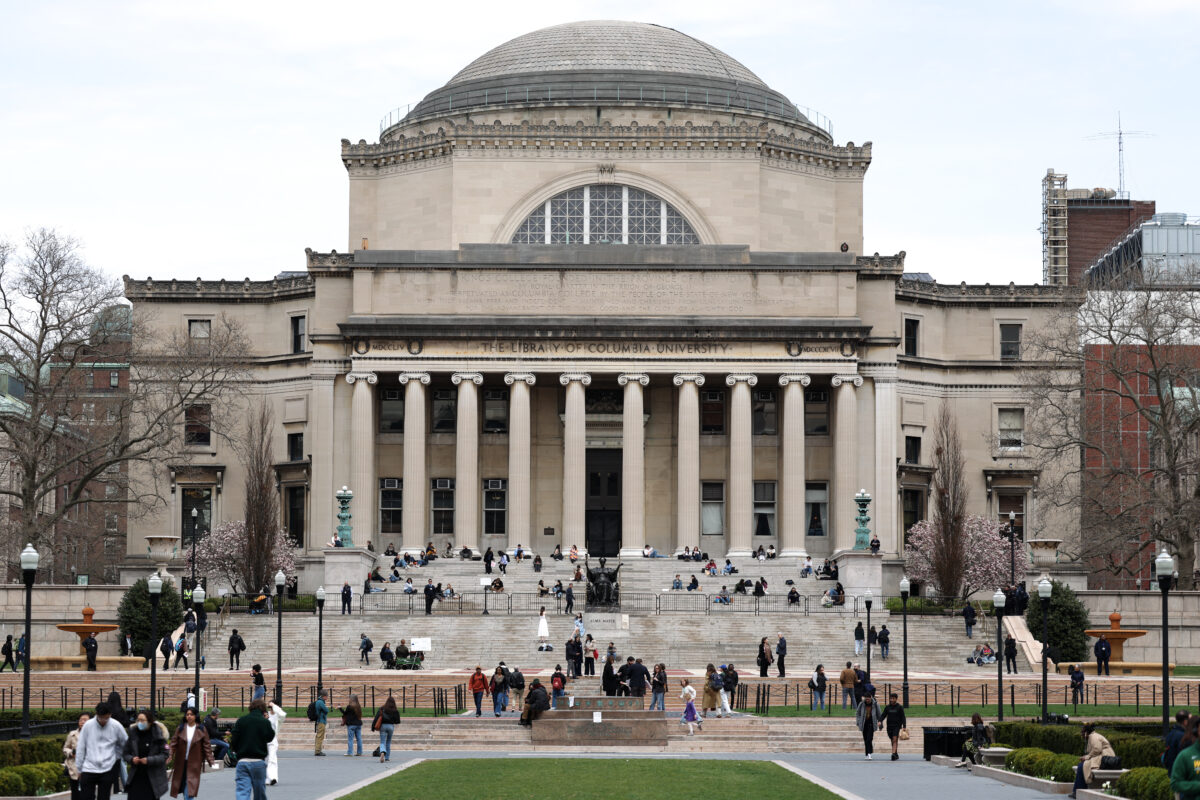
Jewish leaders on and off Columbia University’s campus praised the settlement reached last week between the university and the Trump administration to restore some $400 million in federal funding that was slashed in March due to the Ivy League’s record dealing with antisemitism. While some Jewish leaders, students and alumni are taking a wait-and-see-approach, others expressed cautious optimism that the deal could lead to a safer environment for Jewish students following nearly two years of antisemitic protests and disruptions on campus in the aftermath of the Oct. 7, 2023, Hamas terror attacks in Israel, Jewish Insider’s Haley Cohen reports.
Positive perspective: “I am heartened to see the resolution agreement for several reasons,” Adam Lehman, president and CEO of Hillel International, told JI last week. “It recognizes both the clear, egregious violations of the civil rights of Jewish students and staff at Columbia and Barnard [an affiliate of Columbia] during the past two academic years, and the concrete steps Columbia has recently pursued to address these issues.”
Reservations: Still, some said that key reforms are missing from the deal, which falls short of several demands initially made by the Trump administration. Among the demands were putting the Middle Eastern, South Asian and African studies department and the Center for Palestine Studies under the purview of a senior vice provost, who would be appointed by the university to supervise course material and non-tenure faculty hiring, as well as the formation of a presidential search committee to replace acting President Claire Shipman.
security surcharge
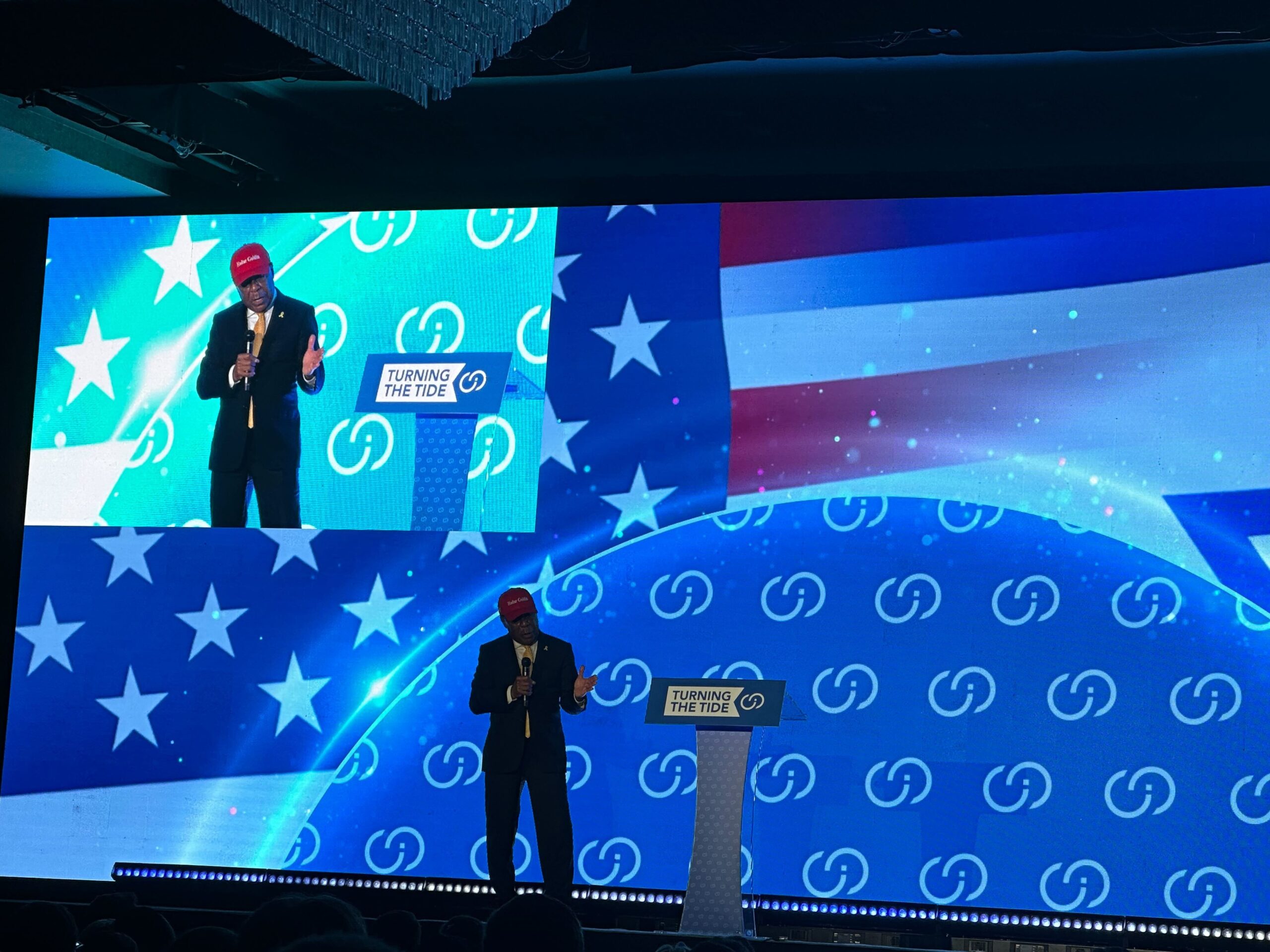
Leo Terrell, senior counsel to the assistant attorney general for civil rights, said he is intent on eliminating what he called “the Jewish tax” in an address on Sunday to hundreds of Jewish college students gathered for the Israel on Campus Coalition’s three-day annual leadership summit held in Washington, Jewish Insider’s Haley Cohen reports.
What he said: “For those who don’t know what the Jewish tax is — for you to have this convention, for you to walk your child to a synagogue down the street — you have to pay for extra security,” said Terrell, who heads the Department of Justice’s antisemitism task force. “It makes no sense. It’s unfair. It’s wrong. I find it offensive that it’s being allowed throughout this country. I’m doing everything I can to eliminate it.” Terrell’s comments came as the Federal Emergency Management Agency announced last month that it had awarded $94.4 million in security grant funding to a total of 512 Jewish organizations nationwide.
DEDICATED ROLE

TikTok recently hired a new hate speech manager with long-standing ties to the Jewish community, the company confirmed to Jewish Insider’s Matthew Kassel, as the social media platform faces growing pressure to confront a sharp rise in antisemitic content. The streaming platform enlisted Erica Mindel, a former State Department contractor who worked for Ambassador Deborah Lipstadt, the Biden administration’s special envoy to monitor and combat antisemitism, to join TikTok’s global public policy and government affairs team.
Taking action: The hire comes as TikTok has drawn accusations that it has failed to address a spike in antisemitic and anti-Israel content in the wake of Hamas’ Oct. 7, 2023, terror attacks and amid the ensuing war in Gaza. In her newly created role, Mindel will “develop and drive the company’s positions on hate speech,” seek to “influence legislative and regulatory frameworks” and “analyze hate speech trends,” with a particular focus on “antisemitic content,” among other duties cited in an official job description shared by TikTok.
Worthy Reads
Just Cause, Unjust Tactics: The New York Times’ Ross Douthat argues that Israel’s war against Hamas in Gaza — which he describes as “a war for a just cause” — is now being fought unjustly. “One can have a righteous cause, one’s foe can be wicked and brutal and primarily responsible for the conflict’s toll, and still — under any coherent theory of just war — there is an obligation to refrain from certain tactics if they create too much collateral damage, to mitigate certain predictable forms of civilian suffering and to have a strategy that makes the war’s outcome worth the cost. These are tests that Israel is failing.” [NYTimes]
RJC Rising: The Dispatch’s David Drucker explores the growing influence of the Republican Jewish Coalition. “Since Election Day 2024, the Republican Jewish Coalition has been telling anyone who will listen that Trump’s performance among Jewish voters was a historic success — due in no small part to the money and manpower invested by the RJC. There’s data to back that assertion up…To understand the real and consequential movement toward Trump by Jewish voters in 2024, you have to look under the hood, at the exit polls of battleground states and local precincts with significant populations of Jewish voters. That’s where Trump made his mark with a cohort usually elusive for Republicans; it’s what helped propel him past Harris in swing states that were quite close despite the president’s sweep.” [TheDispatch]
Art of the Steal: In AirMail, Ezra Chowaiki reflects on his dealings with forged looted artworks whose sellers wrongly claim them to be works that belonged to high-ranking Nazi officials. “Art dealers know the back of a painting is more important than its front. The back is where you trace the painting’s history, and the clues for each artwork in Jimmy’s collection were incredible, including incidental marks and labels on each painting, not to mention all those Nazi stamps. … In my years of meeting collectors, I’ve realized that many prefer the forbidden fruit. In its own perverse way, it just tastes a little sweeter. But beware: your perverse fascination with forbidden provenance — the back of the canvas — may keep you from examining a painting’s more obvious faults on the front.” [AirMail]
Word on the Street
Darren Beattie, who was fired from his role as a speechwriter in the first Trump administration over his ties to white nationalists, was tapped to serve as acting president of the U.S. Institute of Peace in addition to his role as under secretary of state for public diplomacy and public affairs at the State Department…
Sen. Lindsey Graham (R-SC) told NBC’s “Meet The Press” that he believes Israel will be unable to negotiate an end to its war with Hamas and will have to do “what [the Allied forces] did in Tokyo and Berlin, take the place by force and start over again, presenting a better future for the Palestinians, hopefully having the Arabs take over the West Bank and Gaza”…
Secretary of State Marco Rubio is reportedly favoring “a more comprehensive approach to end the war and free all the remaining hostages” after meeting with hostage families at the State Department on Friday…
A Palestinian boy referenced in images that went viral last week as a symbol of the humanitarian crisis in Gaza was discovered to be suffering from a preexisting genetic muscle disorder…
A growing number of news organizations are calling on Israel to allow journalists access to the Gaza Strip…
The New York Times reports on speculation that funding for the refurbishment of the Qatari plane being gifted to the Trump administration is coming from funds allocated from a nuclear modernization program inside the Pentagon…
A White House official told The Wall Street Journal that it will use its recent settlement with Columbia University as a blueprint for its legal battles with other universities…
The New York Times spotlights former Commerce Secretary Penny Pritzker’s role as head of the Harvard Corporation, as both the Trump administration and the Corporation raise concerns about her continued leadership and involvement…
Minnesota Democratic activist Latonya Reeves, a member of the Democratic National Committee, is mulling a primary challenge to Rep. Ilhan Omar (D-MN)…
French authorities are investigating the circumstances behind the removal last week of several dozen French Jewish campers and camp staffers from a Vueling flight amid claims from the group that it was deplaned because the campers were Jewish; Vueling has denied the allegations and said the group was removed due to the unruly behavior of some of the campers prior to takeoff…
The New York Times looks at the impact of Iran’s deepening water crisis amid record-setting heat and energy shortages around the country…
Mathematician-turned-singer Tom Lehrer, whose satirical tunes from the 1950s and ‘60s gained new audiences when Cameron Mackintosh compiled Lehrer’s music into the 1980 revue “Tomfoolery,” died at 97…
Pic of the Day

Ofer Calderon (right), who was held hostage by Hamas in Gaza for 484 days, cycled yesterday alongside Israel-Premier Tech team owner and philanthropist Sylvan Adams in the final stage of the Tour de France on the Champs-Élysées in Paris. On the 100th day of the hostages’ captivity, Adams led a global cycling event in their honor and promised that when Calderson would be released, he would ride alongside him at the Tour de France.
Birthdays
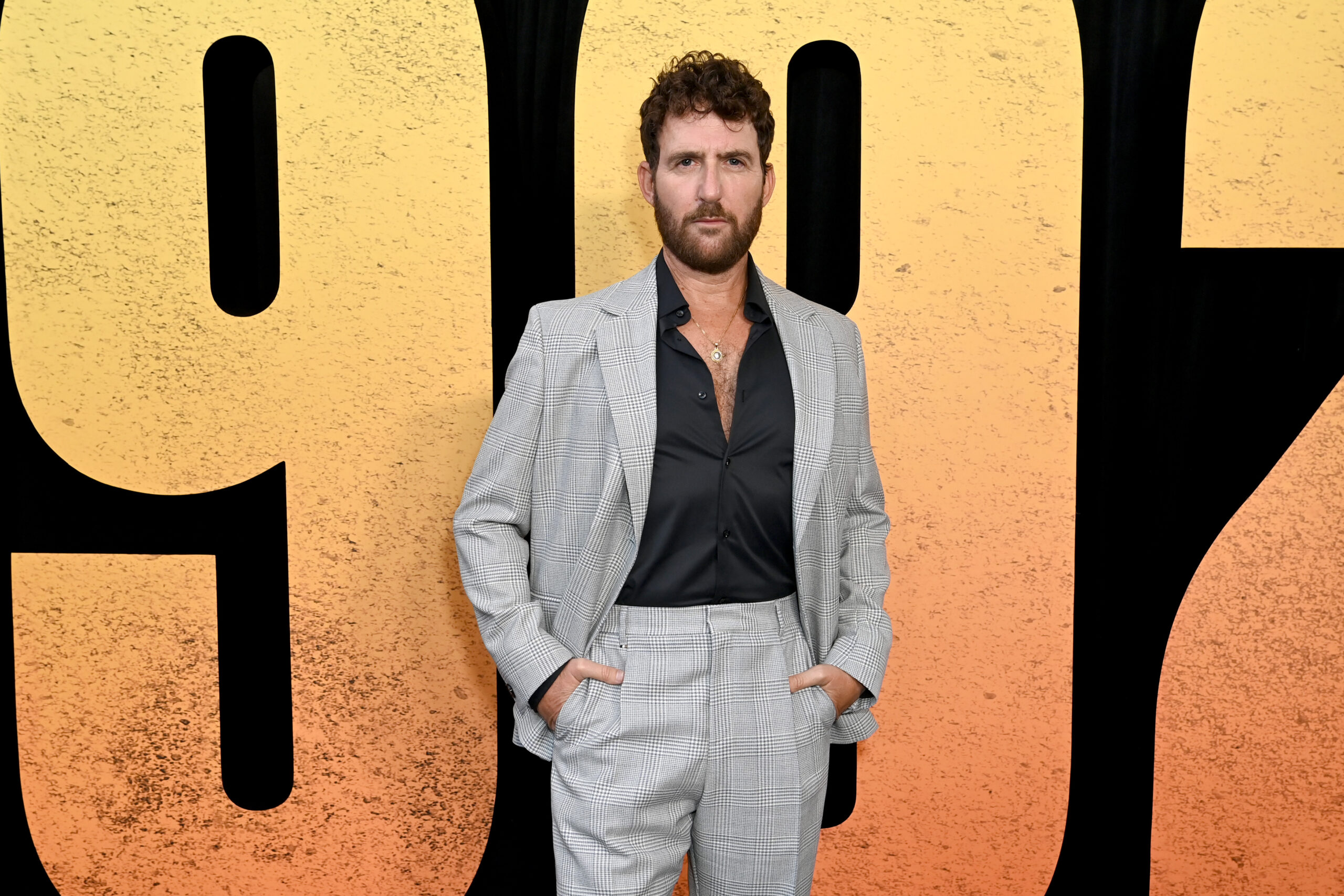
Jerusalem-born actor with more than 30 movie and television roles in the U.S., Ori Pfeffer turns 50…
Survivor of Auschwitz-Birkenau as a teen, he emigrated to Israel and became an artist, Yehuda Bacon turns 96… Chicago radio news personality, from 1973 to 2013 he was a television news anchor in Chicago, Walter David Jacobson turns 88… U.S. District Court judge in Manhattan until 2006, then U.S. attorney general for the last 14 months of the Bush 43 administration, now of counsel at the international law firm of Debevoise & Plimpton, Michael Mukasey turns 84… Swedish industrialist, chairman of the Nobel Foundation (manager of the Nobel Prize) from 2005 to 2013, Marcus Storch Ph.D. turns 83… In 1986 she became the first woman in the IDF to hold the rank of brigadier general, she then served as a member of Knesset, and now serves on multiple for-profit and nonprofit boards, Amira Dotan turns 78… Oldest active quarterback, he also manages football teams in Baltimore and Jerusalem, Joe Pollak turns 75… President of the Council on Foreign Relations for 20 years until he retired in 2023, Richard N. Haass turns 74… Tel Aviv-born real estate developer, restorer of historic buildings in downtown Los Angeles, Izek Shomof turns 66… Partner and managing director of Meadow Lane Advisors, Marty Friedman… French-Israeli hairdresser and entrepreneur, Michel Mercier turns 64… Sports executive, attorney and former president of basketball operations for the NBA’s Minnesota Timberwolves, David Kahn turns 64… American schoolteacher, wrongfully detained by Russia in 2022, he was released in the early weeks of the Trump 47 administration, Marc Hilliard Fogel turns 64… Talent booker, publicist and television and radio personality in Atlanta, Mara Davis turns 56… Tech entrepreneur who has invested in more than 100 startups, New York Times bestselling author, Joshua M. “Josh” Linkner turns 55… Co-founder of 23andMe, she recently regained control of the company, Anne Wojcicki turns 52… Actress and reality show personality, Elizabeth Berkley Lauren turns 51… Deputy CEO at UpStart, Jennifer Lew Goldstone… Associate justice of the Supreme Court of California, Leondra Kruger turns 49… Israeli journalist and former member of the Knesset, Ksenia Svetlova turns 48… Managing partner at Altitude Ventures, a health-care venture capital firm, he is a former White House liaison to the Jewish community, Jay Zeidman… Senior reporter at Bloomberg News, Laura Nahmias… CEO and CTO at Diagnostic Robotics in Jerusalem, Kira Radinsky Ph.D. turns 39… VP of player personnel at MLB’s Miami Marlins, Samuel Mondry-Cohen… Administrator at Lehigh Valley Homecare in Allentown, Pa., Menachem (Mark) Perl… Actor and producer who stars in the CBS series “Ghosts,” Asher Chazen Grodman turns 38… National narrative enterprise reporter at The Washington Post, Ruby Cramer… Larry Gordon…
At the ICC summit, the DOJ’s Terrell said extra security costs borne by Jewish communities are ‘offensive’
Haley Cohen
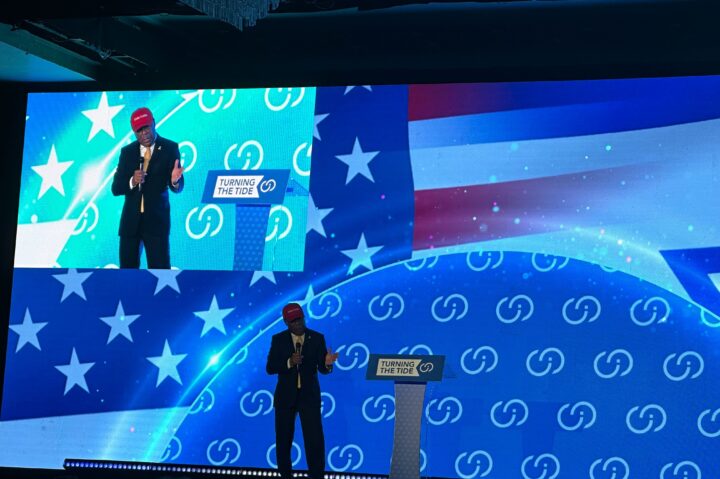
Leo Terrell, senior counsel to the assistant attorney general for civil rights, addresses the Israel on Campus Coalition three-day annual leadership summit held in Washington on Sunday, July 27th, 2025.
Leo Terrell, senior counsel to the assistant attorney general for civil rights, said he is intent on eliminating what he called “the Jewish tax” in an address on Sunday to hundreds of Jewish college students gathered for the Israel on Campus Coalition’s three-day annual leadership summit held in Washington.
“For those who don’t know what the Jewish tax is — for you to have this convention, for you to walk your child to a synagogue down the street — you have to pay for extra security,” said Terrell, who heads the Department of Justice’s antisemitism task force. “It makes no sense. It’s unfair. It’s wrong. I find it offensive that it’s being allowed throughout this country. I’m doing everything I can to eliminate it.”
Terrell’s comments came as the Federal Emergency Management Agency announced last month that it had awarded $94.4 million in security grant funding to a total of 512 Jewish organizations nationwide.
Terrell, who wore a baseball cap embroidered with the name “Hadar Goldin,” an IDF soldier abducted and killed by Hamas in 2014 whose body remains held by the terrorist group, shared that he has faced “fights and arguments” with some colleagues over how to strategically address antisemitism. He said that some colleagues have called to “cut a deal, to move on,” an apparent reference to the Trump administration’s recent settlement with Columbia University following a monthslong battle over the Ivy League university’s record dealing with antisemitism.
“I will not compromise,” Terrell said. “No, how can you ask a group [to] compromise freedom? There is no compromise on your equality, your freedom, you have the right to go to schools, to walk down the streets and not be worried and not be afraid.”
Terrell, a former civil rights attorney and a conservative media personality, told the crowd that eradicating antisemitism is a “full-time commitment,” one that he’s decided to take on in part due to Jewish involvement in the Civil Rights Movement.
“I’m not a Jewish American. I’m a Black American. I also understand the history of this great country. Before becoming a lawyer, I was a school teacher. I grew up in the ‘60s,” Terrell said. “I remember Jewish Americans walking hand in hand with Black Americans making sure they got their civil rights.”
Please log in if you already have a subscription, or subscribe to access the latest updates.
 Continue with Google

 Continue with Apple