














































































Plus, Tom Barrack's Israel bypass

(Ryan Murphy/Getty Images)
Troy Jackson, Democratic candidate for U.S. Senate, speaks during a demonstration outside of a federal immigration office after a man was fatally shot by U.S. Immigration and Customs Enforcement (ICE) agents, on July 14, 2026 in Scarborough, Maine.


 Add JewishInsider on Google
Good Monday morning.
In today’s Daily Kickoff, we look at how pro-Israel advocates are adjusting their approaches to Democratic lawmakers following last week’s failed vote to cut U.S. aid to Israel that garnered the support of 103 House Democrats, and report on antisemitic streamer Hasan Piker’s surprise appearance at a College Democrats of America convention over the weekend. We talk to former U.S. Ambassador to Israel Dan Shapiro about Israel’s ability to repair its relationships in the U.S., and look at U.S. Ambassador to Turkey Tom Barrack’s effort to create a Middle East trade alignment that excludes Israel. Also in today’s Daily Kickoff: Rabbi Efrem Goldberg, Michael Rubin and Judit Polgar.
We have also launched a new on-demand Live Briefing that you can access throughout the day via our new app (on Apple and Android) and on our website.
Today’s Daily Kickoff was curated by JI Executive Editor Melissa Weiss and Israel Editor Tamara Zieve, with assists from Danielle Cohen-Kanik and Marc Rod. Have a tip? Email us here.
What We’re Watching
- Tensions in the Middle East continue to rise following the deaths of four U.S. service members resulting from Iranian attacks targeting U.S. bases in Jordan and Iraq. As the White House considers a broader offensive against Iran, it is moving dozens of military refueling planes to Israel.
- Secretary of State Marco Rubio, meanwhile, told reporters before departing for the Association of Southeast Asian Nations summit in the Philippines on Sunday that the U.S. was still open to diplomacy with Tehran. “We’ve tried multiple times with Iran, and we’ll continue to try. If that door opens, we’ll be happy to see it open,” Rubio said. “Their behavior has to change in order for ours to change.”
- Before departing for Manila, Rubio met with Lebanese President Joseph Aoun, who is in Washington this week, where he’s slated to meet with President Donald Trump on Tuesday.
- Support is growing for former Maine state Sen. Troy Jackson to succeed Graham Platner as the Democratic Party’s nominee to challenge Sen. Susan Collins (R-ME), with most of Jackson’s rivals dropping their bids ahead of the state party’s nominating convention set for Saturday. More below.
- Keir Starmer delivered his final address as U.K. prime minister today before formally submitting his resignation to King Charles III. Former Greater Manchester Mayor Andy Burnham then separately traveled to Buckingham Palace to meet with the king and accept his request to form a new government.
- In Israel, Yair Golan’s Democrats party is holding its primary today to determine its slate for the upcoming election.
What You Should Know
A QUICK WORD WITH JI’S JOSH KRAUSHAAR
July was scheduled to offer a break from primary politics, but two seismic developments this month — the collapse of scandal-plagued Graham Platner’s campaign in Maine and the sudden death of Sen. Lindsey Graham (R-SC) — are forcing both parties to deal with messy internal conflicts as they choose replacements in these key races.
The outcome of the July 25 Maine Democratic convention choosing an alternative candidate to run against Sen. Susan Collins (R-ME) and the Aug. 11 special election primary to choose a GOP nominee for Graham’s seat are offering clarity on the ideological directions of the two parties as the November midterm elections approach.
Already, we’re seeing that Democrats want to nominate a candidate as ideologically similar to Platner as possible, with most of the convention delegates chosen this weekend gravitating towards former state Senate President Troy Jackson, an anti-Israel progressive who unsuccessfully ran for governor this year as a champion of Sen. Bernie Sanders (I-VT).
As Maine counties completed the process of choosing delegates for the nominating convention, Jackson’s campaign expressed confidence that he rallied enough backers to secure a victory. Most of his leading rivals dropped out of the race on Sunday, indicating that the state party is clearly intent on pushing forward a candidate that shares Platner’s anti-establishment, left-wing worldview but without the personal baggage he brought to the table.
TRUST FALL
After 104 members of the House voted last week in favor of an amendment to eliminate all $3.3 billion in annual military aid to Israel, pro-Israel activists across the country who have spent years building ties with lawmakers are now wondering how to approach those relationships following a vote that some see as a betrayal, Jewish Insider’s Gabby Deutch reports.
Looking ahead: Several friends and backers of the members of Congress who voted for the amendment told JI that a single vote on a measure that was sure to fail should not spell the end of years of friendship. But even as they acknowledged the seismic reverberations of the vote, many also spoke of the need to tread carefully at a politically uncertain moment. “Our issues are too important to not hold onto the ability to have a conversation with the person, because the votes are not going to end. It’s not going to all of a sudden stop,” Sam Lauter, a major Democratic donor and pro-Israel activist, said. He talked to several members of Congress in the days before the vote, urging them to vote no.
Silent rebuke: AIPAC will no longer allow donations through its political action committee to 18 lawmakers it endorsed who voted in favor of the legislation. The group did not announce the change. But the endorsement page on AIPAC’s political giving portal — where supporters can donate to candidates who have been endorsed by AIPAC — removed the option for individuals to route money to those lawmakers.
SPEAKER SCRUTINY

J Street’s college group sponsored the College Democrats of America convention over the weekend that featured far-left, antisemitic influencer Hasan Piker. J Street U, the student organizing arm of J Street, “is proud to sponsor and participate in the College Democrats Convention,” Jeremy Ben-Ami, president of J Street, told Jewish Insider’s Haley Cohen on Friday, hours after Piker was announced as the convention’s “surprise speaker.”
J Street’s position: “We had no role in the selection of speakers and we’re sure there will be speakers — including Hasan Piker — with whom we disagree,” said Ben-Ami. “Being in venues like this is even more important when there are participants with whom we disagree. Failing to show up would be an abdication of our responsibility to make the case for our pro-Israel views.”
Turning tides: Rep. Steve Cohen (D-TN) told CNN he left the Congressional Progressive Caucus last year — and decided not to run for reelection this year — in part because of the rise of socialist leadership in the caucus. The Democrat said there’s now a growing contingent of anti-Israel Democrats as well within the Congressional Progressive Caucus, which he said was not present when he first came to the Hill, JI’s Marc Rod reports.
TRADE ROUTES
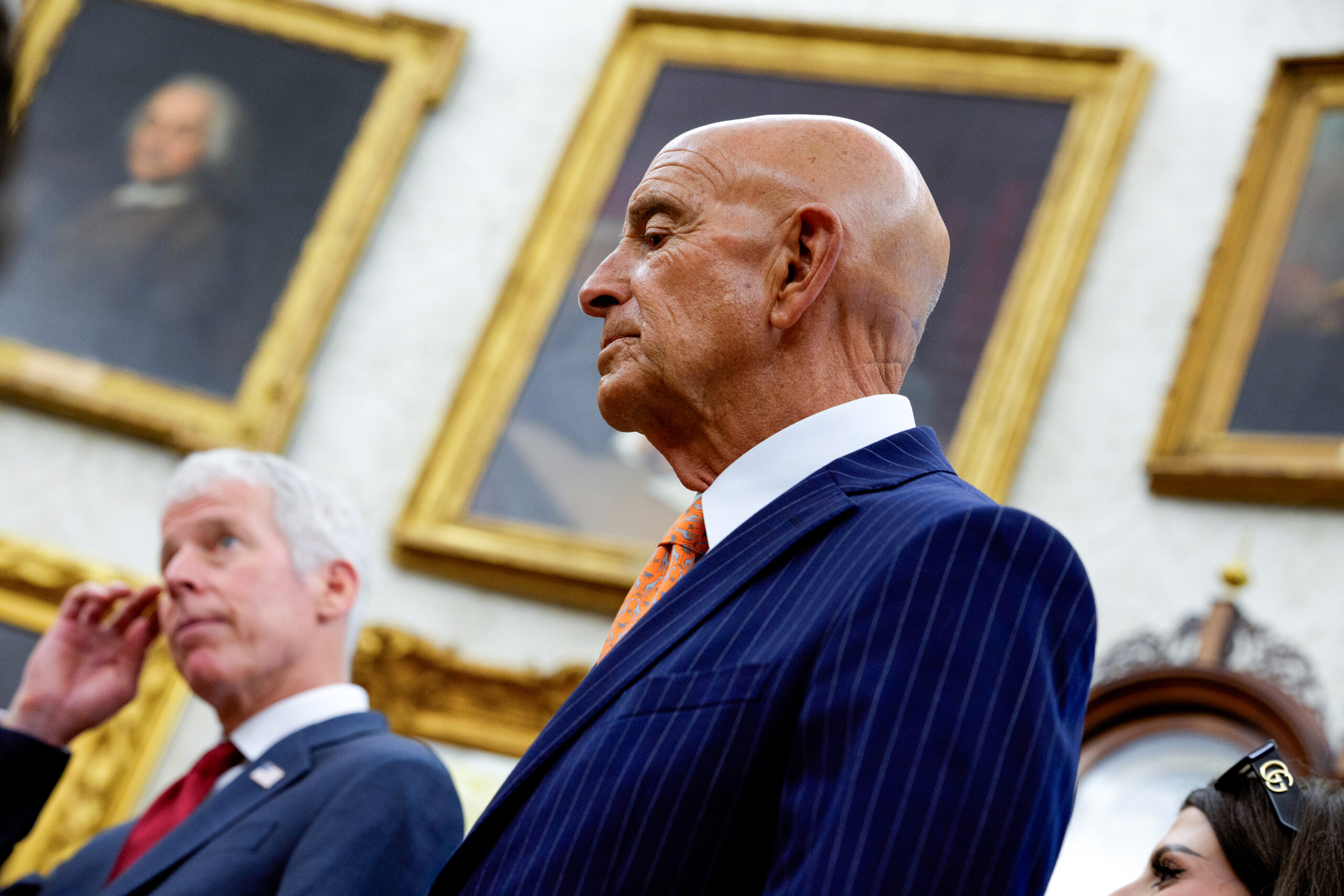
U.S. Ambassador to Turkey Tom Barrack on Friday promoted a new regional trade and security alignment in the Middle East centered around Iraq, Turkey and neighboring Arab states, appearing to sideline a similar regional project including Israel, Jewish Insider’s Matthew Shea reports.
What he said: Speaking at the U.S.-Iraq Business Summit, Barrack told attendees that Iraqi Prime Minister Ali al-Zaidi, who visited with President Donald Trump at the White House last week, is considering a transformative agreement. “What this young leader [al-Zaidi] has in mind — aligned with Syria, Jordan, Turkey, Lebanon, Egypt — is a program that will make the Strait of Hormuz an afterthought in two years,” Barrack said. “We’re going from just-in-time delivery on boats through these minor straits to just-in-case delivery going the other way.”
NO STRINGS ATTACHED
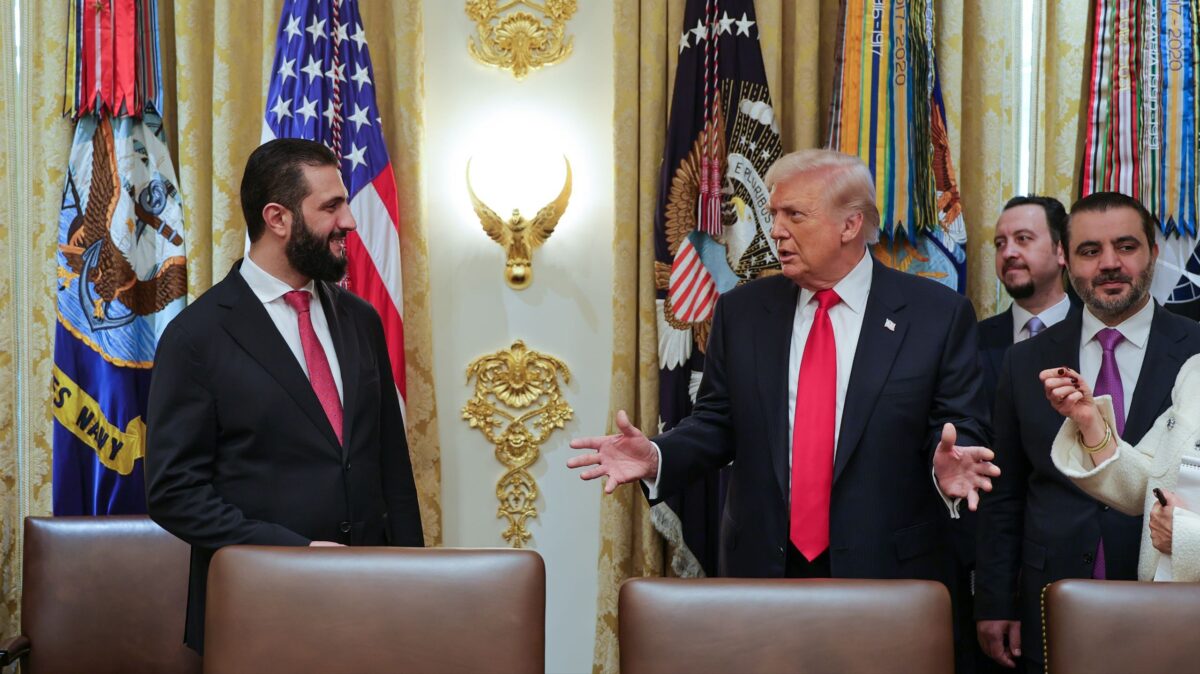
As the Trump administration moves to end the diplomatic isolation of Syria, dismantling decades of U.S. sanctions in the process, lawmakers are offering mixed assessments of whether Washington should have conditioned that relief on steps toward normalizing relations with Israel, Jewish Insider’s Matthew Shea reports.
What they said: Rep. Brad Sherman (D-CA) said the Trump administration “should be urging” Damascus to improve economic and political relations with Jerusalem in exchange for sanctions relief, “but I would say that you’ve got to have a consistent standard.” Sherman noted he would “like to see Syria move in that direction,” toward joining the Abraham Accords, “even if they can’t join the accords yet.” Rep. Steny Hoyer (D-MD) agreed that the Trump administration should be pursuing normalization as part of its efforts with Damascus, but said the current focus on prioritizing stability is a “worthwhile objective” and “positive” effort. “I think a stable, democratic [Syria] may be too much of a hope, but a stable and non-terrorist-supporting Syria is important to the Middle East and to the United States of America and to some type of global stability,” Hoyer told JI.
Read the full story here, with additional comments from Reps. Brad Schneider (D-IL), Troy Nehls (R-TX) and Tim Burchett (R-TN).
HEARD AT ASPEN
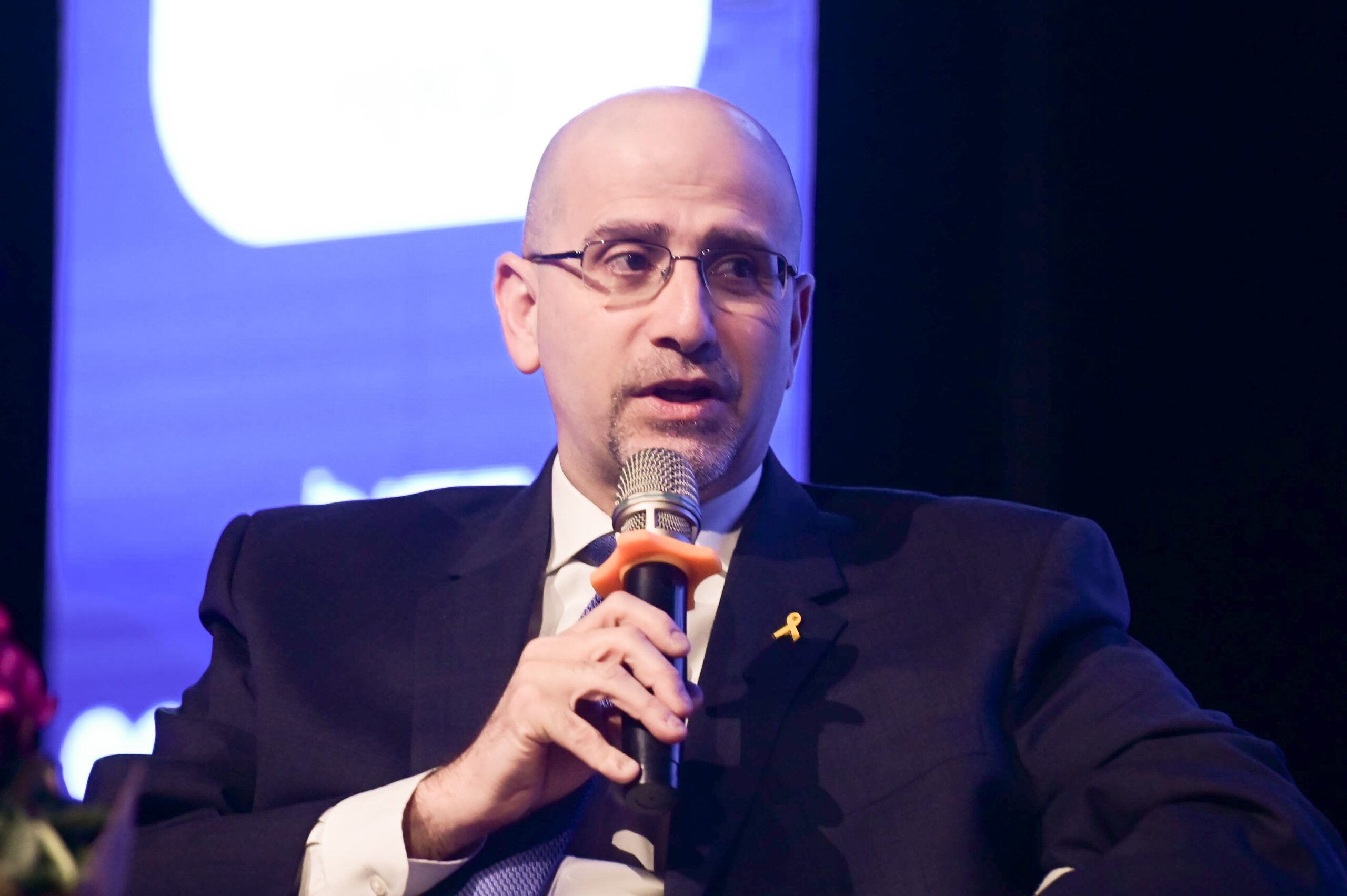
Former U.S. Ambassador to Israel Dan Shapiro told Jewish Insider’s Marc Rod on the sidelines of the Aspen Security Forum last week that without new leadership in Israel — meaning a defeat for Prime Minister Benjamin Netanyahu in Israel’s elections — he does not know how Israel can repair its reputation in the United States.
Notable quotable: “I don’t see a path to repairing Israel’s deteriorating standing in the United States on both sides of the aisle without a change of leadership in Israel,” Shapiro told JI, a sentiment he repeated during a panel on Israel and the U.S.-Israel relationship at the conference. Speaking to JI shortly after more than 100 House Democrats voted to cut off U.S. military aid to Israel, Shapiro said that, while there’s “legitimate ground for concern and for criticism” of Israel’s operations in Gaza, cutting off all $3.3 billion wholesale is not “a very thoughtful way” to address concerns about civilian harm and that maintaining the U.S.-Israel relationship remains in America’s interests.
IRAN ADD-ON

President Donald Trump’s call for Republicans to incorporate sanctions against Iran into the late Sen. Lindsey Graham’s (R-SC) bipartisan legislation sanctioning Russia and countries that buy Russian oil was met with confusion by some of the Democrats supporting the bill, Jewish Insider’s Emily Jacobs reports.
Dem dismay: “Our Russia sanctions bill was meticulously crafted during painstaking, sometimes painful negotiations over many months,” Sen. Richard Blumenthal (D-CT), who spearheaded the effort alongside Graham for over a year, told JI in a statement. “This bill should move forward as quickly as possible — as is — without additional provisions, which can be done separately.” Sen. Jeanne Shaheen (D-NH), the top Democrat on the Senate Foreign Relations Committee, told Bloomberg’s “This Weekend” on Sunday that, “Sen. Graham never raised the concern about putting Iranian sanctions on the bill.”
Institution clash: Annalena Baerbock, the president of the United Nations General Assembly and former foreign minister of Germany, on Friday criticized the Board of Peace, the U.S.-led body responsible for managing the ceasefire in Gaza, JI’s Marc Rod reports.
Worthy Reads
Swamp Creatures: In his Substack, Erick Erickson examines “self-dealing” among Trump administration officials who have personally financially benefited from their professional roles, despite President Donald Trump’s oft-repeated campaign pledge to “drain the swamp.” “It does not matter whether each arrangement is technically legal. The swamp was never a legal problem; it was a trust problem. When the party that promised to end influence-peddling instead perfects it — when access to the president can be bought with a memecoin and a black-tie ticket — the lesson every ambitious operator learns is that the spoils go to whoever holds power, and restraint is for suckers. That is the real cost.” [Substack]
Taking on Tehran Together: In the Arab News, former White House Middle East Envoy Jason Greenblatt posits that unified Gulf states — which over the last six months have all sustained attacks from Iran — can push back against the Islamic Republic’s malign behavior in the region. “The scale and consequences differed by country. The decision behind them did not. Six governments. One regime deciding, each time, that Gulf territory was a legitimate target. … The differing intensity of Iran’s attacks reflects Tehran’s country-by-country calibration of pressure. Iran weighs its own exposure, the relationships it still hopes to preserve, how much pressure it mistakenly believes it can place on Washington, and how much pressure it wants to place directly on each Gulf government.” [ArabNews]
The Future of Faith: In The Washington Post, David DeSteno considers how religiously engaged people are interacting with AI on issues of moral guidance. “As of yet, the data don’t show that people of faith are forsaking the moral teachings and advice of clergy in favor of that offered by AI; they’re utilizing both. But that might soon change. … According to Anthropic’s own research, its AI chatbot Claude just happens to be most sycophantic when it discusses spiritual themes, meaning that it could be especially persuasive while dispensing moral and religious advice.” [WashPost]
A larger selection of Worthy Reads is available in our Live Briefing.
Word on the Street
Joining President Donald Trump in his suite at MetLife Stadium for Spain’s 1-0 win over Argentina in Sunday’s World Cup final were Mexican President Claudia Sheinbaum, Canadian Prime Minister Mark Carney, Spain’s King Felipe VI and Queen Letizia, Spanish Prime Minister Pedro Sánchez, First Lady Melania Trump, Secretary of State Marco Rubio, FIFA President Gianni Infantino, Commerce Secretary Howard Lutnick, Homeland Security Secretary Markwayne Mullin, Andrew Giuliani, Barron and Eric Trump and Robert Kraft…
Rep. Haley Stevens (D-MI) rejected claims, including those made recently by Vice President JD Vance, of Israeli influence over Trump’s decision-making on Iran, calling it “a fool’s run to place blame on him supposedly being dictated by others”…
Abdul El-Sayed, who is up against Stevens in next month’s Michigan Democratic Senate primary, deflected a question from CNN’s Jake Tapper on Sunday’s “State of the Union” about audio in which El-Sayed was heard telling staff there were “a lot of people in Dearborn who are sad” over the death of former Iranian Supreme Leader Ayatollah Ali Khamenei; in response, El-Sayed criticized the war with Iran and the recent deaths of U.S. service members…
Iran reportedly moved $6 billion in oil out of the country during the roughly four weeks that the Strait of Hormuz was open in accordance with the memorandum of understanding between Washington and Tehran…
The Wall Street Journal looks at Iranian efforts to make Jordan a flashpoint in its war with the U.S., which stations thousands of soldiers at a base in the country — three of whom were killed in an Iranian ballistic missile attack last week…
New York City Mayor Zohran Mamdani told The New York Times he was in “an active conversation” with legal officials regarding the potential arrest of Israeli Prime Minister Benjamin Netanyahu, who is expected to travel to New York in September for the U.N. General Assembly; Mamdani had said during his campaign for mayor that he would order the arrest of Netanyahu should the Israeli leader travel to New York, despite doubts from experts over the legality of such a move…
Rabbi Efrem Goldberg, who leads the Boca Raton Synagogue, an Orthodox congregation in South Florida, is urging members of his congregation to register as Democrats ahead of the upcoming Florida primary in order to help Rep. Jared Moskowitz (D-FL) fend off a far-left primary challenger, Jewish Insider’s Marc Rod reports…
Fanatics CEO Michael Rubin wrapped tefillin — reportedly for the first time — at Fanatics Fest in New York over the weekend…
eJewishPhilanthropy’s Judah Ari Gross talks to Amy Spitalnick, the CEO of the Jewish Council for Public Affairs, about the group’s engagement with education associations and unions on efforts to address antisemitism…
The Wall Street Journal profiles Emily Austin, a sports and pro-Israel influencer with deep ties to the Trump administration who leveraged her relationships in Washington to score a gig as a content creator for FIFA during the World Cup…
Hungarian Prime Minister Péter Magyar announced the nomination of Hungarian chess grandmaster Judit Polgar, who is Jewish, to serve as the country’s interim president…
An Israir plane slated to depart from London’s Luton Airport last week was damaged by an aircraft tug — the third such incident involving an Israir flight at that airport in the last year — prompting concerns that the airline is being targeted by ground workers…
The Wall Street Journal does a deep dive into a $700 million effort by Israel to help improve its global public image, including a $45 million contract with Trump ally Brad Parscale, as well as through influencers and AI-generated texting campaigns…
Cisco is in advanced talks with Zafran Security to purchase the Israeli cybersecurity startup for between $150-200 million…
The Associated Press reports on how a conflict between the Bank of Israel and the Palestinian Monetary Authority as Israel caps the amount of shekels it takes back from the West Bank is causing cash surpluses in the territory…
Fortune compares and contrasts the power of the Israeli shekel and the Japanese yen as the former gains strength and the yen, once one of the world’s strongest currencies, drops in value…
NPR looks at efforts by Israeli paraglider Amnonn Hahn to help swifts during their migration to Israel for the spring nesting season as the global population of the birds faces a steep decline…
The New York Times spotlights the wedding of Pamela Soberman and Rabbi Beni Summers, who met at a Jewish singing retreat in upstate New York…
Simone Kanter, who previously worked for Rep. Dan Goldman (D-NY), is joining Tusk Strategies as a vice president in the group’s public affairs practice…
Israeli actor and singer Shoshik Shani died at 91…
Shoshana Bryen, the senior policy director at the Jewish Policy Center, died last week…
Pic of the Day

U.S. Ambassador to Argentina Peter Lamelas participated in an event on Saturday marking the 32nd anniversary of the bombing of the AMIA Jewish community center in Buenos Aires.
Birthdays

Actor and comedian, Joey Bragg turns 30…
Retired U.S. senator (D-MD), Barbara Mikulski turns 90… Professor emeritus of mathematics at Penn State University, Paul Baum turns 90… Retired president of the National Endowment for Democracy, Carl Gershman turns 83… Long-time Israeli diplomat, he served as Israel’s ambassador to Germany, Yoram Ben-Zeev turns 82… Former commissioner on the Civil Rights Commission, assistant secretary of HUD in the Clinton administration, presently vice chair of the Bank of San Francisco, Roberta Achtenberg turns 76… Senior U.S. District Court judge in Massachusetts, Judge Patti B. Saris turns 75… New York Times weekly columnist and three-time Pulitzer Prize winner, Thomas Loren Friedman turns 73… Molecular geneticist at NYC-based Rockefeller University and an investigator of the Howard Hughes Medical Institute, Jeffrey M. Friedman turns 72… Broadcast and digital media consultant, Farrell Meisel… Professor of sociology at the University of Illinois at Chicago, Barbara Risman turns 70… Past president of the Women’s Department at the Jewish Federation of Detroit, she is the mother of fashion designers Matthew and Alex, Marcie Hermelin Orley… Head of a women-led political network for the U.S.-Israel relationship, also a mahjong instructor, Linleigh Ayn Richker… Public policy expert and author, Jane S. Hoffman turns 62… Former member of the Knesset for the Yesh Atid party, she is a brigadier general in the IDF (res.), Nira Shpak turns 60… Member of Knesset for the United Torah Judaism party, Yitzhak Ze’ev Pindros turns 55… Attorney, Jack Achiezer Guggenheim… SVP, Washington bureau chief and political director of CNN, where he oversees the political coverage across all of CNN’s platforms, David Marc Chalian turns 53… Author of World Without Mind: The Existential Threat of Big Tech, he is a staff writer at The Atlantic, Franklin Foer turns 52… Miami-based EVP at AIPAC, David Fox… Singer who came on the scene as a finalist on the fifth season of “American Idol,” Efraym Elliott Yamin turns 48… Assistant commissioner in the Community Affairs Bureau at the NYPD, Fred Kreizman… Co-founder and managing partner of the communications and branding firm of Main+Rose, Beth Doane… Co-founder and co-executive director of the progressive Indivisible movement, Ezra Levin turns 41… Former MLB player, he was a shortstop for Team Israel in 2023, Ty Kelly turns 38… Comedian and former regular player on “Saturday Night Live,” Chloe Fineman turns 38… Software engineer at Home Chef, Ashley Abramowicz Gibbs… Anesthesiologist, Dr. Sheila Ganjian Navi… VP of business development and operations at Thyme Care, Etan Raskas… Principal at Blackstone, Jonathan Tamir Alden… Intellectual property attorney at Ballard Spahr, Goldie Fields…
After 104 members of the House voted last week in favor of an amendment to eliminate military aid to Israel, pro-Israel activists who have spent years building ties with lawmakers are now wondering how to approach those relationships
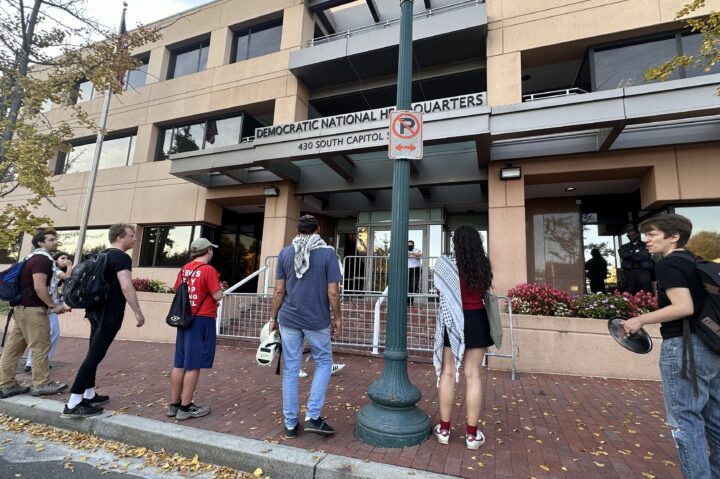
(Yasin Ozturk/Anadolu via Getty Images)
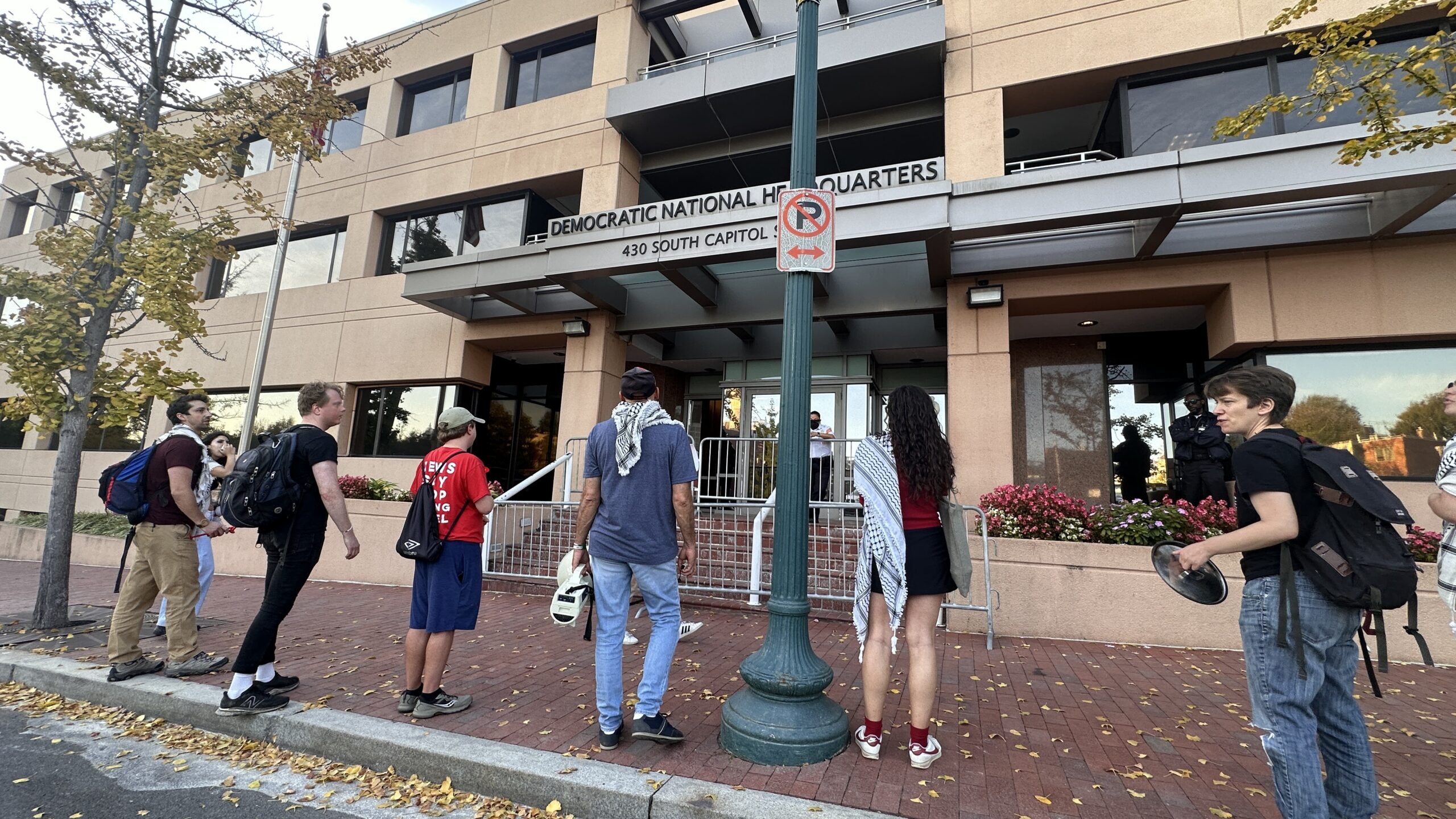
A group of demonstrators hold a noise protest outside the Democratic National Committee Headquarters in Washington D.C., United States on October 31, 2024.
Before AIPAC began spending tens of millions of dollars per election cycle on campaigns, back when it was purely an advocacy organization that touted its relationships with many of the 535 members of Congress, the pro-Israel group used to describe its approach to Capitol Hill with a cheeky, upbeat motto: “You have friends, and you have potential friends.”
But when former Bay Area AIPAC leader Naomi Lauter used to invoke the slogan, she added a third category: “Friends who have a little less potential than others.” Lauter died in 2017, but the saying still resonates with her son, Sam, who is a major Democratic donor and pro-Israel activist in his own right — and who is now wondering whether that third category might be growing even larger.
After 104 members of the House voted last week in favor of an amendment to eliminate all $3.3 billion in annual military aid to Israel, pro-Israel activists across the country who have spent years building ties with lawmakers are now wondering how to approach those relationships following a vote that some see as a betrayal. Even many longtime Israel supporters — including Reps. Jack Auchincloss (D-MA), Glenn Ivey (D-MD), Laura Friedman (D-CA), Nancy Pelosi (D-CA) and Pat Ryan (D-NY) — voted for the amendment, which did not pass. Pro-Israel activists who spent years building trust and gaining access to these lawmakers are now grappling with whether whether those relationships are still worth their continued investment.
To borrow from AIPAC’s old slogan: Are the lawmakers who voted for the amendment still considered friends — or potential friends — of the U.S.-Israel relationship? Or was their vote against the annual aid package to Israel, and against a bill that was opposed by a wide swath of nonpartisan and Democratic Jewish groups, a crossing-the-Rubicon moment that cannot be undone?
Friends and backers of the members of Congress who voted for the amendment are struggling to answer those questions. Several who spoke to Jewish Insider said that a single vote on a measure that was sure to fail should not spell the end of years of friendship. But even as they acknowledged the seismic reverberations of the vote, many also spoke of the need to tread carefully at a politically uncertain moment.
“Our issues are too important to not hold onto the ability to have a conversation with the person, because the votes are not going to end. It’s not going to all of a sudden stop,” Sam Lauter said. He talked to several members of Congress in the days before the vote, including Pelosi, urging them to vote no.
“It’s not a good trend line, but also this idea that we’ve lost the Democrats — let’s not create self-fulfilling prophecies here. There’s an opportunity for us to turn some of this around,” Tyler Gregory, CEO of the Bay Area Jewish Community Relations Council, said. “I am optimistic that several of them could be flipped if the vote had actual consequences, and I think that’s the job ahead of us.”
“Now, if someone said to me, ‘You know what, I voted yes, and my reasoning was because actually I don’t think we should be allies with Israel anymore, and I have no interest in the friendship with the community or the country, I’m done.’ Well, OK, that friendship’s done,” said Lauter.
This vote was destined to fail, but Tyler Gregory, CEO of the Bay Area Jewish Community Relations Council, called it “a dress rehearsal.” It will not be the last time U.S. aid to Israel comes up for a vote, and Gregory said he will need to lean on those lawmaker relationships in the future when the vote is more consequential.
“It’s not a good trend line, but also this idea that we’ve lost the Democrats — let’s not create self-fulfilling prophecies here. There’s an opportunity for us to turn some of this around,” Gregory said. “I am optimistic that several of them could be flipped if the vote had actual consequences, and I think that’s the job ahead of us.”
Halie Soifer, who served as an advisor to then-Sen. Kamala Harris (D-CA), now leads the Jewish Democratic Council of America, which urged members to vote against the amendment — as did Democratic Majority for Israel and the more liberal J Street. She called the vote “an inflection point,” but said the group is not considering removing its endorsements of lawmakers who supported the amendment.
“We’ve maintained a very consistent, principled position with regard to aid for Israel, and it’s not us that shifted,” Soifer said. “There is clearly a fast-moving shift within the Democratic Party itself, and we’re considering what that means.”
When asked whether she had ever seen so many candidates shift their positions on an issue within a single two-year election cycle, Soifer answered directly: “Absolutely not.”
AIPAC responded to the vote by no longer allowing donations, through its political action committee, to the 18 lawmakers it endorsed who voted for the measure.
“AIPAC members across the country watched this vote closely and are making sure their representatives in Congress who stood on principle hear that they’re appreciated,” AIPAC spokesperson Deryn Sousa told JI.
“The reality is these are our representatives. There is a relationship that we have with most of them, and they continue to be our representatives today, tomorrow, next week,” said Jeremy Burton, the CEO of the Greater Boston Jewish Community Relations Council. “The ones who say, ‘No, I’m still committed to Israel’s security and the Jewish community,’ things like that — and I’m not going to quote any one of them — but the ones who are saying that in these private conversations, it’s incumbent upon them now to show what that means.”
Many activists who have relationships with lawmakers are taking the long view, arguing that cutting ties now will not help in future battles. For a lot of them, Israel is not the only issue about which they are concerned.
Jeremy Burton, the CEO of the Greater Boston Jewish Community Relations Council, said he knows that some Jewish Bostonians have told Massachusetts’ congressional representatives, all of whom voted for the amendment, that this moment represents a “break point.” But as the leader of a nonpartisan organization, he cannot end relationships over a disagreement on one vote. He has other issues — such as nonprofit security funding and cooperation on fighting antisemitism — to consider.
“The reality is these are our representatives. There is a relationship that we have with most of them, and they continue to be our representatives today, tomorrow, next week,” said Burton. “The ones who say, ‘No, I’m still committed to Israel’s security and the Jewish community,’ things like that — and I’m not going to quote any one of them — but the ones who are saying that in these private conversations, it’s incumbent upon them now to show what that means.”
For one Jewish former Biden administration staffer, voting to cut off security aid to Israel must be the red line.
“They’re like, ‘Don’t worry about it. It’s just symbolic.’ Well, no, you’re telling us not to care about it, but clearly other people care about it, and that’s why you’re voting in that way,” said the staffer, who requested anonymity to speak about communal organizations they support. “I don’t think the Jewish community should be giving these people a pass right now, and I believe that’s actually creating an incentive for them to actually take these votes against us and against our interests, because there’s no political consequence or repercussions for them.”
House Minority Leader Hakeem Jeffries (D-NY) said on Thursday that Democrats will adopt a new approach to Israel if the party regains control of the House in November. “The current status quo is unsustainable,” said Jeffries, who voted no on the amendment.
“On one hand, I am really disappointed to see some true friends of mine and Israel vote for the [amendment] or vote ‘present,’” said Jennifer Laszlo Mizrahi, a Jewish philanthropist and disability rights advocate in Maryland. “On the other hand, as an American and as a Jew, I am horrified by how Netanyahu and his administration treat Palestinians in the West Bank, give Haredim the ability to be draft-dodgers and don’t show empathy when legitimate security operations accidentally kill an innocent child.”
Many of the 103 Democrats who voted “yes” released statements saying that they still support America’s relationship with Israel, but that they viewed the amendment as a symbolic way to tell Israeli Prime Minister Benjamin Netanyahu that they disagreed with his handling of the wars in Gaza and Iran.
In doing so, they tapped into a difficult reality for many of the Jewish activists who wanted to see the measure defeated. Many of those activists also wish Netanyahu would do more to take the concerns of Democrats and liberal Jews into account, even as they think Washington should continue supporting Jerusalem’s security needs.
“On one hand, I am really disappointed to see some true friends of mine and Israel vote for the [amendment] or vote ‘present,’” said Jennifer Laszlo Mizrahi, a Jewish philanthropist and disability rights advocate in Maryland. “On the other hand, as an American and as a Jew, I am horrified by how Netanyahu and his administration treat Palestinians in the West Bank, give Haredim the ability to be draft-dodgers and don’t show empathy when legitimate security operations accidentally kill an innocent child.”
In Los Angeles, Democratic donor and pro-Israel activist Howard Welinsky said many of the “yes” votes were a result of political “noise” — namely, concerns about current or future primary challengers from the left. “It’s the volume of the noise, and some members of Congress have more intellectual capacity to withstand it, and others have less,” said Welinsky.
So he is holding out hope that a change in Israel’s political leadership might help rectify Israel’s plummeting support among Democrats. “I just pray that Oct. 27” — the day Israel goes to elections — “gives Israel a new prime minister, and we can turn a page,” said Welinsky.
The vice president acknowledged that some conservatives wrongly blame Israel for too many of America’s problems, but argued that pro-Israel advocates are often too quick to accuse critics of antisemitism

Roy Rochlin/Getty Images
Vice President JD Vance
Vice President JD Vance warned pro-Israel advocates against seeing Israel and the U.S. as always aligned and cautioned against conflating criticism of the Israeli government with antisemitism, saying that “if everything is Jew hatred, then nothing is Jew hatred.”
In an episode of Christian conservative commentator Allie Beth Stuckey’s podcast podcast released on Friday, Vance said that “pro-Israel people in the United States make two critical mistakes. One … is not delineating between America’s interests and Israeli interests, because they’re not always the same.”
“But the second is conflating criticism of a particular government with Jew hatred. Because if everything is Jew hatred, then nothing is Jew hatred,” he continued. “And we have to be very careful not to, you know, in order to serve a certain foreign policy objective, try to criticize somebody as antisemitic when they’re just not.”
Asked by Stuckey if Israel has an “outsized influence in the U.S.,” Vance said, “I certainly think that Israel, like a lot of other countries, tries to influence American politics. I sort of take that as a given. And what I think is that American leaders have to be very careful that when we pursue something, we’re doing it for America’s best interest and not for any other country’s best interest.”
Vance added that the late conservative influencer Charlie Kirk “was very worried about Israeli influence in American politics. He also really disliked antisemitism.”
Stuckey raised the “the obsession that some people have, I would say on the right, with blaming all of their problems on Israel, all of their disagreements with Trump on some secret Israeli influence,” which she said she sees “more prominently on the right than I see the true ‘Israel first’ kind of obsession that you seem to be describing.”
“I see both, and I think both are bad,” Vance responded. But he said he’s “particularly sensitive” to what he views as the elevation of Israel’s interests because he’s “been defending the president’s decision to end the Iran [war], and I find often the arguments are, ‘Well, Israel doesn’t think this is good, therefore it’s bad.’ And my reaction is: Israel’s opinions matter, but fundamentally they are separate.”
“But you’re right. I mean, there are certainly people who take every frustration with the Trump administration, every policy disagreement becomes because of Israel, and that is absolutely wrong. And again, I think that that is one of those things that can bleed into some very dark places,” he continued.
Vance also defended the emerging deal with Iran, prior to departing over the weekend for direct negotiations with Tehran’s representatives in Switzerland. “You do still have terrorist elements within the regime, but you also have pragmatic elements within the regime who are actually affirmatively trying to have a better relationship with the United States,” he said.
Far-left antisemitic streamer Hasan Piker, replying to a video of Vance’s comments about criticism of the Israeli government and antisemitism, wrote on X, “I GOT BANNED FROM THE UK FOR SAYING THIS VERBATIM BTW.”
Please log in if you already have a subscription, or subscribe to access the latest updates.
 Continue with Google

 Continue with Apple