Since the Oct. 7 attacks, Rep. Al Green, running against Rep. Christian Menefee, has taken a hostile turn against Israel — and Jewish voters in his district have noticed
Drew Angerer/Getty Images
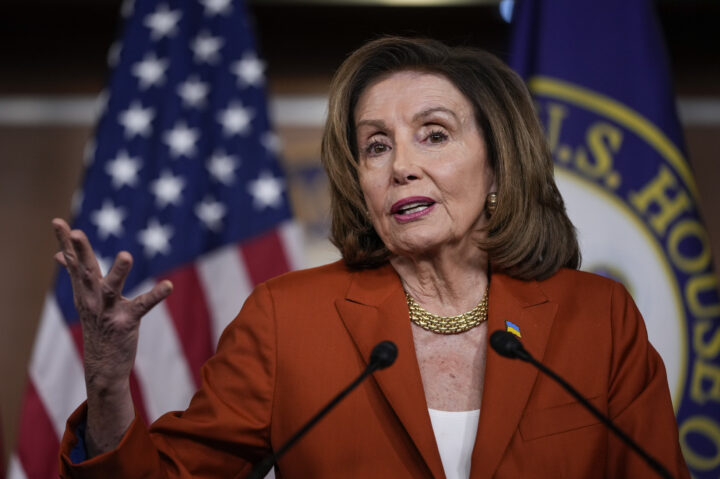
Then-Speaker of the House Nancy Pelosi (D-CA) speaks during her weekly news conference on Capitol Hill March 9, 2022 in Washington, D.C.


 Add JewishInsider on Google
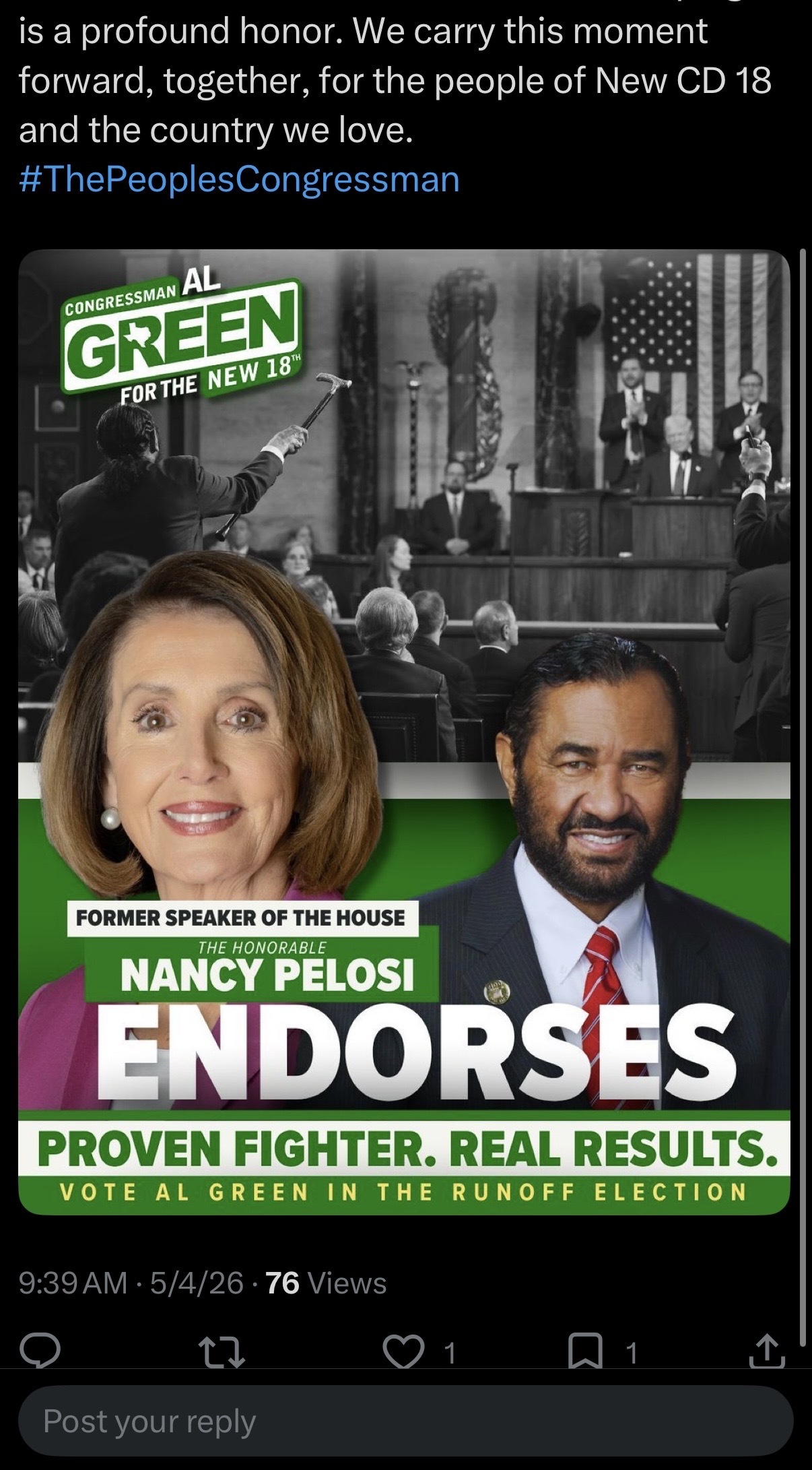
Rep. Al Green (D-TX), a vocal critic of Israel competing in a closely contested runoff against a fellow House Democrat later this month, announced in social media posts on Monday that he had received a coveted endorsement from Rep. Nancy Pelosi (D-CA), the powerful former House speaker.
Jewish community leaders in the Houston area were surprised to see Pelosi’s endorsement, especially as it appeared to break with her precedent of declining to engage in member-on-member races.
It also fueled ongoing frustrations with Green’s alleged lack of outreach to Houston’s sizable Jewish community — a potentially critical constituency in what is expected to be a close election.
The endorsement wasn’t straightforward — by Tuesday afternoon, Green’s original post had been removed, raising questions about his claim. Neither Pelosi nor her team had confirmed the purported endorsement before it was suddenly deleted without explanation.
On Wednesday, however, the endorsement had been reposted across Green’s social media accounts, albeit with slightly altered imagery.
“Speaker Pelosi is a leader I have stood beside through the most consequential fights of our time,” Green said on Wednesday. “Her endorsement of our campaign is a profound honor. We carry this moment forward, together, for the people of New CD 18 and the country we love.”
The message was accompanied by a graphic that featured an image of Pelosi differing from the photo used in the initial post. “The honorable Nancy Pelosi endorses,” it said. “Proven fighter. Real results. Vote Al Green in the runoff election.”
Ian Krager, a spokesperson for Pelosi, confirmed to Jewish Insider on Wednesday that Green’s new post was official, saying that her endorsement was “based in loyalty” to a longstanding colleague. Pelosi, who is set to retire at the end of her term, has traditionally avoided taking sides in House races between sitting members of her own party.
Krager declined to comment on why the original posts had been deleted. Green’s campaign also would not comment on the initial posts, only directing JI to his social media platforms “where you can find the endorsement from Speaker Emerita Nancy Pelosi.”
The confusion underscored some of the intraparty sensitivities surrounding the May 26 runoff election between two incumbents — Green, 78, and freshman Rep. Christian Menefee (D-TX), 38 — now vying for a Houston-area House seat in a bitter fight caused by the state’s recent Republican redistricting.
While some House colleagues are supporting Green, according to his campaign site, Pelosi’s backing is a major pickup for the outspoken, 11-term lawmaker seeking reelection in Texas’ newly consolidated 18th Congressional District, redrawn to favor Democrats.
It also marks something of a change in their relationship — Green had publicly clashed with Pelosi during her time as speaker over his efforts in 2019 to impeach President Donald Trump, which she had opposed.
In the March primary election, neither candidate claimed more than 50% of the vote required to win the nomination outright and avoid a runoff. Green secured 44%, two points short of Menefee, a former Harris County attorney who took office in February after winning a special election runoff to fill the seat held by Rep. Sylvester Turner (D-TX) until his death last year.
Art Pronin, a Jewish Democratic leader who lives in the district, echoed others who have said that Green has all but disengaged from the Jewish community in recent years — contributing to a strained relationship with the veteran congressman.
Since the Hamas attacks of Oct. 7, 2023, Green has also taken a noticeably hostile turn against Israel in his votes and public statements, local Jewish leaders say. Weeks after the attacks, for instance, Green was among just 10 House lawmakers who opposed a bill voicing support for Israel while condemning Hamas. He has otherwise supported House legislation calling the war in Gaza a genocide and consistently voted to cut military aid to Israel, among other moves seen as antagonistic.
“Regardless of the rhetoric, showing up” to Jewish community functions “is really important,” especially in a tight race, Pronin told JI on Tuesday. “We don’t see him breaking bread.” Green’s long absence “could cost him the race,” Pronin suggested. “It’s going to be close, and I think that we’re in a situation where a lot of the community is feeling alienated from Green,” he said.
With a few weeks until the runoff, Pronin said he is leaning toward voting for Menefee because the new congressman has been a more active presence in the Jewish community, showing up at several events like a Passover Seder sponsored by the Jewish Federation of Greater Houston last month. Meanwhile, Menefee has expressed a more “balanced view” with regard to Israel and Gaza, Pronin told JI, even as he has made only a limited number of public statements clarifying his own views on Middle East policy while in office.
During a tense debate on Monday, Menefee said he believed that Israel had committed “atrocities” and “war crimes” in Gaza, while acknowledging that Oct. 7 was “absolutely horrific.” He understood, he told the audience, “why a nation would want to wage war against a terrorist organization.”
Green, for his part, reiterated his charge that Israel had committed a genocide and accused Menefee of avoiding the term because, he alleged, his opponent is beholden to the pro-Israel advocacy group AIPAC. “He didn’t say genocide,” Green noted. “AIPAC won’t allow that.”
AIPAC, however, has not issued an endorsement in the race.
In the wake of Oct. 7, some in the Jewish community turned to faith, philanthropy or federal advocacy. Others set their sights closer to home, organizing to shape school boards and influence city councils

Michael Nigro/Pacific Press/LightRocket via Getty Images
A pro-Israel supporter holds a sign during the "March for Israel" held on the National Mall.
After the Sandy Hook Elementary School shooting in 2012, Norri Leder dedicated herself to fighting gun violence as a founding member of Moms Demand Action, the gun control group created after the shooting.
And last year, there was another single defining moment that pushed her to create something new, just like she did after Sandy Hook: A candidate running in a Houston school board special election in 2025 sent out a mailer showing herself in a photo with a virulently anti-Israel politician. When Leder ran into the candidate at the polls, she told the candidate that she was “unknowingly alienating yourself, potentially, from members of the Jewish community.” The candidate had no idea.
“She asked me if there was a Jewish group that meets with candidates as they’re running,” Leder recalled. “I said, there are Jewish groups, but it occurred to me that many of them don’t have the bandwidth to meet on these races that are at much more of a local, state and county level as [candidates are] running for office.”
So Leder created one. Where she was once a single-issue activist fighting for gun control measures, now she is putting everything else aside to focus on Jewish communal concerns with her new organization, Houston Jewish Women Vote. Less than four months into its existence, the group has met with candidates running in local attorney, city council and judicial races in 2026.
“We are narrowly focusing on physical security for the Jewish community, antisemitism, targeting of Jews in academic and professional settings, prayer in school and staying in your lane for state, local and county offices — just please don’t engage in foreign policy issues that undermine bridge building in the community and accomplish nothing in the world of foreign policy,” said Leder. “There’s a feeling of, we’re Jewish women, and a lot of us feel politically homeless right now. People feel good knowing that they’re participants and that they can exercise their voice.”
Houston Jewish Women Vote joins dozens of other Jewish advocacy efforts that grew out of the desperation people felt in the days after the Oct. 7, 2023, attacks to fill a void in local politics.
In Pittsburgh, the Beacon Coalition was created when community activist Jeremy Kazzaz saw that local politicians were too afraid to criticize a colleague who posted pro-Hamas messages. The group is now urging Jewish Democrats in the Pittsburgh area to run for seats on the Allegheny County Democratic Committee to be able to help shape the party’s endorsements.
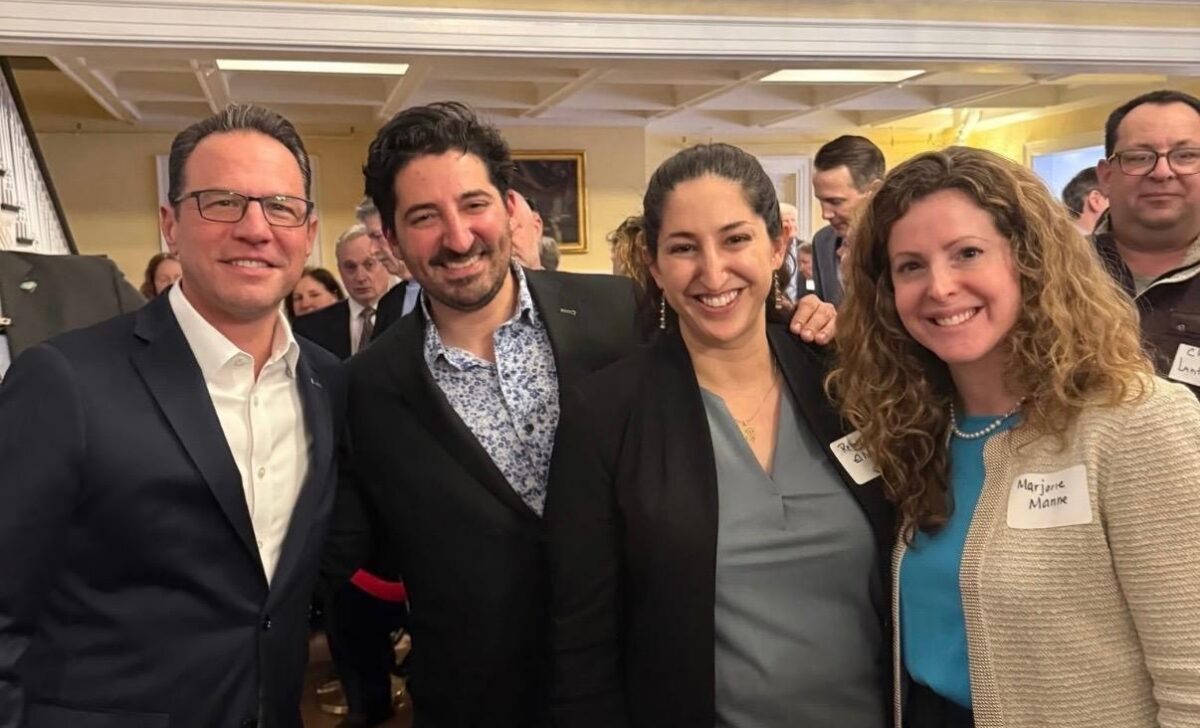
In California, Israeli immigrants helped launch the Bay Area Jewish Coalition (BAJC), in part to help locals make sense of the many local races for positions most people have never heard of.
“Even when we have special elections for things that seem totally unrelated, like the county assessor, which is in charge of property taxes and things like that, at this point, people are reaching out to us and saying, ‘Who do we vote for?’” said BAJC co-founder Keren-Or Reiss, who was born in Israel and now lives in San Mateo, Calif., where she works as a product manager at a tech company. “Is there someone here who’s going to somehow use this platform to spread hate or to normalize antisemitism against us?”
Some in the Jewish community turned to religious practice after Oct. 7, or to supporting charities helping victims of the attacks in Israel, or to pro-Israel political advocacy through establishment groups like AIPAC, or some combination. Leder, Kazzaz and Reiss represent a new class of Jewish American activists: people who were disappointed by the apathy or even outright hostility that some co-workers, teachers, neighbors and local elected officials demonstrated towards Jews and Israelis suffering in the aftermath of Oct. 7, and who felt no one was doing what needed to be done to reach those leaders.
“Local community members can’t just wait for institutions to have enough bandwidth to do everything. People can take responsibility to step up and engage. And that’s what people were doing,” said Jeremy Burton, CEO of the Boston Jewish Community Relations Council. “Part of this revitalization of American Jewish life that we’ve seen has been this emergence of these activists.”
They saw a new kind of opportunity in an American political landscape reshaped by Oct. 7 and the ensuing war in Gaza. Advocating for Congress to vote a certain way on weapons sales to Israel would not do much to affect the swell of antisemitism growing in their communities. Although the war was happening thousands of miles away, they understood that its impact would be local.
“Almost every other community and interest group is doing this on the local level, and not the Jewish community. So we’re really trying to close that gap,” said Tyler Gregory, CEO of the Bay Area Jewish Community Relations Council, which in 2024 became the first JCRC in the country to launch an affiliated advocacy arm to fundraise for candidates and engage in elections. “I think it’s a combination of Congress being sexier and there being fewer issues at the local level.”
After Oct. 7, it became clear that there were not, in fact, fewer issues locally. City council members who were elected to work on municipal governance were now tasked with voting on contentious ceasefire resolutions and calls to divest from Israel. School superintendents and principals had to decide how to respond to teachers who were bringing biased, anti-Israel instruction into the classroom. These were battlefields where existing Jewish communal infrastructure did not have the capacity to fight — either because their nonprofit status kept them from engaging in political races, or because they simply did not have the manpower to reach the hyper-local spaces where debates about Israel, Zionism and antisemitism were now front and center.
“Local community members can’t just wait for institutions to have enough bandwidth to do everything. People can take responsibility to step up and engage. And that’s what people were doing,” said Jeremy Burton, CEO of the Boston Jewish Community Relations Council. “Part of this revitalization of American Jewish life that we’ve seen has been this emergence of these activists.”
The new Jewish activism did not begin in Jewish federation board rooms or congressional office buildings in Washington. It was grassroots campaigns that started in WhatsApp groups and recruited dozens of volunteers through word-of-mouth conversations. These were people who showed up to city hall hearings or met with candidates running for local offices that prior to Oct. 7 may have seemed irrelevant to Jewish concerns.
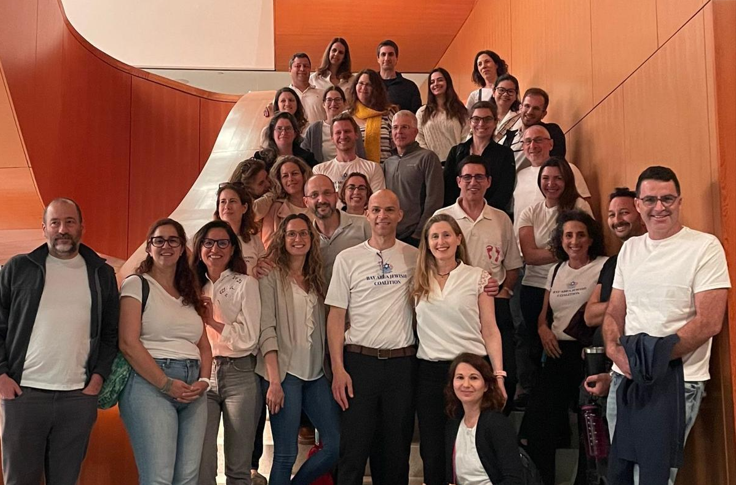
For Sam Gechter, who works in tech in Boston, a call from a friend in early 2024 alerted him that the city council of Somerville, Mass., where he lives, was trying to pass a resolution calling for a ceasefire in Gaza. The language, Gechter recalled, was “atrocious,” pinning the blame for the war on Israel and hardly mentioning Hamas.
“I got off the phone. I turned to my wife, who was standing next to me, and said, ‘We gotta start a WhatsApp right now of everybody we know in Somerville and get people to come and speak against this,’” Gechter told JI. “That was my moment of being politically activated.”
Soon, that WhatsApp group became Shalom Somerville, a group of Jewish people in the small Boston suburb — an uber-progressive city that neighbors the better-known Cambridge — committed to advancing “a Somerville that is safe for Jews and Israelis.” Despite nominally being an advocacy organization, Shalom Somerville has also become a lifeline for people who otherwise weren’t connected to Jewish institutions.
“For a number of people who haven’t found their place Jewishly in the community, this has become their main Jewish community,” said Gechter. “We had, like, 150 people at our Hanukkah party. It’s gotten to be a pretty big group.”
New organizations that formed to focus on important but unglamorous posts like the county commission and municipal human relations councils are heading into a major election year with ambitious plans to activate Jewish community members to flex their political muscle. They want to show local officials that they ignore Jewish voters at their own peril — and that, conversely, Jewish voters will miss a chance to improve their community if they sit out these races that have a real impact on their day-to-day lives.
“Around the country, there was this awakening, and an understanding that the cavalry wasn’t coming for anybody,” Chicago Jewish Alliance founder Daniel Schwartz told JI.
Each local outfit has a different strategy. Mindy Miller, a former top aide to the Colorado Senate president, co-founded the Colorado Jewish Action Alliance to educate her former colleagues about topics that they never expected to address but that are now everywhere, even in state politics.
“We ask them what they think Zionism means because it’s been so weaponized, and I would say virtually all of them have been appreciative of being able to have those conversations without being fear of being canceled or called out or vilified, because they have to walk a tight rope,” Miller told Jewish Insider.
Chicago Jewish Alliance founder Daniel Schwartz has taken a more confrontational approach. During the city council’s vote on a contentious ceasefire resolution in January 2024, he showed up at City Hall draped in an Israeli flag. He created a WhatsApp group — called the “Zionist Information Group” — to get Chicagoans out to protest.
“Around the country, there was this awakening, and an understanding that the cavalry wasn’t coming for anybody,” Schwartz told JI.
In Lexington, Mass., a suburb of Boston, a group called Lexington United Against Antisemitism, is focused on interfaith work, and connecting members of the town’s Jewish community with Christians.
“Quickly we understood that people, actually, even in Lexington, know very little about Jews altogether. Jews — what do they think? What do they believe?” said Francine Jacobs, a retired Tufts professor who created LUAA.
The group was founded several months before Oct. 7, but its founders have doubled down on their mission, particularly as some liberal Christians who are critical of Israel have taken stances that crossed into antisemitism.
“It took some of the steam out of our effort. There were some folks who just said, ‘Oh, Israel, I’m so angry about it, I just can’t hear the word Jew,’” said Stephen Van Evera, a retired MIT international relations professor, who is Christian and leading LUAA with Jacobs. “I mean, why are you connecting these dots that way? Do you really think that the Jewish community in Lexington is deciding how to fight the Gaza war?”
What drove many people to get involved was their kids. Viviane Safrin became an education activist in San Francisco after the pandemic, when she felt frustrated that public schools were not doing more to reopen. After Oct. 7, parents started calling her to report that their children had experienced antisemitism. So she created SF Jews in School, with the tagline “advancing Jewish inclusion in San Francisco schools.”
“We respond to incidents. We guide families through working with their school. We also engage directly with principals and administrators to support them in ensuring that our schools are welcoming spaces, but we also celebrate our heritage. We build Jewish pride and belonging across the city,” Safrin told JI. “We bring apples and honey for Rosh Hashanah and sufganiyot for Hanukkah.”
Two thousand five hundred miles away, in the Philadelphia suburb of Lower Merion, Dani Shaw created a WhatsApp group for 75 moms soon after Oct. 7. They wrote to the diversity, equity and inclusion director in their school district to ask to talk about ensuring Jewish perspectives were included in the office’s programming. They wound up meeting with the superintendent instead and having a productive conversation. But, shortly after, an op-ed in a high school newspaper that Shaw said spread “blood libels” against Israel caused the moms to step up their activism.
“We created an organization called the Jewish Families Association with a board that consisted at the time of about 15 parents who were all representing different schools in the district,” Shaw told JI. There are now several other Jewish Families Associations in small school districts across Pennsylvania. “It’s really representation — a bridge between the parents and the administration, the school district, to make sure that these incidents, whether they be bullying or problematic curriculum, are dealt with appropriately.”
The group in Lower Merion, a heavily Jewish suburb, supported three Republican candidates for school board last year. They all lost in the liberal town. Keeping activists engaged in the work is hard — “they have to get on with their lives and their livelihoods,” Shaw acknowledged — particularly because the group plans to remain volunteer-led and grassroots, with no fundraising arm.
Fatigue is real. The work of building ties with dozens or even hundreds of local elected officials requires dedicated volunteers and resources. BAJC, the Bay Area group, created a voter guide in 2024 tracking dozens of races — work they want to replicate in 2026, even as they see some people in the community losing interest.
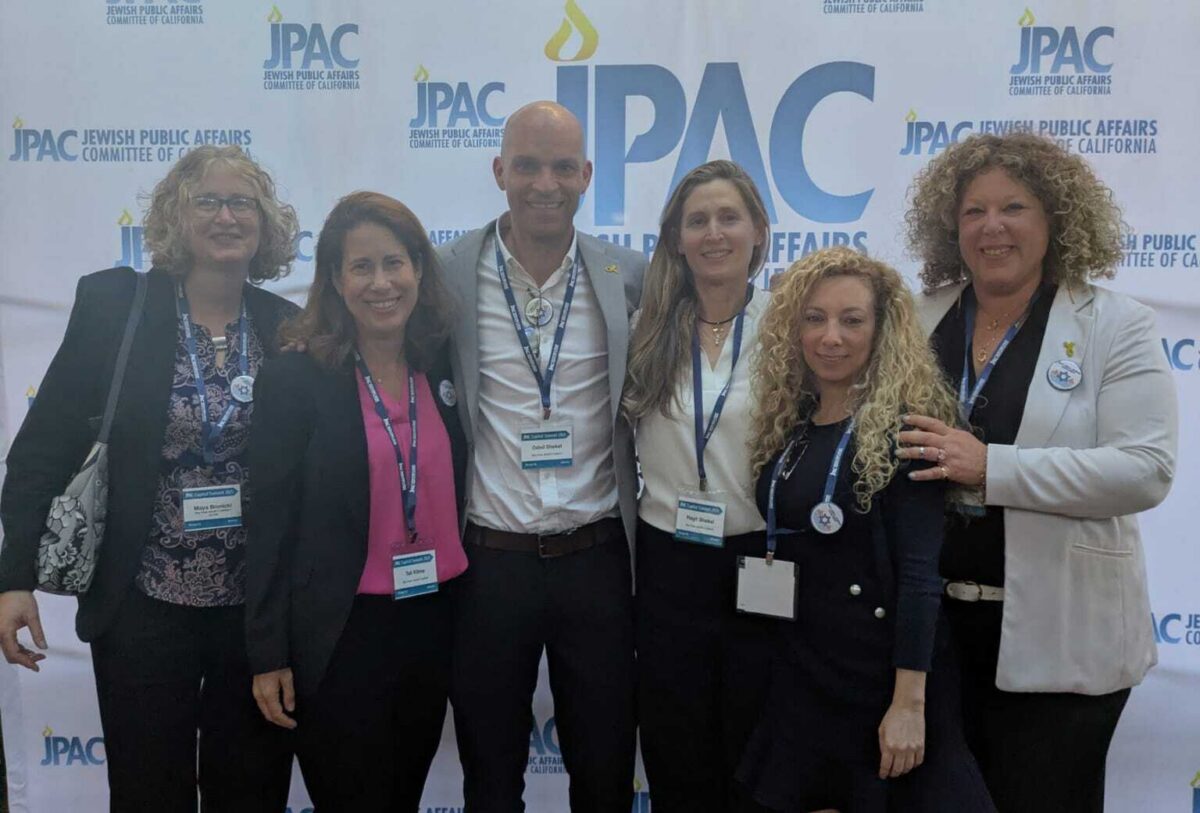
“It’s a constant fight to activate the community. I wouldn’t take that for granted. People prefer to go and watch a football game than to go to a demonstration,” said Oded Shekel, a BAJC leader and an Israeli immigrant who is the CEO of a financial technology startup. “You need to find ways to keep people motivated, activated, connected. I think local fights are easier to connect to than, ‘Would you like to come and support, like, a D.C. bill that we are going to promote?’ Yeah, whatever, I don’t care. ‘Would you like to meet the school boards who actually create policies for the teachers or the kids in your class?’ That’s more likely.”
Not everyone who got involved in this work after Oct. 7 remains involved. But many still are. There is now an entire class of American Jews, many of whom were not engaged politically at all before, who now wholeheartedly believe that the way to make their communities safer and more welcoming is to get involved in local politics. And as both the Democratic and Republican parties face internal fissures over Israel at the national level, an awareness is starting to solidify that reaching politicians at the beginning of their careers, when they are unpolished and open-minded, is a winning strategy.
“We’re not seeking to educate candidates about our issues once they announce for Congress. We want to have multi-year relationships and be able to explain the many nuances of Judaism and Zionism long before they’d like to run for higher office,” said Sam Jefferies, co-chair of The Kids Table, a political action committee in Washington state that is supporting “pro-Jewish” candidates. “You can’t solve antisemitism, but you can prevent antisemites from being in positions of power.”
Rep. Christian Menefee is the favorite against Rep. Al Green in next month’s primary; Green has consistently voted against Israel since Oct. 7
Jason Fochtman/Houston Chronicle via Getty Images
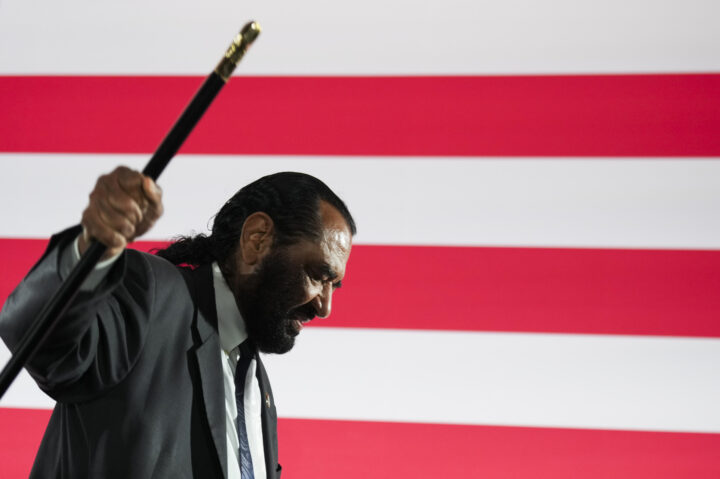
Texas Rep. Al Green leaves the stage after speaking during a rally featuring California Governor Gavin Newsom in Houston, Saturday, Nov. 8, 2025.
Jewish leaders in the Houston area see a chance for a fresh start this year with a new congressman, after an increasingly strained relationship with their longtime representative, Rep. Al Green (D-TX), who has taken a strong anti-Israel turn in recent years.
Green, 78, is struggling to hold onto his seat in a primary against newly elected Rep. Christian Menefee (D-TX), the former Harris County attorney, who won a commanding victory in a special election runoff last month to replace former Rep. Sylvester Turner (D-TX). Turner died months after taking office to replace former Rep. Sheila Jackson Lee (D-TX), who died less than a year earlier of pancreatic cancer after serving for over 30 years in the House.
Due to Texas’ redistricting process, Menefee now faces Green, as well as other longshot candidates, for a full term in the House beginning in 2027.
Since the Oct. 7, 2023, Hamas attacks, Green has consistently taken anti-Israel stances, even on legislation that has received widespread support on a bipartisan basis. Weeks after the attacks, Green was one of just 10 House lawmakers who voted against legislation expressing support for Israel and condemning Hamas.
The veteran congressman was an early backer of efforts to unilaterally recognize Palestinian statehood, of legislation describing the war in Gaza as a genocide and of the Block the Bombs Act.
Siding with six other members of the House, he voted to cut off missile-defense funding to Israel last July. Green also voted against supplemental aid to Israel in 2024 and has supported legislation to block specific arms transfers to Israel.
Green was one of 11 lawmakers to vote against an amendment condemning Hamas’ use of human shields and demanding its unconditional surrender and disarmament.
He voted against declaring the phrase “From the river to the sea, Palestine will be free” to be antisemitic. And he was one of just four House members who voted to require universities to disclose investments in countries whose leaders are facing International Criminal Court arrest warrants, indirectly targeting Israel.
In 2024, he introduced a resolution affirming the Palestinian right to statehood, to which two Jewish members were added as cosponsors without their knowledge or consent. He led an effort, opposed by a majority of House Democrats, to impeach President Donald Trump for striking Iran last June without congressional authorization.
At the same time, Green has also continued to back certain measures to combat antisemitism.
Green told the Texas Tribune that he expects AIPAC to spend “inordinate amounts of money to get me out of office,” and has been railing against the group on the campaign trail, though AIPAC has not endorsed anyone in the race.
Menefee has said little publicly about Middle East politics, though in a January candidate forum for the special election, he described Israel’s operations in Gaza as excessive while also condemning the Oct. 7 Hamas attacks, according to The Daily Cougar, the University of Houston’s student newspaper.
“Look, what I want is peace, now,” Menefee said. “I want a lasting ceasefire so that not a single baby in either Israel or Gaza has to worry about being bombed.”
Leaders in the local Jewish community said their once-strong relationship with Green — who had been a frequent presence at community events and maintained strong relationships with members of the community — turned sour following Green’s vote on the post-Oct. 7 resolution, which surprised and hurt many in the community.
“Everybody — particularly in a large section of the Jewish community — carries this wound from that vote. They’ve not forgotten it. They’re unforgiving about it. It’s been very painful because there was a relationship,” Art Pronin, who is Jewish and leads the Meyerland Area Democrats Club, told Jewish Insider. “It felt like we lost a congressman. … it was just shocking.”
Pronin says he now hears concerns from others in the community about Green on a weekly basis at his synagogue.
“It’s really sad, because we used to have a very strong relationship with him,” Norri Leder, a founder of Houston Jewish Women Vote and a board member of the local federation, told JI. “It’s been incredibly disappointing, and especially because the way his district was newly drawn, he represents a very large chunk of the Jewish community. … It almost feels like he’s hostile towards us, not just disagrees. It doesn’t feel like respectful disagreement.”
Leder added that Green’s positions on Israel policy had appeared to begin to shift prior to Oct. 7, but the change became more pronounced after the attacks.
She said that she has heard from other members of the community for whom Green’s stance on Israel issues is factoring “very heavily” into their plans for their primary votes. “We’re looking for somebody that understands us and wants to represent us, and Al Green gets a poor grade on that front.”
The longtime congressman was the chair of the local NAACP before entering public office, building strong relationships with the local Jewish community that he maintained for years, according to Pronin.
Since Oct. 7, Pronin and Leder said that Green has not attended community events to which he’s been invited and has been inaccessible to Jewish constituents who have requested meetings or expressed concerns about his posture.
Leder said that lack of accessibility and engagement from Green and his office, in addition to the shock of his vote against the resolution condemning Hamas, has contributed to the sense of hostility she feels from him.
Pronin said he had multiple conversations with Green about his vote on the resolution condemning Hamas, seeking an explanation, but has never received a “solid explanation,” and Green has not softened his stance.
Leder joined a group meeting with Green recently, where he was pressed on his lack of engagement with Jewish constituents, and said Green vowed he would try to engage on some issues of mutual concern, but also “did launch off on Israel” during the conversation.
“The challenge is you can have very strong feelings about Israel, but if you’re representing the Jewish community that lives here, you still have to represent that community, and that’s where I think he’s really fallen down,” Leder continued. “He wasn’t present at any [Oct. 7 memorial] events in the community. He hasn’t attended … community seders, things like that a lot of elected officials attend, and he just has been completely absent.”
“It feels like his anger at [Israeli Prime Minister] Benjamin Netanyahu and whatever he’s feeling towards the Israeli government is spilling over into his treatment of Jewish constituents,” she added.
Leder said that Menefee, on the other hand, has interacted on numerous occasions with the Jewish community and attended events like the community Passover seder. He “understands our concerns,” Leder said, though she said she couldn’t speak specifically about his views on the current Israeli government.
“I know him personally. I think he has a lot of respect for the Jewish community and is available and that’s what the Jewish community is looking for: somebody that understands our concerns and is there for us as constituents, and when it comes to Israel, is somebody that is open and reasonable,” she continued.
Pronin said he has known Menefee for a long time and never heard him say anything about Israel policy that has concerned him, describing the newly elected lawmaker as “balanced” on the issue, though he hasn’t spoken about it extensively.
“I think he’s got a balancing act to play on this issue, and we’ll have to really kind of thread the needle in conversations with these communities, and maybe help bring people together to talk about this, so he can listen and hear out the perspectives on this as a congressman over time,” Pronin said.
Green’s campaign did not respond to a request for comment.
Mark Jones, a Texas pollster and fellow at Rice University’s Baker Institute for Public Policy, recently conducted a poll of the district showing Menefee with a commanding 52%-28% lead.
“Menefee’s crushing him,” Jones told Jewish Insider, noting that an internal poll by Menefee’s campaign conducted by the well-regarded Lake Research Partners shows similar results. Jones predicted that Menefee should be able to win the race cleanly in the primary, without advancing to a runoff.
Around two-thirds of the voters from the new district come from Green’s old district, but they are roughly evenly split — with a slight advantage toward Menefee — between the two leading candidates, Jones said. The quarter of the district that comes from the current 18th District “overwhelmingly prefer[s] Menefee,” Jones added. “And that’s also the case with some of the other northern parts of the district that used to be in other districts.”
“The only reason Green is even in this race remotely is that he still is popular among … his current constituents, but he’s doing very poorly among the roughly little more than a third of constituents who he currently doesn’t represent,” he said.
And though voters report positive views on both candidates, Jones noted, when forced to choose, “a significant majority — effectively almost two-to-one — prefer Menefee.”
Jones said that, for many Democrats, Menefee is a “perfect candidate,” with a reputation for being pragmatic progressive and a record opposing Trump. Green’s age is also a stumbling block for him, particularly for voters who saw two of their representatives die in office over the course of about a year.
“People like what he’s done over the past 20 years, but they believe it’s time to pass the baton,” Jones said.
Green has argued that he will be more effective given his greater seniority in the House, which is particularly valuable in the Democratic Caucus. At the same time, the veteran lawmaker has been a bomb-thrower who has sometimes found himself out of step with Democratic leadership.
The 33-year-old political scion has had to balance his allegiance to Trump with fealty to his family’s more traditional conservatism
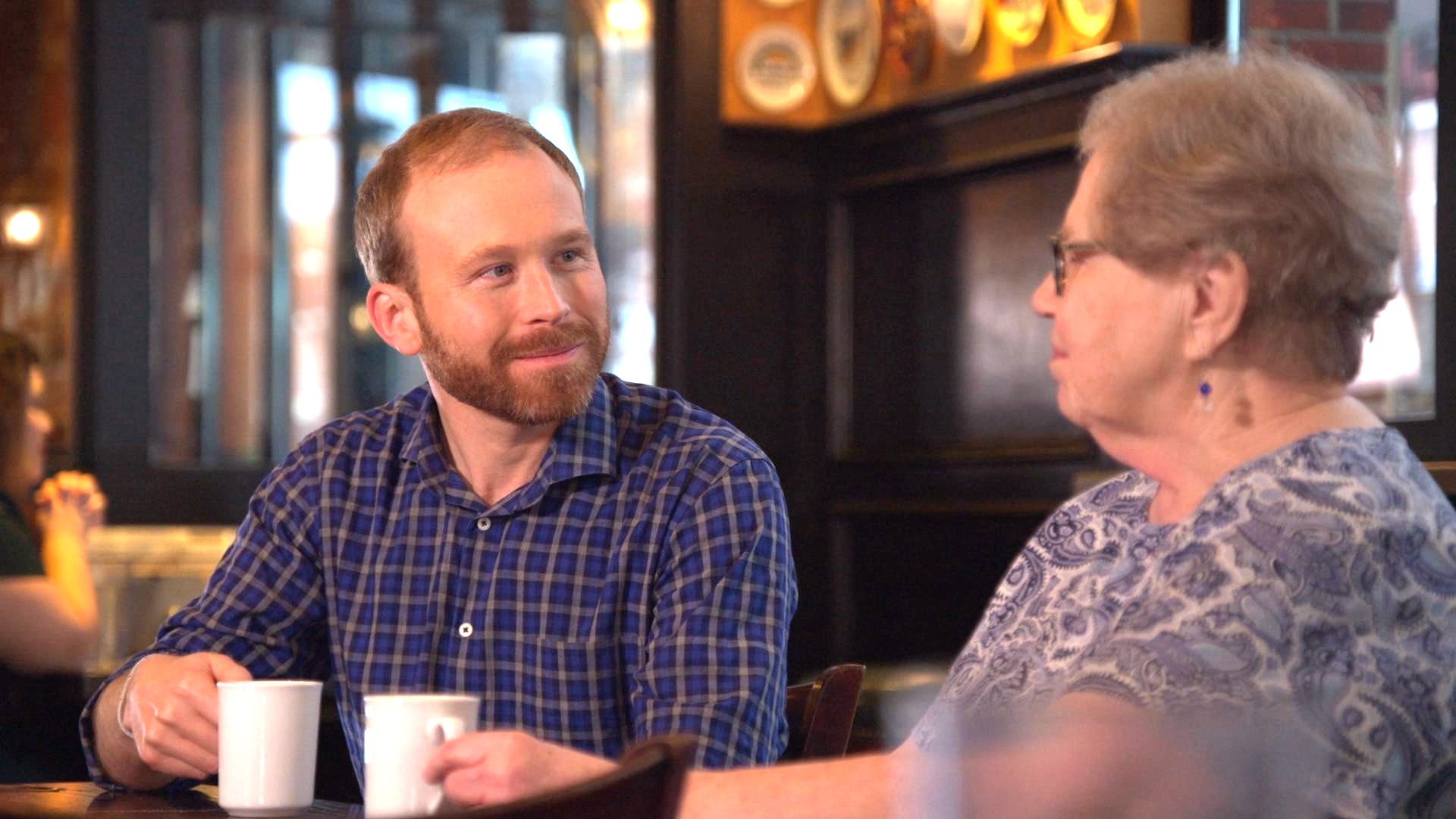
On a trip to Israel in October 2012, Pierce Bush visited Masada, the ancient desert fortress where, according to ancient scholars, a band of beseiged Jewish rebel soldiers chose to commit suicide rather than surrender to Roman troops. Though Bush was a long way from his native Houston, the story reminded him of a similar tale back home — that of the Alamo, the famous site of a protracted battle in which a group of Texian revolutionaries died defending the stronghold from Mexican soldiers.
“From a cultural standpoint,” Bush told Jewish Insider, “it spoke to me.”
There may be another reason why the legend of Masada resonates with Bush, the 33-year-old political scion — grandson of the late George H. W. Bush and nephew to George W. Bush, respectively the 41st and 43rd U.S. presidents — who is now running for office in Texas’s 22nd congressional district, a suburban swath of southwest Houston.
Ahead of the primary on March 3, more than a dozen candidates are vying to succeed Republican Rep. Pete Olson, who announced last summer that he would not seek re-election.
In recent years, the Bush name has come under siege in the Republican Party, representative of a kind of genteel conservatism that seems to have been negated in the age of Donald Trump. The Bush family has a strained relationship with the president, who notoriously mocked Jeb Bush as “low-energy” during the 2016 election cycle, in which H.W. — snubbing the GOP — cast his vote for Hillary Clinton instead of Trump.
Any Bush who wants to enter politics now must contend with this history. While Texas Land Commissioner George P. Bush has embraced Trump wholeheartedly, his cousin Pierce seems to have chosen a different and somewhat more cautious route. Rather than surrendering completely to the Trumpian impulses of the modern Republican party, experts say Bush is straddling a delicate line.
Mark P. Jones, a professor in the department of political science at Rice University in Houston, described Bush as a moderate at heart whose core values gravitate to the conservative center.
“But he knows that that doesn’t play in today’s current Texas Republican primary electorate,” Jones told Jewish Insider. So in an effort to survive on the campaign trail, Jones said, Bush has veered further to the right — particularly on issues like immigration — and pledged his allegiance to Trump.
To do otherwise would, perhaps, be a form of political suicide.
***

Pierce Bush, grandson of former President George H.W. Bush, speaks during the unveiling ceremony of the Forever Stamp honoring Bush in June 2019, in College Station, Texas.
Bush’s pedigree is, of course, still an asset in the 22nd district, which was represented by former House Majority Leader Tom DeLay from 1985 to 2006. But he is up against a number of hard-edged candidates who have complicated his prospects.
Republican donor and candidate Kathaleen Wall, who has spent more than $3 million of her own money in the primary, is a frontrunner in the race who has aligned herself with Trump’s policies — vowing, for instance, to stop illegal immigration and build a wall along the border with Mexico. Another serious contender is Troy Nehls, a Fort Bend sheriff who is popular in the district.
Bush has managed to hold his own, raising more money than Wall and Nehls combined — more than $1 million, according to the Federal Election Commission — and notching endorsements from Olson as well as the Houston Chronicle.
In his December announcement video, Bush cast himself as a kindhearted, benevolent leader, touting his role as CEO of Big Brothers Big Sisters Lone Star, a Texas affiliate of the nonprofit youth mentorship organization, while warning of the evils of socialism.
At the same time, he has put forth some views that echo the president’s, vowing in one ad to “stop the cartels” and “deport criminal illegals” — policy points that have created some tension in his messaging.
Moving beyond domestic issues, Bush discusses foreign policy in a manner reminiscent of his uncle’s aggressive, post-9/11 approach.
“We need to be a shining light for the rest of the world in terms of foreign policy and stand for freedom,” Bush told Jewish Insider by phone Friday morning from a polling station in Cinco Ranch, a suburb of Houston, where he was greeting constituents on the last day of early voting. “I think freedom works.”
But he is also quick to praise the man who now occupies the Oval Office. “President Trump is doing a good job on foreign policy — I’d like to be on the record as saying that,” Bush said. “He intervenes when America’s interests are at stake, but he’s also kind of a non-interventionist and he’s shown to be someone willing to go have discussions with people and try to negotiate things in a favorable way for the United States.”
Bush defended Trump’s controversial decision to assassinate Iranian General Qassim Soleimani in early January, a move that critics said could destabilize the Middle East.
“I think it’s his responsibility to make tough calls,” Bush said, speaking more broadly about the president’s prerogatives as commander-in-chief. “I’ve been close to two presidents who had to make those calls. In a strategic way, it makes sense to me, because it’s his decision and it’s on his watch. And it’s a huge responsibility. The world is better without Soleimani, no doubt about it.”
He was equally complimentary of Trump’s Middle East peace plan, released in late January and overseen by Jared Kushner. “I think Jared’s a really smart guy,” Bush told JI. “And I’m sure whatever plan he presents is a good one, because I know he cares deeply about finding a peaceful solution and about our partnership [with Israel].”
Having visited Israel twice in the past decade, Bush told JI he believes the country shares similar values with the U.S., and he regards the Jewish state as a “tremendous partner.” His affinity for Israel — along with his vocal opposition to antisemitism — goes beyond politics. His sister Lauren is married to a Jewish man — David Lauren, son of fashion designer Ralph Lauren.
“My two nephews are being raised in the tradition,” Bush told JI. “And so of course I think we need to stand up to antisemitism. This is a compassionate country and our compassion has to be built around inclusivity and tolerance — and I personally don’t have time for antisemitism at all.”
He added, “I’m blessed to have friends in the Jewish culture, and it’s a rich culture, and it makes our country better. So, believe me — it alarms me, because there are people I love who are Jewish.”
***
In conversation, Bush is warm, engaged and affable, qualities that would seem to be at odds with some of the more hardline beliefs he has adopted. Such views have the potential to alienate voters in a district that is home to a number of immigrants and includes most of Fort Bend, one of the most diverse counties in the country — though they may redound to his benefit in the primary.

Pierce Bush, his wife Sarahbeth and Winston-Moose.
Still, Bush speaks with a sense of awe about his district — where he recently settled with his wife, Sarahbeth, and their golden retriever, Winston-Moose — that suggests a more inclusive brand of conservative politics.
“It’s a pretty amazing place,” he told JI, later adding: “You could say it’s a microcosm of what the country will be like in 20 years.”
Since the primary is so crowded, experts predict the frontrunners will split the vote in Tuesday’s primary, resulting in a runoff election on May 26 between the top two candidates.
“I would be surprised if Pierce Bush would not be in that runoff,” said Cal Jillson, an expert on Texas politics and a professor at the Dedman College of Humanities and Sciences at Southern Methodist University in Dallas.
Should he win the runoff, Bush may still have a fight ahead of him in a district — and a state — that has been shading purple in recent years. Though the 22nd is a historically Republican district, in 2018, Olson beat his Democratic opponent, Sri Kulkarni — who is running again this primary season — by a margin of just five percentage points.
Abhi Rahman, director of strategic communications for the Texas Democratic Party, told JI that he believes Bush will lose if he makes it through to the general election.
“Pierce Bush’s fate,” he said, “proves that the Trump name is stronger than the Bush name among Texas Republicans.”
The more immediate question, as the primary looms, is whether Bush’s name will function more as an asset or as a liability in a political climate that seems to favor brash Republican populism over the traditional conservatism that defines the Bush family.
“The Bush name still has sway with many Republicans,” said Brandon Rottinghaus, a professor of political science at the University of Houston, “but the challenge for Bush is to walk the line between an accessible conservatism associated with the family name and the more strongly conservative leanings of modern Republican primary voters.”
For his part, Bush is optimistic ahead of Tuesday’s vote. “I feel like momentum is on our side,” he told JI. “I think our message is resonating.”
It will be up to voters, then, to decide if Bush’s message is more Trump’s or his own — and, ultimately, if one matters more than the other.
Please log in if you already have a subscription, or subscribe to access the latest updates.
 Continue with Google

 Continue with Apple