









































Sanders’ support lends a major boost to the mayor’s effort to unseat several incumbent lawmakers

CHARLY TRIBALLEAU / AFP via Getty Images
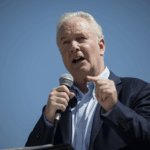
Sen. Bernie Sanders (I-VT) speaks next to New York City Mayor Zohran Mamdani during Mamdani's 100 Day Address in Maspeth, New York on April 12, 2026.


 Add JewishInsider on Google
Sen. Bernie Sanders (I-VT) is set to join a rally in New York City next Thursday with Mayor Zohran Mamdani and a trio of candidates he is backing in closely watched House races, The New York Times reports.
The event, which will be held five days before the June 23 primary at the Kings Theatre in Brooklyn, will lend a jolt of momentum to Mamdani’s preferred slate of far-left congressional candidates — including democratic socialists Claire Valdez and Darializa Avila Chevalier, and Brad Lander, a former New York City comptroller who also ran for mayor last election cycle.
Sanders, who is seen as a godfather of the modern left, most recently appeared with Mamdani in April at a rally to mark the mayor’s first 100 days in office. The Vermont independent also swore Mamdani in at his inauguration in January.
The senator’s decision to appear at the rally next week, however, is notable in part because he will be aiding Mamdani in his efforts to unseat two Democratic incumbents, Reps. Dan Goldman (D-NY) and Ariano Espaillat (D-NY), who have drawn backlash from the left over their support for Israel and ties to the pro-Israel group AIPAC, a chief source of criticism in the races.
Several House progressive leaders, prominently including Rep. Alexandria Ocasio-Cortez (D-NY), have remained neutral in the primaries to unseat Goldman, who is defending his seat against Lander, and Espaillat, who is facing Avila Chevalier. Polling has indicated Goldman is in serious trouble, with Espaillat bracing for a closer race than he and his allies had expected.
Sanders, one of the most vocal critics of Israel in the Senate, has not officially backed Chevalier, even though his appearance in his home borough of Brooklyn next week is all but tantamount to an endorsement. The anti-Israel activist, backed by the Democratic Socialists of America’s New York City chapter, has drawn scrutiny in recent days over past inflammatory online posts — including one accusing Sanders of promoting “liberal Zionism.”
Espaillat, a five-term congressman, has garnered support from some influential House progressives, including Reps. Greg Casar (D-TX), who chairs the Congressional Progressive Caucus, Pramila Jayapal (D-WA) and Maxwell Frost (D-FL).
Mamdani had reportedly promised to endorse Espaillat before he announced his support for Avila Chevalier late last month. He has continued to stand by her amid blowback over her old posts that are now featuring in attack ads.
Sanders has already endorsed Lander as well as Valdez, a DSA-backed state assemblymember now leaning into her opposition to Israel in campaign ads she has released during the closing stretch of her race against Antonio Reynoso, the Brooklyn borough president backed by retiring Rep. Nydia Velasquez (D-NY). Reynoso, a more traditional progressive, has described himself as an “underdog” in the primary, due to Mamdani’s high-profile support for Valdez.
Valdez shared a post on X Friday featuring a raised eyes emoji in response to news of the Sanders rally.
In a statement shared Friday with the Times, which cited sources familiar with the rally, Mamdani called the three primaries a “fight for the city we can afford” and “a Democratic Party driven by big ideas, not big money.”
Mamdani appeared alongside Chevalier, Lander and Valdez in a widely viewed TV ad that aired last week shortly after the Knicks had won the first game of the NBA finals.
Lander, who left the DSA over its promotion of an Oct. 8 Times Square rally celebrating Hamas’ terror attacks on Israel in 2023, insisted this week that his own appearance in the ad was not an endorsement of Avila Chevalier, who had joined that demonstration.
“I’m not supporting any other congressional candidates in New York City,” Lander told Jewish Insider, arguing that “different members of a team” he said was led by Mamdani “play different roles.”
His planned appearance with Avila Chevalier next week, however, is likely to draw further scrutiny to that explanation.
Lander did not respond to a request for comment about the rally.
Two DSA-backed challengers have a credible shot at winning seats, while Rep. Dan Goldman is down in polls against Brad Lander

Erik McGregor/LightRocket via Getty Images
NY Assemblymember Claire Valdez
As an emboldened socialist wing of the Democratic Party gains traction across New York City in the aftermath of Mayor Zohran Mamdani’s victory, Jewish leaders and moderate officials are bracing for the possibility of multiple upsets in key House races that could reshape the ideological orientation of the state’s congressional delegation.
Three races have drawn heightened attention in recent weeks, including a marquee House contest playing out largely in progressive Brooklyn where Rep. Dan Goldman (D-NY) is seeking to fend off a serious challenge from former New York City Comptroller Brad Lander. Meanwhile, in upper Manhattan and the Bronx, Rep. Adriano Espaillat (D-NY) is facing what looks like an increasingly credible challenge from an anti-Israel organizer. And in the race to replace retiring Rep. Nydia Velazquez (D-NY), her favored primary candidate is struggling to compete against a democratic socialist endorsed by Mamdani.
“If you have two socialists and Brad Lander” who are elected, “that’s a real move to the left — and it’s a lot of people who are bringing down the seniority of the congressional delegation,” said Chris Coffey, a New York City Democratic strategist not involved in the races. “That is probably the biggest shift we’ve seen at the congressional level in generations,” he told Jewish Insider, adding that there are “a lot of ifs baked into that.”
A recent public poll showing Goldman trailing badly behind Lander underscored how an emboldened far left is asserting itself in a race that is hinging in large part on the candidates’ differences over Israel. The independent survey, released last week by Emerson College, strongly indicated that Goldman is in serious trouble in the closely watched June 23 primary, lagging badly behind Lander, who held a commanding 57% of the vote.
Goldman, a pro-Israel Democrat who gained prominence as an outspoken critic of President Donald Trump, touts a relatively progressive record on domestic issues like healthcare, climate policy and immigration. But as he seeks a third term, Goldman has faced backlash from left-wing activists over his continued support for U.S. funding to Israel, which Lander, notably endorsed by Mamdani, has vowed to end, even for missile defense.
In a rare convergence on Middle East-related issues, the candidates opposed a successful effort this week to implement a boycott of Israeli products at a high-profile local food cooperative in the Park Slope neighborhood of Brooklyn, which sits in the district. (In a sign of the times, the boycott vote passed by a 2-to-1 margin.) But they otherwise disagreed on whether the measure was antisemitic, as Goldman and other Jewish community activists, including an influential rabbi in the district, had described the divisive effort.
Both Goldman and Lander are slated to address Jewish community concerns on June 7 during off-the-record town hall events at Congregation Beth Elohim, a Reform synagogue in Park Slope that is led by that rabbi, Rachel Timoner, according to an email recently sent to members. They will answer questions from congregants independently in the back-to-back, hour-long forums.
Despite tensions over Israel, some strategists note that Lander’s dominance in the progressive district covering sections of Brownstone Brooklyn and Lower Manhattan can be attributed to his standing as a popular former councilman and citywide elected official who also ran for mayor last cycle — a level of name ID that marks him as a sort of de facto incumbent.

But other races have also sharply demonstrated how anti-Israel sentiment is fueling the rise of candidates endorsed by the Democratic Socialists America’s New York City chapter. The group, which has championed anti-Zionism as a core element of its platform, is now backing challengers in two high-profile congressional primaries as well as some down-ballot races for seats in the state Legislature.
The closest race, for an open House seat spanning parts of Brooklyn and Queens, pits Claire Valdez, a democratic socialist assemblymember who is known for her anti-Israel activism, against Antonio Reynoso, the progressive Brooklyn borough president boasting establishment support from the outgoing incumbent, Velazquez, and the state attorney general, Letitia James, among other elected officials and groups.
But even as Reynoso entered the race in a favorable position, well-known to voters for his reputation as a more traditional progressive, he has struggled in his campaign to gain traction, recently calling himself an underdog, thanks to Valdez’s support from Mamdani paired with the grassroots organizational muscle of a resurgent DSA. A recent poll showed Valdez narrowly leading Reynoso by two points, with 23% of the vote, even while she is comparatively new to the district as a first-term state lawmaker.
Valdez’s favorable position has come as she has made opposition to Israel a primary focus of her campaign, while facing some scrutiny over her decision to sit for a friendly discussion earlier this month with a Twitch streamer who was once suspended from the platform for calling Jews a “demonic ethnicity.” Her campaign did not respond to a request for comment concerning the interview.
In a separate House primary in upper Manhattan as well as parts of the Bronx, Jewish leaders have begun to raise alarms about an insurgent challenger to Espaillat, a veteran incumbent who, like Goldman, is backed by the pro-Israel group AIPAC. In the final weeks of the race, he is now facing what Democratic strategists say is an increasingly serious threat from Darializa Avila Chevalier, a DSA-endorsed organizer who helped lead campus anti-Israel demonstrations at Columbia University.
“Folks seem to be getting very nervous,” one Jewish leader following the race told JI, echoing others who relayed similar concerns about the contest as it enters its closing stretch.
An internal campaign poll conducted in March, for instance, put Avila Chevalier at 28% among primary voters, with Espaillat at 42%, a poor showing for an incumbent who has held office for close to a decade. Political observers suggested the race could be closer as the primary nears and Avila Chevalier rides a wave of anti-establishment, leftist sentiment now shaping several races across the country where the DSA is involved.
In addition to backing an arms embargo on Israel and efforts to boycott the Jewish state, both Avila Chevalier and Valdez pledged to “refrain from any affiliation with the Israeli government and Zionist lobby groups, including but not limited to AIPAC, J Street, or DMFI,” according to DSA questionnaires reviewed by JI.
Justice Democrats, the far-left group that has frequently targeted incumbents, has also endorsed both candidates and is now spending to boost their campaigns. On Wednesday, it dropped $260,000 on ads to help boost Avila Chevalier — suggesting it sees the race as in play. The group also made its first foray into Valdez’s primary this week, according to filings, spending $11,000 on digital ads to prop up her bid.
Reynoso and Espaillat, meanwhile, can expect seven figures spent independently on their behalf in the coming weeks, a Democratic operative familiar with the matter told JI, but did not disclose the source of such funding.
The upcoming expenditures foreshadow what is shaping up to be a bitterly contested fight between the Democratic establishment and the far left now seeking to supplant it.
Still, there are signs that the far left is struggling to gain traction outside of deeply progressive districts. For example, Rep. Ritchie Torres (D-NY), a pro-Israel stalwart facing a challenge from former state lawmaker Michael Blake, who has made opposition to AIPAC a key part of his messaging, is expected to prevail. A recent poll showed Torres with a commanding 60% of the vote share, far outpacing Blake, who held just 15% in the Bronx-based district.
Torres’ position “shows that if you are actually working hard in your district and are there and present and delivering, then you should be OK,” Coffey, the Democratic strategist, told JI, noting that the congressman also developed a positive relationship with Mamdani, despite their disagreements on Middle East policy.
Hank Sheinkopf, a veteran Democratic strategist in New York City, characterized the DSA’s strategy as part of a “long-term plan” to “take over legislatures” across the country and influence foreign policy at the congressional level, as other far-left candidates have made inroads in key House races in Philadelphia and Denver. “New York is just the beginning,” he told JI.
There hasn’t been much incentive for party groups to set red lines against radicals looking to disrupt the party in lower-profile races

Spencer Platt/Getty Images
Members of the Democratic Socialists of America May 01, 2019 in New York City.
As the Democratic Party lurches left in the run-up to the midterms — and amid the rise of high-profile, far-left Senate candidates such as Graham Platner in Maine and Abdul El-Sayed in Michigan — candidates affiliated with the Democratic Socialists of America (DSA) have gradually been making inroads and positioning themselves to win nominations in several key House races.
This has happened without much protest or opposition from Democratic Party leadership. And given that the urban districts where the DSA-endorsed candidates have the most support are so heavily Democratic, there hasn’t been much incentive for party groups to set red lines against radicals looking to disrupt the party in these lower-profile races.
One of the most insidious aspects of the advocacy of many DSA chapters is the demand that its endorsees cut ties with any Jewish group that recognizes the State of Israel. Some chapters celebrated or justified Hamas’ Oct. 7 terror attacks against Israel.
“They are trying to do in America what [the Boycott, Divestment and Sanctions movement] seems to do internationally, which is to make being Jewish unacceptable in polite society,” Ron Halber, the CEO of the Jewish Community Relations Council of Greater Washington, recently said on a webinar of D.C-area Jewish leaders.
But despite the group’s radical views, DSA-endorsed candidates have a real shot at prevailing in several upcoming Democratic primaries in major cities.
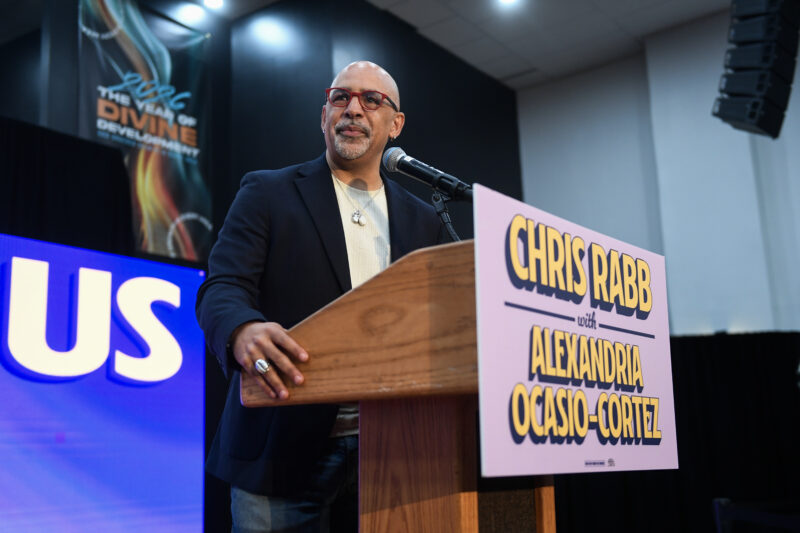
Pennsylvania state Rep. Chris Rabb, one of several Democrats looking to succeed retiring Rep. Dwight Evans (D-PA) in his Philadelphia district, has the notoriety of recirculating an Instagram post blaming the Bondi Beach terrorist attack that killed 14 Jewish Australians on “Zionists,” insinuating the terror attack was a false flag. (His campaign later blamed a former staffer for reposting the item.)
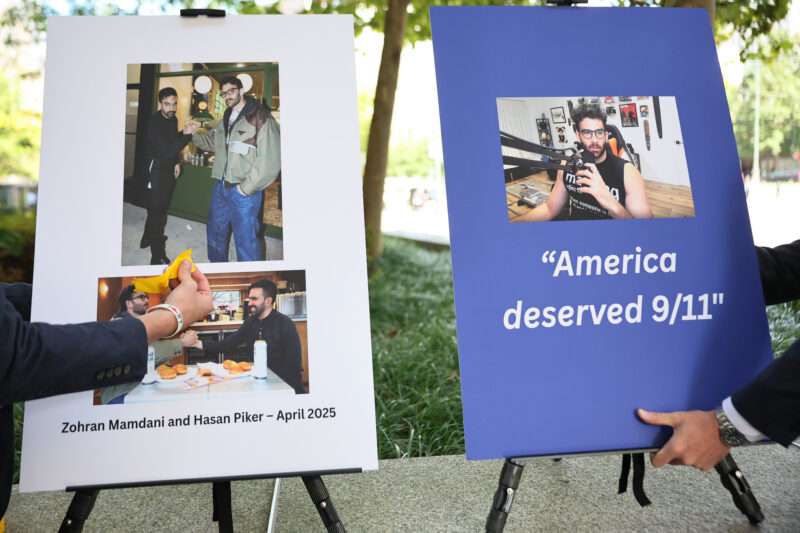
Rabb, who has been endorsed by many of the leading anti-Israel progressives in Congress, also recently campaigned with antisemitic streamer Hasan Piker. His far-left views and virulent criticism of Israel has alarmed Gov. Josh Shapiro, according to Axios, and the popular Pennsylvania governor has worked behind the scenes to oppose his campaign.
Democratic sources familiar with the primary, however, suggest that any behind-the-scenes efforts aren’t having much effect in derailing the DSA candidate’s campaign. Rabb’s two leading opponents — surgeon Ala Stanford and state Sen. Sharif Street — are both mainstream Democrats and may potentially split the more-moderate vote. The primary is on Tuesday.
Next month, a similar clash between the Democratic mainstream and socialist wing of the party is taking place in New York City, where state Assemblymember Claire Valdez, who is backed by Mayor Zohran Mamdani and New York’s DSA chapter, is squaring off against Brooklyn Borough President Antonio Reynoso, the progressive establishment’s favorite.
The race, in one of the most left-wing districts in the city, which covers part of Brooklyn and Queens, will mark a major test of Mamdani’s political capital — and whether the DSA brand is more compelling to progressives than the endorsement of Reynoso by retiring liberal stalwart Rep. Nydia Velazquez (D-NY).
Reynoso, in an interview with The New York Editorial Board, proclaimed himself the underdog in the race despite boasting endorsements from organized labor, the outgoing congresswoman, state Attorney General Letitia James and the left-wing Working Families Party line. “Zohran Mamdani is a celebrity-status, inspiring figure at the levels of AOC and Bernie Sanders. He is a movement and is deeply important,” Reynoso said.
Meanwhile, in Denver, another DSA hotbed, Rep. Diane DeGette (D-CO) faces a primary threat from DSA-backed challenger Melat Kiros, a 28-year-old attorney. Kiros has made criticism of Israel a centerpiece of her campaign, accusing Israel of genocide, and she supports an arms embargo against the Jewish state. Kiros dominated DeGette at a districtwide party convention filled with activists in March, and the congresswoman has been airing ads touting her progressive record, in anticipation of a competitive June primary.
And in St. Louis, the local DSA chapter is again backing former Rep. Cori Bush (D-MO), who was one of the most extreme anti-Israel lawmakers when serving in Congress, in her attempt at a comeback against Rep. Wesley Bell (D-MO).
(The other major contest featuring a DSA-endorsed contender is next month’s D.C. mayoral primary, where Jewish groups have been alarmed by Janeese Lewis George’s rhetoric around Israel and antisemitism.)
All told, there could be at least four Democratic Socialists of America-endorsed lawmakers in the next Congress, with limited party efforts to marginalize the extremists from within. It underscores how fast the Democratic Party is evolving, and how quickly the guardrails that kept the party centered — and largely free of antisemitism — are falling out of place.
The pro-Israel Democratic group warns that nominating far-left candidates will cost the party winnable seats against GOP incumbents

Daniel Knighton/Getty Images
City of San Diego Councilmember Marni von Wilpert rides in the Port of San Diego Holiday Bowl Parade on December 28, 2022 in San Diego, California.
As Democratic Majority for Israel prepares for the midterms amid growing divisions in the party over Middle East policy, the pro-Israel group is now focusing much of its energy on three under-the-radar House races for swing seats in California and Colorado that could be key to the party’s chances of reclaiming the majority in Congress.
In those primaries, DMFI’s political arm recently endorsed a trio of relatively moderate, pro-Israel Democrats facing opponents whom, the group feels, have demonstrated anti-Israel records or questionable positions on Middle East policy — qualities that could hamper their odds of winning Republican-held districts in the November election.
“These definitely rank high on our list of priorities,” Brian Romick, DMFI’s president and the chair of its super PAC, said in an interview with Jewish Insider on Tuesday. “These are all strong places where this matters.”
DMFI’s political arm is backing Marni von Wilpert, a San Diego councilwoman seeking the nomination in California’s 48th Congressional District; Jasmeet Bains, a California assemblywoman and a physician competing in the state’s 22nd District; and Shannon Bird, a former Colorado legislator running to unseat a vulnerable freshman Republican in the state’s 8th District. The nonpartisan Cook Political Report has ranked each of the races as “toss-ups” in its election forecast.
“We think all three of these candidates are strongly pro-Israel and have great relationships and records with the community,” Romick noted, calling them “the kind of candidates we need who can win both primaries and generals” and “hold these seats over the long term.”
DMFI’s efforts underscore how the organization is choosing to highlight consequential races in which the interests of Democratic Party leaders converge with its own, a notable alignment during a moment when Israel — and outside spending from pro-Israel groups — has emerged as one of the most polarizing sources of internal conflict in reliably blue districts.
One of DMFI’s “major goals” this cycle, Romick explained, is to “both elect pro-Israel candidates and help Democrats take back the House,” citing Republicans’ narrow three-seat majority as partly motivating its calculus. “If we win these three seats, then Democrats are in the majority with pro-Israel candidates.”
“I don’t think that anyone else is in that lane, and I think that’s an important distinction for us,” he told JI.
Romick declined to share if DMFI PAC plans to invest in the three primaries, following election cycles in which the group has spent heavily to help unseat vocally anti-Israel Democrats in deep blue House districts. “Possibly,” he hinted. “But I don’t want to show my hand.”
Here’s a rundown on the state of play in those races:
San Diego showdown
In California’s 48th District, redrawn last year to give Democrats an edge, von Wilpert is running in a crowded open primary to replace Rep. Darrell Issa (R-CA), who has long been a fixture in state and national politics. Her top opponent in the June race, Ammar Campa-Najjar, twice unsuccessfully competed for the seat in 2018 and 2020 — and is familiar to voters as a perennial candidate in a district covering the San Diego area.
Campa-Najjar outraised the field in the last quarter of 2025 and has claimed endorsements from a range of House members — including his girlfriend, Rep. Sara Jacobs (D-CA).
During his race against Issa in 2020, Campa-Najjar, who is of mixed Palestinian and Mexican-American descent, stressed support for Israel as an important strategic partner, broadly aligning with mainstream Democratic sentiment regarding Middle East policy. He said in a candidate questionnaire solicited by JI at the time, for instance, he believed the U.S. should maintain foreign aid to Israel.
In a statement to JI on Tuesday, Campa-Najjar said his “Middle East foreign policy remains consistent,” arguing that the “United States must help broker a lasting peace to end the bloodshed between Israelis and Palestinians.”
“As a new member of Congress, I’ll put forward a meaningful agenda for the day after that promotes a stable, secure, and prosperous future for both Israel and Palestine,” he continued. “That future is only possible with new leadership, with Palestinians no longer under Hamas rule and the Israelis no longer burdened by Netanyahu’s failures,” he added, in a reference to the right-wing Israeli prime minister.
Still, Romick echoed other critics of Campa-Najjar in noting that the candidate had previously changed his positions on key issues as part of a conservative makeover in his last election, raising questions over his commitment to upholding support for Israel as a lawmaker.
“He’s on record as anti-Trump. He’s on record as pro-Trump,” Romick said. “You never know what you’re going to get and that’s obviously dangerous when people shift a lot on Israel.”
Andrew Lachman, the political committee chair of California Jewish Democrats, said his organization reviewed questionnaires from both candidates and concluded that von Wilpert’s record in backing Jewish community causes was more substantive. The group gave von Wilpert a rating of “strong support” and is “neutral” on Campa-Najjar.
“Campa-Najjar seems interested in building a relationship with the Jewish community, but with respect to a record of resolutions and legislation to support the Jewish community, von Wilpert had a voting record and a record of supporting the Jewish community that was much more clearly defined,” he told JI.
For her part, von Wilpert said in a statement to JI that she “strongly” supports “Israel’s right to exist as a secure, Jewish democratic state and defend itself from the real threats it faces.”
“To me, ensuring Israel’s security and building peace for all in the region, including getting the two-state solution back on track, are inseparable, and U.S. leadership is indispensable to achieving both outcomes,” she added. “Only when a nation feels safe and secure, can it take the necessary steps to make peace.”
Both von Wilpert and Campa-Najjar are endorsed by J Street, the progressive Israel advocacy group.
Last week, Jim Desmond, a Republican member of the San Diego County Board of Supervisors, also filed to run for the seat that is now being vacated by Issa.
Under the newly drawn district lines, former Vice President Kamala Harris would have narrowly defeated President Donald Trump by three points.
Bakersfield battle
In a GOP-held district hours north of San Diego that includes part of Bakersfield, Bains is facing off against a progressive rival, school board trustee Randy Villegas, to challenge Rep. David Valadao (R-CA), who took office in 2021 but is now confronting a difficult national environment for Republicans. .
Villegas has gained endorsements from some of the most prominent Israel critics in Congress, including Sen. Bernie Sanders (I-VT) as well as Reps. Pramila Jayapal (D-WA) and Ro Khanna (D-CA), along with the virulently anti-Israel AIPAC Tracker, which said in a social media post that Villegas had signed on to a January 2024 letter pressing for “an immediate ceasefire in Gaza and to end the weaponization of antisemitism claims against Israel’s critics.”
“In Congress, Randy will fight to end the flow of unconditional military aid to Israel that fuels the ongoing genocide in Gaza and ethnic cleansing in the West Bank,” AIPAC Tracker said in its January endorsement. “He is ready to champion a foreign policy that centers human rights over militarism.”
Villegas’ campaign did not respond to a request for comment about his foreign policy views concerning Israel.
Speaking with JI, Romick characterized Villegas as “the most obvious” source of concern for pro-Israel Democrats among the three primaries that DMFI is now eyeing, referring in part to his early demand for a ceasefire just a few months after the Oct. 7 Hamas attacks. “He consistently has an anti-Israel record,” Romick said.
Lachman, meanwhile, said his group had not yet weighed in on the primary. “I do know that Bains has a reputation as a fighter for progressive values, but one who can build coalitions in order to sustain them,” he told JI. “Whereas, I don’t think Villegas is known for that.”
In a statement shared with JI on Tuesday, Bains said she believes “in Israel’s right to exist, defend itself and live in peace as a secure nation.”
“As a doctor,” she pledged, “my priority will always be protecting all human life and for that we must ensure advancing lasting peace. That’s why I believe a two-state solution is a necessary path forward to ensure long-term security and the dignity of people across the region.”
Valadao, for his part, is backed by AIPAC, which calls the congressman “a steadfast supporter of the U.S.-Israel alliance throughout his six terms representing the Golden State’s Central Valley.”
Colorado clash
Meanwhile, in a Colorado House race to take on Rep. Gabe Evans (R-CO), two Democrats are vying for their party’s nomination with differing records of public commentary on Israel as well as the rise of antisemitism.
Bird, who resigned from the Colorado legislature in January to focus on her congressional bid, has long been vocal in her support for Israel and opposition to antisemitism, which she recently called a “global cancer” after the terror attack targeting the Jewish community in Bondi Beach, Australia late last year.
During the war in Gaza, she frequently highlighted the plight of hostages on social media while issuing statements standing with Israel. “Lessons learned from history make clear that the world must stand with and protect Israel,” she wrote in one X post in 2024. Bird’s campaign did not return a request for comment from JI.
By contrast, her chief rival in the June primary, Manny Rutinel, a progressive state representative, has condemned recent instances of antisemitism — but does not appear to have clarified his stances on key issues regarding Israel.
While he has garnered endorsements from some pro-Israel House members such as Reps. Adriano Espaillat (D-NY) and Rob Menendez (D-NJ), his past record of activism has raised some concerns among pro-Israel Democrats who privately worry he will assume a hostile approach to Israel if he is elected. Republicans have indicated that they are eager to run against him in the general election.
As an undergraduate at the University of Florida, for example, Rutinel attended a demonstration in 2014 that was co-organized by Students for Justice in Palestine, the extreme anti-Israel group that has recently expressed alignment with Hamas, according to a local news story covering the event at the time.
The campus demonstration was “aimed to raise awareness for police brutality in Ferguson, Mo., and military oppression in Palestine,” the article noted.
In a statement to JI, however, a spokesperson for Rutinel said he “has never affiliated with Students for Justice in Palestine.”
“While in college at the time of the Ferguson protests, he attended a demonstration to protest police brutality in the United States,” the campaign spokesperson explained. “Manny supports Israel’s right to exist and supports a two-state solution with secure borders to bring peace.”
Rutinel also “supports U.S. security assistance to Israel in line with the Obama administration’s 2016 memorandum of understanding,” the spokesperson added, when asked about his views on conditioning aid to Israel, which has become a litmus test of sorts for left-wing candidates.
Evans, an Army veteran endorsed by AIPAC, has cited his service in the Middle East as motivating his staunch support for Israel and opposition to a nuclear Iran. The first-term congressman is viewed as one of the most vulnerable House Republicans seeking reelection in a district north of Denver.
State Sen. Laura Fine, former Rep. Melissa Bean and Cook County Commissioner Donna Miller are getting a big bump for their respective campaigns

State Sen. Laura Fine/Facebook
State Sen. Laura Fine
A pair of well-financed groups, whose origin is currently unknown, is set to begin running ads boosting moderate pro-Israel candidates in a series of open House seats in Chicago, each of whom is facing off against vocal anti-Israel opponents.
The ads — being run by newly formed super PACs Elect Chicago Women and Affordable Chicago Now — boost state Sen. Laura Fine, running in the 9th Congressional District, former Rep. Melissa Bean (D-IL), running in the 8th District and Cook County Commissioner Donna Miller, running in the 2nd District.
The ad buys for the two groups add up to millions of dollars across the three races.
Given that the groups were just launched, FEC filing policies will not require them to disclose their donors until close to Election Day. But the ads, which do not focus on Israel policy, are widely rumored to be connected to the United Democracy Project, the AIPAC-affiliated super PAC.
UDP did not immediately respond to a request for comment, and AIPAC has not made formal endorsements in any of the races in question.
Fine has established herself as a supporter of Israel during her campaign, and Bean had a pro-Israel record in office. Miller’s public record on the issue is less established.
A spokesperson for Evanston, Ill. Mayor Daniel Biss, running in the 9th, declared that ads were being run by “a right-wing dark money super PAC” and that Fine “is being propped up by Trump supporters, AIPAC donors, and right-wing super PACs.”
Biss has called for a ban on offensive weapons transfers to Israel and far-left influencer Kat Abughazaleh, another leading candidate in the race, has taken even stronger anti-Israel positions.
State Sen. Robert Peters, a 2nd District candidate who also strongly condemned Israel during the war in Gaza, posted a video earlier this week accusing “AIPAC and Trump donors” of “pouring cash” into Miller’s campaign, warning that “AIPAC and Trump allies” are “trying to buy this seat.”
One of Bean’s leading challengers in the 8th is Junaid Ahmed, who supports an arms embargo and an end to all military aid to Israel.
In several progressive-minded districts across the country, UDP has utilized similar pop-up groups and not disclosed its involvement until after Election Day.
The pro-Fine ad praises her record in office on issues like health insurance and gun control, as well as points to her support for a ban on Immigration and Customs Enforcement agents in Chicago. It calls her “the fighter we need to stop Donald Trump.”
ICE has become a major issue in the race, with both Biss and Abughazaleh attending anti-ICE demonstrations. Abughazaleh is under indictment for allegedly conspiring to injure ICE officers during a protest.
The pro-Bean ad highlights her support for the Affordable Care Act in her previous service in Congress, even though she “knew it might cost her an election,” and includes a photo of her with former President Barack Obama. It frames her new run for Congress as a continued effort to protect healthcare access from GOP attacks.
The pro-Miller ad highlights her work with Planned Parenthood and her work to protect pregnant mothers and combat domestic violence on the Cook County Commission. It also frames her as a fighter against President Donald Trump.
All three moderates — Fine, Miller and Bean — solidified their places as leading contenders in their respective races this week by leading in fundraising in the fourth quarter of 2025.
Fine also released an internal poll this week showing herself and Biss tied for the lead in her race, with Abughazaleh in third and other candidates trailing.
Bean is seen as the front-runner in her race, given her established record. Miller, in spite of her strong fundraising, could face headwinds running against former Rep. Jesse Jackson, Jr. (D-IL), who has strong local and institutional support but struggled to raise money last quarter.
Please log in if you already have a subscription, or subscribe to access the latest updates.
 Continue with Google

 Continue with Apple