










































































'Iran’s fundamental choice remains the same: negotiate from a weakening position or continue escalating against a president who has already shown that he is prepared to continue applying pressure,' former Trump administration Middle East envoy Jason Greenblatt told JI
ATTA KENARE / AFP via Getty Images
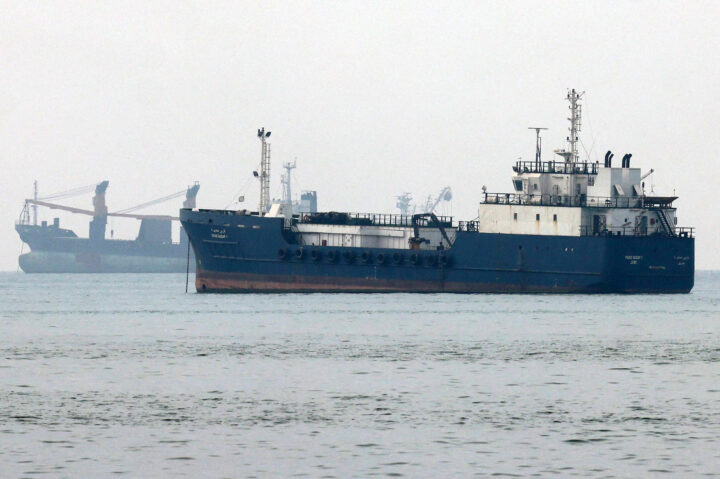
Vessels transit the Hormuz Strait off the coast of Iran's southern port city of Bandar Abbas on September 7, 2026.


 Add JewishInsider on Google
U.S. efforts to protect commercial shipping through the Strait of Hormuz have helped revive Persian Gulf oil exports and weaken Iran’s grip on the waterway, experts now acknowledge, but a debate is brewing over how durable those gains are, and whether Washington is willing to sustain the costly naval commitment that underpins them.
Persian Gulf crude exports rebounded to nearly 13 million barrels a day in September, approaching 72% to 80% of pre-war volumes as regional flows head back toward normal levels. According to maritime tracker Kpler, crude oil moving specifically through the Strait of Hormuz climbed to a wartime high average of 7.4 million barrels a day — supplemented by alternative pipeline and ship-to-ship routes — with an average of 17 to 19 tankers securely transiting the waterway daily under U.S. military protection.
U.S. military protection and the absence of confirmed Iranian attacks for nearly a week have helped commercial traffic increase, while Gulf exporters have also relied on ship-to-ship transfers in the Gulf of Oman and the United Arab Emirates’ Fujairah pipeline, which bypasses the Strait. In addition, Saudi Arabia resumed oil shipments from its Red Sea port of Yanbu after restarting the East-West pipeline, restoring a critical export route that allows the kingdom to bypass the Strait of Hormuz.
Analysts said that pressure could potentially increase Tehran’s incentive to ratchet up military tensions. In a video address on Tuesday, Israeli Prime Minister Benjamin Netanyahu said Israel had received “indications” that adversaries would try to attack the country ahead of its upcoming elections, slated for Oct. 27.
Ari Cicurel, associate director of foreign policy at the Jewish Institute for National Security of America, said the recent developments have challenged assumptions about how effectively Iran could use the strait to constrain international commerce.
“I think some in the foreign policy community underestimated the U.S. ability to break Iran’s effective hold over the strait, particularly the logistical capacity to sustain an alternative shipping route and protect commercial traffic,” Cicurel said. “Iran can impose costs on shipping, but the U.S. response has shown that the regime cannot translate those costs into a sustained blockade that preserves the same level of economic leverage as U.S. operations.”
The shift has reshaped Tehran’s relationship with the companies that depend on the waterway, Cicurel said, making it harder for Iran to dictate who can use the strait and on what terms. “The Navy’s blockade and protection of commercial shipping have shifted the cost of disrupting the strait onto Iran, which has lost most of its exports while its Gulf neighbors have increased their oil shipments,” he said. “Shippers now have a route through the strait that does not depend on Tehran’s permission” — eroding Iran’s leverage in negotiations.
But Cicurel said Iran can still attempt to influence decisions by creating enough uncertainty around the safety of the strait to deter companies from using it.
“Even with its leverage diminished, the Iranian regime has repeatedly withstood economic pressure by diverting money from the Iranian people to its military, and it will likely continue to do so to keep funding attacks as its revenue shrinks. Iran will likely keep launching calibrated attacks to extract as much of its remaining leverage as possible and to convince insurers and shipping companies the strait remains unsafe,” Cicurel said.
Jason Greenblatt, former White House Middle East envoy in the first Trump administration, similarly argued that U.S. efforts to reopen the strait were underestimated.
“As is often the case, much of the media, diplomatic community and foreign-policy establishment wrung their hands, predicted disaster, blamed President [Donald] Trump for the war and underestimated him and the enormous military and economic power of the United States,” Greenblatt said. “The conventional wisdom was that Iran’s leverage in the Strait of Hormuz could not be broken. President Trump demonstrated how that leverage can be eroded when Tehran is confronted with American military strength, relentless economic pressure and a president willing to use both.”
Greenblatt cautioned that the conflict is “far from over,” and warned that “complex and dangerous situations like this take time to resolve.”
“I expect Tehran will test the United States again,” he said. “But Iran’s fundamental choice remains the same: negotiate from a weakening position or continue escalating against a president who has already shown that he is prepared to continue applying pressure, regardless of the critics or the political calendar.”
Elliott Abrams, who served as Iran envoy during the first Trump administration and is now a senior fellow at the Council on Foreign Relations, said the U.S. Navy’s performance has exceeded some experts’ expectations.
Still, he said, “I do not expect a deal soon, before the U.S. elections, because that would be a gift to Trump — unless Trump is willing to accept terms that greatly advantage Iran, which I also don’t expect right now.”
Garrett Nada, a policy analyst at the Israel Policy Forum, however, asserted there was “little doubt” that the U.S. could effectively regain control of the strait. The harder question, he said, is whether the current approach can be maintained as the financial and operational costs accumulate.
Nada cited a Bloomberg report estimating that the U.S. naval blockade of Iran has costed $32.5 million per day, which he said captures only part of the resources Washington is committing to keeping commercial traffic moving.
“That estimate does not even include the additional operation costs of aerial and maritime drones, ships, manned aircraft, satellites, U.S. personnel and other U.S. assets used to guide and protect commercial traffic,” Nada said. “In the process, U.S. forces have come under Iranian attack, including from small boats, missiles, and drones. Two weeks ago, eight U.S. Marines were injured in a cruise missile attack, for example.”
That same report also outlined how Washington’s naval blockade has drained its global military power, decreasing available resources for deployment elsewhere in the world. Nada said the operation is also imposing costs on the private companies that have resumed using the waterway, creating another question about how long the current system can function.
“Aside from increased wait times for transit and more complicated travel arrangements, shippers have to pay higher crew compensation, charter rates, insurance and reinsurance premiums, and other operating expenses,” he added.
Even with those costs, Nada said the renewed traffic represents a meaningful strategic setback for Tehran because each vessel that successfully passes through the strait reduces Iran’s ability to use the waterway as leverage.
“The combination of sanctions and the blockade may be pushing Iran to try diplomacy with the U.S. again to secure its interests,” he said. “If diplomacy fails, however, Iran will be more likely to resort to military escalation as a way to restore some of its leverage.”
Matthew Levitt, a senior fellow at The Washington Institute for Near East Policy, similarly identified the durability of the U.S. commitment as the central unanswered question.
“The question is how long the United States will be willing to maintain the type of commitment necessary to enable oil flows at this level,” Levitt said. “This, even as customers have yet to feel economic relief at home and the price of diesel and other commodities like fertilizer remain sky high.”
Daniel Shapiro, the U.S. ambassador to Israel during the Obama administration and a senior fellow at the Atlantic Council, said the increased oil flows are “significant” but cautioned against viewing them as evidence that the broader economic consequences of the conflict have been resolved.
“The increased flow of oil through the Strait of Hormuz is significant. Combined with the blockade of Iranian ports and expanded sanctions, it is putting pressure on the Iranian economy and relieving some of the international economic fallout. But only some. Oil remains over $100 per barrel. Gas averages $4.50 per gallon. Diesel is at $6.50,” Shapiro said.
The recovery in oil traffic also masks continued disruptions elsewhere in the region, Shapiro said, with other commodities still struggling to reach global markets and attacks on alternative supply routes offsetting some of the gains through the strait.
“Few other commodities — natural gas, fertilizer, helium — are getting through the strait. And the Houthis offset some of the Hormuz gain by bombing the Saudi pipeline that was bringing 5 million barrels per day to the market via the Red Sea. Iran also has escalation options it has not activated yet,” Shapiro said.
Shapiro said the restored flows are a “limited tactical” achievement that do not resolve the underlying strategic problem. If the U.S. eventually reduces its presence, he said, Iran could again seek to assert control over the waterway.
“The limited tactical success of restoring some of the pre-war oil flow through the strait has come at enormous, and unsustainable, cost, and masks the lack of a strategy to keep Iran from ultimately reasserting its control over the strait when, inevitably, the U.S. scales down its operations,” Shapiro said. “The larger point is that the struggle for control of the Strait of Hormuz is a massive, costly undertaking made necessary by an ill-advised war. Will the U.S. Navy be called upon to maintain a blockade of Iranian ports and escort oil tankers … forever?”
“It has already put enormous strain on the Navy, pulled assets from elsewhere, and will leave us with delayed maintenance and disrupted deployment rotations for years to come,” he added.
Kristin Diwan, a senior resident scholar at the Arab Gulf States Institute, said alternative routes have been a key part of increased oil flows, but have not restored a fully reliable passageway through the region.
“U.S. and Gulf coordination on alternative routes and shuttle ships have increased the flow of oil and weakened Iran’s leverage in the Strait. But this is a daily battle that comes at some cost,” Diwan said. “The Iranians continue to strike ships involved in the transfer, preventing a consistent and reliable passage. And some products, most importantly diesel fuel and LNG, are more constrained and have few, if any, alternative routes.”
The pressure on Iran’s economy could nevertheless be creating an opening for diplomacy, Diwan said, as Tehran weighs whether to make concessions in exchange for an end to restrictions on its oil exports.
“The Iranians are contemplating compromise to end the ban on their oil exports which indicates that the economic blockade is beginning to bite. Still a ‘mini-deal,’ based on – but less than – the previous MOU agreement, appears to be a long-shot. Internal disagreement within the Iranian establishment and conflicting impulses from President Trump will be hard for Qatari mediators to overcome,” she said.
Meanwhile, Jonathan Ruhe, a fellow at JINSA, said the “real underestimation” was on the part of the Trump administration. He noted that while the oil is “flowing again,” Washington should have heeded presumptions that Tehran could potentially close the strait during the conflict.
“The real underestimation was the Trump administration’s failure to anticipate and preempt Iran’s initial efforts to threaten the strait. Extensive U.S. war plans built this exact scenario into their assumptions, but it was discounted,” Ruhe said. “The U.S. military, particularly the Navy, always had the ability to counter Iran’s unconventional maritime threats, but doing so became a lot harder once Iran dropped its first mines in the water and scared off commercial shipping with its opening drone strikes. Only recently have those mines, radars and other Iranian military assets been degraded, enabling the tough work of naval escorting to begin belatedly.”
Ruhe explained that while the flow of oil presents several diplomatic and economic benefits for the U.S. in its confrontation with Iran, he warned that Tehran’s leverage in talks may not shift.
“There are many diplomatic, economic, and operational benefits to getting oil flowing again. Yet it’s hard to imagine how any of this meaningfully changes Tehran’s negotiating posture,” Ruhe said. “Tellingly, Iran’s recent seven-day plan offered no concessions compared to the June MOU, when traffic through Hormuz was much lower. For all the military and economic pounding it has taken, the regime has been predictably stubborn in resisting Trump’s demands.”
“If the recent upsurge in Hormuz traffic proves sustainable, and if the U.S naval blockade on Iran remains effective, the regime could see diminishing downside in restarting attacks upstream from Hormuz, targeting the Arabian Gulf, commercial vessels, and energy sites with mines, drones, and missiles,” Ruhe continued. “Those strikes proved incredibly successful early in the war, and Iran currently has no reason to believe that’s no longer the case.”
Analysts say Iran and the U.S. remain too far apart on compensation demands and Washington's military posture in the region for a deal
AFPTV / AFP via Getty Images
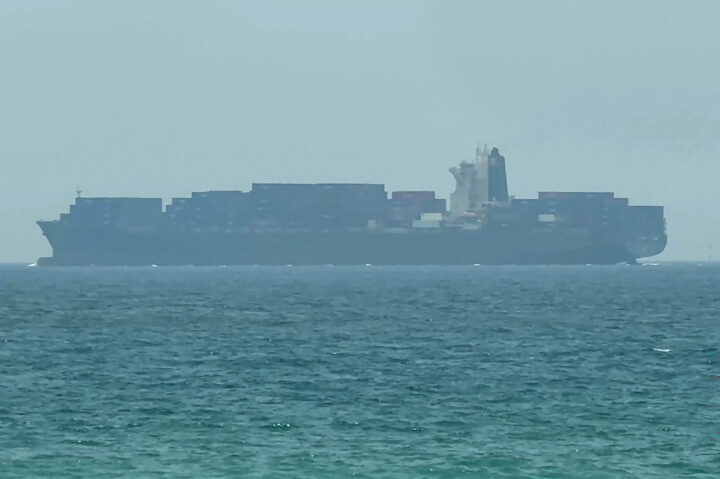
A cargo ship anchoring near the Strait of Hormuz off the eastern coast of the United Arab Emirates on July 12, 2026.
Talks to reopen the Strait of Hormuz appear unlikely to produce an agreement, analysts told Jewish Insider this week, with little sign that Washington and Tehran can bridge their competing demands over the waterway. The Trump administration is more likely to pursue continued economic pressure than return to military confrontation, the experts suggested — but that strategy may not be enough to force Tehran to back down.
Reports indicate that an agreement between Iran and Oman on managing traffic through the strait is imminent, but a final deal has failed to materialize despite days of negotiations. Mohsen Rezaei, secretary of Iran’s Supreme National Security Council, insisted on Tuesday that any agreement reached between the two countries is separate from Tehran’s broader closure of the waterway, which will only be lifted once the U.S. accedes to Tehran’s demands, including full compensation for its war costs.
Trump has also applied conditions of his own, stating the U.S. would also seek compensation from Iran for the current conflict as well as previous ones. Experts maintained to JI that a broader agreement between Washington and Tehran over the strait appears increasingly unlikely, with both sides seeking to preserve the leverage they have gained.
“Iran is unlikely to give up control of the strait anytime soon, having spent years threatening to choke the waterway and finally proving it can with relatively few cheap missiles and drones,” Ari Cicurel, associate director of foreign policy at the Jewish Institute for National Security of America, told JI. “The mere threat of attacks remains Iran’s best leverage after a war that gutted its economy, which is why its demands for reopening [the strait] center on Washington lifting the blockade and pulling back forces, the two things that give the United States its own leverage, leaving the two sides’ positions increasingly incompatible.”
Steven Cook, a senior fellow at the Council on Foreign Relations, said his “sense is that we are going to have a long and drawn-out contest of wills over the strait.”
“The president has toggled between threatening force, using force and negotiating. He seems to like the idea of economic pressure, but of course there is no way of knowing that the resulting economic pain will dislodge the regime,” he continued.
Michael Koplow, chief policy officer at the Israel Policy Forum, similarly noted the Trump administration is more likely to continue pursuing economic pressure than return to military hostilities, citing American munitions shortages, the war’s unpopularity with the public and Congress and the approaching midterm elections.
“Given the extreme unlikelihood of any successful negotiation between the U.S. and Iran, the two plausible scenarios are either a continuation of the status quo, or Trump using an Iran-Oman agreement on Hormuz to declare victory and extricate himself from the situation altogether,” Koplow said. “Trump’s preferred option is economic pressure … The economy has priced in the Hormuz closure, so if the U.S. keeps up economic pressure without returning to war, Trump can at least count on no drastic changes on inflation or public opinion, even if neither improves before the election.”
Elliott Abrams, who served as Iran envoy in the first Trump administration, said Washington has caused “great economic damage” to Iran by maintaining its blockade on oil exports, something he called “the right policy now.” He noted that Iran’s inflation rate “is just under 90 percent and it loses hundreds of millions of dollars a day in oil revenue.”
Cicurel cautioned, however, that economic pressure may not be enough to force Tehran to surrender its leverage over the strait, pointing to the Iranian regime’s history of passing along economic hardships to the country’s citizens while continuing to direct resources toward its military. He suggested Washington could instead seek to weaken Iran’s control over the strait by establishing “protected windows of time” for commercial vessels to transit and offering financial backing to shipping companies and insurers.
“The Iranian regime has long shown it can absorb immense economic pressure at the expense of the Iranian people while funneling resources into the military programs that have now handed it this leverage,” Cicurel said. “Neither economic pressure nor the limited tit-for-tat strikes over the past few weeks have changed Tehran’s calculus on leverage it waited years to gain.”
Additionally, Abrams indicated that the decision may not be entirely up to Trump should Tehran grow impatient under increased economic pressure.
“The problem for Trump is that Iran may decide not to allow him to sit and wait. It is a vicious and brutal tyranny, but the rulers know that they risk another uprising as the economy worsens. That may lead them to attack Gulf Arab states, Israel and U.S. bases again,” Abrams said. “At some point Trump will have to hit back. The decision to return to war is really in the Ayatollah’s hands right now.”
Cook also noted that the economic pressure strategy “has costs for Americans too.”
“So far, prices at the pump have generally been manageable, but that cannot go on forever,” Cook said. “Americans have also been helped by the fact that experts undercounted how much oil is in storage around the globe. That’s a good problem to have, but it doesn’t change the fact that less oil (and other products like fertilizers and aluminum) is flowing through the strait. At some point, the laws of economics are going to catch up with us.”
Reps. Brad Schneider and Craig Goldman raised ideas for how Congress could assist, including diversifying energy routes
Bill Clark/CQ Roll Call
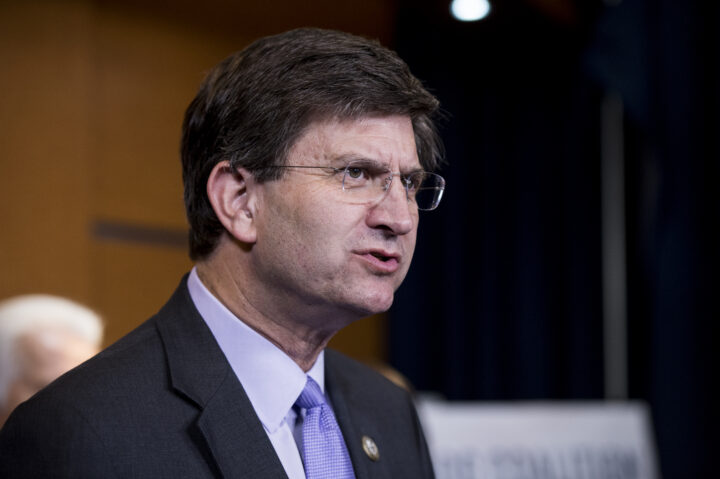
Rep. Brad Schneider (D-IL)
Reps. Brad Schneider (D-IL) and Craig Goldman (R-TX), co-chairs of the Abraham Accords Caucus, convened on Thursday with former U.S. Ambassador to Jordan Yael Lempert and Karen Young, a senior fellow at the Middle East Institute, to discuss the global energy crisis stemming from the closure of the Strait of Hormuz.
Schneider in a statement after the event, highlighted rising gas prices, utility bills and inflation as a result of the global developments.
“I teamed up with my Republican colleague Rep. Craig Goldman to talk through what Congress can do about it, including diversifying energy routes, deepening regional integration, and building a more interconnected and stable Middle East,” Schneider said.
Goldman told reporters after the event that “no one wants to be in this situation, I think everybody wants this conflict [with Iran] to end sooner rather than later. No one’s happy.” But he said that if the U.S. is able to bring stability and reformed leadership in Iran, it will have transformative effects for the region.
“With this more stabilized Iran, with a regime or leader in there who we can actually have a discussion with, negotiation with, when we see that the Iranian people have the freedoms that we enjoy over here in the United States, I think we will see more nations join the Abraham Accords,” Goldman said.
He said he had been told by representatives of other countries in the region that they would normalize relations with Israel “tomorrow” if they did not think it would produce backlash in the region. “It all starts with a stabilized Iran.”
Goldman acknowledged, however, that there remain competing power centers inside Iran, and that some remain unwilling to compromise.
“I think we’re at the point where no one can predict the future, but we certainly want a leader in Iran that we can negotiate with and deal with to bring stability to the region,” Goldman said.
Asked whether he sees ways for the U.S. and its partners to leverage the Abraham Accords to move products currently impacted by the closure of the Strait of Hormuz to global markets, Goldman deferred to the State Department.
Please log in if you already have a subscription, or subscribe to access the latest updates.
 Continue with Google

 Continue with Apple