













































































Plus, Rappaport's billion-shekel Big Mac

Chip Somodevilla/Getty Images
Then-U.S. President Barack Obama waves to reporters after returning to the White House on board Marine One September 3, 2015 in Washington, DC.


 Add JewishInsider on Google
Good Friday morning.
In today’s Daily Kickoff, we report on New York City Comptroller Mark Levine’s follow-up comments over the Israel bonds controversy and cover Brett McGurk’s comments at an Atlantic Council event last night, where he pushed back on arguments from some Biden administration colleagues that former President Joe Biden should have applied more pressure on Israel to end the war in Gaza. We report on an unannounced meeting between U.S. Ambassador to Israel Mike Huckabee and Yashar party leader Gadi Eisenkot, and cover comments by former President Barack Obama in Belfast, Northern Ireland, where he said Israel’s founding had unjustly taken land from Palestinians. Also in today’s Daily Kickoff: Jessica Tisch, Assaf Rappaport and Tal Naim.
Curated by Israel Editor Tamara Zieve and U.S. Editor Danielle Cohen-Kanik.
Today’s Agenda
Rep. Alexandria Ocasio-Cortez (D-NY) is joining Michigan Democratic Senate nominee Abdul El-Sayed for rallies today at Oakland University in Rochester, Mich., and Eastern Michigan University in Ypsilanti, along with a “Latinos for Abdul” event in Detroit, after they launched their joint bus tour across Michigan’s Upper Peninsula yesterday. The trip marks Ocasio-Cortez’s first campaign appearance for El-Sayed during the general election.
Jewish groups including the Jewish Democratic Council of America and Westchester Jewish Democrats will hold a door-knocking and canvassing event on Sunday for Cait Conley, the Democratic nominee for New York’s 17th Congressional District, as she seeks to unseat Rep. Mike Lawler (R-NY).
One Thing To Know
PREDECESSOR PROBLEMS
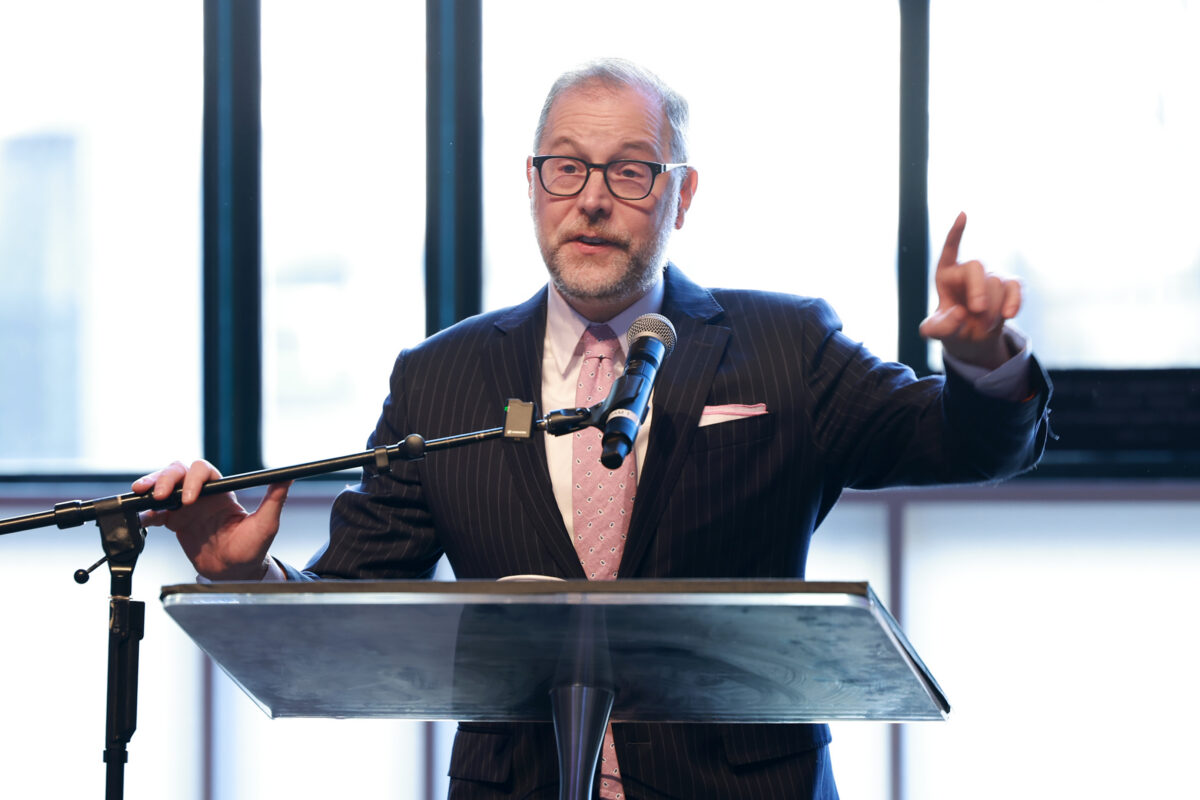
A day after New York City Comptroller Mark Levine sparked criticism by backing off a campaign promise to reinvest the city’s pension dollars in State of Israel bonds, mainstream Jewish groups rallied around the historically pro-Israel Democrat — though sources said they expect a change in his investment policy in the months ahead.
Levine, who ran on a vow to reverse his predecessor Brad Lander’s termination of the city’s half-century of investment in Israeli bonds, posted an extended statement to X on Thursday affirming his personal support for Israel and the city’s long-standing economic ties to the Jewish state. He noted that some $285 million in city pension funds, most of them outside of his direct management, remain invested in Israeli equities and firms.
Levine’s initial comments, made on Wednesday to The New York Times, about his decision not to reinvest in Israeli government securities emphasized regional and political instability as the basis for his decision. By contrast, his social media post stressed another reason — during his tenure, Lander had instituted policies over the pot of funds the comptroller directly controls to bar their investment in multiyear bonds of the sort Israel makes available to New York City to buy.
The Big Reads
DAYLIGHT DEBATE
Brett McGurk, a veteran national security official who has served in Republican and Democratic administrations, pushed back on Thursday against arguments from his Biden administration colleagues that former President Joe Biden should have applied more pressure on Israel to end the war in Gaza and secure the release of the hostages sooner, Jewish Insider’s Matthew Shea reports. Phillip Gordon, who served as national security advisor to then-Vice President Kamala Harris, argued that pressure on Jerusalem had worked and that “most” White House staff believed Biden should have taken an even tougher line against Israel. McGurk said at an Atlantic Council event about his book, Brink: Inside the Race to Free the October 7th Hostages, “If there was a shortcut, Joe Biden would have taken [it]. And if somebody could point to a key moment in which we would have been able to get a deal sooner, I’m open to that conversation. But I don’t think there was.”
MEETING MINUTES
U.S. Ambassador to Israel Mike Huckabee met quietly in recent days with Yashar party leader Gadi Eisenkot amid the final stretch of Israel’s high-stakes election campaign, Gili Cohen reports for Jewish Insider, the first known time U.S. officials have met with the former IDF chief of staff as a prime ministerial candidate, considered Israeli Prime Minister Benjamin Netanyahu’s chief rival in the contentious race. The meeting, according to a source familiar with the matter, focused on critical security concerns, including Gaza, West Bank escalation and rising settler violence. According to another source, the meeting went beyond formal diplomatic courtesy and served as a reconnaissance move by Washington to gauge Eisenkot’s regional outlook.
Poll projection: A Times of Israel poll published Thursday found that Eisenkot’s Yashar party has opened up a significant lead over Netanyahu’s Likud, though neither bloc is projected to win a 61-seat majority.
PRESIDENTIAL POV
Former President Barack Obama criticized Israel’s security policy as having “ceded moral ground” and said that Israel’s founding had unjustly taken land from Palestinians in remarks in Belfast, Northern Ireland, this week, Jewish Insider’s Marc Rod reports. At the same time, the former president also emphasized that both Israelis and Palestinians have a responsibility to change their approach in order to move toward peace. “The fact is that the Jewish people for millennia were oppressed, discriminated against, killed. Europe was responsible for much of that. They understandably sought a refuge in a place where they had historic ties. That is undeniable,” Obama said, according to transcripts and recordings of his remarks. “What is also undeniable is that they took the land of people and they were expelled. And those people, understandably, said, ‘This is an injustice, and I want my land back.’”
On the Oct. 7, 2023 attacks: “You could not have designed something that was less likely to produce meaningful change. In fact, it created the opposite,” Obama said.
The Rundown
TEXAS TALK
ON DEFENSE
NUCLEAR NEWS
MAINE EVENT
On Our Radar
● The Live Briefing. Word on the street, clips, podcasts and quick updates — the items we’re tracking all day in our Live Briefing on the app (on Apple and Android) and website.
President Donald Trump, asked in a Newsmax interview if he trusts Israeli Prime Minister Benjamin Netanyahu, responded, “I don’t trust anybody, honestly … in a world of politics, I don’t trust anybody.” Asked if he plans on being involved in Netanyahu’s reelection campaign, Trump said, “Well, they’d like me to be. Yeah, they’d like me to be. Look, I’ve had a very good relationship with him. We’ve had good success together”…
NYPD Commissioner Jessica Tisch received a standing ovation on Thursday at the Alfred E. Smith Memorial Foundation Dinner in Manhattan, where she accepted the “Happy Warrior” award and joked about the Democratic Socialists of America’s calls for Mayor Zohran Mamdani to fire her, while the mayor, seated one row below her on the dais, was met with scattered boos alongside cheers, The New York Times reports.
Also on the dais were Gov. Kathy Hochul, Senate Minority Leader Chuck Schumer (D-NY), New York Attorney General Letitia James, New England Patriots owner Robert Kraft and Tishman Speyer CEO Rob Speyer….
Democratic Senate candidates far outraised their Republican opponents in the third quarter across the most competitive races, Axios reports. James Talarico brought in $64 million in Texas to Ken Paxton’s $18 million, Abdul El-Sayed raised $30.7 million in Michigan to Mike Rogers’ $9.7 million, Troy Jackson pulled in $20.4 million in Maine to Sen. Susan Collins’ (R-ME) $5.2 million and Kansas pastor Adam Hamilton raised $11 million to Sen. Roger Marshall’s (R-KS) $800,000…
Politico talks to Rep. Haley Stevens (D-MI) about why she hasn’t campaigned alongside El-Sayed since endorsing him. “There’s changing dynamics, and there’s a new coalition that Abdul has built, and some people are a die-hard part of it, and some people are not. We’re seeing some constituent community pain coming out,” Stevens said…
The U.N. Security Council issued a statement on Thursday condemning the “escalatory” Houthi attacks against Saudi Arabia and affirming the Gulf kingdom’s “inherent right to self-defence in accordance with international law”…
The Treasury Department issued further sanctions against Iran’s financial networks on Thursday including against an Iraqi bank, Iranian offshore banks, exchange houses and financiers accused of helping Tehran access U.S. dollars and evade sanctions…
The Financial Times reports that the Trump administration is exploring options to ease restrictions on “shadow fleet” tankers linked to Russia and Iran in an attempt to lower fuel costs ahead of the midterm elections…
CNN reports that the U.S. military has drawn up potential strike plans for Iran that could include using the GBU-43/B “mother of all bombs” against energy infrastructure and nuclear sites if Trump orders renewed combat operations…
Secretary of State Marco Rubio spoke Thursday with Lebanese President Joseph Aoun following Beirut’s seizure of a shipment of explosives destined for Hezbollah, which Hezbollah lawmaker Hassan Fadlallah said were intended for use against Israeli forces…
The 10-year-old son of slain Hamas leader Yahya Sinwar wrote to his father that he wanted to “hold the Kalashnikov and shoot the Jews” when he grows up, accompanied by drawings of tanks, rifles and rockets, according to letters recovered by the IDF in Gaza and provided by the military to The Telegraph…
Netanyahu revealed on Thursday that he spoke with Syrian President Ahmad al-Sharaa last year after Israel bombed the Syrian Defense Ministry due to government forces targeting the Syrian Druze population…
Police arrested a teenager who had allegedly planned to carry out a mass shooting at a Hindu temple in suburban Chicago last weekend, officials said at a press conference on Thursday. Investigators found at the suspect’s home a rifle, loaded magazines, hundreds of rounds of ammunition and tactical gear, as well as items with Nazi symbols…
A Nazi-looted painting by Russian artist Wassily Kandinsky, which was returned to its heirs in 2023, sold for almost $42 million at an auction in London on Wednesday…
A Hamburg court sentenced two men to prison for plotting, on Iranian intelligence orders, to kill Jewish leaders in Germany including Josef Schuster, the president of the Central Council of Jews in Germany, and pro-Israel German politician Volker Beck…
The Jerusalem News Syndicate reports Paraguay announced that it will pursue full membership in the International Holocaust Remembrance Alliance and adopt its working definition of antisemitism…
Wiz co-founder Assaf Rappaport is poised to buy McDonald’s Israel franchise’s 230 branches for roughly 1 billion shekels ($320 million)…
Worthy Reads
Find more Worthy Reads in our Live Briefing via our app (on Apple and Android) and website.
The 61-Seat Problem: Suleiman Maswadeh, senior correspondent for Israel’s Channel 13, lays out in The Atlantic the math problem facing both Israeli Prime Minister Benjamin Netanyahu and the opposition ahead of the Oct. 27 election, with polls showing both blocs falling short of a 61-seat majority. “Most polls give the ‘change camp’ — shorthand for the anti-Netanyahu bloc, which stretches from the left to the nationalist right — no path to 61 without either the Haredi or the Arab parties. Its leaders face a choice: break a promise or risk failing to form a government, which would send Israel to yet another election. … Every major poll except those on Channel 14, the network that functions as Netanyahu’s house broadcaster, shows that his bloc cannot form a coalition either. … Netanyahu’s best scenario, Israeli analysts say, is a stalemate: No bloc reaches 61, and the country goes to another election. Netanyahu would then remain at the head of a caretaker government, in power without a new mandate.” [TheAtlantic]
Demand Better: In Newsweek, Ron Halber, CEO of the Jewish Community Relations Council of Greater Washington, and Joel Rubin, a former Obama administration deputy assistant secretary of state, lament that Jewish voters are being asked by both parties to overlook antisemitism from their own candidates, in the name of a greater electoral good. “Jewish voters are being told repeatedly in this election cycle to forgive and forget offensive comments and dangerous worldviews because the stakes are too high to do otherwise. As each party warns of an existential threat to the country if the other side wins, the common message to Jews is that we need to just keep our mouths closed and fall in line. We reject that deal. We reject the idea that hate speech should have a home in our political discourse. We reject the notion that acquiescing to discrimination is simply the price of admission to our political system. We reject the principle that ‘anything goes’ in pursuit of control of Congress.” [Newsweek]
Picture of the Day
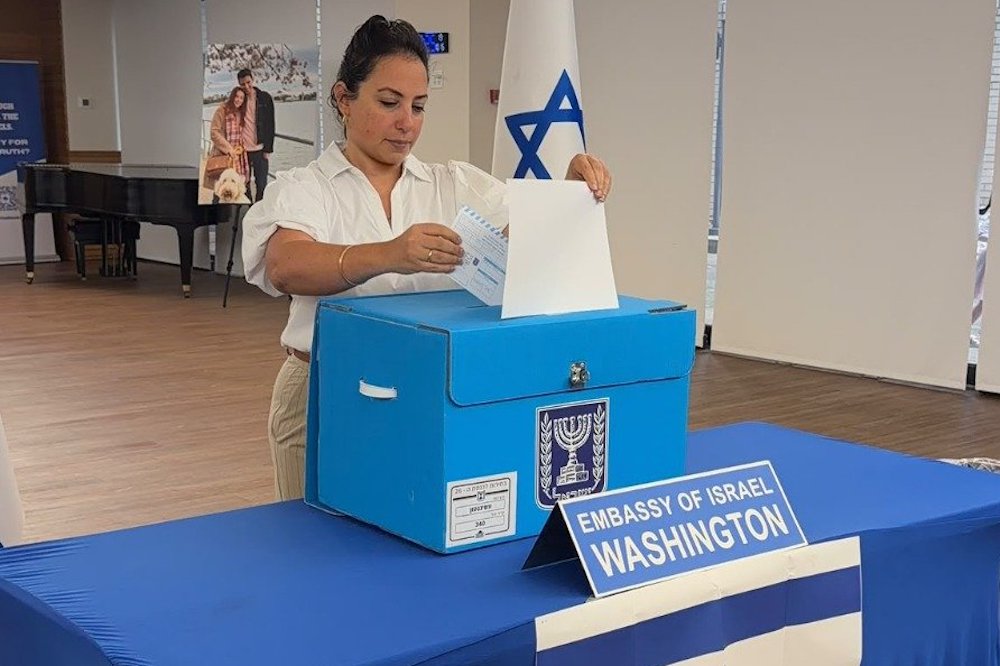
Tal Naim, spokesperson of the Israeli Embassy in Washington, cast her ballot on Thursday after early voting opened at Israeli diplomatic missions around the world ahead of the Oct. 27 elections. Tal Naim/X
Birthdays
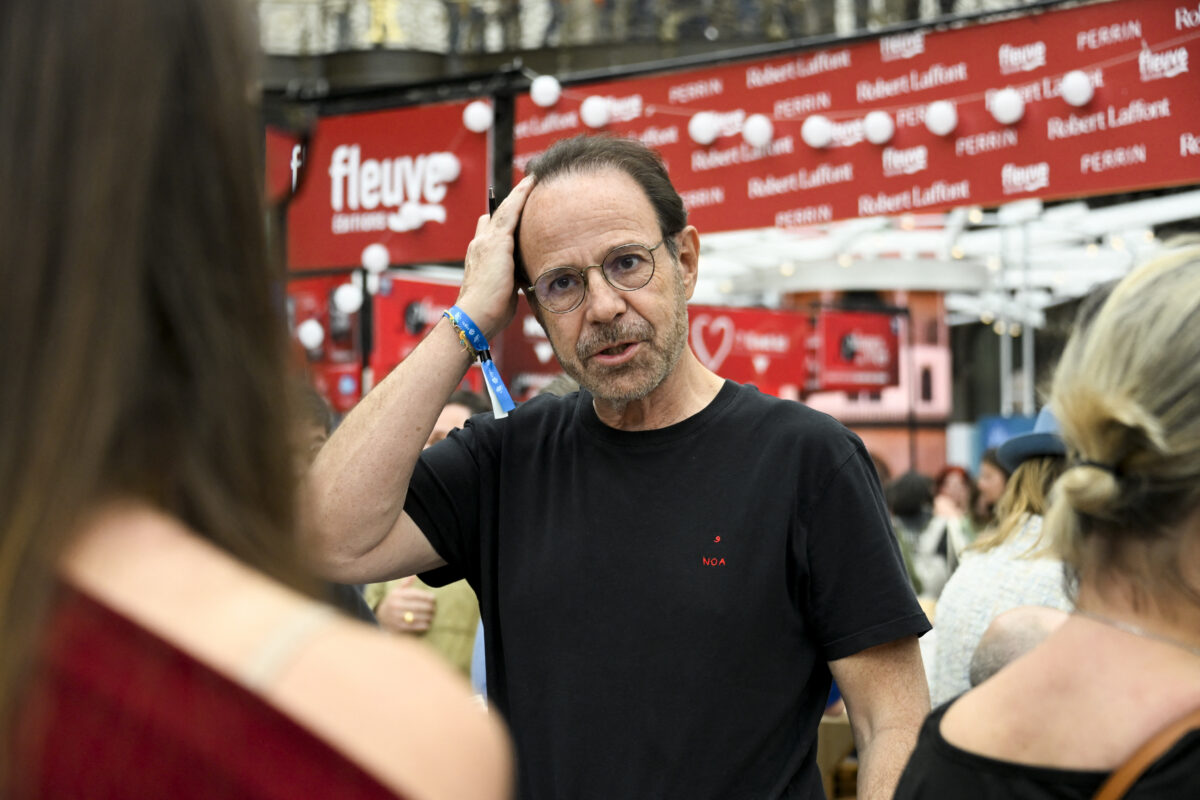
Marc Levy, best-selling French novelist, one of whose books was made into DreamWorks’ “Just Like Heaven,” turns 65 on Friday Magali Cohen/Hans Lucas/ AFP via Getty Images
FRIDAY
Shimon Mizrahi, Israeli attorney, chairman of Maccabi Tel Aviv Basketball, turns 87
Alfred Altschul, retired CFO of Amtrak, Midway Airlines and Airlines Reporting Corporation, turns 87
Morton A. Klein, national president of the Zionist Organization of America (ZOA), turns 79
David Zucker, film director, producer, screenwriter and creator of “The Naked Gun” franchise, turns 79
Andrew S. Zimbalist, professor emeritus of economics at Smith College and author of 28 books, turns 79
Marvin C. Feuer, vice president for strategy at AIPAC
Elinor Lipman, novelist, short story writer and essayist, turns 76
Shmuel Slavin, chairman of Sela Capital Real Estate Ltd., he previously served as the director-general of Israel’s Ministry of Finance, turns 73
Jeff Narod, executive director of Clark University Hillel
David Linsky, member of the Massachusetts House of Representatives since 1999, turns 69
Daniel Benjamin, president of the American Academy in Berlin, he was the coordinator for counterterrorism during the Obama administration, turns 65
Howard David Krein, otolaryngologist who also specializes in facial and reconstructive surgery, turns 60
Scott Tobin, senior advisor at Battery Ventures’ Israel’s office
Adam Fetterman, attorney in North Palm Beach, Fla., he served in the Florida House of Representatives, turns 56
Gil Kenan, filmmaker, best known for directing “Monster House” and “Ghostbusters: Frozen Empire,” turns 50
Kala Savage, actor best known for her television roles in “Undressed,” “Santa Barbara” and “8 Simple Rules,” turns 48
Sue Bird, retired basketball player for the Seattle Storm of the Women’s National Basketball Association, she has five Olympic gold medals, turns 46
Brandon Jared Perlman, founder and CEO at Social Studies, Inc., he is also the founder of The Gramlist
Boyd Melson, three-time U.S. Army light-middleweight boxing champion, he boxed with a Star of David on his trunks, turns 45
Jason Langsner, VP of data at The Atlantic
Margalit Rosenthal, West Coast regional director at Foundation for Jewish Camp
Avi Fink, SVP for financial planning and analysis at Vibrant Emotional Health
Devora Kaye, senior director of communications at Mark43
Sam Ginsberg, business analyst at LWF Group and project manager at Aqualinq
SATURDAY
Jody Gottfried Arnhold, chair emeritus of the board of directors of NYC’s 92NY, turns 83
Ronald Murray Gould, judge of the U.S. Court of Appeals for the 9th Circuit since 1999, turns 80
Michael L. Tolkin, filmmaker and novelist, turns 76
Robert Neil Chatigny, U.S. district judge for the District of Connecticut since 1994, he took senior status in 2017, turns 75
Lawrence Bender, movie and television producer, his films have won eight Academy Awards, turns 69
Peggy Futerman, Rochester, N.Y., resident
Jeffrey Shallit, number theorist and professor emeritus at the University of Waterloo in Ontario, Canada, turns 69
Ellyn Setnor Bogdanoff, shareholder in Becker & Poliakoff, she has been a member of both houses of the Florida Legislature, turns 67
Rabbi Mayer Twersky, rosh yeshiva at Yeshiva University, he is a son of Professor Isadore Twersky and a grandson of Rabbi Joseph B. Soloveitchik, he also serves as the rebbe of the Talne Hasidic dynasty, turns 66
Andrew Straus, Oakland, Calif.-based former Northwest regional director of J Street, turns 66
Jeremy C. Stein, professor of economics at Harvard, he served as a member of the Board of Governors of the Federal Reserve System, turns 66
Shemsi Prinzivalli, N.J.-based licensed professional counselor
Josh Newman, former member of the California State Senate, turns 62
Cliff Asness, hedge fund manager, he is the co-founder of AQR Capital Management, turns 60
David Halbfinger, Jerusalem bureau chief of The New York Times, turns 58
Michael Granoff, founder of Maniv Investments in 1997 and Maniv Mobility (Israel’s first venture capital fund dedicated exclusively to the new mobility future), turns 58
Martin Heinrich, U.S. senator (D-NM), turns 55
Kenneth Baer, CEO and founder of Crosscut Strategies, a D.C.-based public affairs firm
Shari B. Diamond, rheumatologist and director of the rehabilitation division of Arthritis and Rheumatism Associates in the D.C. area
Ariel Levy, author and staff writer at The New Yorker, turns 52
Michael Beckerman, head of public policy for the Americas at TikTok, turns 48
Jessica Goldin, CEO of Wellbel, turns 47
Nicholas Britell, Emmy Award-winning film and television music composer, turns 46
Tomer Kagan, chief strategy officer of Relationship Labs, turns 43
Katharine Nasielski, D.C.-based director of federal affairs for New York University
Caroline Mehl, co-founder and executive director at the Constructive Dialogue Institute
Dalya Attar, member of the Maryland State Senate following seven years in the House of Delegates, turns 36
Adam Greenspan, staff software engineer at Zocdoc
SUNDAY
Irwin M. Jacobs, co-founder and former chairman of Qualcomm, turns 93
Marius Job Cohen, former mayor of Amsterdam and leader of the Dutch Labour Party, turns 79
Victor A. Friedman, linguist, he is a professor emeritus at the University of Chicago, turns 77
Marc Ginsberg, former U.S. ambassador to Morocco, the first Jewish ambassador to an Arab country, he is president of the Coalition for a Safer Web, turns 76
Max S. Maizels, physician and political activist in Henrico County, Va., turns 76
Joshua B. Sinai, professor of practice in intelligence and global security studies at Capitol Technology University
Marc Widelock, Bakersfield, Calif.-based attorney focused on adoption and reproductive law
Chuck Lorre, television director, writer, producer, composer and actor, turns 74
Bob Weinstein, film producer and founder of Watch This Entertainment, turns 72
Jonathan Tasini, president of the Economic Future Group, a consulting firm, turns 70
Eugene Yelchin, award-winning illustrator and writer of books for children, turns 70
Gary Gensler, chair of the U.S. Securities and Exchange Commission during almost all of the Biden administration, turns 69
Leon Calvin Murray, retired NFL running back, he writes of his conversion in From Rose Bowl to Rashi: My Unique Journey to Judaism, turns 68
Ben Caspit, Israeli journalist, political commentator and author of two books critical of PM Benjamin Netanyahu, turns 66
Andrew Getraer, former longtime director at Rutgers Hillel, followed by a year at the Harvard Hillel, he is now an adjunct professor at Sy Syms School of Business
David Fisher, founder of Coalesce Advisors, he is a former president at Birthright Israel Foundation
Steven Phillip Weitzman, professor and director of Jewish studies at the University of Pennsylvania, turns 61
David M. Price, weather anchor for NBC 4 New York, turns 60
Rachel Nichols, former ESPN television host, sports reporter and anchor, turns 53
Amy Lynn Webb, CEO of Future Today Strategy Group, she is an adjunct professor of strategic foresight at NYU, turns 52
Maryna Asauliuk, fashion designer, stylist and art director, turns 46
Suzanne Gershowitz, SVP and COO at the American Enterprise Institute
Graham Moore, Academy Award-winning screenwriter and author, turns 45
Julia Ioffe, founding partner and Washington correspondent for Puck News, turns 44
Annie Karni, congressional correspondent for The New York Times
Ayal Kellman, support team leader at Moovit
Idan Yaniv, popular Israeli singer, turns 40
Emma Green, staff writer at The New Yorker
Zohran Kwame Mamdani, mayor of New York City, turns 35
Plus, NYC’s pension tension on Israel Bonds
In this photo illustration, the Wikipedia - the free encyclopedia - logo is seen displayed on a smartphone screen.
Good Thursday morning.
In today’s Daily Kickoff, we cover a new Anti-Defamation League report on what the group says is a failure on the part of Wikipedia to address a coordinated effort to inject anti-Israel content into the site, look at New York City Comptroller Mark Levine’s decision not to reinvest some of the city’s pension funds into Israel Bonds, and report on New Jersey congressional candidate Rebecca Bennett’s decision to campaign alongside a local mayor embroiled in an antisemitism lawsuit, even as her opponent has also appeared with the mayor. Also in today’s Daily Kickoff: Lebanese Ambassador Nada Hamadeh Moawad, Ronen Bar and Theo Baker.
Today’s Daily Kickoff was curated by JI Executive Editor Melissa Weiss, with assists from Tamara Zieve and Danielle Cohen-Kanik.
Today’s Agenda
The Atlantic Council is hosting a sit-down this afternoon with former Biden administration official Brett McGurk, a distinguished fellow with the council’s Middle East Programs, and The Washington Post’s David Ignatius to discuss McGurk’s new book, Brink: Inside the Race to Free the October 7th Hostages, which details his role in White House efforts to secure the release of Israeli hostages in Gaza.
Former Secretary of State Hillary Clinton is slated to deliver remarks this morning at the Hillary Rodham Clinton Awards at Georgetown University, which will honor Indian social worker Reema Nanavaty, designer Tory Burch and Bangladeshi economist and Nobel Peace Prize laureate Muhammad Yunus.
In Baku, Azerbaijan, the seventh Summit of the Conference on Interaction and Confidence-Building Measures in Asia kicks off today after a day of preparatory meetings on Wednesday.
As Israeli President Isaac Herzog, who held a rare meeting with Bahrain’s foreign minister in Baku yesterday, took the stage earlier today, representatives from Turkey, Kuwait, Iran and Pakistan appeared to leave the room, while the delegations from the United Arab Emirates and Bahrain stayed for the speech. The emir of Qatar, with whom Herzog first shook hands at COP28 in Dubai in late 2023, also stayed in the room for Herzog’s address.
One Thing To Know
EDIT WARS

By Haley Cohen
A year after the Anti-Defamation League exposed what it described as a coordinated campaign to inject antisemitic and anti-Israel narratives into Wikipedia entries, 91% of one banned editor’s contributions to six prominent articles on issues related to Israel remain in the live text, according to a new report.
The report, released Thursday by the ADL Center for Technology and Society, found that Wikipedia has failed to systematically review or correct edits to pages on Hamas, Zionism, the Oct. 7, 2023, terrorist attacks and Israel’s war in Gaza, even after banning editors involved in the alleged campaign.
The ADL’s analysis focuses specifically on activity involving articles about Israel, Jewish history and the Israeli-Palestinian conflict. It found that while coordinated editing activity declined by about 95% since last year, 11 new editors continue to shape articles on Israel and the Palestinians, warning that the disputed content can also influence search results and AI-generated responses.
The Big Reads
pension politics
New York City Comptroller Mark Levine came under fire on Wednesday after he revealed to The New York Times that he would reverse course on a long-standing pledge to reinvest municipal pension dollars in State of Israel bonds — criticism that came even from a predecessor in the role, Scott Stringer, Jewish Insider’s Will Bredderman reports. Speaking to the Times, Levine stressed his continued personal relationship with and support for the Jewish state, and maintained his decision not to purchase the bonds was based solely on “technical challenges” and “financial considerations.” In a statement to JI, his office explicitly echoed a recent analysis by the ratings agency Fitch that cited upcoming Israeli elections as a stability risk, and further pointed to growing state debt and the possibility of additional military clashes with Iran or Hezbollah.
Empire state feud: New York City Mayor Zohran Mamdani sharply criticized Nassau County Executive Bruce Blakeman — the GOP candidate for New York governor — on Wednesday, calling the Republican’s assertions that he would not protect Hasidic communities from arson and sexual violence “directly racist.”
sharing a stage
New Jersey Democratic House candidate Rebecca Bennett campaigned this week alongside Linden, N.J., Mayor Derek Armstead, a Democrat who has been accused of antisemitic discrimination in an ongoing lawsuit, at an event that also featured House Minority Leader Hakeem Jeffries (D-NY), Jewish Insider’s Marc Rod reports. But her opponent, Rep. Tom Kean Jr. (R-NJ), has also been photographed alongside Armstead on multiple occasions, including at least once since the lawsuit containing the antisemitism allegations was filed, at an event related to an energy and chemical manufacturing facility in Linden that appears to have been organized by a third party.
in their memory
Secretary of State Marco Rubio, Secretary of Commerce Howard Lutnick and his wife, Allison, CENTCOM Commander Adm. Brad Cooper, State Department antisemitism envoy Rabbi Yehuda Kaploun and other administration officials joined the families of former hostages and victims of the Oct. 7, 2023, Hamas attacks on Israel for a commemoration event on Wednesday at the State Department, Jewish Insider’s Marc Rod reports. Rubio and Lutnick played a central role in organizing the event to honor the 46 Americans killed in the Oct. 7 attacks, following advocacy by Ruby Chen — father of Itay Chen, an American who served in the IDF and was killed on Oct. 7 — and other bereaved families, several of whom delivered remarks. Others in attendance included Director of National Intelligence Jay Clayton, Sen. Bill Hagerty (R-TN) and Seb Gorka, the senior director of counterterrorism at the National Security Council.
Seeking answers: Families of Americans killed in the Oct. 7, 2023, Hamas terrorist attacks on Israel said a State Department memorial event honoring their loved ones offered a meaningful recognition of their loss, with some calling on the U.S. government to take further action and investigate the attacks, JI’s Matthew Shea reports.
The Rundown
reggio regrets
booking bias
DRAWING A LINE
veep’s view
platform check
On Our Radar
● The Live Briefing. Word on the street, clips, podcasts and quick updates — the items we’re tracking all day in our Live Briefing on the app (on Apple and Android) and website.
The U.S. criticized a legal complaint filed in Lebanon against Beirut’s ambassador in Washington, Nada Hamadeh Moawad, over her outreach to Israeli Ambassador to the U.S. Yechiel Leiter after Leiter’s son was critically injured in a terror attack.
The State Department is reportedly considering sanctions on the Lebanese judges involved in the legal complaint, which the Trump administration suggested was an effort by Hezbollah-linked government actors to undermine the ongoing U.S.-brokered talks between Israel and Lebanon.…
Shipping authorities said two cargo ships were sunk in the Strait of Hormuz this week; Ali Ozmaei, the naval commander of Iran’s Islamic Revolutionary Guard Corps, reportedly claimed on Wednesday that Tehran was “counting the moments” until it could strike U.S. warships…
Russian Foreign Minister Sergey Lavrov and Chinese Foreign Minister Wang Yi held talks ahead of the CICA summit in Baku, Azerbaijan; the two discussed, among other issues, bilateral cooperation as well as Iran…
The Iran-backed Houthis in Yemen said on Wednesday they planned to continue their attacks on Saudi Arabia, a day after striking and causing significant damage to Saudi Aramco’s headquarters…
The Wall Street Journal reports that a federal investigation into Rep. Ilhan Omar (D-MN) is part of an effort by the Trump administration to strip the congresswoman of her citizenship and ultimately deport her to her native Somalia; the investigation focuses in part on the validity of the date of birth on her citizenship application…
Speaking in Belfast, Northern Ireland, former President Barack Obama suggested that Israel has “ceded moral ground” through its actions in the Middle East…
Abdul El-Sayed, the Michigan Democratic Senate nominee, told NBC News that his half-sister’s social media posts suggesting that their relatives, including for a time their mother, were members of the Muslim Brotherhood amounted to “hearsay,” days after he told NBC’s “Meet the Press” that neither he nor members of his family had ties to the group…
A former grant administrator at Harvard’s School of Public Health is suing the university, claiming that he was fired weeks into starting a new position, after he had requested time off for Rosh Hashanah…
The OpenAI employee arrested after a recording device was found in an executive conference at the AI company’s headquarters had a one-way ticket back to his native Saudi Arabia at the time of his arrest…
Robert Kraft and the Kraft family donated $5 million for naming rights to the Chabad at Chestnut Mill (Ma.) which will now be called the Kraft Family Chabad at Chestnut Hill…
A South Jersey deli is facing a $1,000 fine from the state for using the terms “Jewish” and “kosher-style” in its marketing, despite serving non-kosher items…
Jewish members of the U.K.’s Green Party are planning to sue the party for discrimination over its recent passage of a measure declaring Zionism to be a form of racism…
The technocratic committee tasked with governing Gaza and Germany’s state-run GIZ development agency signed a memorandum of understanding establishing a framework for technical cooperation on Gaza’s recovery and reconstruction; the agreement covers economic recovery, municipal services, education, employment, water, agriculture and energy, with GIZ providing technical expertise, needs assessments and capacity-building support…
Former Shin Bet chief Ronen Bar filed a NIS 3 million ($970,000) defamation suit against Israeli Prime Minister Benjamin Netanyahu over the prime minister’s claims that Bar knew of the Hamas threat on the night of Oct. 7, 2023, but decided not to alert him…
A new report from the University of Toronto’s digital watchdog group found that two Israeli firms installed spyware on dozens of computers at Al Jazeera..
Irish novelist Sally Rooney said that she is no longer permitted to sell her books in the U.K., owing to her public support for Palestine Action, which was outlawed by the British government last year…
Theo Baker, who as a Stanford student authored How to Rule the World: An Education in Power at Stanford University, is joining the San Francisco Standard as the outlet’s senior Silicon Valley reporter; read our May 2026 interview with Baker here…
Worthy Reads
Find more Worthy Reads in our Live Briefing via our app (on Apple and Android) and website.
Terminal Blow: In The Washington Post, Jim Geraghty warns of the rise of drone warfare targeting airports, following strikes on Saudi Arabia’s King Khalid International Airport over the weekend in which more than a dozen people were killed. “If you’re looking to terrorize people, a drone attack on a major international airport is an effective tool. … Of course, blowing up an airport terminal doesn’t weaken a target country militarily. But the Houthis and Iranians are less interested in that objective. They are convinced that enough civilian casualties will force opposing governments to say ‘uncle’ and agree to their terms.” [WashPost]
Paying a Price: The Wall Street Journal’s Barton Swaim looks at the pressure Democrats are facing from their left to take an increasingly critical approach to Israel. “The choice that Democratic leaders seem increasingly inclined to make — aligning themselves with the international left on Israel — will offer short-term relief but create hellish problems that have nothing to do with the American Israel Public Affairs Committee. The ‘anti-Zionist’ academics, activists, influencers and troublemakers Democrats wish to gather into a winning coalition despise democratic politics and loathe the whole idea of a coalition.” [WSJ]
Continental Concern: The Telegraph‘s Con Coughlin posits that European inaction on Houthi attacks on Saudi Arabia will lead to deeper problems for the continent in the longer term. “The West’s reluctance to provide the Saudis with tangible support is short-sighted, especially for the European leaders who need to understand that the Houthis’ decision to escalate their attacks against the kingdom is as much a problem for Europe as it is the Saudis themselves. … [U.K. Prime Minister Andy] Burnham and his fellow European leaders need to understand that, by failing to confront foes who threaten their countries’ interests, they are demonstrating a level of weakness that their enemies will be only too eager to exploit.” [TheTelegraph]
Picture of the Day

Colombian Foreign Minister Omar Bula Escobar (center) and Israeli Foreign Minister Gideon Sa’ar (second from right) participated in a ribbon-cutting ceremony on Wednesday at the opening of Colombia’s Embassy in Jerusalem, which comes months after a conservative government led by Abelardo de la Espriella came to power in Bogota. During Escobar’s visit, he reinstated a free-trade agreement between the countries that had been terminated by the previous Colombian government. Rafi Ben Hakoon/GPO
Birthdays
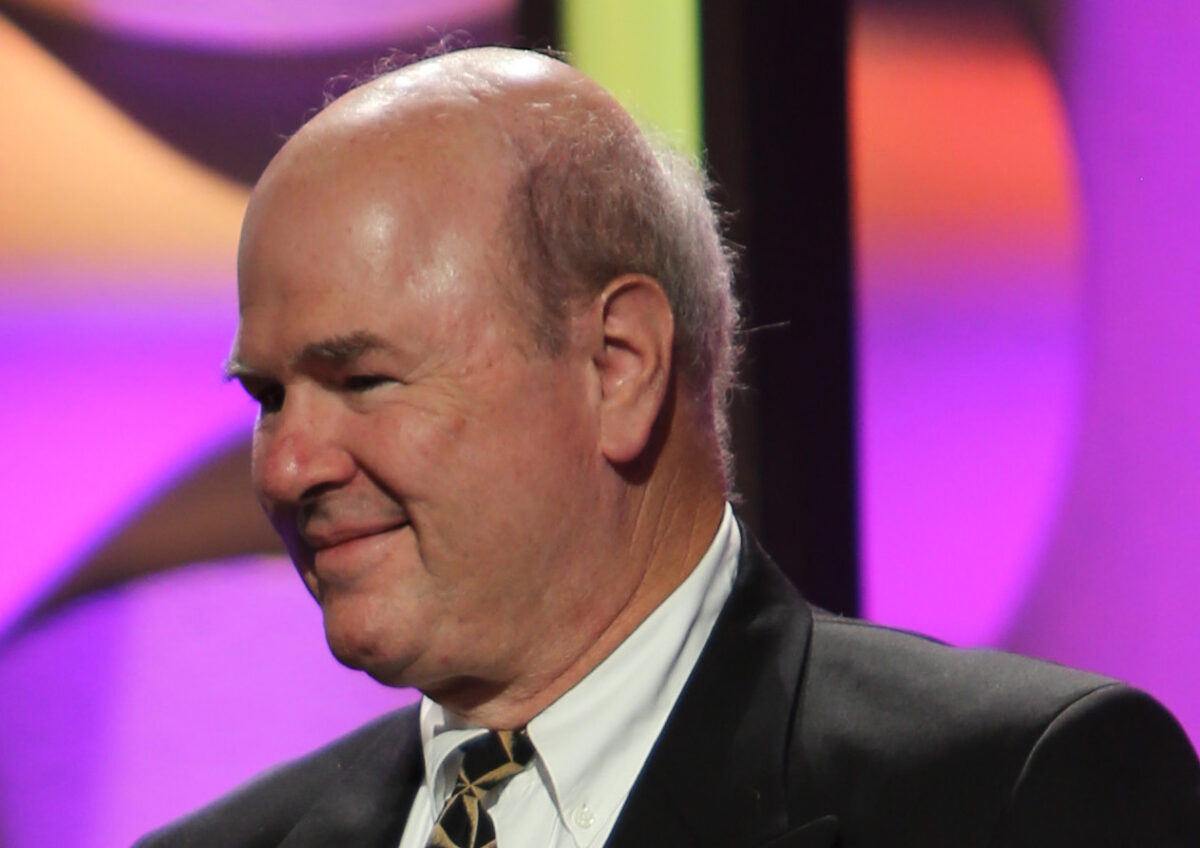
Lawrence John Miller, comedian, actor, podcaster and columnist, turns 73
Jack Newman, retired from the Los Angeles County Superior Court in 1996, he is a mediator and arbitrator, turns 87
Rabbi Yochanan Zweig, founder and dean of the Talmudic University of Florida in Miami Beach, Fla., turns 84
Haim Saban, media mogul, major donor to the Democratic Party and producer of “Power Rangers,” turns 82
Barbara Corday, television executive, writer and producer known for co-creating “Cagney & Lacey,” turns 82
Alan D. Bersin, senior advisor at Covington & Burling, he was commissioner of U.S. Customs and Border Protection during the Obama administration, turns 80
Mindy Hersh, Miami-based mental health counselor and senior executive producer of the My Survivor Film Project
Alain Cohen, owner of Los Angeles-based Got Kosher? Bakery, turns 71
Yossi Shelley, Israeli ambassador to the United Arab Emirates, turns 69
Darrell Steven Steinberg, former mayor of Sacramento, Calif., turns 67
Neil Kugelman, founder and CEO of Refinement Services, a provider of software for precious-metal redemption retailers
Mitchell “Moyshe” Allen Silk, former U.S. Treasury official, he is reported to have been the first Hasidic Jew to hold a Senate-confirmed administration position, turns 65
Andrew Fawer, founding partner of Equalitas Capital and managing director at Allegiant Real Estate Capital
Shai Franklin, director of national government relations at Gotham Government Relations & Communications, turns 61
Kenneth C. Griffin, founder and chief executive of the global investment firm Citadel, turns 58
Stu Loeser, press secretary to former New York City Mayor Michael Bloomberg, now a political communications strategist, turns 53
Wes Moore, governor of Maryland since 2023, turns 48
Melissa Batya Cohen Biden, documentary filmmaker, she is married to Hunter Biden, turns 40
Jesse Levine, director of racquet sports at Shell Bay in Boca Raton, Fla., and former professional tennis player, turns 39
Elizabeth Kenigsberg, managing director at SKDKnickerbocker
Mitch Glasser, second baseman on Israel’s National Baseball Team from 2017 to 2021, turns 37
Heiko Stoiber, director of strategic initiatives at the Modern Art Museum in Shanghai
Plus, a Brooklyn pol blames the ‘Zionists’
Tayfun Coskun/Anadolu via Getty Images
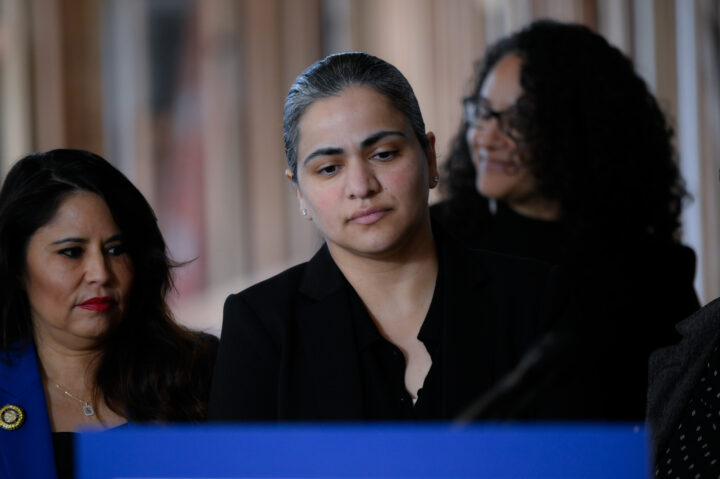
California state Sen. Aisha Wahab attends a press conference in Hayward, Calif., on March 2, 2026.
Good Tuesday morning.
In today’s Daily Kickoff, we preview today’s primaries in Florida and a special election runoff in California, report on comments by Brooklyn Democratic official Carmella Charrington accusing “Zionists” of being behind a personal property dispute and cover yesterday’s meeting between Jared Kushner and Israeli Prime Minister Benjamin Netanyahu. Also in today’s Daily Kickoff: Justin Ishbia, Ariel Levy and Stefan Zweig.
Curated by JI Executive Editor Melissa Weiss, with an assist from Danielle Cohen-Kanik and Marc Rod.
Today’s Agenda
It’s primary day in Florida. We’ll be watching a number of races around the Sunshine State, including the Democratic primaries in South Florida, where Reps. Debbie Wasserman Schultz, Jared Moskowitz and Lois Frankel are facing challenges from their left.
We’ll also be awaiting the results of the state’s GOP primaries, where fringe elements of the party, including gubernatorial candidate James Fishback and congressional candidate Dan Bilzerian, are mounting bids that are unlikely to succeed but will be instructive as to the extent of the far-right’s reach in the state. More below.
In California, voters in the state’s 14th Congressional District will cast their ballots in the special election runoff between state Sen. Aisha Wahab and former Dublin, Calif., Mayor Melissa Hernandez to succeed former Rep. Eric Swalwell (D-CA) — a race in which the United Democracy Project has invested heavily. More below.
King Abdullah II of Jordan is kicking off a weeklong visit to China today, where he’s slated to meet with President Xi Jinping in Beijing and travel to Shanghai and Shenzhen.
In New York, the two-day Sephardic Rabbinic Conference wraps up this afternoon. Ofir Akunis, Israel’s consul general in New York, is slated to address the gathering today.
One Thing To Know
By Matthew Kassel
As primary election season comes to an end, AIPAC is closing out its involvement in a dramatic cycle with an unexpected foray into a low-profile California House race on Tuesday where Israel has not been among the top issues.
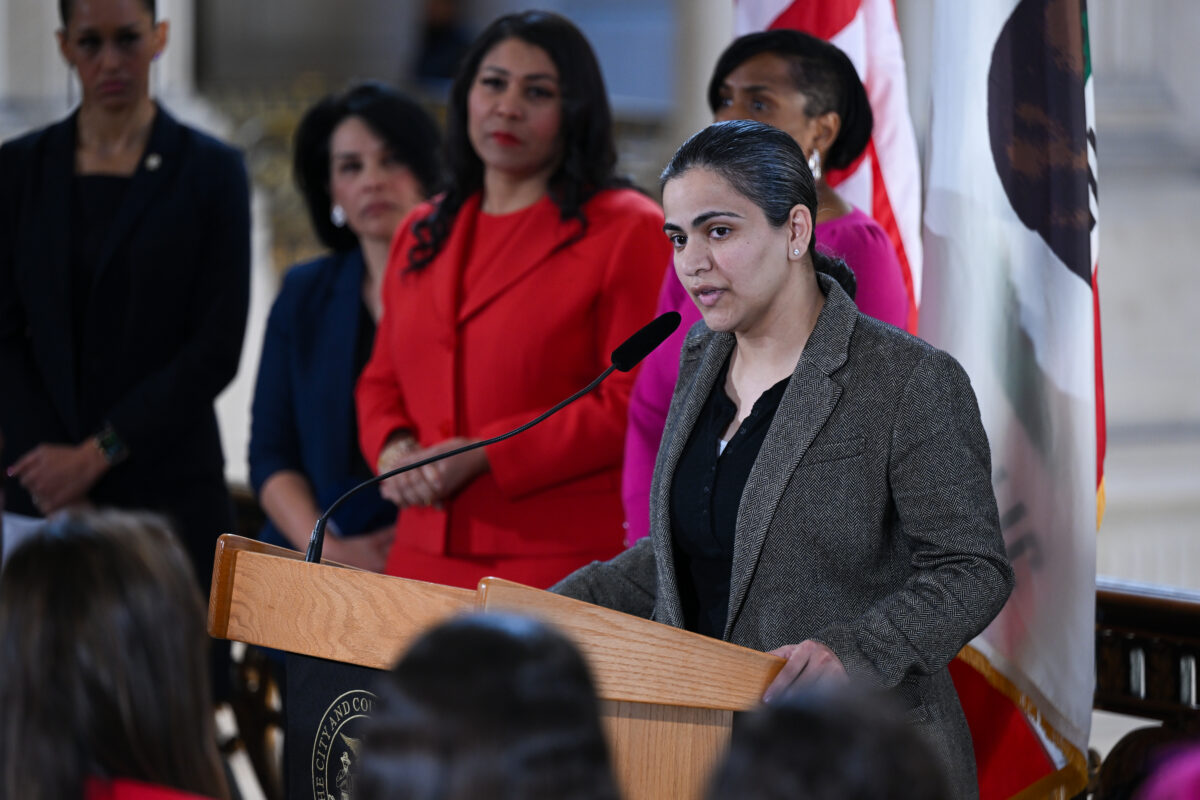
In the last two weeks, AIPAC’s super PAC, the United Democracy Project, has spent nearly $2.5 million in an effort to defeat Aisha Wahab, a progressive state senator competing in a special election runoff against Melissa Hernandez, a moderate Democrat who is the president of the Bay Area Rapid Transit board and the former mayor of the East Bay city of Dublin.
The aggressive maneuver, which appears to be AIPAC’s last investment before the general election, has raised eyebrows among some Jewish leaders and Democratic strategists in the state, who see Wahab as favored to replace disgraced former Rep. Eric Swalwell (D-CA) in California’s 14th District, despite the flood of recent attacks against her from UDP and other allied groups.
The Big Reads
READING THE RIGHT
Today’s Republican primaries in Florida will be a critical test for far-right candidates who have built their campaigns on open antisemitism, providing hard data on how popular those views have become in the GOP, Jewish Insider’s Marc Rod reports. Neither gubernatorial candidate James Fishback nor Dan Bilzerian, who is challenging Rep. Randy Fine (R-FL) in Florida’s 6th Congressional District, is expected to win. But the extent of the support they’re able to pick up will be instructive.
blame game
Brooklyn Democratic politician and housing activist Carmella Charrington, who has a history of pushing century-old antisemitic conspiracy theories, blamed the property dispute that launched her to prominence on “Zionists” in a recent interview with an Egyptian podcaster, Jewish Insider’s Will Bredderman reports. In the interview, Charrington raged against the Jewish investors who had acquired the building at the heart of the dispute. “They’re Zionists that basically did this,” Charrington said. “Same thing that they’re doing in the West Bank, it’s the same thing.”
PEACE PROSPECTS
Israeli Prime Minister Benjamin Netanyahu’s office announced on Monday, following his meeting with Jared Kushner, that Israel and the U.S.-led Board of Peace will launch two working groups to address key issues in the board’s plan for disarming Hamas and reconstructing the enclave, Jewish Insider’s Emily Jacobs reports. One group will focus on disarmament and demilitarization in Gaza, the PMO said, while the second will focus on “sanitation, clean water and other public health issues for the people of Gaza and which also impact the people of Israel.”
The Rundown
HATE BY THE NUMBERS
SPEECH CONTROVERSY
On Our Radar
● The Live Briefing. Word on the street, clips, podcasts and quick updates — the items we’re tracking all day in our Live Briefing on the app (on Apple and Android) and website.
President Donald Trump threatened to “bomb the s— out of” Oman if the Gulf state’s talks with Iran over the Strait of Hormuz interfere with U.S. efforts to reach a deal with Tehran…
The U.K. Maritime Trade Operations agency said that a vessel transiting through the Strait of Hormuz earlier Tuesday was struck by a projectile; one casualty was reported in the attack, which caused damage to the ship’s engine room…
Sen. Darline Graham (R-SC) said that she told Israeli Prime Minister Benjamin Netanyahu last month, when the Israeli leader was in Washington for Sen. Lindsey Graham’s (R-SC) funeral, that, like her brother, “I will stand with Israel as well”…
House Minority Leader Hakeem Jeffries (D-NY) criticized the “ongoing siege of Palestinian homes in the West Bank by violent, lawbreaking settlers” and called on the Trump administration to “compel the Israeli government to protect the lives, property and livelihood” of residents.
Jeffries’ comments came as the Ohio-based Palestinian American owner of a West Bank property that has been targeted by settlers returned to the home on Monday night…
U.S. defense technology firm Ondas is acquiring Israeli company Aran Defense in its first acquisition of operations from a company traded on the Tel Aviv Stock Exchange…
The Federal Railroad Administration approved more than $600 million in federal grants for Amtrak to relocate from its facility in Chicago’s South Loop to a new location in nearby Bridgeport; the 47-acre South Loop site is being considered by Chicago White Sox owner-in-waiting Justin Ishbia as the location for a possible new stadium…
The New York Post spotlights incoming Duquesne University freshman Chaim Galbut, who this fall will become the first observant Jewish player in Division I men’s basketball in 25 years…
The New York Times looks at a dispute between the daughter of a Holocaust survivor, the granddaughter of the woman who betrayed the survivor’s family and an author seeking to write about the women’s connection…
The Salzburg, Austria, home that belonged to Stefan Zweig before the writer fled the country in 1934 for England and then Brazil, where he died, was put on the market for $14.5 million…
The Banshee Labyrinth in Edinburgh, Scotland, acknowledged that it had discriminated against a Jewish performer whose stand-up show at the venue during last year’s Fringe festival was canceled over his social media posts about the Israel-Hamas war; comic Philip Simon said the venue had canceled his show “just for being Jewish”…
The IDF said that a member of Palestinian Islamic Jihad who participated in the abduction of an Israeli civilian from Kibbutz Be’eri during the Hamas-led Oct. 7, 2023, terror attacks was killed in a strike in southern Gaza…
Israel has located the remains of Yehuda Katz, who was declared missing after the Battle of Sultan Yacoub during the First Lebanon War in 1982; the remains of two other soldiers who were declared missing following the battle were returned to Israel in 2019 and 2025…
Six Thai migrant workers were injured, two seriously, after an old unexploded ordnance detonated near the northern Israeli town of Metula…
The New Yorker’s Ariel Levy is joining CBS’ “60 Minutes” as a contributor…
Sarah Golabek-Goldman, who served as chief of staff to the Justice Department’s Leo Terrell, is joining the Louis D. Brandeis Center for Human Rights Under Law as director of legal initiatives…
Worthy Reads
Find more Worthy Reads in our Live Briefing via our app (on Apple and Android) and website.
Weaponizing the Waterways: In The Washington Post, Elise Labott looks at how the Iran-backed Houthis are using their control over strategic maritime choke points in the Red Sea to disrupt global shipping lanes. “Washington long assumed that if these vulnerabilities were weaponized, it would be by China or Russia. Instead, the Houthis got there first. Washington is still treating them as a military threat and missing their strategic evolution — under the mistaken assumption that insurgent groups don’t develop interests of their own, or the patience to act on them.” [WashPost]
Two Trump Cards: In The Wall Street Journal, former State Department official Ludovic Hood, now at the Hudson Institute, considers how President Donald Trump can address the stalemate with Iran without delivering a win to the Islamic Republic. “Mr. Trump is caught between political constraints that prevent using adequate military force to change Tehran’s behavior and a defiant regime willing to risk severe economic pain to rebuff Washington’s demands. … Slicing through this Gordian Knot and arriving at a satisfactory outcome, namely a subdued or new government in Tehran, depends on two lines of effort: waging economic warfare against the regime’s revenue sources and rallying partners to undermine Iran and its proxy network in the region.” [WSJ]
Song of the Day

British-Israeli pianist Mendy Portnoy, who is one half of the Portnoy Brothers, released his new solo piano album “Elul” — a piano cover of Hanan Ben Ari’s “Hashiveinu” — six years after the release of Portnoy’s album “Introspection.”
Birthdays

Jessi Ruth Klein, writer, actor and stand-up comedian from NYC, turns 51
FREDERIC J. BROWN/AFP
Sonia Wolff Levitin, Holocaust survivor, novelist, artist and producer, turns 92
Barbara Bluhm-Kaul, art collector, museum trustee in Chicago, Aspen, Colo., and Orange County, Calif., and former member of Cultural Property Advisory Committee to the State Department, turns 86
Jerome Seaman, Baltimore resident
Rabbi Noam Gordon, Ph.D, retired teacher of Talmud at Jerusalem’s Yeshiva Torat Shraga
Susan G. Golding, former two-term mayor of San Diego, the first Jewish mayor of the city, turns 81
John D. Goldman, businessman and former chair of the Jewish Community Federation of San Francisco, turns 77
Cindy Chazan, partner in Chazan-Leipzig Consulting
Gary Silow, retired judge of the Montgomery County (Pa.) Court of Common Pleas, turns 75
Winnie Holzman, dramatist, screenwriter and poet, turns 72
Raphael Schwartz, president at Wyckoff, N.J.-based Benefit Connections
Alan H. Kadish, M.D., president of Touro University, turns 70
Stuart Tochner, employment law attorney in the Los Angeles office of Ogletree Deakins
Timothy Geithner, treasury secretary in the Obama administration, now chairman of Warburg Pincus, turns 65
Jules Polonetsky, CEO of the Future of Privacy Forum, a D.C.-based think tank and advocacy group focused on issues of data privacy, turns 61
Kenneth Goldin, auctioneer, television personality and sports card collector, he is featured on the Netflix TV series “King of Collectibles: The Goldin Touch,” turns 61
David Brog, executive director of the Maccabee Task Force established by Haim Saban and the late Sheldon Adelson, turns 60
Dayvid Figler, criminal defense attorney and media personality in Las Vegas, turns 59
Brian Michael Bendis, award-winning comic book writer and artist for both Marvel and then DC Comics, turns 59
Jason Furman, professor at Harvard’s Kennedy School, he served as chairman of the Council of Economic Advisers during the Obama administration, turns 56
Andrew Wilkow, conservative political talk radio host on the Sirius XM Patriot channel, turns 54
Gabriel Naddaf, Greek Orthodox priest, he serves as a judge in Israel’s religious court system and encourages Christians to enlist in the IDF, turns 53
Nicole Krauss, best-selling author, her novels have been translated into 35 languages, turns 52
Roger Zakheim, director of the Reagan Presidential Foundation and Institute, he was previously a partner in the law firm of Covington & Burling and general counsel of the House Armed Services Committee
David A.J. “Andy” Samberg, actor, comedian, writer, producer and musician, turns 48
Zachary Iscol, former commissioner of New York City Emergency Management, turns 48
Noah Slepkov, fellow at The Jewish People Policy Institute and managing partner of theMadad website
Sarah Breger, editor of Moment Magazine
Sadie Gurman, reporter for The Wall Street Journal covering the Justice Department and federal law enforcement
Laurie Segall, founder and CEO of Mostly Human, a New York-based entertainment media company, turns 41
Olga Rubin, mixed martial artist, she competes in the bantamweight and featherweight divisions, turns 37
Or “Ori” Sasson, Israeli judoka who won Olympic bronze medals at the 2016 and 2020 Summer Olympics, turns 36
Plus, Cruz champions bipartisan buffer zone bill
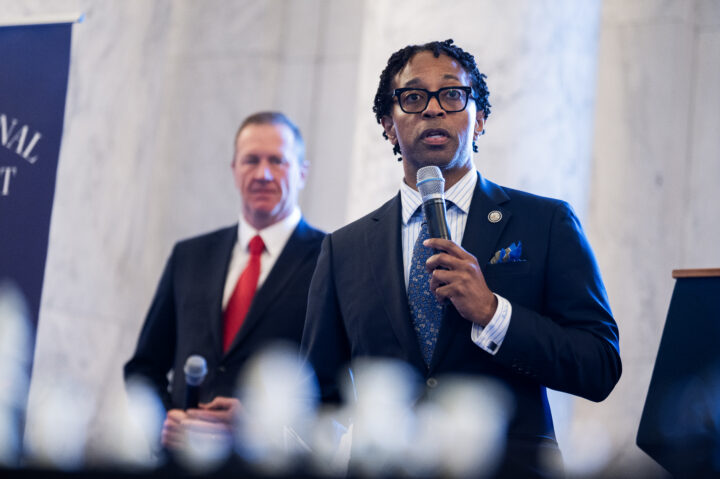
UNITED STATES - JUNE 3: Rep. Wesley Bell, D-Mo., right, and Sen. Eric Schmitt, R-Mo., attend the Congressional Chess Tournament hosted with the St. Louis Chess Club in Russell building on Wednesday, June 3, 2026. (Tom Williams/CQ-Roll Call, Inc via Getty Images)
In today’s Daily Kickoff, we look at the state of play in Michigan’s Democratic Senate primary in the final days of the race, and have the scoop on plans by Sen. Ted Cruz and Reps. Brad Knott and Tom Suozzi to introduce federal buffer zone legislation. We talk to Israeli officials and regional experts about the Trump administration’s newly released Gaza disarmament roadmap, and report from the Israel on Campus Coalition’s National Leadership Summit in Washington. Also in today’s Daily Kickoff: Dean Kremer, Alex Ryvchin and Balaji Srinivasan.
We also have a new on-demand Live Briefing that you can access throughout the day via our new app (on Apple and Android) and on our website.
Today’s Daily Kickoff was curated by JI Executive Editor Melissa Weiss and Israel Editor Tamara Zieve, with an assist from Marc Rod. Have a tip? Email us here.
What We’re Watching
- The Middle East remains on edge after President Donald Trump called off plans to launch “the biggest attack since World War II” targeting Iran, saying on Sunday that he was persuaded by Qatar, the United Arab Emirates and Saudi Arabia to again attempt to reach a diplomatic solution with Tehran. Trump said that talks with Iran are slated to restart today, while the Islamic Republic denied that talks were set to take place.
- Jay Clayton assumes his role today as director of national intelligence, following his confirmation vote last week to replace ODNI interim head Bill Pulte, who briefly served as acting director following Tulsi Gabbard‘s resignation.
- The Israel on Campus Coalition is holding its annual National Leadership Summit in Washington. More below.
What You Should Know
A QUICK WORD WITH JI’S JOSH KRAUSHAAR
Michigan will take center stage this week as it holds its marquee Senate primary and consequential down-ballot races that showcase the divide between the Democratic mainstream and its left-wing, anti-Israel activists.
But Missouri is playing the role of the must-watch undercard, with the rematch between Rep. Wesley Bell (D-MO) and Democratic Socialists of America-aligned former Rep. Cori Bush (D-MO) marking another significant bellwether contest between the center and the left.
Bell, a stalwart supporter of Israel who was championed by AIPAC in both of his congressional campaigns, is facing a changed political environment within the Democratic Party with public opinion turning against the Jewish state.
Bell defeated Bush by five points in 2024, but the race could end up being closer this time around given the ascendance of socialist candidates in urban, deep-blue districts like Missouri’s First District.
Bush, however, has myriad other vulnerabilities beyond her far-left policy views, from missed votes during her time in Congress to ethical questions surrounding her handling of campaign funds.
Bell is also being boosted by outside groups, led by the AIPAC-affiliated United Democracy Project super PAC, which has spent over $2.6 million in the race hitting Bush, along with the New Democrat Coalition-affiliated super PAC, which has poured in just over $1 million on Bell’s behalf. Bell has also outspent Bush on the airwaves by about a ten-to-one margin, according to the Cook Political Report.
MICHIGAN MOVES
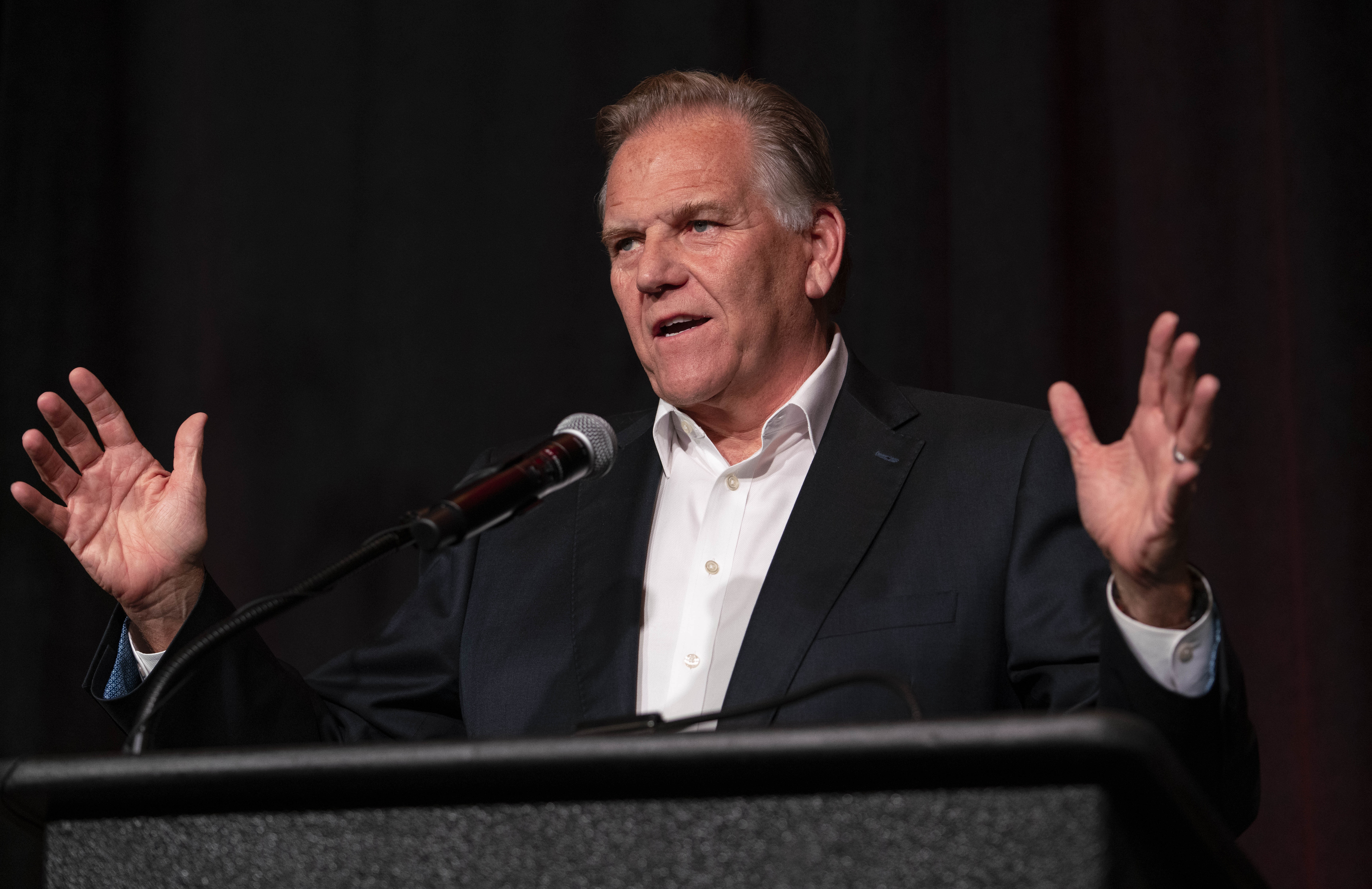
As Abdul El-Sayed pulls ahead in the final days of Michigan’s bitter Democratic Senate primary race, Republicans are eyeing a chance, in the general election, to peel support from disaffected Jewish Democrats anxious about their party’s sharp turn to the left on Israel and its tolerance for actions they view as antisemitic. If Rep. Haley Stevens (D-MI) loses, Republicans are eager to present former Rep. Mike Rogers (R-MI), the GOP’s presumptive nominee, as a safe alternative to El-Sayed for Jewish Democrats in the general election who may not be able to stomach voting along party lines,Jewish Insider’s Matthew Kassel reports.
Shifting tide: “I think that Jewish voters and many Democrats in general feel” the party “has moved away from them,” Bobby Schostak, a former chairman of the Michigan Republican Party who sits on the Republican Jewish Coalition’s board, told JI, calling Rogers “unconditionally and unapologetically pro-Israel and part of the fight against antisemitism in America.”
Called out: In a late-night tweet five days before Michigan’s high-stakes Democratic Senate primary, Stevens explicitly accused her opponent, El-Sayed, of trafficking in antisemitism, JI’s Gabby Deutch reports. Despite that, Stevens said, when asked in an MS NOW interview if she could commit to backing El-Sayed if he wins Tuesday’s primary: “You bet … I am on the team, alright. And I am gonna link arms and do whatever’s needed.”
SCOOP
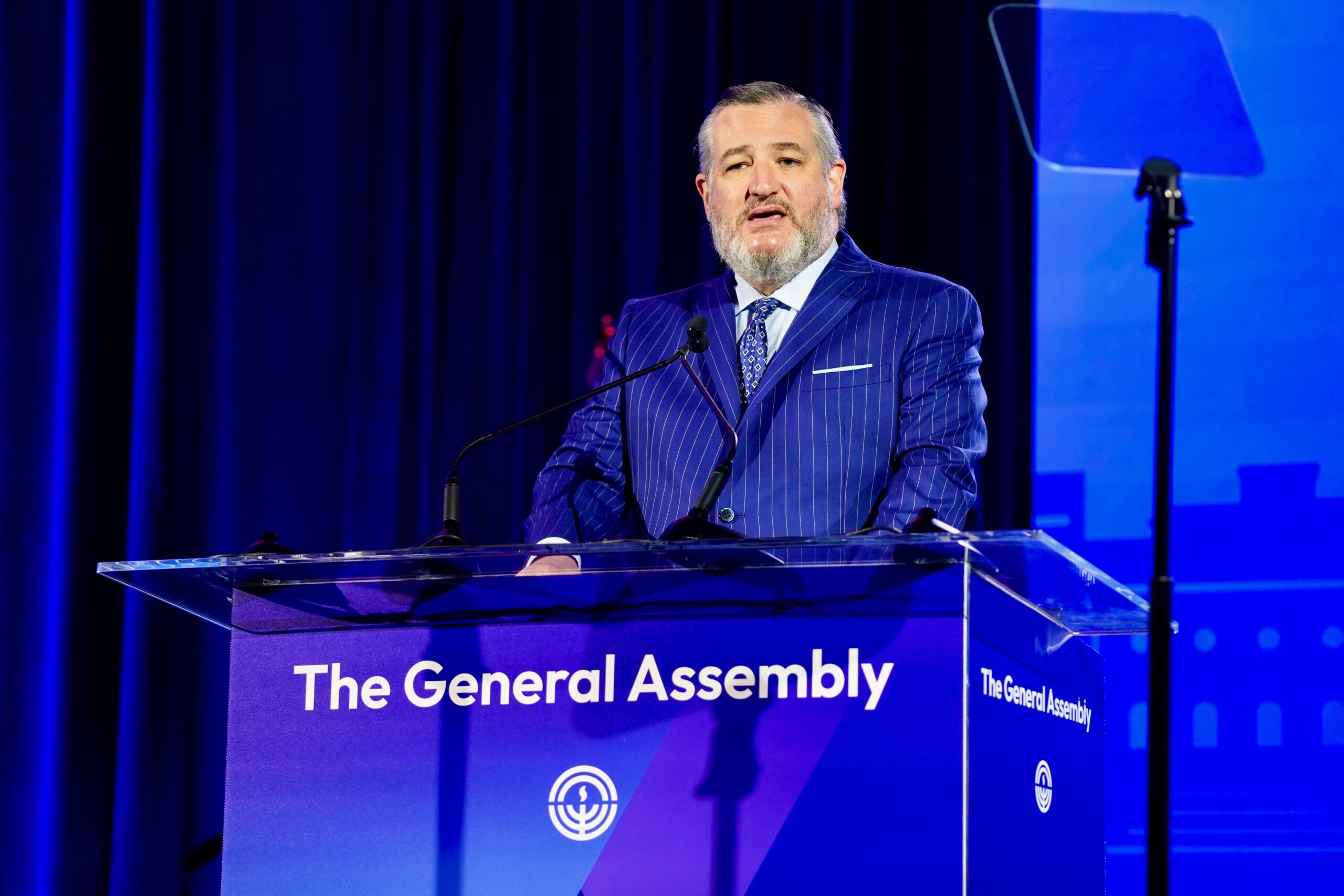
Sen. Ted Cruz (R-TX), Rep. Brad Knott (R-NC) and Rep. Tom Suozzi (D-NY) are preparing to introduce federal legislation that would establish a 100-foot buffer zone around religious institutions, within which conduct that disrupts religious services or interrupts access to the place of worship would be banned during religious services, Jewish Insider’s Emily Jacobs and Marc Rod report.
Negotiations: The Right to Worship Act aims to address demonstrations around synagogues and other houses of worship that have become a growing concern for the Jewish community following anti-Israel and antisemitic protests outside synagogues that have turned violent. Several states have pursued similar legislation. Cruz and Knott have been working on the bill for some time, and two sources familiar with the situation said that “intense negotiations” had been ongoing between Cruz and Suozzi’s teams to reach a bipartisan compromise balancing the desire to protect religious worship and free speech rights. A source said a deal was reached on Sunday evening.
PEACE PROSPECTS

Israeli officials and regional experts are expressing deep skepticism over the Trump administration’s newly unveiled Gaza disarmament roadmap, warning that public disagreements between Israel and Hamas over the timing of weapon surrenders and troop withdrawals threaten to unravel the agreement before it even begins, Jewish Insider’s Matthew Shea reports.
Israeli concern: Doron Spielman, a spokesman for the Israeli Prime Minister’s Office, told JI that Jerusalem conveyed to Washington that the plan “does not reflect Israel’s concerns.” Spielman said that Israeli intelligence has shown that Hamas “has been regrouping, digging additional tunnels, rearming and resupplying and have plans to attack Israel again.” For that reason, he said it is difficult for Israeli leaders to justify any decision to withdraw prior to Hamas’ complete disarmament.
BOILING POINT

A popular Montreal kosher restaurant was destroyed in what police are investigating as a possible arson attack early Saturday morning, the latest in a worsening pattern of antisemitic attacks across the city and throughout Jewish communities in Canada, Jewish Insider’s Haley Cohen reports.
Caught on camera: First responders were called to Nöam Restaurant in the Côte-des-Neiges neighborhood around 3:15 a.m. Saturday to find the building engulfed in flames. Despite the efforts of roughly 80 firefighters, the two-story building suffered extensive damage. No injuries were reported, and no arrests had been made as of Sunday afternoon. The Montreal Gazette reported that the blaze was set by a single individual who appeared to be a young man, perhaps in his early 20s, according to video footage of the incident.
On the soccer pitch: Amid chants of “Death to Israel,” Israeli striker Dor Turgeman scored a goal for his New England Revolution team during a Saturday night Major League Soccer match against CF Montréal.
CAMPUS CLIMATE
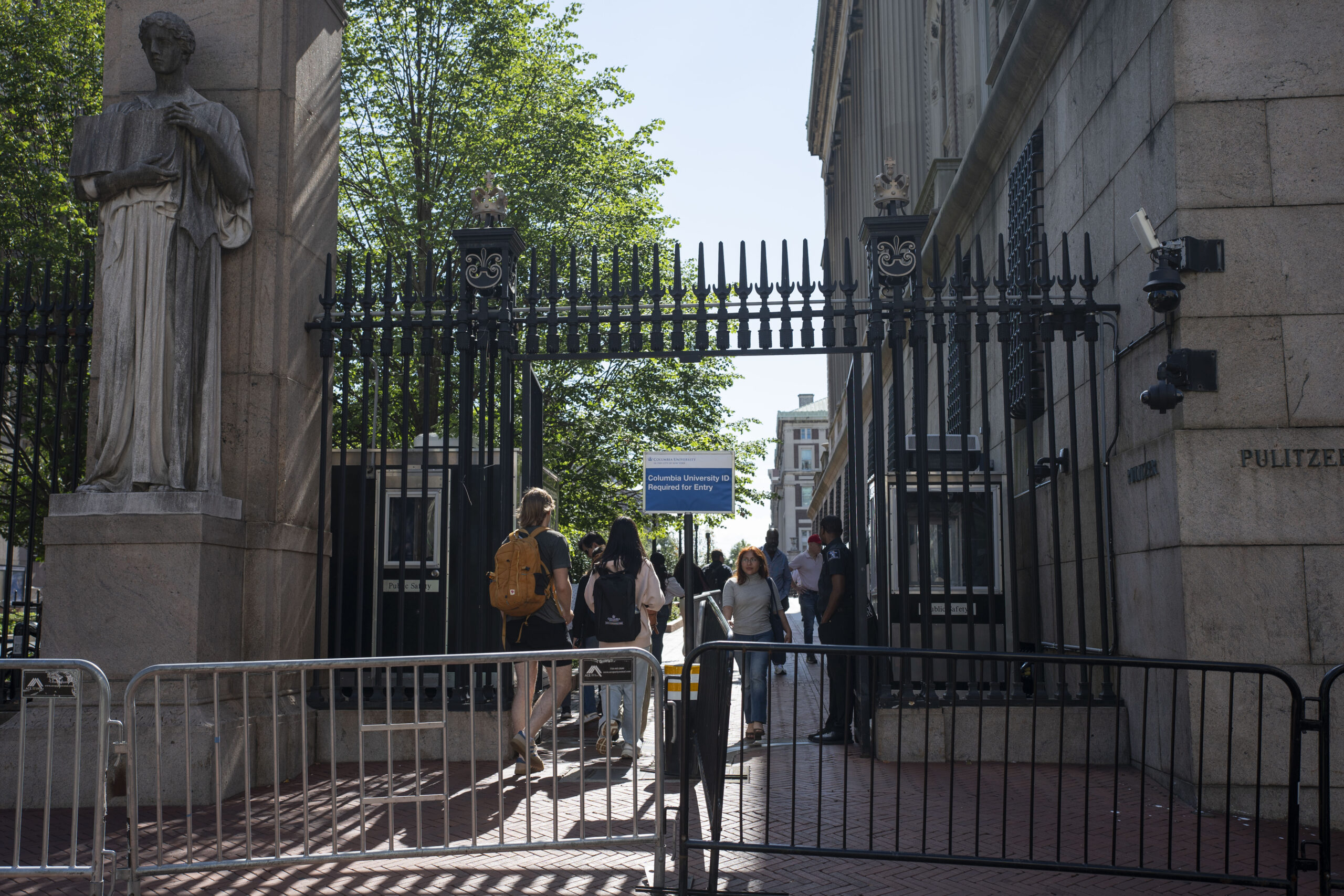
As close to 1,000 pro-Israel students from around the country gather in the nation’s capital for the Israel on Campus Coalition’s annual National Leadership Summit, they’ll do so against a backdrop of seemingly quieter campus antisemitism than in the years immediately following the Oct. 7, 2023, terrorist attacks in Israel. But students are still seeking tools to navigate a campus climate they’ve come to see as permanently changed, Jewish Insider’s Haley Cohen reports.
Campus concerns: “My main concern [on campus today] is every time I sit down with a classmate I have to wonder whether the person next to me was at the [anti-Israel] encampment,” Noah Lederman, an incoming senior at Columbia University majoring in philosophy and Jewish ethics, told JI. In February 2024, Lederman said he was shoved and pinned against a wall by an anti-Israel protester as he donned a shirt with an Israeli flag on it during a pro-Israel demonstration right outside of the Morningside Heights campus. More than two years later, Lederman still feels wary on campus.
ON SECOND THOUGHT
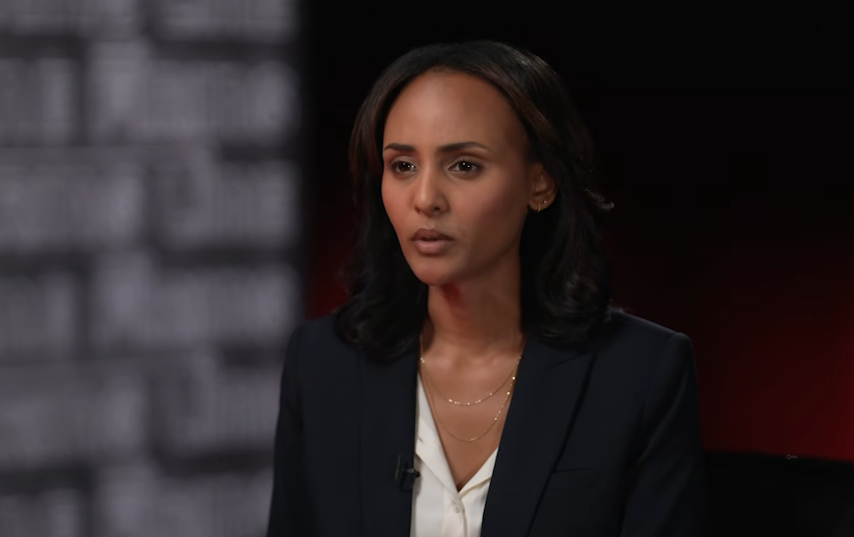
Far-left Colorado congressional candidate Melat Kiros backtracked on Sunday from her conciliatory tone in a PBS interview on the need for progressives to formulate a policy on Israel that does not engage in antisemitism, Jewish Insider’s Danielle Cohen-Kanik reports.
U-turn: Appearing on “Firing Line with Margaret Hoover” on Saturday morning, Kiros said her “greatest concern right now is that the State of Israel is losing support all across the political spectrum” and that progressives are “leaving a vacuum” for far-right commentators like Tucker Carlson and Candace Owens to fill by “pretending to care about Palestinian safety when really it’s just masking their overt hatred for Jewish people.” The 29-year-old doctoral student, who was backed by the Democratic Socialists of America in her campaign, quickly reversed course after the interview aired. Responding on Sunday to criticism on X from Al Jazeera producer Sana Saeed, Kiros said she “fumbled this line, plain and simple.”
Mounting pressure: Sen. Bernie Moreno (R-OH) publicly accused Rep. Max Miller (R-OH), his former son-in-law, of domestic abuse on Sunday and said Miller is unfit for office. Moreno’s comments came in response to a video address by Miller denying wrongdoing amid growing scrutiny of the allegations of domestic violence and abuse by his ex-wife Emily Moreno, the senator’s daughter, JI’s Emily Jacobs and Marc Rod report.
Worthy Reads
History Lesson: In The New York Times, Mehrzad Boroujerdi reflects on his father’s 1978 killing by Iranian revolutionaries, some of whom are now among the Islamic Republic’s top officials. “The United States and Israel have yet to learn that the Iranian regime is not made of papier-mâché, and the Islamic republic’s confrontational ideology is unlikely to dissipate anytime soon. The men in uniform showed no hesitation in killing thousands of their compatriots in January — a national trauma that Iranian society has yet to fully process. They will continue to practice a politics of performance for domestic audiences even as they recognize that the regime’s social contract is both morally bankrupt and fiscally unsustainable.” [NYTimes]
Threat to the West: In The Wall Street Journal, Lorenzo Vidino, the head of The George Washington University’s Program on Extremism, warns of the dangers of political Islam’s impact that have largely been misunderstood by successive U.S. presidential administrations. “Save for the years immediately after Sept. 11, 2001, there has been no concerted effort within U.S. law-enforcement and policy communities to acquire a deep institutional understanding of Islamist networks worldwide. A particular lack of understanding exists on how Islamists are using the American political and educational systems to advance their aims — dynamics that have become apparent in the past few years.” [WSJ]
Rise of the Far Right: Politico’s Kathy Gilsinan does a deep dive into concerns among Republicans over the rise of “groypers” in the party, who are beginning to gain professional footholds in Washington and in the conservative space. “If, as the adage goes, personnel is policy, the stakes are significantly higher than intergenerational trash talk, given the degree to which government staffers, across branches, effectively run the country. Student government types become interns become policy aides become senior advisers, chiefs of staff and even heads of agencies. If the conservative personnel pipeline is changing, Republican government will change with it.” [Politico]
Find more Worthy Reads in our Live Briefing via our new app (on Apple and Android) and website.
Word on the Street
A new survey of K Street leaders from Punchbowl News focused on the war with Iran and memorandum of understanding between Washington and Tehran found that 65% of respondents believed that Israel’s involvement in the war with Iran had a negative impact on its outcome…
The New York Times looks at the cyberattacks targeting water facilities in at least seven states, finding that evidence indicates potential Iranian involvement…
Sens. Marsha Blackburn (R-TN), Tim Sheehy (R-MT) and Dave McCormick (R-PA) introduced a resolution condemning the Iranian government’s human rights abuses…
Senate Appropriations Committee leaders finalized a stopgap funding bill that would, at least temporarily, prevent the Trump administration from putting political appointees in charge of approving federal grants, a plan that had raised concerns on both sides of the aisle…
A district court judge dismissed a complaint filed against The George Washington University by alumni of the school alleging that the school allowed “pervasive and severe” antisemitism on campus, citing the length of the complaint; the judge gave the plaintiffs until the end of August to refile an amended complaint…
The New York Times reports from a national meeting of the Democratic Socialists of America, finding an invigorated activist base that struggled at times to find consensus on issues regarding policy and organizing…
Boy George split from his manager, Paul Kemsley, after the latter pulled the performer from a two-week West End run of “Jesus Christ Superstar” after Boy George posted a reggae song with pro-Israel lyrics…
The Minnesota Twins acquired starting pitcher Dean Kremer, the first Israeli player drafted by a Major League Baseball team and a great-nephew of Haim Saban, from the Baltimore Orioles…
FIFA President Gianni Infantino is facing mounting criticism from the governing bodies of European, North American and Central American football leagues following his proposal to privatize FIFA — which originated last year with secret talks between Infantino and Josh Kushner; Bloomberg reports that Nasser Al-Khelaifi, the chairman of Qatar Sports Investments and president of the Paris Saint-Germain team, has the backing of some European sports officials…
The New York Times reports on the Metropolitan Museum of Art’s decision to feature an exhibition on designer John Galliano and honor him at its annual Met Gala despite a 2011 outburst in which he proclaimed, “I love Hitler”; the Times notes that Galliano participated in a May meeting with former Vogue Editor-in-Chief Anna Wintour and New York City Jewish leaders over the decisions…
The Washington Post follows up on a May story about a trove of WWII-era love letters written by a Jewish soldier Louis “Speedy” Weber to his eventual wife, Frances, after finding the couple’s nephew…
The people’s choice award of the Archibald Prize, Australia’s top portraiture honor, was given to artist Michael Zavros for his portrait of Australian Jewish leader Alex Ryvchin following the December 2025 terror attack at a Hanukkah celebration at Sydney’s Bondi Beach…
The Wall Street Journal spotlights tech entrepreneur Balaji Srinivasan’s effort to create an incubator for new countries in a sparsely inhabited Malaysian city that fell apart after the project faced government scrutiny following a social media post alleging that the incubator included participants with Israeli citizenship in violation of Malaysian laws…
CNN does a deep dive into increasing incitement in Israel against journalists, who accuse Israeli Prime Minister Benjamin Netanyahu and his political allies of stoking animus toward reporters in the country…
Ugandan officials unveiled a statue of Yonatan Netanyahu, the older brother of the Israeli prime minister, at the airport in Entebbe where the elder Netanyahu was killed during the 1976 hostage-rescue operation following the hijacking of a passenger plane by members of the Popular Front for the Liberation of Palestine…
Former Rep. Kay Granger (R-TX), the first Republican woman from Texas elected to serve in the House, died on Sunday at 83…
Find on-demand Live Briefing updates throughout the day via our new app (on Apple and Android) and website.
Pic of the Day

Members of Israel’s lacrosse team celebrated on Sunday after scoring a goal during the bronze medal match between Israel and Haudenosaunee, made up of Native American nations, during the 2026 World Lacrosse Women’s Championship in Tokyo. Israel came in third in the tournament overall after its win over Haudenosaunee.
Birthdays
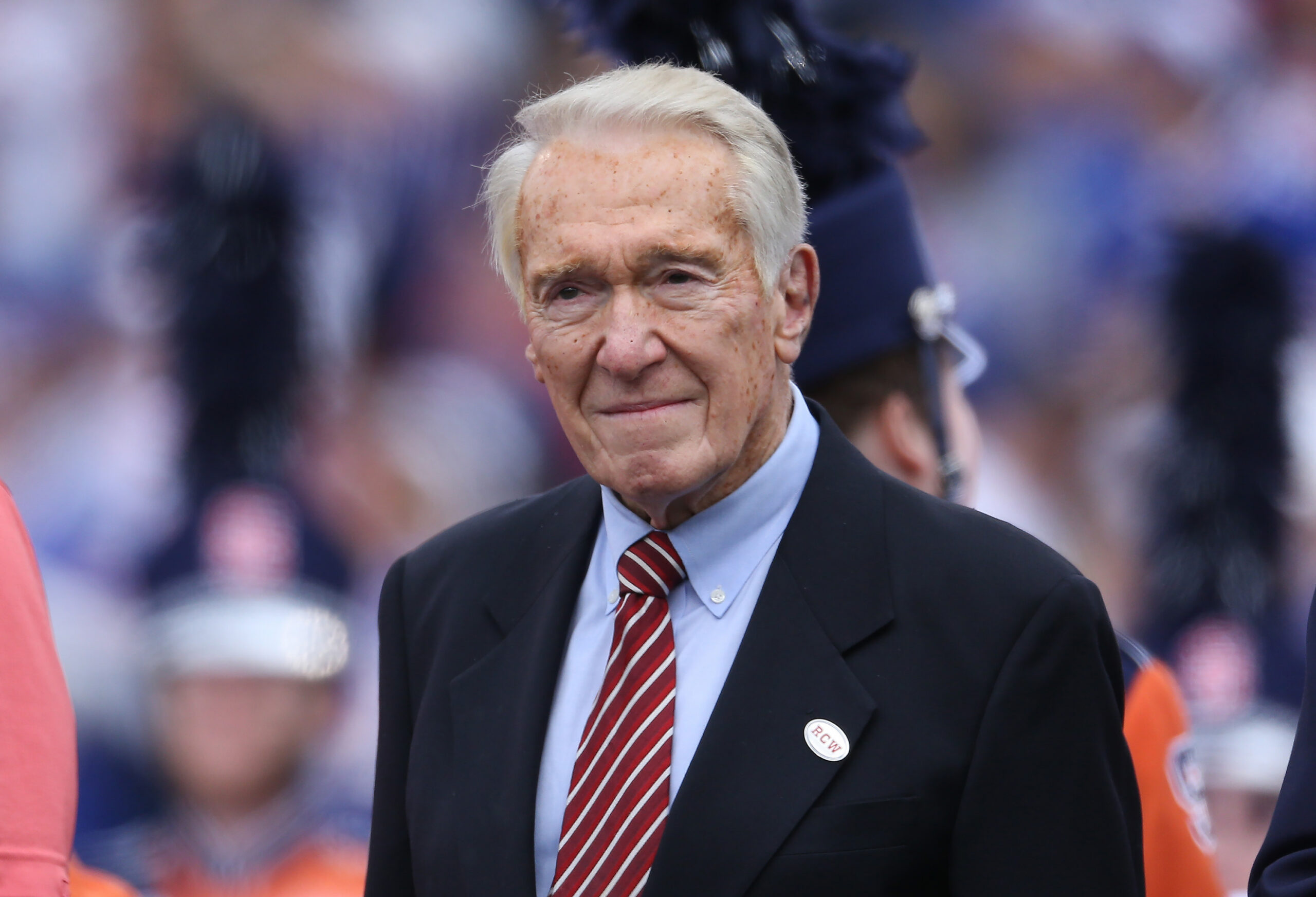
Retired head coach of both the NFL’s KC Chiefs and the Buffalo Bills, the oldest-ever living member of the Pro Football Hall of Fame, Marv Levy turns 101…
English actor, author, playwright and theatre director, known for his roles as the villain in both “James Bond” and “Rambo” films, Steven Berkoff turns 89… EVP emeritus of the UJA-Federation of New York, John S. Ruskay turns 80… Retired regional director in the Cleveland office of the ADL, she serves on the board of trustees of the Cleveland Federation, Anita Gray… Former chairman and CEO of the North America office of commercial real estate brokerage firm Savills, he is a past member of AIPAC’s Real Estate Division Executive Council, Mitchell S. Steir turns 71… Voice actor in dozens of Disney films, video games and television programs, known professionally as Corey Burton, Corey Gregg Weinberg turns 71… Former chair of the board of the Jewish Federation of Los Angeles and board member of JFNA, Orna Amir Wolens… CEO and co-founder of D.C.-based Freedman Consulting, LLC, Thomas Z. Freedman turns 63… Co-founder of Pushkin Industries, a podcast company, Jacob Weisberg… Israeli filmmaker, producer and director, Ilan Moskovitch turns 60… Canadian entrepreneur and former commodities trader, Alexander Shnaider turns 58… Executive director of public affairs at the Jewish Federation of Broward County (Florida), Evan Goldman… Emmy Award-winning sportscaster, she sometimes serves as a fill-in for her husband, Rich Eisen, Suzy Shuster turns 54… Managing editor of Vital City, Josh Greenman… U.S. senator (D-CT), Chris Murphy turns 53… Chief advancement and communications officer at the National September 11 Memorial & Museum, Joshua Cherwin… Senior vice president of public policy at Riot Platforms, Brian Morgenstern… Senior editor of Commentary magazine, Seth A. Mandel turns 44… Managing partner and head of global government affairs at SoftBank Group International, Jeffrey A. Dressler turns 42… Director of strategic partnerships and senior development officer at JDC (the “Joint”), Erica Greenblatt… Caroline “Carrie” Keller-Lynn… Director of member engagement at Christians United For Israel, she was born in Lutsk, Ukraine and raised in Sacramento, California, Liliya Maskovcevs… Executive director of The Natan Fund, Adina Poupko … Executive director of the Reducetarian Foundation (a non-profit organization dedicated to reducing meat consumption), Brian Kateman… Fashion model and entrepreneur, founder of the “Kode with Klossy” nonprofit and founder and CEO of Bedford Media, Karlie Kloss turns 34… U.S. news editor at the Financial Times, Emily Goldberg… First-round pick of MLB’s Atlanta Braves in the 2020 draft, he made his MLB debut in 2023, now in the St. Louis Cardinals organization, Jared Shuster turns 28… Ariana Kaufman… Founder-director of Meeting Your Mission, Leslie Rosen Stern… Leigh Bonner Levine… Co-founder and editor-in-chief of the Washington Reporter, Matthew Foldi…
Plus, the Pied Piker problem
Francis Chung/Politico/Bloomberg via Getty Images
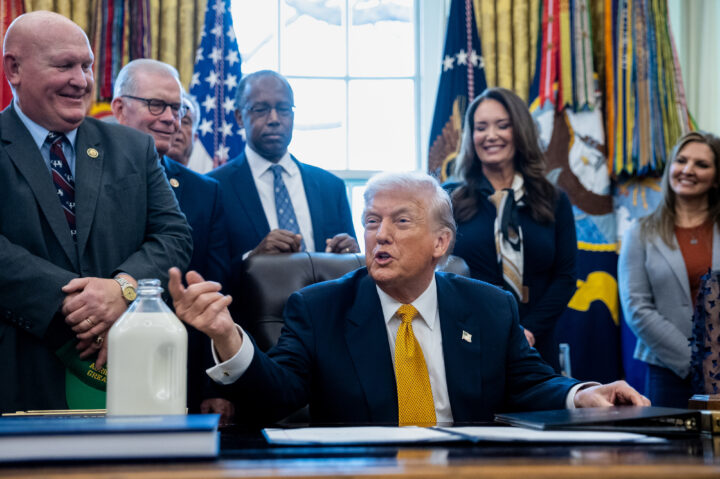
President Donald Trump speaks during a signing ceremony in the Oval Office of the White House in Washington, DC, US, on Wednesday, Jan. 14, 2026.
👋 Good Thursday morning!
In today’s Daily Kickoff, we look at the continued embrace of Hasan Piker by elements of the progressive movement, despite the far-left commentator’s recent rhetoric defending Hamas, and interview former Marine Ryan Crosswell about his effort to flip the GOP-held congressional seat represented by Rep. Ryan Mackenzie in Pennsylvania. We have the scoop on Andrew Hale’s departure from the Heritage Foundation to join Advancing American Freedom, and talk to Lishay Miran Lavi, the wife of freed Israeli hostage Omri Miran, about the book she wrote to help children deal with loss. Also in today’s Daily Kickoff: Sen. Ron Wyden, Jacob Helberg and Rob Satloff.
Today’s Daily Kickoff was curated by Jewish Insider Executive Editor Melissa Weiss and Israel Editor Tamara Zieve, with assists from Danielle Cohen-Kanik and Marc Rod. Have a tip? Email us here.
What We’re Watching
- We are continuing to monitor the situation in Iran, after tensions hit a fever pitch last night, with Iran closing its airspace for several hours and the U.S. withdrawal of some military personnel and aircraft from its Al-Udeid base in Qatar. President Donald Trump said yesterday that he had been “told on good authority” that “the killing in Iran is stopping.” Iranian airspace reopened in the middle of the night.
- Despite Washington’s walk-back from the brink of potential military action, the U.S. and U.K. issued warnings this morning cautioning against travel to Israel; the U.S. advisory, issued by the embassy in Jerusalem, said the alert was due to “ongoing regional tensions.”
- Trump is slated to meet today with Nobel Prize Prize winner and Venezuelan opposition leader Maria Corina Machado at the White House. The meeting comes a day after Trump spoke by phone with acting Venezuelan President Delcy Rodriguez.
- The first meeting of the new Palestinian technocratic committee that will administer Gaza is being held today in Cairo.
- The Israeli American Council’s annual summit kicks off today in Hollywood, Fla. Speakers at the three-day confab include Dr. Miriam Adelson, Haim Saban, Safra Catz, Special Envoy to Monitor and Combat Antisemitism Yehuda Kaploun, the Justice Department’s Harmeet Dhillon, former CENTCOM head Gen. (Ret.) Michael Erik Kurilla, Reps. Debbie Wasserman Schultz (D-FL) and Rich McCormick (R-GA), writer Micah Goodman, former Israeli Ambassador to the U.N. Gilad Erdan, former IDF spokesman Daniel Hagari and Meta’s Jordana Cutler.
What You Should Know
A QUICK WORD WITH JI’S Matthew kassel
Hasan Piker, a popular far-left influencer, has long withstood scrutiny for his antisemitic commentary and justification of Hamas’ Oct. 7, 2023, attacks, continuing to boast millions of loyal followers while hosting prominent Democratic elected officials on his Twitch show.
But his recent remarks unequivocally siding with Hamas provide particularly clarifying insight into Piker’s extreme worldview, raising questions about the permission structure in the broader progressive movement that tolerates such views with little to no pushback.
In a social media post last week, Piker came to the defense of anti-Israel protesters who had explicitly expressed support for Hamas while demonstrating outside a synagogue in Queens that was hosting an event promoting Israeli real estate investment.
“Hamas is a thousand times better than the fascist settler colonial apartheid state and the real harm happening here is that another illegal stolen land sale is taking place at another synagogue!” he said on X, describing himself as “a lesser evil voter” who was simply repeating a “harm reductionist credo.”
While the protest drew belated criticism from progressive Israel critics such as New York City Mayor Zohran Mamdani and Rep. Alexandria Ocasio-Cortez (D-NY), both of whom have appeared on Piker’s show, the streamer made clear he was not backing down.
In contrast with Ocasio-Cortez, who had accused the protesters of using “disgusting and antisemitic” language while targeting a “predominantly Jewish neighborhood,” Piker issued a defiant retort to his 1.6 million X followers. “‘Hamas is resisting against Israel because they’re antisemitic’ is the funniest lie people tell themselves,” he argued. “If Israel was a Christian nation managing the apartheid and ethnic cleansing they’d still fight. You’re just mad people are fighting back at all.”
TEHRAN TALK

Middle East policy experts argued on Wednesday that the United States should actively intervene in Iran’s unrest — including through cyber measures, economic pressure and potentially military strikes — amid the regime’s crackdown on nationwide protests. The comments were made during a program hosted by Iran International, one of the largest independent Persian-language news outlets in the world, Jewish Insider’s Matthew Shea reports.
Step by step: “The first thing I would recommend is that we use our very impressive capabilities to shut down the communication system for the government,” said Robert Satloff, executive director of The Washington Institute for Near East Policy, speaking of a potential retaliation for the regime’s decision to cut internet access to the public. “This will be a huge step.” Satloff said if that did not work, he would then support subsequent U.S. strikes on Iranian military infrastructure.
Trump’s tone change: President Donald Trump indicated that his threats to Iran over its use of violence on protesters have had their desired effect, saying on Wednesday afternoon that “the killing in Iran is stopping,” JI’s Danielle Cohen-Kanik reports. NBC News reports that Trump told advisors that he would want any strike on Iran to deal a significant blow to Tehran and avoid a sustained war in the region, and that his team could not guarantee that a U.S. strike would prompt regime change in the Islamic Republic.
CONSIDERED CANDIDACY
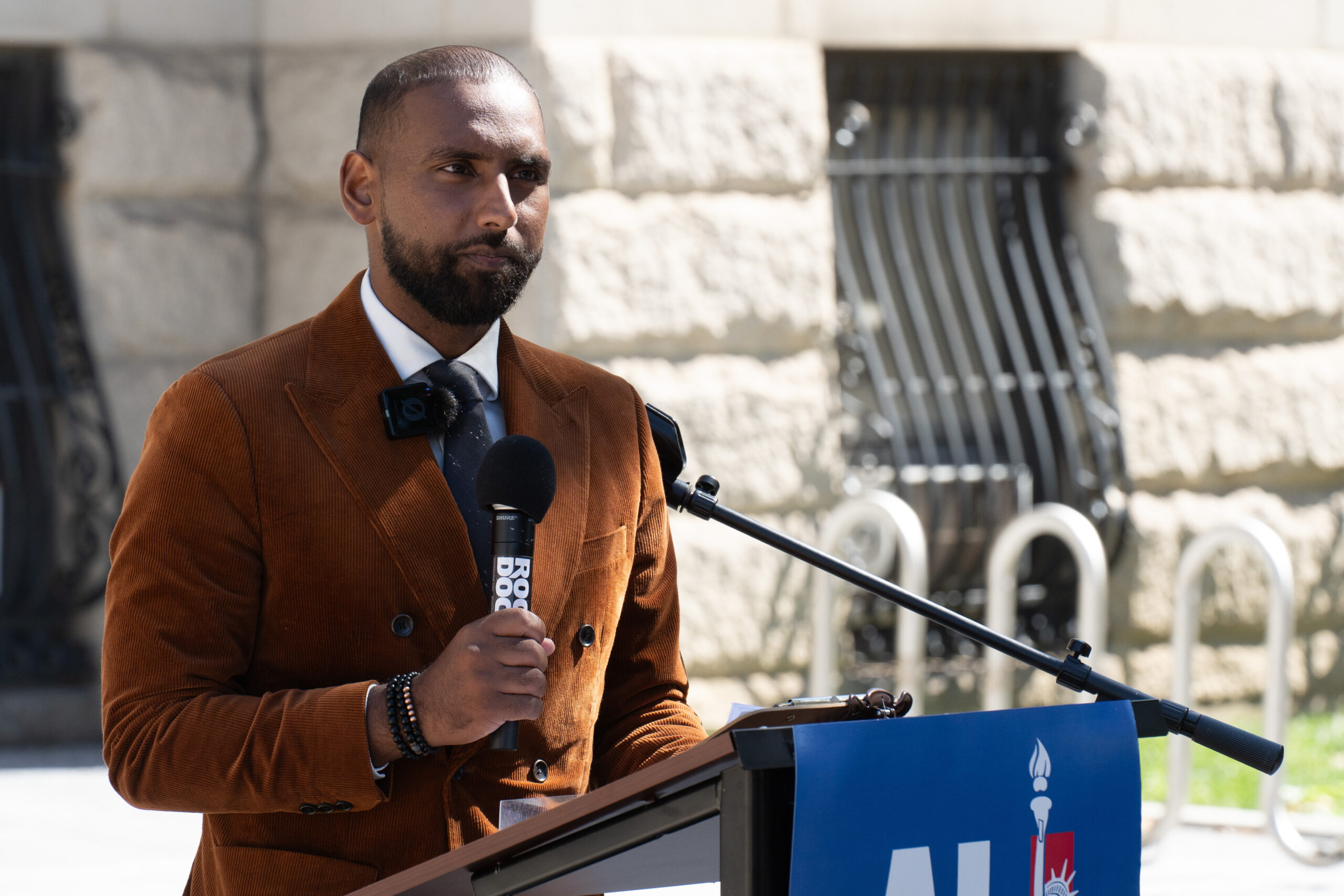
Rep. Rob Menendez (D-NJ), who faced a heated primary battle in 2024, is facing the prospect of another primary challenger in 2026, from an outspoken anti-Israel activist, Jewish Insider’s Marc Rod reports. Former Jersey City school board President Mussab Ali, also a former mayoral candidate, is reportedly considering a run against the incumbent Democrat.
History: As early as Oct. 17, 2023 — before Israel’s full ground invasion of Gaza began — Ali accused Israel of ethnic cleansing and genocide, and demanded that American Jews denounce Israel’s actions. He posted on X demanding a ceasefire two days later. He has also called for an end to U.S. military aid to Israel, recognition of Palestinian statehood and a one-state solution. But Menendez scored a major victory in his efforts to pick up progressive votes on Wednesday, landing an endorsement from Sen. Andy Kim (D-NJ), whose Senate candidacy helped catalyze the anti-Democratic machine movement in the state.
SEEING PURPLE
Ryan Crosswell is hoping his background as a former federal prosecutor and Marine veteran — as well as a former Republican — will provide a road map to flipping a critical swing district in Pennsylvania, Jewish Insider’s Marc Rod reports. The 7th Congressional District, centered around Allentown and Easton and rated by the Cook Political Report as a toss-up, is held by Rep. Ryan Mackenzie (R-PA), who himself flipped the seat in 2024. It was previously held by former Rep. Susan Wild (D-PA).
Meet the candidate: Crosswell, in an interview with JI, characterized himself as a lifelong public servant and patriot, both as a Marine and as a federal prosecutor, who “always put my country first, even when it came at personal costs, as when I resigned from the Department of Justice because I felt I was being asked to do something that was inconsistent with my oath.” Crosswell also said that he’s “uncomfortable with cutting off aid” to Israel, as some in the Democratic Party are advocating, “because Israel is surrounded by historical enemies, and I don’t want to put the Israeli people in danger by cutting off aid.”
JUMPING SHIP
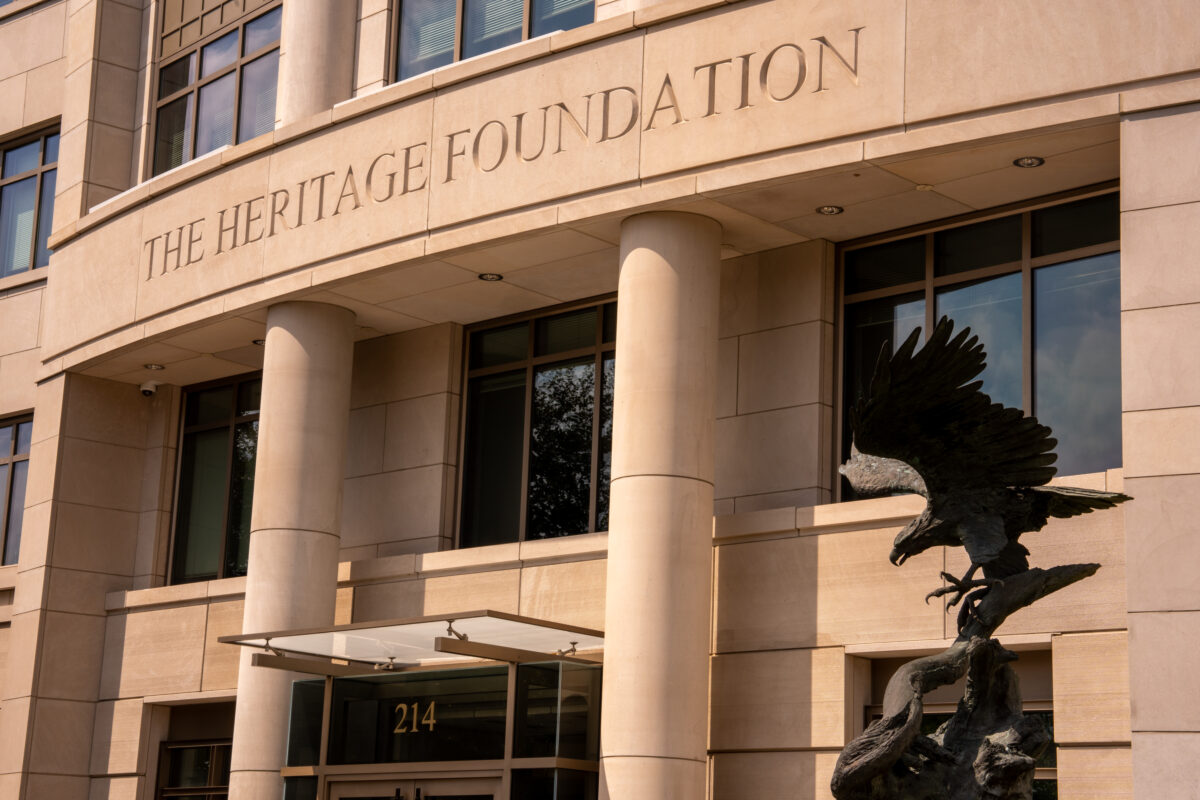
A senior Heritage Foundation staffer has been hired by Advancing American Freedom, joining more than 20 other former Heritage employees who have departed the conservative think tank for AAF over criticism of President Kevin Roberts’ refusal to disavow Tucker Carlson for platforming neo-Nazi influencer Nick Fuentes and Roberts’ handling of the broader fallout. Andrew Hale, who joined Heritage in 2023, served as the Jay Van Andel senior policy analyst in trade policy at the Thomas A. Roe Institute for Economic Policy Studies. He began at AAF, former Vice President Mike Pence’s policy shop, on Tuesday as a fellow specializing in economics, trade policy and international relations, Jewish Insider’s Emily Jacobs reports.
Reason for leaving: “I can roll with policy changes, but what I can’t roll with is a tolerance or an overlooking of antisemitism or any form of bigotry,” Hale told JI in an interview. “I’ve worked for Democrats, Republicans, Labour and Conservative in the U.K., on both sides of the Atlantic. I can roll with policy changes. This is not about that. For me, I feel obligated because I have the freedom to do so and the means to do so. I’m calling out a problem that exists at Heritage and exists in the conservative movement, and we need to exorcize it in a way that the left has not done well.”
ON THE HILL
Sen. Ron Wyden (D-OR) introduced legislation on Wednesday to condemn the Israeli government for allegedly withholding aid in Gaza and to potentially impose sanctions on Israeli government officials, Jewish Insider’s Marc Rod reports.
What it does: Under the legislation, any government officials or those acting on their behalf “found to be restricting, diminishing, undermining, or preventing the delivery and distribution of sufficient humanitarian assistance” would be subject to U.S. financial and visa-blocking sanctions. The legislation includes a presidential waiver, though that, or the removal of sanctions, can be overridden by a joint resolution of disapproval by Congress. Senior lawmakers would also be allowed to request an assessment of whether a foreign official meets the criteria for sanctions.
BOOKSHELF

The Oct. 7, 2023, Hamas attacks on Israel left children living near the Gaza border with significant emotional baggage — whether they themselves were kidnapped, had a loved one taken hostage or killed, or had to evacuate their home — and their parents and caregivers tasked with helping them regain hope and resilience. Lishay Miran Lavi, whose husband, Omri Miran, was held hostage by Hamas in Gaza for 738 days, sought to help children deal with loss and uncertainty related to Oct. 7 and beyond, with her new book, Mojo’s Return: A Story of Resilience and Hope, which was published in Hebrew and English in November, Jewish Insider’s Lahav Harkov reports.
Book’s purpose: “It’s a tool to reflect what happened for the girls and help them deal with the fact that their dad [was] not there,” Miran Lavi told JI last week. “It’s for my girls and for everyone’s children who experienced Oct. 7 with a great loss, like a father or uncle who is not coming back because he was murdered, or fell in the war.”
Worthy Reads
Pumping Up the Protesters: The New York Times’ editorial board throws its support behind protesters in Iran, arguing that the regime in Tehran is “irredeemable” over its years of domestic human rights abuses and efforts to sow terror around the world. “The recent brutality of that government underscores what has been clear for decades: It is among the world’s most nefarious regimes, and the people who bear the biggest cost are the citizens of Iran. … The appropriate response from the rest of the world starts with a unified expression of solidarity with the protesters. The Khamenei regime is too depraved to be reformed. It has had plenty of chances to choose a different path. The Obama administration invited Iran to become a regional power so long as it gave up on having a nuclear weapon and followed basic international norms. The ayatollahs chose extremism and subjugation instead. They have shown themselves to be beyond rehabilitation. The protest movement represents the best hope for an Iran that does less damage in the world and better serves its own people.” [NYTimes]
Thanks, Israel: In The Wall Street Journal, Somaliland President Abdirahman Mohamed Abdullahi praised the “bold step” Israel had taken in recognizing the African nation last month, citing the long history between Jerusalem and Hargeisa. “This recognition didn’t arise from diplomatic calculation alone; it is rooted in a bond forged during Somaliland’s darkest chapter. In the late 1980s, the people of Somaliland endured a systematic campaign of extermination. The Somali dictator, Siad Barre, gave orders that spread through the ranks in the now notorious words ‘kill all but the crows.’ More than 200,000 civilians were killed, and 90% of Hargeisa was destroyed, earning it the name ‘the Dresden of Africa.’ Starting in 1988, some 800,000 people fled into Ethiopia. While much of the world remained silent, Israel raised the alarm at the United Nations in May 1990, drawing attention to the systematic persecution and killing of Somaliland’s population, later referred to as the ‘Hargeisa Holocaust.’” [WSJ]
Word on the Street
White House Special Envoy Steve Witkoff announced the start of the second phase of the ceasefire agreement between Israel and Hamas, saying the U.S. “expects Hamas to comply fully with its obligations, including the immediate return” of the body of Ran Gvili, who was killed on Oct. 7, 2023…
President Donald Trump told Reuters that exiled Iranian Crown Prince Reza Pahlavi “seemed very nice” but questioned the level of support that Pahlavi has inside Iran; Pahlavi secretly met over the weekend with Witkoff to discuss the situation in Iran…
The Wall Street Journal looks at how the Trump administration’s military buildup in the Caribbean as part of its effort to apprehend ousted Venezuelan leader Nicolás Maduro has limited the U.S.’ naval capabilities in the Middle East…
Israel and Iran quietly exchanged messages through Russia just prior to the onset of protests in Iran that neither country would launch a preemptive attack on the other…
The House voted to pass the finalized 2026 State Department appropriations bill, which includes new restrictions on U.S. funding for the United Nations as well as funding for Israel…
Former Sen. Sherrod Brown (D-OH) raised $8.8 million in the last quarter of 2025 as he mounts a comeback bid for the Senate…
Dozens of elected officials and community leaders in California’s Bay Area called on Richmond Mayor Eduardo Martinez to resign if he refuses to meet with Jewish leaders and publicly apologize for recent comments sharing conspiracy theories about the antisemitic terror attack in Sydney, Australia, last month…
Following an inquiry into the decision of the West Midlands, U.K., police force to ban Maccabi Tel Aviv fans from a recent match against Aston Villa, Home Secretary Shabana Mahmood called on the department’s head to resign; Chief Constable Craig Guildford acknowledged having used an AI-generated search that pointed the department to false information about the Israeli team…
The French book publisher Hachette is recalling three high school textbooks that refer to victims of the Oct. 7, 2023, Hamas terror attacks as “Jewish settlers”…
The board of Australia’s Adelaide Festival apologized to a Palestinian-Australian academic who had been uninvited from the literary event over her past statements about Zionists; the removal of Randa Abdel-Fattah had prompted dozens of speakers to drop out of the annual event, which was ultimately canceled…
Police in Iraq said they arrested a man who is a suspect in a series of arson attacks in Australia, including the December 2024 firebombing of a synagogue in Melbourne…
UAE Foreign Minister Abdullah bin Zayed met on Wednesday in Abu Dhabi with Turkish Foreign Minister Hakan Fidan…
Chinese officials, citing national security concerns, issued guidance against using software from approximately a dozen U.S. and Israeli cybersecurity companies…
NPR’s Michele Keleman spotlights Akko, Israel, for the broadcaster’s weekly “Far-Flung Postcards” series…
Bloomberg reports on the Saudi-backed LIV Golf‘s $5 billion struggle to gain a foothold in the sport, as the league is plagued by low attendance rates and TV viewership, as well as the decision by former No. 1 player Brooks Koepka to leave LIV and return to the PGA Tour…
Former Jerusalem Post Managing Editor David Brinn retired from a full-time role at the end of December 2025 after 31 years at the publication; he will continue on a part-time basis doing, among other things, video interviews with Israeli and Jewish musicians and pop culture figures…
Former Los Angeles Controller Ron Galperin was named the interim head of the American Jewish Committee’s Los Angeles office…
Pic of the Day

Jacob Helberg, the U.S. under secretary of state for economic affairs, and United Arab Emirates Minister of State Saeed Bin Mubarak Al Hajeri signed the U.S.-UAE Pax Silica Declaration on Wednesday during Helberg’s trip to the UAE, two days after a similar signing ceremony with Qatar.
Birthdays
Basketball analyst for Fox Sports, he is also the men’s basketball head coach at the University of Wisconsin–Green Bay, Doug Gottlieb turns 50…
Senior counsel at Covington & Burling, he was previously the domestic policy advisor to President Jimmy Carter, U.S. ambassador to the EU and deputy secretary of the treasury, Ambassador Stuart E. Eizenstat turns 83… Partner in BECO Management LLC and vice chair of the Jewish Policy Center, Michael David Epstein turns 81… University professor at Columbia University, he won the 2008 Nobel Prize in Chemistry, Martin Chalfie turns 79… President of Ben-Gurion University of the Negev for 16 years, then a member of the Knesset for nine years, Avishay Braverman turns 78… Longtime member of Congregation B’nai B’rith in Santa Barbara, Calif., Madelyn Silver Palley… Founder of Prospect Global, Toni G. Verstandig… Chairman and CEO of Stagwell Global, Mark Penn… Football head coach and general manager, he has worked in both the NFL and CFL, Marc Trestman turns 70… President and CEO of Warner Bros. Discovery, David M. Zaslav turns 66… Rabbi at Bar-Ilan University’s Institute of Advanced Torah Studies, he holds a Ph.D. in theoretical physics, Michael Avraham turns 66… Rabbi of Rumson (N.J.) Jewish Center at Congregation B’nai Israel, Douglas Sagal… Cryptographer, computer security specialist, blogger, writer, author of 13 books, he is a fellow and lecturer at Harvard’s Kennedy School, Bruce Schneier… Partner in the NYC office of Gibson Dunn, Barry H. Berke turns 62… White House deputy press secretary in the Bush 43 administration, now a podcast host, Adam L. Levine turns 57… Filmmaker and educator, her films are aimed at Haredi female audiences, Tali Avrahami turns 57… Israeli journalist for Maariv, based in Poland, Nissan Tzur turns 53… Former deputy prime minister and minister of foreign affairs of Belgium, she was elected as a member of the European Parliament in 2024, Sophie Wilmès turns 51… Judge of the United States Court of Appeals for the Second Circuit, Judge Steven Menashi turns 47… Israeli-Italian model, television personality and actor, Jonathan Kashanian turns 45… Editor emeritus of The Daily Wire and conservative political commentator, Ben Shapiro turns 42… Investigative reporter at The New York Times focused on health care, Sarah Kliff… Real estate investor, Hershy Tannenbaum… Actress, singer and writer based in NYC, she starred as Hodel in Bartlett Sher’s acclaimed revival of “Fiddler on the Roof,” Samantha Massell turns 36… CNN’s Jerusalem correspondent, Jeremy Diamond turns 36…
Plus, Maduro's successor holds the party line
Amos Ben-Gershom/GPO
Somaliland President Abdirahman Mohamed Abdullah speaks to Israel Prime Minister Benjamin Netanyahu, Dec. 26, 2025
👋 Good Wednesday morning!
In today’s Daily Kickoff, we do a deep dive into Israel’s strategic interests in and diplomatic overtures to Somaliland following Israeli Foreign Minister Gideon Sa’ar‘s trip the country, and look at early signals from interim Venezuelan President Delcy Rodríguez that she will maintain Caracas’ critical approach to Israel and relations with American adversaries. We talk to Rep. Josh Gottheimer about his recent trip to the Middle East and challenges in building Gaza’s International Stabilization Force, and report on an article in the Spanish daily El Pais that disparaged the Jewish background of the judge overseeing Venezuelan leader Nicolás Maduro’s case. Also in today’s Daily Kickoff: Rep. Dan Goldman, George Conway and Joyce Karam.
Today’s Daily Kickoff was curated by Jewish Insider Executive Editor Melissa Weiss and Israel Editor Tamara Zieve, with an assist from Danielle Cohen-Kanik. Have a tip? Email us here.
What We’re Watching
- Secretary of State Marco Rubio is holding House and Senate briefings this morning before meeting this afternoon with Saudi Foreign Minister Prince Faisal bin Farhan Al-Saud.
- The New York City Council will elect its next speaker today. Councilmember Julie Menin, the daughter of a Holocaust survivor, announced last month she’d garnered support from a supermajority of councilmembers. Read our report on Menin — and the counterweight she is expected to be to Mayor Zohran Mamdani’s agenda — here.
- Mamdani’s first major test with the Jewish community could come as soon as this evening, when PAL-Awda, the group behind the November protest outside a synagogue that was hosting a Nefesh B’Nefesh event about immigrating to Israel, is slated to protest another event hosted by NBN tonight in Manhattan.
- Elsewhere in Manhattan, the annual Colel Chabad International Awards Gala is taking place tonight. Russian-Israeli entrepreneur Yitzchak Mirilashvili, Heather and Joe Sarachek, Sara and Harry Krakowski and Lauren and Martin Tabaksblat are set to be honored at the event. Also slated to be honored is Ahmed al-Ahmed, the Syrian immigrant to Australia who helped disarm one of the Bondi Beach terrorists during last month’s terror attack in Sydney.
- The Atlantic Council’s Freedom and Prosperity Center is holding a panel discussion this morning at its Washington headquarters on the future of humanitarian assistance. Speakers include IsraAID CEO Yotam Polizer, Zipline Africa’s Caitlin Burton, DAI’s Tine Knott and UNICEF USA’s Patrick Quirk
What You Should Know
A QUICK WORD WITH JI’S Tamara ziEVE AND MATTHEW SHEA
At the conclusion of the 12-day war in June of last year, both Israel and Iran suspected that the ceasefire brokered by the U.S. would be a pause, not a final cessation of hostilities. That truce has lasted for more than six months, with both sides wary of entering another military conflict — one likely to be more deadly and destructive than the first.
But now, amid destabilizing world events from Venezuela to the Middle East — compounded by growing domestic pressure on the Islamic Republic amid nationwide protests — that ceasefire is even more tenuous, with officials in Tehran and Jerusalem closely watching the other’s every move, careful not to make a potentially disastrous miscalculation — even as both sides make overtures at de-escalation.
Speaking at the Knesset on Monday, Israeli Prime Minister Benjamin Netanyahu said, “President [Donald] Trump and I have expressed a firm stance — we won’t allow Iran to rebuild its ballistic missile industry or to renew the nuclear program, which we damaged severely in Operation Rising Lion.”
In response, Iran’s newly formed Defense Council warned on Tuesday that the country could act preemptively if it detects clear signs of a threat. “The long-standing enemies of this land … are pursuing a targeted approach by repeating and intensifying threatening language and interventionist statements in clear conflict with the accepted principles of international law, which is aimed at dismembering our beloved Iran and harming the country’s identity,” the council said.
Recent reports suggest that Israel, in an attempt to de-escalate tensions, has used Moscow as an intermediary, communicating through Russian President Vladimir Putin that it has no intention of launching a preemptive strike on Iranian soil. Iranian leaders, including Supreme Leader Ayatollah Ali Khamenei, are unconvinced.
In a post on X, Khamenei accused Israel of deception: “What makes the enemy first request a ceasefire during [12-day] war with the Iranian nation, then send messages saying he doesn’t want to fight us?”
“Now if he doesn’t believe the messaging and thinks that Israel is about to attack then you can understand why Israel is worried Iran is about to miscalculate and attack. Very tense days/weeks ahead of us,” Nadav Pollak, a lecturer on the Middle East at Reichman University, commented on Khamenei’s post.
REASONING AND RAMIFICATIONS

When Israel announced the day after Christmas that it would formally recognize Somaliland, making it the first country in the world to announce formal diplomatic relations with the secessionist region in the Horn of Africa, even some of Washington’s foremost foreign policy experts were sheepishly asking the same question: What, exactly, is Somaliland? There was no single event that led to Israel’s choice to recognize the sovereignty of Somaliland, which announced its independence from Somalia in 1991. The territory has functioned independently for 35 years; nothing in its governance changed last year. What changed was Israel — and its geopolitical calculus regarding regional security threats, Jewish Insider’s Gabby Deutch reports.
Security strategy: “The Houthis didn’t used to fire missiles at Israel. That’s new, and Israel’s now trying to respond to a new situation,” said David Makovsky, the Ziegler Distinguished Fellow at The Washington Institute for Near East Policy. “I have no doubt that this was driven by how to try to neutralize a threat from the Houthis that Israel takes very seriously.” Somaliland sits just across the Gulf of Aden from Yemen, from which the Iran-backed Houthis have fired drones and ballistic missiles at Israel following the Oct. 7 Hamas attacks in 2023.
Sa’ar in Somaliland: Israeli Foreign Minister Gideon Sa’ar made a historic diplomatic visit to Somaliland on Tuesday, marking the first official trip by an Israeli Cabinet minister to the territory and the latest move to strengthen bilateral ties following Israel’s recognition of Somaliland’s independence last month, JI’s Matthew Shea reports.
SAME AS THE OLD BOSS
In the aftermath of U.S. strikes in Venezuela and the capture of leader Nicolás Maduro, uncertainty remains over whether the South American country’s ties to key U.S. adversaries and hostile posture toward Israel will change under interim President Delcy Rodríguez. Despite Maduro’s capture and vows from Venezuelan opposition leader María Corina Machado to return to the country and reject the authority of the interim president, the U.S. appears to be backing Rodríguez, who is closely aligned with Maduro and has shown a similar posture when it comes to Israel and U.S. adversaries, Jewish Insider’s Matthew Shea reports.
Similar direction: Brad Bowman, a senior director at the Foundation for Defense of Democracies, told JI that the Trump administration’s apparent backing of Rodríguez is a “mistake” and that he doesn’t see “any reason to believe” she would depart from Maduro’s approach to U.S. adversaries. “I have concern that we still have most of the problematic elements of the regime in Venezuela remaining in place,” said Bowman. “[Rodríguez] has been part of a regime that has been hostile to the United States and cozy with the Islamic Republic of Iran and its terror proxies. If one were a betting person, you would say at a minimum that [Rodríguez] is going to continue to harbor those problematic views toward China, Russia and Iran, if not manifest them in policy.”
REGIONAL RELUCTANCE

Rep. Josh Gottheimer (D-NJ), who visited Qatar, Bahrain and Saudi Arabia over the weekend, said that the Gulf countries have yet to commit personnel to be directly involved in the International Stabilization Force (ISF) in Gaza, without which the next phase of the ceasefire between Israel and Hamas cannot proceed, Jewish Insider’s Marc Rod and Emily Jacobs report. Gottheimer visited Qatar and Bahrain alongside Sen. Markwayne Mullin (R-OK) and Reps. Jimmy Panetta (D-CA), Jason Smith (R-MO) and Ronny Jackson (R-TX). Members of the delegation were photographed meeting with Qatari Prime Minister Sheikh Mohammed bin Abdulrahman bin Jassim Al Thani, who also serves as the kingdom’s foreign affairs minister.
Takeaway: “All the countries in the region who I’ve met with seem very eager to get to Phase 2. I think the question remains of which countries are willing to put boots on the ground and take the necessary steps to disarm Hamas,” Gottheimer told JI on Tuesday. “We’re all waiting for announcements on who that will be — that’s still the outstanding question … and what level of commitment.” Building and staffing the ISF, he emphasized, is a “very important piece of the puzzle right now.”
PAPER PROBLEM

Spain’s leading newspaper, El País, came under fire Tuesday for publishing an antisemitic comment about the Jewish background of the judge overseeing the case against deposed Venezuelan President Nicolás Maduro. In a since-edited story, the left-leaning newspaper reported on Monday that federal Judge Alvin Hellerstein is a highly regarded jurist “despite being a recognized member of the Jewish community,” Jewish Insider’s Haley Cohen reports.
Printed words: “Hellerstein, who studied law at Columbia University (New York), began his career as a clerk in the court he now presides over. Throughout his career, he has issued well-reasoned rulings and strived to maintain impartiality, despite being a prominent member of the Jewish community,” the article stated in Spanish. The end of the last sentence was removed on Tuesday. Before it was edited, the story was reproduced by the Uruguayan El País, which also removed the line on Tuesday evening, following an inquiry from JI.
DILUTING THE MESSAGE
Vice President JD Vance, asked about the rise of antisemitism in the conservative movement, said “all forms of ethnic hatred” must be rejected and emphasized that the U.S. is rooted in “Christian principles,” Jewish Insider’s Danielle Cohen-Kanik reports. In an interview released Tuesday, CNN commentator Scott Jennings, on his eponymous podcast, asked the vice president about “certain kinds of views that have been espoused by certain kinds of people” in the conservative movement who “try to drag you into this conversation all the time.”
What he said: “Just for the record, does the conservative movement need to warehouse anybody out there espousing antisemitism in any way?” Jennings asked. “No it doesn’t, Scott,” Vance answered. “I think that we need to reject all forms of ethnic hatred, whether it’s antisemitism, anti-Black hatred, anti-white hatred. I think that’s one of the great things about the conservative coalition, is that we are, I think, fundamentally rooted in the Christian principles that founded the United States of America and one of those very important principles is that we judge people as individuals.”
CANDIDATE CONCERNS
George Conway, a former Republican lawyer and prominent critic of President Donald Trump who announced his bid in a Democratic House primary in Manhattan on Tuesday, is raising concerns about New York City Mayor Zohran Mamdani’s approach to Israel and antisemitism, Jewish Insider’s Matthew Kassel reports.
Conway’s criticism: Conway, who recently relocated to Manhattan in order to run for the seat being vacated by retiring Rep. Jerry Nadler (D-NY), said in an interview with The New York Times published Tuesday that he was “disturbed” by Mamdani’s sharp criticisms of Israel, even as he called the mayor “a great politician” and voiced admiration for his “focus on affordability.” The first-time candidate, 62, added in an interview with NBC News on Tuesday that he was “concerned about some of the language” Mamdani has “used in the past about Israel,” as well as the mayor’s recent decision to revoke a pair of executive orders related to Israel and antisemitism on his first day in office.
Worthy Reads
Man of the Moment: In The Free Press, Eli Lake posits that Secretary of State Marco Rubio, who began the second Trump administration as “the odd man out,” now “might be the second most powerful man” in DC. “So what’s the secret to Rubio’s success? Administration officials and Trump intimates tell me that he clawed ahead through a combination of competence, loyalty, and realism. Rubio has not embarrassed the White House with episodes like Signalgate, when former national security adviser Mike Waltz accidentally included Atlantic editor in chief Jeffrey Goldberg in a Signal chat to discuss plans for bombing Houthi targets in Yemen. Rubio has not publicly accused subordinates of leaking classified information with little evidence, as Defense Secretary Pete Hegseth has done. ‘Marco puts his head down and does his job, and the president appreciates that,’ one administration official told me.” [FreePress]
Thank You For the Music: Rolling Stone’s Marisa Fox looks at how former Israeli hostages leaned on music for strength while in captivity in Gaza. “‘Music has been my lifeline until today,’ says [Alon] Ohel, who also attended Nova, and was snatched from a shelter along with Hersh Golberg-Polin. ‘Music helped me get through the nightmare … and rise above.’ Held in an apartment for his first 52 days, he would hum Bill Withers’ ‘Ain’t No Sunshine’ to himself, a track that took on new meaning in the pitch-black of the tunnels, where he was eventually relocated. Sometimes, he’d imagine the Police’s ‘Roxanne’ to rev himself up. But his most constant companion was ‘Shir LeLo Shem,’ or ‘A Song With No Name,’ by Israeli artist Yehudit Ravitz, and in particular the verse ‘For my song is a leaf in the wind/Faded out, forgotten/It’s the soft light opening in my nights/It is you who walks towards me.’” [RollingStone]
Word on the Street
Rep. Dan Goldman (D-NY) formally launched his reelection bid in New York’s 10th Congressional district, where he is facing a primary challenge from the left from former New York City Comptroller Brad Lander, on Tuesday…
In a New York Times interview, Goldman said that his support for Israel could cost him votes against Lander, acknowledging that some Democrats have been quick to turn on Israel; referring to a censure of Rep. Rashida Tlaib (D-MI) over her comments early in the Israel-Hamas war that he had backed, Goldman said he would “most likely vote differently” if the vote were held again…
House Majority Whip Tom Emmer (R-MN) announced the death of 65-year-old Rep. Doug LaMalfa (R-CA); the California Republican’s death shrunk the House GOP’s majority to 218-213…
Rep. Jan Schakowsky (D-IL), who is retiring at the end of this year, is expected to endorse Evanston, Ill., Mayor Daniel Biss in the Democratic primary to succeed her in the state’s 9th Congressional District…
Former Rep. Sean Patrick Maloney (D-NY) is passing on a challenge to Rep. Mike Lawler (R-NY) for his old Hudson Valley seat…
Former Rep. Mary Peltola (D-AK) is moving closer to launching a Senate bid challenging Sen. Dan Sullivan (R-AK) after narrowly losing her House reelection bid in 2024…
The Board of Deputies of British Jews called on the chief constable of West Midlands, U.K., to step down over his force’s recommendation to ban Maccabee Tel Aviv fans from a November match against Aston Villa and false statements given in a subsequent investigation…
A significant majority of Jewish Israelis feel that it is safer for them to live in Israel than abroad, according to a new survey by the Israeli Voice Index, reflecting heightened concerns about antisemitism overseas, Jewish Insider’s Tamara Zieve reports…
A teenager was killed and several others injured by a bus during a Jerusalem riot protesting Haredi draft efforts; the driver of the bus told investigators he had been attacked by Haredi protesters and lost control of the vehicle…
Senior Israeli and Syrian officials agreed at a U.S.-brokered meeting in Paris to speed up the pace of talks between the countries on reaching a security agreement…
Israel ordered Doctors Without Borders to cease operations in the Gaza Strip, citing the organization’s refusal to provide identification numbers of Palestinian employees as well its failure to comply with a policy cracking down on criticism of Israel’s conduct in Gaza…
Israel passed the final approval for the controversial E1 settlement project near Jerusalem, with a government tender now open for developers to submit bids, paving the way for construction that would effectively divide the West Bank…
At least 35 people have been killed and more than 1,200 arrested in anti-government protests sweeping across Iran…
Emily Bromberg is joining the Jewish Federations of North America as vice president of community security operations…
Joyce Karam was named the editor-in-chief of Al-Monitor…
Tennis table champion Josef Veselsky, who survived the Holocaust by joining the resistance in the mountains of Czechoslovakia before migrating to Ireland in 1949, where he eventually became the country’s oldest man, died at 107…
Pic of the Day

Ahmed al-Ahmed (third from left), who disarmed one of the terrorists during the terror attack on a Hanukkah celebration in Sydney, Australia, last month, joined Rabbi Yehoram Ulman (second from left), director of Chabad of Bondi, whose congregants and son-in-law were murdered in the attack, and Rabbi Sholom Duchman (fourth from left), director of Colel Chabad, at the Ohel, the resting place of the Lubavitcher Rebbe, Rabbi Menachem M. Schneerson, in Queens, N.Y.
Birthdays
Co-founder and publisher of Rolling Stone magazine and co-founder of the Rock & Roll Hall of Fame, Jann Wenner turns 80…
Former president of the Federal Reserve Bank of Chicago, Michael H. Moskow turns 88… U.S. District Court judge for the Eastern District of Michigan since 1994, he assumed senior status in 2023, Judge Paul D. Borman turns 87… Pulitzer Prize-winning sports reporter, columnist and writer, he wrote for The New York Times from 1981 to 2007, Ira Berkow turns 86… Scottsdale, Ariz., resident, Bruce Robert Dorfman… Retired president of the University of South Florida system, Judy Genshaft turns 78… Senior U.S. District Court judge in Miami, Joan A. Lenard turns 74… Former brigadier general and chief rabbi of the IDF until 2016, then minister of Jerusalem affairs, Rafael “Rafi” Peretz turns 70… Former CEO of Glencore, one of the world’s largest commodity trading and mining companies, Ivan Glasenberg turns 69… Dermatologist and cosmetic surgeon in Beverly Hills, starting in 2011 he assumed control of his family’s nationwide real estate operations, Dr. Ezra Kest… Documentary filmmaker with a focus on social justice and Jewish history, Roberta Grossman turns 67… One of the heirs to the Hyatt Hotel fortune, Anthony Pritzker turns 65… U.S. senator (R-SD), he has served as Senate majority leader since January 2025, John Thune turns 65… U.S. senator (R-KY), Rand Paul turns 63… Managing director and senior relationship manager at Bank of America, she serves as the chair of the Jewish Funders Network, Zoya Raynes… Television and film actress, Lauren Cohan turns 44… Executive director of Keep Our Republic and author of Paths of the Righteous, Ari Mittleman… Concord, N. H.-based public affairs consultant, Holly Shulman… Executive director of Congregation Beth Am in Los Altos, Calif., Jeremy Ragent… Music director of the Israel Philharmonic Orchestra, he will become the chief conductor of the Munich Philharmonic at the start of the 2026-2027 season, Lahav Shani turns 37… Drummer and founding member of The Groggers, a pop punk band from Queens, Nechemia “Chemy” Soibelman turns 35… Reporter on Haredi and Knesset affairs for Walla News, Yaki Adamker… Author of five books and host of the history podcast “Noble Blood,” Dana Schwartz turns 33… National chair of Israel Policy Forum Atid, Jonathan Kamel… Pitcher for the Baltimore Orioles, the first Israeli player ever drafted by an MLB team, his great-uncle is Haim Saban, Dean Kremer turns 30…
Plus, Trump’s Kuwait ambassador pick to face GOP grilling
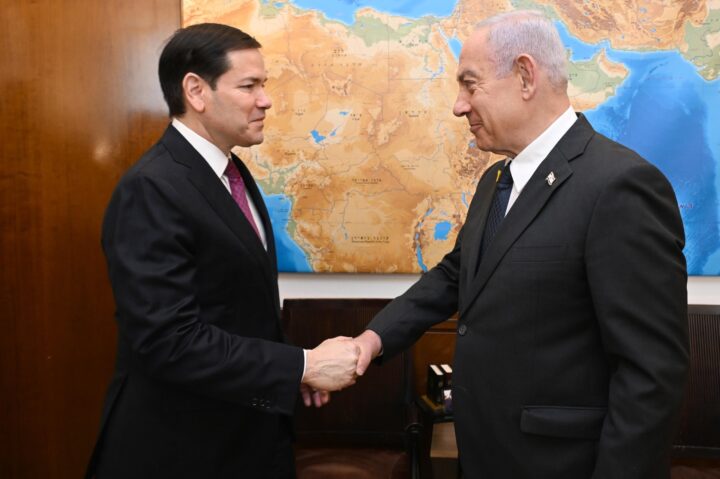
Haim Tzach/GPO
U.S. Secretary of State Marco Rubio meets Israeli Prime Minister Benjamin Netanyahu in Jerusalem, Sept. 15th, 2025
Good Thursday morning.
In today’s Daily Kickoff, we preview tomorrow’s presidential election in Ireland and look at front-runner Catherine Connolly’s history of criticizing Israel and the West, and report on today’s Senate Foreign Relations Committee confirmation hearing for Amer Ghalib, who has questioned Hamas’ atrocities on Oct. 7, 2023, to be U.S. ambassador to Kuwait. We talk to experts about the carousel of senior U.S. officials traveling to Israel this week as the ceasefire holds, and talk to legislators on Capitol Hill about Vice President JD Vance’s suggestion that Turkish troops could play an on-the-ground role in postwar Gaza. Also in today’s Daily Kickoff: NYPD Commissioner Jessica Tisch, Rabbi Ammiel Hirsch and Joel Rayburn.
Today’s Daily Kickoff was curated by Jewish Insider Executive Editor Melissa Weiss and Israel Editor Tamara Zieve, with an assist from Danielle Cohen-Kanik. Have a tip? Email us here.
What We’re Watching
- Secretary of State Marco Rubio lands in Israel today for a two-day trip that will include meetings with senior officials. Rubio’s visit comes days as Vice President JD Vance wraps up his trip to the country. The vice president, who is still in the country, is meeting today with Defense Minister Israel Katz and IDF Chief of Staff Eyal Zamir. More below.
- In Washington, the Senate Foreign Relations Committee is holding its confirmation hearing for Hamtramck, Mich., Mayor Amer Ghalib to be U.S. ambassador to Kuwait. More below.
- The Hudson Institute’s Center for Peace and Security in the Middle East is hosting a one-day conference focused on the U.S. role in the South Caucasus. Sen. Steve Daines (R-MT) is slated to give the keynote address.
- In New York, Dan Senor is hosting a live taping of the “Call Me Back” podcast with Israeli journalists and CMB contributors Nadav Eyal and Amit Segal at the Temple Emanu-El Streicker Center.
- Elsewhere in New York, the 92NY is hosting the second installment of the Sapir Debates. Former Rep. Kathy Manning (D-NC), Yehuda Kurtzer, Batya Ungar-Sargon and Jamie Kirchick, in conversation with The New York Times’ Bret Stephens, will debate “Does Zionism Have a Future on the American Left?”
- The Jewish National Fund’s annual Global Conference for Israel begins today in Hollywood, Fla.
What You Should Know
A QUICK WORD WITH JI’S LAHAV HARKOV
Ireland is set to elect a new president tomorrow. Like in Israel, the role of president is largely ceremonial, but unlike in Israel, where the Knesset elects the president and the choice is mostly the result of backroom political deals, the Irish president is directly elected by the people.
That means the choice reflects the mood of the Irish public — and after the news coming out of the Emerald Isle over the past two years, it may come as no surprise that the country appears to be on the verge of choosing a candidate with anti-Israel, antisemitic and even anti-Western views.
The current president, Michael D. Higgins, is no friend of Israel or the Jews, having called antisemitism accusations an Israeli “PR exercise.” When the Jewish community asked him not to attend a Holocaust remembrance ceremony out of a concern that he would politicize it, he went anyway and gave a speech comparing Israel’s actions in the war in Gaza to the Holocaust.
The country’s former justice minister, Alan Shatter, told Jewish Insider that the leading candidate for the presidency, Catherine Connolly, “if elected, will present as Michael D. Higgins on steroids.”
Connolly, a legislator representing Galway West since 2016, is a hard-left candidate running as an independent, and led a recent Irish Times poll by 18 points.
The front-runner’s anti-Israel history goes back to before the Oct. 7, 2023, Hamas attacks on Israel and the ensuing war in Gaza, and includes remarks that crossed the line into antisemitism. In 2021, Connolly wrote in a parliamentary question that Israel is “attempt[ing] to accomplish Jewish supremacy,” using language associated with centuries-old antisemitic conspiracy theories.
NOMINEE BACKLASH
Amer Ghalib, the mayor of Hamtramck, Mich., and President Donald Trump’s nominee to be U.S. ambassador to Kuwait, is expected to face a frosty reception when he appears today before the Senate Foreign Relations Committee for his confirmation hearing. The hearing comes after months of private pushback from GOP senators to Ghalib’s nomination over his anti-Israel record, which includes him questioning reports of Hamas atrocities on Oct. 7, 2023, supporting the Boycott, Divestment and Sanctions movement and for liking antisemitic comments on social media, Jewish Insider’s Emily Jacobs reports.
Pushback: Ghalib was given a date for his confirmation hearing in early October after months of delays. During that time, several committee Republicans unsuccessfully lobbied the White House to withdraw Ghalib from consideration for the Kuwait post, according to a senior GOP defense staffer familiar with the conversations. Sen. Jeanne Shaheen (D-NH), the top Democrat on the committee, said earlier this month that Ghalib’s nomination had been delayed. Ghalib acknowledged at the time that he was facing objections but said that Trump had called him to offer his continued support for his nomination, and the hearing was scheduled shortly after. With the hearing moving ahead, senators on both sides of the aisle have prepared questions for Ghalib about his history of incendiary public statements criticizing Israel and appearing to justify Hamas’ attacks on the Jewish state and deny that sexual violence took place, as well as his record as mayor of Hamtramck.
DIPLOMATIC CAROUSEL
‘Bibi-sitting’: Experts say Vance, Rubio trips to Israel part of U.S. efforts to constrain Netanyahu
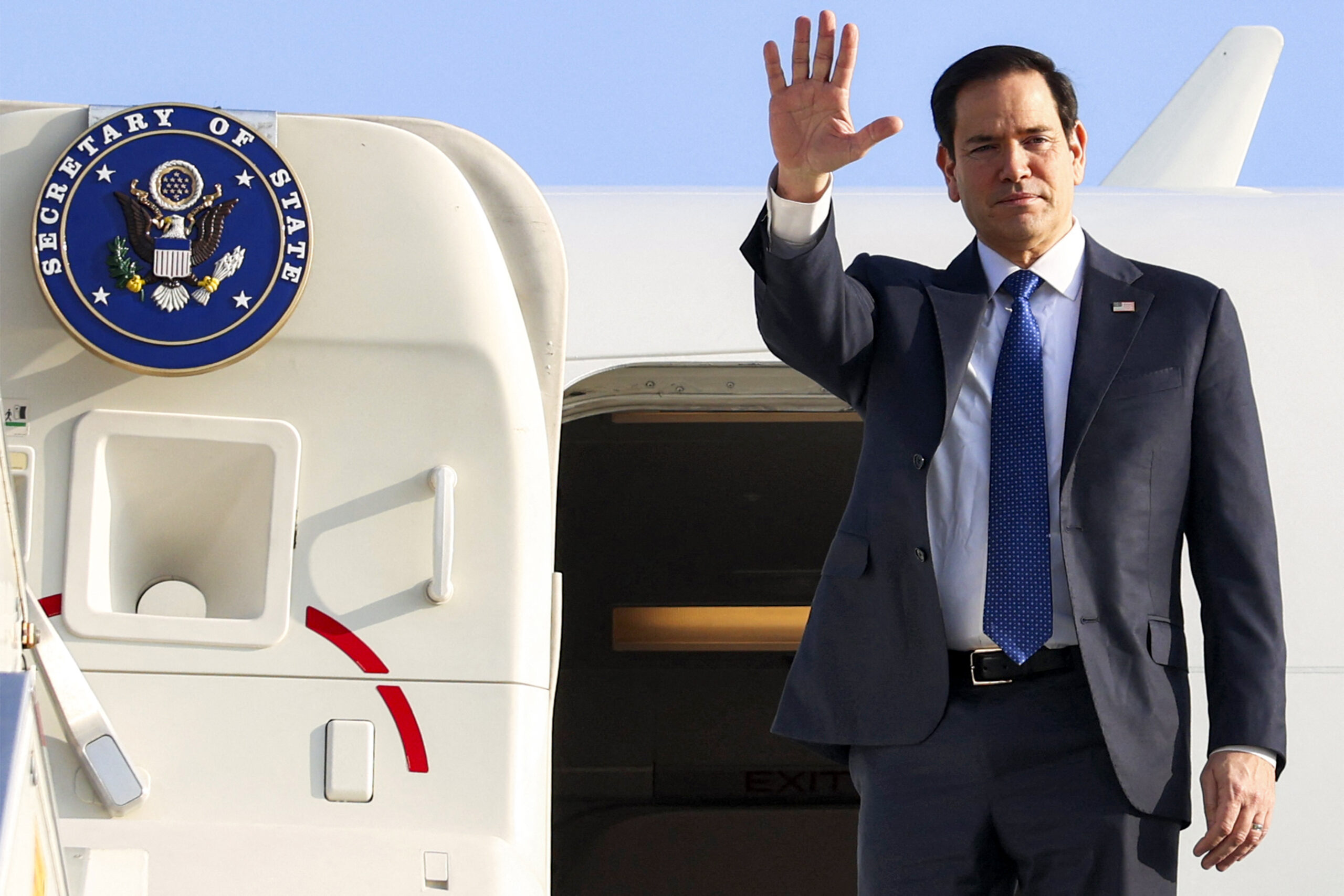
Secretary of State Marco Rubio traveled to Israel on Thursday, becoming the latest senior official dispatched to the country by President Donald Trump as the fragile ceasefire between Israel and Hamas extends into its second week, Jewish Insider’s Matthew Shea reports. Rubio joins several other administration officials and representatives who have made the journey to Israel this past week, on the heels of the signing of the first phase of Trump’s peace proposal, including Vice President JD Vance, White House Special Envoy Steve Witkoff and advisor Jared Kushner.
Administration’s aims: The swift mobilization of U.S. officials comes as the Trump administration aims to lay the groundwork for the second phase of the deal and works to keep Israeli Prime Minister Benjamin Netanyahu from reigniting fighting in the Gaza Strip and fracturing a delicate peace deal, amid Hamas’ repeated violations of the agreement. Vance, in his meeting with Netanyahu on Wednesday, emphasized that Israel is not a “vassal state” that needs to be told what to do. The string of high-level visits is “not about monitoring in the sense of, you know, monitoring a toddler,” Vance told reporters alongside Netanyahu. “It’s about monitoring in the sense that there’s a lot of work.” Chuck Freilich, an associate professor of political science at Columbia University, told JI he sees it as a form of U.S. oversight, or “Bibi-sitting,” something he says is “long-standing tradition” in the U.S.-Israel relationship.
turkey tension

Vice President JD Vance’s suggestion on Tuesday that the U.S. would welcome Turkish troops playing a role in the proposed stabilization force in Gaza was met with skepticism from leading Republican lawmakers and experts in Washington, Jewish Insider’s Matthew Shea and Emily Jacobs report. Vance told reporters in Israel that while the U.S. would not “force” Israel to accept Turkish troops “on their soil,” the Trump administration believed “that there’s a constructive role for the Turks to play.”
Expressing doubts: Sen. Lindsey Graham (R-SC) told JI, “I appreciate Turkey and Qatar as allies, but when it comes to Israel, [Turkish President Recep Tayyip] Erdogan’s been terrible in terms of rhetoric. I appreciate the role they played in trying to get the ceasefire, but the appetite in Israel for Turkey and Qatar to have a major role is pretty limited, given the history.” Jonathan Ruhe, a fellow for American strategy at the Jewish Institute for National Security of America, expressed similar doubts. “Having Turkish forces in there particularly strikes me as a bad idea. Turkey is not an impartial force. They are a capable and experienced military, but mostly doing things the United States and Israel don’t want them to be doing.”
Q&A

As the New York City mayoral race nears its end, Manhattan Rabbi Ammiel Hirsch has a message for his colleagues: It’s not too late to provide “leadership and clarity of perspective” to voters to oppose Democratic nominee Zohran Mamdani, citing the candidate’s hostility towards Israel and refusal to recognize it as a Jewish state. In an interview with Jewish Insider’s Haley Cohen on Wednesday, the senior rabbi of the Stephen Wise Free Synagogue, said there is still time for left-wing Jewish leaders to find their voice. Even without initiatives and statements from the Reform movement, progressive Jewish leaders can still “make a difference” by “laying out the stakes” — even as early voting begins this Saturday.
Sense of duty: “We’ve been slow to respond to widespread, pervasive, global anti-Zionism and we’ve been slow inside the Jewish community in countering Jewish voices who are anti-Zionist,” Hirsch told JI. “We, the mainstream of the Jewish community, have an obligation to counter that ideology. If it’s not countered, it intensifies and exacerbates the problem and that relates to public candidates as well. It’s imperative for the American Jewish community to stand up and express the kinds of views that I expressed. I think more are doing so. It is a responsibility at this historic moment in time for Jewish leadership to do so.”
Rabbinic rebuke: Over 650 rabbis from around the country signed on to an open letter on Wednesday voicing concern that, if elected New York City mayor, Mamdani would threaten “the safety and dignity of Jews in every city,” citing the Democratic nominee and front-runner’s antagonistic views towards Israel, JI’s Haley Cohen reports.
DEBATE DIGEST
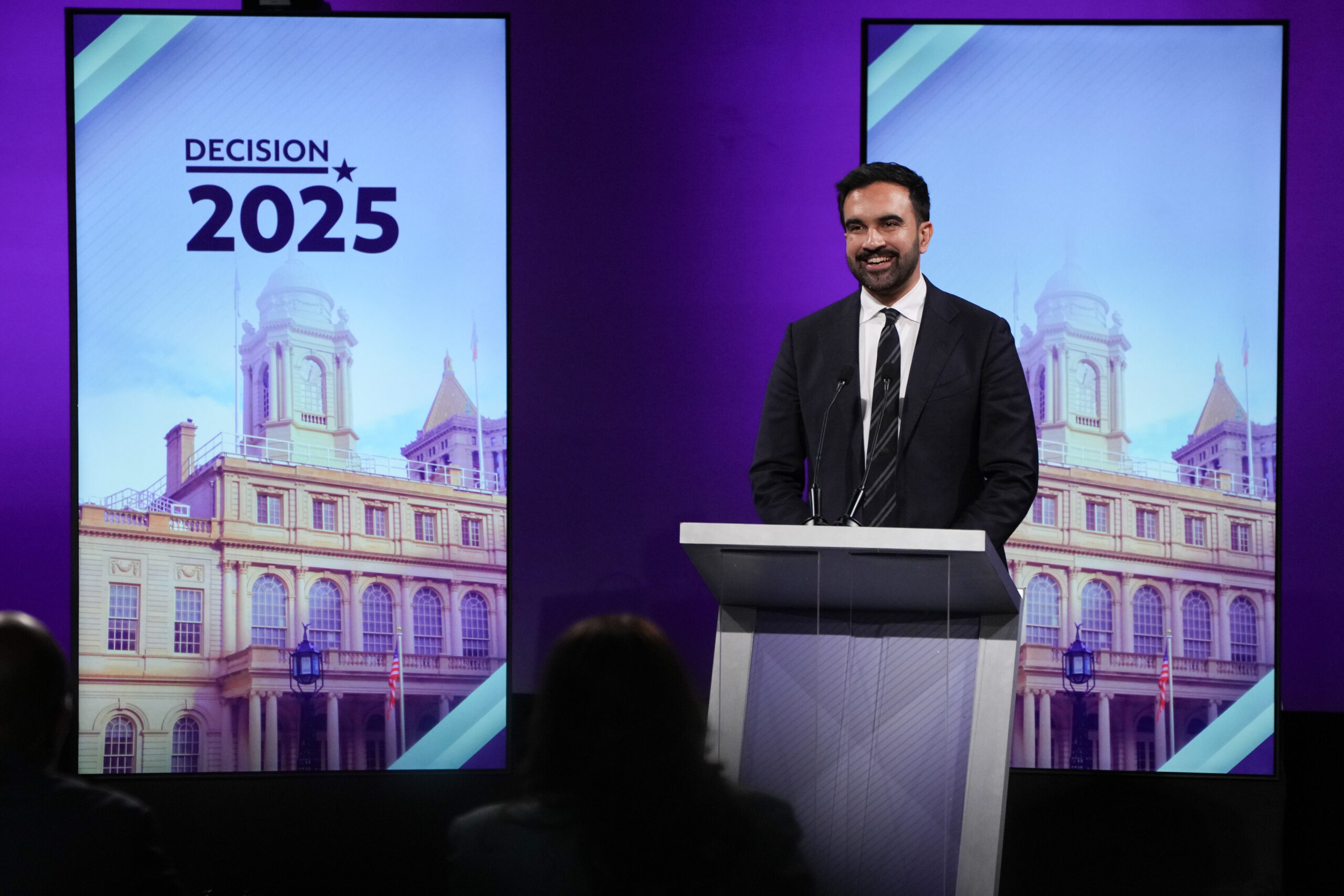
Zohran Mamdani, the Democratic nominee for mayor of New York City, confirmed that he would ask Jessica Tisch to stay on as the city’s police commissioner if elected, ending long-standing speculation over his plans for a key role in his potential administration, Jewish Insider’s Matthew Kassel reports.
What he said: Tisch, appointed last year by outgoing Mayor Eric Adams, “took on a broken status quo, started to deliver accountability, rooting out corruption and reducing crime across the five boroughs,” Mamdani said at the second and final general election debate on Wednesday evening. “I have said time and again that my litmus test for that position will be excellence, and the alignment will be of that position,” Mamdani added. “And I am confident that under a Mamdani administration, we would continue to deliver on that same mission.” Mamdani’s choice could assuage concerns among moderate Democrats and other crime-conscious New Yorkers who had been hopeful that he would choose Tisch, a widely respected technocrat who previously led the Department of Sanitation. Tisch, 44, who is Jewish, has not said whether she would plan to continue in her position if Mamdani is elected on Nov. 4.
Democrats divided: Rep. Dan Goldman (D-NY) said on Tuesday that he is still not ready to endorse Democratic nominee Zohran Mamdani, as he hasn’t seen the candidate assuage Jewish communal concerns, Jewish Insider’s Danielle Cohen-Kanik reports. Appearing on CNN, Goldman said he wasn’t sure if he would vote for Mamdani or his rival, former New York Gov. Andrew Cuomo, and that he’s “trying to work through” outstanding issues he has with the candidates.
UNION UNEASE

Rep. Josh Gottheimer (D-NJ) and other top New Jersey officials are urging the state’s largest teachers’ union to reverse its decision to appoint Ayat Oraby as an editor of its NJEA Review magazine, citing a series of antisemitic and pro-Hamas posts on social media, Jewish Insider’s Matthew Shea reports. Gottheimer has engaged repeatedly with the New Jersey Education Association in recent weeks, sending two letters to union leadership outlining his concerns, but Oraby, who was appointed in August, has remained in her position at the Review — a magazine distributed to roughly 200,000 educators statewide.
Online archive: Oraby’s since-deleted posts on X, screenshots of which were viewed by JI, hold Israel — not Hamas — responsible for the deaths of Israelis during the Oct. 7, 2023, terrorist attacks, claiming Israel “killed many of its citizens,” and voiced her support of Hamas, praising their actions on social media as “resistance” in August 2025. “While the criminal occupation gang kills children in the streets and treats Muslims with no mercy, you find liberated prisoners hugging and kissing HAMAS soldiers, which indicates the good treatment they received,” Oraby posted, referring to videos of Israeli hostages staged by Hamas. In other posts, Oraby explicitly called for violence against Israeli officials and claimed in July 2025 that the Jewish state “surpassed Nazism by far.” She also referred to journalists as “the filthy Hebrew media.”
Worthy Reads
Problematic Poster Boy: The Free Press’ Eli Lake examines the mainstreaming of far-right conspiracy theorist Nick Fuentes, who had previously faced ostracization over a litany of antisemitic, racist and misogynist comments. “Fuentes became the avatar of the canceled during his time in the wilderness. For his superfans, or Groypers, he is the Sex Pistols in 1977, reveling in broken shibboleths. And these anonymous low-follower accounts repost short clips from his livestreams on YouTube, X, Facebook, and TikTok. Fuentes is not just an influencer; he leads a dedicated movement of obsessive shitposters. … Part of the Fuentes appeal is that he presents himself as the ultimate martyr in a movement built on the social martyrdom of right-wingers. He is also willing to turn his sights on beloved MAGA influencers and politicians — to his fans, that makes him seem authentic.” [FreePress]
Alarm Bell: In his “Clarity” Substack, former Israeli Ambassador to the U.S. Michael Oren raises concerns about New York City Democratic mayoral candidate Zohran Mamdani’s candidacy weeks before the election. “Yes, the candidate is young, charismatic, and brimming with new ideas. So, too, are many of the Jew-hating influencers followed by millions. There can be no obscuring the fact that the candidate wants to see my state, my family, and the home of the world’s largest Jewish community erased from the map. And clearly the candidate would not care if that erasure were accomplished with violence. The candidate’s vicious positions on Israel come after the two years in which the distinction between anti-Zionism and antisemitism has virtually disappeared. In that time, New York Jews have been threatened almost daily by the haters of both the Jewish people and the Jewish state. For them, the candidate’s constant condemnations of Israel are not merely dog whistles but clarion calls to action.” [Clarity]
Word on the Street
United Arab Emirates National Security Advisor Tahnoon Bin Zayed Al Nahyan met on Wednesday with Jared Kushner and White House Special Envoy Steve Witkoff, following their trip to Israel earlier this week…
Maine Senate candidate Graham Platner, under fire for a tattoo that resembles a Nazi symbol, said he’d covered up the tattoo, which he got in 2007, shortly after its existence was made public earlier this week; on Wednesday, the Advocate reported that the Maine Democrat, who is also facing criticism for past racist and misogynist Reddit posts, authored a series of newly uncovered homophobic posts between 2016-2021…
The State Department rejected a ruling from the International Court of Justice earlier this week that determined Israel must facilitate aid into Gaza and that the Israeli government had not proven that members of the U.N. Relief and Works Agency were members of Hamas…
The Justice Department will pause several investigations into the University of Virginia, following the school’s confirmation that it will comply with a Trump administration directive prohibiting “unlawful racial discrimination in its university programming, admissions, hiring, or other activities”…
The Senate Foreign Relations Committee advanced Joel Rayburn’s nomination to be assistant secretary of state for Near Eastern affairs; Rayburn had faced what Sen. Jeanne Shaheen (D-NH), the committee’s ranking member, described over the summer as a “very difficult” confirmation path, owing to a lack of Democratic support and Sen. Rand Paul’s (R-KY) refusal to back the nomination…
Sen. Ted Cruz (R-TX) spoke out against the rise of right-wing antisemitism in his speech at Christians United for Israel’s “Night to Honor Israel” event on Sunday: “In the last six months, we have seen antisemitism rising on the right in a way I have never seen it in my entire life,” Cruz said; he also noted that Israeli Prime Minister Benjamin Netanyahu seemed to downplay right-wing antisemitism as the result of “astroturfed” Qatari and Iranian bots. “I am telling you, it is real, it is organic and it is spreading,” Cruz said he told Netanyahu…
The New York Times covers the multiple efforts by Paramount — all rebuffed — to purchase Warner Bros. Discovery, following Warner Bros.’ announcement earlier this week that it was considering a number of deals…
The California Faculty Association, which opposed a recent effort to to combat antisemitism in California schools, is distributing a questionnaire to political candidates in the state asking them if they had ever accepted money from AIPAC or the Jewish Public Affairs Committee of California, the latter of which is a coalition of nonprofits and progressive associations and does not make political contributions…
Rabbi Louis Scheiner was spotted speaking with former House Speaker Kevin McCarthy (R-CA) at a wedding in Los Angeles…
The New York Times’ culture critic reports from a recent event at New York’s Beacon Theater with “Curb Your Enthusiasm” and “Seinfeld” creator Larry David, who has largely avoided the spotlight since “Curb” ended a year and a half ago…
The International Olympic Committee recommended that global sporting events no longer be held in Indonesia, following Jakarta’s decision to refuse visas to Israeli athletes who qualified for this week’s World Artistic Gymnastics Championships…
Tehran announced the conditional release of Iranian national Mahdieh Esfandiari in France; the countries had previously discussed the potential release of Esfandiari in exchange for a French couple jailed for more than two years in Iran on espionage charges…
Pic of the Day
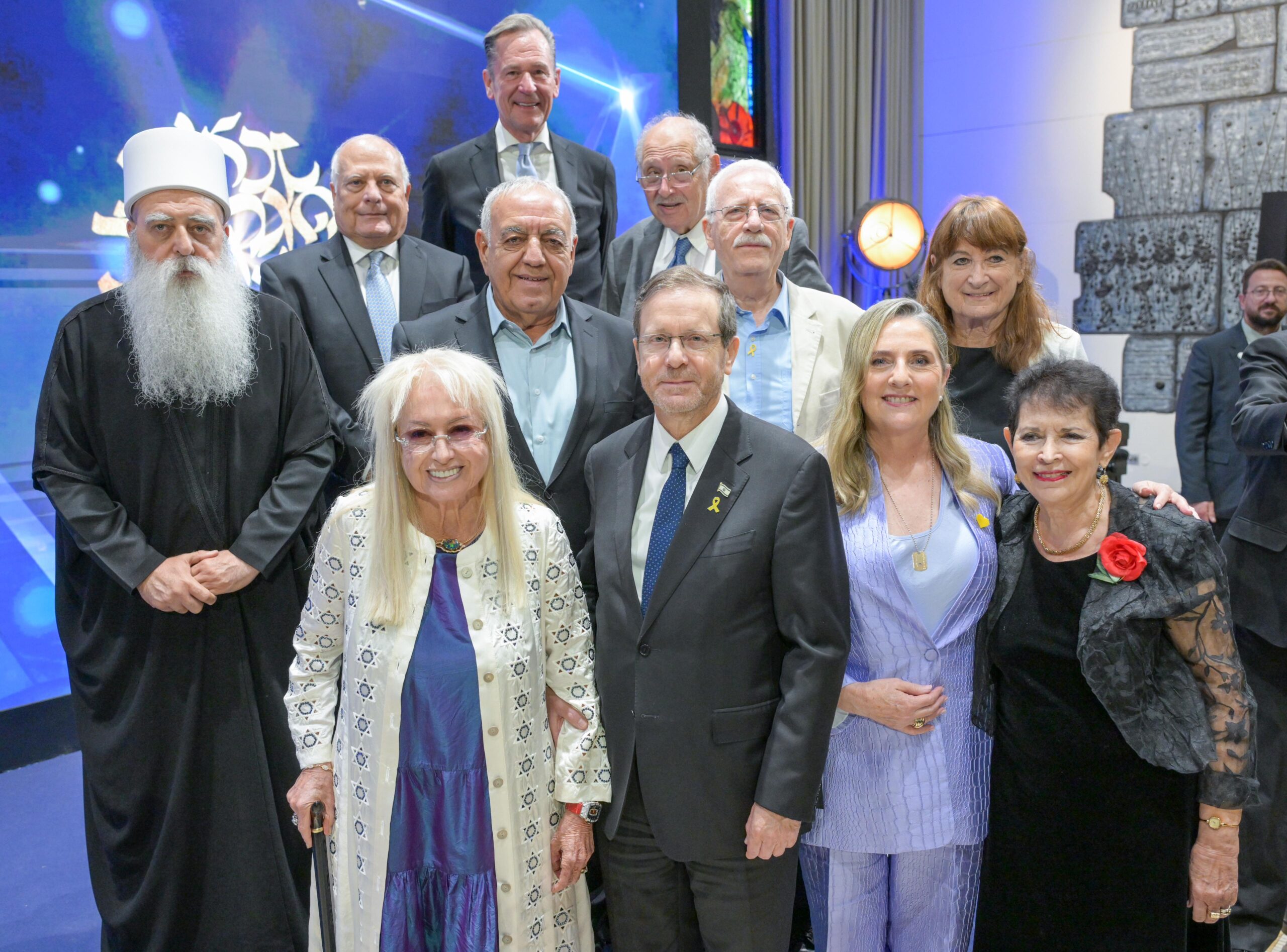
Israeli President Isaac Herzog presented the Israeli Presidential Medal of Honor, the country’s highest civilian award, to nine individuals in a ceremony last night in Jerusalem.
Spotted at the ceremony: honorees Dr. Miriam Adelson, Mathias Döpfner, Avi Ohry, Justice (ret.) George Karra, Galila Ron-Feder Amit, Dina Porat, Yossi Vardi, Sheikh Muwaffaq Tarif and Moti Malka, as well as U.S. Ambassador to Israel Mike Huckabee, former U.S. Ambassador to Israel David Friedman, German Ambassador to Israel Steffen Seibert, Friede Springer, Jan Bayer, Haim Saban, Shimon Axel Wahnish, Eli Beer, Amitai Raziel, Matan Adelson, Shirin Herzog, Natan Sharansky and former hostages Matan Angrest and Segev Kalfon.
Birthdays

Filmmaker, actor and producer famous for creating the cult horror “Evil Dead” series, as well as directing the original “Spider-Man” trilogy, Sam Raimi turns 66…
Chairman emeritus of the shopping mall developer Simon Property Group and the principal owner of the NBA’s Indiana Pacers, Herbert “Herb” Simon turns 91… Distinguished university professor of American and Jewish studies at the State University of New York at New Paltz, Gerald Sorin turns 85… Israeli journalist who has written for Davar and Yedioth Ahronoth, he won the Israel Prize in 2007, Nahum Barnea turns 81… Attorney best known for his role as special master for the 9/11 Victim Compensation Fund and for similar roles in a number of mass torts, Kenneth Feinberg turns 80… Neuro-ophthalmologist, academic, author and researcher, he is vice-chair of ophthalmology at UCLA, Alfredo Arrigo Sadun, M.D. turns 75… Screenwriter and television producer, best known for his work on “Star Trek,” Ira Steven Behr turns 72… Founder and CEO of global outsourcing company TeleTech (now TTEC) with over 50,000 employees on six continents, Kenneth D. Tuchman turns 66… Founder of the New Democrat Network in 1996, he closed it down in 2024, Simon Rosenberg turns 62… Author of 100 children’s and young adult fiction books that have sold more than 35 million copies worldwide, Gordon Korman turns 62… Former editor-in-chief of The New York Observer, Kenneth Kurson turns 57… Member of the Federal Reserve Board of Governors until her surprise retirement this past August, she is a tenured professor of public policy at Georgetown, Adriana Debora Kugler turns 56… President of the Jewish Confederation of Ukraine and VP of the World Jewish Congress, Boris Lozhkin turns 54… Film director, producer and talent agent, best known for his two-year marriage to Meghan Markle starting in 2011, Trevor Engelson turns 49… Senior director of strategic operations at SRE Network, following eight years at J Street, Shaina Wasserman… President of Renco Group, a family-owned private holding company founded by his father, Ira Rennert, Ari Rennert turns 47… Communications consultant, she was a senior advisor to Rohit Chopra, the former director at the Consumer Financial Protection Bureau, Allison Preiss… Minister delegate for European Affairs in the French government, Benjamin Haddad turns 40… Cartoonist for The New Yorker, Amy Kurzweil turns 39… Director of development at Mabua Israeli Beit Midrash, Ayelet Kahane… Senior associate in the Washington office of Hogan Lovells, Annika Lichtenbaum… Former speechwriter and special assistant at the U.S. Department of Labor, now a sales manager at Orangetheory Fitness, Rachel Shabad… VP of content marketing and partnerships at SiriusXM, Allison Rachesky… Richard Rubenstein…
Plus, new study suggests X is safe harbor for antisemitism

Jim Lo Scalzo/EPA/Bloomberg via Getty Images
President Donald Trump, right, and Benjamin Netanyahu, Israel's prime minister, during a news conference in the State Dining Room of the White House in Washington, DC, US, on Monday, Sept. 29, 2025.
Good Monday afternoon.
This P.M. briefing is reserved for our premium subscribers like you — offering a forward-focused read on what we’re tracking now and what’s coming next.
I’m Danielle Cohen-Kanik, U.S. editor at Jewish Insider and curator, along with assists from my colleagues, of the Daily Overtime briefing. Please don’t hesitate to share your thoughts and feedback by replying to this email.
📡On Our Radar
Notable developments and interesting tidbits we’re tracking
In a press conference this afternoon at the White House, President Donald Trump and Israeli Prime Minister Benjamin Netanyahu announced that Israel had agreed to sign onto the White House’s 20-point peace plan to end the war in Gaza.
The plan, which has not yet been agreed to by Hamas, would see the release of all of the remaining hostages in Gaza in exchange for an immediate end to the war and the release of 2,250 Palestinians in Israeli jails, including 250 serving life sentences. Hamas would be removed from power in Gaza with its members offered amnesty if they “commit to peaceful co-existence and to decommission their weapons.”
Netanyahu and Trump weren’t in lockstep on the future of Gaza, though. The Israeli PM said in his remarks that “Gaza will have a peaceful civilian administration that is run neither by Hamas nor by the Palestinian Authority,” while the White House’s plan says that the PA will control Gaza once the body has reformed (a process that could take years).
Even if Hamas rejects the plan, humanitarian aid operations will continue to be scaled up, and terror-free areas of Gaza will be handed over from the IDF to an international stabilization force. But Trump said that Israel will have the “full backing” of the U.S. to resume fighting in Gaza if Hamas does not accept.
“If Hamas rejects the deal — which is always possible, they’re the only one left. Everyone else has accepted it. But I have a feeling that we’re going to have a positive answer. But if not, as you know, Bibi, you’d have our full backing,” said Trump. Read JI’s coverage of the press conference here…
During their meeting beforehand in the Oval Office, Netanyahu and Trump held a phone call with Qatar’s prime minister, Sheikh Mohammed bin Abdulrahman al-Thani, where Netanyahu apologized for killing a Qatari serviceman in an attempted strike on Hamas leadership in Doha and promised not to violate Qatari sovereignty again.
The conversation came after Trump has repeatedly expressed his dissatisfaction with Israel’s decision to strike a major non-NATO U.S. ally without providing sufficient notice to the White House.
The apology was met with frustration and scorn from Netanyahu’s right-wing political allies and left-wing opponents in Israel. Finance Minister Bezalel Smotrich compared the apology to U.K. Prime Minister Neville Chamberlain’s appeasement of Adolf Hitler during World War II. Netanyahu’s “groveling apology to a state that supports and funds terror is a disgrace,” Smotrich said on X…
A New York Times/Siena College poll released today found dramatic declines in American support for Israel, with slightly more American voters saying they sympathize more with Palestinians (35%) than with Israelis (34%) for the first time since the Times started asking the question in 1998, though there remains a large segment of the population that is unsure or that sympathizes with both equally (31%).
Around 60% of voters said that Israel should end the war in Gaza “in order to protect against civilian casualties” even if the remaining hostages are not released and even if Hamas is not fully eliminated. Among Democrats, that figure is an overwhelming 81%.
The majority of the shifting sentiment against Israel comes from Democrats: 59% also think that Israel is intentionally killing Gazan civilians. Within the party, the biggest shift is coming from white, college-educated, older voters. In a similar poll two years ago, Democrats ages 45 and older “sympathized with Israel over Palestinians 2-to-1. That is now reversed, with 42% saying they sympathize more with Palestinians, compared with 17% who feel more sympathetic toward Israel”…
Among Israel’s detractors, New York City Democratic mayoral nominee Zohran Mamdani declined to denounce Hamas on Friday, when asked if he agreed with Netanyahu’s remarks at the U.N. General Assembly that Hamas is a terrorist group that needs to be destroyed.
“I’m not going to echo the words of Benjamin Netanyahu,” Mamdani said. “I can, however, share my own words and say them right here, which is that my politics is built on a universality. I can think of no better illustration of that than from the words of the hostage families themselves: Everyone for everyone.”
“What has been so infuriating to me and so many New Yorkers, frankly, is Benjamin Netanyahu’s use of the hostages as a justification to continue a war that has only continued to endanger the lives of those very hostages, as well as of so many Palestinians,” Mamdani said…
A new study by the Center for Countering Digital Hate and the Jewish Council for Public Affairs found that antisemitism is “thriving” on the social media platform X in an analysis of over 679,000 posts. The study found that X took action on only 36 out of the 300 most-viewed posts espousing antisemitic conspiracy theories and only four of them received community notes, which X owner Elon Musk has touted as the antidote to harmful content instead of increased moderation…
⏩ Tomorrow’s Agenda, Today
An early look at tomorrow’s storylines and schedule to keep you a step ahead
Keep an eye on Jewish Insider tomorrow morning for the latest reporting and analysis of the White House’s Gaza peace plan and a breakdown of the anti-Israel candidates running for all four open Chicago-area House seats in hotly contested Democratic primaries.
Tomorrow evening, Democratic Majority for Israel will host a virtual briefing with Rep. Greg Landsman (D-OH) and Jacob Magid, The Times of Israel‘s U.S. bureau chief, on the implications of today’s White House meeting, the status of the war, political developments in Jerusalem and Landsman’s reflections from his recent trip to Israel.
BOWING OUT
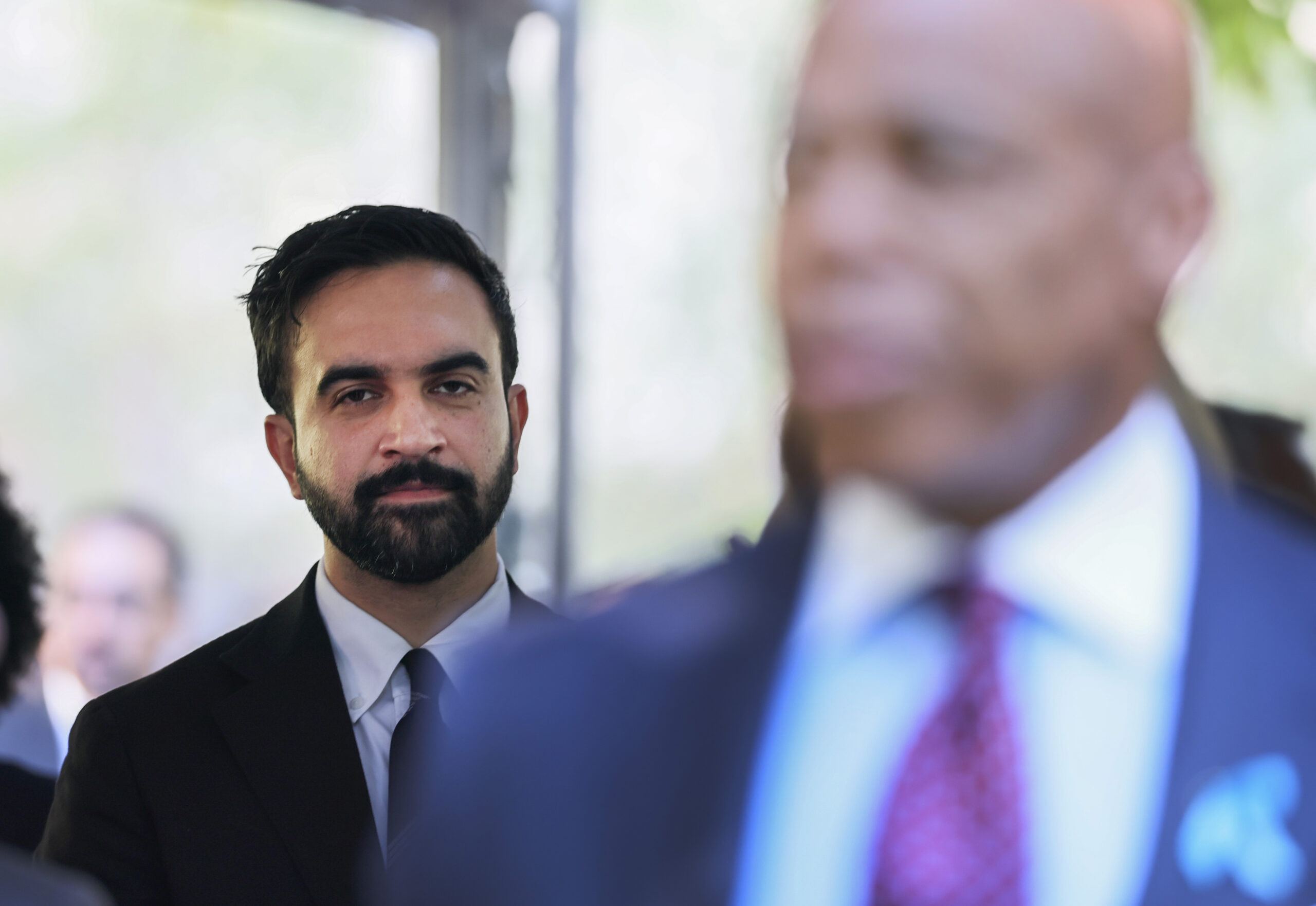
Individuals involved in the race told JI impediments remain to consolidating support behind Andrew Cuomo
INFLUENCER INSIGHTS

‘We have to fight the fight’ on social media, shore up support on American right, Netanyahu says
Plus, Mamdani rings in new year at anti-Zionist synagogue
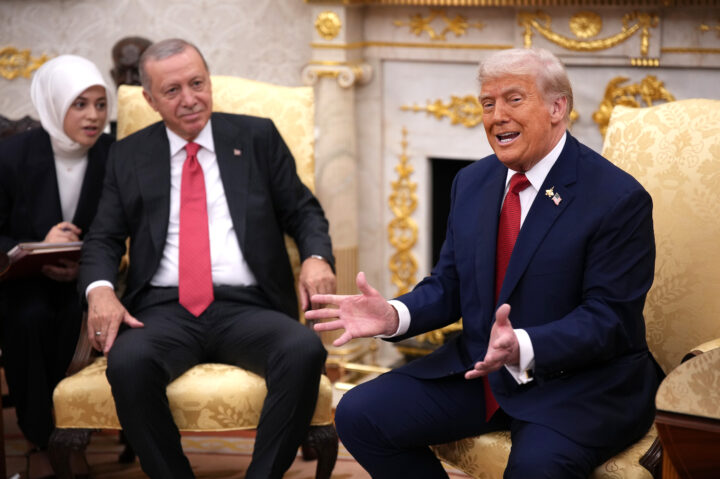
Photo by Andrew Harnik/Getty Images
President Donald Trump delivers remarks during a meeting with President of Turkey Recep Tayyip Erdogan in the Oval Office at the White House on September 25, 2025 in Washington, D.C.
Good Thursday afternoon.
This P.M. briefing is reserved for our premium subscribers like you — offering a forward-focused read on what we’re tracking now and what’s coming next.
I’m Danielle Cohen-Kanik, U.S. editor at Jewish Insider and curator, along with assists from my colleagues, of the Daily Overtime briefing. Please don’t hesitate to share your thoughts and feedback by replying to this email.
📡On Our Radar
Notable developments and interesting tidbits we’re tracking
Asked about reports that he had told Arab leaders this week he will not allow Israel to annex the West Bank, President Donald Trump confirmed to reporters in the Oval Office this afternoon, “I will not allow Israel to annex the West Bank, nope, I will not allow it. It’s not gonna happen.”
Pressed if he spoke with Israeli Prime Minister Benjamin Netanyahu about the issue, Trump said, “Yeah, but I’m not going to allow it. Whether I spoke to him or not — I did — but I’m not allowing Israel to annex the West Bank. There’s been enough, it’s time to stop now”…
The comments came shortly after Trump met with Turkish President Recep Tayyip Erdogan at the White House today, where Trump suggested that he may permit Ankara to purchase F-35 fighter jets, which it has been prohibited from doing since it acquired a Russian S-400 missile defense system in 2017.
Trump said without mentioning the F-35s or the less-advanced F-16 jets by name that he expected Erdogan would “be successful with buying the things” he would “like to buy.” “He needs certain things, and we need certain things, and we’re going to come to a conclusion. You’ll know by the end of the day,” Trump said.
The prospect of the sale has sparked concern from lawmakers: Bipartisan groups have urged the administration on several occasions not to change policy on the issue, including in a new letter today…
Elsewhere in the White House, one of the architects of the Trump administration’s negotiations with universities said that the large financial sums being extracted in the settlements are meant to bring attention to the administration’s aggressive approach to tackling discrimination in higher education, rather than punish the schools financially.
May Mailman, a conservative attorney who until last month served as a senior White House strategist, told The New York Times that “These are small dollar figures compared to the amounts that they are getting every year from the federal government and from their donors — but I think it provides a seriousness and a focus on these in ways that promises only wouldn’t.”
“When you see numbers like that, then you pay attention, and you look, and then you’re able to learn a little bit more, something maybe you wouldn’t normally learn,” Mailman said…
Getting in the holiday spirit, New York City Democratic mayoral nominee Zohran Mamdani joined Rosh Hashanah services on Monday night at Kolot Chayeinu, a Brooklyn synagogue known for its anti-Zionist activism, where the rabbi spoke extensively about Israel carrying out a “genocide” in Gaza.
The congregation, one of the first to call for a ceasefire just weeks after the Oct. 7 attacks, faced criticism last year for promoting anti-Israel views in its Hebrew school curriculum. One of its rabbis, a member of Jewish Voice for Peace’s Rabbinical Council, was kicked out of a White House event for disrupting former First Lady Jill Biden to call for an arms embargo on Israel.
Two of Mamdani’s challengers also spent time in NYC synagogues over the holiday: Former New York Gov. Andrew Cuomo joined the Park East Synagogue for its services and Mayor Eric Adams spoke to the Sephardic Lebanese Congregation.
Mamdani also plans to join Rep. Jerry Nadler (D-NY) for Yom Kippur services next week, where Nadler said some of the congregants will be “frankly very upset to see” Mamdani. It remains unclear which synagogue they will attend; the B’nai Jeshurun synagogue on the Upper West Side, which Nadler frequents, told Jewish Insider that Mamdani “will not be joining services with our community”…
Also in New York, Palestinian Authority President Mahmoud Abbas addressed the U.N. General Assembly by video today after the Trump administration revoked his visa to attend in person. He called Israel’s actions in Gaza “war crimes” and said the PA would be willing to govern the enclave, which he said is an integral part of a future Palestinian state…
Elon Musk’s xAI announced today it has reached a deal with the Trump administration to allow federal agencies to use its AI chatbot Grok, just months after the bot went rogue on X proclaiming itself to be “MechaHitler” and espousing extreme antisemitic rhetoric…
Over 1,200 celebrities including Mayim Bialik, Debra Messing, Sharon Osbourne, Howie Mandel, Haim Saban, Gene Simmons and Liev Schreiber have signed on to an open letter urging over 4,000 of their Hollywood colleagues to reconsider their signatures on a recent pledge to boycott Israeli film institutions. “We cannot stay silent when a story is turned into a weapon, when lies are dressed up as justice, and when artists are misled into amplifying antisemitic propaganda,” the letter reads…
⏩ Tomorrow’s Agenda, Today
An early look at tomorrow’s storylines and schedule to keep you a step ahead
Keep an eye on Jewish Insider for reporting on Microsoft’s decision to restrict the IDF’s use of its software after repeated protests by its employees and on what the sale of TikTok’s U.S. business may mean for the platform’s algorithm, which has been accused of promoting antisemitic and anti-Israel content.
This evening, UCLA Chancellor Julio Frenk will speak on Jews United for Democracy & Justice’s “America at a Crossroads” series about President Donald Trump’s approach to higher education. Read JI’s interview with Frenk here.
Israeli Prime Minister Benjamin Netanyahu will be the first world leader to speak at the U.N. General Assembly tomorrow morning, after many of the week’s speeches by world leaders included condemnations of Israel and recognition of a Palestinian state. On Monday, Netanyahu will meet with Trump at the White House.
Also tomorrow, the Nova Music Festival Exhibition opens in Boston.
We’ll be back in your inbox with the Daily Overtime on Monday. Shabbat shalom!
Q&A
The media mogul told JI she’s excited to show the world a different view of Israel through the Sipur production company, which she joined as chair
EYE ON UNESCO
‘It’s bad for Israel and bad for America,’ an Israeli diplomat told JI this week
DAY 8: “A week of raids and arrests, but no hard lead to the kidnappers” by Avi Issacharoff:“The terrorist group that was able to kidnap the three Israeli teens from the Alon Shvut hitchhiking stop last Thursday will likely go down in the annals of the Shin Bet (Israel Security Agency) and Israeli intelligence forces as one of the most dangerous and sophisticated cells to have been active in the West Bank in recent years.“To disappear for more than a week with the entire Israeli army and intelligence force in hot pursuit is no easy task. Clearly, much thought and many resources were dedicated to it. Which begs the question: could it be that all this was a local initiative by a local Hamas cell acting of its own accord? Or was it a case of a few terrorists who instigated an attack under explicit orders from the political leadership of Hamas or, alternatively, its senior military leadership?” [ToI] (more…)
Josh Rogin Scoops: GOP Will Force Reid to Save Obama’s Iran Policy—Over and Over Again: “Dozens of Republican senators joined Wednesday to demand that Harry Reid allow a floor vote on a new Iran sanctions bill. If he doesn’t, they are planning to make his life miserable. Republicans plan to respond today by using an array of floor tactics—including bringing up the bill and forcing Reid to publicly oppose it—as a means of putting public pressure on Reid and Democrats who may be on the fence.” [DailyBeast] — See the letter sent to Harry Reid [Scribd] (more…)
Transcript of remarks by President Obama at the 10th Annual Saban Forum where Obama was interviewed by Haim Saban.
1:13 P.M. Willard Hotel Washington, D.C.
THE PRESIDENT: Hello! (Applause.)
MR. SABAN: How are you doing?
THE PRESIDENT: I’m good. Hello, everybody.
MR. SABAN: One of your staffers said you are in a great mood this afternoon, so —
THE PRESIDENT: I am.
MR. SABAN: — we’re doubly blessed here. So that’s terrific. I’d like to thank you very much for being here today, Mr. President. The Forum, and I personally, are honored to have you join us in this conversation. And I am personally honored that you insisted that I have this conversation with you, even though I never set foot for any conversation for 10 years. (Laughter.) So thank you. I’m very honored. Shall we start with Iran?
THE PRESIDENT: We should.
MR. SABAN: Okay, good. (Laughter.) Mr. President, polls indicate that 77 percent of Israelis don’t believe this first nuclear deal will preclude Iran from having nuclear weapons, and they perceive this fact as an existential matter for them. What can you say to the Israeli people to address their concern?
THE PRESIDENT: Well, first, before I answer the question, let me say to you, Haim, thank you so much for the great work that you’ve done. I think the Saban Forum and the Saban Center has done outstanding work, and it provides us a mechanism where we don’t just scratch the surface of these issues. Obviously the challenges in the Middle East are enormous, and the work that’s being done here is terrific. So I want to also thank Strobe for hosting us here today, and all of you who are here, including some outstanding members of the Israeli government and some friends that I haven’t seen in a while. So thanks for having me. Let me start with the basic premise that I’ve said repeatedly. It is in America’s national security interests, not just Israel’s national interests or the region’s national security interests, to prevent Iran from getting a nuclear weapon. And let’s remember where we were when I first came into office. Iran had gone from having less than 200 centrifuges to having thousands of centrifuges, in some cases more advanced centrifuges. There was a program that had advanced to the point where their breakout capacity had accelerated in ways that we had been concerned about for quite some time and, as a consequence, what I said to my team and what I said to our international partners was that we are going to have to be much more serious about how we change the cost-benefit analysis for Iran. We put in place an unprecedented regime of sanctions that has crippled Iran’s economy, cut their oil revenues by more than half, have put enormous pressure on their currency — their economy contracted by more than 5 percent last year. And it is precisely because of the international sanctions and the coalition that we were able to build internationally that the Iranian people responded by saying, we need a new direction in how we interact with the international community and how we deal with this sanctions regime. And that’s what brought President Rouhani to power. He was not necessarily the first choice of the hardliners inside of Iran.
Now, that doesn’t mean that we should trust him or anybody else inside of Iran. This is a regime that came to power swearing opposition to the United States, to Israel, and to many of the values that we hold dear. But what I’ve consistently said is even as I don’t take any options off the table, what we do have to test is the possibility that we can resolve this issue diplomatically. And that is the deal that, at the first stages, we have been able to get done in Geneva, thanks to some extraordinary work by John Kerry and his counterparts in the P5- plus-1. So let’s look at exactly what we’ve done. For the first time in over a decade, we have halted advances in the Iranian nuclear program. We have not only made sure that in Fordor and Natanz that they have to stop adding additional centrifuges, we’ve also said that they’ve got to roll back their 20 percent advanced enrichment. So we’re —
MR. SABAN: To how much?
THE PRESIDENT: Down to zero. So you remember when Prime Minister Netanyahu made his presentation before the United Nations last year —
MR. SABAN: The cartoon with the red line?
THE PRESIDENT: The picture of a bomb — he was referring to 20 percent enrichment, which the concern was if you get too much of that, you now have sufficient capacity to go ahead and create a nuclear weapon. We’re taking that down to zero. We are stopping the advancement of the Arak facility, which would provide an additional pathway, a plutonium pathway for the development of nuclear weapons. We are going to have daily inspectors in Fordor and Natanz. We’re going to have additional inspections in Arak. And as a consequence, during this six-month period, Iran cannot and will not advance its program or add additional stockpiles of advanced uranium — enriched uranium. Now, what we’ve done in exchange is kept all these sanctions in place — the architecture remains with respect to oil, with respect to finance, with respect to banking. What we’ve done is we’ve turned the spigot slightly and we’ve said, here’s maximum $7 billion out of the over $100 billion of revenue of theirs that is frozen as a consequence of our sanctions, to give us the time and the space to test whether they can move in a direction, a comprehensive, permanent agreement that would give us all assurances that they’re not producing nuclear weapons.
MR. SABAN: I understand. A quick question as it relates to the $7 billion, if I may.
THE PRESIDENT: Please.
MR. SABAN: How do we prevent those who work with us in Geneva, who have already descended on Tehran looking for deals, to cause the seven to become 70? Because we can control what we do, but what is the extent that we can control the others?
THE PRESIDENT: Well, Haim, this is precisely why the timing of this was right. One of the things we were always concerned about was that if we did not show good faith in trying to resolve this issue diplomatically, then the sanctions regime would begin to fray. Keep in mind that this was two years of extraordinary diplomatic work on behalf of our team to actually get the sanctions in place. They’re not just the unilateral sanctions that are created by the United States. These are sanctions that are also participated in by Russia, by China, and some allies of ours like South Korea and Japan that find these sanctions very costly. But that’s precisely why they’ve become so effective. And so what we’ve said is that we do not loosen any of the core sanctions; we provide a small window through which they can access some revenue, but we can control it and it is reversible. And during the course of these six months, if and when Iran shows itself not to be abiding by this agreement, not to be negotiating in good faith, we can reverse them and tighten them even further. But here is the bottom line. Ultimately, my goal as President of the United States — something that I’ve said publicly and privately and shared everywhere I’ve gone — is to prevent Iran from getting a nuclear weapon. But what I’ve also said is the best way for us to prevent Iran from getting a nuclear weapons is for a comprehensive, verifiable, diplomatic resolution, without taking any other options off the table if we fail to achieve that.
It is important for us to test that proposition during the next six months, understanding that while we’re talking, they’re not secretly improving their position or changing circumstances on the ground inside of Iran. And if at the end of six months it turns out that we can’t make a deal, we’re no worse off, and in fact we have greater leverage with the international community to continue to apply sanctions and even strengthen them. If, on the other hand, we’re able to get this deal done, then what we can achieve through a diplomatic resolution of this situation is, frankly, greater than what we could achieve with the other options that are available to us.
MR. SABAN: Let’s all hope we get there.
THE PRESIDENT: Absolutely.
MR. SABAN: You have hosted Passover dinners at the White House.
THE PRESIDENT: I have.
MR. SABAN: And you know this famous saying, “Why is this night different than any other night?” In that context, I would like to ask you a question.
THE PRESIDENT: Please.
MR. SABAN: With the best intentions and all efforts, President Reagan vowed that Pakistan would not go nuclear. Didn’t happen. With the best intentions and all efforts, President Clinton vowed that North Korea won’t go nuclear. Why is this nuclear deal different than any other nuclear deal? (Laughter.)
THE PRESIDENT: Well, we don’t know yet. No, we don’t know yet. I think it’s important for everybody to understand this is hard. Because the technology of the nuclear cycle, you can get off the Internet; the knowledge of creating a nuclear weapons is already out there. And Iran is a large country and it is a relatively wealthy country, and so we have to take seriously the possibility that they are going to try to get a nuclear weapon. That’s what this whole exercise is about. Having said that, if you look at the history, by the time we got an agreement with North Korea, they essentially already had a nuclear weapon. With respect to Pakistan, there was never the kinds of inspection regimes and international sanctions and U.N. resolutions that were in place. We have been able to craft an international effort and verification mechanism around the Iran nuclear program that is unprecedented and unique. That doesn’t mean it’s easy. And that’s why we have to take it seriously. But I think one of the things that I’ve repeatedly said when people ask, why should we try to negotiate with them, we can’t trust them, we’re being naïve, what I try to describe to them is not the choice between this deal and the ideal, but the choice between this deal and other alternatives. If I had an option, if we could create an option in which Iran eliminated every single nut and bolt of their nuclear program, and foreswore the possibility of ever having a nuclear program, and, for that matter, got rid of all its military capabilities, I would take it. But —
MR. SABAN: Next question —
THE PRESIDENT: Sorry, Haim, I want to make sure everybody understands it — that particular option is not available. And so as a consequence, what we have to do is to make a decision as to, given the options available, what is the best way for us to assure that Iran does not get a nuclear weapon. And the best way for us to assure it is to test this diplomatic path, understanding that it’s not based on trust; it’s based on what we can verify. And it also, by the way, does not negate the fact that Iran is engaging in a whole bunch of other behavior in the Middle East and around the world that is detrimental to the United States and detrimental to Israel. And we will continue to contest their efforts where they’re engaging in terrorism, where they’re being disruptive to our friends and our allies. We will not abide by any threats to our friends and allies in the region, and we’ve made that perfectly clear. And our commitment to Israel’s security is sacrosanct, and they understand that. They don’t have any doubt about that. But if we can negotiate on the nuclear program in the same way that Ronald Reagan was able to negotiate with the Soviet Union even as we were still contesting them around the world, that removes one more threat — and a critical, existential threat — takes it out of their arsenal. And it allows us then to ultimately I think win them — defeat some of their agenda throughout the region without worrying that somehow it’s going to escalate or trigger a nuclear arms race in the most volatile part of the world.
MR. SABAN: Unfortunately, you’re right — it would. Tom Friedman had an interesting perspective in one of his columns. He said, “Never negotiate with Iran without some leverage and some crazy on your side. We have to out-crazy the crazies.” Do you think he has a point? (Laughter.)
THE PRESIDENT: Well, Tom is a very smart observer. And I know that my friend, Bibi, is going to be speaking later, and if Tom wants to characterize Bibi the way you just described, that’s his —
MR. SABAN: I didn’t say that.
THE PRESIDENT: — that’s his prerogative, that’s not my view. (Laughter.) Prime Minister Netanyahu and I have had constant consultations on these issues throughout the last five years. And something that I think bears repeating: The United States military cooperation with Israel has never been stronger. Our intelligence cooperation with Israel has never been stronger. Our support of Israel’s security has never been stronger. Whether you’re talking about Iron Dome, whether you’re talking about trying to manage the situation in Gaza a little over a year ago, across the board, our coordination on the concrete issues facing Israel’s security has never been stronger. And that’s not just my opinion; I think that’s something that can be verified. There are times where I, as President of the United States, am going to have different tactical perspectives than the Prime Minister of Israel — and that is understandable, because Israel cannot contract out its security. In light of the history that the people of Israel understand all too well, they have to make sure that they are making their own assessments about what they need to do to protect themselves. And we respect that. And I have said that consistently to the Prime Minister. But ultimately, it is my view, from a tactical perspective, that we have to test out this proposition. It will make us stronger internationally, and it may possibly lead to a deal that we’ll have to show to the world, in fact, assures us that Iran is not getting a nuclear weapon. It’s not as if there’s going to be a lot of capacity to hide the ball here. We’re going to be able to make an assessment, because this will be subject to the P5-plus-1 and the international community looking at the details of every aspect of a potential final deal, and we’re consulting with all our friends, including Israel, in terms of what would that end state look like. And if we can’t get there, then no deal is better than a bad deal. But presuming that it’s going to be a bad deal and, as a consequence, not even trying for a deal I think would be a dire mistake.
MR. SABAN: Well, personally, I find a lot of comfort in the fact that even though the United States and Israel may have red lines in different places, we are on the same place as far as the bottom line goes —
THE PRESIDENT: Absolutely.
MR. SABAN: — and Iran will not have nuclear weapons. Fair to say?
THE PRESIDENT: Absolutely. That is more than fair.
MR. SABAN: Good. Thank you. Should we move to these Israeli-Palestinians —
THE PRESIDENT: We should.
MR. SABAN: Okay. (Laughter.) Very obedient President I have here today. (Laughter.)
THE PRESIDENT: This is the Saban Forum, so you’re in charge. (Laughter.)
MR. SABAN: I wish. (Laughter.)
THE PRESIDENT: Or Cheryl is in charge.
MR. SABAN: You’re more on now, Mr. President. It is Cheryl who is in charge.
THE PRESIDENT: That’s exactly right.
MR. SABAN: Anyway. (Laughter.) First of all, before I ask the first question, I would be remiss if I didn’t, from the bottom of my heart, thank you for your continuous effort to achieve peace in the Middle East. Thank you so very much. (Applause.)
THE PRESIDENT: I appreciate it. Thank you.
MR. SABAN: So people talk about an imposed American solution. We’ve heard these rumors rumbling around for a while. The U.S. has always said it doesn’t want to impose. What would you propose?
THE PRESIDENT: Well, first of all, this is a challenge that we’ve been wrestling with for 60 years. And what I’ve consistently said is that the only way this is going to be resolved is if the people of Israel and the Palestinian people make a determination that their futures and the futures of their children and grandchildren will be better off with peace than with conflict. The United States can be an effective facilitator of that negotiation and dialogue; we can help to bridge differences and bridge gaps. But both sides have to want to get there. And I have to commend Prime Minister Netanyahu and President Abbas for the courageous efforts that have led to very serious conversations over the last several months. They are not easy. But they come down to what we all know are going to be the core issues: territory; security; refugees; Jerusalem. And there are not a lot of secrets or surprises at this point. We know what the outlines of a potential agreement might look like. And the question then becomes are both sides willing to take the very tough political risks involved if their bottom lines are met. For the Palestinians, the bottom line is that they have a state of their own that is real and meaningful. For the Israelis, the bottom line is, to a large extent, is the state of Israel as a Jewish state secure. And those issues have been spoken about over the last several months in these negotiations in a very serious way. And I know Tzipi Livni is here and been participating in that, and we’re very grateful for her efforts there. And I think it is possible over the next several months to arrive at a framework that does not address every single detail but gets us to a point where everybody recognizes better to move forward than move backwards. Sometimes when you’re climbing up a mountain, even when it’s scary, it’s actually easier to go up than it is to go down. And I think that we’re now at a place where we can achieve a two-state solution in which Israelis and Palestinians are living side-by-side in peace and security. But it’s going to require some very tough decisions. One thing I have to say, though, is we have spent a lot of time working with Prime Minister Netanyahu and his entire team to understand from an Israeli perspective what is required for the security of Israel in such a scenario. And we — going back to what I said earlier — we understand that we can’t dictate to Israel what it needs for its security. But what we have done is to try to understand it and then see through a consultative process, are there ways that, through technology, through additional ideas, we can potentially provide for that. And I assigned one of our top former generals, John Allen, who most recently headed up the entire coalition effort in Afghanistan — he’s retired now, but he was willing to take on this mission — and he’s been working to examine the entire set of challenges around security —
MR. SABAN: Has he concluded anything?
THE PRESIDENT: Well, he’s come up to — he has arrived at the conclusion that it is possible to create a two-state solution that preserves Israel’s core security needs. Now, that’s his conclusion, but ultimately he’s not the decision-maker here. Prime Minister Netanyahu and the Israeli military and intelligence folks have to make that determination. And ultimately, the Palestinians have to also recognize that there is going to be a transition period where the Israeli people cannot expect a replica of Gaza in the West Bank. That is unacceptable. And I think we believe that we can arrive at that point where Israel was confident about that, but we’re going to have to see whether the Israelis agree and whether President Abbas, then, is willing to understand that this transition period requires some restraint on the part of the Palestinians as well. They don’t get everything that they want on day one. And that creates some political problems for President Abbas, as well.
MR. SABAN: Yes. Well, I’d say my next question of what was the reaction of the Prime Minister to General Allen for John Kerry.
THE PRESIDENT: Yes, ask John Kerry, or ask the Prime Minister.
MR. SABAN: Okay.
THE PRESIDENT: I don’t want to speak for him. (Laughter.)
MR. SABAN: They won’t tell me, but, okay. (Laughter.)
THE PRESIDENT: That’s probably true.
MR. SABAN: My last question: The Palestinians are two people — one in the West Bank, led by President Abbas that is negotiating the deal; and one in Gaza, led by Hamas that wants to eradicate Israel from the face of the Earth. President Abbas, as far as I know, says he won’t make a deal that doesn’t include Gaza, which he doesn’t control. How do we get out from this labyrinth?
THE PRESIDENT: Well, I think this is going to have to happen in stages. But here’s what I know from my visits to Israel, my visits to the West Bank: There are people of goodwill on both sides that recognize the status quo is not sustainable over the long term, and as a consequence, it is in the interests of both the Israelis and Palestinians to resolve this issue. There are young people, teenagers that I met both in Israel and in the Palestinian Territories that want to get out from under this history and seek a future that is fundamentally different for them. And so if, in fact, we can create a pathway to peace, even if initially it’s restricted to the West Bank, if there is a model where young Palestinians in Gaza are looking and seeing that in the West Bank Palestinians are able to live in dignity, with self-determination, and suddenly their economy is booming and trade is taking place because they have created an environment in which Israel is confident about its security and a lot of the old barriers to commerce and educational exchange and all that has begun to break down, that’s something that the young people of Gaza are going to want. And the pressure that will be placed for the residents of Gaza to experience that same future is something that is going to be I think overwhelmingly appealing.
But that is probably going to take place during the course of some sort of transition period. And the security requirements that Israel requires will have to be met. And I think that is able — that we can accomplish that, but ultimately it’s going to be something that requires everybody to stretch out of their comfort zones. And the one thing I will say to the people of Israel is that you can be assured whoever is in the office I currently occupy, Democrat or Republican, that your security will be uppermost on our minds. That will not change. And that should not mean you let up on your vigilance in terms of wanting to look out for your own country. It does — it should give you some comfort, though, that you have the most powerful nation on Earth as your closest friend and ally. And that commitment is going to be undiminished.
Mr. Saban: That was my last question.
THE PRESIDENT: I promised — we worked something backstage where as long as Haim’s questions weren’t too long, I’d take a couple of questions from the audience. And he was very disciplined — (laughter) — so let me take one or two. This gentleman right here. Why don’t you get a microphone so everybody can hear you?
Q Mr. President, I used to be a general in the Israeli Air Force, in intelligence, and now running a think tank in Tel Aviv. Looking into the future agreement with Iran — I put behind me the initial agreement, and what is really important is the final agreement. Two questions. What is the parameters that you see as a red line to ensure that Iran will be moving forward — moving backward, rolling back from the bomb as much as possible? And what is your plan B if an agreement cannot be reached?
THE PRESIDENT: Well, with respect to the end state, I want to be very clear there’s nothing in this agreement or document that grants Iran a right to enrich. We’ve been very clear that given its past behavior, and given existing U.N. resolutions and previous violations by Iran of its international obligations, that we don’t recognize such a right, and if, by the way, negotiations break down, there will be no additional international recognition that’s been obtained. So this deal goes away and we’re back to where we were before the Geneva agreement, subject — and Iran will continue to be subject to all the sanctions that we put in place in the past and we may seek additional ones. But I think what we have said is we can envision a comprehensive agreement that involves extraordinary constraints and verification mechanisms and intrusive inspections, but that permits Iran to have a peaceful nuclear program. Now, in terms of specifics, we know that they don’t need to have an underground, fortified facility like Fordor in order to have a peaceful nuclear program. They certainly don’t need a heavy-water reactor at Arak in order to have a peaceful nuclear program. They don’t need some of the advanced centrifuges that they currently possess in order to have a limited, peaceful nuclear program. And so the question ultimately is going to be, are they prepared to roll back some of the advancements that they’ve made that would not justify — or could not be justified by simply wanting some modest, peaceful nuclear power, but, frankly, hint at a desire to have breakout capacity and go right to the edge of breakout capacity. And if we can move that significantly back, then that is, I think, a net win. Now, you’ll hear arguments, including potentially from the Prime Minister, that say we can’t accept any enrichment on Iranian soil. Period. Full stop. End of conversation. And this takes me back to the point I made earlier. One can envision an ideal world in which Iran said, we’ll destroy every element and facility and you name it, it’s all gone. I can envision a world in which Congress passed every one of my bills that I put forward. (Laughter.) I mean, there are a lot of things that I can envision that would be wonderful. (Laughter.) But precisely because we don’t trust the nature of the Iranian regime, I think that we have to be more realistic and ask ourselves, what puts us in a strong position to assure ourselves that Iran is not having a nuclear weapon and that we are protected? What is required to accomplish that, and how does that compare to other options that we might take? And it is my strong belief that we can envision a end state that gives us an assurance that even if they have some modest enrichment capability, it is so constrained and the inspections are so intrusive that they, as a practical matter, do not have breakout capacity.
Theoretically, they might still have some. But, frankly, theoretically, they will always have some, because, as I said, the technology here is available to any good physics student at pretty much any university around the world. And they have already gone through the cycle to the point where the knowledge, we’re not going to be able to eliminate. But what we can do is eliminate the incentive for them to want to do this. And with respect to what happens if this breaks down, I won’t go into details. I will say that if we cannot get the kind of comprehensive end state that satisfies us and the world community and the P5-plus-1, then the pressure that we’ve been applying on them and the options that I’ve made clear I can avail myself of, including a military option, is one that we would consider and prepare for. And we’ve always said that. So that does not change. But the last point I’ll make on this. When I hear people who criticize the Geneva deal say it’s got to be all or nothing, I would just remind them if it’s nothing, if we did not even try for this next six months to do this, all the breakout capacity we’re concerned about would accelerate during that six months. Arak would be further along. The advanced centrifuges would have been put in place. They’d be that much closer to breakout capacity six months from now. And that’s why I think it’s important for us to try to test this proposition. I’ll take a couple more. Yes, sir. Right over here.
Q Mr. President, Israeli journalist from Isreal Hayom daily newspaper. Mr. President, I covered the negotiations with Iran, nuclear negotiations — Geneva 2009, Istanbul 2010. And I came back now from Geneva again, where you could see the big change was not only on Iran’s side, but also on the P5-plus-1 side, meaning they were very eager to reach an agreement. Coming back from Geneva, we learned, and some of us had known before, the secret talks America had with Iran. And we know the concern you have on the Israeli security — e’re very grateful. But how does it coincide with your secret negotiations Washington had with Tehran? Thank you.
THE PRESIDENT: The truth is, is that, without going into the details, there weren’t a lot of secret negotiations. Essentially what happened — and we were very clear and transparent about this — is that from the time I took office, I said we would reach out to Iran and we would let them know we’re prepared to open up a diplomatic channel. After Rouhani was elected, there was some acceleration leading up to the U.N. General Assembly. You’ll recall that Rouhani was engaging in what was termed a charm offensive, right, and he was going around talking to folks. And at that point, it made sense for us to see, all right, how serious are you potentially about having these conversations. They did not get highly substantive in the first several meetings but were much more exploring how much room, in fact, did they have to get something done. And then as soon as they began to get more technical, at that point, they converged with the P5-plus-1 discussions. I will say this: The fact of Rhouhani’s election — it’s been said that there’s no difference between him and Ahmadinejad except that he’s more charming. I think that understates the shift in politics that took place in this election. Obviously, Rouhani is part of the Iranian establishment and I think we have to assume that his ideology is one that is hostile to the United States and to Israel. But what he also represents is the desire on the part of the Iranian people for a change of direction. And we should not underestimate or entirely dismiss a shift in how the Iranian people want to interact with the world. There’s a lot of change that’s going to be taking place in the Middle East over the next decade. And wherever we see the impulses of a people to move away from conflict, violence, and towards diplomatic resolution of conflicts, we should be ready and prepared to engage them — understanding, though, that, ultimately it’s not what you say, it’s what you do. And we have to be vigilant about maintaining our security postures, not be naïve about the dangers that an Iranian regime pose, fight them wherever they’re engaging in terrorism or actions that are hostile to us or our allies. But we have to not constantly assume that it’s not possible for Iran, like any country, to change over time. It may not be likely. If you asked me what is the likelihood that we’re able to arrive at the end state that I was just describing earlier, I wouldn’t say that it’s more than 50/50. But we have to try. Last question. And I think it’s — the young lady right there.
Q Mr. President, I’m a reporter for Israeli Channel Two. I have been listening to your analysis of the Iranian deal, and I can only imagine a different — a slightly different analysis given by our Prime Minister Netanyahu.
THE PRESIDENT: I think that’s probably a good bet. That’s more than 50/50. (Laughter.)
Q Israelis are known for their understatement. (Laughter.) And I try to imagine a conversation between you two. And he would ask you, Mr. President, I see this deal as a historic mistake — which he has already stated — and I think it’s the worst deal the West could have gotten. And you would have told him, Bibi, that’s where you go wrong. What would you have told him? That’s one thing. And then, perhaps to understand the essence of your conversation, he would ask you, Mr. President, is there one set of circumstances under which you will order your B-52s to strike in Iran? What would you tell him? (Laughter.) Is there any set of circumstances in which you will order your fighter pilots to strike in Iran? What would you tell the Prime Minister?
THE PRESIDENT: Let me make a couple of points. Number one, obviously, the conversations between me and the Prime Minister are for me and the Prime Minister, not for an audience like this. And I will say that Bibi and I have very candid conversations, and there are occasionally significant tactical disagreements, but there is a constancy in trying to reach the same goal. And in this case, that goal is to make sure that Iran does not have a nuclear weapon. As President of the United States, I don’t go around advertising the circumstances in which I order pilots to launch attacks. That I think would be bad practice. (Laughter.) I also would say, though, that when the President of the United States says that he doesn’t take any options off the table, that should be taken seriously. And I think I have a track record over the last five years that indicates that that should be taken seriously. It’s interesting — in the region, there was this interesting interpretation of what happened with respect to Syria. I said it’s a problem for Syria to have chemical weapons that it uses on its own citizens. And when we had definitive proof that it had, I indicated my willingness potentially to take military action. The fact that we ultimately did not take military action in some quarters was interpreted as, ah, you see, the President is not willing to take military action — despite the fact that I think Mr. Qaddafi would have a different view of that, or Mr. bin Laden. Be that as it may, that was yesterday, what have you done for me lately? (Laughter.) But the point is that my preference was always to resolve the issue diplomatically. And it turns out, lo and behold, that Syria now is actually removing its chemical weapons that a few months ago it denied it even possessed, and has provided a comprehensive list, and they have already begun taking these weapons out of Syria. And although that does not solve the tragic situation inside of Syria, it turns out that removing those chemical weapons will make us safer and it will make Israel safer, and it will make the Syrian people safer, and it will make the region safer. And so I do not see military action as an end unto itself. Military action is one tool that we have in a tool kit that includes diplomacy in achieving our goals, which is ultimately our security. And I think if you want to summarize the difference, in some ways, between myself and the Prime Minister on the Geneva issue, I think what this comes down to is the perception, potentially, that if we just kept on turning up the pressure — new sanctions, more sanctions, more military threats, et cetera — that eventually Iran would cave. And what I’ve tried to explain is two points: One is that the reason the sanctions have been so effective — because we set them up in a painstaking fashion — the reason they’ve been effective is because other countries had confidence that we were not imposing sanctions just for the sake of sanctions, but we were imposing sanctions for the sake of trying to actually get Iran to the table and resolve the issue. And if the perception internationally was that we were not in good faith trying to resolve the issue diplomatically, that, more than anything, would actually begin to fray the edges of the sanctions regime. Point number one. And point number two — I’ve already said this before — you have to compare the approach that we’re taking now with the alternatives. The idea that Iran, given everything we know about their history, would just continue to get more and more nervous about more sanctions and military threats, and ultimately just say, okay, we give in — I think does not reflect an honest understanding of the Iranian people or the Iranian regime. And I say that — by the way, I’m not just talking about the hardliners inside of Iran. I think even the so-called moderates or reformers inside of Iran would not be able to simply say, we will cave and do exactly what the U.S. and the Israelis say. They are going to have to have a path in which they feel that there is a dignified resolution to this issue. That’s a political requirement of theirs, and that, I suspect, runs across the political spectrum. And so for us to present a door that serves our goals and our purposes but also gives them the opportunity to, in a dignified fashion, reenter the international community and change the approach that they’ve taken — at least on this narrow issue, but one that is of extraordinary importance to all of us — is an opportunity that we should grant them. All right? Well, thank you very much. I enjoyed this. (Applause.)
MR. SABAN: Thank you so much. Thank you, Mr. President. You’ve been very generous. (Applause.) END 2:00 P.M. EST
First Look – The Tower Magazine December Issue: Jonathan Schanzer – We Really Need to Talk About Corruption: The U.S. has made Israeli-Palestinian peace into a top priority. But how can you build a legitimate, peaceful state out of a kleptocratic regime? — Michael Ledeen: Dare We Say It? The Mullahs Must Go – In dealing with the Iranian nuclear threat, there are many options besides capitulation and war. — Benjamin Kerstein: What You Can Lose When You Try Too Hard – Twenty years later, the dashed hopes of the Oslo Accords still feel to many like an open wound. Will the diplomats learn from past mistakes? [TowerMag]
Nelson Mandela, 95, first democratic president of South Africa, was close to country’s Jews [JTA] — Jewish Groups Had Complex Relationship with Mandela: Mourning Today, but Criticism in Years Past [Forward] — Nelson Mandela was close to Jews, resolutely loyal to Palestinians [ToI] — One Jewish South African on the Moment Mandela Walked Free [TabletMag] (more…)
Rundown – AIPAC breaks silence on Iran deal; White House reaches out to Jewish leaders; Haim Saban hosted President Obama at his house last night; Harry Reid stuck between Dem caucus and White House…
AP – A battered Israel resumes campaign against Iran: “Having lost its battle to stop the international deal reached this week on Iran’s nuclear program, Israeli officials are already picking up the pieces and planning a fight to shape a final agreement that negotiators hope to reach in six months.” [AssociatedPress]
AIPAC – U.S. Must Prevent a Nuclear-Capable Iran: “Now that the P5+1 has inked an initial agreement with Iran, America must not only ensure full Iranian compliance but also insist that any final deal deny Tehran a nuclear weapons capability. Tough sanctions legislation passed by Congress and vigorous diplomacy pursued by the administration have brought Iran to negotiations. However, the initial agreement raises many concerns—including implicit acceptance of Iranian enrichment. Congress has provided the leverage to spur Iran to seek talks; now it must press the administration to negotiate a verifiable agreement that will prevent Iran from ever building nuclear weapons. Congress must also legislate additional sanctions, so that Iran will face immediate consequences should it renege on its commitments or refuse to negotiate an acceptable final agreement.” [AIPAC] Analysis from @Yair_Rosenberg – AIPAC is not bucking the Obama administration by pushing sanctions IF Iran violates deal. That’s the admin’s stance! (more…)
West and Iran May Be Near Nuclear Deal: “After years of fruitless negotiations, Western and Iranian diplomats are on the verge of an agreement that would freeze Tehran’s nuclear program in exchange for an easing of some economic sanctions.” [Bloomberg]
Netanyahu: Geneva offer to Iran is a ‘historic mistake’: Addressing Israeli and Diaspora leaders in Jerusalem as a new round of talks on Iran’s rogue nuclear program got under way in Geneva, Netanyahu said, the proposals “on the table in Geneva” would “ease the pressure on Iran in return for ‘concessions’ that aren’t concessions at all.” He said Israel completely oppose these proposals, which would leave Iran with a capacity to build nuclear weapons. “I believe that adopting [these proposals] would be a mistake of historic proportions. They must be rejected outright,” he added.” [TOI] (more…)
Haim Saban and Simon Cowell enjoyed their evening at a Friends of the IDF Western Region Gala at the Beverly Hilton Hotel in Los Angeles on Tuesday. Saban, creator of Power Rangers, offered to donate $1 million if Cowell sang the show’s theme song. Cowell sang the song and ended up donating $250,000 himself, while Saban donated $2.3 million.
TMZ obtained a video of Cowell singing.
Please log in if you already have a subscription, or subscribe to access the latest updates.
 Continue with Google

 Continue with Apple