














































































Plus, Jewish leaders go grassroots to fight political extremes

(Sarah Stier/Getty Images)
Commissioner of the NBA Adam Silver, Joshua Kushner and CEO of Disney Bob Iger attend the Men's Quarterfinal match between Novak Djokovic of Serbia and Taylor Fritz of the United States on Day Ten of the 2025 US Open at USTA Billie Jean King National Tennis Center on September 2, 2025 in the Flushing neighborhood of the Queens borough of New York City.


 Add JewishInsider on Google
Good Thursday morning.
In today’s Daily Kickoff, we talk to Jewish leaders about their efforts to build up local grassroots organizing to counter extremist political forces, and report on Bob Iger and Josh Kushner’s purchase of a controlling interest in the Los Angeles Lakers. We interview Andrew Gross, the incoming head of the American Jewish Committee’s New York/New Jersey office, and spotlight Scouting America’s efforts to provide a welcoming environment for Jewish and Israeli scouts. Also in today’s Daily Kickoff: Yuval Ben Neriah, Rabbi Ben Berger and Nelson Peltz.
We also have a new on-demand Live Briefing that you can access throughout the day via our new app (on Apple and Android) and on our website.
Today’s Daily Kickoff was curated by JI Executive Editor Melissa Weiss and Israel Editor Tamara Zieve, with assists from Danielle Cohen-Kanik and Marc Rod. Have a tip? Email us here.
What We’re Watching
- We’re monitoring the situation in Israel and Lebanon after Lebanese Prime Minister Nawaf Salam slammed “attacks, incursions, demolitions and the systematic destruction of homes” in parts of southern Lebanon.
- Israeli Defense Minister Israel Katz, meanwhile, said the IDF was “destroying all the houses” in the established buffer zone between the countries as it prepares for a “long-term presence” in the area, prompting a rebuke from a State Department official, who said, without naming Katz, that a “permanent military presence in south Lebanon is not consistent with the commitments made in the framework or the long-term peace and security of both states.”
- We’re also keeping an eye on developments in the West Bank, as extremist settlers attempt a siege on a home owned by a Palestinian American family in the village of Qusra. U.S. Ambassador to Israel Mike Huckabee criticized the “horrific act of terror” targeting the home and its residents, who according to a relative in the U.S. were evacuated by the IDF.
- In Washington, the Hudson Institute is holding an event this morning looking at the U.S. and Israeli war against Iran nearly six months after the launch of Operation Epic Fury. Speakers include the Foundation for Defense of Democracies’ Behnam Ben Taleblu, the Hudson Institute’s Michael Doran and Zineb Riboua, and former State Department official Ludovic Hood, who recently joined Hudson’s Center for Peace and Security in the Middle East as a senior fellow.
What You Should Know
A QUICK WORD WITH JI’S JOSH KRAUSHAAR
Rep. Alexandria Ocasio-Cortez (D-NY), who is openly considering a presidential campaign in 2028, made waves over the weekend when she declared that “Woke 1.0 was crazy” in a nationally televised ABC News interview where she distanced herself from the most unpopular elements of the progressive movement.
Left unsaid during the conversation is what specific policies in the party’s last activist wave does she think were crazy, and does she still agree with any of them? After all, the platform of the Democratic Socialists of America currently outlines many of the same issues that played a role in Democrats’ defeat in 2024 — from progressive candidates’ support for defunding the police to the Biden administration’s open-ended immigration policy that led to the second Trump administration’s harsh crackdown on refugees and undocumented immigrants.
Presumably, she’ll be asked to answer more of the specifics in subsequent interviews. But the implication of her comments was that it’s hard for Democrats to publicly embrace the panoply of left-wing issues that became liberal conventional wisdom around the time of the pandemic without suffering a significant political penalty. Democrats aren’t exactly speaking the language of climate change activists or transgender advocates or supporting watering down penalties for criminals anymore, as was commonplace in 2020.
But they aren’t confronting the far-left forces that drove these issues to the forefront of the conversation for much of the last decade, either. The scandal surrounding Francesca Hong’s view of Thanksgiving as a “colonizer holiday” and Abdul El-Sayed’s comments bashing football, July 4 fireworks and Mackinac Island only underscore the impression that their deeply-held views are at odds with a majority of Americans.
And meanwhile, the DSA faction is as influential as ever in Democratic Party politics. How did that happen, even as a prominent progressive like AOC now acknowledges the excesses of the far left? It’s because the activists have refocused their attention away from their (still deeply held) unpopular social and cultural positions, and are now singularly focused on demanding candidates label Israel’s war against Hamas in Gaza as a genocide. That’s the biggest litmus test right now. And their efforts are aided by the overall decline in support for Israel within the Democratic Party that’s accelerated in the last year.
MOVERS AND LAKERS

Josh Kushner, managing partner of the venture capital firm Thrive Capital, and former Disney CEO Bob Iger have agreed to purchase a controlling interest in the Los Angeles Lakers for a record-breaking price of $12.5 billion, Jewish Insider’s Matthew Shea reports.
Announcement: “As lifelong NBA fans, we are deeply honored for the opportunity to become stewards of the Los Angeles Lakers, one of the most iconic sports franchises in the world. We have immense respect for the leadership and vision of Jerry and Jeanie Buss,” Kushner and Iger said in a statement, referring to Jeanie Buss, governor and minority owner of the Lakers, and her late father, longtime Lakers owner Jerry Buss. “Our long-term commitment is to build on that foundation, compete at the highest level, and serve this extraordinary team, its fans, and the city of Los Angeles.”
NEW BATTLEGROUND

Until recently, the political strategy of the American Jewish establishment could be summed up in two ways: Elect pro-Israel lawmakers to Congress and, at a much smaller scale, educate state and local officials about Jewish values and causes. But a new model of Jewish political engagement is emerging to counter growing populist angst and surging antisemitism across the political spectrum: local efforts focused on school boards and city councils and statehouses, Jewish Insider’s Gabby Deutch reports.
Door-to-door: These Jewish activists are not shying away from the messy reality of politics: They aren’t here to make friends with everyone, acknowledging that not everyone is an ally. Their goal is to offer support — through door-knocking, organizing and their checkbooks — to candidates who have stood by the Jewish community in the post-Oct. 7 political firestorm, and to try to unseat those who have not. “All of these groups are starting to pop up because we realize that the infrastructure that the community has had in the past isn’t enough and isn’t working,” said Stefanie Clarke, a political strategist in Colorado who co-founded the Colorado Jewish Action Alliance.
EYE ON THE BALL
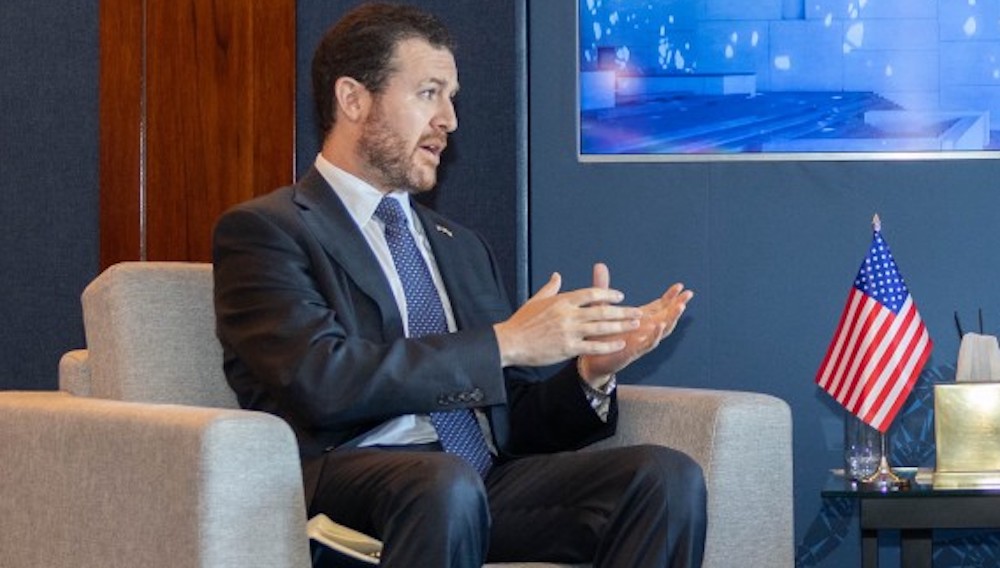
Andrew Gross arrived in his new role as the American Jewish Committee’s New York regional director on Monday with memories from the other side of the Hudson River — memories of the shattered JC Kosher Supermarket in Jersey City, where in December 2019 antisemitic gunmen murdered three people before themselves dying in a firefight with police. “I remember seeing the bullet casings and glass fragments on the ground,” Gross, who had become executive director of the New Jersey-Israel Commission under then-Gov. Phil Murphy just a few months before, told Jewish Insider’s Will Bredderman.
Wide net: “As I do my job here at the AJC, I’m going to work with everyone to make sure that exact type of scenario does not happen again,” he said in a wide-ranging interview with JI. “Everyone,” as he described it, extends from the NYPD to New York City Council Speaker Julie Menin to AJC’s long-standing network of Jewish and non-Jewish civic allies, and even friendly interests out of the Persian Gulf. Gross said he also plans to draw on another set of experiences from Murphy’s administration as he looks now to forge stronger ties with Big Apple business leaders: his time at the New Jersey Economic Development Authority.
COMMUNITY CONCERN
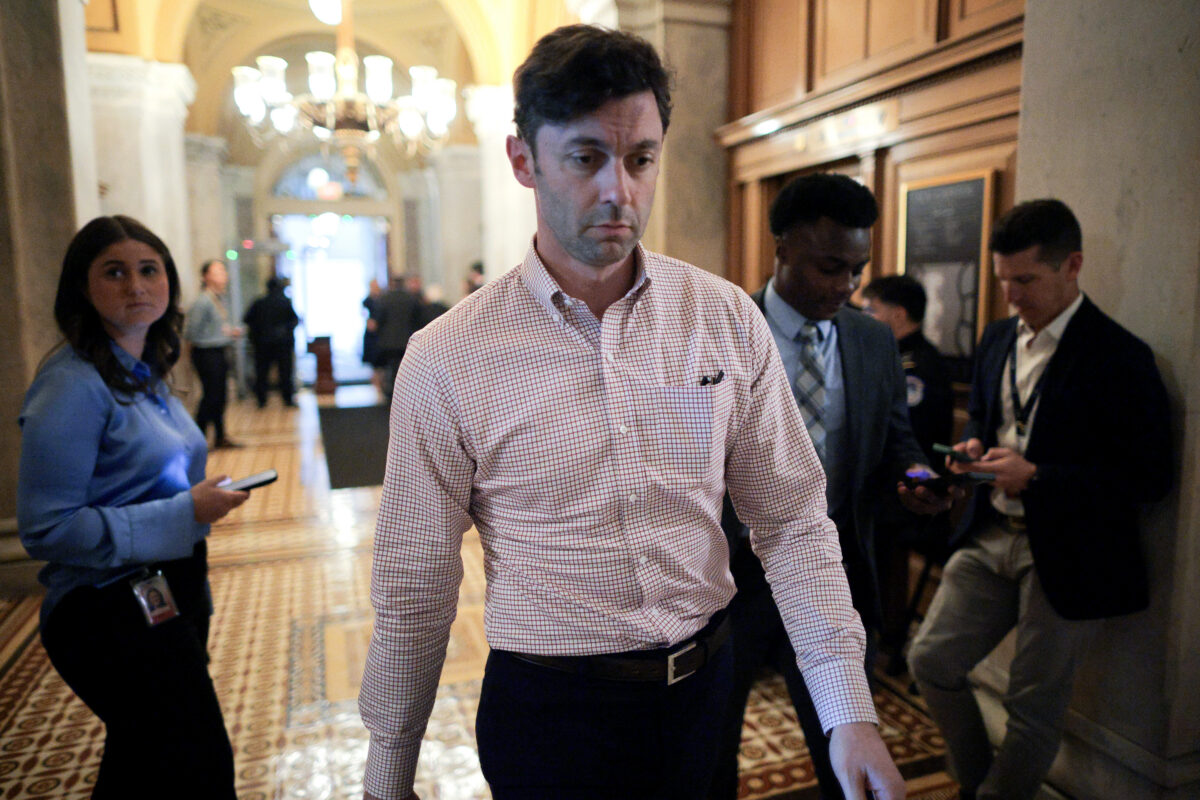
The publisher of the Atlanta Jewish Times penned an open letter to Sen. Jon Ossoff (D-GA) on Wednesday pressing the senator over his repeated votes to block U.S. military sales to Israel, accusing Ossoff of failing to support Israel and of misrepresenting his positions to his Jewish constituents, Jewish Insider’s Marc Rod reports.
Notable quotable: “I apologize for being blunt, but please, stop lying to me and your constituents. I hear you claim, over and over again, that you support Israel — that your support is ‘ironclad,’” Michael Morris wrote in the letter. “It is not. You vote against Israel on the Senate floor in Washington, then come home to Georgia and make this untruthful claim.” He argued that, by contrast, Ossoff’s “antagonism toward Israel has remained steadfast,” pointing to his repeated votes for efforts to block arms sales.
FOLLOW THE MONEY
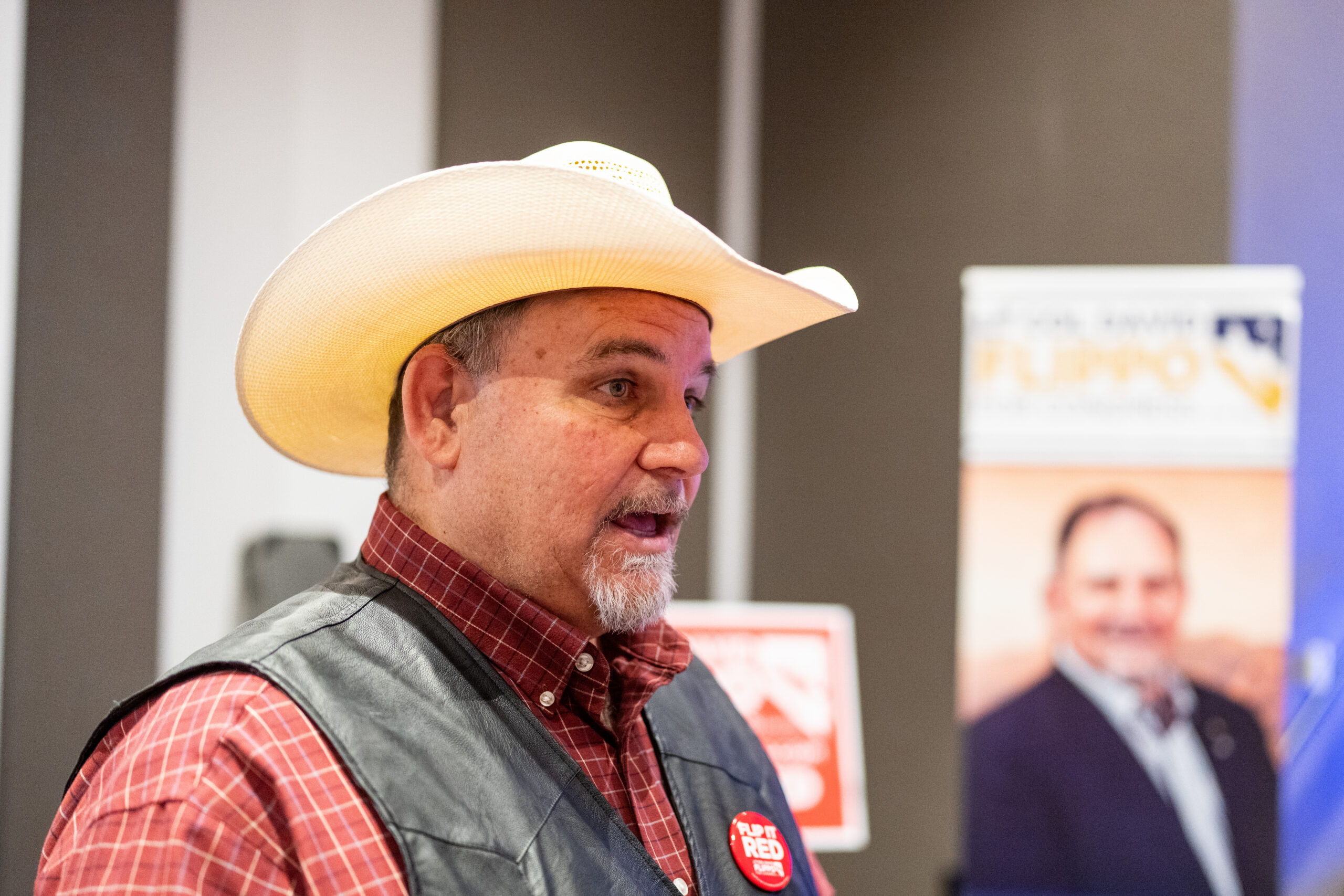
David Flippo, the Republican nominee in Nevada’s 2nd Congressional District, accepted a max-out donation from Robert Beadles, a prominent local GOP donor and commentator who has repeatedly promoted the Protocols of the Elders of Zion and other antisemitic conspiracy theories, Jewish Insider’s Marc Rod reports.
Paper trail: Flippo, a military veteran who is running in a district that strongly favors Republicans to replace Rep. Mark Amodei (R-NV), has positioned himself as a close ally of the Jewish community. But according to FEC records, he has received $7,000 in donations from Beadles — the legal allowable limit — in May and June of 2026, the only donations Beadles has made thus far this election cycle.
SCOUT’S HONOR

Clad in khaki uniforms and merit badges, hundreds of scouts gathered on a Saturday morning for a sight that has become increasingly rare in America: a Jewish prayer service without security and where nobody felt the need to look over their shoulder, Jewish Insider’s Haley Cohen reports.
Sense of security: At a moment when Jewish students contemplating the upcoming school year are weighing whether to wear or hide their Star of David necklaces as they return to the classroom, this summer’s Scouting America national jamboree in West Virginia offered a different message — holding a full, public Shabbat service for its Jewish scouts as part of an event organizers describe as one of the last unapologetically inclusive spaces for religious minorities in youth culture. “I’ve had the privilege of going to synagogue services around the world for the past 20 years. [The jamboree] was the only one I’ve been to, other than in Israel, where there was no need for security around the service,” Ricky Mason, chair of Scouting America’s national executive board, told JI.
Worthy Reads
Not Very Christian: For Fox News, George Deek, Israel’s special envoy to the Christian world, reflects on the “double standard” applied to Israel amid reports of attacks by Israeli extremists targeting Christians in the country. “Extremism exists in every democratic society. Sometimes it grows dangerously. Governments must confront it. But serious people understand the difference between extremists within a society and the character of the society itself. Except, increasingly, when that society is Israel. An extremist in Boston, Madrid or London attacks a Jew, and we correctly call him an antisemite. A fanatic spits at a Christian in Jerusalem, and suddenly we are invited to diagnose Israeli society. That is not analysis. It is a double standard. If you genuinely want to know whether Christians are flourishing in a country, there are better measures than the behavior of its worst citizens.” [FoxNews]
Trouble Back Home: The Wall Street Journal’s Sadanand Dhume looks at the challenges facing Pakistani Field Marshal Asim Munir as he notches a series of high-profile diplomatic wins but struggles with domestic constraints. “Over the past year and a half, the army chief and Pakistan’s de facto leader, Field Marshal Asim Munir, has pulled off a high-wire act: He has raised Pakistan’s international standing even as domestic challenges have mounted. But unless Gen. Munir can revive the country’s stagnant economy and calm its restive population, his diplomatic gains will likely prove evanescent. … Unfortunately for Pakistan, neither Gen. Munir’s diplomatic feats nor his consolidation of power offers solutions to the country’s domestic crises.” [WSJ]
Find more Worthy Reads in our Live Briefing via our new app (on Apple and Android) and website.
Word on the Street
Secretary of State Marco Rubio was spotted at a joint practice between the Washington Commanders and the Miami Dolphins in Virginia alongside Commanders owner Josh Harris and Dolphins CEO Daniel Sillman…
White House Press Secretary Karoline Leavitt is stepping away from her role at the end of the month; President Donald Trump, who announced Leavitt’s upcoming departure from the White House, said she will now serve as “one of my top outside advisors”…
Rep. Haley Stevens (D-MI) dismissed the notion on Wednesday that campaign spending in her favor by AIPAC’s super PAC backfired in her failed bid for U.S. Senate, and defended the pro-Israel group as Jewish Americans participating in the democratic process, Jewish Insider’s Matthew Shea reports…
Nelson Peltz’s Trian Fund Management is preparing, as part of a consortium of investors it organized that includes Abu Dhabi-based BlueFive Capital, to make a bid for Wendy’s that would take the fast food chain private…
TheWrap’s media editor looks at the pushback to New York magazine’s recent edition that focused on New York City’s Middle East culture scene while denigrating Israel, including the characterization of the Jewish state by one reporter as “the land mass currently called Israel” and lumping Zionism together with Islamophobia and xenophobia…
Israeli chef Yuval Ben Neriah is opening a chain of Japanese fast casual restaurants across Europe in a $10 billion venture; the first branch of the yet-to-be-named chain is set to open in Vienna…
Israel Police announced a monthlong gag order on details related to an Israeli mother-daughter pair who disappeared last week in Austria; the request for the order came from the Lahav 433 major crimes unit, which took over the case…
A new report from the Israeli think tank IMPACT-se, which monitors educational materials around the Middle East, found that most of the “problematic themes” in Saudi curricula targeting Jews and Christians had been addressed, noting that the materials indicated a shift “toward greater moderation, inclusivity, and alignment with the broader reform objectives of” Riyadh’s ambitious Vision 2030 project…
The European Broadcasting Union announced changes to next year’s Eurovision Song Contest in which a winning country would “automatically be ineligible to host” if it was involved in an “armed conflict” or a “sensitive geopolitical situation” at the time…
More than 25 European countries signed on to a joint statement condemning Iran’s use of the death penalty to “silence dissent, intimidate communities, and punish individuals” tied to the Islamic Republic’s anti-government protests…
The governor of Iran’s central bank said the country would soon join BRICS’ New Development Bank, two years after Tehran joined the growing consortium whose founders include Brazil, Russia, India, China and South Africa…
Yeshivat Chovevei Torah announced that Rabbi Ben Berger will serve as the Modern Orthodox seminary’s president and CEO, after eight years at Hillel International, eJewishPhilanthropy’s Jay Deitcher reports; Berger succeeds Rabbi Dov Linzer, who served as president and rosh yeshiva for seven years and will continue in the latter role…
Rachel Nielsen is joining the Milwaukee Jewish Federation as chief operating officer…
Israeli journalist Oren Nahari died at 70 of complications from ALS, a year after announcing his diagnosis and days after his last radio broadcast…
Find on-demand Live Briefing updates throughout the day via our new app (on Apple and Android) and website.
Pic of the Day

Israeli President Isaac Herzog was honored with an honorary degree from the Jewish Theological Seminary on Wednesday in a special ceremony with JTS Chancellor Emerita Shuly Rubin Schwartz at the President’s Residence in Jerusalem.
Birthdays
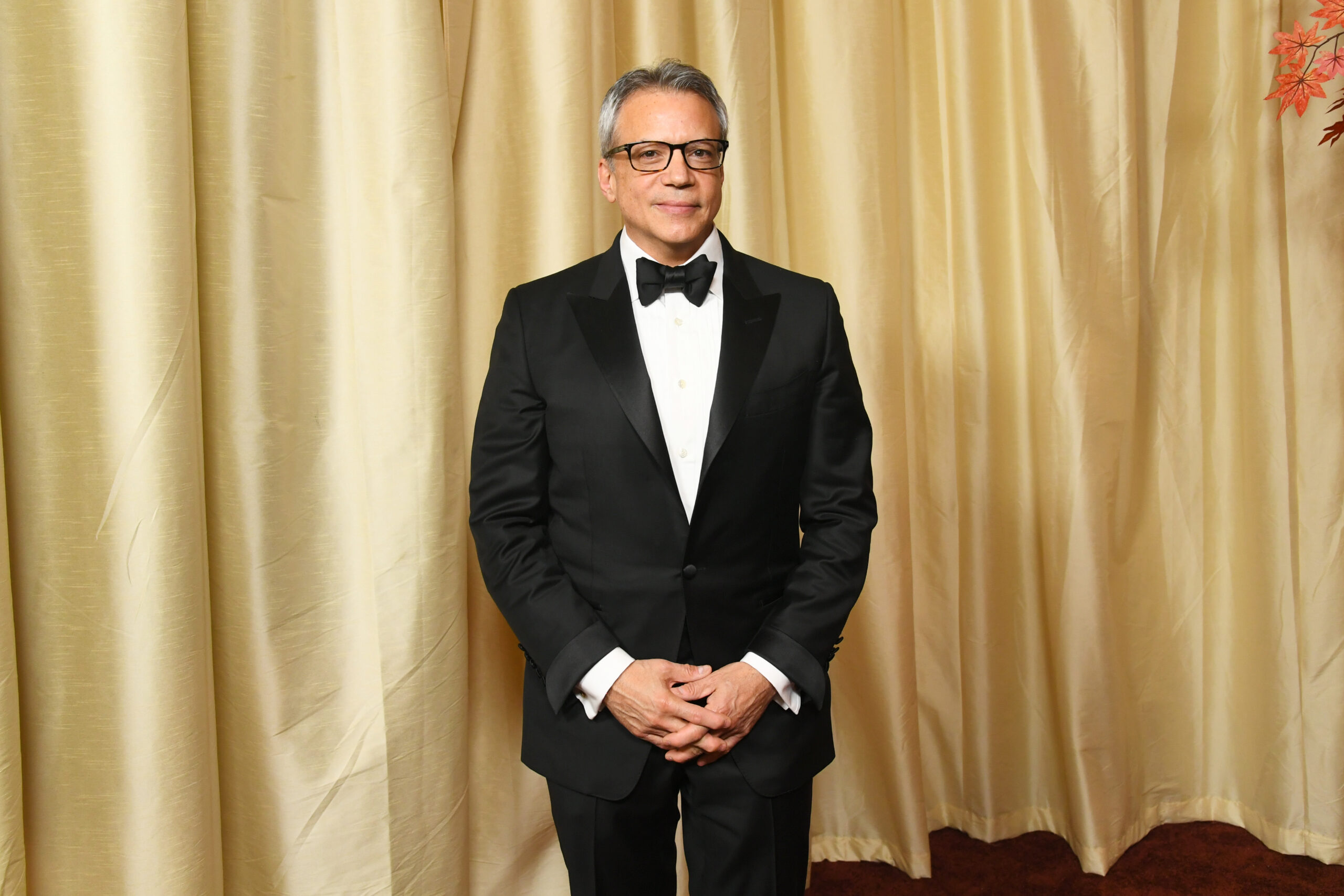
Co-chair and CEO of Warner Bros. Motion Picture Group, Michael De Luca turns 61…
Member of the New York State Assembly for 24 years, since then she is the county clerk of Queens County, Audrey I. Pheffer turns 85… Retired CPA and senior executive in Los Angeles, Morton Algaze turns 83… Treasury secretary through all four years of the Biden administration, Janet Yellen turns 80… Documentary still photographer of the American and international Jewish communities since 1970, Robert A. Cumins turns 78… Beverly Hills, Calif., resident, Ruth Fay Kellerman… VP and chief of staff at The Aspen Institute, James M. Spiegelman turns 68… Film producer, writer and director, Susan Landau Finch turns 66… Founder of the Council of Orthodox Jewish Organizations of Manhattan, he is also the executive chairman of LifeHealth Network, Michael Landau… Storyteller, producer and writer, Jeffrey Mark “Slash” Coleman turns 59… Editor-in-chief of the Hollywood Reporter, Maer Roshan turns 59… Co-founder and managing director at Beacon Global Strategies, he was chief of staff at the CIA and the Pentagon during the Obama administration, he is a graduate of CESJDS, Jeremy B. Bash turns 55… President of Accessibility Partners, a Maryland firm that hires people with disabilities for tech jobs, she is also the founder of a nonprofit I Support the Girls, Dana Marlowe… Three-time Olympian water polo player, now head coach at Pepperdine University, Merrill Marc Moses turns 49… Professor of government at Harvard University, he was the director of the Harvard Center for Jewish Studies, Eric Matthew Nelson turns 49… Professor of law at the South Texas College of Law in Houston, Joshua Michael Blackman turns 42… Deputy general counsel and global head of contracts and litigation for Tower Research Capital, Matthew Weiss turns 40… Weekend editor for The Washington Post, Sara Sorcher… Israeli Olympic long-distance runner, she ran the marathon for Israel at the Paris Olympics in 2024, Maor Tiyouri turns 36… Counsel at CD&R, Nathan Jablow… Senior account supervisor at Edelman, Jodie Michelle Singer… VP of business development at Azul Hospitality Group, Adam Dahan… Head of investor relations at Israel Legacy Partners, David Angel… Elaine Hall… Jonathan Gerber…
There’s widespread interest within the Jewish community to develop efforts to counter the growing populist rage and anti-Jewish hate, city by city

Getty Images
Human crowd forming a big David's star on blue background.
Until recently, the political strategy of the American Jewish establishment could be summed up in two ways: Elect pro-Israel lawmakers to Congress and, at a much smaller scale, educate state and local officials about Jewish values and causes.
But a new model of Jewish political engagement is emerging to counter growing populist angst and surging antisemitism across the political spectrum: local efforts focused on school boards and city councils and statehouses.
These Jewish activists are not shying away from the messy reality of politics: They aren’t here to make friends with everyone, acknowledging that not everyone is an ally. Their goal is to offer support — through door-knocking, organizing and their checkbooks — to candidates who have stood by the Jewish community in the post-Oct. 7 political firestorm, and to try to unseat those who have not.
If you want to make a difference in the actual day-to-day lives of Jewish Americans, these activists argue, the place to do so is not Congress. It’s Sacramento, or Harrisburg, or the local Democratic Party committee meeting up the street.
“All of these groups are starting to pop up because we realize that the infrastructure that the community has had in the past isn’t enough and isn’t working,” said Stefanie Clarke, a political strategist in Colorado who co-founded the Colorado Jewish Action Alliance.
Like nearly all of the groups now operating in local politics, COJAA was born after the Oct. 7, 2023, Hamas terror attacks, when municipal governments in the U.S. became the newest front in Israeli-Palestinian culture wars. Anti-Israel rhetoric that often veered into outright antisemitism could suddenly be heard regularly in city halls and state legislatures. People who were elected to office because of their views on bike lanes or the environment were suddenly being pressured to weigh in on a contentious issue that originated thousands of miles away.
By law, tax-exempt nonprofits cannot engage in the political system. But a growing consensus is emerging that the apolitical approach necessarily adopted by the Jewish philanthropic world is not enough to address the intense partisanship of the moment, where incendiary antisemitic rhetoric has seeped into all levels of the political system.
In places including Atlanta, Denver and Pittsburgh, first-time Jewish activists such as Clarke are responding with grassroots initiatives like COJAA. Elsewhere, existing Jewish communal institutions are incubating new political organizations that they are spinning off as independent entities — for example, in San Francisco, where the local Jewish Community Relations Council created an affiliated advocacy organization called Bay Area Jewish Action (BAJA).
“We are seeing an increasingly unhinged and violent-prone mob challenging elected officials for standing with the Jewish community, and so there is a risk in standing with us, however unacceptable that reality is,” said Tyler Gregory, the CEO of JCRC and executive director of BAJA. “We need to be able to do more than just verbally say thank you in a situation like that.”
What that looks like in practice differs from place to place. BAJA created a political network where members commit to donating a certain amount throughout the election cycle, and have opportunities to meet candidates in BAJA-organized forums.
Other efforts are bipartisan. COJAA endorsed 13 candidates in Colorado’s primaries this year, a mix of Democrats and Republicans. (The primary results were themselves mixed; seven of COJAA’s preferred candidates won.) Georgia Solidarity Network, based in Atlanta, sees its mission as educating lawmakers about the state’s Jewish community.
“Part of our theory of change is that you cannot meet the moment by just showing up in an election cycle and trying to get messaging out there,” Beacon Coalition founder Jeremy Kazzaz explained. “It requires people on the ground, and it requires conversations going all the time.”
“Our legislators are incredible. But our legislators are blueberry farmers and used car sales lot owners and small-time lawyers in tiny towns who have no familiarity at all with the Jewish community,” Georgia Solidarity Network co-founder Alli Medof told Jewish Insider. “We really recognized that there was a need for us as a community to have a strong voice and presence in the legislature and to represent the concerns of Jewish Georgians.”
In Pittsburgh, a group called the Beacon Coalition spent the past year recruiting moderate Democrats to run for local volunteer positions in official Democratic groups throughout Allegheny County. Forty aligned Democrats won their races for small neighborhood seats that play an outsized role in party endorsements.
“Part of our theory of change is that you cannot meet the moment by just showing up in an election cycle and trying to get messaging out there,” Beacon Coalition founder Jeremy Kazzaz explained. “It requires people on the ground, and it requires conversations going all the time.”
Each of these groups is independent, created and operated — and funded (for the most part) — locally. But they see an opportunity to connect with and learn from each other.
Schusterman Family Philanthropies, the philanthropic behemoth that supports liberal causes and pro-Israel groups, convened a gathering earlier this year that brought together dozens of activists in the burgeoning local Jewish political ecosystem.
“I’m deeply concerned about the rise in extremism that’s playing out in local politics,” the foundation’s senior director for U.S. Jewish grantmaking, David Rittberg, told JI. “I do think that Jewish community leaders as well as everyday Americans are waking up to the challenges that these dynamics are creating in a local political context.”
Schusterman’s involvement in this space is an indication that Jewish philanthropists are taking problems at the local level seriously. Rittberg declined to comment on whether Schusterman has given grants to any of the groups, but said the foundation sees its role as being “a connector.”
Many emerging local activists have looked to a group called New York Solidarity Network for advice. NYSN was formed in 2022 after New York City’s Democratic Socialists of America chapter began pressuring local candidates to pledge not to travel to Israel, a request that at the time was seen as radical but has since become the norm in many Democratic primaries in liberal urban areas.
Sara Forman, the group’s founding executive director, advises them that money is not enough — a pointed message at a moment when, at the national level, AIPAC’s super PAC just spent tens of millions of dollars backing Rep. Haley Stevens (D-MI) in a failed Michigan Senate primary bid, and further damaged its image with Democrats in the process.
“DSA has been incredibly successful at organizing community and at making people feel like they are part of something,” said Sara Forman, founding executive director of NYSN. “I think in the Jewish community, having local organizations mimic some of the same practices of DSA is a good thing. Make people feel included. Make people feel like their voice counts.”
“You can’t build something inorganically. There has to be a reason for people to want to come out and attend events, and want to knock on doors and make phone calls and organize their synagogues,” said Forman, who stepped down from NYSN in January. “Check-writing isn’t what’s going to make the difference here.”
The goal, instead, is building up American Jews’ appetite for grassroots political organizing in support of Jewish causes and candidates who support them. That’s a different position than the one taken by AIPAC in recent years, which has invested at the federal level in high-dollar political fundraising. But when groups such as DSA are able to recruit eager volunteers to campaign for far-left officials and show up to public meetings to voice support for anti-Israel measures, Jewish activists increasingly see a need to fight fire with fire.
“DSA has been incredibly successful at organizing community and at making people feel like they are part of something,” said Forman. “I think in the Jewish community, having local organizations mimic some of the same practices of DSA is a good thing. Make people feel included. Make people feel like their voice counts.”
The success of a DSA-aligned faction in several major Democratic primaries this year has led many of these Jewish activists to now see their fight for communal safety as part of a larger battle within the party, about whether it will move left or to the center ahead of the 2028 presidential election.
“I think the overlap between folks who are concerned about fighting illiberalism, extremism, antisemitism and virulent anti-Zionism deeply intersects with those of us who want to strengthen moderate factions on both sides of the aisle, in particular for us on the Democratic side,” Third Way President Jon Cowan told JI. “A lot of folks are coming to realize that those fights deeply overlap.”
“We know that the next phase for us is focusing more on the creeping threat of DSA,” Medof, from Georgia, said. “The way we think about this work is that the sorts of things that we’re fighting for are not just about what’s good for Jewish Georgians. They’re good for Georgia overall.”
Last week, The New York Times outlined a new effort by the centrist Democratic group Third Way to push back against the growing appeal of DSA-aligned groups and policies within the party. Third Way President Jon Cowan told JI that the organization is, for the first time in its history, working with groups at the local level. Third Way gave a grant to the Beacon Coalition this year to support its work and help the organization expand to Cleveland.
“I think the overlap between folks who are concerned about fighting illiberalism, extremism, antisemitism and virulent anti-Zionism deeply intersects with those of us who want to strengthen moderate factions on both sides of the aisle, in particular for us on the Democratic side,” Cowan said. “A lot of folks are coming to realize that those fights deeply overlap.”
Building support for Israel is not what most of these groups see as their focus. They want efforts targeting Israel — like Boycott, Divestment and Sanctions campaigns — to fail, and for local governments to otherwise stay mum on one of the most intractable foreign policy issues in the world.
“We are about Jewish safety, security and engagement in civil life. We really don’t talk about Israel other than how the rhetoric around it endangers our community,” said Mindy Miller, a co-founder of the Colorado group.
Not that that has stopped opponents from trying to tar the groups as, essentially, mini-AIPACs.
“We’ve seen a trend with a very similar pattern of behavior targeting groups like Beacon, where there are Jewish Americans who are showing up in spaces as Jewish Americans and saying our community is important,” said Pittsburgh-based Kazzaz. “It’s a lot of boogeyman-ing, just name calling, ‘You’re a secret Republican.’”
Mostly, though, the new Jewish activists are finding curiosity, not animosity. People who are eyeing local positions are generally not running with Israel or Palestine as their top issue. But that doesn’t mean they don’t understand how thorny the discourse can be.
“One of the things we say is we will never cancel you. There are no stupid questions,” said Miller, from Colorado.
She wants to be a guide to help local politicians learn about the issues. And with financial and manpower resources that can help candidates in their campaigns, Miller hopes the Jewish community will now have a shot of being the first to reach those politicians.
Please log in if you already have a subscription, or subscribe to access the latest updates.
 Continue with Google

 Continue with Apple