














































































Several candidates in Tuesday’s elections have ties to the U.S., a trend that goes back to the beginning of the State of Israel
Courtesy
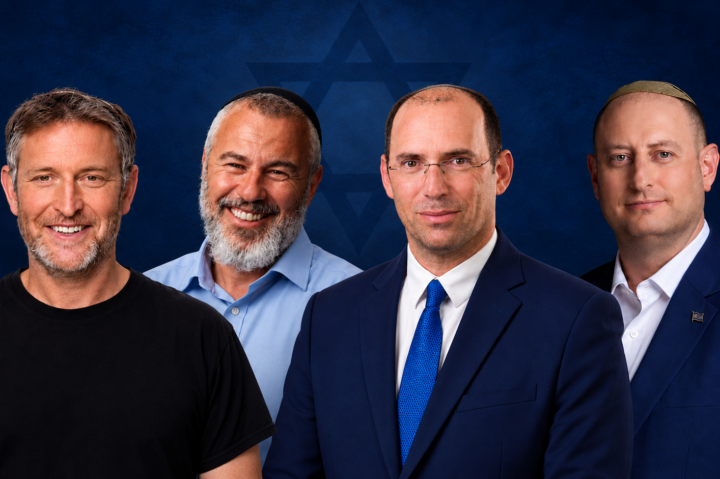
Yaya Fink, Yishai Fleisher, Simcha Rotman, Jeremy Saltan


 Add JewishInsider on Google
American immigrants to Israel have played outsized roles in governing the Jewish state from its establishment: Golda Meir, born in Kyiv and raised in Milwaukee, was a member of the first Knesset, working her way up to become prime minister 20 years later in 1969. A few years after that, Marcia Freedman, from New Jersey, became a pioneer of Israeli feminism in the Knesset, and in the 1980s, Brooklyn-born Rabbi Meir Kahane entered the Knesset as a one-man faction that was later banned because of its racist platform.
Broaden that out to people who spent formative years in America or have American parents, and you have another two prime ministers: Benjamin Netanyahu and Naftali Bennett, respectively.
Several of the parties likely to win Knesset seats in next Tuesday’s election have candidates who meet those criteria, and some of them spoke with Jewish Insider this week. The interviews have been condensed for space and clarity.
Jeremy Saltan, No. 23 on the B’Yachad list
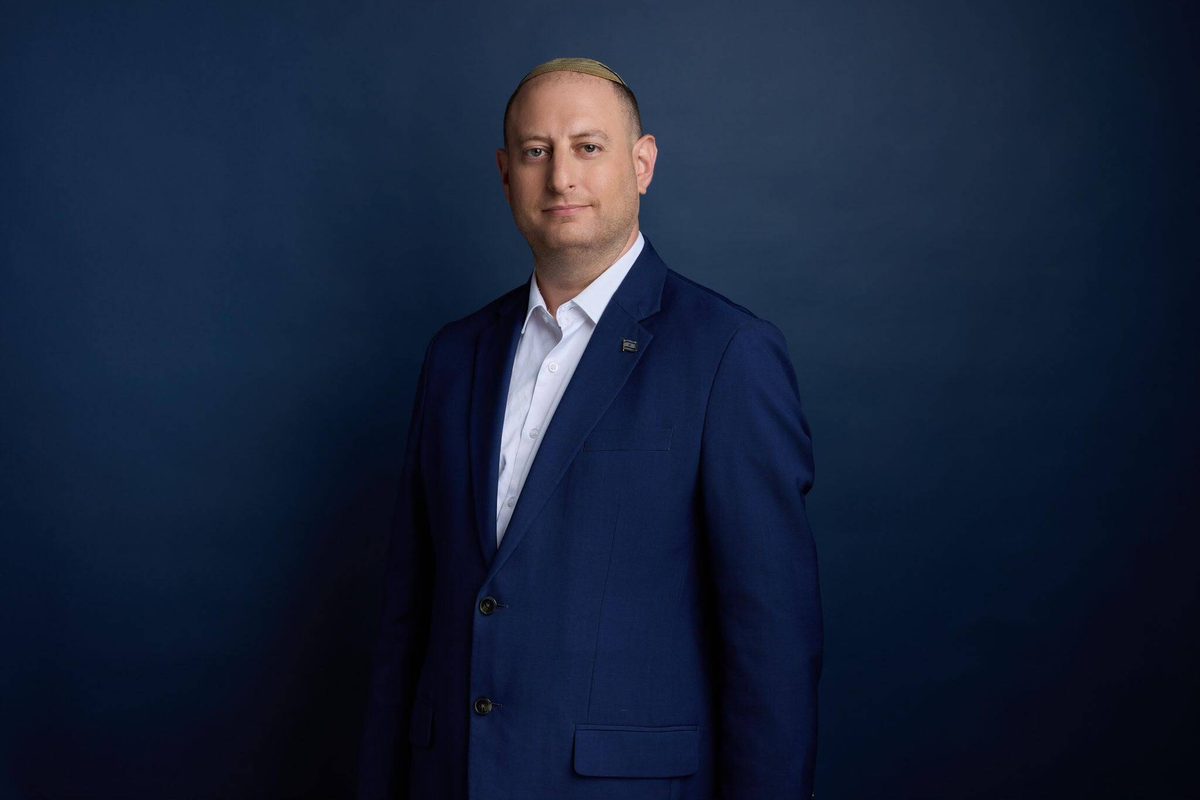
Bennett’s B’Yachad has a record-breaking six American candidates: Bennett, whose parents moved to Israel from Berkeley, Calif.; Baltimore, Md.-born Yonatan Shalev, who at 24 is set to be the youngest Knesset member since 1959; longtime Bennett advisor Jeremy Saltan, who was born and raised in the Chicago suburbs; former Teva executive Mati Gil, who was born in Columbus, Ohio; Knesset member Moshe Tur-Paz was born in Philadelphia; and Member of Knesset Michal Slawny Cababia, a native of Blacksburg, Va.
Saltan, a fifth-generation Chicagoan, moved to Israel with his family at age 11, and spent many subsequent summers in the Windy City. He has been an aide to Knesset members from several right-wing parties, as well as an advisor to Bennett in formal and informal capacities since 2012. He is a major in the IDF who has served over 600 days of reserve duty since the Oct. 7, 2023, Hamas attacks on Israel.
Jewish Insider: Why did you decide to run for the Knesset?
Saltan: The number one thing that brought me to accept Naftali’s offer to come from behind the scenes is to help those who serve. … I see the price that my soldiers have had to pay in this war, and I understand that if the current government remains in power, I’m going to have to do another 600 days in the next term. I’m looking at soldiers who I’m helping get through [military] medical committees, some for physical reasons, but many for mental health reasons. I think of my soldiers who [emigrated], five in a company of a little over 100 soldiers who left, because they can no longer carry what is on their shoulders. Bennett’s plan to flip the pyramid and stop giving money to those who don’t serve and give it to those who do — I want to be a part of that, not only for my soldiers, but for the entire IDF reservist community. When Bennett commits to giving NIS 4,000 towards daycare to anyone who is in active reserve duty, that’s a huge lifesaver.
I’m bringing 17 years of experience in the Knesset and 20 years of military service as a reservist. I understand the problems and the solutions.
JI: How has being American influenced you?
Saltan: We’re all products of our upbringing and education. … The experience that I had going to Jewish day school where the size of the kippah or what synagogue you prayed at, if at all, didn’t matter, that we were all just Jews, is a very big part of my frame of thought. The values of liberty, freedom, accountability, transparency and representation are just second nature to me. The one thing that I find to be incompatible is that I have always worn a suit and tie to the Knesset, and many sabras [native Israelis] have a problem with that.
JI: If you become a member of Knesset, you will have to give up your American citizenship. How do you feel about that?
Saltan: I’m totally fine with it. I identify as an Israeli. My American upbringing is a big piece of me and will always be a part of me, but I’m first and foremost a Jew. I’m happy to be a citizen in the Jewish homeland and to have the chance to be a representative in today’s Knesset … is a privilege.
Yair “Yaya” Fink, No. 5 on the Democrats list
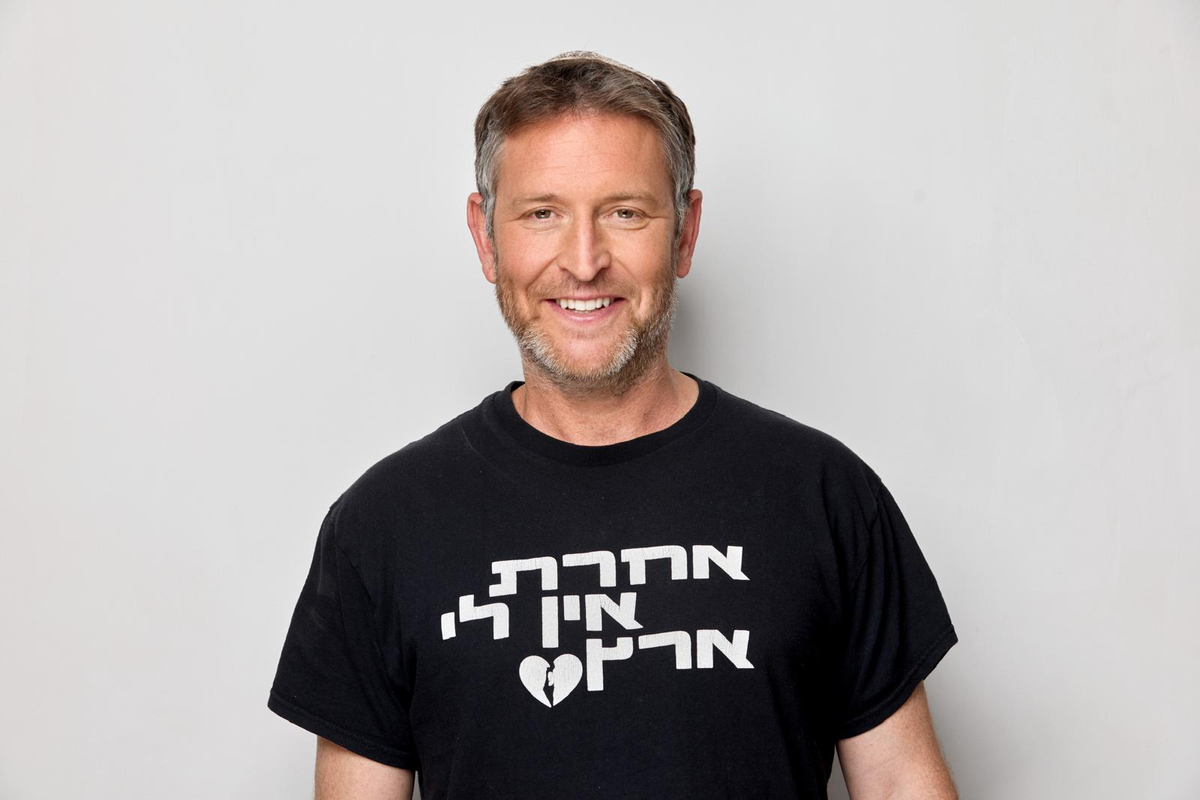
Yaya Fink, whose parents and two of his older siblings moved to Israel from the U.S., has been a well-known political activist for nearly two decades, serving as chief of staff to Labor leader Shelly Yachimovich in 2011-2013, and leading several left-leaning organizations, as well as the “Social Justice” faction in Israel’s Histadrut national labor union.
Jewish Insider: Why did you decide to run for the Knesset?
Fink: I very much love this country. … As far as I’m concerned, we have to change the direction in which the country is going. It has massive potential, but the country is going to a very dangerous place of extremism, draft-dodging, running from responsibility, major failures, lack of security and religious coercion. We want to try to bring the country back on track in the directions of social justice, equality, diplomatic agreements, equality in the burden [of IDF service] and democracy. After what happened in the last four years, I think it’s my responsibility and ours to do this in the place where decisions are made.
JI: How has being American influenced you?
Fink: My parents moved to Israel at the end of the ‘60s, and my brother and sister were born in the U.S. We were a house of immigrants. It influenced us in understanding how much this place has to be a home for all Jews, not only those who live in Israel, but also those abroad. It also helped me understand what it means that Israel is a country of immigrants. … We are a varied, complex country, and that is part of its beauty and an opportunity.
I have a great appreciation of my parents and the many other Americans in my neighborhood in Jerusalem who gave up a lot … to move to Israel and take part in the Zionist project.
I think I better understand, thanks to [my parents], the importance of international relations. When I do reserve duty, my uniform, my helmet, my night vision goggles, my weapon are all American. It reminds me of the importance of good relations with other countries generally, and especially our best friend, America. Support [from America] has to be bipartisan, and it’s important to keep up the connection and be a home for American Jews.
I’m also named after my cousin, Shmuel Yair Landau, who was killed in the First Lebanon War a few years after he came to Israel from America. I understand the price of being here, but also want to ensure it’s not just a place of blood, sweat and tears, but also one where we reach diplomatic agreements and solutions.
JI: If you become a member of Knesset, you will have to give up your American citizenship. How do you feel about that?
Fink: I’m an Israeli citizen. I live in Israel. I visit the U.S. a lot, but I don’t have two homes; I have one home in Israel. I don’t have a deep connection with my American passport. I will try from within the Knesset to strengthen ties between Israel and the U.S., and Israeli Jews and American Jews. I love and appreciate the U.S. very much and I feel comfortable when I’m there; I have family and many friends there, but in the end, I have only one home.
Yishai Fleischer, No. 12 on the Otzma Yehudit List
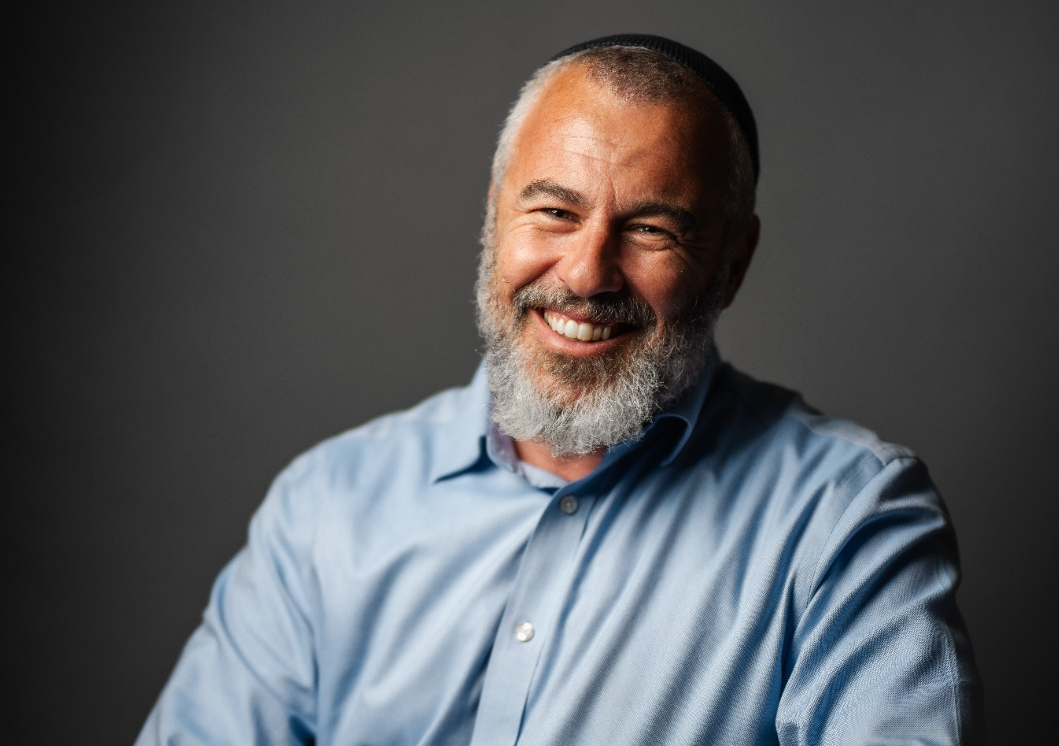
Fleischer was born in Haifa to parents who were Russian refuseniks who arrived in Israel in the 1970s. They moved to New Jersey for work when he was eight years old. After graduating from high school in New Jersey, he served as a paratrooper in the IDF, during which time he was injured by a Hezbollah roadside bomb in Lebanon. He attended college and law school in the U.S. and returned to Israel, where he has served as the international spokesman for the Jewish community of Hebron, as well as informally advising Otzma Yehudit leader Itamar Ben-Gvir on foreign media and matters relating to the U.S.
Jewish Insider: Why did you decide to run for the Knesset?
Fleischer: Because I have a legal degree, I have been involved in trying to change Israeli policy for the better … I came up with the idea of the Biblical Highway project, renaming Rt. 60 [which spans from Beersheba, through Bethlehem and Jerusalem, to Nazareth], and now [since June], it’s the law of the land.
I want to utilize Israeli law to make our country stronger and more Jewish. Two years ago, I was invited to work with Minister Ben-Gvir to head up his trip to the U.S., and that’s where we started forming a relationship. I was trying very hard to explain to people that Ben-Gvir’s policies are reasonable, so he tapped me to be No. 12 in this upcoming election. I really believe that Otzma is the law and order party. … For me, Oct. 7 and [riots] in Paris are indicative of a global trend … of jihadism in and around our land, and we have to stop that effort to undermine our sovereignty and also strengthen Jewish values.
JI: How has being American influenced you?
Fleischer: I didn’t just grow up in America, I purposefully went to American law school to understand the system and learn it to see if we can bring some of the good values of America to Israel. … There are many beautiful ideas that America has about liberty — things like the poisoned fruit doctrine of evidence, which is very important … a more open economy with less bureaucracy, freedoms like the right to bear arms. … We’d like to bring some of the more red-state ideas to Israel, and just a general sense of law and order and a much more limited Supreme Court that is not a free for all, but is bound by laws that limit its powers.
In general, when you have a perspective on a different system of governance and law, it gives you a way to measure how we’re doing.
JI: If you become a member of Knesset, you will have to give up your American citizenship. How do you feel about that?
Fleischer: It’s definitely not easy to swallow. It’s part of my identity, and I’m proud of it. I had to earn my American citizenship. If I have to give it up in order to serve the Jewish state and help it move forward, then I’ll do it, because that is the law and a superior value, to be able to serve the Jewish state, but I do it with a heavy heart. … I did call some well-known Israeli politicians who had to do it, and they said it’s not so bad. But it’s not something that I take lightly.
Simcha Rotman, No. 4 on the Religious Zionism list
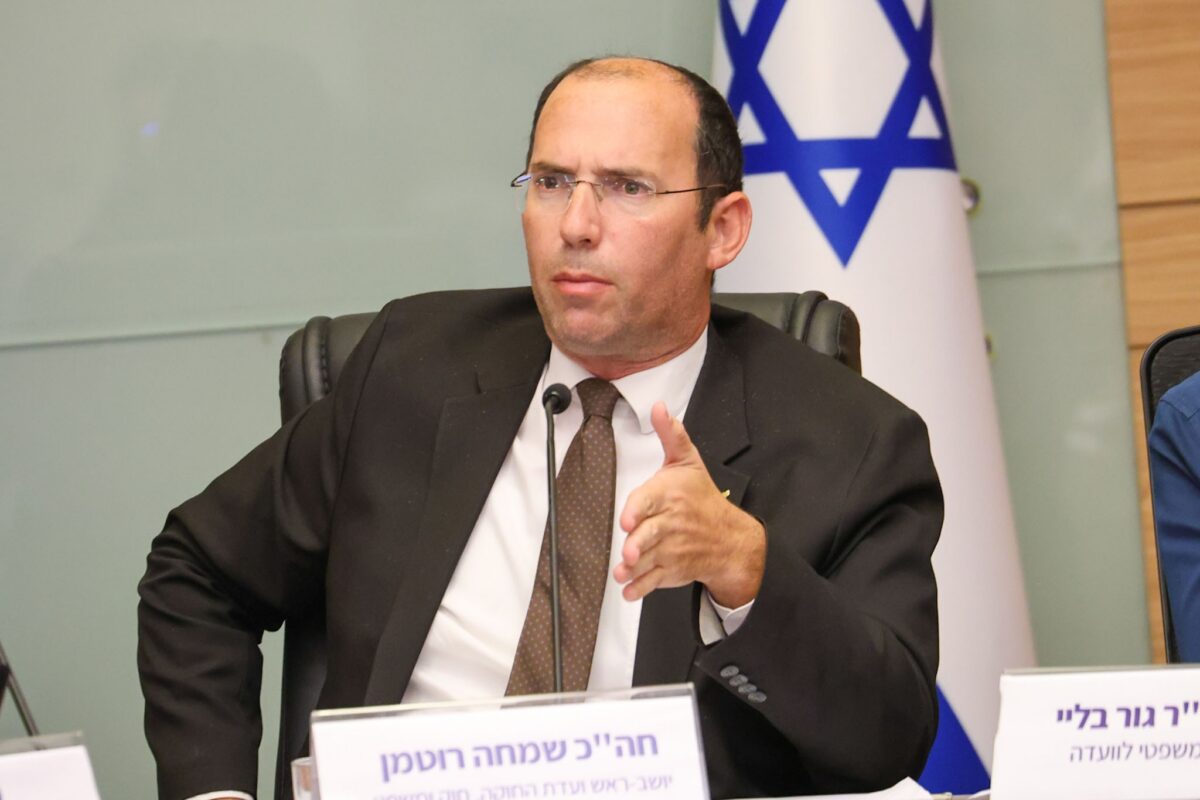
Rotman was born in Israel, with a father who has U.S. citizenship, and has spent a lot of time with extended family in Cleveland. While Rotman does not have American citizenship, his children do, thanks to his wife, whose parents are American. “I know how to file taxes in both countries,” he quipped in a past interview.
Rotman has been a Knesset member since 2021 and chairman of the Knesset Constitution, Law and Justice Committee in recent years, making him one of the leaders of the government’s controversial judicial reform push. Before entering electoral politics, he led an organization that opposed judicial activism.
Jewish Insider: Why did you decide to run for the Knesset?
Rotman: I am running mostly on the topic of judicial reform, repairing the judicial system. The connection there to the U.S. is very strong, because what I’m trying to do in judicial reform is to introduce checks and balances into the Israeli system, more like the American style. In Israel today, there are no checks and balances on the court, and none on the deep state.
I have a master’s degree from a joint program of Tel Aviv University and Northwestern University. I learned American constitutional law at an American university, which made even clearer to me that Israel must select its judges in a more democratic way, like the U.S., and have the power of the court checked and balanced to have better governance and preserve civil rights.
JI: How has growing up with American family influenced you?
I think the fact that large parts of my family live in the U.S. … really opened my mind to understand where parts of the Jewish people are … and how important aliyah is. … I have cousins who made aliyah, lived in Israel, and then returned. All of that back and forth from the U.S. showed me how hard we have to try to make Israel attractive for aliyah from the U.S. and other countries with strong economies. We don’t want to go back to the days where my great-grandfather was considered crazy [for moving to Israel]. We need Israel to be attractive, to be strong in its security and economy and to have a more organized government.
One of the things I did for immigrants to Israel is pass a law to stop double taxation of earnings from a country where they already pay [social security] for the first five years in Israel. I hope to pass a law so that can continue beyond five years.
**
No. 2 on the Yashar list, led by Gadi Eisenkot, is Chili Tropper, a former culture minister whose parents and two of his nine siblings moved to Israel from the U.S. Tropper’s office did not respond to interview requests, and the party did not make its U.S.-born No. 29, Alon Futterman, available for an interview.
Grenell, at October event for Oct. 7-themed exhibit, told attendees: ‘It certainly would be a shame if we lost this room to a corporation or an individual and it was no longer the lounge’
Paul Morigi/Getty Images
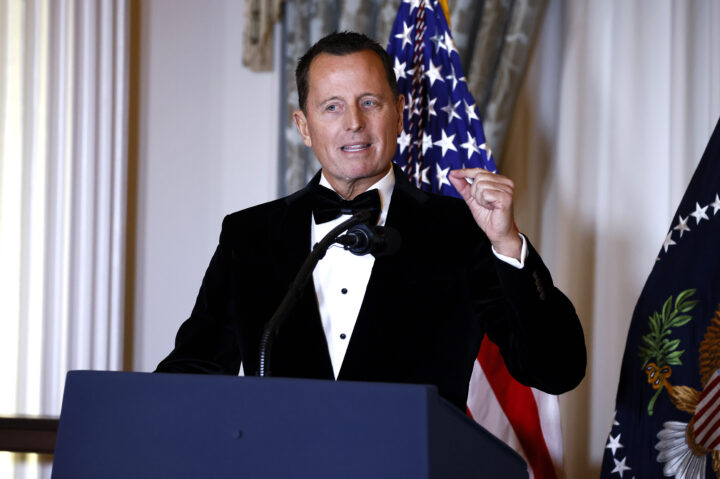
Ambassador Richard Grenell, Kennedy Center president, speaks at the 48th Kennedy Center Honors Medallion Reception at the U.S. Department of State on December 06, 2025 in Washington, DC.
When the Kennedy Center unveiled the Israeli Lounge in 1971, Sen. Edward M. Kennedy (D-MA) offered soaring remarks about the importance of the small reception room, which had been designed and constructed at the behest of Israeli Prime Minister Golda Meir as a gift to the United States.
Kennedy called the lounge — designed by Israeli architect Raphael Blumenfeld, who also designed the interior of the Israeli Knesset, and filled with original creations by Israeli artists — a “magnificent room” that could bring “the U.S. and Israel closer together, and all humanity together.”
But for months now, the Kennedy Center has been warning that the lounge, which is open to all patrons of the Kennedy Center, is at risk of ceasing to exist in its current form, unless donors step forward to sponsor it and pay for all renovation costs, two sources confirmed to Jewish Insider. Staff of the Kennedy Center are actively soliciting donations from Jewish philanthropists to update the lounge, which has been unchanged for more than five decades.
“I’m here to spread the word that if we want to keep it the Israel Lounge, we’ve got to act quickly, and we’re on the hunt. So please spread the word,” Kennedy Center President Richard Grenell said in October in previously unreported remarks at a reception in the lounge, which at the time was the venue for an Oct. 7-themed exhibit by Israeli artist Marc Provisor. “It certainly would be a shame if we lost this room to a corporation or an individual and it was no longer the lounge.”
Grenell was named president of the Kennedy Center last year after President Donald Trump took control of the institution and fired its previous trustees. Since then, the institution has faced the cancellation of a number of high-profile events, particularly after the performing arts center was formally renamed The Donald J. Trump and The John F. Kennedy Center for Performing Arts in December.
Grenell has made the modernization and beautification of the building, which opened in 1971, a priority.
“This room hasn’t been touched since 1971, so you now are standing in the oldest room, and we’ve really got to change that. If you just look around, we’re bringing the whole place up because of President Trump,” Grenell said in October.
The building has five historic lounges, and Grenell is making clear that they all need to be renovated — and he is actively pursuing sponsorships. The first one to be renovated was the room previously known as the Opera House Circles Lounge, which recently reopened as the SyberJet Lounge, after the company SyberJet Aircraft paid to renovate it with a large corporate donation that grants it naming rights for the next five years.
“The Israeli Lounge, specifically, the contract lapsed 15 years ago, and now it’s up for sale again, and we would love for it to remain a space that honors the Jewish people,” the Kennedy Center’s vice president of public relations, Roma Daravi, told JI on Monday.
As those conversations with individual philanthropists and corporate sponsors continue, the Kennedy Center is offering no guarantee that the room will remain the Israeli Lounge. Nor will the institution guarantee that the artwork in the lounge, by the artists Shraga Weill, Ezekiel Kimche and Nehemia Azar, will remain.
A weekend post from right-wing commentator Laura Loomer suggested that the room’s naming rights could go to Qatar. Two sources at the Kennedy Center denied that the lounge would be sold to the Qataris. But it is possible that a foreign nation could obtain the opportunity to renovate and redesign the room, and in fact other countries are in the mix, according to one source with knowledge of the solicitation process.
The Israeli Embassy has no role in soliciting funds for the lounge, according to Tal Naim, the spokesperson for the embassy.
“We really do want to see it continue,” Naim told JI. “We’re in touch with Grenell and his team, and we appreciate their effort to find the donor.”
Grenell has not publicly named a deadline for the project. But since a major donor has not yet materialized, Grenell has given the team raising money for the project additional time beyond what was initially allotted, according to one source.
Please log in if you already have a subscription, or subscribe to access the latest updates.
 Continue with Google

 Continue with Apple