






‘I understand that meaningful atonement is not achieved through an exhibition, institutional recognition or a single public gesture,’ Galliano said in a statement
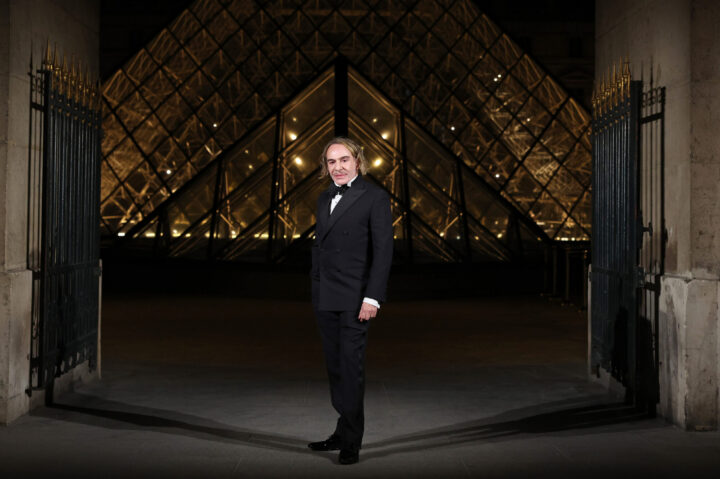
Pascal Le Segretain/Getty Images
John Galliano attends the "Le Grand Diner du Louvre" Passage Richelieu Photocall at Musee du Louvre on March 4, 2025 in Paris, France.


 Add JewishInsider on Google
The Metropolitan Museum of Art and British designer John Galliano announced Monday that they are canceling a planned exhibit honoring Galliano’s work, citing public outcry over his past conviction for antisemitic remarks.
The disgraced fashion powerhouse — who was convicted of a hate crime in 2011 and fired from Dior after a video surfaced of his drunken, antisemitic and anti-Asian tirade at a bar in La Marais, a Jewish quarter of Paris — was scheduled to be the focus of “John Galliano: Horizons,” a nine-month exhibition by the Met’s Costume Institute. The exhibition was scheduled to launch in May with the Met Gala, the star-studded annual spring benefit.
Although Galliano publicly apologized for his rant years ago — and the Met consulted with Jewish leaders including Anti-Defamation League CEO Jonathan Greenblatt ahead of announcing the exhibition — it sparked widespread criticism from some Jewish leaders, including New York City Council Speaker Julie Menin, who called the museum’s decision to highlight Galliano’s career “a serious mistake” in a letter she sent on Thursday to Met leadership.
“After much reflection and discussion with The Met and all those involved, I have decided, with great sadness, that it is best for the exhibition not to take place at this time,” Galliano said in a statement about the decision. “I remain fully accountable for the pain caused by my words in the past, particularly the hurt I caused to the Jewish and Asian communities, and I remain deeply sorry for it. I understand that meaningful atonement is not achieved through an exhibition, institutional recognition or a single public gesture. It is a continuing responsibility, demonstrated through listening, learning and one’s conduct over time.”
On Monday, Menin said she was “pleased” that the Met agreed to not honor Galliano.
“From the beginning, I have told them that I strongly disagreed with this decision, and at this rising time of antisemitism, it had served as a gut punch to the Jewish community. This is the correct decision, as the harm and pain this was causing was simply unacceptable,” Menin wrote on X.
“Museums such as The Met must be held to a high standard of inclusiveness and tolerance, and I am pleased that they have listened to the concerns I have raised and reacted with the right decision. As the daughter of a Holocaust survivor, and as the first Jewish speaker of the New York City Council, this decision was personal to me, and the Jewish community and I felt a strong obligation to speak out.”
“With antisemitism at crisis levels, the Met honoring John Galliano at this moment was misguided, and even Galliano ultimately recognized what the Met should have done from the start,” Greenblatt wrote on X. “This was the wrong move at the wrong moment. Timing matters.”
A new exhibition at the Upper East Side synagogue uses paintings of everyday Jewish life to explore nostalgia and identity as Jewish artists increasingly feel unwelcome in cultural spaces
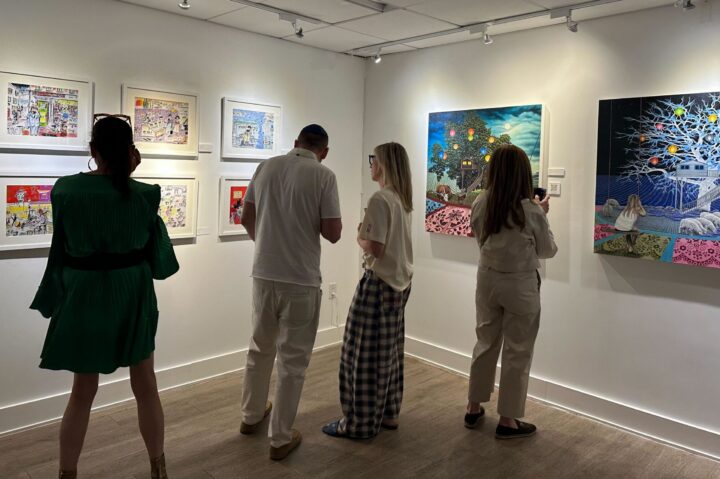
Haley Cohen
Opening night of "Golden Age: Nostalgia for the American Jewish Century" at Altneu in Manhattan.
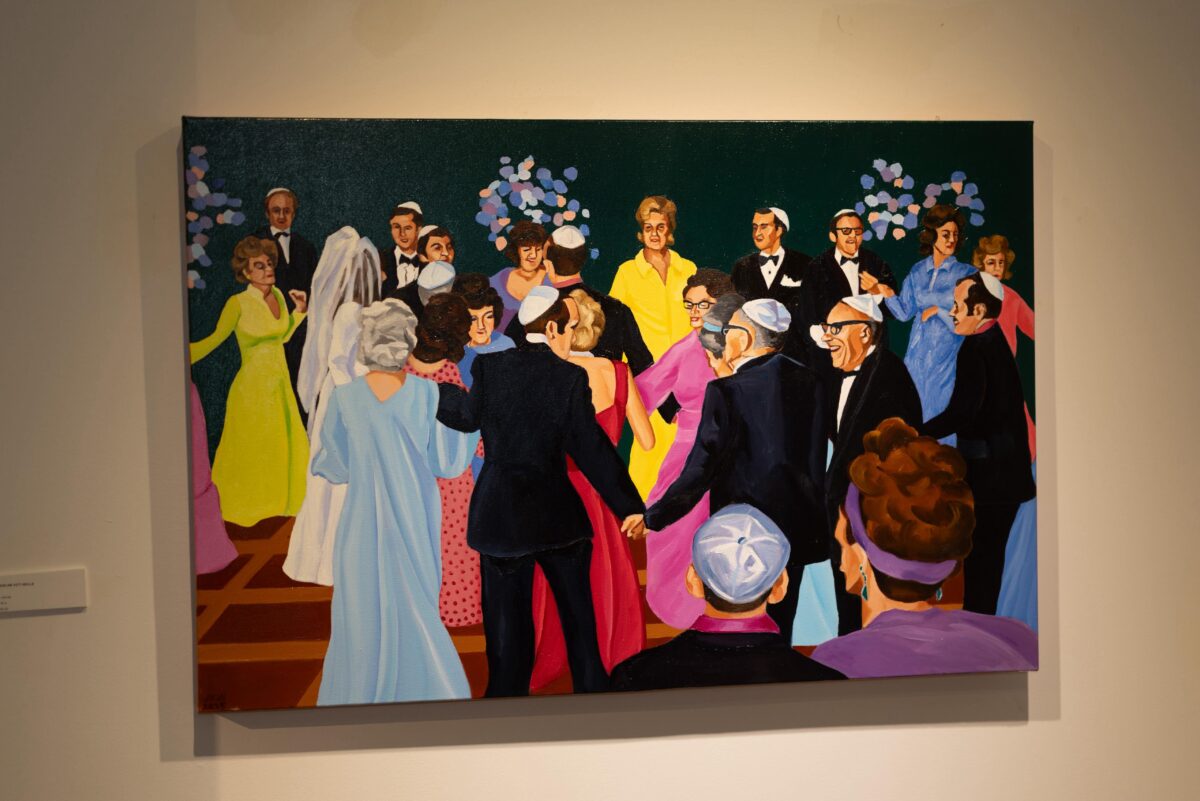
Four friends gather around a table as a waiter serves a tray of pastrami sandwiches; a Torah scroll is passed from grandfather to father and son, marking a bar mitzvah; three grandmothers sit on lawn chairs outside of a brownstone, watching passersby on a summer night.
These candid glimpses of ordinary American Jewish life, part of a new art exhibition, “Golden Age: Nostalgia for the American Jewish Century” — currently on display at the Altneu, an Upper East Side Orthodox synagogue — evoke a bygone era, before today’s historic rise in antisemitism.
“I grew up in the golden age [of North American Jewry], the ’70s, ’80s and ’90s. It was an easy time,” Jacqueline Kott-Wolle, one of the seven artists whose work is highlighted in the exhibit, told Jewish Insider on Wednesday at an event to mark the gallery’s opening. “My memories of growing up Jewish [in Toronto] were very positive. Everybody was Jewish — even the people at my high school who weren’t Jewish were Jewish. It was a good time to be alive. [Today,] antisemitism slammed into us so hard. It shocked us.”
Kott-Wolle, who is based in Highland Park, Ill., and is the daughter of Holocaust survivors, said her oil paintings “represent the height of that time period, when we were very comfortable being Jewish.” The artwork, she said, evokes memories of the “Golden Age of American Jews,” which a 2024 piece in The Atlantic claimed is ending due to antisemitism stemming from both the left and right.
In addition to her six paintings displayed in the exhibit, Kott-Wolle has a larger exhibit called “Growing Up Jewish – Art and Storytelling.” The series of 40 paintings illustrates five generations of her family photos, which have been exhibited in the Maltz Museum in Cleveland and Houston Holocaust Museum.
“[The paintings] are playful and fun, and they make us feel a little more nostalgic for something that we think or worry might be lost,” she told JI, noting that displaying her work in a synagogue is a unique experience.
“The paintings resonate everywhere, but differently,” she said. “I find Jewish audiences recognize it immediately. I can’t tell you how many times someone will come up to me and say, ‘I love this painting and how come my mom is in it?’”
In more mainstream settings, her art has also been widely embraced, she said. “It’s like our Jewish faces have been beaming into people’s TV screens forever. Our faces are familiar, so non-Jewish audiences also respond, but in a different way. Still in a very loving and receptive way.”
But amid the highest levels of antisemitism seen in generations following the Oct. 7, 2023, terrorist attacks in Israel and the ensuing war in Gaza, many Jewish and Israeli artists no longer feel their work is welcome in non-Jewish spaces. Located in the basement of the Altneu synagogue — a Tudor Revival townhouse on East 70th Street — the new exhibit directly responds to that exclusion, according to curator Anne-Marie Helwaser and co-chairs Diana Gordon and Avital Chizhik-Goldschmidt, who is also Altneu’s rebbetzin.
“At a moment when openly Jewish artists are facing growing barriers in cultural spaces, we are doubling down on Jewish creativity by giving space and visibility to strongly Jewish [and] Israeli emerging art, in the heart of the Upper East Side,” said Chizhik-Goldschmidt who founded Altneu in 2022 together with her husband, Rabbi Benjamin Goldschmidt.
“On a deeper level, there is a spiritual component too. Visual arts is a powerful connection point for people; in the words of Rav Kook, ‘Literature and art are positioned to express the deepest of secrets hidden within the soul.’ We believe it’s an important part of our spiritual experience, to be moved, to feel a stirring in the soul when seeing a particularly evocative piece of work,” she told JI.
“As the Altneu grew, I dreamt of people coming to an Orthodox synagogue for a contemporary art show, and for those two pieces to feel utterly organic together,” said Chizhik-Goldschmidt, who recalled growing up in the halls of New York’s museums, the granddaughter of a passionate art historian and tour guide.
“It was a major part of my upbringing, as a child of Soviet Jewish immigrants,” she told JI. “The arts were the only kind of spirituality that Jews had access to in the USSR. Now, we are blessed to be able to combine this with a sanctuary space.”
This is the fourth art exhibit the Altneu has hosted. Until now, the synagogue has focused on Israeli artists. However, the conflict with Iran made the logistics of securing their artwork nearly impossible in time for this exhibit.
The idea first came about “at a fragile moment,” said Helwaser, director of the Helwaser Gallery on Madison Avenue.
On a trip to Israel soon after Oct. 7, she recalled being moved by an exhibition by one artist who was an IDF soldier.
“He came back [from war] and started painting,” she said. “I talked to my friend, [Altneu community leader] Diana [Gordon], and thought we should show the images. We created — very improvised — an exhibition here. People responded really well.”
Once the organizers realized the Iran war would make it a challenge to bring Israeli art, they issued an open call for American Jewish artists, and the resulting meetings sparked the idea to highlight this different political moment.
“Hundreds of artists responded. I selected maybe 20 and we met with them and chose seven.
In different ways, all the selected artists were asking the same question: what does it mean to be Jewish today in America? It’s something we are concerned about,” Helwaser continued.
Asked why she displayed the art at Altneu instead of her own gallery, Helwaser admitted she never expected to curate for a synagogue. She explained that unlike gallery visitors, this audience comes for the story and to connect with the artists rather than just the art.
“We don’t need Altneu for art, we have the best galleries in the world in New York,” she continued. “[Visitors] want to talk about what it is to be Jewish. Art is a nice way to do that.”
“It’s not easy [to show Israeli artwork] in New York City galleries now,” said Helwaser. “I would do it but I’d be worried. In London, you wouldn’t be able to do it. Israeli artists here [are afraid] to be shown as Israeli.”
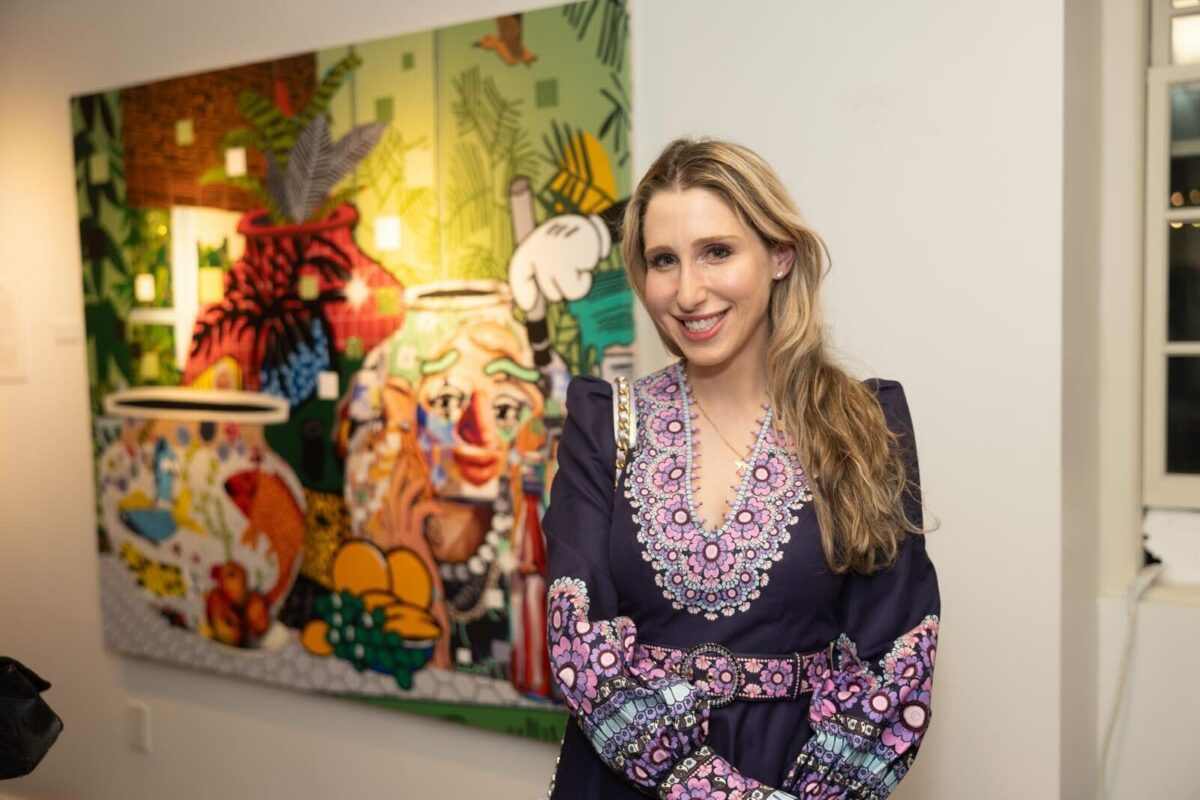
In addition to Kott-Wolle, participating artists are: Rotem Amizur, Nicole Gordon, Noa Ironic, Alan Richards, Ephraim Wuensch and Allison Zuckerman.
Paintings are priced between $600- $52,000. Many of the buyers are not Jewish, according to Helwaser. The exhibit is scheduled to run until July 6.
The opening night brought a diverse crowd of Jews together, including many newcomers to the synagogue — from those wearing black yarmulkes and sheitels to others sporting piercings and tattoos. “That’s the beauty of Manhattan, and of the Altneu as a gathering point. It goes beyond denomination,” said Chizhik-Goldschmidt.
The artwork appears to be resonating. At the debut, one guest was overheard gesturing toward a painting and remarking to a friend, “This is nostalgia for me. This is exactly how American grandmothers looked when I was growing up.”
The new presidential center, scheduled to open June 19 in Chicago, highlights Obama’s ‘strategic engagement with adversaries’
Scott Olson/Getty Images
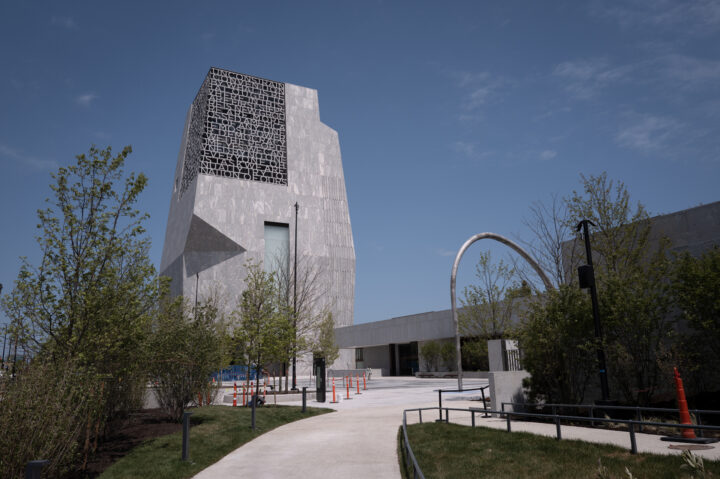
The Obama Presidential Center towers over Jackson Park on May 15, 2026 in Chicago, Illinois.
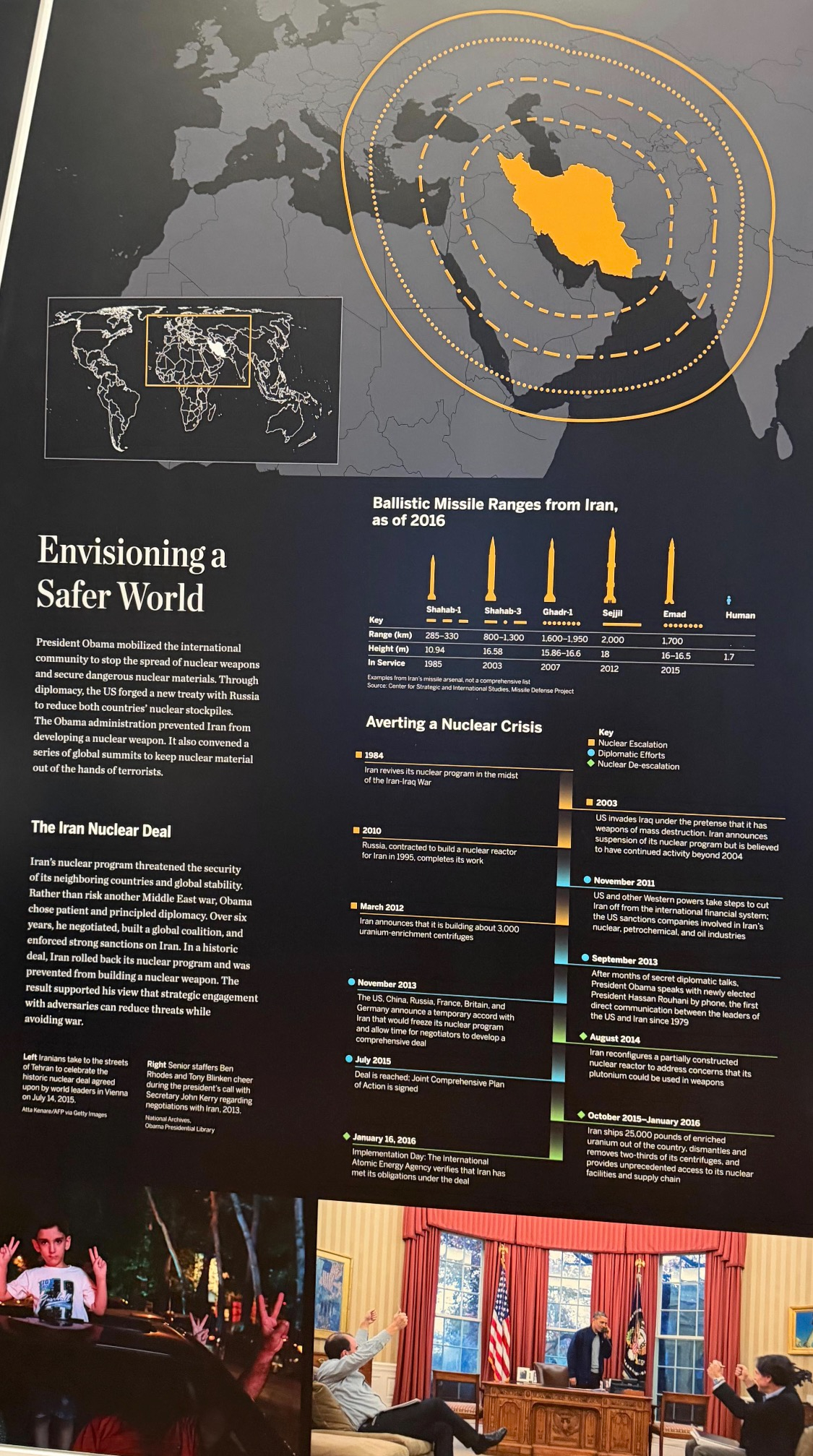
The Barack Obama Presidential Center, slated to open in Chicago in mid-June, will feature an exhibit highlighting the former president’s “patient and principled diplomacy” and “strategic engagement with adversaries” in the lead-up to the 2015 Iran nuclear deal, asserting that he prevented Iran from developing a nuclear weapon.
The claims emerge amid a tenuous ceasefire between the U.S. and Iran as the parties have repeatedly rejected the other’s proposals to end the war. Iran and its proxies in the region have attacked Israel and its neighbors with thousands of ballistic missiles and drones since the Oct. 7, 2023, Hamas terrorist attacks.
“Through diplomacy, the US forged a new treaty with Russia to reduce both countries’ nuclear stockpiles,” the exhibit reads, according to images obtained during the museum’s soft launch reviewed by Jewish Insider. “The Obama administration prevented Iran from developing a nuclear weapon.”
It goes on to say, “Iran’s nuclear program threatened the security of its neighboring countries and global stability. Rather than risk another Middle East war, Obama chose patient and principled diplomacy. Over six years, he negotiated, built a global coalition, and enforced strong sanctions on Iran. In a historic deal, Iran rolled back its nuclear program and was prevented from building a nuclear weapon. The result supported his view that strategic engagement with adversaries can reduce threats while avoiding war.”
The statements refer to the 2015 agreement known as the Joint Comprehensive Plan of Action. At the time of its implementation, the deal garnered widespread criticism, including from mainstream Jewish organizations, over concerns that the limits placed on Iran lifted too quickly and would allow the Islamic Republic to achieve a nuclear weapon, all while jeopardizing Israel’s security. Critics further say the agreement indirectly provided Tehran with additional resources to fund its regional proxies.
President Donald Trump abandoned the agreement in 2018, arguing it was inadequate and failed to address Iran’s ballistic missiles and regional malign activities.
A dedication ceremony for the Obama Presidential Center is scheduled for June 18 followed by its opening to the public the next day.
The center did not respond to a request for comment from Jewish Insider about the exhibit.
Please log in if you already have a subscription, or subscribe to access the latest updates.
 Continue with Google

 Continue with Apple