













































































Rep. Josh Gottheimer called the trend ‘deeply alarming’ as Spain and Ireland moved to downgrade EU ties with Israel

Jens Kalaene/picture alliance via Getty Images
The flags of Israel (l-r), the EU and Germany fly in front of the Berlin House of Representatives.


 Add JewishInsider on Google
Democratic lawmakers are expressing concern over Israel’s fracturing relationship with key European allies, while experts say the shifting dynamics could carry longer-term economic and political risks for Jerusalem, even if Israel weathers threats to unwind largely symbolic defense agreements.
Israel’s relationships with various European countries have come under increasing strain in recent weeks. Last month, Israel halted all defense procurement from France amid worsening bilateral ties, while Italian Prime Minister Giorgia Meloni announced last week that Italy would cancel the automatic extension of its defense agreement with Jerusalem.
On Tuesday, Spain and Ireland led a push to suspend the EU’s association agreement with Israel — which has governed the bloc’s trade and political ties with Jerusalem since 2000. However, the move stalled as member states remained divided on the issue. A suspension of the full association agreement would require unanimity, a threshold that is not expected to be met as Germany and Italy indicated they would remain opposed for the time being. The European Commission has previously proposed suspending trade-related provisions of the agreement — which would only require a majority vote out of the 27 member states.
Rep. Josh Gottheimer (D-NJ) told Jewish Insider that the latest slate of moves unfolding in Europe is “deeply alarming” and “dangerous for all of us.”
“NATO allies like Spain, France and Italy are turning their backs on Israel, a key democratic partner that is actively fighting on the front lines against Iran,” Gottheimer said. “Singling out Israel represents a double standard.”
Gottheimer said that the U.S. “must make it clear” to European allies that “abandoning the world’s only Jewish state does not make them safer — it puts all of us at risk.”
Rep. Jake Auchincloss (D-MA) argued that the U.S. response should focus on strengthening regional and transatlantic ties, calling for an expanded Abraham Accords that are “knitted together with economic, energy and defense ties with Europe,” something he said would “create a more durable Eurasian security infrastructure.”
“As we look towards the next MOU [memorandum of understanding], it needs to be a regional security architecture,” Auchincloss said. “I think this Iran war has been such a complete catastrophe. As it relates to Europe, the president should close his mouth and stop belittling and degrading NATO.” President Donald Trump has taken repeated aim at the North Atlantic alliance over its leaders’ refusal to engage with the war in Iran.
When asked whether the U.S. should intervene in response to recent European measures, Rep. Brad Schneider (D-IL) said he believes the U.S. is “engaging” with European countries.
“We should continue to engage and work,” Schneider said. “My goal is to find a path to peace, Israel’s security and stability in the region, and ultimately peace for all peoples.”
“Israel is an incredible ally in an important region,” he continued. “We got to make sure we work together and strengthen that relationship and the same is true for Europe.”
Experts said that while the deterioration in Israel-Europe relations is real, the immediate military implications of these moves are limited.
“Israel’s relationship with Europe is certainly deteriorating,” Steven Cook, a senior fellow at the Council on Foreign Relations, told JI. But he called the moves from European countries “mostly symbolic.”
“There are European countries that have already embargoed weapons and parts, but it has not affected Israeli security,” Cook said. “Regardless, I suspect that the very fact that European countries are trying to use defense agreements and weapons systems as leverage with the Israeli government will only encourage the Israelis to be more self-sufficient in defense.”
Elliott Abrams, who served as Iran envoy during the first Trump administration, similarly told JI that the “military impact on Israel is not very large.” He noted that Israel did not maintain a serious military relationship with Spain and France.
Additionally, Abrams said that Meloni’s decision to cancel the automatic extension of the Israel-Italy defense agreement was not a sign that those ties are permanently broken, but rather it could provide her “leeway to renew” down the road “if the political situation is easier.”
“Nearly all of Israel’s military equipment comes from domestic production, the United States or Germany, so the deteriorating defense ties with European countries will not have a major impact on Israel’s military procurement,” David May, a senior research analyst at the Foundation for Defense of Democracies, said. “If anything, the European countries will be harmed by losing access to Israel’s battle-tested and innovative defense technology.”
Edmund Fitton-Brown, a former British diplomat and a senior fellow at FDD, also said that “defense issues are more symbolic than practical.”
“Israel’s overwhelming primary partnership is with the U.S., which regards Israel as a model ally,” Fitton-Brown said. However, he noted that putting “all Israeli eggs in one U.S. basket has drawbacks.”
“In an ideal world, any independent country will seek to diversify its supplies and partnerships to guard against excessive dependency on a single ally — but it reflects the reality that Israel no longer has any other load-bearing alliances besides the U.S. Netanyahu is investing everything in his management of the relationship with Trump,” Fitton-Brown added.
But while the military impact may be slim, experts warned of serious potential economic and political consequences of the worsening ties. Cook said that while he believes Sanchez’ EU push is unlikely to be successful due to a lack of support, he noted that it still has “enough support that it should make Israelis uncomfortable.”
“Israel’s security relationship pales in comparison to its economic relationship,” Cook said. “If the Europeans took action against Israel — like Sanchez’s proposal to end Israel’s association agreement with the EU — it would likely hurt the Israeli economy.”
The EU is currently Israel’s largest trading partner, accounting for roughly one-third of its total trade. Trade in goods between Jerusalem and the union has reached up to 42.6 billion euros in 2024. Israel is the EU’s third largest trading partner in the Mediterranean.
Fitton-Brown said that it would be a “serious matter” if Sanchez could “force the European Union to end its association agreement with Israel.” However, he similarly predicted that “he [Sanchez] probably can’t deliver on that threat.”
Abrams said that while Israel maintains relationships in “Central and Eastern Europe, and with Germany,” he warned that the changing dynamics among European nations could have political consequences.
“The political impact is serious, and here I would hope the U.S. can help,” Abrams said. “I am not sure we [the U.S.] can right now, given Trump’s own unpopularity in Europe and his too-frequent criticism of NATO countries.”
“The better path for Israel right now, in my view, is for Israel to ask friends like Germany, Poland and Czechia to block any Spanish initiative, and I think they will,” Abrams continued. “Sanchez’s hostility to Israel is not consensus among EU leaders, even given their criticism of [Israeli Prime Minister Benjamin] Netanyahu.”
Cook said Washington is unlikely to step in unless core defense supply chains are threatened. He noted that the “only way the U.S. would get involved is if Europeans tried to hold up parts for [Israel’s] F-35s [fighter jets],” adding that “critical components are built in Europe.”
Fitton-Brown, on the other hand, said that the U.S. should take action in response. He argued that a potential option could be for Washington to “question Spain’s right to protection from NATO,” adding that the U.S. could argue that such members that “undermine a key U.S. ally do not qualify as allies themselves.”
“The U.S. should make clear that it will not tolerate anti-Israeli policies beyond a certain point,” Fitton-Brown said. “Sanchez is almost equally showy in his anti-Americanism, and should be taught that such a policy is not without costs.”
The Delaware senator holds a unique place in the Democratic Party, rising to leadership roles while continuing to champion Biden-era foreign policy
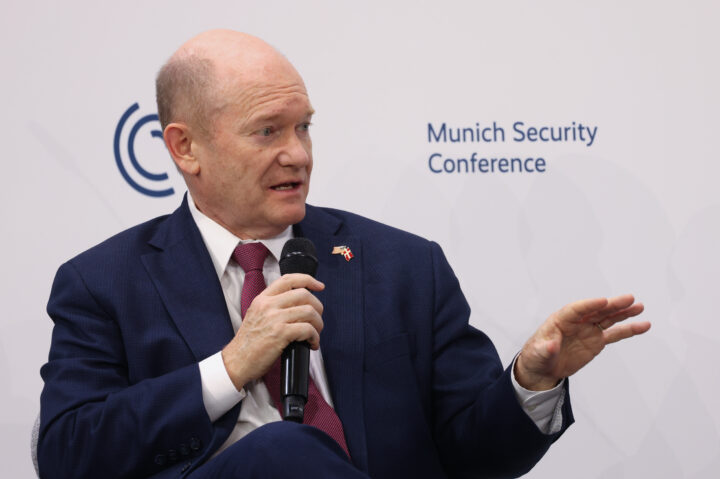
Alex Kraus/Bloomberg via Getty Images
Senator Chris Coons, a Democrat from Delaware, at the Munich Security Conference in Munich, Germany, on Saturday, Feb. 14, 2026.
Sen. Chris Coons (D-DE), one of the leading foreign policy voices in the Democratic Party’s moderate wing, expressed concern over the weekend that any White House decision to move ahead with military action against Iran would deeply alienate leading European allies of the United States.
“There are pretty stark early warning signs of some challenges where core allies do not share our priorities,” Coons told Jewish Insider following a weeklong trip to Europe, which included stops at the Munich Security Conference, along with meetings in Ukraine and Moldova with top European diplomats.
“It leaves me genuinely concerned that if Trump goes ahead with a strike against Iran, it is not going to enjoy support from any of our core allies,” he continued. “That will make it harder, and it may deepen this growing challenge for us.”
Asked how he would like to see the Trump administration address the Iranian regime’s violent crackdown on protesters and its nuclear program, Coons urged the president to work with close allies to “ramp up pressure” on Tehran and explain his approach to the public. The Delaware senator also encouraged Trump to include Congress in his deliberations.
“A) Consult Congress. B) Make a case to the American people about why this is in our national security interest,” Coons said. “C) Clarify what on earth he’s planning with this Board of Peace, which just launched with a massive pledge from the United States that none of us had heard of before he announced it,” he said, ostensibly referring to the $10 billion financial commitment Trump made to Gaza’s reconstruction. “And D) If he’s going to work with close allies to ramp up pressure to try and achieve something at the negotiating table, he should work with close allies.”
“He shouldn’t just fire off a bunch of missiles and assume that that’s going to be enough to achieve the result he wants,” he added.
Coons also highlighted growing transatlantic tensions over potential U.S. military action against Iran during discussions with European officials, who expressed worries about a brewing U.S.-U.K. dispute tied to the Chagos Islands.
The remote British Indian Ocean Territory is at the center of a 2025 agreement in which the U.K. agreed to transfer sovereignty of the island chain to Mauritius while securing a 99- or 100-year lease for the strategic Diego Garcia military base, a joint U.S.-U.K. facility long used by American forces.
The Trump administration initially signaled support for the deal, with the State Department affirming it last Tuesday. But one day later, President Donald Trump publicly urged Prime Minister Keir Starmer to scrap the arrangement and retain full control of the “strategically located” base, warning it could be needed if diplomacy with Iran fails.
The Times of London reported Thursday that the British government had informed Washington that week it would not permit U.S. strikes on Iran from Diego Garcia or the Royal Air Force’s Fairford station, which houses U.S. Air Force troops, in England.
Coons called the U.K.’s stance “striking.”
Coons plays a unique role in today’s Democratic Party. He sits in the Senate seat held by former President Joe Biden for 36 years, and the two Delaware Democrats have a relationship that dates back four decades.
In addition to being the ranking member on Defense Appropriations, the panel responsible for Pentagon funding, Coons is next in line to succeed retiring Sen. Jeanne Shaheen (D-NH) as the top Democrat on the Senate Foreign Relations Committee, a role Biden held in the early 2000s. The Delaware senator remains Biden’s most ardent defender in politics following his exit from public life, and continues to advocate in his role as a senior Democrat in Congress for the traditional foreign policy views the two men have long shared.
He does so against the backdrop of the ongoing debate among Democrats about the future direction of the party, on foreign policy and otherwise, in the post-Biden era.
Alongside Coons in Munich were a handful of prominent Democrats believed to be considering presidential runs in 2028, including Rep. Alexandria Ocasio-Cortez (D-NY), Sens. Chris Murphy (D-CT), Ruben Gallego (D-AZ), Mark Kelly (D-AZ) and Elissa Slotkin (D-MI). Govs. Gretchen Whitmer of Michigan and Gavin Newsom of California and former Commerce Secretary Gina Raimondo.
Among the possible presidential hopefuls, Ocasio-Cortez and Whitmer were criticized for being unprepared for the conference after struggling to answer questions on U.S. policy toward China and Ukraine. Meanwhile, Murphy and Ocasio-Cortez separately accused Israel of committing genocide in Gaza — appealing to a left-wing base that has made criticism of the Jewish state central to its foreign policy.
Ocasio-Cortez later griped to The New York Times that her gaffes and perceived presidential ambitions overshadowed the message she was attempting to deliver on a major foreign policy stage.
Asked about the large presence of potential Democratic presidential candidates in Munich, Coons joked that he was “announcing my 2028 candidacy” before crediting his fellow Democrats for engaging closely on foreign policy issues.
“The reality is that over the last several cycles, I’ve been very encouraged to see governors, senators, former cabinet officials who are likely future presidential candidates invest the time in coming to Munich, coming to Davos, going to Halifax, going to Australia, because the threat environment for all of our countries has become more serious and more real,” Coons said.
Coons also expressed concern about the hefty $850 billion budget for the Pentagon in the upcoming fiscal year, noting the significantly increased funding is “a breathtaking amount of money, and there is a lot of skepticism on the part of Americans that it’s being well spent.”
“The average American needs to see good jobs and innovation coming out of this massive defense investment. If we focus only on buying American and only on American jobs, we will lose tactically, we will lose strategically, we will lose politically. To the extent we align together, there is a strong future for all of our countries as democracies to meet this moment and to deliver the innovation that this threat environment absolutely demands,” Coons said.
Good Tuesday afternoon,
This P.M. briefing is reserved for our premium subscribers like you — offering a forward-focused read on what we’re tracking now and what’s coming next.
I’m Danielle Cohen-Kanik, U.S. editor at Jewish Insider. I’ll be curating the Daily Overtime for you, along with assists from my colleagues. We hope you enjoy the inaugural edition and would love to hear your thoughts and feedback. Please don’t hesitate to drop us a line by replying to this email.
📡On Our Radar
Notable developments and interesting tidbits we’re tracking
Today, we remember Wesley LePatner, a Jewish philanthropist and Blackstone executive killed in Monday’s shooting at the firm’s Manhattan headquarters. LePatner, 43, served on the boards of the pluralistic Abraham Joshua Heschel School and the UJA-Federation of New York. The federation called LePatner “extraordinary in every way” in a statement, saying she “lived with courage and conviction, instilling in her two children a deep love for Judaism and the Jewish people.” Hindy Poupko, deputy chief planning officer at UJA, said in remarks at the Israel on Campus Coalition’s National Leadership Summit in Washington today that there was a second Jewish victim of the shooting, Julia Hyman. Hyman, a Cornell graduate, worked for Rudin Management in the Midtown skyscraper…
Concerns among Democrats about the humanitarian situation in Gaza and Israel’s role in it are intensifying. On Capitol Hill, the majority of Senate Democrats, led by a group including Senate Minority Leader Chuck Schumer (D-NY) and Sen. Jacky Rosen (D-NV), sent a letter to Secretary of State Marco Rubio and Middle East envoy Steve Witkoff calling the humanitarian crisis in Gaza “unsustainable” and saying that the Israeli- and American-backed Gaza Humanitarian Foundation has “failed” to properly deliver aid…
One Democrat standing up for Israel is Rep. Ritchie Torres (D-NY), who said at the ICC summit today, “We have to remind the world that, despite the amnesia, Hamas was the central cause of the war in Gaza. … Hamas is morally responsible, principally responsible for the war in Gaza.” Read more on Torres’ speech in JI’s Daily Kickoff tomorrow…
Sen. Bernie Sanders (I-VT), who did not sign the Senate Democrats’ letter, jumped into the fray by introducing another resolution to block an arms transfer to Israel — his third since November 2024. In a novel twist, this resolution would block the sale of $1 million worth of assault rifles to Israel’s police force overseen by far-right Minister of National Security Itamar Ben-Gvir, potentially opening the door for more Democrats to vote in favor, given Ben-Gvir’s less-than-favorable reputation within the party…
British Prime Minister Keir Starmer, applying pressure of his own, announced today that the U.K. will recognize a Palestinian state at the U.N. General Assembly in September — matching France’s timeline, announced last week — unless Israel takes “substantive steps to end the appalling situation” in Gaza, reaches a ceasefire with Hamas and commits to reviving the possibility of a two-state solution and not annexing the West Bank. President Donald Trump, who met with Starmer in Scotland yesterday, told reporters that the British PM didn’t discuss the move with him and that he has no view on it, but that the U.S. is “not in that camp”…
On the home front, UCLA settled a lawsuit with Jewish students who alleged that the university permitted antisemitic conduct during the campus’ anti-Israel encampments in spring 2024. According to the agreement announced today, the university cannot allow or facilitate the exclusion of Jewish students, faculty or staff from UCLA programs or campus areas. Notably, the agreement specifies that Jews cannot be excluded “based on religious beliefs concerning the Jewish state of Israel.” Also getting a windfall in the settlement: UCLA agreed to pay over $2.3 million combined to UCLA Hillel and Chabad, the Anti-Defamation League, the Academic Engagement Network and other Jewish organizations combating antisemitism on campus…
⏩ Tomorrow’s Agenda, Today
An early look at tomorrow’s storylines and schedule to keep you a step ahead
Keep an eye on Jewish Insider later this week where we’ll feature an interview with Jeanine Pirro, interim U.S. attorney for D.C., who spoke with JI about the ongoing prosecution of the assailant responsible for the deadly May shooting at the Capital Jewish Museum. We’ll also cover Rep. Mike Collins’ (R-GA) record on antisemitism as he jumps in the race to challenge Sen. Jon Ossoff (D-GA), and report on Harvard’s overtures to the Jewish community while it gears up for a settlement with the federal government.
We’re staying tuned for how President Donald Trump may react as some of the U.S.’ closest allies gear up to recognize a Palestinian state, a policy the U.S. has rejected as unhelpful to peace efforts for decades. Though he said today he has “no view” on the matter, as the U.N. General Assembly nears, will Trump take a tougher line on his European partners?
WAIT-AND-SEE APPROACH
One Jewish political leader: ‘No one thinks it’s going to be good for the Jewish community to be hostile and to be in constant war with the next mayor’
PODCAST POLITICS

Ben Rhodes and Tommy Vietor shaped the story of the Iran nuclear deal. Now they’re trying to turn Democrats away from Israel
Plus: TikTok hires a hate speech manager

GAZA CITY, GAZA - JULY 27: An aircraft from the United Arab Emirates drops humanitarian aid balloons over the al-Sudaniyya area of Gaza City, Gaza on July 27, 2025 following Israeli army's announcement of a 'tactical suspension' of military operations in 3 parts of Gaza Strip. Suspension began at 0700GMT and applies to 3 key areas, including Al-Mawasi, Deir al-Balah, and Gaza City, according to Israeli army spokesman. Aid packages were collected by Palestinians struggling to access food. (Photo by Khames Alrefi/Anadolu via Getty Images)
Good Monday morning.
In today’s Daily Kickoff, we report on the mounting international pressure on Israel — including among some pro-Israel Democrats — to resolve the humanitarian crisis in Gaza, the subsequent measures taken by Israel and how they are expected to impact diplomatic ties with European allies. We report on DoJ senior counsel Leo Terrell’s comments yesterday at the Israel on Campus Coalition National Leadership Summit and report on the new TikTok hire with professional roots in the Jewish world who was brought on board to tackle hate speech on the platform. Also in today’s Daily Kickoff: Rep. Ritchie Torres, Ofer Calderon and Penny Pritzker.
What We’re Watching
- Today in New York, France and Saudi Arabia are co-hosting a conference focused on reviving two-state solution talks. The gathering, initially scheduled for June, now comes days after French President Emmanuel Macron said he planned to recognize a Palestinian state at this year’s U.N. General Assembly. Macron is skipping the conference, but his foreign minister, Jean-Noël Barrot, is expected to, per The Economist, “formally present” Paris’ U.N. plans. Barrot, for his part, attempted to meet with Jewish groups while in New York, but was shut down after Macron’s announcement last week. More below.
- The Israel on Campus Coalition’s National Leadership Summit continues today in Washington. Former Israeli Prime Minister Naftali Bennett and Leo Terrell, senior counsel at the Department of Justice, addressed the gathering of more than 600 students yesterday. More below.
- In North Carolina, former Gov. Roy Cooper, a Democrat, is expected to announce his bid for the Senate seat being vacated by Sen. Thom Tillis (R-NC). Cooper’s upcoming announcement comes as former Rep. Wiley Nickel (D-NC) plans to step aside from the race and endorse Cooper, consolidating Democratic support around the former governor. On the GOP side, Republican National Committee Chairman Michael Whatley is expected to announce his bid for the seat in the coming days, setting up what is likely to be one of the most expensive Senate races of the upcoming cycle.
What You Should Know
A QUICK WORD WITH ji’S melissa Weiss and Tamara zIEVE
In Israel’s effort to conduct a pressure campaign on Hamas to oust the terror group and release the remaining hostages held in Gaza, it has found itself instead on the receiving end of another global pressure campaign.
Facing mounting pressure amid a worsening humanitarian crisis in Gaza, Israel over the weekend announced a series of measures aimed at alleviating the widespread malnutrition and security issues in the enclave, including temporary ceasefires, aid airdrops, facilitating a massive increase in Gaza’s water supply and establishing designated humanitarian corridors — even as the IDF called claims of starvation in Gaza “a false campaign promoted by Hamas” and Israeli Prime Minister Benjamin Netanyahu denied that there was starvation in Gaza.
The crisis hit a fever pitch over the weekend as opposition to Israel’s efforts and limits on aid — first put into place in March as a pressure tactic to push Hamas to release the remaining hostages — surged to the highest levels of government around the world.
Dozens of countries called for an end to the war, a restoration of the flow of humanitarian aid into Gaza and the immediate release of the hostages. The shift in the political dynamic extended to Capitol Hill, where Democratic legislators, including many who have been strong supporters of Israel, expressed their concerns over Israel’s approach to the worsening humanitarian crisis in Gaza.
SPEAKING UP
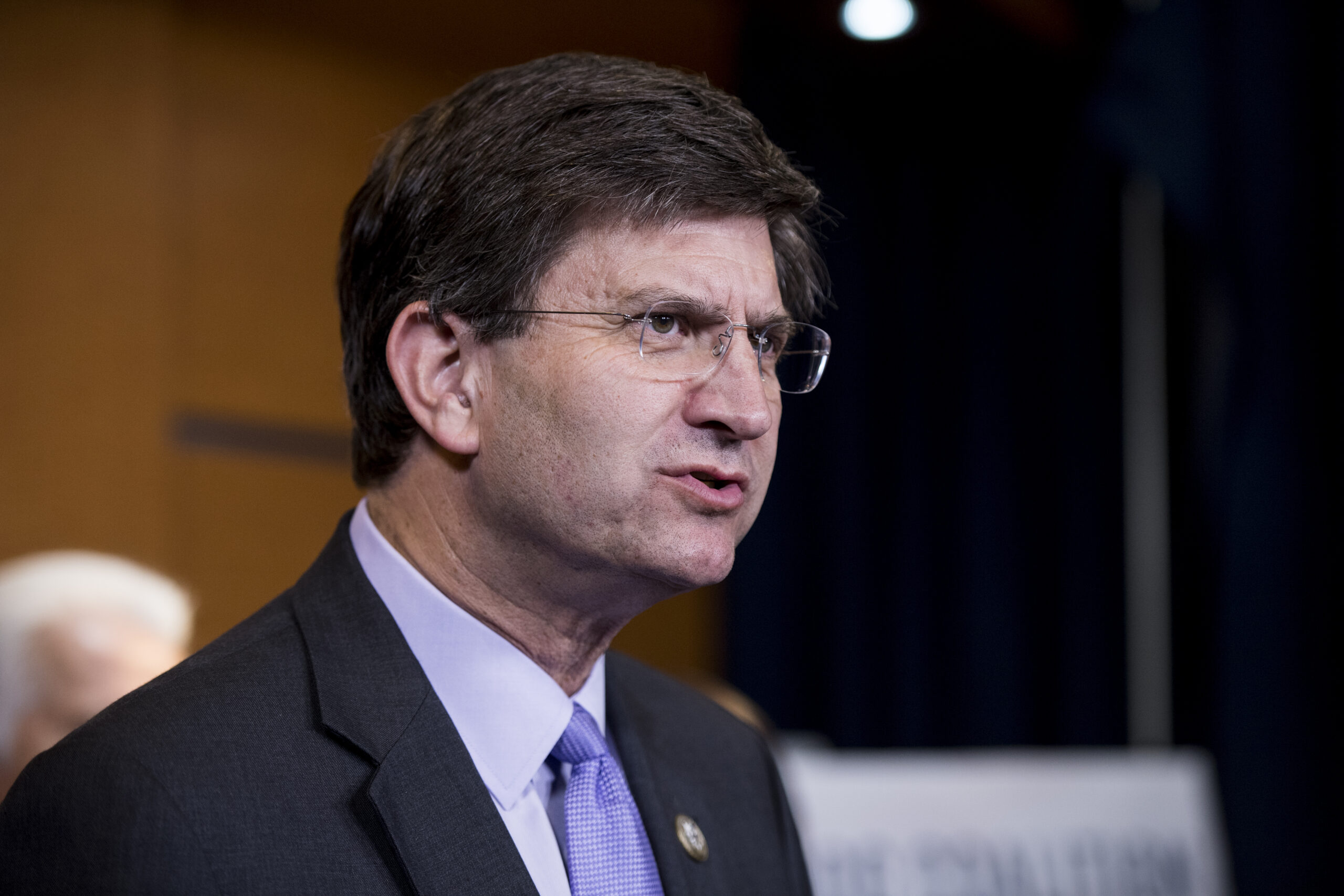
Amid reports of a mounting hunger crisis in Gaza, some of Israel’s staunchest defenders in the Democratic Party are now calling for Israel to do more to get humanitarian aid to Gazans — a signal that deteriorating conditions in the enclave are shifting public opinion even among those firmly in the pro-Israel camp. In a series of Friday statements, two major pro-Israel Democratic groups and a top Jewish Democrat in Congress raised concerns about what Rep. Brad Schneider (D-IL) described as “undeniably dire” circumstances in Gaza, Jewish Insider’s Gabby Deutch reports.
A matter of responsibility: “Israel must take immediate action to ensure sufficient food gets into the territory and to the people in desperate need. The world must not turn a blind eye to the fact that children are starving because of this war,” Schneider said in a statement. “It is Israel’s responsibility, and within its capacity, to address and resolve the situation.” Democratic Majority for Israel CEO Brian Romick said Friday that even though Hamas has no interest in mitigating human suffering in Gaza, Israel still has a responsibility to help starving children. “Even as Hamas works to prolong this war and prevent food from getting to people in need, Israel — along with the United States, Egypt, Qatar, and the rest of the international community — must continue to work to get food to innocent children in Gaza,” Romick said in a statement.
TORRES’ TAKE

Rep. Ritchie Torres (D-NY), a vocal Democratic supporter of Israel in Congress, said in an interview with journalist Chuck Todd on Sunday that Israeli Prime Minister Benjamin Netanyahu had done “irreparable damage” to Israel’s relationship with and support among Democrats, Jewish Insider’s Marc Rod reports.
Notable quotable: “If you’re a Democrat, and if you’re a Democrat of color and if you’re a Black Democrat, you take immense pride in Barack Obama. He represents one of the greatest achievements in politics. We take great pride in his presidency,” Torres said. “To see a foreign leader visibly disrespect him in the manner that Bibi Netanyahu did, I feel did irreparable damage to the relationship with the Democratic Party.” He also said that, despite his support for the Jewish state, he has “no real relationship” with the Israeli government.
Israel’s standing

For European leaders who are ratcheting up pressure on Israel to end the humanitarian crisis in Gaza, the Jewish state’s moves to pause military activity to allow a freer flow of humanitarian aid and begin airdrops of aid are “steps in the right direction,” the German foreign minister said on Sunday. But the aid crisis is inextricably linked, observers say, to a much larger and even thornier issue — a deal to end the grinding 21-month war with Hamas and a release of the hostages. Until such a deal is struck, the pressure from Europe, and from some inside Israel, likely won’t ease. And it could worsen, with some experts warning that European sanctions on Israel aren’t out of the question, Jewish Insider’s Lahav Harkov reports.
Wider issue: Daniel Shek, a former Israeli ambassador to France and a member of the Hostage Families Forum’s diplomatic team, said that the aid airdrops are “a result of international pressure and not sudden altruism.” However, Shek said, they are “like Tylenol for a cancer patient. Surgery is needed, meaning the end of the war.” A spokesperson for German Chancellor Friedrich Merz said that he is “prepared to increase the pressure if progress [on a ceasefire and humanitarian aid] is not made.”
Red lines: A coalition of major American Jewish organizations refused an invitation on Friday to meet with Jean-Noel Barrot, France’s minister for Europe and foreign affairs, after French President Emmanuel Macron announced that the country will recognize a Palestinian state in September, eJewishPhilanthropy’s Nira Dayanim reports.
COLUMBIA COMMITMENTS

Jewish leaders on and off Columbia University’s campus praised the settlement reached last week between the university and the Trump administration to restore some $400 million in federal funding that was slashed in March due to the Ivy League’s record dealing with antisemitism. While some Jewish leaders, students and alumni are taking a wait-and-see-approach, others expressed cautious optimism that the deal could lead to a safer environment for Jewish students following nearly two years of antisemitic protests and disruptions on campus in the aftermath of the Oct. 7, 2023, Hamas terror attacks in Israel, Jewish Insider’s Haley Cohen reports.
Positive perspective: “I am heartened to see the resolution agreement for several reasons,” Adam Lehman, president and CEO of Hillel International, told JI last week. “It recognizes both the clear, egregious violations of the civil rights of Jewish students and staff at Columbia and Barnard [an affiliate of Columbia] during the past two academic years, and the concrete steps Columbia has recently pursued to address these issues.”
Reservations: Still, some said that key reforms are missing from the deal, which falls short of several demands initially made by the Trump administration. Among the demands were putting the Middle Eastern, South Asian and African studies department and the Center for Palestine Studies under the purview of a senior vice provost, who would be appointed by the university to supervise course material and non-tenure faculty hiring, as well as the formation of a presidential search committee to replace acting President Claire Shipman.
security surcharge

Leo Terrell, senior counsel to the assistant attorney general for civil rights, said he is intent on eliminating what he called “the Jewish tax” in an address on Sunday to hundreds of Jewish college students gathered for the Israel on Campus Coalition’s three-day annual leadership summit held in Washington, Jewish Insider’s Haley Cohen reports.
What he said: “For those who don’t know what the Jewish tax is — for you to have this convention, for you to walk your child to a synagogue down the street — you have to pay for extra security,” said Terrell, who heads the Department of Justice’s antisemitism task force. “It makes no sense. It’s unfair. It’s wrong. I find it offensive that it’s being allowed throughout this country. I’m doing everything I can to eliminate it.” Terrell’s comments came as the Federal Emergency Management Agency announced last month that it had awarded $94.4 million in security grant funding to a total of 512 Jewish organizations nationwide.
DEDICATED ROLE

TikTok recently hired a new hate speech manager with long-standing ties to the Jewish community, the company confirmed to Jewish Insider’s Matthew Kassel, as the social media platform faces growing pressure to confront a sharp rise in antisemitic content. The streaming platform enlisted Erica Mindel, a former State Department contractor who worked for Ambassador Deborah Lipstadt, the Biden administration’s special envoy to monitor and combat antisemitism, to join TikTok’s global public policy and government affairs team.
Taking action: The hire comes as TikTok has drawn accusations that it has failed to address a spike in antisemitic and anti-Israel content in the wake of Hamas’ Oct. 7, 2023, terror attacks and amid the ensuing war in Gaza. In her newly created role, Mindel will “develop and drive the company’s positions on hate speech,” seek to “influence legislative and regulatory frameworks” and “analyze hate speech trends,” with a particular focus on “antisemitic content,” among other duties cited in an official job description shared by TikTok.
Worthy Reads
Just Cause, Unjust Tactics: The New York Times’ Ross Douthat argues that Israel’s war against Hamas in Gaza — which he describes as “a war for a just cause” — is now being fought unjustly. “One can have a righteous cause, one’s foe can be wicked and brutal and primarily responsible for the conflict’s toll, and still — under any coherent theory of just war — there is an obligation to refrain from certain tactics if they create too much collateral damage, to mitigate certain predictable forms of civilian suffering and to have a strategy that makes the war’s outcome worth the cost. These are tests that Israel is failing.” [NYTimes]
RJC Rising: The Dispatch’s David Drucker explores the growing influence of the Republican Jewish Coalition. “Since Election Day 2024, the Republican Jewish Coalition has been telling anyone who will listen that Trump’s performance among Jewish voters was a historic success — due in no small part to the money and manpower invested by the RJC. There’s data to back that assertion up…To understand the real and consequential movement toward Trump by Jewish voters in 2024, you have to look under the hood, at the exit polls of battleground states and local precincts with significant populations of Jewish voters. That’s where Trump made his mark with a cohort usually elusive for Republicans; it’s what helped propel him past Harris in swing states that were quite close despite the president’s sweep.” [TheDispatch]
Art of the Steal: In AirMail, Ezra Chowaiki reflects on his dealings with forged looted artworks whose sellers wrongly claim them to be works that belonged to high-ranking Nazi officials. “Art dealers know the back of a painting is more important than its front. The back is where you trace the painting’s history, and the clues for each artwork in Jimmy’s collection were incredible, including incidental marks and labels on each painting, not to mention all those Nazi stamps. … In my years of meeting collectors, I’ve realized that many prefer the forbidden fruit. In its own perverse way, it just tastes a little sweeter. But beware: your perverse fascination with forbidden provenance — the back of the canvas — may keep you from examining a painting’s more obvious faults on the front.” [AirMail]
Word on the Street
Darren Beattie, who was fired from his role as a speechwriter in the first Trump administration over his ties to white nationalists, was tapped to serve as acting president of the U.S. Institute of Peace in addition to his role as under secretary of state for public diplomacy and public affairs at the State Department…
Sen. Lindsey Graham (R-SC) told NBC’s “Meet The Press” that he believes Israel will be unable to negotiate an end to its war with Hamas and will have to do “what [the Allied forces] did in Tokyo and Berlin, take the place by force and start over again, presenting a better future for the Palestinians, hopefully having the Arabs take over the West Bank and Gaza”…
Secretary of State Marco Rubio is reportedly favoring “a more comprehensive approach to end the war and free all the remaining hostages” after meeting with hostage families at the State Department on Friday…
A Palestinian boy referenced in images that went viral last week as a symbol of the humanitarian crisis in Gaza was discovered to be suffering from a preexisting genetic muscle disorder…
A growing number of news organizations are calling on Israel to allow journalists access to the Gaza Strip…
The New York Times reports on speculation that funding for the refurbishment of the Qatari plane being gifted to the Trump administration is coming from funds allocated from a nuclear modernization program inside the Pentagon…
A White House official told The Wall Street Journal that it will use its recent settlement with Columbia University as a blueprint for its legal battles with other universities…
The New York Times spotlights former Commerce Secretary Penny Pritzker’s role as head of the Harvard Corporation, as both the Trump administration and the Corporation raise concerns about her continued leadership and involvement…
Minnesota Democratic activist Latonya Reeves, a member of the Democratic National Committee, is mulling a primary challenge to Rep. Ilhan Omar (D-MN)…
French authorities are investigating the circumstances behind the removal last week of several dozen French Jewish campers and camp staffers from a Vueling flight amid claims from the group that it was deplaned because the campers were Jewish; Vueling has denied the allegations and said the group was removed due to the unruly behavior of some of the campers prior to takeoff…
The New York Times looks at the impact of Iran’s deepening water crisis amid record-setting heat and energy shortages around the country…
Mathematician-turned-singer Tom Lehrer, whose satirical tunes from the 1950s and ‘60s gained new audiences when Cameron Mackintosh compiled Lehrer’s music into the 1980 revue “Tomfoolery,” died at 97…
Pic of the Day

Ofer Calderon (right), who was held hostage by Hamas in Gaza for 484 days, cycled yesterday alongside Israel-Premier Tech team owner and philanthropist Sylvan Adams in the final stage of the Tour de France on the Champs-Élysées in Paris. On the 100th day of the hostages’ captivity, Adams led a global cycling event in their honor and promised that when Calderson would be released, he would ride alongside him at the Tour de France.
Birthdays
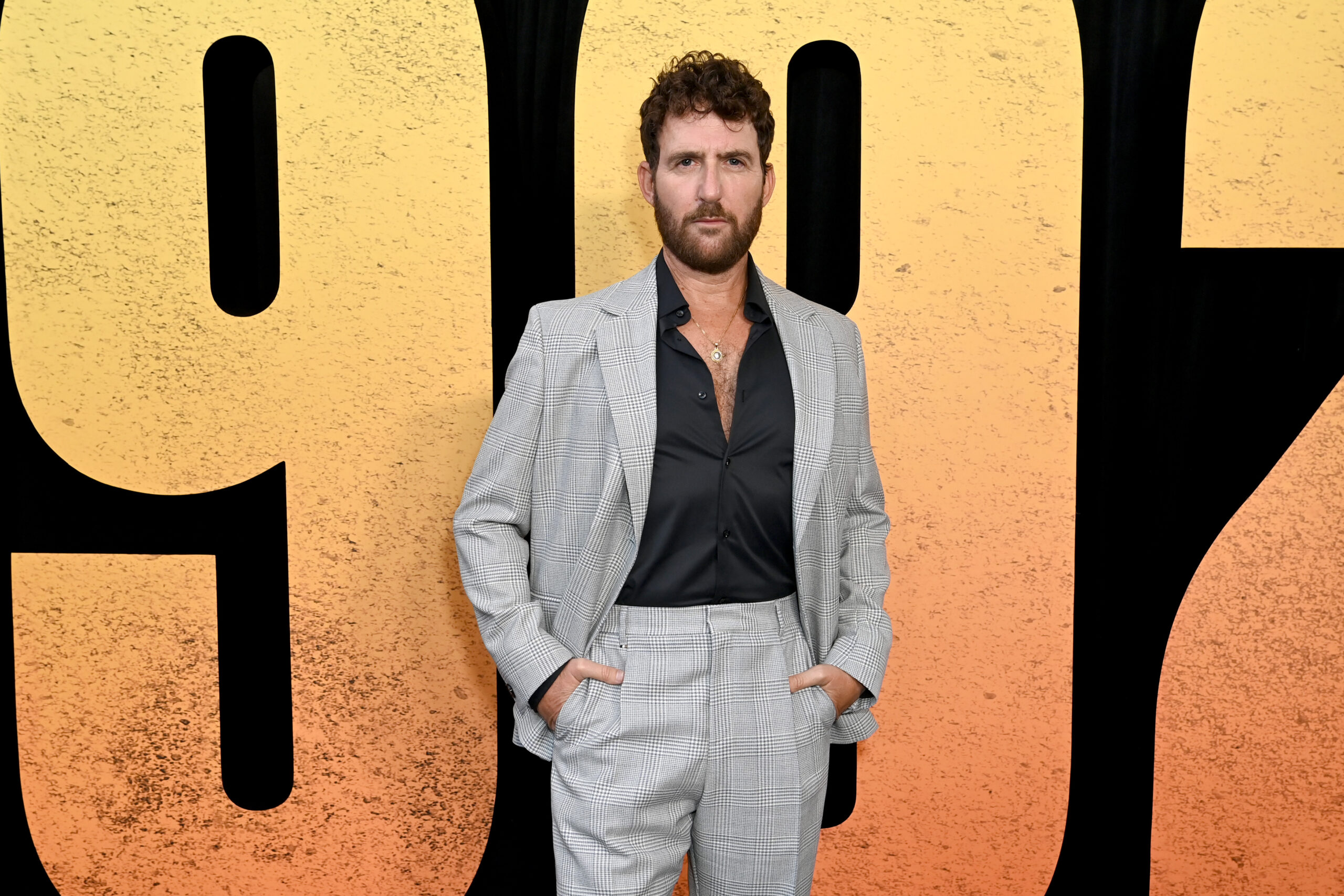
Jerusalem-born actor with more than 30 movie and television roles in the U.S., Ori Pfeffer turns 50…
Survivor of Auschwitz-Birkenau as a teen, he emigrated to Israel and became an artist, Yehuda Bacon turns 96… Chicago radio news personality, from 1973 to 2013 he was a television news anchor in Chicago, Walter David Jacobson turns 88… U.S. District Court judge in Manhattan until 2006, then U.S. attorney general for the last 14 months of the Bush 43 administration, now of counsel at the international law firm of Debevoise & Plimpton, Michael Mukasey turns 84… Swedish industrialist, chairman of the Nobel Foundation (manager of the Nobel Prize) from 2005 to 2013, Marcus Storch Ph.D. turns 83… In 1986 she became the first woman in the IDF to hold the rank of brigadier general, she then served as a member of Knesset, and now serves on multiple for-profit and nonprofit boards, Amira Dotan turns 78… Oldest active quarterback, he also manages football teams in Baltimore and Jerusalem, Joe Pollak turns 75… President of the Council on Foreign Relations for 20 years until he retired in 2023, Richard N. Haass turns 74… Tel Aviv-born real estate developer, restorer of historic buildings in downtown Los Angeles, Izek Shomof turns 66… Partner and managing director of Meadow Lane Advisors, Marty Friedman… French-Israeli hairdresser and entrepreneur, Michel Mercier turns 64… Sports executive, attorney and former president of basketball operations for the NBA’s Minnesota Timberwolves, David Kahn turns 64… American schoolteacher, wrongfully detained by Russia in 2022, he was released in the early weeks of the Trump 47 administration, Marc Hilliard Fogel turns 64… Talent booker, publicist and television and radio personality in Atlanta, Mara Davis turns 56… Tech entrepreneur who has invested in more than 100 startups, New York Times bestselling author, Joshua M. “Josh” Linkner turns 55… Co-founder of 23andMe, she recently regained control of the company, Anne Wojcicki turns 52… Actress and reality show personality, Elizabeth Berkley Lauren turns 51… Deputy CEO at UpStart, Jennifer Lew Goldstone… Associate justice of the Supreme Court of California, Leondra Kruger turns 49… Israeli journalist and former member of the Knesset, Ksenia Svetlova turns 48… Managing partner at Altitude Ventures, a health-care venture capital firm, he is a former White House liaison to the Jewish community, Jay Zeidman… Senior reporter at Bloomberg News, Laura Nahmias… CEO and CTO at Diagnostic Robotics in Jerusalem, Kira Radinsky Ph.D. turns 39… VP of player personnel at MLB’s Miami Marlins, Samuel Mondry-Cohen… Administrator at Lehigh Valley Homecare in Allentown, Pa., Menachem (Mark) Perl… Actor and producer who stars in the CBS series “Ghosts,” Asher Chazen Grodman turns 38… National narrative enterprise reporter at The Washington Post, Ruby Cramer… Larry Gordon…
Please log in if you already have a subscription, or subscribe to access the latest updates.
 Continue with Google

 Continue with Apple