






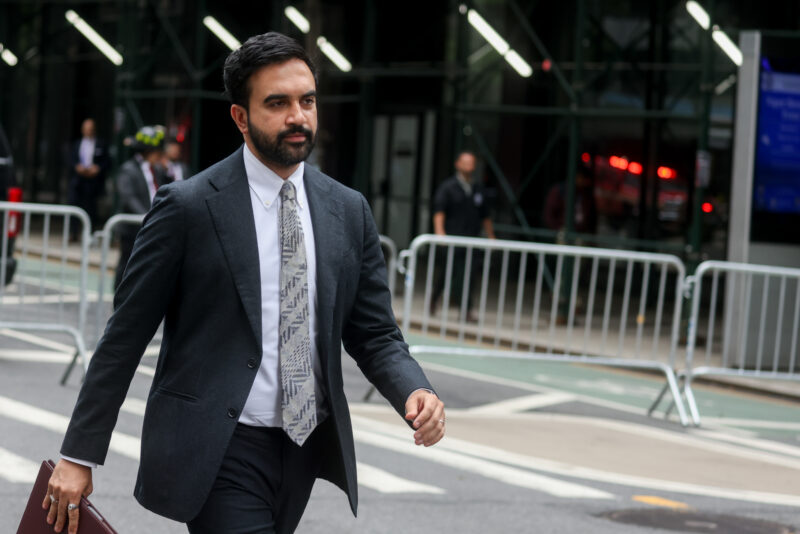
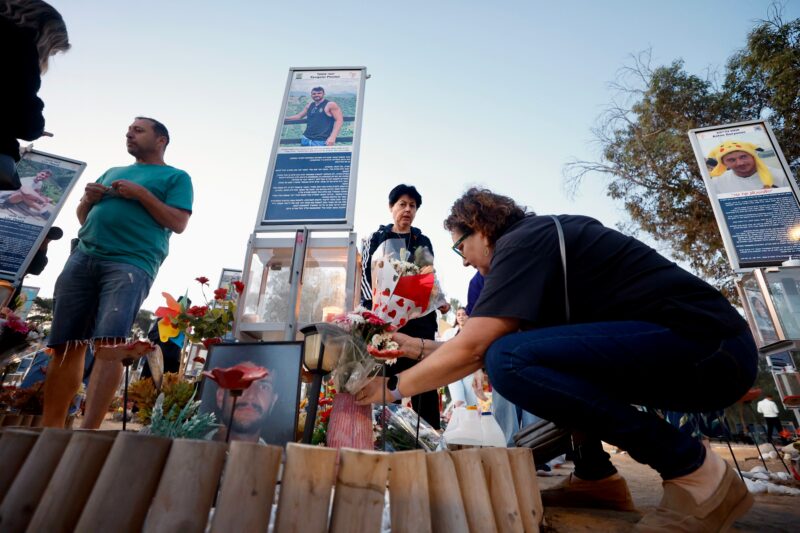
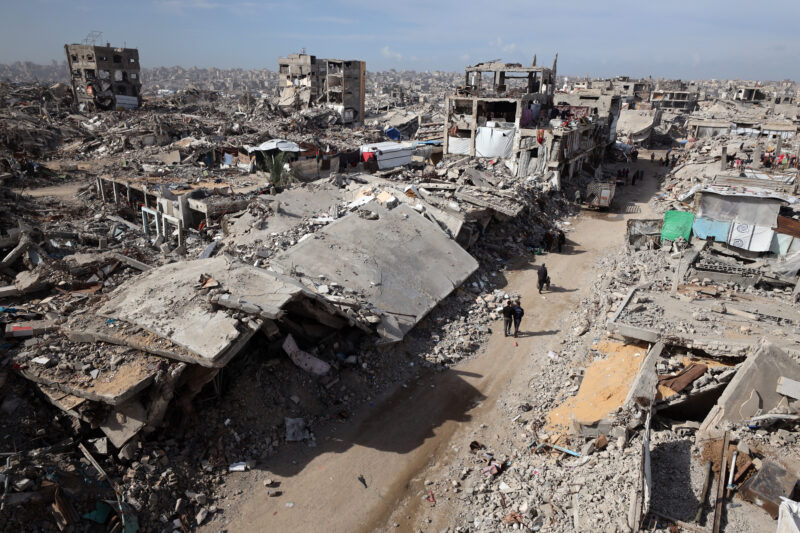






















‘The assumption is that it’s better by virtue of there being no encampments right now, there's no buildings being sieged. But that being the bar is ridiculous,’ Columbia student Noah Lederman said of the challenges on campus
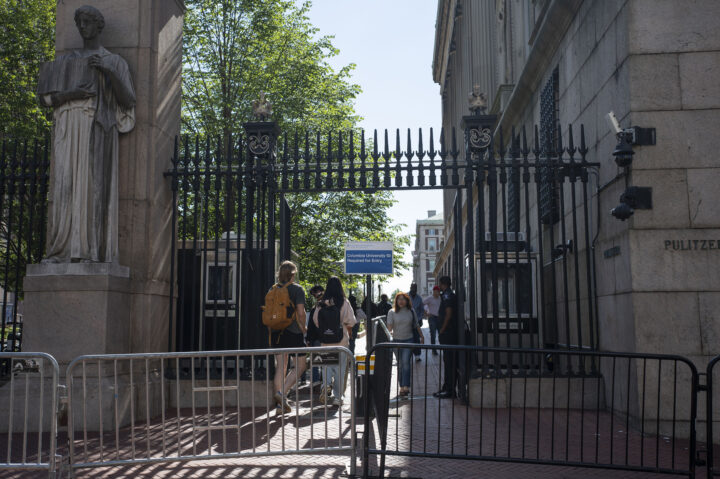
Mostafa Bassim/Anadolu via Getty Images
Students enter campus on the first day of the fall semester at Columbia University in New York City, United States on September 2, 2025.


 Add JewishInsider on Google
As close to 1,000 pro-Israel students from around the country gather in the nation’s capital for the Israel on Campus Coalition’s annual National Leadership Summit, they’ll do so against a backdrop of seemingly quieter campus antisemitism than in the years immediately following the Oct. 7, 2023, terrorist attacks in Israel. But students are still seeking tools to navigate a campus climate they’ve come to see as permanently changed.
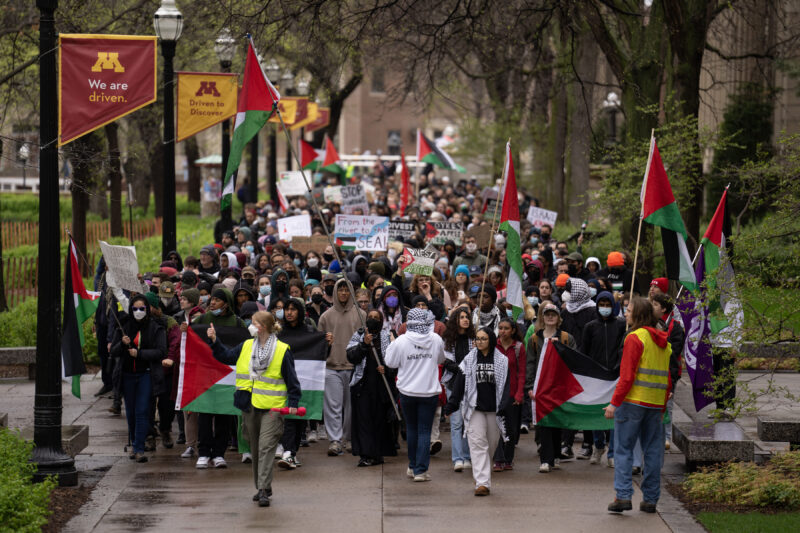
“My main concern [on campus today] is every time I sit down with a classmate I have to wonder whether the person next to me was at the [anti-Israel] encampment,” Noah Lederman, an incoming senior at Columbia University majoring in philosophy and Jewish ethics, told Jewish Insider. In February 2024, Lederman said he was shoved and pinned against a wall by an anti-Israel protester as he donned a shirt with an Israeli flag on it during a pro-Israel demonstration right outside of the Morningside Heights campus.
More than two years later, Lederman still feels wary on campus. “Did the person sitting next to me siege Hamilton Hall?” he said, referring to the April 2024 occupation of the academic building at Columbia by anti-Israel student demonstrators, who barricaded the doors. “Because those students have yet to receive consequences or be identified because they wore masks to cover their faces. Are they the person who pushed me up against a wall?” he said.
“Campus is not better, it’s just different,” said Lederman. “The assumption is that it’s better by virtue of there being no encampments right now, there’s no buildings being sieged. But that being the bar is ridiculous. What we saw my freshman year was so beyond the pale that people are inclined to say campus is better just because we don’t have people storming buildings, disrupting classes and Jewish students being told to go home because campus isn’t safe.”
He views the ICC conference as a place to help “further my skills in having civil dialogue” before returning to Columbia in the coming weeks.
The program spans a wide range of topics, from making sense of Middle East tensions to addressing antisemitism at home.
The summit opened Sunday with a moderated conversation featuring former Israeli Defense Minister Yoav Gallant about the future of the region. It was followed by a security update by IDF Col. (ret.) Miri Eisin; former Knesset member Ruth Wasserman Lande and Jonathan Schanzer, executive director of the Foundation for the Defense of Democracies. The panel was moderated by JI Executive Editor Melissa Weiss.
Last year’s conference came at the height of the Trump administration’s pressure campaign on universities to crack down on antisemitism, which has included federal funding cuts from dozens of schools.
Monday’s opening session will address the implications of those cuts, when Noah Pollak, a senior advisor at the Education Department, and Jonathan Rauch, a senior fellow of the Brookings Institution, debate whether the federal government’s campus crackdown is good for America.
Other speakers scheduled to address the gathering throughout the three-day conference include Rachel Goldberg-Polin and Jon Polin, parents of the late Israeli hostage Hersh Goldberg-Polin; former hostage Omer Shem Tov; Sen. John Fetterman (D-PA); Rep. Elise Stefanik (R-NY); and Harmeet Dhillon, assistant attorney general for civil rights at the Department of Justice.
“With respect to [campus] antisemitism, we’ve seen improvements over the last year,” Ken Marcus, founder and chairman of the Louis D. Brandeis Center for Human Rights Under Law and a former Education Department official, told JI. “[That is] thanks, in part, to the efforts of many different organizations and government agencies.”
“But we’re still seeing a level of challenge that is near historic levels,” said Marcus. “In other words, we don’t have encampments and similar problems to the extent of previous semesters, but we are receiving intake calls that are significantly higher in number and severity than we had in all the worst of the last few years.” The Brandeis Center has filed numerous lawsuits and federal complaints against universities on behalf of Jewish students alleging a failure to address antisemitism since Oct. 7.
“There’s no sugarcoating what Jewish students are living through,” Jacob Baime, CEO of ICC, told JI. “Campus life has grown more hostile, and the antisemitism more brazen, than at any point in memory: it’s on the quad, in the classroom, and online. But something profound is happening at the same time. This generation refuses to hide. They are prouder, better organized and more determined than any pro-Israel student cohort in history.”
The goal of the conference, Baime said, is “to train them, connect them and send them back to school ready to stand tall and proud.”
One of the most profound changes since Oct. 7, Lederman said, is a shift in how professors behave. Before the attacks, he said, “antisemitism was subtle and professors were afraid.”
“Now they are brazenly antisemitic under the guise of anti-Zionism,” he continued. The biggest difference, Lederman added, is that professors “are no longer afraid to incite Jew hatred in their classes.”
Lederman said he expects the conference to give students tools to deal with that shift. “We are not going to run away and hide,” he said. “[ICC] teaches students to be unashamedly Zionist and Jewish. They teach them how to advocate for Israel, while also thinking for themselves.”
Biss reportedly told the committee ‘the great majority of his Jewish friends in the Northwestern community had no concerns,’ contrary to comments from Jewish community members and groups
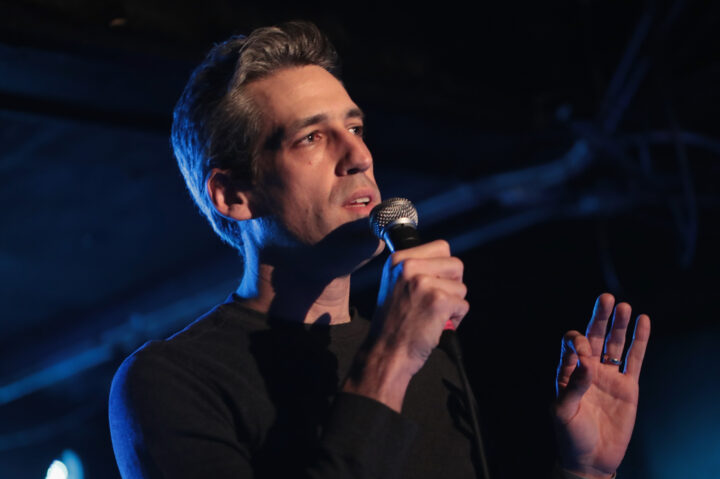
Scott Olson/Getty Images
Evanston, Ill. Mayor Daniel Biss on March 6, 2018 in Chicago, Illinois.
In a briefing for the House Education & Workforce Committee on his response to the anti-Israel protest encampment at Northwestern University in 2024, Evanston, Ill., Mayor Daniel Biss “severely downplayed” the situation on that campus and antisemitism across the country, the committee said.
The committee asked Biss, who is a congressional candidate in the race to succeed retiring Rep. Jan Schakowsky (D-IL), to brief them on his decision to withhold Evanston police support from Northwestern University when requested by the school to help clear the encampment.
The lack of external law enforcement support prompted Northwestern to make a deal, widely criticized in the Jewish community, with the encampment members to disband voluntarily, according to internal Northwestern communications released by the committee.
“In his briefing with the Committee today, Mr. Biss severely downplayed antisemitism at Northwestern after October 7th. He told the Committee that the great majority of his Jewish friends in the Northwestern community had no concerns about it,” a committee spokesperson told Jewish Insider.
That’s at odds with comments from Jewish Northwestern community members and local Jewish groups about the encampment.
“He further stated that Northwestern should not have received an F on the Anti-Defamation League’s college report card. He even accused the Committee of alarmism that is not warranted by the facts when it comes to antisemitism at the university after the October 7th attacks,” the spokesperson continued. “The countless Jewish Northwestern students, faculty, and community members that the Committee has interviewed would say otherwise.”
The school reached an agreement with the Department of Justice last year, paying $75 million and making policy changes to address antisemitism on its campus.
Biss, meanwhile, has dismissed the committee’s questioning of him as a smear campaign orchestrated by AIPAC and one of his primary opponents, state Sen. Laura Fine, to hurt his congressional campaign.
“From the start, this ‘briefing’ was a flimsy attempt to weaponize the very real threat of antisemitism to attack me and support my opponent. It failed,” Biss said in a statement.
“I’m proud of my record of protecting peaceful protest and combating antisemitism, including my decision to decline the unnecessary and undemocratic request to clear the Northwestern encampment in 2024. As the Trump administration increasingly attacks our fundamental democratic rights, it’s more important than ever to back our commitment to peaceful protest with action. I hope the committee learned something today.”
Biss’ campaign also noted that only House staff attended the briefing, rather than lawmakers themselves.
Ian Hurd’s appointment to the search committee drew criticism from some of the school’s Jewish alumni
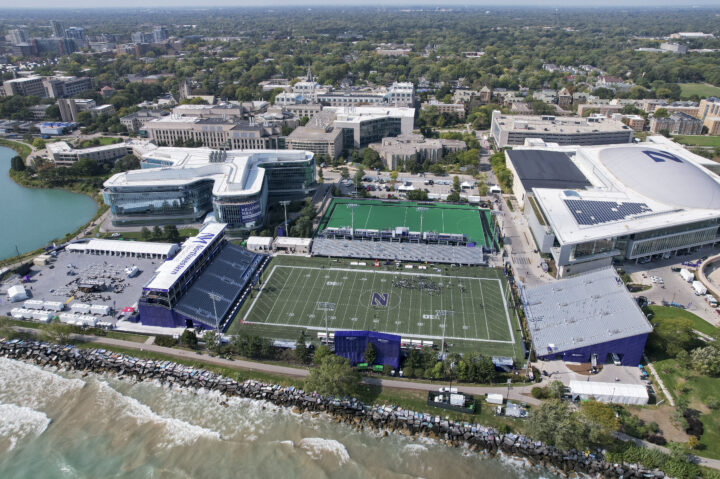
Vincent Alban for The Washington Post via Getty Images
Northwestern University in Evanston, Ill. on Saturday, October 5, 2024.
A Northwestern University professor who supported the anti-Israel encampment on the Evanston, Ill., campus and is married to the founder of the university’s chapter of Educators for Justice in Palestine was tapped to join a new presidential search committee, the school announced last week.
Ian Hurd, a professor of political science and president of the faculty senate at Northwestern University, is listed on Northwestern’s website as an “expert on the Middle East.” As Faculty Senate president, Hurd has played an influential role in shaping faculty responses to campus protests, academic freedom disputes and university governance questions.
During this period, faculty leadership — including the Senate — was widely criticized by Jewish students, parents and advocacy groups for failing to condemn antisemitic conduct, for blurring distinctions between political speech and discriminatory harassment and for prioritizing faculty and activist concerns over student safety and civil rights compliance.
The search committee is tasked with making a recommendation to the board of trustees for selecting the school’s next president. The search comes following President Michael Schill’s resignation in September, amid widespread controversy over the school’s handling of antisemitism during his tenure.
During the anti-Israel encampment that overtook Northwestern’s campus in April 2024 — in which Jewish students were surrounded by mobs and told to “go back to Germany and get gassed” — Hurd signed an open letter with 171 faculty members backing the encampment.
Schill was heavily scrutinized by Jewish leaders for overseeing the Deering Meadow agreement, a controversial pact made with anti-Israel encampment participants in the spring of 2024, that allowed students to protest the war in Gaza until the end of the school year so long as tents were removed, and encouraged employers not to rescind job offers for student protesters. The document also allowed students to weigh in on university investments — a major concession for students who had demanded the university divest from Israel.
The Illinois private university agreed to end its commitment to the agreement last month as part of a $75 million settlement with the federal government to restore federal funding that was frozen earlier this year over allegations that administrators failed to address campus antisemitism.
Hurd praised Schill’s capitulation to demonstrators in a May 2024 interview with the Daily Northwestern, saying he was “really proud of how NU handled the situation.”
Hurd’s wife, Elizabeth Shankman Hurd, who is also a professor of political science at Northwestern, was among the founders of the NU chapter of Educators for Justice in Palestine, a faculty-staff network established in December 2023 aligned with NU Students for Justice in Palestine. Shankman Hurd signed the October 2023 faculty letter that downplayed the Hamas attacks in Israel and also helped circulate multiple faculty statements opposing Northwestern’s antisemitism task force, even as Jewish students reported harassment and exclusion from campus spaces.
Hurd’s appointment to the search committee drew criticism from some of the school’s Jewish alumni. “The antisemitic encampment at Northwestern occurred in April 2024, immediately before Ian Hurd was elevated into senior faculty leadership. At the time, Hurd was a leading figure in the Faculty Senate and publicly defended the administration’s response,” Michael Teplitsky, president of the Coalition Against Antisemitism at Northwestern and an alum of the school, told Jewish Insider.
“That sequence is not incidental — it is disqualifying,” continued Teplitsky. “Northwestern is under federal civil rights scrutiny precisely because its leadership normalized antisemitic conduct and chose negotiation over enforcement. Elevating a faculty leader who publicly endorsed that approach into a gatekeeping role for selecting the next president signals continuity, not reform. It raises profound concerns about judgment, civil rights enforcement, and whether the university is capable of the governance reset that Jewish student safety and federal compliance now plainly require.”
Hurd “brings an obvious bias to this committee, likely put in there as the most respectable proxy for the anti-Zionist faculty cohort,” Rich Goldberg, a senior advisor at the Foundation for Defense of Democracies who holds bachelor’s and master’s degrees from Northwestern, told JI.
“His decision to sign the faculty letter [in support of] the pro-Hamas encampment should be disqualifying. Now is certainly the time to double down on accountability for what Northwestern has agreed to, not pretend everything is rosy because of [the settlement with the Trump administration] and [former President Michael] Schill’s resignation,” said Goldberg.
Hurd did not respond to a request for comment from JI on Monday.
The two university chancellors have been speaking out against ‘creeping politicization’ on college campuses
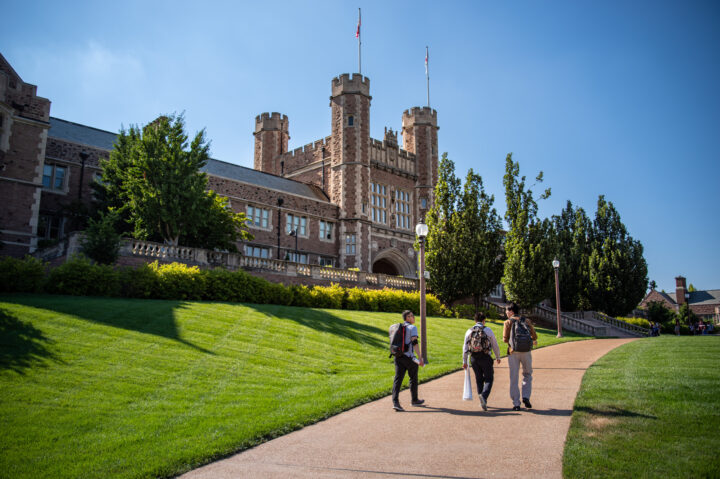
GETTY IMAGES
Three people with backpacks on sidewalk in front of the campus administrative building on sunny day moving away.
By the time a group of activists attempted to erect an encampment at Washington University in St. Louis in late April 2024, Andrew D. Martin, the chancellor of the university, had already carefully considered how he would respond. It was a benefit, he said recently, of being “in the middle of the country,” far from the national media that ceaselessly covered the anti-Israel encampments at Columbia University and other high-profile campuses.
Campus police arrested more than 100 people, the vast majority of whom had no ties to the university, and the encampment was shut down. Faculty, staff and student leaders all spoke out against university leadership for bringing in the police. But Martin saw it as an opportunity to enforce university rules and avoid the chaos playing out elsewhere.
“We take a very strong pro-free speech approach,” Martin, a political scientist, told Jewish Insider in an interview last month. “But we also have restrictions which are based on time, place and manner. And for us, it was really clear, and we made it very clear to the campus community. Look, you can protest all you want. … But you can’t take over our buildings, you can’t deface our property and you also can’t set up an encampment.”
Since then, Martin has teamed up with Daniel Diermeier, the chancellor of Vanderbilt University, in something of an informal pact — a joint effort to promote principled leadership in higher education, presenting their two schools as a refreshing counterweight to the dysfunction plaguing higher-ranked competitors like Harvard and Columbia. Both campuses largely steered clear of major antisemitic incidents in that intense spring semester in 2024. (The period has not been without criticism for Diermeier, either; he faced pushback from some faculty and students after canceling a vote on an anti-Israel boycott resolution.)
This February, Diermeier and Martin wrote a joint op-ed in The Chronicle of Higher Education calling on other universities to reject “creeping politicization.”
“The universities we oversee have drawn a line against politicization so that we can continue contributing to the nation’s competitiveness and strength abroad, and to stability and prosperity here at home. All American research universities should do the same,” Diermeier and Martin wrote.
Published just days after President Donald Trump took office with the promise of scrutinizing elite liberal universities, the article was an attempt at setting out a marker, signaling to Trump and potential applicants that Vanderbilt and WashU haven’t lost focus like so many other universities who have found themselves in crisis mode since the Oct. 7 attacks in 2023.
Both schools were committed to institutional neutrality — a position that has now been adopted by more than 100 American universities, including Harvard, Stanford, Columbia and Syracuse — well before Oct. 7 and its aftermath led other university administrators to conclude it is in their interests to not weigh in on complex political and social causes.
“Whether it’s fossil fuel divestment or Ukraine or other things, we’re just not going to engage. Our faculty have strong views on those issues, as do our students. It’s their job to be advocates. It’s our job to create a playing field, if you will, for them to have those views,” said Martin.
Diermeier said universities that had not adopted a stance of principled neutrality were susceptible to “competitive lobbying,” where students demand a response on one side or another.
“We saw this in gory detail after Oct. 7, where you had one group who wanted to say, ‘Well, you need to denounce Israel of genocide,’ and the other one said, ‘No, you have to support Israel,’” Diermeier told JI in June. “It ripped many university campuses apart. And we were very, very clear from the beginning that we are committed to institutional neutrality. We will not divest from companies that have ties to Israel. We will not denounce Israel’s ‘genocide.’ We will not boycott products that are associated with Israel in any way, shape or form.”
It comes down to the role of a university — and whether it is up to university administrators to pick a side. Doing so, the chancellors argued, undermines trust in their institutions. (Others take a different position, like Ora Pescovitz, president of Oakland University, a small public university in Michigan: “A president’s voice is precious,” she told JI last year.)
“There’s a certain arrogance for us, that we think that if, like, Harvard speaks, that somehow an issue is settled,” said Diermeier, a political scientist and management scholar. “What is the purpose of the university? What we’re very clear on is that universities are about the creation and dissemination of knowledge through research and education and related activities. They are not in the business of becoming partisans in any type of political or ideological battle.”
Many universities are still navigating the post-Oct. 7 maelstrom, trying to handle competing concerns from students, parents, alumni and faculty — all while facing civil rights investigations by the federal government. In March, Education Secretary Linda McMahon wrote a letter to 60 schools under investigation for antisemitic discrimination, including Harvard, Yale, Northwestern, Stanford and Princeton.
“I think people that visit us see the difference, and they say this is a great place for Jewish families and for Jewish students to thrive, and we’re very proud of that,” said Diermeier. “We want to be a place where every member of our community can thrive. And right now, in the current environment, I think the contrast between what’s happening at other universities and what’s happening at Vanderbilt is visible for people.”
Vanderbilt and WashU were not on the list. That presents an opening for them to reach Jewish students with concerns about what they’re seeing elsewhere, particularly as the Jewish student populations at many top universities have shrunk. According to Hillel International, just 7% of Harvard’s undergraduates are Jewish, compared to 14% at Vanderbilt and 22% at WashU.
“The Jewish community at Washington University is very robust. Our students are comfortable and proud living out their Jewish identity on our campus, and have been able to do so for generations. And we’ll make sure that they’re able to do this over generations to come,” said Martin. WashU implemented a new transfer program soon after Oct. 7 to allow students to transfer for the spring semester, rather than waiting until the following fall. Several Jewish students took advantage of it after facing antisemitism on their old campuses.
WashU’s appeal to Jewish students is not new; it has for years been tagged with the nickname “WashJew.” And more than two decades ago, Vanderbilt’s former chancellor said that targeting Jewish students was an explicit part of the university’s bid to better compete with Ivy League schools. Diermeier seeks to continue that push.
“I think people that visit us see the difference, and they say this is a great place for Jewish families and for Jewish students to thrive, and we’re very proud of that,” said Diermeier. “We want to be a place where every member of our community can thrive. And right now, in the current environment, I think the contrast between what’s happening at other universities and what’s happening at Vanderbilt is visible for people.”
“It became clear to Daniel [Diermeier] and me that we’re never going to be able to have the sustained federal support or, for that matter, state support of our institutions, without broad support of the American people, and that the American people, in some respect, lost faith in us because of places where we have diverged from those important core principles,” said Martin. “That was amplified by the events of Oct. 7, or what happened after Oct. 7.”
Martin and Diermeier see themselves and their institutions as the stewards of a forward-looking case for higher education at a time when the institution is under attack, both from Washington and from Americans, whose trust in higher education has plummeted. Nearly 6 in 10 Americans said in 2015 that they have a great deal or quite a lot of confidence in U.S. higher education, according to Gallup. In 2024, that number was 36%. Among Republicans, the number dropped from 56% to 20% in nine years. Among Democrats, the decrease was milder — but still present, moving from 68% to 56%.
Oct. 7 only sharpened that distrust, Martin said. Regaining that confidence, he argued, is imperative to saving the institution of higher education — and staving off federal funding threats from Trump.
“It became clear to Daniel [Diermeier] and me that we’re never going to be able to have the sustained federal support or, for that matter, state support of our institutions, without broad support of the American people, and that the American people, in some respect, lost faith in us because of places where we have diverged from those important core principles,” said Martin. “That was amplified by the events of Oct. 7, or what happened after Oct. 7.”
It’s not just about values. It’s a savvy political move. After all, both Vanderbilt and WashU would be in trouble if federal research dollars stopped flowing to the schools, or if Trump made the call that they could not admit international students, as is the case with Harvard.
When asked about his approach to the Trump administration, Diermeier repeatedly declined to answer questions about the matter on the record.
Martin acknowledged that he is concerned.
“I’m worried about everything coming out of Washington, whether that’s legislative action or actions of the administration, around endowment excise tax, federal research funding, the ability to have federal financial aid, the ability to admit international students. All of those things are up for grabs,” Martin said.
But what WashU and Vanderbilt are willing to do is acknowledge that there are big problems in American academia. In other words, they’re saying that Trump’s got a point.
“Here are two institutions that are willing to stand in the public square and say, American higher education has lost its way in some respects,” said Martin. “We’re great institutions, and we’re committed to working to ensure that our institutions and higher education writ large will do better in the future.”
Eural Warren Jr. served 17 years for his role in an altercation in which one person was killed

Getty images
View of the Carrier Dome and Syracuse University hill in Syracuse, N.Y.
A man convicted of manslaughter has been participating in an anti-Israel encampment in the middle of Syracuse University’s campus for more than a week, Jewish Insider has learned.
Eural Warren Jr. was convicted of manslaughter in the first degree in 1996 when he beat a victim’s head with a firearm, causing multiple skull fractures, according to the New York State Department of Correctional Services website. (He was also charged with criminal possession of a firearm.)
The victim was punched and knocked down by a second person, and died due to his injuries. Warren appealed the conviction in 1997, but was denied. According to court documents from his appeal, “Medical testimony established that the victim died from the cumulative effect of several skull fractures, only one of which was caused by the second assailant. [D]efendant’s conduct was an actual cause of death, in the sense that it forged a link in the chain of causes which actually brought about the death.” Warren was released from prison in 2013 after serving 17 years, records show. His LinkedIn shows him as the “CEO/Executive Director/Founder” of No Space For Hate since April 2023.
The 49-year-old is unaffiliated with the upstate New York university, but several photos obtained by Jewish Insider show him protesting and sleeping alongside students since the “Gaza solidarity encampment” overtook Syracuse’s campus on April 29. (On Tuesday, the encampment was directed by the administration to relocate off of the central quad to make room for graduation ceremonies; it was not shut down).
Onondaga County District Attorney William Fitzpatrick confirmed to JI that Warren is the person photographed at the encampment. “I can confirm it is absolutely the same person. I have looked up his mugshot just to be sure,” Fitzpatrick said. Of the encampment, Fitzpatrick added, “Syracuse administration has decided to handle it ‘internally’… my position is that [all of the protesters] are breaking the law [and] should be removed and arrested.”
A spokesperson for Syracuse University did not respond to multiple inquiries from JI asking whether the school is aware of Warren.
Warren’s troubling history came to light after a vocally pro-Israel female student alleged that, on several occasions, he photographed her and a friend passing by the encampment. “We were creeped out,” the student, who requested to remain anonymous to speak about a sensitive topic, told JI. “It wasn’t hard to find his name because he follows Syracuse’s Students for Justice in Palestine and Jewish Voice for Peace Instagram pages. Then we did a quick Google search and found out he’s a criminal,” she said.
The student, who is active in the school’s pro-Israel group, said that last Sunday she reported Warren to the Syracuse Department of Public Safety, which encouraged her to fill out a bias report. She submitted the report on Tuesday, rather than going to the police. Also on Tuesday, Warren was photographed at the encampment, dressed in Syracuse gear to blend in with student protesters.
By Thursday, the student hadn’t heard a response from the school.
“It’s difficult, [especially] when the encampments were in the middle of campus because you couldn’t avoid it,” she said, noting that “intimidating” slogans have been tossed around by the protesters, “including calling for the intifada and ‘from the river to the sea Palestine will be free.’”
Please log in if you already have a subscription, or subscribe to access the latest updates.
 Continue with Google

 Continue with Apple