











































































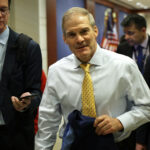


In an interview with JI, Shapiro said he ‘[hasn’t] really thought about’ whether he would appear on Hasan Piker’s stream but that he hasn’t been invited
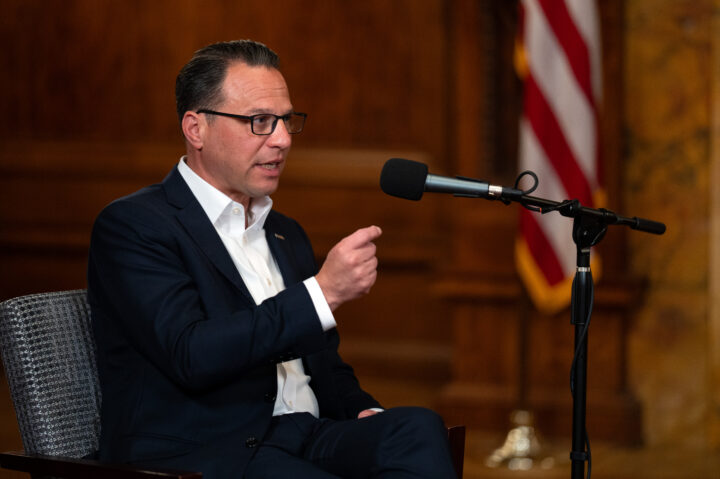
Peter W. Stevenson/The Washington Post via Getty Images
Pennsylvania Gov. Josh Shapiro sits for an interview at the Pennsylvania State Capitol on June 11, 2025.


 Add JewishInsider on Google
PITTSBURGH — On the eve of the NFL Draft on Wednesday, Pittsburgh, the host city, was in full spectacle mode. Israel, 6,000 miles away, was abuzz for a very different reason: the country was celebrating Yom HaAtzmaut, marking 78 years of independence.
As he jumped between draft events, Pennsylvania Gov. Josh Shapiro shared his thoughts about both.
“I think we’re here to celebrate an iconic event in sports and sports in general. Sports has the power to bring people together, and we need more of that in our society,” Shapiro told Jewish Insider in an interview following a “unity dinner” in Pittsburgh that brought together 100 Black and Jewish students from local universities.
At the event — organized by New England Patriots owner Robert Kraft’s Blue Square Alliance Against Hate, in partnership with Hillel International, the United Negro College Fund, the NFL and the Pittsburgh Steelers — Shapiro appeared on a panel with Kraft and retired Steelers quarterback Charlie Batch. NFL Commissioner Roger Goodell stopped by to introduce the event.
“The fact that the commissioner and Robert decided to dedicate a portion of draft week to finding ways to come together to a unity dinner, I felt that it was not just something I should do, but a responsibility of mine,” said Shapiro.
Asked about Yom HaAtzmaut, Israel’s independence day, Shapiro expressed affection for Israel. He also called for America to do more to rein in its government.
“I’ve always been really clear that I have a love for Israel, even while I have real concern about the leadership of Israel,” said Shapiro.
A growing number of progressive lawmakers have in recent weeks called for an end to U.S. aid to Israel, including funding for Israel’s Iron Dome missile-defense system, a position adopted by the progressive Israel advocacy group J Street. Shapiro declined to endorse that position.
“In the case of Israel, you have a country that is constantly being attacked with missiles and other weapons that put civilians at risk, and America is invested in providing assistance like Iron Dome to protect innocent civilians from those terrorist attacks,” said Shapiro. “I think that is in America’s national security interest.”
But he did argue that the U.S. should use its position as a major financial backer of Israel to exert leverage over the country’s use of American-made weapons. Shapiro said Washington has not done a good enough job of that.
“I would say that our last two presidents, President [Joe] Biden and now President [Donald] Trump, have failed to use the leverage of an American president to force Israel’s hands to use that military aid in ways that comport with our American values, to limit the loss of innocent lives as the key factor there,” said Shapiro. “I think what we need to examine is the rubber stamp that Donald Trump has been to the Netanyahu government.”
Shapiro noted that more than 100 countries receive some form of military assistance from the U.S., a figure that includes nations who may not receive funding but who instead partner with the U.S. military for training or purchase U.S. weaponry.
“In any one of those 100 countries comes leverage for an American president to exercise to ensure that the military assistance we provide to that country is being used in accordance with our values, our American values,” said Shapiro. “What we need is an American president who’s going to use the leverage that we have when we provide that kind of assistance to Israel or any one of the other 90-plus countries.”
In recent months, as Shapiro eyes a 2028 presidential bid, he has appeared on several popular podcasts, including “Pod Save America,” “Higher Learning” from digital media company The Ringer and the “All-In Podcast.” As one of the most vocally Jewish politicians in the country, Shapiro is almost always asked about his views on Israel.
“Every day I do, of course, get asked about Israel and the Middle East, and I think it’s important to just speak truthfully about how I feel,” said Shapiro. “I think it’s important to be true to who you are, to not put your finger in the wind and just sort of follow which way it’s blowing.”
One show he has not appeared on? The Twitch stream hosted by Hasan Piker, a far-left commentator with a history of antisemitic and anti-American views who has hosted conversations with several progressive lawmakers. California Gov. Gavin Newsom, another potential 2028 contender, has said he would sit for an interview with Piker.
Piker has generated a great deal of controversy among Democrats in recent weeks after he appeared at two campaign rallies with Michigan Democratic Senate candidate Abdul El-Sayed this month. Those events prompted sharp criticism from several Michigan Democrats, including Sen. Elissa Slotkin (D-MI) and El-Sayed’s primary opponents, Rep. Haley Stevens (D-MI) and state Sen. Mallory McMorrow.
Shapiro opted not to weigh in. Asked if he would appear on Piker’s stream, he demurred.
“I haven’t been invited,” said Shapiro. “I haven’t really thought about it.”
The amendment, led by Sen. Joni Ernst, highlights the ‘serious and growing’ missile threats from Iran and its proxies

Kevin Carter/Getty Images
U.S. Capitol Building on January 18, 2025 in Washington, DC.
The Senate Armed Services Committee’s draft of the 2026 National Defense Authorization Act, passed out of committee this week, includes provisions aimed at furthering coordinated air and missile defense efforts in the Middle East.
Moves to strengthen military cooperation among the U.S., Israel and Arab countries have been part of several recent NDAAs, starting with the DEFEND Act, which first pushed for coordinated air and missile defense efforts in 2022, as an outgrowth of the Abraham Accords.
The new amendment, led by Sen. Joni Ernst (R-IA), a co-chair of the Abraham Accords Caucus, instructs the Defense Department to submit to Congress a new report on implementing integrated air and missile defense infrastructure in the Middle East, including an assessment of threats; a summary of U.S. priorities and capabilities; and lessons learned from the Iranian ballistic missile attacks on Israel and the Houthi attacks in the Red Sea.
The amendment highlights the “serious and growing” missile threats from Iran and its proxies, which puts U.S. forces and allies in danger, and states that the U.S. has an “obligation” to protect its own forces and its partners.
“My DEFEND Act created unprecedented cooperation between Israel and its Abraham Accords allies and has played an intricate role in defending against missile attacks from Iran and its network of terrorist proxies,” Ernst said in a statement regarding the amendment. “October 7th was a reminder that our enemies are constantly evolving and scheming new ways to carry out their malign ‘Death to America’ mission. We must stay one step ahead and ensure that America and our partners are fully equipped and prepared to defend themselves in the post-October 7th world.”
The bill would also require the Defense Department to lay out for Congress its plans for assisting the Jordanian and Lebanese militaries, would extend U.S.-Israel anti-tunnelling cooperative programs and would authorize increased funding for U.S.-Israel counter-drone and missile cooperative efforts, according to a summary released by the Armed Services Committee.

Evan Vucci
President Donald Trump speaks about the mass shootings in El Paso, Texas and Dayton, Ohio, in the Diplomatic Reception Room of the White House, Monday, Aug. 5, 2019, in Washington.
Jewish Insider has obtained a draft of the executive order that President Donald Trump will sign this afternoon at the White House.
As first reported by The New York Times on Tuesday, the order formally calls on government departments enforcing Title VI of the Civil Rights Act of 1964 to adopt the International Holocaust Remembrance Alliance (IHRA) definition of antisemitism.
The order calls for the enforcement of “Title VI against prohibited forms of discrimination rooted in anti-Semitism as vigorously as against all other forms of discrimination prohibited by Title VI.” The order also calls on departments enforcing Title VI to consider “‘Contemporary Examples of Anti-Semitism’ identified by the IHRA, to the extent that any examples might be useful as evidence of discriminatory intent.”
Initial reporting indicated that the order would include language defining Judaism as a “national origin,” setting off a frenzy among major Jewish organizations, activists and lawmakers. The draft text of the order obtained by JI makes no such reference.
Of note: There is no mention of Israel in the text of the executive order draft shared with JI. However, IHRA includes as contemporary examples of antisemitism the accusation of dual loyalty, using symbols associated with antisemitism to characterize Israel or Israelis and “claiming that the existence of a State of Israel is a racist endeavor.” IHRA also notes in its working definition that “criticism of Israel similar to that leveled against any other country cannot be regarded as antisemitic.”
Please log in if you already have a subscription, or subscribe to access the latest updates.
 Continue with Google

 Continue with Apple