














































































Rep. Brad Sherman warned that nuclear enrichment technology could fall into the hands of a malign regime
Kevin Carter/Getty Images
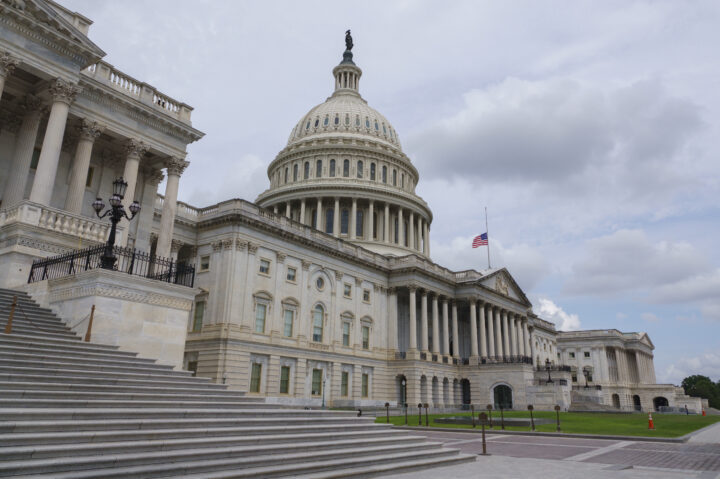
U.S. Capitol building on July 12, 2026 in Washington, DC.


 Add JewishInsider on Google
Congressional Democrats are lining up in opposition to the Trump administration’s reported nuclear agreement with Saudi Arabia that could allow Riyadh to enrich uranium for civilian purposes, while Republicans are mostly supportive of the effort.
Critics have long warned that any civilian nuclear enrichment in Saudi Arabia could open the path for the country to obtain nuclear weapons at a later date and that it runs the risk of a nuclear enrichment race in the Middle East.
The reported deal would allow the construction, by U.S. companies, of an enrichment facility in Saudi Arabia, insulating the enrichment to some degree from the Saudi government, though that is unlikely to placate skeptics who worry that the technology could fall into malign hands in the event of a change in regime, or be used by the Saudi government for weaponization purposes.
It does not require Saudi Arabia to agree to enhanced oversight and inspections under an International Atomic Energy Agency “additional protocol,” which other U.S. nuclear deals such as the one with the United Arab Emirates have mandated.
“I have talked to Crown Prince Mohammed bin Salman about this on a number of occasions and both of us have been in agreement that an appropriate nuclear agreement would be in the best interest of both of our countries. Idaho is the birthplace of nuclear energy, so this matters deeply to me,” Sen. Jim Risch (R-ID), the chairman of the Senate Foreign Relations Committee, said in a statement to Jewish Insider. “I look forward to seeing the details of the agreement and working with the Administration to review it.”
Sen. James Lankford (R-OK) emphasized that, if the deal emerges as reported, the enrichment would be carried out by an American company.
“Saudi Arabia has been going after nuclear power for a while, there’s a big difference between nuclear power and nuclear weapons, with the amount of enrichment with the technology,” Lankford told JI. “Most countries that actually have nuclear power don’t enrich their own uranium, but the opportunity to be able to have our companies and entities doing it is significant.”
Sen. Mike Rounds (R-SD) told JI that he would be concerned if Saudi Arabia were to enrich to levels higher than necessary for civilian nuclear power uses, “but if they’re talking about just enriching it to the point where you can use it for nuclear power plant, I don’t have a problem with that. Somebody needs to do that, and it would be better to be us than anybody else.”
Rounds’ logic echoes concerns that if the U.S. did not agree to allow Saudi Arabia to enrich, it would instead pursue a deal with China or Russia.
Sen. Chuck Grassley (R-IA) told reporters, “as long as they’re a friend of the United States, [the deal is] OK.”
Sen. John Cornyn (R-TX) said he’s not sure “what to make of [the deal] yet” but argued that Saudi Arabia would not “necessarily … ask our permission” if it ultimately decided it wanted to enrich uranium or pursue a nuclear weapon.
“If Iran is trying to get a nuclear weapon, they’re going to do what they need to do to defend themselves,” Cornyn told JI. “But I know this is civilian nuclear for energy purposes, which generally we’ve encouraged and condoned with India, with a number of other countries, if they want to do it strictly for that. But I would think that would require some inspections and transparency by the IAEA and others.”
Sen. John Kennedy (R-LA) was the most skeptical of the Senate Republicans who spoke to JI but said he wasn’t sure at this point where he lands on the deal, expressing worries about global nuclear proliferation.
He said that he’s concerned that American allies and enemies will, as a result of rising tensions around the world, conclude they need to develop nuclear weapons of their own.
“I worry about nuclear proliferation in the Middle East, Japan, South Korea. The leaders of those countries love their countries and they love their people, and they wouldn’t be doing their job if they didn’t at least think about it,” Kennedy said. “That’s why we need to get this Middle East situation under control, as well as the war between Russia and Ukraine.”
Democrats, meanwhile, are largely opposed to the deal as publicly reported. Under the law governing nuclear agreements with foreign countries, Congress can pass a resolution to block such deals, though even if such a resolution were to pass, it would be subject to a presidential veto.
Sen. Richard Blumenthal (D-CT) told JI that he remains opposed to any nuclear deal with Saudi Arabia separated from the normalization of relations with Israel, an arrangement that the Biden administration had been pursuing.
“It should be part of normalization of relations, a broader agreement, rather than an isolated one-off,” Blumenthal said. “I have yet to see any of the details. I haven’t been informed officially, but my feeling continues to be that the paramount goal should be normalization of relations, recognition of Israel, the peace and stability of the region, and that aid to Saudi Arabia in establishing nuclear power should be included in that larger deal.”
Asked whether he would support a legislative effort to block the agreement, Blumenthal said that he would “pretty surely oppose the deal” — pending details — because of the lack of a broader normalization agreement.
Rep. Brad Sherman (D-CA), a longtime critic and skeptic of the prospect of Saudi nuclear enrichment, demanded prompt congressional hearings on the issue at a House Foreign Affairs Committee hearing on Wednesday morning.
He warned, as he has in the past, that nuclear enrichment technology could fall into the hands of a malign regime — as U.S. weapons did with the fall of the shah in Iran in 1979. “We have no idea who’s going to be running Saudi Arabia ten years from now,” Sherman said.
Sherman argued that Saudi Arabia should not be allowed to enrich if the U.S. is going to war to prevent Iranian enrichment, suggesting that the deal is being driven by a financial windfall for an American company.
He urged Congress to advance a resolution of disapproval, and noted that he worked with Secretary of State Marco Rubio when he was a senator to advocate for legislation that would have required affirmative congressional approval for a nuclear deal with Riyadh.
Sen. Mark Kelly (D-AZ) told JI that he has “some issues” with the deal as presented, relating to the enrichment provisions.
“Their own ability in the future to possibly enrich uranium is something we put guardrails in place for other countries. UAE being considered the gold standard that took a long time to work through,” Kelly said. The U.S.-UAE deal prevents Abu Dhabi from enriching and reprocessing uranium and includes a series of strict oversight provisions.
Asked about a potential resolution of disapproval, Kelly reiterated his concerns about the deal but also emphasized the importance of maintaining the U.S.-Saudi relationship.
“I also recognize that specifically with regard to Saudi Arabia, we want to make sure that we’ve got a positive relationship with them,” he said. “But on this thing, with enriched uranium, I’ve got problems.”
Sen. Tim Kaine (D-VA) told JI that Saudi Arabia’s failure, as part of the agreement, to agree to the IAEA additional protocol raises questions.
“My question is, why wouldn’t they? If it’s all going to be peaceful and all that, why wouldn’t you? Iran agreed to the additional protocol and the [2015 Joint Comprehensive Plan of Action], so why wouldn’t the Saudis?” Kaine said.
“We’ll see about congressional action on it, but I have said if you’re going to do this [you should be required to agree to] no enrichment and reprocessing, and you got to agree to inspections,” Kaine continued. “My understanding, from what I’ve read about the announcement, is that neither of those are in place, and then that really raises the issue of intent and proliferation.”
Sen. Chris Coons (D-DE) said he hadn’t seen the deal or the reporting, but, when informed by JI and a staff member that the deal would allow for Saudi Arabia’s nuclear enrichment, indicated he was skeptical.
Top contributors to Florida gubernatorial candidate James Fishback are also bankrolling Rashida Tlaib, Ilhan Omar, Abdul El-Sayed and Andre Carson
Campaign website
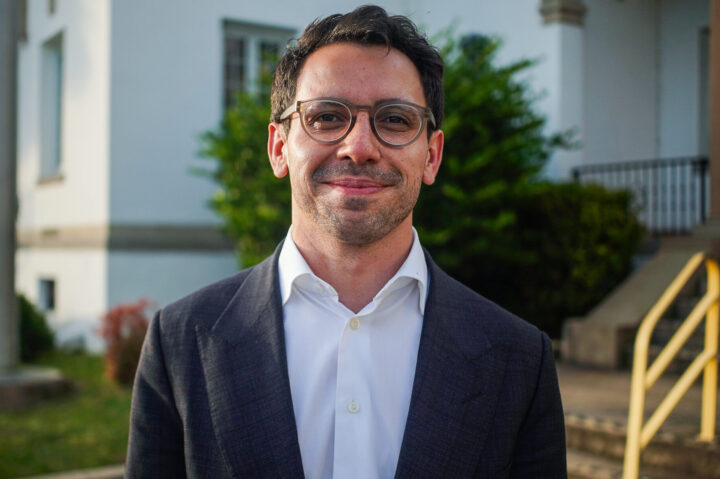
James Fishback
James Fishback, the GOP candidate for Florida governor whom critics call “openly racist” and “openly antisemitic,” ostensibly sits at the opposite end of the political spectrum from the likes of Rep. Rashida Tlaib (D-MI) and Democratic Senate candidate Abdul El-Sayed in Michigan.
But the far-right and far-left politicians share more than just an aversion to Israel — they also overlap in donors, Jewish Insider has found.
As a candidate, Fishback has embraced and celebrated neo-Nazi podcaster Nick Fuentes’ “groyper” movement, propagated the “white genocide” and “great replacement” conspiracy theories, told a Black Floridian they should be lynched and repeatedly taunted Rep. Byron Donalds (R-FL) — his rival to replace Gov. Ron DeSantis — over his race. The radical right candidate has also called the Western Wall “stupid,” referred to fast food as “goyslop,” promised Tucker Carlson he would dump the Sunshine State’s holdings in Israeli bonds, blamed the Iran war on AIPAC and released an ad vowing that no one would be “convicted of antisemitism” for criticizing the Jewish state under his leadership.
But his campaign has proven a magnet for donors to progressive candidates, who have poured tens of thousands of dollars into a PAC supporting his election.
Among the 27 donors to give the maximum $3,000 contribution to Fishback’s bid for Tallahassee is New York-based philanthropist and financier Amed Khan. A longtime associate of the Clinton family and contributor to former Presidents Barack Obama and Joe Biden, as well as to the Democratic National Committee, Khan’s public commentary and political giving has pivoted leftward since the Oct. 7, 2023, Hamas attacks on Israel.
Besides maxing out to Fishback, this cycle the investment banker and Quincy Institute board member has kicked $7,000 to former Maine Senate nominee Graham Platner, the progressive Democrat whose tirades against “oligarchs” and “the establishment” — not to mention his rhetoric on Israel — made him a favorite of the online left before a rape allegation derailed his campaign. In March, Khan donated the maximum $5,000 to Peace, Accountability, and Leadership PAC, an arm of the Institute for Middle East Understanding Policy Project, a dark money nonprofit dedicated to advancing pro-Palestinian narratives and candidates.
And just weeks before contributing to the Republican Fishback in February, Khan gave $3,500 to Gaza flotilla activist Greg Stoker, who is running against Rep. John Carter (R-TX) and Democratic candidate Justin Early on the Green Party line. On the same day he cut a check to the far-right Floridian, Khan donated $3,500 to another Green House hopeful: former Gaza Humanitarian Foundation contractor Anthony Aguilar, who has accused his former employer and the IDF of war crimes.
Khan also gave $3,500 in January to Rep. Ro Khanna (D-CA), part of a pattern of support for the increasingly anti-Israel lawmaker that stretches back to 2019.
In the 2024 cycle, Khan gave $5,000 to Justice Democrats, and donated smaller amounts to Rep. Summer Lee (D-PA), Rep. Ilhan Omar (D-MN), and then-Rep. Jamaal Bowman (D-NY), all figures linked to the Democratic Socialists of America and the left-wing “Squad” in Congress.
But Khan has also maintained support for more mainstream liberal figures, donating $7,000 in June 2025 to former U.S. Ambassador to Ukraine Bridget Brink’s bid for Congress in Michigan, and $14,000 that March to committees affiliated with Sen. Jon Ossoff (D-GA), a Jewish Democrat who has lately clashed with AIPAC and opposed military aid to Israel.
Another of Fishback’s max-out donors is similarly a historic backer of Democrats who lately has ventured into supporting figures on the fringes of both parties: Parviz Tayebati, a Port Biscayne-based tech investor.
Tayebati has donated a total of $19,000 to committees linked to Rep. Thomas Massie (R-KY) and $6,600 to former Rep. Marjorie Taylor Greene (R-GA), both hard-right figures who have increasingly leaned into an anti-Israel identity toward the end of their tenure. He has also donated $3,500 to a PAC supporting one of Greene’s unsuccessful replacements, former state lawmaker Colton Moore, who once was a firm supporter of Israel but more recently became the lone Republican in the state Senate to oppose adopting the International Holocaust Remembrance Alliance’s working definition of antisemitism.
In May, Tayebati gave $2,000 to Platner and another $1,000 to Effie Phillips-Staley, a left-wing Democrat who picked up an anti-Israel drumbeat in her failed bid to become the Democratic nominee against Rep. Mike Lawler (R-NY).
One of the few donors to comment for this story, Tayebati told JI he donated to Fishback after seeing a social media video of him criticizing Israel’s military campaign in the Gaza Strip. However, he called his decision to give money to the candidate “short sighted,” and pleaded ignorance of Fishback’s full views at the time of the donation in January.
“After I found out how extreme and actually antisemitic he is I regretted my support,” Tayebati wrote in a text message, adding that he has changed parties several times in the years since he arrived in the U.S. from Iran. “I am an American citizen and believe anyone who becomes a citizen [in] this country must have their loyalty only to America first and view anyone who is a U.S. citizen but uses their rights and freedom to promote another country as traitors and should be deported.”
Tayebati has also supported a few less extreme candidates, including Dr. Annie Andrews, a Democratic challenger to Sen. Lindsey Graham (R-SC) and Rep. Nancy Mace (R-SC).
Fitting a similar pattern is physician Mohamad Naem of Tampa, Fla., who has given the maximum to Fishback while also donating $7,450 to El-Sayed’s campaign in Michigan, blowing past the $7,000 campaign contribution ceiling. The Senate candidate’s team told JI they would refund the over-the-limit funds, but declined to comment for this piece beyond vowing they had never shared any donor list or had other contact with Fishback.
A longtime supporter of Tlaib, in late 2023 Naem began also sending cash to her Squad colleagues Lee, Bowman, Rep. Ilhan Omar (D-MN) and former Rep. Cori Bush (D-MO). Also in the 2024 cycle, he donated $2,000 to Pervez Agwan and $1,000 to Preston Nouri, both left-wing upstarts who made criticism of Israel and AIPAC a central theme in their campaigns.
Last year, he contributed $3,333.34 to the committees of Rep. Andre Carson (D-IN) and $1,500 to Rep. Delia Ramirez (D-IL), both key backers of legislation that would sever military aid to the Jewish state and of resolutions condemning its actions, while keeping up his support for Omar and Tlaib.
In recent months, along with donations to El-Sayed, Naem has given smaller amounts to Phillips-Staley and to Eric Yonce, another unsuccessful Israel critic who ran for Congress in Florida.
As with Khan and Tayebati, Naem has made a few donations to candidates supportive of Israel, including Sen. Jim Risch (R-ID), Rep. Abe Hamadeh (R-AZ) and Rep. Cory Mills (R-FL). He also gave $1,000 in 2025 to Rep. Marlin Stutzman (R-IN), who in June proposed winding down U.S. aid to Israel, although the congressman has aligned his position with that of Israeli Prime Minister Benjamin Netanyahu.
But Fishback’s other underwriters have shunned centrists in favor of candidates on the party’s margins. Another of his contributors is Hassan Shibly, who left his position as the head of the Florida chapter of the Council on American-Islamic Relations in 2021 following domestic abuse allegations from his wife.
On the federal level, Shibly has given this cycle to Aaron Baker, running as a right-wing, anti-Israel alternative to Rep. Randy Fine (R-FL) and to Mussab Ali, who challenged Rep. Rob Menendez (D-NJ) as an AIPAC-bashing left-wing insurgent. And beginning in November 2023, Shibly has donated $200 each month to Omar in Minnesota.
In an email to JI, Shibly fiercely disavowed all of Fishback’s controversial stances — save one.
“One of the most significant reasons for my support is his stated position that American taxpayer dollars should be prioritized for the needs of Americans rather than funding foreign governments,” Shibly wrote. “I have been outspoken in opposing continued U.S. funding for the Israeli government’s military campaign in Gaza because I believe Israel has committed genocide against the Palestinian people. Ending or substantially reducing U.S. taxpayer funding for that campaign is an issue of profound moral importance to me.”
Current CAIR-Florida director and attorney Mohammad Mubarak gave $1,000 to Fishback, but at the federal level has given thousands more to El-Sayed, Tlaib, Omar and Carson. Radiologist Nabeel Hamoui gave the GOP gubernatorial contender the full $3,000 allowed under law in May, three months after maxing out to El-Sayed’s Senate campaign. In recent cycles, he’s given to Carson, Omar, Bowman, Lee, Bush and Tlaib.
Tampa investor Ramsy Dahla gave the maximum to Fishback, but has never donated to a federal official other than Tlaib. Another longtime Tlaib backer from Tampa, Ymad Elabed, appears to have given double the largest legally permitted contribution to Fishback by donating from two separate addresses.
Meanwhile, another Tampa businessman, Yasin Saad, gave $3,000 to Fishback but has favored Tlaib and recurring Palestinian American congressional candidate Ammar Campa-Najjar at the federal level.
Texas supermarket magnate Salah Nafal is also a member of Fishback’s $3,000 club, even as he’s given strictly to left-wing Israel critics for national offices, including El-Sayed, Platner, Omar and Tlaib, as well as Rep. Analilia Mejia (D-NJ), Michigan democratic socialist Aisha Farooqi and failed Texas congressional candidates Zeeshan Hafeez and Tanya Lloyd.
Meanwhile, Florida First PAC — a state committee dedicated to backing Fishback for governor — picked up a $35,000 contribution in June from Jacksonville law office Farah & Farah. The firm’s founding partner, Eddie Farah, has given $6,000 this cycle to Tlaib while also kicking $2,000 to the committees of Georgia’s Greene. In 2024, he backed Cornel West for president, while also donating to the PAC Counter Coalition, which subsequently ran a small independent expenditure for New York City Mayor Zohran Mamdani.
Oil distributor Basem Ali gave Florida First $5,000 in May, nearly a year after he gave to the Tlaib campaign. Ali has given tens of thousands to the Michigan congresswoman over the course of her career, and also supported Omar and Campa-Najjar, though he has also donated to Rep. Gus Bilirakis (R-FL), a strong Israel supporter.
Attendees included Sen. Chris Murphy, Israeli lawmaker Ahmed Tibi, South African President Cyril Ramaphosa and Brazilian President Lula de Silva
Elisa Schu/picture alliance via Getty Images
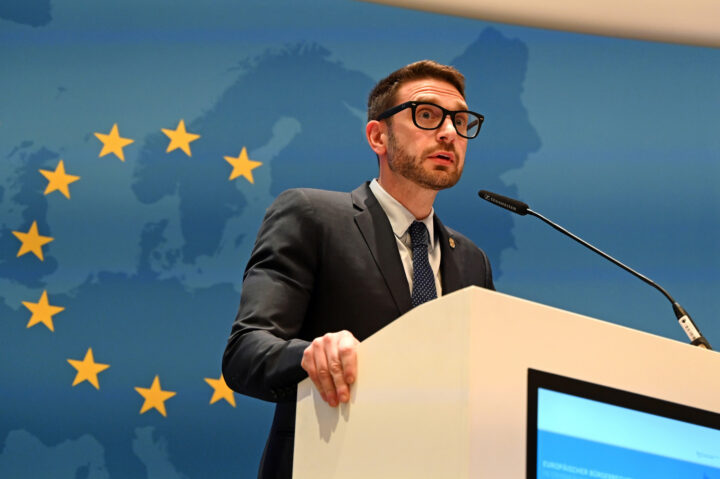
Alex Soros speaks during the presentation of the European Civil Rights Prize for Sinti and Roma on Oct, 23 2025.
A range of Israel critics, from Sen. Chris Murphy (D-CT) to Israeli lawmaker Ahmed Tibi, were among those gathered in Barcelona, Spain, over the weekend for the inaugural Global Progressive Summit, backed by left-wing philanthropist Alex Soros.
The conference brought together representatives from over 40 countries, offering, according to its website, “a necessary alternative to conservative and far-right forces.” Among its goals, the site says, is “to make progressive solutions visible and credible, proving they are the key to humanity’s prosperity.”
Spanish Prime Minister Pedro Sánchez, an outspoken critic of Israel who called on Saturday to downgrade EU-Israel relations, hosted the two-day conference, whose American attendees also included Minnesota Gov. Tim Walz, with Soros.
Sen. Bernie Sanders (I-VT), New York City Mayor Zohran Mamdani and former Secretary of State Hillary Clinton sent video messages.
South African President Cyril Ramaphosa, whose government petitioned the International Criminal Court to prosecute Israeli leaders, Brazilian President Lula de Silva and U.K. Justice Secretary David Lammy were also in attendance.
Tibi is one of the Knesset’s veteran Arab lawmakers and a former advisor to Palestinian leader Yasser Arafat. Other prominent attendees included former Palestinian Authority Prime Minister Mohammed Shtayyeh; Neera Tanden, CEO of the Center for American Progress; and Owen Jones, a writer and former advisor to former U.K. Labour leader Jeremy Corbyn, who was stripped of his leadership position and ultimately booted from the party over his antisemitic views.
Bringing some ideological diversity to the attendee lineup were Clinton, who has been broadly supportive of Israel in recent years; Tanden, a longtime Clinton confidante; and Albanian Prime Minister Edi Rama, a supporter of Israel and chairman of the Albanian Socialist Party. (Clinton’s longtime aide Huma Abedin is married to Alex Soros.)
Murphy said in his remarks that Trump “is out to end our democracy. We are not on the verge of a totalitarian takeover, we are in the middle of it.”
Lula called on U.N. Security Council members to “fulfill their obligation and guarantee peace,” and “stop this madness of war, because the world cannot bear anymore wars.”
Sánchez spoke about “attacks against the multilateral system, the repeated attempts to undermine international law and the dangerous normalization of the use of force,” an apparent reference to the recent war in Iran.
”They know their vision of how the world should be ordered is falling apart due to the tariffs and wars,” he added.
Soros, one of the progressive movement’s most influential donors and son of billionaire philanthropist George Soros, has also been outspoken against the war in Iran, praising Spain for refusing to allow the U.S. to use bases on its soil and reprimanding other European countries for not doing the same.
Trump has criticized Sánchez for Spain’s recalcitrance regarding the Iran war, including on Saturday, writing on Truth Social: “Has anyone looked at how badly the country of Spain is doing. Their financial numbers, despite contributing almost nothing to NATO and their military defense, are absolutely horrendous. Sad to watch!”
Israeli Foreign Minister Gideon Sa’ar responded to Sánchez’s call to downgrade relations between the EU and Israel, writing on X that Jerusalem “will not accept a hypocritical lecture from someone who has relationships with totalitarian regimes that violate human rights, such as [Recep Tayyip] Erdogan’s Turkey and [Nicolas] Maduro’s Venezuela, a government that receives thanks from Iran’s brutal regime and terrorist organizations and has dedicated itself to spreading antisemitism.”
The freshman New York congressman also said that Israel must do more to pursue an end to the war, make its case to the world and provide aid in Gaza

Spencer Platt/Getty Images
Westchester County Executive George Latimer speaks to supporters after winning his race against Democratic incumbent Representative Jamaal Bowman in the 16th Congressional District of New York's Democratic primary.
Having recently returned from a trip to Israel, Rep. George Latimer (D-NY) is emphasizing that Israel’s critics in the United States and around the world are overlooking Hamas’ key role in perpetuating the conflict and contributing to the humanitarian issues in Gaza, strengthening the terrorist group’s position and insulating it from external pressures.
At the same time, the New York Democrat also said that Israel must do more to pursue an end to the war, make its case to the world and provide aid in Gaza.
Latimer, speaking to Jewish Insider last week, said that the trip, organized by the AIPAC-affiliated American Israel Education Foundation for Democratic freshmen and leading Democratic lawmakers, had reinforced his view that the situation on the ground is more complicated than the more simplistic narratives demonizing Israel that have been spread by some critics and media.
“When you see on the ground, you understand it is not a simple black-and-white situation,” Latimer, a first-term congressman from Westchester County, N.Y., who sits on the House Foreign Affairs Committee, said. “People come up to me and say, ‘Israel is practicing genocide. What they’re doing is evil and we need to stop it.’ And then you get on the ground and you realize how much more complicated it is than that.”
He said that American critics of Israel fail to acknowledge Hamas’ “role in all of this and its contributory actions.” He said he sees a “lack of appreciation here in the United States that Hamas is committed — has shown no signs to want to sit, talk peace, have a cessation of hostilities. … That makes it very, very hard to plot a strategy, if the other side is completely intransigent.”
Latimer said the situation is comparable to overlooking the fact that the U.S. entered World War II because Japan bombed Pearl Harbor, or that the U.S. invaded Afghanistan because of the 9/11 attacks. He said that the “mindset” that motivated such attacks doesn’t disappear overnight, and can take protracted conflict to address.
At the same time, he said that “there’s a gap between what [the Israeli government] needs to be doing and what it is doing, and it’s a serious gap.” He said he doesn’t see proposals to relocate the population of Gaza out of the enclave, discussed during a meeting with Israeli Prime Minister Benjamin Netanyahu, as “workable” or “humane.”
He addressed friction within Israeli society over Israel’s war plans in Gaza, and said that Netanyahu’s decision-making may be shaped by his far-right coalition members, adding that “if there’s no movement from Hamas, what can you ask Israel to do unilaterally?”
“So Netanyahu’s strategies present as intransigent in the face of intransigence on the other side,” Latimer continued. “You need some joint breakthrough where both sides step back from the path that they’re on, and both sides have to be willing to do that, if you can expect the other side to also then do that.”
He noted the difficulty of forcing a dug-in enemy like Hamas to surrender, comparing it to the challenge of forcing a Japanese surrender during WWII.
Latimer unseated Rep. Jamaal Bowman (D-NY), a vocal Israel critic, in the 2024 Democratic primary, boosted by significant support from his district’s Jewish community as well as national pro-Israel groups.
Latimer told JI he thinks Israel has not done enough to try to win over or influence global opinion in its favor. Latimer said he believes that the Israeli government views such efforts as a lost cause and not worth attempting.
“There’s a case to be made [for Israel]. But in lieu of that, the rhetoric is all what Israel is doing and not doing, and how evil they are, when, in fact, all of this came from an attack that was horrific on Oct. 7,” Latimer said.
He said that there have been “atrocities” on the Israeli side, pointing broadly to settler violence in the West Bank, but said that “the question is, overall, are you weighing all of these things together, or as the world opinion, and much of the United States opinion, particularly among younger people, has been framed completely around ‘Israel bad,’” ignoring the “evil that’s been done on behalf of the other side of this. That is a contributing reason why we’re in the situation we’re in.”
“The fact that people are starving is horrific. But as long as the world blames Israel for it solely, Hamas is winning. Why would they change any strategies?” Latimer said. “The leaders of Hamas are not sitting in the tunnels. … They’re sitting in the safety of the protection of [Turkish President Recep Tayyip] Erdogan or over in Qatar. Therefore, they’re not under the pressure.”
Latimer said that the food supply in Gaza was a key issue he examined on the trip, calling starvation in Gaza a “legitimate” problem.
He said that the current four Gaza Humanitarian Foundation aid distribution sites are “nowhere near enough,” given the “massive number of people that need to be fed and housed.”
But he added that Hamas being “unwilling to cooperate” in the safe delivery of aid is an impediment to efforts to improve the humanitarian situation and that the United Nations “in the eyes of the Israelis, has lost credibility.”
He said that the best path forward would likely be for a coalition of Arab countries to take the lead of a humanitarian aid distribution entity: “We need to have a third party that has credibility.”
“Israel is not doing enough to solve the problem, and Hamas is doing things to prohibit the problem from being solved,” Latimer said, calling on Israel to work to increase the number of food distribution centers and strengthen supply lines and on Hamas to stop attempting to intercept food and sow chaos at distribution sites.
“The fact that people are starving is horrific. But as long as the world blames Israel for it solely, Hamas is winning. Why would they change any strategies?” he said. “The leaders of Hamas are not sitting in the tunnels. … They’re sitting in the safety of the protection of [Turkish President Recep Tayyip] Erdogan or over in Qatar. Therefore, they’re not under the pressure.”
“What I saw in September 2005 gave me hope. What I see when I go back 20 years later is, you shake your head and you go, ‘Why did it turn out this way?’” Latimer said. “Did it turn out this way because Israel wanted it to turn out this way? Israel didn’t want Oct. 7. Israel didn’t want all of its young men in the reserves and active duty, constantly on a wartime footing.”
He declined to weigh in definitively — citing the limited information at his disposal and his limited power as a lone congressman — on whether the U.S. needs to increase pressure on its allies in Turkey or Qatar to expel or detain those Hamas leaders, but said that “clearly there has been insufficient pressure on Hamas” because its leaders have shown no urgency to return the hostages, negotiate in good faith or participate in un-corrupted food distribution.
Latimer said he first traveled to Israel two decades ago, just after the Israeli disengagement from Gaza, and that there was hope at the time that the Israeli withdrawal would “allow the opportunity for Gaza to experience peace and some kind of growth.”
“What I saw in September 2005 gave me hope. What I see when I go back 20 years later is, you shake your head and you go, ‘Why did it turn out this way?’” Latimer said. “Did it turn out this way because Israel wanted it to turn out this way? Israel didn’t want Oct. 7. Israel didn’t want all of its young men in the reserves and active duty, constantly on a wartime footing.”
He said that if Gaza’s leaders had pursued growth and development over the past 20 years, “we could be in a very different place today,” but instead Hamas seized power and used Gaza as a platform to attack Israel.
Asked about recent decisions by European countries to unilaterally recognize a Palestinian state, which came around the time of Latimer’s trip, the congressman said that he supports a two-state solution, but one that “comes out of a negotiated process,” noting the many outstanding issues to be worked through.
“You cannot expect Israel to survive with a hostile entity interspersed with its borders, and yet be its own country. And there has to be a sense that this country can function and provide its services to its people and maintain civil control. None of those things are automatically in place yet, so I don’t know what we’re recognizing in substance,” Latimer said.
“I think what we’re recognizing in symbolism is European countries that basically are saying, ‘We need to have a two state solution,’ and probably their population is reacting to what’s happening in the moment and putting pressure on their governments to do this,” he continued.
“The Palestinian Authority certainly has a steep mountain to climb, but right now, they’re the best hope that you have of a presence — and certainly it’s not Hamas, it’s certainly not coming out of any of the groups that Iran is backing or has backed,” Latimer said.
Based on the delegation’s meeting with Palestinian Authority leaders, Latimer said that he believes there is an “intent” and “willingness” in the PA to pursue needed reform and bolster credibility with the Palestinian population.
“How much success they’re going to have with the civilian population to accomplish those things — it’s going to be a tall task,” he said.
At the same time, he noted that some Arab governments such as those in Jordan and Egypt maintain cooperative relationships with Israel even as many of their citizens remain hostile.
“The Palestinian Authority certainly has a steep mountain to climb, but right now, they’re the best hope that you have of a presence — and certainly it’s not Hamas, it’s certainly not coming out of any of the groups that Iran is backing or has backed,” he continued.
In the long term, Latimer added, the Abraham Accords represent a path forward for the region, and said that moderate Sunni Arab states want to see a viable and demilitarized Palestinian Authority government that can credibly govern the Palestinian people.
Please log in if you already have a subscription, or subscribe to access the latest updates.
 Continue with Google

 Continue with Apple