











































Plus, Kaploun's restitution vow draws doubters
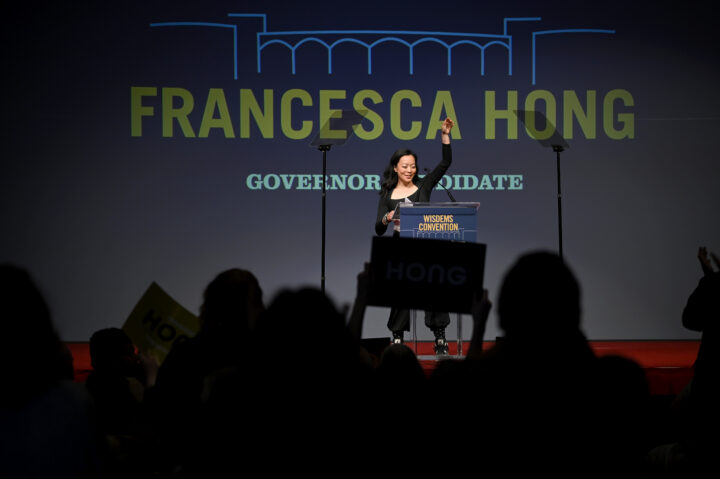
Daniel Boczarski/Getty Images for WisDems
Gubernatorial candidate Francesca Hong speaks on stage during Wisconsin Democrats 2026 Convention on June 14, 2026 in Madison, Wisconsin.


 Add JewishInsider on Google
Good Wednesday morning.
In today’s Daily Kickoff, we break down the results of yesterday’s primaries in Connecticut, Minnesota, South Carolina and Wisconsin, and talk to New York Jewish leaders who attended a meeting with Mayor Zohran Mamdani to discuss concerns over his inflammatory Israel rhetoric. We report on antisemitism envoy Yehuda Kaploun’s recent pledge, which drew skepticism, to resolve all Holocaust restitution claims in the final years of the Trump administration, and have the scoop on New Jersey congressional candidate Rebecca Bennett’s efforts to distance herself from fellow N.J. Democratic candidate Adam Hamawy. Also in today’s Daily Kickoff: Ken Marcus, Ari Emanuel and Michal Slawny Cababia.
We also have a new on-demand Live Briefing that you can access throughout the day via our new app (on Apple and Android) and on our website.
Today’s Daily Kickoff was curated by JI Executive Editor Melissa Weiss and Israel Editor Tamara Zieve, with assists from Danielle Cohen-Kanik and Marc Rod. Have a tip? Email us here.
What We’re Watching
- We’re keeping an eye on the last races to be called after last night’s primaries in Minnesota, Wisconsin, Connecticut and Vermont, as well as the special election primaries in South Carolina and Alabama. More below.
- President Donald Trump asserted late Tuesday that the U.S. has “total control over the Hormuz strait right now,” even as Oman and Iran engage in talks over control of the waterway. More below from our conversations with Iran experts and observers about the talks and likely outcomes.
What You Should Know
A QUICK WORD WITH JI’S JOSH KRAUSHAAR
In Tuesday’s newsletter, we wrote that four major Democratic primary races — in Minnesota, Wisconsin and Connecticut — would be key tests of the depth of the anti-establishment, anti-Israel left’s staying power.
So far, the left of the party won three of the four contests, with the notable exception of Democratic Socialists of America-affiliated Wisconsin gubernatorial candidate Francesca Hong, who fell short against Milwaukee County Executive David Crowley — in the night’s most high-profile race testing whether a socialist can win the Democratic nomination for an executive role in a pivotal battleground state.
Hong, who drew criticism from leading Democrats over her record of comments attacking Thanksgiving, support for defunding the police and overall embrace of the DSA’s radical platform, underperformed the primary polls showing her with a substantial lead in the race. But as Wisconsin Gov. Tony Evers and leading Democratic officials warned that her nomination could cost Democrats the governorship, her lead dissipated amid concerns about her electability come November.
Of note: Sen. Bernie Sanders (I-VT) and Rep. Alexandria Ocasio-Cortez (D-NY), the two leading members of the ideological left in Congress, declined to endorse Hong’s campaign.
The establishment’s unified — and effective — show of force against Hong offered a stark contrast to party leaders’ efforts in Michigan to stop far-left candidate Abdul El-Sayed from winning the nomination. In that race, party leaders were more equivocal in their support of Rep. Haley Stevens (D-MI), with Sen. Elissa Slotkin (D-MI) declining to support Stevens’ candidacy despite their similar political backgrounds. Even Gov. Gretchen Whitmer, who offered a late endorsement to Stevens, didn’t go after El-Sayed’s electability like Evers has in his comments speaking out against Hong.
The socialist speed bump in Wisconsin, however, was seemingly the only exception to an overall dominant showing from progressive candidates, highlighted by the left’s successes in Minnesota.
Trust, but verify
A roundtable with New York City rabbis held at City Hall on Monday gave participants a chance to voice growing concerns about New York City Mayor Zohran Mamdani’s Israel rhetoric they felt had before gone unheard — with several attendees telling Jewish Insider the strong collective message, and Mamdani’s reaction, gave them hope he would change tack, JI’s Will Bredderman and Matthew Kassel report.
Airing concerns: Multiple attendees of the meeting told JI they viewed the gathering as an opportunity to bring their fears directly to the mayor and to demonstrate communal unity amid a period of spiking antisemitic hate crimes. “People talked about their own concerns, their families’ concerns, their congregations’ concerns. I think he heard them,” said one participant, who requested anonymity to speak freely about their ongoing contact with Mamdani’s antisemitism czar, Phylisa Wisdom, and her deputy, Josh Binderman. “When they framed the meeting, they said it was going to be an ‘open, honest dialogue.’”
Bonus: The Wall Street Journal reports that Mamdani is facing both “growing discontent from New Yorkers upset with his anti-Israel rhetoric and slights against the business community,” as well as a “fraying” relationship with the New York City Council.
SCOOP
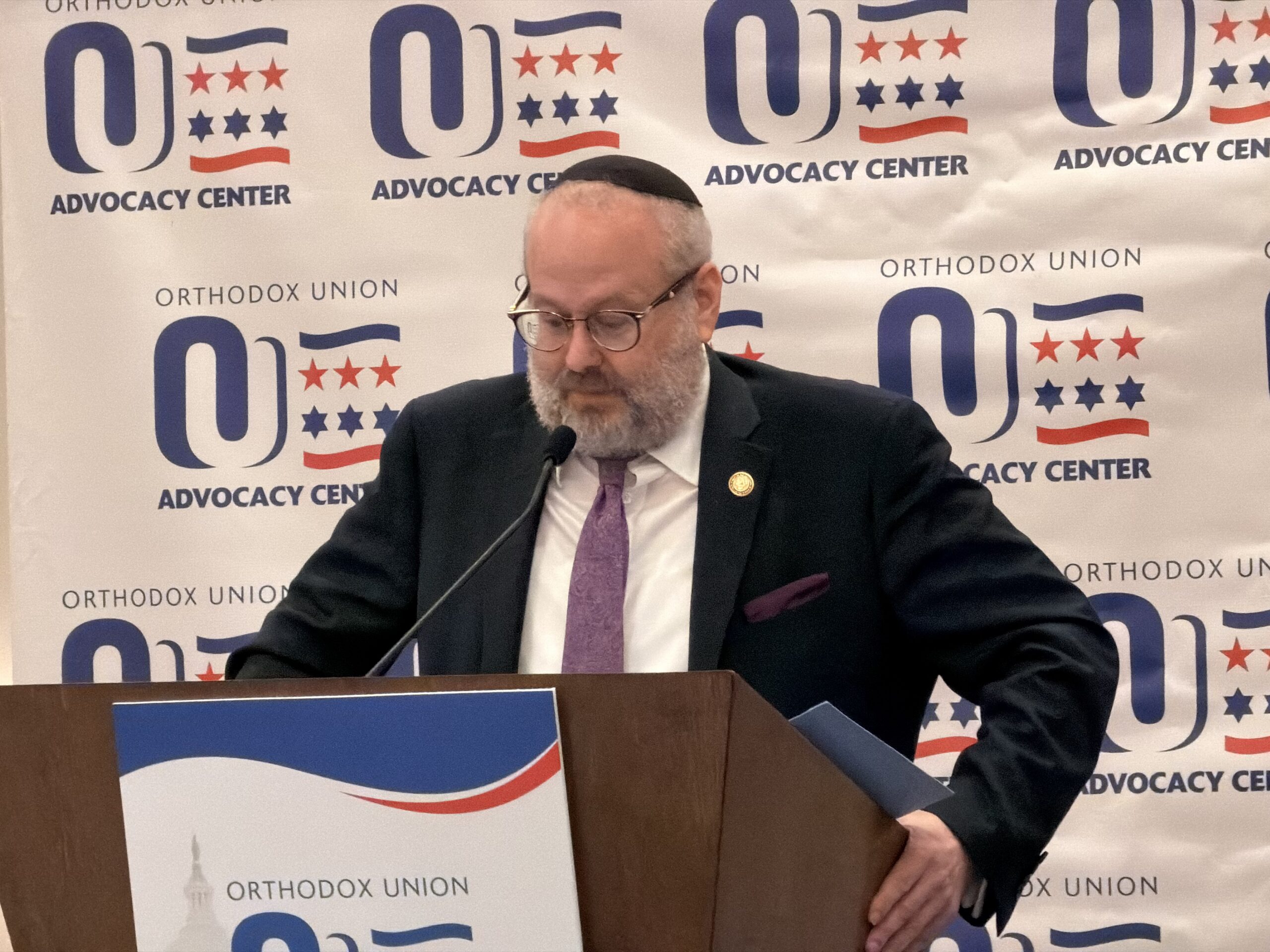
Ambassador Yehuda Kaploun, the State Department’s antisemitism envoy, said last month that he would be able to resolve all remaining Holocaust restitution issues within the next two and a half years, before the end of the Trump administration, two sources with knowledge of the remarks told Jewish Insider’s Marc Rod.
Response: The assertion — made during the July annual meeting of the board of the Conference on Jewish Material Claims Against Germany, better known as the Claims Conference, in New York — has left experts in the field skeptical. The U.S. has been pursuing Holocaust restitution issues for decades. “The tone … was basically, ‘I’m coming in, and I know what needs to be done, and I’m going to do it my way despite whatever anybody else feels or does because I have the backing of the administration,’” one source, granted anonymity to speak candidly about the meeting, explained.
SCOOP
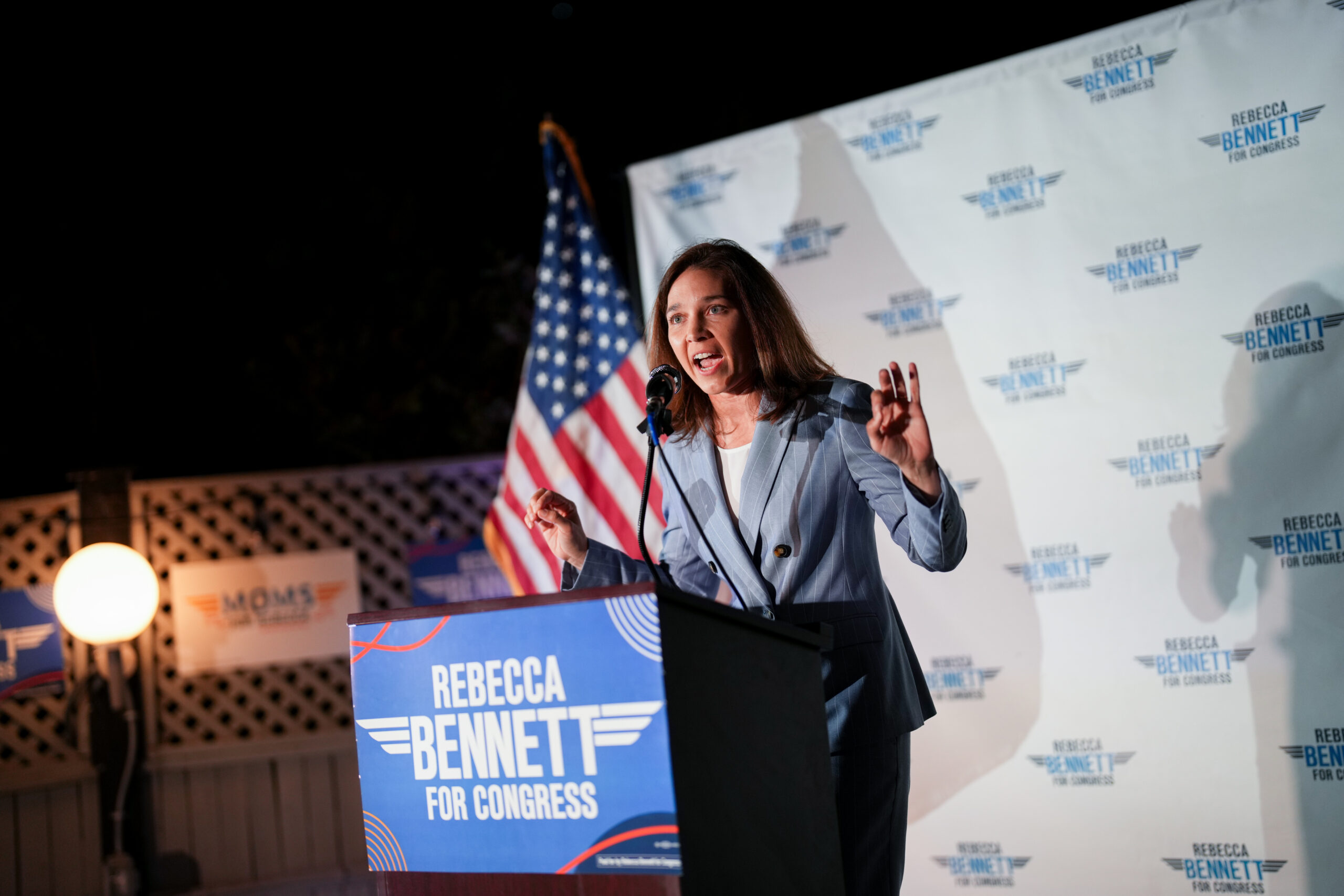
Rebecca Bennett, the Democratic nominee in New Jersey’s swing 7th Congressional District, distanced herself from a fellow Democratic nominee, Adam Hamawy, who is running in a neighboring district, Jewish Insider’s Marc Rod reports.
Notable quotable: “Rebecca Bennett is not going to campaign with or endorse Adam Hamawy this fall, as she is laser focused on flipping New Jersey’s seventh district, lowering costs, and getting corruption out of Washington,” a Bennett campaign spokesperson told JI.
STRAIT TALK

Talks to reopen the Strait of Hormuz appear unlikely to produce an agreement, analysts told Jewish Insider’s Matthew Shea this week, with little sign that Washington and Tehran can bridge their competing demands over the waterway. The Trump administration is more likely to pursue continued economic pressure than return to military confrontation, the experts suggested — but that strategy may not be enough to force Tehran to back down.
Trump’s options: “Given the extreme unlikelihood of any successful negotiation between the U.S. and Iran, the two plausible scenarios are either a continuation of the status quo, or Trump using an Iran-Oman agreement on Hormuz to declare victory and extricate himself from the situation altogether,” Michael Koplow, chief policy officer at the Israel Policy Forum, said. “Trump’s preferred option is economic pressure … The economy has priced in the Hormuz closure, so if the U.S. keeps up economic pressure without returning to war, Trump can at least count on no drastic changes on inflation or public opinion, even if neither improves before the election.”
EDUCATION CONSTERNATION
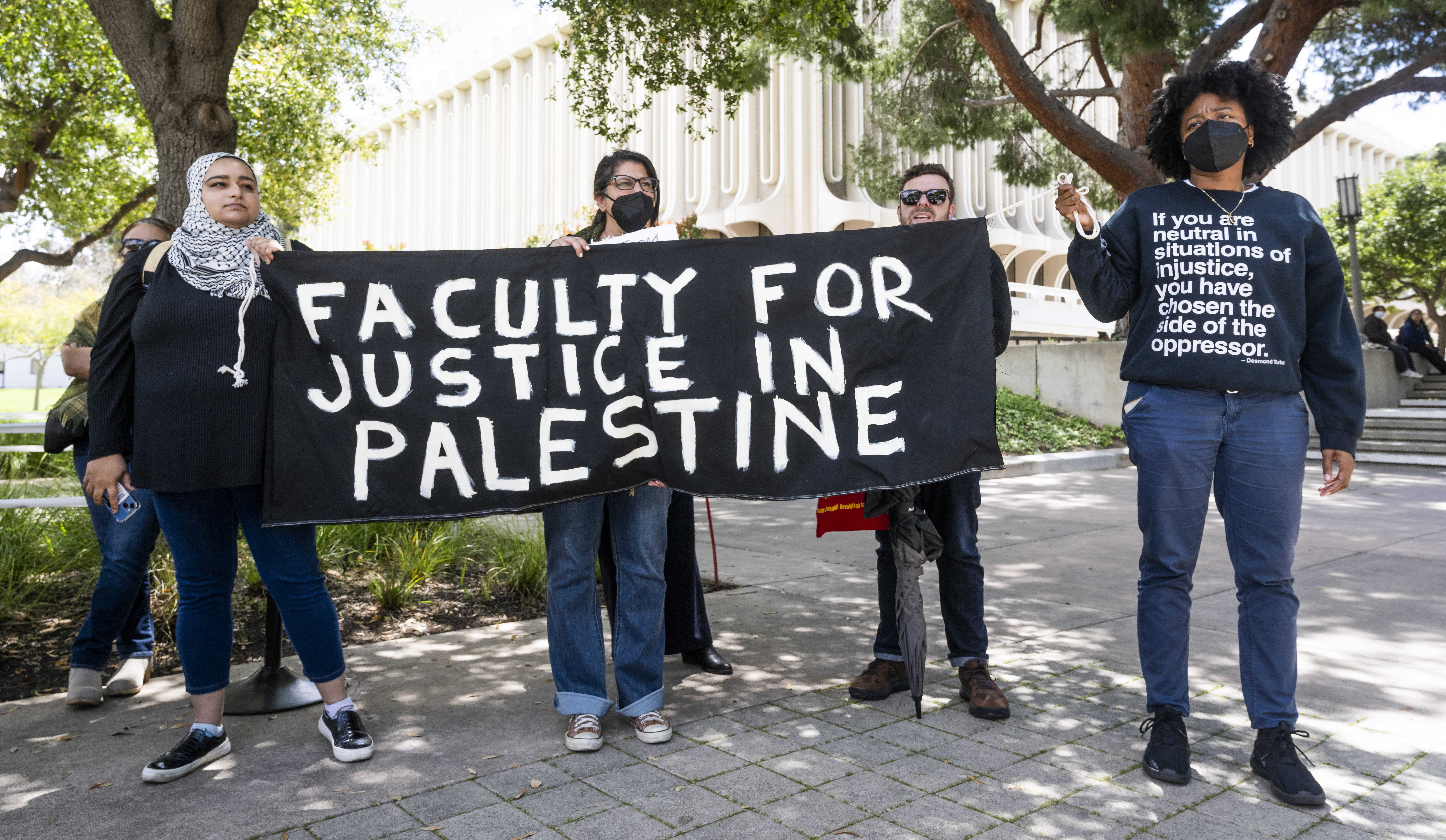
Even as student-driven protests against Israel and the war in Gaza have quieted down on college campuses, two new Anti-Defamation League reports reveal rising levels of antisemitism and anti-Zionism in university classrooms nationwide driven by faculty, noting that some instructors are still presenting one-sided views on Israel as fact, assigning readings by terrorist groups and offering extra credit for attending anti-Israel protests, Jewish Insider’s Haley Cohen reports.
Findings: “The Faculty Factor: Inside the Networks Driving Anti-Israel and Anti-Zionist Activism on Campus,” published on Wednesday, documents how faculty groups, unions and networks drive anti-Israel and anti-Zionist actions at universities. The report claims that faculty networks such as Faculty & Staff for Justice in Palestine and the American Association of University Professors have shielded anti-Israel student groups from discipline since the 2024 campus anti-Israel encampments, detailing methods used by influential organizations to provide institutional cover. A second report, “Antisemitism Among Faculty and in the Classroom: Trends, Patterns and Institutional Dynamics,” highlights anti-Israel narratives presented to students through regular course study since the Oct. 7, 2023, Hamas terror attacks and the ensuing Gaza war.
DATA DEBATE

Kenneth Marcus, the chairman of the Louis D. Brandeis Center for Human Rights Under Law, urged the Equal Employment Opportunity Commission on Tuesday to repeal a long-standing rule requiring large employers to keep and report data on the racial, ethnic and sex makeup of their workforce, Jewish Insider’s Marc Rod reports.
The argument: Marcus was one of a slew of speakers who appeared before the commission to testify for and against the rule, which the commission has proposed repealing. He argued that the reporting requirements have resulted in employers feeling pressure to make hiring decisions based on race, rather than encouraging equal treatment. He said that the Jewish community’s experience “illustrates both the promise and the peril of demographic data collection.”
Worthy Reads
Youth Movement: The New Yorker’s Bernard Avishai profiles Israeli satirist and Netanyahu government critic Lior Schleien, who through his “Free Israel” movement engages in dialogue with right-leaning young Israelis that is filmed and shared online. “Relevant closed in late 2024, but last November Schleien launched an online movement, called Free Israel, a play on the slogan ‘Free Palestine,’ and released videos, he told me, aimed at influencing public opinion so that Israel can ‘free itself first from Netanyahu’s rule.’ … Since then, Schleien has continued his campaign, which he and a few friends have financed, to meet with dozens of groups of Israeli youth — some seven hundred thousand of whom will be voting for the first time in the fall and who, in their majority, identify as ‘right wing.’” [NewYorker]
Rationing the Islamic Republic: The Wall Street Journal’s Georgi Kantchev, Henna Moussavi and Summer Said look at how Iran is becoming a “survival economy” that rations its limited resources in an effort to buy time until the current conflict ends. “Tehran is rationing scarce goods, limiting access to foreign currency, slashing investment and shifting more of the burden onto households while preserving strategic imports and the essential machinery of the state, analysts say. The result will be a deepening economic malaise that leads to rising poverty and dysfunction, but also more room for Iran’s leaders to stall talks with the U.S.” [WSJ]
Word on the Street
Reps. Brad Schneider (D-IL), Gus Bilirakis (R-FL), Jake Auchincloss (D-MA), Dan Goldman (D-NY), Craig Goldman (R-TX) and Haley Stevens (D-MI) wrote to Secretary of State Marco Rubio and U.S. International Development Finance Corporation CEO Ben Black urging them to prioritize the Great Sea Interconnector linking the Greek, Cypriot and Israeli energy grids as part of the India-Middle East-Europe Economic Corridor…
The Louis D. Brandeis Center for Human Rights Under Law urged House Speaker Mike Johnson (R-LA) and Majority Leader Steve Scalise (R-LA) to call up the No Antisemitism in Education Act for a full House vote when the chamber returns in September…
Sen. Adam Schiff (D-CA) said he would continue to accept AIPAC money, telling Politico, he’s “not going to exclude any person, faith, organization”…
Police in San Diego are investigating a weekend incident at the Alpha Epsilon Pi fraternity house at the University of California, San Diego, in which the building was vandalized with antisemitic and racist graffiti…
The NYPD denied that its officers will be accompanying New York City First Lady Rama Duwaji on a trip to Lebanon and Syria next month after City Hall said that her security detail would join the trip, saying the “NYPD does not send officers to countries with level four travel advisories for discretionary reasons”; Mayor Zohran Mamdani later said the diverging statements stemmed from a “miscommunication,” and that when his wife makes the trip “it will be without any NYPD detail”…
Yankee Global Enterprises announced a new $2.6 billion strategic investment partnership with Apollo Sports Capital…
Ari Emanuel’s Mari reached a $6 billion deal to acquire the U.K.-based theater company ATG Entertainment, whose portfolio includes dozens of theaters, including on Broadway and London’s West End…
Phoenix Suns owner Mat Ishbia was forced to cede board seats and key control of his United Wholesale Mortgage to debt firm Oaktree Capital in exchange for a $1.5 billion rescue, after UWM suffered a $600 million loss…
The Wall Street Journal interviews actor Jon Lovitz, whose films “Redemption” and “Don’t Say Good Luck” are set to be released this week, about his entry into comedy (and his childhood friendship with Lisa Kudrow)…
Yemeni officials said that six people were killed in a Houthi strike on a vessel in the Bab el-Mandeb strait; elsewhere in the region, CENTCOM said it disabled a Panama-flagged cargo ship sailing toward Iranian ports by firing two Hellfire missiles into the vessel’s engine room, the third such incident since the U.S. blockade began…
The Palestinian technocratic committee meant to govern Gaza convened a joint coordination meeting in Cairo with several U.N. agencies — including the World Food Program, UNICEF and the World Health Organization — as well as representatives from the Board of Peace and former U.K. Prime Minister Tony Blair’s Institute for Global Change, to coordinate on humanitarian aid and reconstruction issues…
The Wall Street Journal’s William Galston considers the evolution of U.S. support for Israel stemming back to its Six-Day War victory…
LinkedIn is shutting down its research and development facility in Tel Aviv and laying off nearly all of the 50 staffers who work there, four years after establishing the center following its acquisition of analytics startup Oribi…
Teddy Sagi’s Layam and Adel Mardini’s Jetex opened a new VIP lounge in Ben Gurion Airport’s Terminal 3 this week…
Michal Slawny Cababia, the World Zionist Organization’s representative for North America, was sworn in to Israel’s Knesset as a member of Yair Lapid’s Yesh Atid party; in an X post announcing the news, Lapid praised Slawny Cababia’s efforts to help new immigrants assimilate into Israeli society…
The New York Times spotlights concerns among the Druze residents of the Syrian province of Sweida who fear what they believe is a looming government takeover of the region, a year after hundreds were killed in a wave of sectarian violence…
Pic of the Day

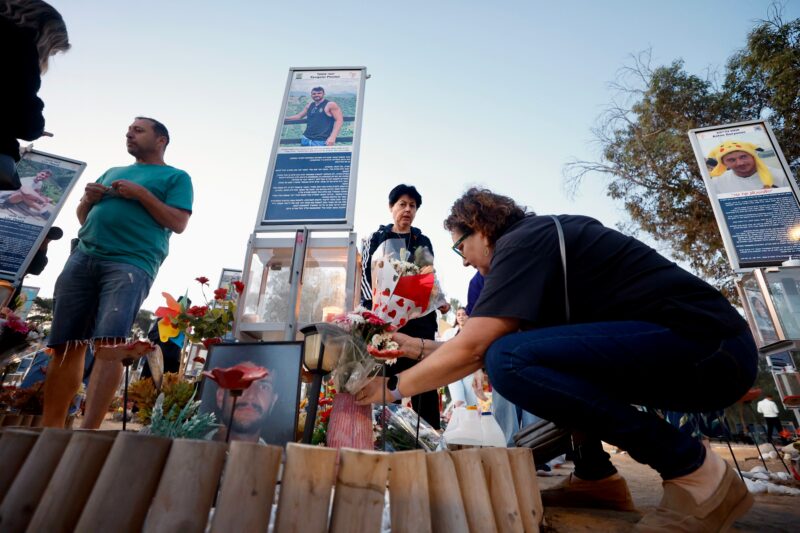
A toast was held by the Aner Shapiro Association during the VERSE Festival on Tuesday, honoring the memory of the Jerusalem artist and Nova music festival attendee who saved the lives of dozens of people on Oct. 7, 2023, when he repeatedly caught and threw back grenades hurled by terrorists into a bomb shelter before he was killed.
Birthdays
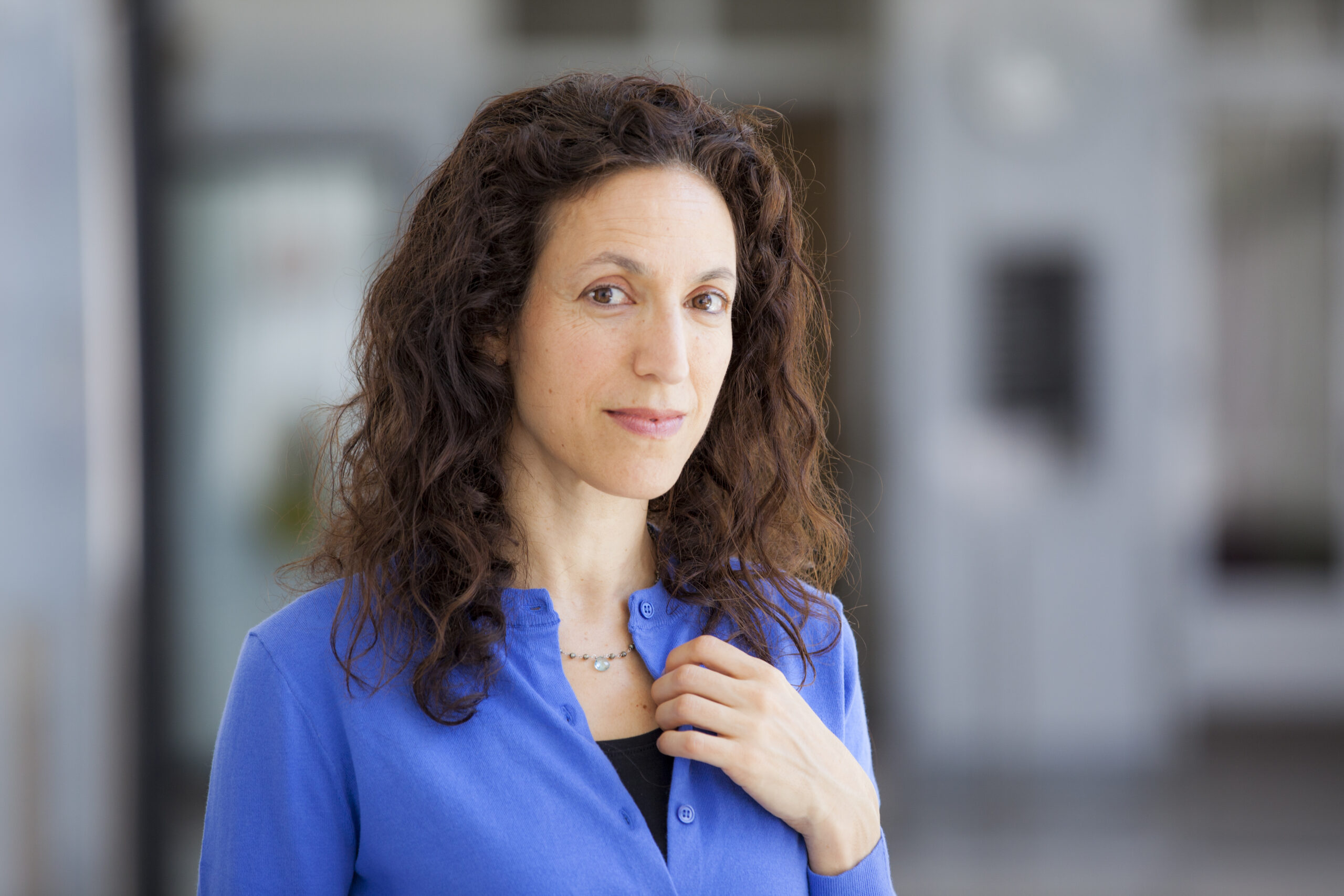
Award-winning writer of fiction and nonfiction and the author of several novels and a novella, Rachel Kadish turns 57…
Hungarian American investor, currency trader and political activist, born György Schwartz, George Soros turns 96… Retired Beverly Hills, Calif., attorney, Sheldon Stanford Ellis… Emmy Award-winning television screenwriter, television producer and author, Gail Parent turns 86… Professor of psychology at the University of Pennsylvania and author of many self-help books, Martin Elias Peter Seligman turns 84… Attorney in Ontario, Canada, who served as president of the Canadian Jewish Congress, Lester Scheininger turns 79… Co-founder and chairman of the film and television company Beacon Pictures, Barry “Armyan” Bernstein turns 79… U.S. diplomat, Karyn Allison Posner-Mullen turns 75… Member of Houston’s Congregation Emanu El, she worked for more than 40 years at the University of Texas Health Science Center at Houston, Fredi Bleeker Franks… Sales manager of Illi Commercial Real Estate in Woodland Hills, Calif., Stuart Steinberg… Israel’s former ambassador to Uzbekistan, Bulgaria, Kenya, Uganda, Tanzania and Albania, Noah Gal Gendler turns 69… Former member of Knesset from the Yesh Atid party, Haim Jelin turns 68… Founding editor of The Times of Israel and formerly the editor-in-chief of The Jerusalem Post, David Horovitz turns 64… Former chairman of Goldman Sachs International, now CEO of Ki Corporation, Sir Bradley Fried turns 61… Senior rabbi at Brookline’s (Mass.) Temple Beth Zion, Claudia Kreiman… Chief strategy officer at NYC’s Educational Alliance, Anya Hoerburger… Scottsdale, Ariz.-based real estate investor, Jay Chernikoff… Co-founder at Understory, David Fine… Head of strategy and innovation at EquipmentShare, Ariel Applbaum…
So far, the left of the party won three of the four contests, with the notable exception of Democratic Socialists of America-affiliated Wisconsin gubernatorial candidate Francesca Hong, who fell short against Milwaukee County Executive David Crowley

(AP Photo/Kayla Wolf)
David Crowley, Democratic candidate for Wisconsin governor, shakes hands with Karen Hilt, left, during a campaign stop Friday, Aug. 7, 2026, in Sheboygan, Wis.
In Tuesday’s newsletter, we wrote that four major Democratic primary races — in Minnesota, Wisconsin and Connecticut — would be key tests of the depth of the anti-establishment, anti-Israel left’s staying power.
So far, the left of the party won three of the four contests, with the notable exception of Democratic Socialists of America-affiliated Wisconsin gubernatorial candidate Francesca Hong, who fell short against Milwaukee County Executive David Crowley — in the night’s most high-profile race testing whether a socialist can win the Democratic nomination for an executive role in a pivotal battleground state.
Hong, who drew criticism from leading Democrats over her record of comments attacking Thanksgiving, support for defunding the police and overall embrace of the DSA’s radical platform, underperformed the primary polls showing her with a substantial lead in the race. But as Wisconsin Gov. Tony Evers and leading Democratic officials warned that her nomination could cost Democrats the governorship, her lead dissipated amid concerns about her electability come November.
Of note: Sen. Bernie Sanders (I-VT) and Rep. Alexandria Ocasio-Cortez (D-NY), the two leading members of the ideological left in Congress, declined to endorse Hong’s campaign.
The establishment’s unified — and effective — show of force against Hong offered a stark contrast to party leaders’ efforts in Michigan to stop far-left candidate Abdul El-Sayed from winning the nomination. In that race, party leaders were more equivocal in their support of Rep. Haley Stevens (D-MI), with Sen. Elissa Slotkin (D-MI) declining to support Stevens’ candidacy despite their similar political backgrounds. Even Gov. Gretchen Whitmer, who offered a late endorsement to Stevens, didn’t go after El-Sayed’s electability like Evers has in his comments speaking out against Hong.
The socialist speed bump in Wisconsin, however, was seemingly the only exception to an overall dominant showing from progressive candidates, highlighted by the left’s successes in Minnesota.
In the pivotal Minnesota Senate race, progressive Lt. Gov. Peggy Flanagan comfortably outdistanced moderate Rep. Angie Craig (D-MN) by nearly 20 points. Flanagan is one of Minnesota’s most progressive statewide officials, and campaigned as a strident critic of Israel. Flanagan will be facing former NBC Sports sideline reporter Michele Tafoya, who easily won the Republican nomination. Republican leaders believe Tafoya has broad appeal given her national television work, but winning a blue state like Minnesota given the GOP headwinds will be a very difficult task — even against a less-electable challenger like Flanagan.
The left is also celebrating the results in Craig’s suburban Minneapolis district, where the most anti-Israel and furthest-left candidate, former state Sen. Matt Little, easily outpaced two more-moderate challengers, including pro-Israel state Sen. Matt Klein. Little will be facing GOP state Sen. Eric Pratt in the general election, and will be favored in a district that Kamala Harris carried by six points in 2024.
In Connecticut, Rep. John Larson (D-CT) was handily defeated by a younger political challenger in former Hartford Mayor Luke Bronin, who moved to Larson’s left on Israel during the campaign, but was broadly seen as the more future-oriented candidate. The seat, with the largest Jewish constituency in the Nutmeg State, is a safe Democratic district.
On the Republican side, Sen. Darline Graham (R-SC) will be squaring off against Rep. Ralph Norman (R-SC) in a special election runoff later this month to fill the full term of her late brother Sen. Lindsey Graham’s Senate seat. Graham won 33% of the Republican vote in the crowded race, while Norman won 25%. Norman outpaced Rep. Russell Fry (R-SC) — the other sitting member of Congress in the race — by five points.
Norman is a hard-line fiscal conservative who was one of former House Speaker Kevin McCarthy’s (R-CA) biggest antagonists in his battle to remain as House leader. He also endorsed Nikki Haley in the 2024 presidential campaign, a factor that could lead President Donald Trump to redouble his backing for Graham’s candidacy.
Plus, 'Shabbat with training wheels'

GETTY IMAGES
Dinner
Good Tuesday morning.
In today’s Daily Kickoff, we preview today’s primaries in Minnesota, Wisconsin, Connecticut and Vermont, and do a deep dive into D.C.’s status as a kosher food desert. We report on calls from Ambassadors Mike Huckabee and Yehuda Kaploun for Jordan-based Sbarro bombing terrorist Ahlam Tamimi to face justice 25 years after the deadly Jerusalem attack she took part in, and talk to Ben Springwater, the founder of a new app that helps people unplug for Shabbat. Also in today’s Daily Kickoff: Rep. Randy Fine, Dana Nessel and Josh Frydenberg.
We also have a new on-demand Live Briefing that you can access throughout the day via our new app (on Apple and Android) and on our website.
Today’s Daily Kickoff was curated by JI Executive Editor Melissa Weiss and Israel Editor Tamara Zieve, with an assist from Danielle Cohen-Kanik. Have a tip? Email us here.
What We’re Watching
- Voters in Connecticut, Minnesota, Vermont and Wisconsin head to the polls today for party primaries. We’ll be keeping a close eye on the Senate and gubernatorial Democratic primaries in Wisconsin and Minnesota as the far left makes gains in the party. More below on the races we’re watching.
- In addition, South Carolina and Alabama are holding special elections. In the Palmetto State, Sen. Darline Graham (R-SC) is running for a full term, which she announced after being tapped to serve out the remainder of her brother’s term following his death last month.
- In Washington, Ken Marcus, the founder and chairman of the Louis D. Brandeis Center for Human Rights Under Law, is slated to testify before the Equal Employment Opportunity Commission for a hearing about rules requiring employers to provide yearly reports breaking down their workforce by race, sex and ethnicity.
What You Should Know
A QUICK WORD WITH JI’S JOSH KRAUSHAAR
Today’s Democratic primaries in Connecticut, Minnesota, Vermont and Wisconsin won’t have the same shock value as previous contests that underscored the strength of the anti-establishment, anti-Israel forces within the party.
But the possibility of Minnesota Democrats nominating a true-blue progressive over a battle-tested moderate lawmaker as their Senate standard-bearer, along with the growing likelihood suburban voters will reject a pragmatist for a left-wing candidate, may well demonstrate just how far left the party has swung in the past year.
Add to that the likelihood that Democratic Socialists of America-aligned candidate Francesca Hong will emerge as the party’s gubernatorial nominee in Wisconsin — providing a spotlight for the socialist group’s governing philosophy in the biggest of battleground states — and the stakes remain awfully high for the Democratic Party tonight.
There’s also a fascinating contest in Connecticut, where Rep. John Larson (D-CT), a former member of House leadership, is facing a real threat from former Hartford Mayor Luke Bronin. The primary isn’t as neatly driven by ideological differences as it is along generational lines (Larson is 78, Bronin 47), but Larson has been a reliable supporter of Israel during his congressional career, while Bronin has tacked to his left on the issue during the campaign.
It’s very possible that the left wing of the party ends up with a clean, four-race sweep in these contests.
CAPITAL CONUNDRUM

Less than a year after kosher sushi restaurant Oro Nami launched its grand opening in Washington, it closed down in May, leaving meat restaurant Char Bar as the only sit-down kosher restaurant with a liquor menu in the nation’s capital. The closure of yet another kosher restaurant in the District has reignited one of Jewish Washingtonians’ favorite conversation topics: Why aren’t there more kosher restaurants in a city as important as the nation’s capital? Jewish Insider’s Gabby Deutch reports.
It’s the economy, stupid: People with knowledge of the restaurant business say that the answer is straightforward, if unsatisfying: economics. The Washington metro area has more than 300,000 Jews, according to a community-wide study completed in 2017. Just 5% of them are Orthodox, and most of the Orthodox Jews live in Maryland. “Kashrut in general in D.C. I think is tricky, because from a real estate perspective, everything is priced like a normal restaurant,” said Rabbi Charlie Schwartz, the director of Lehrhaus, a kosher restaurant outside Boston that plans to expand to Washington. “It’s assuming that you’ll do a high volume of business on Fridays and Saturdays, and for larger restaurant spaces that you’ll have pretty high alcohol sales, and kosher restaurants just don’t operate that way.”
PACT PRAISE
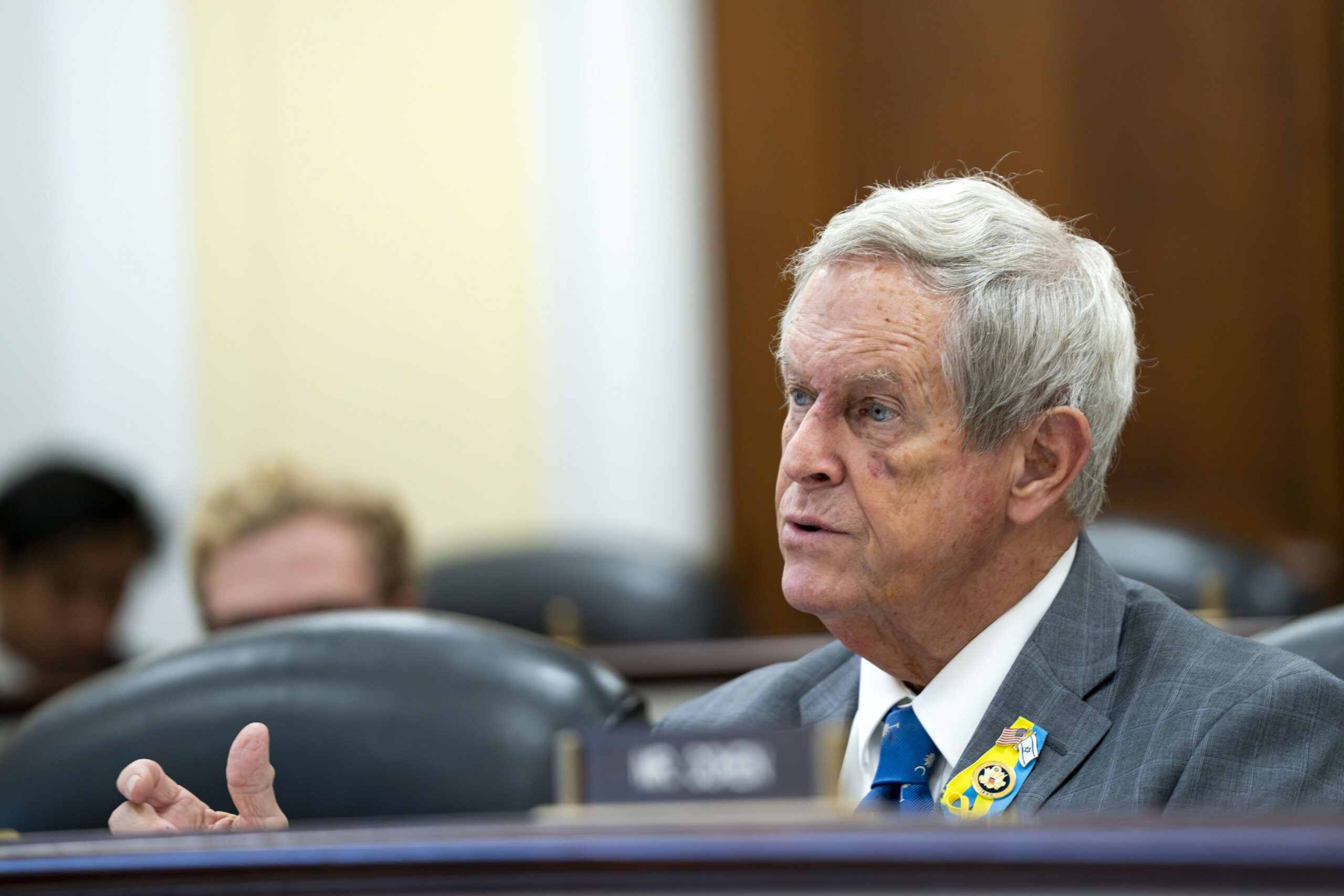
Rep. Joe Wilson (R-SC) on Sunday praised the new mutual defense pact between Saudi Arabia, Turkey and Pakistan as an accomplishment by President Donald Trump. The pact has been seen by many in pro-Israel circles as a sign that some of the U.S.’ Gulf allies are attempting to hedge against the U.S. and Israel, creating an alternative to the Abraham Accords and empowering those hostile to Israel, Jewish Insider’s Marc Rod reports.
Wilson’s words: “The mutual defense pact of Saudi Arabia, Türkiye, and Pakistan is another achievement of [Trump] promoting stability, peace, and prosperity in the Middle East,” Wilson, a vocal supporter of Israel who has also been strongly supportive of Turkey, said in a post on X. “With our prosperous Gulf allies, a liberated Syria, and Lebanese-Israeli negotiations, it is clear the murderous regime in Iran is isolated and the people of Iran can regain a new government worthy of Iran’s rich history.”
Tehran’s take: Iranian Foreign Ministry spokesman Esmaeil Baghaei said on Monday that Tehran was not concerned about the pact inked by Saudi Arabia, Pakistan and Turkey.
ANTISEMITISM ON THE TRAIL

A lawn sign for Rep. Randy Fine’s (R-FL) reelection campaign outside an early voting site in Flagler Beach, Fla., was spray-painted with a swastika over the weekend, local news outlets reported on Monday. Fine is one of the few Jewish Republicans in Congress and has been vocal about his Jewish identity and advocating for Israel and against antisemitism. He’s being challenged in his primary race by Dan Bilzerian, an openly antisemitic online influencer, Jewish Insider’s Marc Rod reports.
Fine’s reaction: “I was a lot more upset than I expected to be,” Fine told Fox 35. “It’s really really affected me and — I’m not going to lie — I’m pretty upset about it. … It upsets me that I live in a world where Jewish kids, let alone any kid, had to see that, and that there’s someone with so much hate in their heart that they were willing to go onto government property and do this.”
JUSTICE, JUSTICE YOU SHALL PURSUE

Two U.S. ambassadors highlighted ongoing U.S. efforts to bring Ahlam Tamimi — who was convicted by Israeli courts for her involvement in the 2001 bombing of a Sbarro pizzeria in Jerusalem that killed 16 people, including three Americans — to face trial in the United States around the 25th anniversary of the terror attack, Jewish Insider’s Marc Rod reports.
Ambassadors’ push: Ambassador Yehuda Kaploun, the State Department’s antisemitism envoy, on Sunday called on X for Tamimi to face justice. Kaploun’s post was shared by the U.S. Embassy in Jordan, which is the body best poised to push the Jordanian monarchy to extradite Tamimi. U.S. Ambassador to Israel Mike Huckabee also posted on Sunday about Tamimi, sharing a link to the Department of Justice page offering up to $5 million for information that could assist in her capture.
SHABBAT REIMAGINED

A new app called Sabbath is selling an ancient pitch to a modern, phone-addicted crowd: lock technology away for one sacred day a week. The app, launched earlier this month by Dig Wells — the makers of the reading app Matter and the habit tracker Halo — is designed to help users unplug from sundown to sundown on either Saturday or Sunday. Users pick the apps they wish to block at no cost, while a paid tier adds custom weekday blocks, such as a daily 5-7 p.m. family time or an hour for morning meditation, Jewish Insider’s Haley Cohen reports.
Founder’s inspiration: Founder Ben Springwater told JI the app draws inspiration from Shabbat. “I’m Jewish and I grew up celebrating Shabbat with my family,” he said. His family didn’t keep a strict Sabbath — they drove and used electronics — but Friday night dinner and prayers was “a cornerstone of my life growing up” and “a way to anchor the week,” he recalled. Springwater has since built a similar Shabbat practice with his wife and two young children.
PIKER SPIKED
The University of Washington on Friday reversed its decision to host far-left, antisemitic influencer Hasan Piker, citing a flawed planning process. Piker, who has an extensive history of antisemitic rhetoric — including justifying Hamas’ Oct. 7, 2023, terrorist attacks, calling Orthodox Jews “inbred” and asserting that America deserved 9/11 — was scheduled to appear in January as part of the school’s 2026-27 Speaker Series, Jewish Insider’s Haley Cohen reports.
University statement: On Friday, however, the public university in Seattle said that “it was determined that the process for organizing this event did not meet the necessary level of rigor for University-hosted events in the Speaker Series. As a result, this event will not be held.” The statement continued, “Going forward, procedures will be updated to ensure the standards we have for University-hosted events like the Speaker Series are met, particularly so that we can help elevate the level of dialogue on divisive topics during a polarized time in our country.”
Worthy Reads
Reality Bites: The New York Times’ Anton Troianovski looks at the challenges facing President Donald Trump as he tries to wind down the wars in both Iran and Gaza. “The two Middle East conflicts have underscored Mr. Trump’s eagerness to declare success and his inability to impose his will on them, despite the enormous military firepower that he has been able to deploy. Mr. Trump is ‘clearly trying to find a pathway as the midterms approach to downgrade all of this,’ said Brian Katulis, a senior fellow at the Middle East Institute, a Washington think tank. Instead, Mr. Katulis went on, ‘reality is slapping him in the face.’” [NYTimes]
August Recess: In The Wall Street Journal, presidential historian Tevi Troy explores the history of presidents seeking refuge from the humid August weather in Washington. “These and other instances remind us that even though August is a time to relax, it can also be a time of peril, for presidents and their staff alike. In his memoir of his time in Jimmy Carter’s White House, aide Stuart Eizenstat grumbled on multiple occasions about people being off in August during important events. …On another occasion, U.S. Ambassador to Iran William Sullivan took a long summer vacation in 1978, when Iran was on the path to a revolution against the shah, an important American ally.” [WSJ]
Brothers in Arms: In The Washington Post, singer John Ondrasik, known as Five for Fighting, expresses solidarity with Boy George after the artist received backlash over his new song supporting Israel. “What makes Boy George so enraging to the haters is that he, like me, is not Jewish. That fact sends a signal: This is not a religious battle but a moral one. One of good versus evil, without relativity or equivocation. To the haters, that means Boy George must be ridiculed, marginalized or intimidated, lest he give license to others who might have been cowed into not voicing their support for the Jewish people. In 1982, Boy George, with Culture Club, released the hit song ‘Do You Really Want to Hurt Me.’ In this battle for civilization, the answer is, indisputably, yes.” [WashPost]
Find more Worthy Reads in our Live Briefing via our new app (on Apple and Android) and website.
Word on the Street
The Washington Post reports that President Donald Trump was clandestinely flown out of Turkey on a small military jet following last month’s NATO summit in Ankara; the president had previously been filmed entering an older Air Force One plane — moving to the smaller plane via catering truck after photos were taken — after the recently gifted Qatari luxury jet he flew on to Turkey was not deemed to have the requisite security features…
The International Atomic Energy Agency will remove nuclear material stored at a secret site in Syria tied to the fallen Assad regime per an agreement reached between the U.S., Jerusalem and Damascus…
The Wall Street Journal reports that Gulf states are resigned to the idea that Iran will have permanent control over the Strait of Hormuz as part of a deal with the U.S., preferring that outcome to war…
Responding to a recent demand from Iran that the U.S. fully compensate it for its war costs in order to reopen the Strait of Hormuz, Trump issued his own demand on Monday that Tehran compensate the U.S. “for all of the people that they have killed and gravely wounded with their roadside bombs and many conflicts,” as well as pay reparations to the “families of the hundreds of thousands of innocent protestors that Iran has killed over the last 50 years”…
The Defense Department renamed a South Carolina military base in honor of the late Sen. Lindsey Graham (R-SC), who died last month; Defense Secretary Pete Hegseth attended the ceremony at the Charleston base to honor Graham, who served in the Air Force JAG Corps before retiring as a colonel…
The Cook Political Report switched its rating of the congressional race in Ohio’s 7th District to a “toss-up” from “likely Republican” after Rep. Max Miller (R-OH), who is facing allegations of domestic violence, passed the deadline to withdraw from the race; Miller denies the accusations from his ex-wife, whose father, Sen. Bernie Moreno (R-OH), has called for Miller to resign…
Politico reports that White House officials, convinced Miller would not drop his reelection bid, dissuaded Ohio Republican leaders from launching a public campaign against Miller; the report comes as national Democrats step up support for Miller’s general election challenger, Brian Poindexter…
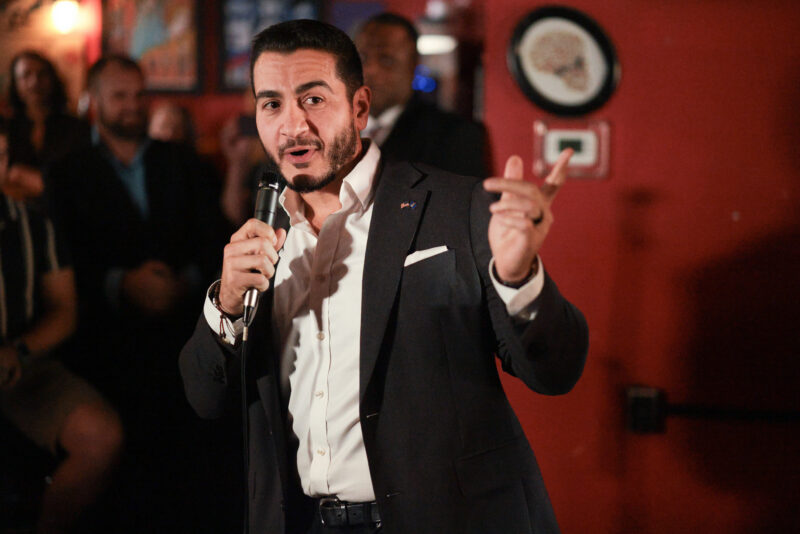
Michigan Attorney General Dana Nessel said that Democratic Senate candidate Abdul El-Sayed should “tone down his rhetoric” about Israel and AIPAC in order to help combat antisemitism within the party…
Two hundred Jewish community activists, rabbis, professionals and academics have signed a petition to the chairman of the Michigan Democratic Party, urging him to take security measures to protect Jewish delegates at the upcoming party convention; Nessel said last month that antisemitism in the state — and in the statewide Democratic Party — had gotten so bad that she will not attend the convention this month…
A national co-chair of the Democratic Socialists of America said last week that she would have attended an anti-Israel rally in Times Square one day after the Oct. 7, 2023, Hamas terror attacks had she been in New York City at the time, describing the terror group’s slaughter of more than 1,200 people across southern Israel as “inevitable,” JI’s Gabby Deutch reports…
A group of rabbis from several denominations urged New York City Mayor Zohran Mamdani on Monday to dial down his rhetoric on Israel, warning him about the impact it is having on the safety of the city’s Jews, during a private meeting at City Hall…
The family of journalist Cara Trager, who was killed in a hit-and-run crash in Queens by a driver who weeks earlier had vandalized a Jewish-owned bagel shop, is calling on elected officials to make greater efforts to address hate crimes…
Apple reached a $150,000 settlement with the Equal Employment Opportunity Commission over a complaint filed on behalf of a Jewish employee who said his request to take time off for Jewish holidays was denied and he was fired shortly after making the ask…
Former Australian Federal Treasurer Josh Frydenberg, who is Jewish, said he was not called to testify before the country’s royal commission into antisemitism, despite being a leader of the country’s Jewish community and a major advocate of the commission’s creation…
A Syrian court sentenced former President Bashar al-Assad and his brother Maher to death in absentia for war crimes and crimes against humanity; both men are living in Russia, where they fled as the Assad regime fell in late 2024…
Colombia’s Foreign Ministry announced Bogota’s recognition of Israeli sovereignty over the Golan Heights, days after conservative President Abelardo de la Espriella was sworn in; the announcement came shortly after a 7.4 magnitude earthquake shook the western part of the country, killing more than 100 people and prompting messages of condolences from Israeli officials…
On Sunday night, mental health nonprofit Ohel Children’s Home and Family Services, Inc. agreed to hand its winning bid for Camp Lavi in Lakewood, Pa., to the second-place bidder, ensuring that the Modern Orthodox camp would continue operating in its current format. But just before the tentative agreement was to be legally recognized on Monday morning, the second-place bidder said he would not offer his original bid, scuttling the deal and throwing the fate of the camp into limbo, eJewishPhilanthropy’s Jay Deitcher has learned…
Miriam Belsky has been appointed executive vice president of the TruBob Fund, a new national initiative supporting Jewish day schools established by philanthropists Trudy Elbaum Gottesman and Robert W. Gottesman…
Find on-demand Live Briefing updates throughout the day via our new app (on Apple and Android) and website.
Pic of the Day
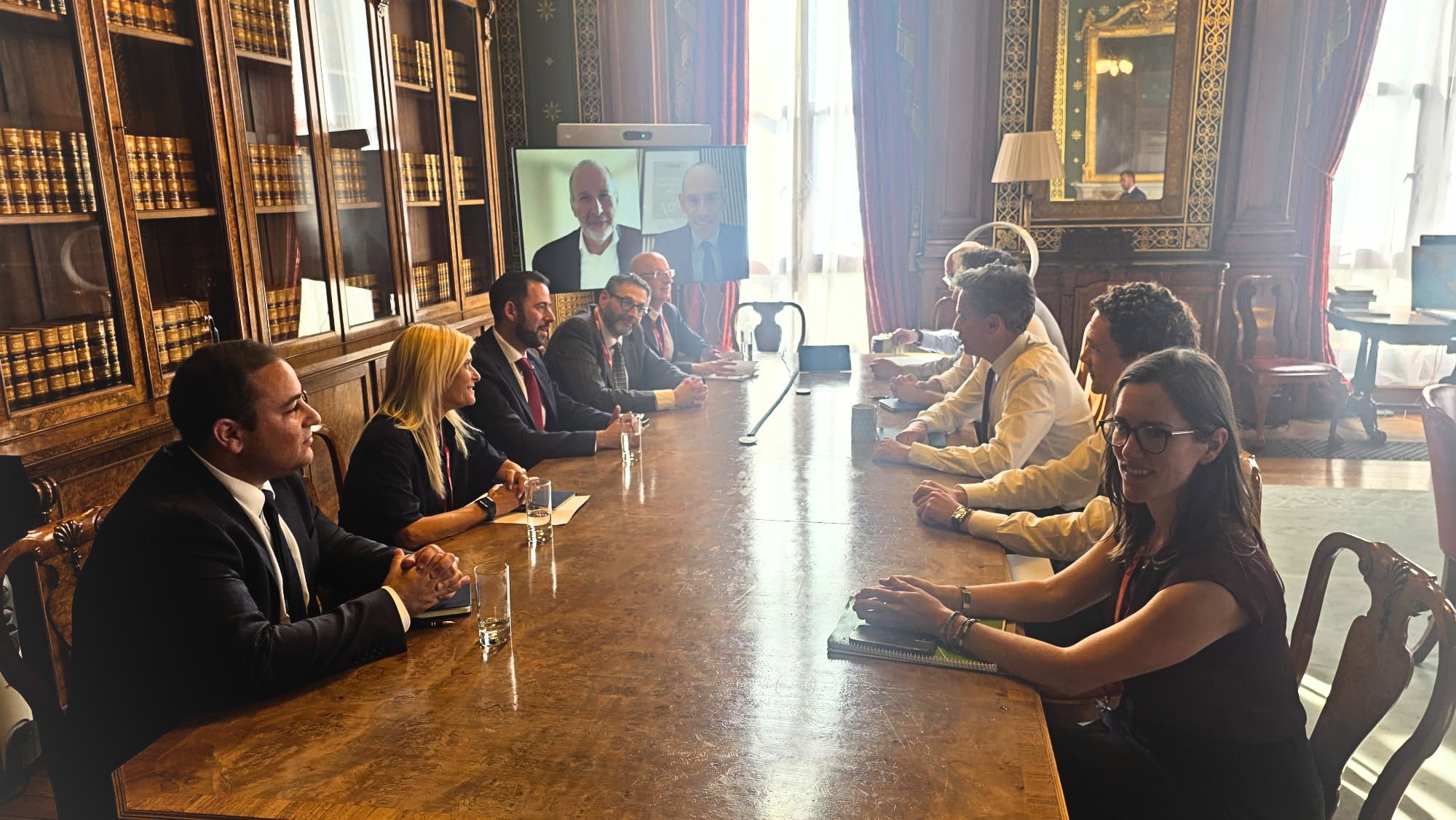
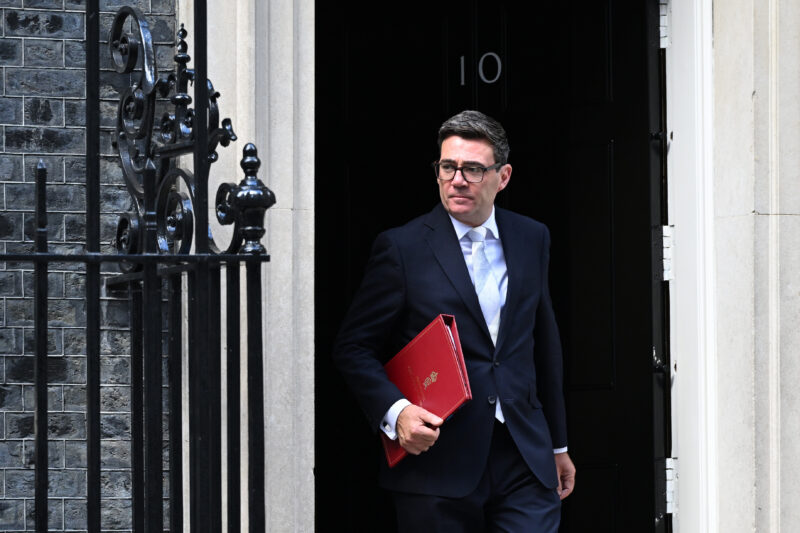
The U.K.’s Board of Deputies of British Jews and the Jewish Leadership Council met on Monday with Ed Miliband, who was appointed last month as foreign secretary under Prime Minister Andy Burnham.
Birthdays

Co-founder and CEO of Israeli interactive video firm Eko, Yoni Bloch turns 45…
Longtime Democratic Party activist in N.Y.’s Orange and Rockland counties, Doris Feder turns 94… Architect best known for the Holocaust Memorial in Berlin and the State Farm Stadium in Glendale, Ariz., Peter David Eisenman turns 94… Former member of the U.S. House of Representatives, she also served as Brooklyn DA and NYC comptroller, Elizabeth Holtzman turns 85… Principal of Investors Research Group based in Los Angeles, Jacob S. Segal… Former SVP for international affairs at the Jewish Federation of Los Angeles, Lois Weinsaft… Co-founder of The Carlyle Group, in 2024 he became the principal owner of MLB’s Baltimore Orioles, David Rubenstein turns 77… U.S. trade representative during the Clinton administration, she is chair of Parkside Global Advisors, Ambassador Charlene Barshefsky turns 76… Senior counsel for benefits and employment at the Wagner Law Group, Linda E. Rosenzweig… Lenore Solomon… Artistic director and choreographer of an eponymous dance company based in Union, N.J., Carolyn Dorfman… CEO, chairman and major shareholder of the Russian gas company Novatek, Leonid Mikhelson turns 71… Board member emeritus of AIPAC, Jeffrey Snyder… Former member of the Massachusetts Senate, he is the founder of Cape Air, Daniel A. “Dan” Wolf turns 69… Publisher of Yated Ne’eman, a weekly English-language Haredi newspaper and magazine based in New Jersey, Rabbi Pinchos Lipschutz turns 68… Israeli minister of regional cooperation, David “Dudi” Amsalem turns 66… Co-founder and partner of MizMaa Ventures and wine columnist for Jewish Insider, Isaac “Yitz” Applbaum… Chairman at Duty Free Americas, his family owns Israel’s Psagot Winery, Simon Falic… Former chief of the Shin Bet/Shabak, Nadav Argaman turns 66… Staff writer at The Atlantic, David Brooks turns 65… Host of “The Joe Rogan Experience,” Joe Rogan turns 59… Senior advisor at The Aspen Institute, Ilana Marcus Drimmer… Clarinetist who performs internationally as a soloist, Sharon Kam turns 55… MLB pitcher for seven teams, he has also been the pitching coach for Team Israel, Andrew Lorraine turns 54… NFL offensive lineman for four seasons, he is now the managing partner of Oakland, Calif.-based North Venture Partners, Alex Bernstein turns 51… Chief investment officer and CEO of Toronto-based investment firm Murchinson, Marc Bistricer… NFL punter for seven seasons with the Jaguars and Bears, he was then a financial advisor in the Jacksonville office of Merrill Lynch, Adam Podlesh turns 43… Reporter for Mishpacha Magazine, known as Turx, Avraham Yaakov Tarkieltaub turns 40… Ukrainian-born and San Francisco-raised journalist and copywriter, Yelena Shuster… Complex general surgical oncology fellow at the University of Texas MD Anderson Cancer Center, Sara Ginzberg, M.D…. Daniel Weitz…
The possibility of Minnesota Democrats nominating a true-blue progressive over a battle-tested moderate lawmaker, along with the likelihood suburban voters will reject a pragmatist for a left-wing candidate, may demonstrate how far left the party has swung
(Joshua Lott/Getty Images)
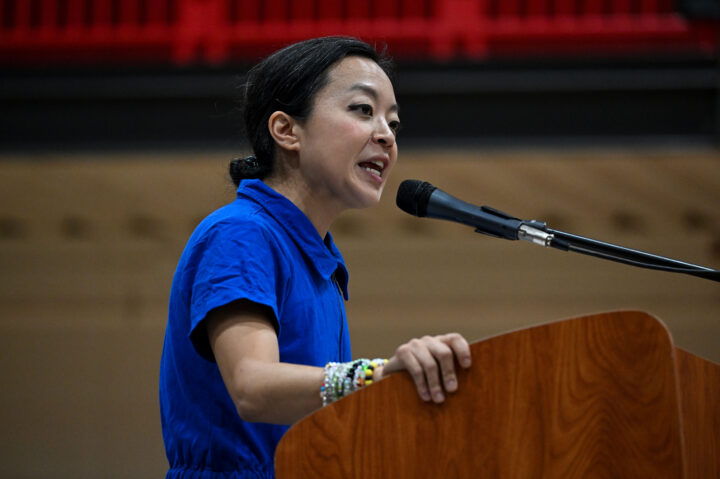
Wisconsin Democratic Gubernatorial candidate Francesca Hong speaks during a campaign rally on August 2, 2026 in Milwaukee, Wisconsin.
Today’s Democratic primaries in Connecticut, Minnesota, Vermont and Wisconsin won’t have the same shock value as previous contests that underscored the strength of the anti-establishment, anti-Israel forces within the party.
But the possibility of Minnesota Democrats nominating a true-blue progressive over a battle-tested moderate lawmaker as their Senate standard-bearer, along with the growing likelihood suburban voters will reject a pragmatist for a left-wing candidate, may well demonstrate just how far left the party has swung in the past year.
Add to that the likelihood that Democratic Socialists of America-aligned candidate Francesca Hong will emerge as the party’s gubernatorial nominee in Wisconsin — providing a spotlight for the socialist group’s governing philosophy in the biggest of battleground states — and the stakes remain awfully high for the Democratic Party tonight.
There’s also a fascinating contest in Connecticut, where Rep. John Larson (D-CT), a former member of House leadership, is facing a real threat from former Hartford Mayor Luke Bronin. The primary isn’t as neatly driven by ideological differences as it is along generational lines (Larson is 78, Bronin 47), but Larson has been a reliable supporter of Israel during his congressional career, while Bronin has tacked to his left on the issue during the campaign.
It’s very possible that the left wing of the party ends up with a clean, four-race sweep in these contests. If that’s the case, there’s no doubt that the winds of change are whipping furiously within the Democratic caucus.
The Minnesota and Wisconsin contests are expected to be competitive in the November general election, especially if Democrats end up nominating progressive slates of candidates. Privately, Democrats in the Badger State are worried that Hong is so unprepared for the national spotlight that the party could end up writing off the key contest against Rep. Tom Tiffany (R-WI), the expected GOP nominee.
And in Minnesota, Republicans are enthused about the candidacy of former NBC Sports sideline reporter Michele Tafoya, who has the party’s backing in a contested primary for the Senate seat. But Democrats, even if Lt. Gov. Peggy Flanagan emerges as the nominee, would start out in the liberal-minded state with the advantage.
In Minnesota’s suburban 2nd District, which leans Democratic but was long held by Republicans before Rep. Angie Craig’s (D-MN) victory in 2018, state Sen. Eric Pratt is running unopposed for the GOP nomination. He’ll also start out as an underdog, but against a progressive challenger, he’ll have a fighting chance to portray himself as closer to the district’s mainstream.
On the Republican side, Tuesday also will feature a hastily scheduled special election primary in South Carolina for the seat of the late Sen. Lindsey Graham (R-SC). The race will be a test of whether voters trust President Donald Trump’s endorsement of the late senator’s sister and want to keep the Senate seat within the Graham family, or turn to a conservative lawmaker with more legislative experience in either Reps. Ralph Norman (R-SC) or Russell Fry (R-SC).
Sen. Darline Graham (R-SC), who was appointed after her brother’s death, holds a narrow lead in most public polls, but Norman and Fry are close behind her. The race is likely headed to a runoff, with the top two finishers squaring off later this month.
Rep. John Larson, a Democrat, supports continued U.S. aid to Israel, while former Hartford Mayor Luke Bronin has said he would not back further offensive aid but does support Iron Dome
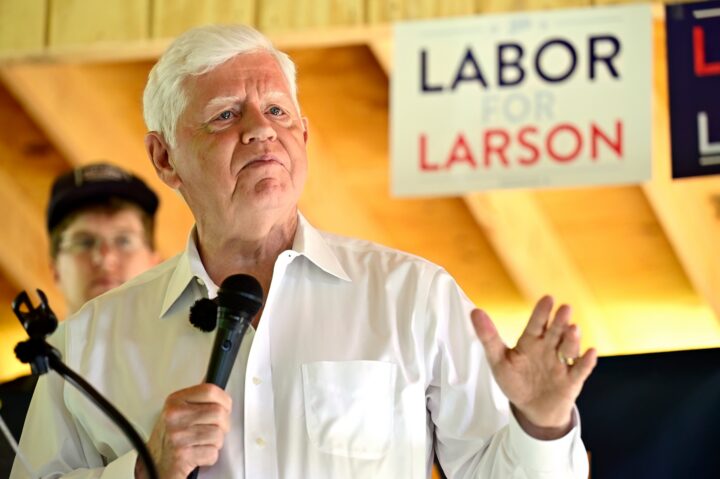
Jessica Hill/AP
U.S. Rep. John Larson D-Conn., attends a campaign event, Saturday, July 25, 2026, in Bristol, Conn.
Longtime Rep. John Larson (D-CT) is facing a serious challenge to his political survival from former Hartford, Conn., Mayor Luke Bronin, the latest in a wave of challengers to make the argument for generational change in the House of Representatives. Larson, 78, has held his House seat since 1999.
Despite their age gap — Bronin is 47 — the two are generally ideologically aligned and were once allies, though Larson has been trying to outflank Bronin from his left, pointing to support the former Hartford mayor has received from wealthy backers. The race has also split local Democrats: Sen. Chris Murphy (D-CT) is defending and recorded an advertisement for Larson, but Bronin won the Connecticut Democratic Party’s endorsement in a party convention, a major upset.
Bronin has argued that the current political environment requires more active and energetic representation. Larson has emphasized his record and experience in office and has had to campaign more aggressively than in decades, according to local reporters.
Larson was among the House Democrats who voted last month against an amendment to cut off all U.S. aid to Israel, and is endorsed by AIPAC. At the same time, he’s been critical of the human rights situation in Gaza and opposed the Iran war. The district is home to the largest concentration of Jews in the state, largely in the Hartford area.
“Yes, I voted in favor of making sure that Israel, our ally, is going to get the aid from the United States that it needs. But the Palestinians need humanitarian aid, and [President] Donald Trump has got to enforce the law,” Larson said of the amendment vote in a recent debate. He urged the administration to enforce the terms of the ceasefire deal between Israel and Hamas, including to ensure that Israel is providing sufficient humanitarian aid to the Palestinians.
Bronin criticized Larson for his vote, adding that if elected, he would not support any further offensive aid to Israel, though he said he supports defensive systems that protect civilians such as the Iron Dome.
“Trusting Donald Trump to do the right thing is a mind-blowing example of putting hope over all of the evidence in front of us,” Bronin said during the debate. “We have a president who is empowering an extremist Netanyahu regime that sees war as the answer to everything — most of all Netanyahu’s political interests.”
Bronin led Larson by eight points in a May poll that was sponsored by a group backing Bronin. The challenger has also received a boost from outside spending. VoteVets has spent $1 million boosting Bronin, with other groups also intervening in support of him, allowing him to dominate the airways, according to the Cook Political Report. Other groups have come in to support Larson, but are spending less on the race.
Bronin also holds an edge in fundraising — atypical for a challenger against a veteran incumbent — bringing in $3 million during the campaign cycle to Larson’s $2.7 million as of late July.
Both Democrats described the war in Iran as illegal and said they opposed it during the debate.
Bronin also emphasized his work in the Obama administration as assistant secretary of the treasury for terrorist financing and financial crimes. He said he had traveled globally to rally support for Iran sanctions that ultimately yielded the Obama-era Iran nuclear deal “that would have kept us safer if Donald Trump had not ripped it up.”
A spokesperson for Murphy said the senator's social media post was 'sarcasm'

Jemal Countess/Getty Images for Fair Share America
Sen. Chris Murphy (D-CT) speaks at the U.S. Capitol on April 10, 2025 in Washington, DC.
Sen. Chris Murphy (D-CT) on Monday appeared to cheer on the reported evasion by more than two dozen Iranian ships of the U.S. maritime blockade of the Strait of Hormuz.
The Connecticut Democrat, one of the most vocal critics of Israel in the Senate, responded on X with a one-word comment — “awesome” — to an unconfirmed report that at least 26 vessels belonging to the shadow fleet, which is overseen by the Islamic Revolutionary Guard Corps, had bypassed the blockade.
A spokesperson for Murphy clarified to Jewish Insider, “The tweet was sarcasm. Chris obviously thinks it’s terrible that Donald Trump continues to mishandle every aspect of a war he started but clearly has no strategy to end.”
Over the weekend, Murphy appeared at the Alex Soros-backed Global Progressive Summit in Barcelona, where he claimed that the U.S. was “in the middle of” a “totalitarian takeover.”
This post was updated at 9:25 a.m. ET on 4/21/2026 to add comment from Murphy’s office.
The Democratic senator — and Joe Lieberman successor — has grown increasingly antagonistic toward Israel and now says he welcomes out-of-the mainstream voices into the Democratic party
Jemal Countess/Getty Images for Fair Share America
Sen. Chris Murphy (D-CT) speaks at the U.S. Capitol on April 10, 2025 in Washington, DC.
When Sen. Chris Murphy (D-CT) walked up to the microphone at the “Rally for Israel” in West Hartford, Conn., two days after the Oct. 7, 2023, Hamas terror attacks, sporting a well-worn UConn baseball hat and a quarter-zip sweatshirt, the first thing he did was apologize for his attire. He was in the middle of his annual walk across the entire state of Connecticut, sporting the same sneakers he has worn each year since 2016.
He said he almost canceled the remainder of the walk after the attacks in Israel.
“But then I thought to myself, what better way to spend my week than traveling from one end of the state to the next to explain to the people of this state why it is so important for this state, the people of this state, to stand up and speak with one voice that we stand in support of Israel?” Murphy asked, receiving loud applause from the crowd gathered outside West Hartford City Hall. The Hartford metro area boasts the largest Jewish community in the state.
Murphy spoke emotionally about the “unspeakable” videos and images that were emerging from Israel. “This is a moment where we are going to have to stand as a nation with greater force, with greater purpose than ever, to make sure that Israel has what it needs,” Murphy said.
But members of Connecticut’s Jewish community say Murphy strayed from that promise just weeks after Hamas launched the deadliest terror attack in Israel’s history. In late November 2023, Murphy said on CNN that he was open to placing conditions on U.S. aid to Israel, a position that astounded many of the people who had stood with him in West Hartford not long before. Since then, he has emerged as a vocal critic of Israel’s handling of the war in Gaza.
“Unlike the unwavering support for Israel shown by President [Joe] Biden and the Democratic leadership in the Senate, your tune has changed in recent weeks,” Rabbi Tuvia Brander, the spiritual leader of Young Israel of West Hartford, wrote in an open letter responding to Murphy, published in the Jewish Link, a local Jewish news outlet. “As a voter and your constituent, I hope you will do better; Israel deserves better, America deserves better, we deserve better!”
Now, more than 18 months after the attack and Murphy’s pledge to stand by Israel, the Connecticut Jewish community’s frustration with Murphy has only grown.
The Connecticut senator voted twice in support of resolutions put forward by Sen. Bernie Sanders (I-VT) that would block certain arms sales to Israel. Following Israel’s strikes on Iranian nuclear facilities, Murphy slammed Israeli Prime Minister Benjamin Netanyahu for sending the Middle East into a “new, deadly conflict,” arguing that the U.S. has “no obligation to follow Israel into a war we did not ask for and will make us less safe.”
His shift to the party’s left flank on Israel comes as Murphy positions himself as a leading voice in the Democratic Party in opposition to President Donald Trump’s policies and builds a stronger public profile for himself. He’s a regular on cable news shows and recently created a new political action committee to encourage protests against Trump, with plans to spend $2 million in the 2026 midterms, sparking rumors that he could mount a presidential bid in 2028.
It’s not just Murphy’s foreign policy views that are concerning his Jewish constituents. Recently, the senator has emerged as one of the most prominent boosters of presumptive New York City Democratic mayoral nominee Zohran Mamdani, even as some of his Democratic colleagues have raised concerns about Mamdani’s refusal to condemn the phrase “globalize the intifada.”
Murphy went on national television on Sunday and announced he was endorsing Mamdani, while saying it might be necessary to include outside-the-mainstream views within the Democratic Party.
“He was authentic, right? I mean, yes, he’s got some views that are a little bit out of the conventional mainstream. But you know what? The traditional political pundits have no idea what’s actually mainstream in this country … And so Democrats should learn from his victory,” Murphy said on “Meet the Press.”
Brander told Jewish Insider that Murphy’s praise of Mamdani is “so beyond the pale of what is just in the basic interests of many of his constituents.”
“He really seems to be trying to position himself within the progressive wing of the Democratic Party,” said Leslie Loew, an emeritus professor at the University of Connecticut’s cell biology department. “He’s been saying things and doing things that people who are supportive of Israel and are sympathetic to Israel’s plight are kind of disturbed at.”
Murphy, a member of the Senate Foreign Relations Committee, views foreign policy as a key issue of national concern, and one where he has decided to be outspoken. His official website touts his efforts to chart a “forward-thinking foreign policy vision” for the United States, describing himself as an “outspoken proponent of diplomacy, international human rights and the need for clear-eyed American leadership abroad.”
Some in the Jewish community — including many who have supported him in the past, particularly around gun control, the issue that first brought him national attention — are left watching all of this warily. (Murphy became a vocal advocate for gun violence prevention after the Sandy Hook Elementary School shooting in 2012, when he represented Newtown in the House of Representatives.)
“He really seems to be trying to position himself within the progressive wing of the Democratic Party,” said Leslie Loew, an emeritus professor at the University of Connecticut’s cell biology department. “He’s been saying things and doing things that people who are supportive of Israel and are sympathetic to Israel’s plight are kind of disturbed at.”
Loew, a Democrat, voted for Murphy in his first two Senate elections. But last year, when Murphy was on the ballot, Loew opted not to vote in the Senate race.
Murphy defeated Republican challenger Matthew Corey by nearly 20 points. He does not face any serious political opposition in solidly blue Connecticut.
“There’s really no challenging him in terms of state politics. He can have his Senate seat as long as he wants it,” said Scott McLean, a political science professor at Connecticut’s Quinnipiac University, who also called Murphy “one of the most visible voices challenging the [Trump] administration on a whole variety of issues.”
One of those issues is Iran, and, more broadly, Trump’s foreign policy in the Middle East. Murphy had also taken aim at Trump for bombing three nuclear sites in Iran, saying that Trump was “goaded into these strikes by the perpetual cheerleaders of war in the Middle East,” and called the actions “illegal” while warning that “countless Americans” could die as a result.
Last week, a senior foreign policy advisor in Murphy’s office met virtually with Loew and Ari Schaffer, who founded an Israel advocacy group called Greater Hartford for Israel, over concerns about Murphy’s approach to Iran. Loew and Schaffer have been organizing weekly pro-Israel marches in West Hartford since Oct. 7.
Murphy’s staffer “insisted that he is fully supportive of Israel,” Loew said after last week’s meeting. “I actually believe her. I think that in his mind, he believes in Israel’s right to exist, but he doesn’t project that when he criticizes Israel. He criticizes Israel at every opportunity, and obviously very unfairly in many cases.”
Murphy told JI in a statement Monday that he “will always be a strong friend of the Israeli people and support Israel’s right to defend itself, especially after the horrors of October 7th but also against the threats posed by Iran and its proxies.”
In April, on the morning of the Senate vote on the Sanders-sponsored resolutions on cutting arms sales to Israel, Murphy spoke with a group of leaders from Jewish federations throughout Connecticut, according to a person with knowledge of the meeting. He listened to their arguments, but he was still one of 15 Democratic senators to vote in favor of the resolutions.
Stephen Davis, a Harvard Law School professor who lives in Connecticut, defended Murphy, despite his distance from the Jewish communal establishment. “Senator Murphy is as pro-Israel as they come. But that doesn’t mean backing everything the current Israeli government does,” said Davis, the chair of J Street’s Connecticut chapter.
Murphy told JI in a statement Monday that he “will always be a strong friend of the Israeli people and support Israel’s right to defend itself, especially after the horrors of October 7th but also against the threats posed by Iran and its proxies.”
He argues that the change is not his attitude toward Israel, but Israel’s actions in Gaza and the shifting geopolitical reality in the Middle East. “I have consistently supported sending Israel the military aid it needs to decimate Hamas’ military capabilities and eliminate Hamas leadership,” said Murphy, adding that he believes “those aims have been achieved, and the government should prioritize a cease-fire deal that brings home all of the hostages.”
“Sen. Chris Murphy has been a critical voice in the fight against antisemitism and extremism. At a time when Jewish communities face historic threats, he has renewed his commitment to strengthening and growing the Nonprofit Security Grant Program,” said Stacey Sobel, the Anti-Defamation League’s Connecticut director, adding that the ADL will continue “working through any differences to advance our shared goals.”
“My vote on the recent JRDs reflects my serious frustration with how Prime Minister Netanyahu has prosecuted this war, which has led to the deaths of more than 50,000 Palestinians and pushed Gaza to the brink of famine,” Murphy said, referring to the Sanders-authored resolutions.
Despite mounting frustration over Murphy’s approach to Israel, Jewish leaders have found common cause with the senator on their requests to increase federal funding for vital security aid for nonprofits. Murphy, a member of the Senate Appropriations Committee, plays an important role on that issue, and has advocated for additional funding for the Nonprofit Security Grant Program.
“Sen. Chris Murphy has been a critical voice in the fight against antisemitism and extremism. At a time when Jewish communities face historic threats, he has renewed his commitment to strengthening and growing the Nonprofit Security Grant Program,” said Stacey Sobel, the Anti-Defamation League’s Connecticut director, adding that the ADL will continue “working through any differences to advance our shared goals.”
Still, despite the areas of collaboration, some of Murphy’s Jewish constituents view his approach to Israel as a betrayal — and a cause for concern as he ascends within the Democratic Party.
“A lot of people are worried what it means for the future of the Jewish community and the safety of the Jewish community, for our relationship with the State of Israel, if he’s the kind of person who’s going to be the standard bearer for the Democratic Party going forward,” Schaffer, who is a registered Republican, said.
The pro-Israel marches that Schaffer has organized since Oct. 7 have drawn several Connecticut lawmakers, including Sen. Richard Blumenthal (D-CT) and Rep. John Larson (D-CT). Despite regular invitations, Murphy has yet to attend one of the weekly pro-Israel events.
Please log in if you already have a subscription, or subscribe to access the latest updates.
 Continue with Google

 Continue with Apple