










































































Is the rise of socialism primarily a product of urban angst and college-age naivete, or does it have staying power beyond the most-progressive precincts in the country?
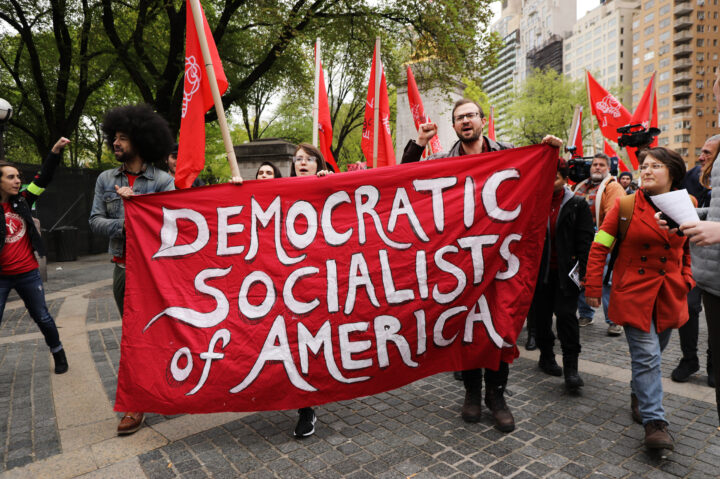
Spencer Platt/Getty Images
Members of the Democratic Socialists of America May 01, 2019 in New York City.


 Add JewishInsider on Google
There’s little doubt that socialism is on the march within the Democratic Party after the latest primaries, with extreme candidates who would have been dismissed as nonviable prevailing in numerous congressional primaries and mayoral contests from coast to coast.
Factor in the political resilience of far-left Maine Senate nominee Graham Platner despite numerous scandals and the momentum of anti-Israel Senate candidate Abdul El-Sayed in a contested Michigan primary despite facing well-funded opposition, and there’s the potential of radicals toppling mainstream candidates well outside the deep-blue confines of major urban centers.
Ultimately, that’s a major question looming for the Democratic Party’s future — and the health of our democracy. Is the rise of socialism primarily a product of urban angst and college-age naivete, or does it have staying power beyond the most-progressive precincts in the country? Can left-wing candidates prevail in swing districts, far away from the urban progressive centers that make up its base? Or will they end up being more of a noisy but powerless faction in Congress?
Either way, socialist candidates have gone from a curiosity that rarely won any congressional seats to riding a Democratic Socialists of America-organized grassroots wave that now has to be reckoned with. You could count the number of Squad members on one hand when Rep. Alexandria Ocasio Cortez (D-NY) and her like-minded allies were first elected in 2018 and 2020. Now their representation is poised to double from its previous peak — and AOC now counts as downright pragmatic, compared to several of her soon-to-be-colleagues.
So far, nearly all of the major victories from the far-left candidates are in the most left-wing constituencies in the country — in big cities and college towns. We first saw the socialist stirrings last year in three prominent mayoral races: New York City, Seattle and St. Paul, Minn., and flagged the three contests as an early bellwether of socialism’s standing in the party. The socialist candidates won two out of three contests, led by New York City Mayor Zohran Mamdani’s shocking success against far more established and mainstream Democratic Party leaders.
Mamdani’s out-of-nowhere victory fueled the rise of like-minded anti-Israel, DSA-aligned candidates, proving that radical records weren’t necessarily an obstacle to success in Democratic primaries. The DSA-endorsed Chris Rabb’s primary victory in a Philadelphia congressional district in May was at the leading edge of how far-left candidates were making inroads with Black voters who have typically been skeptical of ideologically driven campaigns.
Even more shocking was the nomination of Adam Hamawy in a largely urban New Jersey district with a large Jewish population. Hamawy was a former associate of the Blind Sheikh, Omar Abdel-Rahman, and previously held ties with Islamist extremist groups. Not only did he prevail with a plurality in the crowded race, but many of his Democratic opponents didn’t bring up his obvious vulnerabilities.
The commanding victory of Janeese Lewis George, a socialist candidate in the D.C. mayoral primary, and Mamdani’s ouster of two well-respected New York City Democratic leaders in Congress (Reps. Dan Goldman and Adriano Espaillat) — in no small part over their support for Israel — was the capstone to the tidal wave occurring in Democratic Party, at least in the urban centers that make up its geographical base.
It’s also worth noting that while more-competitive districts have tended to nominate traditional center-left Democratic candidates, there have been some notable outliers that underscore the rising tide of radicals within the party. Democratic Party leaders had to furiously organize to stop an outright antisemitic candidate, Maureen Galindo, who broadcast deeply disturbing conspiracy theories about Jews, to prevail in a battleground Texas district.
And in New Jersey, partly as an unintended result of AIPAC spending against a more-traditional front-runner, a Bernie Sanders acolyte and left-wing activist (Rep. Analilia Mejia) prevailed in the heart of the state’s wealthy suburbs. Hamawy’s New Jersey district, too, contained many affluent suburban pockets that nonetheless swung in his direction.
These are the signals that raise the possibility that far-left Democratic candidates, like Platner and El-Sayed, can prevail in larger, more ideologically diverse battlegrounds. If neo-Nazi tattoos, anti-American sloganeering and antisemitic signaling doesn’t move the needle for a critical mass of Democratic voters, it’s fair to wonder how much damage they will cause in a general election.
In all too many of these races featuring extreme anti-Israel candidates, Jewish voters — left without any moderate allies — were the only Democratic constituency who swung away from backing the radical Democratic nominee. Mamdani got record-low support from Jewish voters, but it didn’t matter. Mejia badly underperformed her moderate Republican challenger in Jewish communities, but it barely made a dent in a Democratic-friendly district.
So, the Michigan Democratic Senate primary in August — featuring Israel-bashing Democrat El-Sayed and Rep. Haley Stevens (D-MI), a long-standing ally to the Jewish community — is ultimately the more consequential test of whether this unapologetic brand of socialism can find political purchase outside its home turf.
If it does — and if Platner prevails in Maine despite his significant baggage — it will serve as a five-alarm fire for American Jews and their place in American society.
‘That’s not where America is, that only happens in certain parts — like New York City now, apparently — deep, deep, deep blue,’ Meeks said
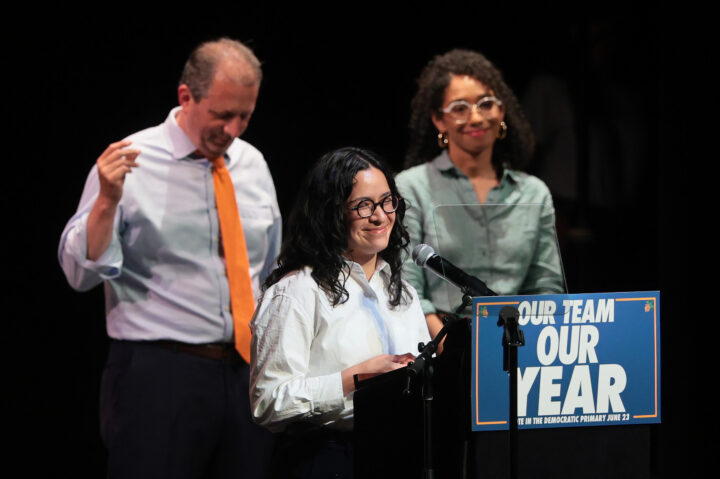
Michael M. Santiago/Getty Images
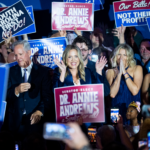
Congressional candidate Claire Valdez speaks during a Get Out the Vote (GOTV) rally at Kings Theater on June 18, 2026 in New York City.
Some moderate and establishment Democrats are raising alarms over the surge of democratic socialists in New York City congressional primaries on Tuesday — which took down two Democratic incumbents. But others are dismissing the phenomenon as one localized to New York City and not applicable to the party at large.
Rep. Greg Meeks (D-NY), a longtime Democratic leader from Queens, lamented Tuesday’s results, particularly Rep. Adriano Espaillat’s (D-NY) loss.
Meeks told reporters that the party as a whole is not a socialist party, and that socialist ideas are very much out of step with the country overall. He said he doesn’t see the party headed in that direction, potentially outside of certain cities.
“That’s not where America is, that only happens in certain parts — like New York City now, apparently — deep, deep, deep blue,” Meeks said. If the entire party follows the same path, “that means that all the other seats that are not [deep blue], we can never win, which means we will never be in the majority, and we [will] never get anything done.”
Meeks told reporters that he believes in capitalism, not socialism, but argued that free markets and opportunities are fully compatible with assistance to help uplift those in need.
He criticized chants of “you’re next” targeting House Minority Leader Hakeem Jeffries (D-NY) at candidate Claire Valdez’s victory party on Tuesday night as unproductive, and noted that ousting Jeffries would deprive New York of a potential speaker of the House, who would also be the first Black House speaker in history.
Meeks said he hopes that the far left doesn’t become a Democratic version of the GOP’s House Freedom Caucus, which routinely sparks gridlock on the House floor with various obstructionist tactics.
“You can’t criticize the MAGAs and then be like the MAGAs, that’s inconsistent,” Meeks said. “That’s why we have the most unproductive Congress right now. … We shouldn’t be that, we want to be the opposite of that. We want to be productive, we want to be able to go help folks.”
Meeks noted that Black and Hispanic communities in Espaillat’s district overwhelmingly sided with the congressman — with newcomers more supportive of his challenger, Darializa Avila Chevalier.
“I understand that neighborhoods don’t always stay the same … but we got to look at the people that have been there for a long period of time, also, so that they are not just pushed to the side. And how do you work collectively together to bring folks together?” Meeks said.
Pressed on whether some of the candidates’ past statements suggest they want to eliminate Israel, rather than see coexistence and a two-state solution, Meeks told Jewish Insider that “we’ll see when they get there” but “if you go by what they’ve said in the past, that would worry me if they stay [there].”
Rep. Tom Suozzi (D-NY), a leading moderate, told JI, “The results in New York City should be a wake-up call for every common-sense Democrat,” arguing that mainstream Democrats are being caught flat-footed by the far left. He called for the party to “reject extremism and embrace common sense.”
“The DSA is not the Democratic Party, and if moderates don’t organize, the far left will continue pushing our party toward an agenda that is increasingly disconnected from mainstream voters,” Suozzi, a co-chair of the House Problem Solvers Caucus, said. “Americans want leaders who solve problems and bring people together. They also expect Democrats to confront antisemitism clearly and unequivocally.”
He told reporters that Democratic moderates have to “work harder to organize. It’s not enough to just talk at a cocktail party” and complain, they need to “do the hard work necessary to provide solutions to the problems people face in their lives.”
Suozzi told JI that Democrats “should be able to support Israel’s right to exist and defend itself and still work toward a lasting peace that protects innocent lives” and “cannot allow those who excuse antisemitism, tolerate anti-Jewish hatred or traffic in division to define our party.”
Rep. Josh Gottheimer (D-NJ) said that the night was a victory for those who “hate America and hate the U.S.-Israel policy.
“This was a night where bomb throwers won, and problem solvers lost,” Gottheimer said. “Those who believe deeply in supporting the U.S.-Israel relationship, but beyond that, believe deeply in fighting antisemitism — your candidates didn’t win.”
Sen. John Fetterman (D-PA) called the winning NYC candidates “a treasure for Republicans,” referencing some past incendiary comments by Chevalier.
Meanwhile, multiple Democrats facing DSA-aligned challengers say they’re not concerned that the results are an omen for their own races.
Asked whether he’s worried about his primary challenge from state Sen. Julie Gonzales, a former DSA member who dominated internal Democratic Party proceedings, Sen. John Hickenlooper (D-CO) laughed and said simply, “No.”
Rep. Wesley Bell (D-MO), who is facing off next month against former Rep. Cori Bush (D-MO), also said he doesn’t see how Tuesday’s results are applicable to his own race.
“Why would primaries in New York concern me in my race?” Bell told JI. “All politics are local and our base, the folks in St. Louis, are going to make and we’re going to make our case — democracy in action.”
Rep. Jared Moskowitz (D-FL) told JI “they’re making blue seats bluer” and are “not helping us take control of Congress,” but also said that the DSA is “uniquely a New York problem” that doesn’t impact him in Florida. Moskowitz faces a primary challenge from DSA-endorsed challenger.
At the same time, Moskowitz described anti-Israel trends as a larger problem within the Democratic Party.
“I’m concerned about the entire movement, [through]out the whole party,” Moskowitz said. “It’s not just what happened in New York last night.”
Senate Minority Leader Chuck Schumer (D-NY) said that the primaries show that the party as a whole is energized.
“There’s tremendous energy in the Democratic Party in the more moderate places, like we saw in the governorships of New Jersey and Virginia, like Iowa this year, and from the more progressive places like New York, and we’re all fighting hard together to stop [President Donald] Trump,” Schumer said.
Rep. Pete Aguilar (D-CA), the No. 3 House Democrat, said he’s “not at all concerned” about the growing socialist bloc employing similar tactics to the Freedom Caucus, and downplayed the idea that radical nominees would be a drag on other Democrats in the midterms.
“They’re going to put folks in ads all the time,” he said, referring to concerns that Republicans will highlight far-left Democrats to defeat other members of the party. “Republicans don’t have a track record to run on, so they’re going to use other issues. We’ve seen that time and time again.”
Rep. Jamie Raskin (D-MD) said that you “never want to read too much into what’s essentially a local or regional political context.”
He said that he sees the results as an “indisputable” sign of Mayor Zohran Mamdani’s role as “the commanding political force” in the New York City area, and added that “there’s a lot of energy on the progressive side of the political equation in America today. That also seems pretty clear.”
Asked about the role Israel had played in the races, particularly the race between Goldman and Brad Lander, where there were few other obvious policy differences between the two candidates, Raskin noted that both Goldman and Lander “described themselves as liberal Zionists.”
He said that Israeli Prime Minister Benjamin Netanyahu is obviously unpopular in the Democratic Party, and argued that there are many in the party who strongly support Israel but reject Netanyahu, “and that sentiment undoubtedly carried the day.”
“It’s a loss to us on the Judiciary Committee to have Dan Goldman go because he was such an excellent prosecutor and he’s a great cross-examiner of administration witnesses and agendas,” Raskin continued. “But that race undoubtedly turned on questions of the Middle East.”
Sen. Ruben Gallego (D-AZ), a potential 2028 presidential contender, also said the results aren’t a reflection of the whole country or party.
“All politics is local,” Gallego said. “I think that’s what you … see right there. The candidates who ran very localized campaigns, that helped them [win].”
Gallego added that the results show the party is a “big tent, and that’s kind of coming through right now.”
“Every state is different, every place is different, every candidate’s going to be different,” he said.
Sen. Gary Peters (D-MI), who chaired the Democratic Senatorial Campaign Committee for two cycles, said that the results reflect the voter base in New York City.
“Those are really deep blue districts, so you expect that kind of vote in a Democratic primary,” Peters said.
Sen. Raphael Warnock (D-GA) also emphasized that his state is distinct from deep-blue New York City and said, “I think pundits are doing what pundits are doing. The takeaway from last night is that the Democratic Party is a big tent, and we’re having a robust conversation about how to make the lives of ordinary people better.”
Sen. Dick Durbin (D-IL), the outgoing No. 2 Senate Democrat, said he doesn’t know much about the races beyond that Mamdani-backed candidates won. He said he wasn’t aware of the fact that the candidates all shared an anti-Israel approach but called it “worrisome.”
Sen. Tim Kaine (D-VA) said he hadn’t followed the races closely enough to understand the outcomes, but said, “I am a Virginia elected official, and Virginia is what I know really well. I just don’t know enough about New York politics — and I think it would be not a good idea to extrapolate New York City to a national level.”
Meanwhile, members of the far left are treating the results as a mandate for the Democratic Party and a signal of rising popularity for their chosen policies.
“Last night, voters across New York delivered a powerful message: the era of status quo politics is over,” Sen. Bernie Sanders (I-VT) said. “If Democrats regain control of Congress next year, they must listen to the people who put them in office. Status quo establishment policies are not enough. We must be bold. We must take on Oligarchy. We must represent working families and create a government that works for all, not just the few.”
He also called the victories a rebuke of AIPAC, the cryptocurrency and artificial intelligence industries and other moneyed interests.
Rep. Ro Khanna (D-CA) said the results on Tuesday were “the beginning of a new, strong, bold Democratic Party” and pointed to other progressive victories outside of New York City.
Brad Lander, Claire Valdez, and Darializa Avila Chevalier are all demonizing the Jewish state in the runup to Tuesday’s primary
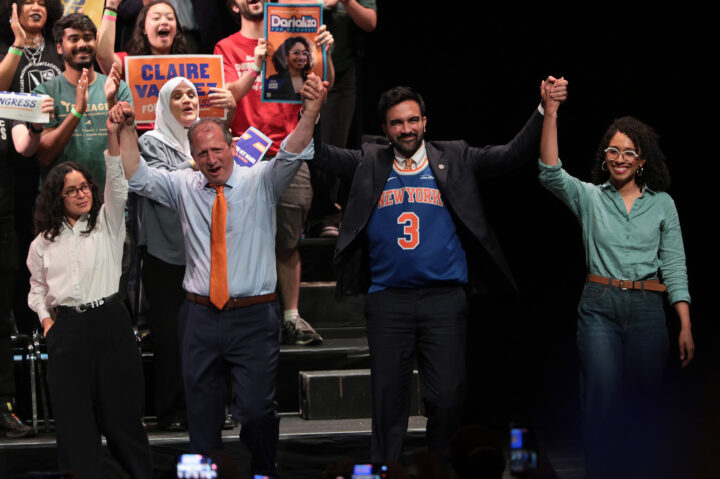
Michael M. Santiago/Getty Images
Congressional candidates Claire Valdez, Brad Lander and Darializa Avila Chevalier with Mayor Zohran Mamdani at King's Theater on June 18, 2026 in New York City.
The battle for three Democratic congressional primaries in New York City has been defined by a conflict more than 5,000 miles away, with candidates spending the final days before Tuesday’s primary echoing the fiercely anti-Israel rhetoric that helped elevate Mayor Zohran Mamdani to power.
All three of the mayor’s favored contenders for the House — former City Comptroller Brad Lander, Assemblymember Claire Valdez and doctoral student Darializa Avila Chevalier — underscored their criticism of Israel and its U.S. supporters as early voting began in the contested districts.
Avila Chevalier took time in a televised debate on Tuesday to accuse the country of “apartheid” while seeming to compare the actions of Jewish settlers in the West Bank and the IDF in the Gaza Strip to gentrification in the district where she hopes to unseat Rep. Adriano Espaillat (D-NY) and other majority-minority areas.
“I saw so many connections between what was happening to Palestinians there in Palestine and what was happening to so many communities across the U.S., particularly Black and Latino communities, who have been priced out and pushed out of our homes,” said Avila Chevalier, who — like most candidates affiliated with the Democratic Socialists of America — draws her strongest support from predominantly white and highly educated residents of the district.
“When we talk about displacement in the West Bank and Gaza, it is a very similar, visually similar situation, where people who have been in a place for generations, are being displaced because of corporate interests, because of folks who are coming in, claiming the land over, and buying it up and kicking the people who live there out.”
Avila Chevalier, who has come under fire for attending an anti-Israel demonstration one day after the Oct. 7 attacks, added during the debate that the “very institutions” involved in both the Holy Land and urban America are the same.
Valdez, vying against Brooklyn Borough President Antonio Reynoso for the seat of retiring Rep. Nydia Velazquez (D-NY), has similarly brought Middle Eastern issues into the race for the district spanning parts of Brooklyn and Queens. As a new PAC, Real Fight NYC, began spending hundreds of thousands on ads attacking her record and boosting that of her opponent, the sculptor-turned-socialist lawmaker inaccurately suggested pro-Israel interests were behind the effort.
“Is it actually AIPAC?” Valdez speculated in a thread on X. “This is a well-established pattern from AIPAC and its affiliates, especially when there’s only one candidate who’s been clear and consistent against the genocide.”
Reynoso in fact has been a fierce critic of Israeli policy during the race, and the American Federation of Teachers subsequently identified itself as the main sponsor of the ad campaign. Valdez has neither apologized for nor retracted her remarks.
Even former City Comptroller Brad Lander, the lone self-described progressive Zionist among the mayor’s endorsees, spent his final TV face-off against Rep. Dan Goldman (D-NY) on Monday criticizing the incumbent for his past support for aid packages to Israel and his refusal to call the military campaign in the Gaza Strip “a genocide.” The day before, Lander held a rally with Mamdani and a bevy of left-wing Jewish and Muslim activist groups, which he took as another occasion to condemn Israel.
“We’re united around a belief that a better world is possible — one in which we don’t compromise on anyone’s humanity. One in which we are not complicit in occupation and genocide,” he wrote on X. “One in which everyone has a home they can afford, with no bombs falling on it, in a place where they are both safe and free.”
Mamdani, for his part, vowed at a rally for the trio Thursday evening that they would help combat “monsters” that he claimed dominate the political process. The only such quarry he called out by name, though, was AIPAC.
“AIPAC, for whom the only thing more frightening than democracy being allowed to run its course is an end to genocide and [Israeli Prime Minister] Benjamin Netanyahu’s wars,” the mayor told the roaring crowd.
Plus, Rubio, Shapiro show momentum in new 2028 polling
Fabrice COFFRINI / AFP via Getty Images
President Donald Trump as he leaves the World Economic Forum (WEF) annual meeting in Davos on January 21, 2026.
Good Thursday morning.
In today’s Daily Kickoff, we report on the Democratic Socialists of America’s efforts to boost affiliated candidates in New York City’s congressional primaries next month, and talk to the State Department’s Sarah Rogers about the Trump administration’s moves to fight antisemitism while preserving free speech protections. We report on NY-15 candidate Michael Blake’s endorsement from a group that attacked incumbent Rep. Ritchie Torres over his “Jewish donors,” and cover President Donald Trump’s suggestion that he may not agree to a deal to end the war with Iran absent commitments from Gulf states to join the Abraham Accords. Also in today’s Daily Kickoff: Eyal Shani, Ron Baron and Tali Farhadian.
Today’s Daily Kickoff was curated by JI Executive Editor Melissa Weiss and Israel Editor Tamara Zieve, with assists from Danielle Cohen-Kanik and Marc Rod. Have a tip? Email us here.
What We’re Watching
- Kuwait said that it activated its air defenses overnight in response to what it called “hostile missile and drone threats,” without identifying the source of the attacks. The announcement from Kuwait’s armed forces came hours after the U.S. struck Iranian attack drones in the Strait of Hormuz — the second time in three days that the U.S. has conducted strikes on Iranian targets — and Islamic Republic forces fired on four ships attempting to traverse the strait.
- U.S. Ambassador to Israel Mike Huckabee is slated to deliver the commencement address at Yeshiva University at the school’s graduation ceremony this afternoon.
- New York City Mayor Zohran Mamdani is scheduled to appear with NYPD Commissioner Jessica Tisch today to brief media about security ahead of Sunday’s Israel Day on Fifth parade.
- The Weitzman National Museum of American Jewish History is holding its annual Only in America Gala tonight in New York, honoring Jane and Stuart Weitzman.
- Democratic Senate candidates in Michigan will square off in a debate this afternoon at the Mackinac Policy Conference.
What You Should Know
A QUICK WORD WITH JI’S MARC ROD AND MATTHEW SHEA
We reported earlier this month on the series of vacancies in key ambassador-level posts throughout the Middle East — in countries including Saudi Arabia, the United Arab Emirates, Qatar, Iraq and Kuwait. A senior State Department post overseeing Middle East issues also remains vacant, after the previous nominee was blocked by lawmakers.
At this point, time is running short for President Donald Trump to fill any of those vacant posts before the confirmation process potentially becomes more difficult in the Senate after the midterm elections.
Processing the nominations will take time: The chamber is set to be out of session for significant portions of the next few months. And there will be various other critical bills — including government funding, the annual defense bill and a potential third reconciliation package, to process on the Senate floor. Even ahead of floor proceedings, the vetting process in the Senate Foreign Relations Committee can, itself, take months before nominees appear for a confirmation hearing.
If Trump seeks to fill these posts, it will likely be in the administration’s interest to do so before the end of the current Congress, as GOP control of the Senate for the final two years of Trump’s term is not assured, and even if Republicans retain the majority, it could be with an even smaller margin.
It’s not just Democrats who have proven to be an obstacle to some of the administration’s picks. Amer Ghalib, Trump’s original nominee to be ambassador to Kuwait, was blocked by Republicans over his history of antisemitism, among other issues. And Joel Rayburn, tapped for a top Middle East job in the State Department, was blocked by Sen. Rand Paul (R-KY), who also slowed down proceedings for U.N. Ambassador Mike Waltz.
That said, it’s not clear whether the administration will prioritize filling these vacancies. Earlier this month, experts told Jewish Insider that the White House has seemed content to vest responsibility for broad Middle East portfolios within a tight circle of personal allies of the president, including White House Special Envoy Steve Witkoff, Jared Kushner and Ambassador to Turkey Tom Barrack — whose role has particularly concerned some Republicans. Many experts have argued that leaving the positions open is unwise and risks harming U.S. influence and diplomacy in the region.
State Department spokesperson Tommy Pigott told JI that “the department has confidence in our ability to communicate with our counterparts around the world and advance the national interest.”
NEW YORK STATE OF MIND
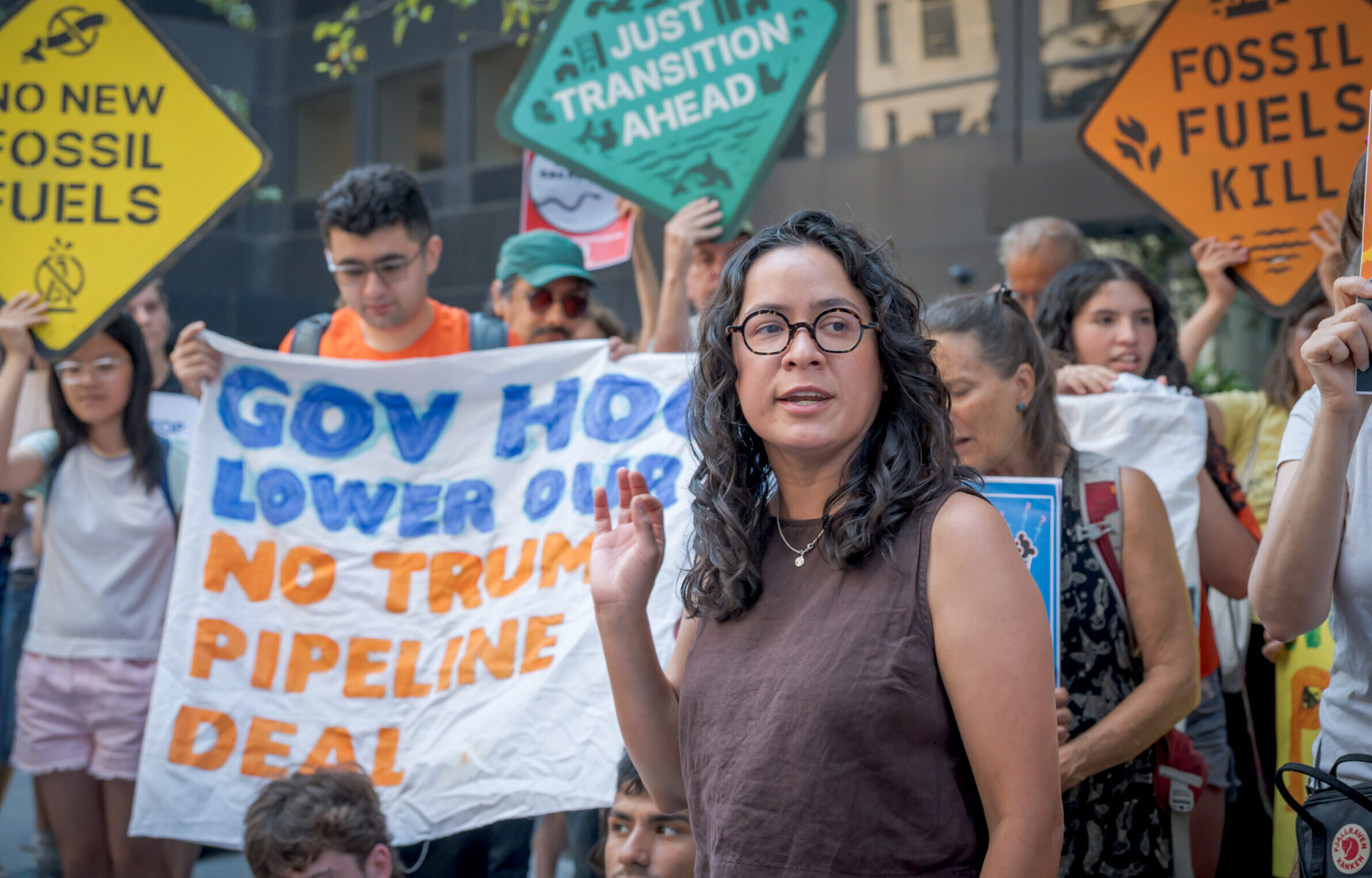
As an emboldened socialist wing of the Democratic Party gains traction across New York City in the aftermath of Mayor Zohran Mamdani’s victory, Jewish leaders and moderate officials are bracing for the possibility of multiple upsets in key House races that could reshape the ideological orientation of the state’s congressional delegation, Jewish Insider’s Matthew Kassel reports.
State of play: Three races have drawn heightened attention in recent weeks, including a marquee House contest playing out largely in progressive Brooklyn where Rep. Dan Goldman (D-NY) is seeking to fend off a serious challenge from former New York City Comptroller Brad Lander. Meanwhile, in upper Manhattan and the Bronx, Rep. Adriano Espaillat (D-NY) is facing what looks like an increasingly credible challenge from an anti-Israel organizer. And in the race to replace retiring Rep. Nydia Velazquez (D-NY), her favored primary candidate is struggling to compete against a democratic socialist endorsed by Mamdani.
MINNESOTA MANEUVERS
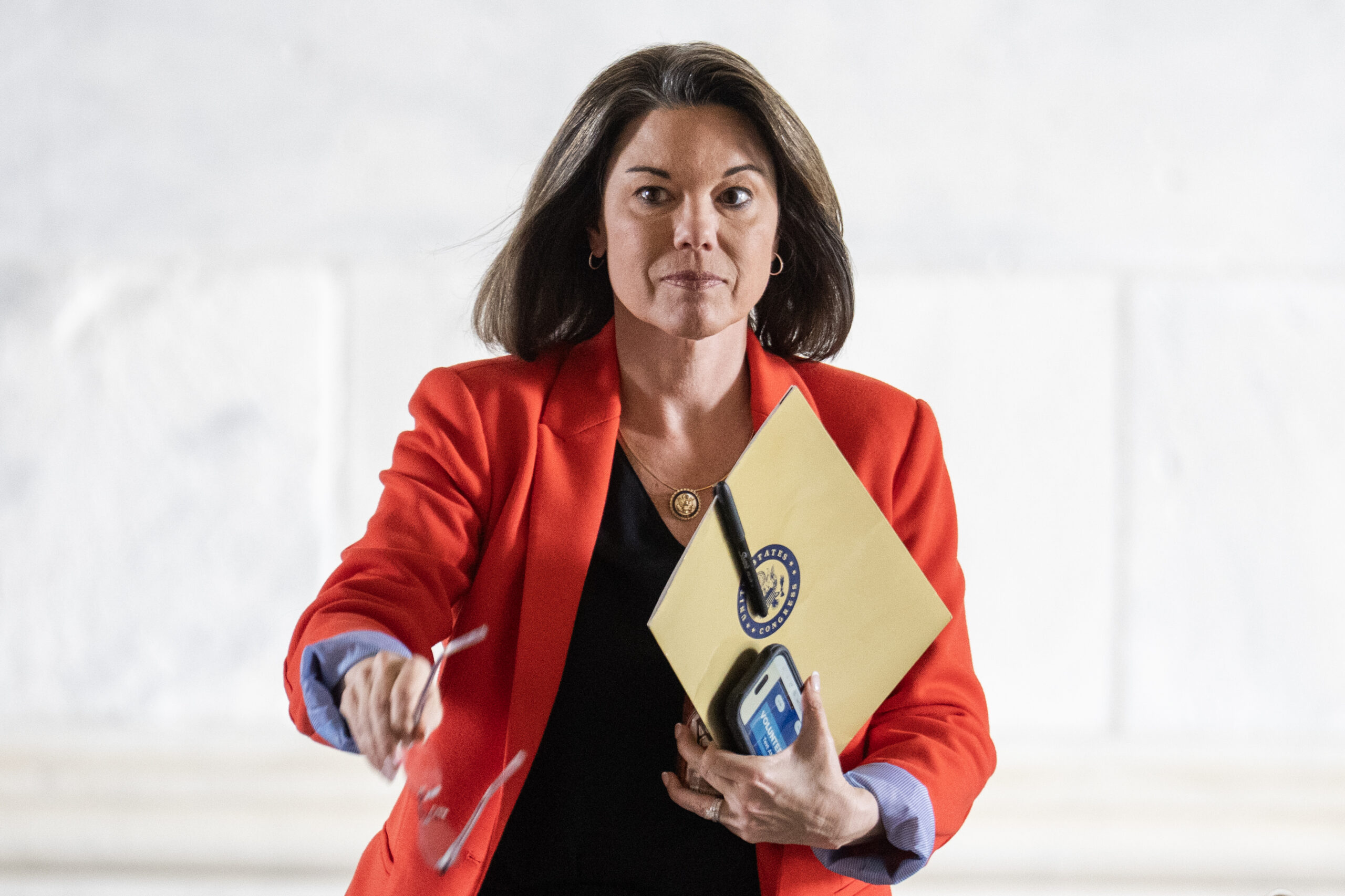
Rep. Angie Craig (D-MN), a moderate Democrat running for Minnesota’s open Senate seat, said on Wednesday that she would not seek the support of the state Democratic Party at its convention being held this weekend — effectively ceding that endorsement to Lt. Gov. Peggy Flanagan, her left-wing opponent, Jewish Insider’s Matthew Kassel reports.
What she said: Craig, who will still run in the Aug. 11 primary, said “the DFL endorsement process just doesn’t reflect the full scope of the party that we are and the purple state that we have become,” referring to the Democratic-Farmer-Labor Party, Minnesota’s Democratic affiliate, which was already expected to back Flanagan.
ESCAPE HATCH

President Donald Trump signaled on Wednesday that he may not agree to a deal to end the war with Iran if Saudi Arabia, Qatar and other countries in the region do not join the Abraham Accords, arguing that the Gulf nations “owe that to us,” Jewish Insider’s Emily Jacobs reports.
Deal or no deal: The president made the comments while taking questions from reporters during a Cabinet meeting at the White House, where he was asked if he would accept a peace agreement with Iran that did not address uranium enrichment. Trump responded that he would agree to a deal that allows for continued negotiations on some issues, though he repeatedly said he would not allow for “a crummy agreement.”
Q&A
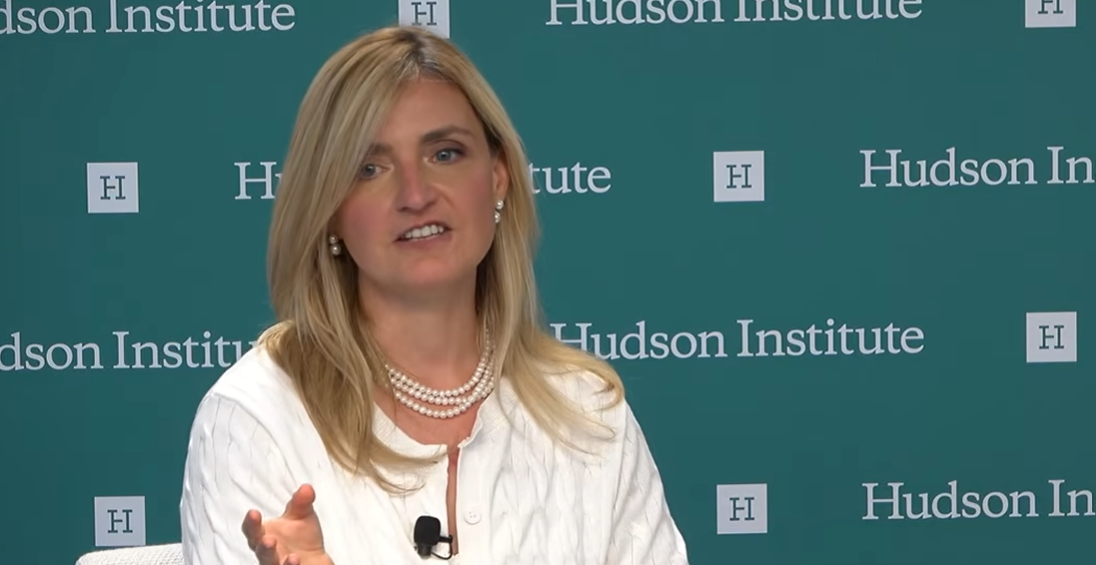
Sarah Rogers, the under secretary of state for public diplomacy, maintained that the Trump administration’s commitment to free speech, including for extreme views, does not take away from its opposition to antisemitism, telling Jewish Insider’s Emily Jacobs in a wide-ranging interview that “the Nazis may have the right to post, but also the Nazis are bad and sick and stupid.”
Also, and: “I don’t see this as a line-drawing exercise between opposed priorities,” Rogers said. “There’s really no conflict between opposing antisemitism on the one hand and opposing censorship on the other. America has a proud history of opposing both. Censorship has not kept antisemites out of power, it has been deployed by antisemites who gain power.”
ON THE SCENE
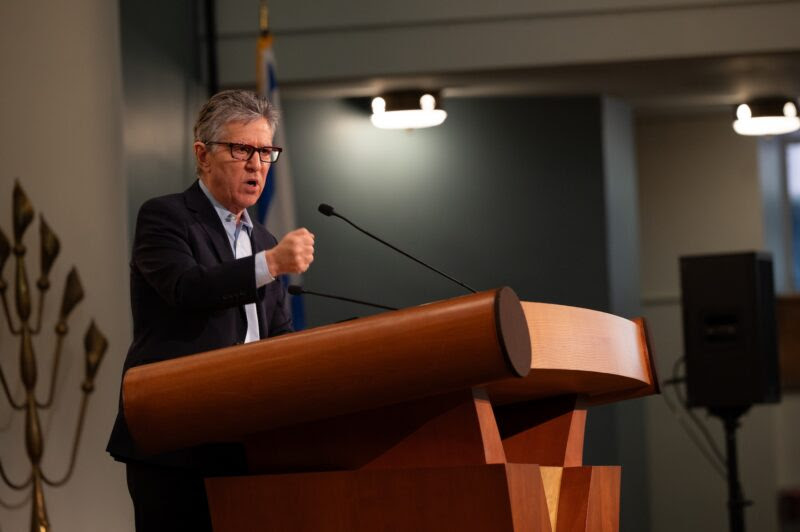
In a fiery keynote address opening the Re-Charging Reform Judaism conference on Wednesday morning, Ammiel Hirsch, Stephen Wise Free Synagogue’s senior rabbi, denounced Reform religious seminaries that ordain anti-Zionist clergy members and doubled down on the importance of Jewish particularism, eJewishPhilanthropy’s Nira Dayanim reports.
What he said: “We cannot succumb to those who preach a false philosophy of Jewish universalism that camouflages disdain for Jewish particularism under the guise of a sometimes sweeping, self-righteous, sanctimonious and suffocating misunderstanding of tikkun olam,” said Hirsch, to wide applause. “Any seminary that either in word or deed, in principle or impression, acquires the reputation of being hostile to Zionism – a seminary that ordains anti-Zionist clergy – has no future in America,” he said, also to wide applause.
Read the full story here and sign up for eJP’s Your Daily Phil newsletter here.
NOT CONVINCED
Michael Blake, the anti-Israel candidate challenging Rep. Ritchie Torres (D-NY) in a Democratic primary in the Bronx, accepted an endorsement on Wednesday from a small progressive group that, in its announcement, attacked Torres for his relationship with “Jewish donors,” Jewish Insider’s Marc Rod reports. The group, Progressive Voters Network, also maintains an active endorsement of Maureen Galindo, the antisemitic Texas Democratic primary candidate who faced condemnation from across the party and was repudiated even by other far-left groups.
What they said: “This AIPAC puppet has raked in millions from the zionist lobby while our people struggle with rent, groceries, and crumbling NYCHA buildings,” the announcement reads. “Torres prioritizes his Jewish donors over his own Black and Brown constituents, cheerleading genocide and shielding war criminals instead of fighting for affordability and justice.”
Denial: House Speaker Mike Johnson’s (R-LA) political spokesperson denied on Wednesday allegations that Johnson was involved in boosting Galindo.
Worthy Reads
Bridge Over Troubled Waters: The Free Press’ Eli Lake profiles the Pentagon’s Elbridge Colby, as the under secretary of defense for policy, an opponent of military action against Iran, finds himself defending the Trump administration’s policies vis-a-vis Iran. “The perception inside Washington in the early months of the second Trump presidency was that Colby and the Pentagon bureaucracy would slow-walk military plans for Iran. The hawks may still have sway in Congress, but the populist restrainers were taking over the national security state. That’s not what happened. Instead, the military provided Trump with war plans for Iran, and the president approved them. … What emerges is a man caught between the contradictions of Trump’s second-term foreign policy. ‘The president is not with him when it comes to Iran,’ one administration official told me.” [FreePress]
Undoing UNRWA: In The Wall Street Journal, Eugene Kontorovich considers how President Donald Trump could effectively shutter the U.N. Relief and Works Agency, which he describes as the “front office” of Hamas. “Mr. Trump cut Unrwa’s funding in 2018 and again in 2025, citing revelations that a dozen employees participated in the Hamas invasion of Israel on Oct. 7, 2023. But U.N. agencies, and Unrwa especially, are designed to be insulated from accountability. Unrwa was created by the General Assembly in 1949 as a temporary mechanism to assist Arabs displaced during Israel’s War of Independence. While it can be closed only by the General Assembly, strategically applied pressure from the U.S. could go a long way.” [WSJ]
Tea Party for Dems: Semafor’s Burgess Everett, Nicholas Wu and David Weigel talk to Democratic officials about the growing concerns around statewide nominating conventions, which in a number of cases this cycle have served to amplify ideological rifts within the party. “The role of party conventions and assemblies is sparking heated debate in the Democratic Party as it seeks to both capitalize on anti-Trump sentiment and anoint candidates who can win general elections. Some Democrats see closed, activist-driven state party events as opportunities to tap into powerful grassroots energy, but others worry that the functions are brewing a liberal version of the anti-establishment tea party.” [Semafor]
A Path Out of Isolation: In The New York Times, RAND’s Shira Efron considers how Israel’s upcoming elections provide an opportunity to reverse Israel’s deepening global isolation. “The task ahead is twofold: to protect Israelis from real dangers, and to persuade the wider world that Israel’s security and its democratic character are not mutually exclusive. The coming elections may not answer everything the international community asks for, but they can stop the slide into isolation, rebuild some trust and allow pragmatic steps that make Israel less alone, and more secure.” [NYTimes]
Word on the Street
A new Emerson College national poll finds that Secretary of State Marco Rubio, if he runs for president in 2028, would be statistically tied with Vice President JD Vance; the poll finds Vance winning 36% of the GOP vote (down from 52% in February), with Rubio tallying 35% (up from 20%)…
The poll also finds former Transportation Secretary Pete Buttigieg leading the field of prospective Democratic presidential candidates with 18% of the vote; Pennsylvania Gov. Josh Shapiro landed in fourth place with 10% of the vote, one of his strongest showings in any national poll to date…
Politico reports on NY-12 congressional candidate Jack Schlossberg’s recent comments to a private group at New York’s Harmonie Club, in which he diverged from some of his recent, critical positions on Israel, telling attendees he was “a stronger supporter of Israel than I ever thought I would be”; in a series of X posts responding to Politico, Schlossberg claimed the article “isn’t true” and was “written in bad faith”…
Chicago Jewish leaders raised concerns about Mayor Brandon Johnson’s plan, released Tuesday, for the city to combat hate crimes; Alderwoman Debra Silverstein, the only Jewish member of Chicago’s City Council, called Johnson’s plan “a watered-down version” of a proposal recommended by the city’s Commission on Human Relations…
The Washington Jewish Week endorsed former D.C. Councilmember Kenyan McDuffie in the capital’s Democratic mayoral primary, arguing that “Washington deserves better” than Councilmember Janeese Lewis George, a member of the Democratic Socialists of America who earlier in the campaign vowed to avoid events that “promote Zionism” and campaigned with a Washington legislator who accused Jews of controlling the weather…
The Wall Street Journal profiles Baron Capital’s Ron Baron, the longtime tech skeptic who has in recent years made significant investments in Elon Musk’s ventures, including X and SpaceX…
The New York Times reports on what Jewish students and faculty at Harvard University describe as a changed campus climate in the two years since anti-Israel and antisemitic activity at the school garnered national attention during the 2023-2024 academic year…
Israeli chef Eyal Shani opened an outpost of his restaurant chain Miznon at Brooklyn’s Barclays Center…
The American Jewish Committee is selling its longtime Manhattan headquarters to real estate developer Gary Barnett’s Extell Development for $39 million, eJewishPhilanthropy‘s Judah Ari Gross reports…
Authorities in London determined that a fire at a kosher grocery store in the heavily Jewish suburb of Golders Green, an area that has faced several arson attacks in recent months, was “non-suspicious”…
The British Museum postponed an event slated for today to celebrate Jewish Culture Month, saying that “a significant proportion of registered attendees were individuals intending to deliberately disrupt the event, preventing others from participating in good faith and undermining the purpose of the programme”; the museum said it intended to reschedule the event “when it can take place in an environment that properly safeguards both the audience experience and the integrity of the programme itself”…
Yad Vashem announced plans to open a Holocaust education center in Munich, which will be the museum’s first international educational center…
An IDF soldier in the Givati Brigade’s Rotem battalion was killed in a Hezbollah drone attack along Israel’s border with Lebanon; two reservists were injured by a second explosive, one seriously…
The Wall Street Journal reports on the “elaborate deception” effort in which sanctioned Iranian oil is transferred between ships at sea to obscure the cargo’s origin and enter markets…
Israeli Attorney General Gali Baharav-Miara intends to file an indictment against Yonatan Urich, an advisor to Prime Minister Benjamin Netanyahu, in connection with the leak of classified documents to German newspaper Bild…
Iran expanded its restrictions on international news organizations operating in the country that would ban the outlets from sharing material with Israeli media as well as Farsi-language media outside of the Islamic Republic…
The U.K.’s Jewish Chronicle interviews Somaliland President Abdirahman Mohamed Abdullahi about relations between Hargeisa and Jerusalem following Israel’s recognition of the East African nation; Abdullahi said he plans to visit Israel later this year as the countries build “links in security, the economy, trade and diplomacy”…
Former federal prosecutor Tali Farhadian was named the CEO of New York’s Museum of Jewish Heritage…
The Heritage Foundation announced that Mollie Hemingway, Yoram Hazony, J.C. Huizenga and Lawrence Blanford are joining the think tank’s board of trustees…
Pic of the Day

Reps. Abe Hamadeh (R-AZ), left, and Marlin Stutzman (R-IN), who are in Israel this week while the House is in recess, met with Israeli Prime Minister Benjamin Netanyahu on Wednesday in Jerusalem. The two GOP legislators also met with Foreign Minister Gideon Sa’ar and visited the Western Wall complex, where they met with Rabbi Shmuel Rabinowitz, the rabbi of the Western Wall and holy sites.
Birthdays

Fashion designer and the founder of WeWoreWhat, Danielle Bernstein turns 34…
American oncologist whose work has contributed to major developments in childhood leukemia treatment, he was the president of the Judea Reform Congregation in Durham, N.C., John Laszlo turns 95… Founding rabbi of both Lincoln Square Synagogue in NYC and later Efrat, Rabbi Shlomo Riskin turns 86… Director of UCSF’s Institute for Neurodegenerative Diseases, he won the 1997 Nobel Prize in medicine, Stanley Benjamin Prusiner M.D. turns 84… Executive director of Ner Israel Rabbinical College, Jerome H. Kadden… Former mayor of New York City, Rudy Giuliani turns 82… Former mayor of Toronto, John Howard Tory turns 72… Author of 14 novels and a children’s book, Millions of Maxes, Meg Wolitzer turns 67… Winnipeg-born attorney, previous campaign chair for Winnipeg’s Combined Jewish Appeal and governor of the Hebrew University of Jerusalem, Gail Sheryl Asper turns 66… British comedian, screenwriter and singer, he is the author of a 2021 book on antisemitism, Jews Don’t Count, David Lionel Baddiel turns 62… Secretary of state of the United States, he is also serving as acting national security advisor, Marco Rubio turns 55… Four-time U.S. national fencing champion and a two-time Olympian, then an attorney who clerked for Justice Ruth Bader Ginsburg, Eric Oliver “Nick” Bravin turns 55… Longtime member of the Knesset on behalf of the Likud party, now serving as Israel’s consul general to New York, Ofir Akunis turns 53… Guitarist, composer and leader of the bands Rashanim and Zion80, Jon Madof turns 52… Rabbi of Boston’s South Shore Congregation Sha’aray Shalom, Eric M. Berk… Dancer and choreographer, Brian L. Friedman turns 49… Senior manager in the executive office at The Pew Charitable Trusts since 2015, Lauren Mandelker… Singer-songwriter, artist and filmmaker, Adam Green turns 45… Entrepreneur focused on real estate, technology, media, consumer products and manufacturing, he is a member of the Pritzker family of Hyatt Hotels, Matthew Pritzker turns 44… Former Jewish liaison for New York Gov. Andrew M. Cuomo, he is now the managing principal of Asher Strategies, David A. Lobl… Founder and CEO of At The Well, a women’s wellness organization rooted in Jewish spirituality and women’s health, Sarah Michal Waxman… Founder and CEO at Vista Nexum, Adelle Malka Nazarian… Freelance journalist writing about culture, she was previously an associate editor for The Forward, Thea Glassman… Named for his father, a Wall Street Journal bureau chief who was kidnapped and murdered by Pakistani terrorists a few months before he was born, Adam Daniel Pearl turns 24… Israeli swimmer, she competed in the 2020 and 2024 Summer Olympics, Aviv Barzelay turns 24… Irwin Weiss…
Rep. Dan Goldman badly trails Brad Lander in his reelection bid; a DSA-endorsed candidate holds a narrow lead in a nearby deep-blue NYC district

Mary Altaffer/AP
Rep. Dan Goldman (D-NY), left, is joined by New York City Comptroller Brad Lander during a news conference outside the Metropolitan Detention Center in the Sunset Park neighborhood of Brooklyn on Tuesday, Aug. 16, 2022.
A new series of Emerson College polls of three closely watched New York Democratic congressional primaries shows a strong left-wing, anti-establishment sentiment coursing through the party.
The polls, commissioned by WPIX-TV, find that a sitting congressman, party-backed borough president and experienced state assemblyman championed by local political leaders are either trailing or barely leading their insurgent challengers.
Rep. Dan Goldman (D-NY), a pro-Israel liberal and fierce critic of President Donald Trump, is badly trailing by 34 points (57-23%) his left-wing challenger Brad Lander, who most recently served as New York City comptroller and has been deeply critical of Israel.
Lander, who was endorsed by New York City Mayor Zohran Mamdani, holds a substantial advantage among voters under 40, winning 73% of the younger constituency. Mamdani, who comfortably carried the district in last year’s mayoral election, holds a 79% approval rating among Democrats in the progressive district.
Goldman’s campaign manager, Simone Kanter, questioned the poll’s methodology in a post on X: “Emerson is assuming an electorate that looks exactly like the once-in-a-generation turnout Mamdani mobilized when he was on the ballot.”
In New York’s 7th Congressional District, the poll finds Assemblymember Claire Valdez, the Democratic candidate backed by Mamdani and the local chapter of Democratic Socialists for America (DSA), holding a narrow lead (23-21%) over Brooklyn Borough President Antonio Reynoso, the candidate endorsed by retiring Rep. Nydia Velazquez (D-NY). A near-majority of Democratic voters (43%) are still undecided.
And in the race to replace retiring Rep. Jerry Nadler (D-NY), state Assemblymember Micah Lasher has a small advantage over Assemblymember Alex Bores, and a larger lead over social media influencer Jack Schlossberg and attorney George Conway.
Lasher holds more institutional support in the race, boasting the endorsements of Nadler, Gov. Kathy Hochul and former New York City Mayor Michael Bloomberg, but that backing hasn’t automatically led into widespread party support. Still, this poll shows Lasher leading, in contrast to other recent public and internal polls that found Bores with a narrow edge.
Pro-Israel Democrats can express some relief after results out of North Carolina and Texas

JEFF KOWALSKY/AFP via Getty Images
People cast their in-person early ballot for the 2024 general election at the Northwest Activities Center on October 29, 2024 in Detroit, Michigan.
A strong anti-incumbent mood is apparent in the electorate, based on primary results from North Carolina and Texas’ congressional primaries Tuesday night. Meanwhile, one sitting Democratic lawmaker who lost support from AIPAC is narrowly fending off a challenge from a virulently anti-Israel challenger who campaigned in the closing days of the primary against the Iran war.
Big picture: There’s a deep skepticism of the political establishment throughout the country within both parties. Rep. Dan Crenshaw (R-TX), a center-right hawk who was one of the stars of the 2018 GOP freshman class, badly lost to state Rep. Steve Toth, a right-wing challenger backed by Sen. Ted Cruz (R-TX).
Sen. John Cornyn (R-TX) is doing a bit better than public polls suggested, but still is only polling in the low 40s against MAGA-aligned Texas Attorney General Ken Paxton in a race that’s headed to a runoff.
Rep. Tony Gonzales (R-TX), who has been enmeshed in scandal after his extramarital affair with a staffer, who later died by suicide, became public, is leading social media influencer Brandon Herrera, but is also only polling in the low-40s and will also be headed to a runoff.
On the Democratic side, Rep. Valerie Foushee (D-NC), who was boosted to office in 2022 with AIPAC support but has since grown more critical of Israel, is clinging to a one-point lead (49-48%) over Durham County Commissioner Nida Allam, who would have become one of the most anti-Israel lawmakers in Congress if she was elected. Allam was backed by the far-left Justice Democrats and received support from a new super PAC attempting to elect anti-Israel lawmakers.
The Iran war may have played a key role in the primary. Foushee won the early vote by an eight-point margin, but Allam carried the Election Day vote by six points — after airing an ad blasting the war in Iran and baselessly accusing the United States of targeting civilians.
And in a member-against-member Democratic primary in Texas, Rep. Al Green (D-TX), one of the most left-wing members of Congress who has been a reliable vote against Israel, is narrowly trailing newly elected Rep. Christian Menefee (D-TX), a more mainstream Democrat. Menefee looks like the favorite, but is short of the 50% necessary to avoid a runoff.
Meanwhile, former Rep. Colin Allred (D-TX) is on track to reclaim his old suburban Dallas seat, unseating Rep. Julie Johnson (D-TX) in the process. But he’s likely heading to a runoff as well.
All told, pro-Israel Democrats can express a bit of relief toward Tuesday night’s primary results. Assuming Foushee holds on to victory, it blocks the path of a Rep. Rashida Tlaib (D-MI) prototype from getting elected to Congress. If Allam prevailed, she could have held that safely Democratic seat — and an anti-Israel platform — for many years.
And Menefee’s advantage against Green in Texas is undoubtedly a win for Jewish voters, potentially replacing an anti-Israel detractor with a stronger ally (if he holds on in the runoff).
On the negative side, the successor to Rep. Jasmine Crockett (D-TX) in the House is expected to be Frederick Haynes III, the congresswoman’s pastor who delivered a scathing sermon against Israel one day after Hamas’ Oct. 7 terror attack against the Jewish state. Haynes was backed by Justice Democrats and an anti-Israel group (IMEU Policy Project), but didn’t have much serious primary competition.
The highest-profile race of the night was Crockett’s Senate primary campaign against state Rep. James Talarico. Talarico prevailed, defeating Crockett 53-46%, with most votes counted. Talarico is hoping to emerge as a sleeper candidate in red-state Texas, and some Democrats believe he has an outside chance of succeeding — especially if he faces the scandal-plagued Paxton.
A few general election showdowns also now look set: Rep. Don Davis (D-NC), drawn into a tougher district, will face a rematch against Republican retired Army Col. Laurie Buckhout this year. And Rep. Vicente Gonzalez (D-TX), drawn into a more Republican district, will face Republican attorney Eric Flores — in a key bellwether race of whether Republicans will be able to maintain their recent inroads with Hispanic voters.
Please log in if you already have a subscription, or subscribe to access the latest updates.
 Continue with Google

 Continue with Apple