
























































Kay will assume the role on Oct. 5, as Eric Goldstein departs after 12 years atop the country’s largest Jewish federation
Courtesy


 Add JewishInsider on Google
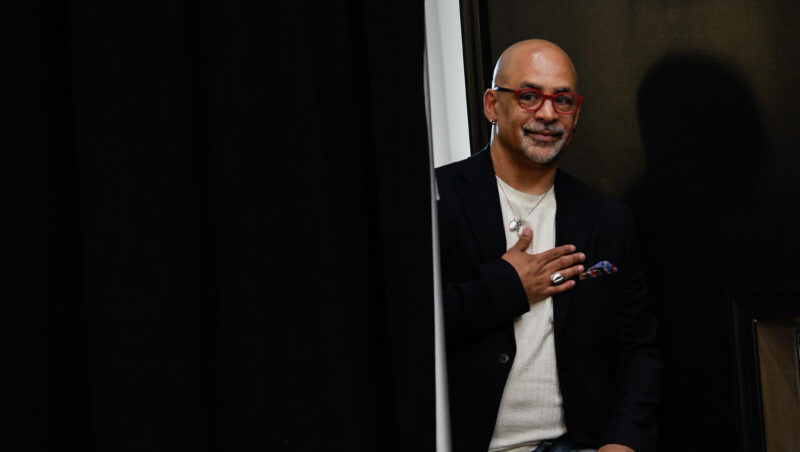
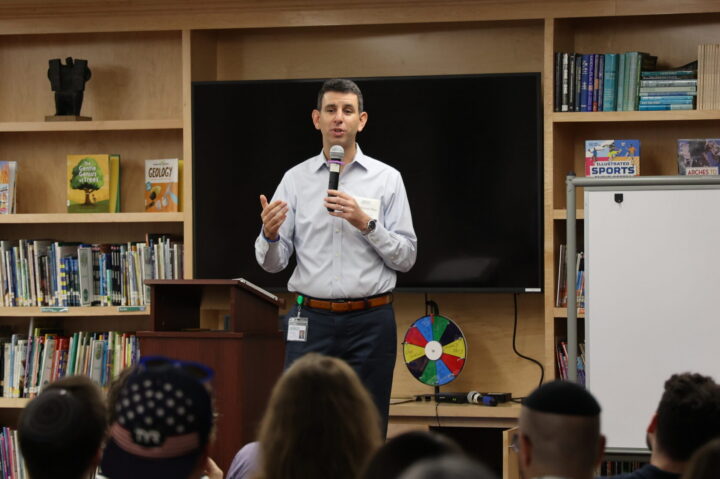
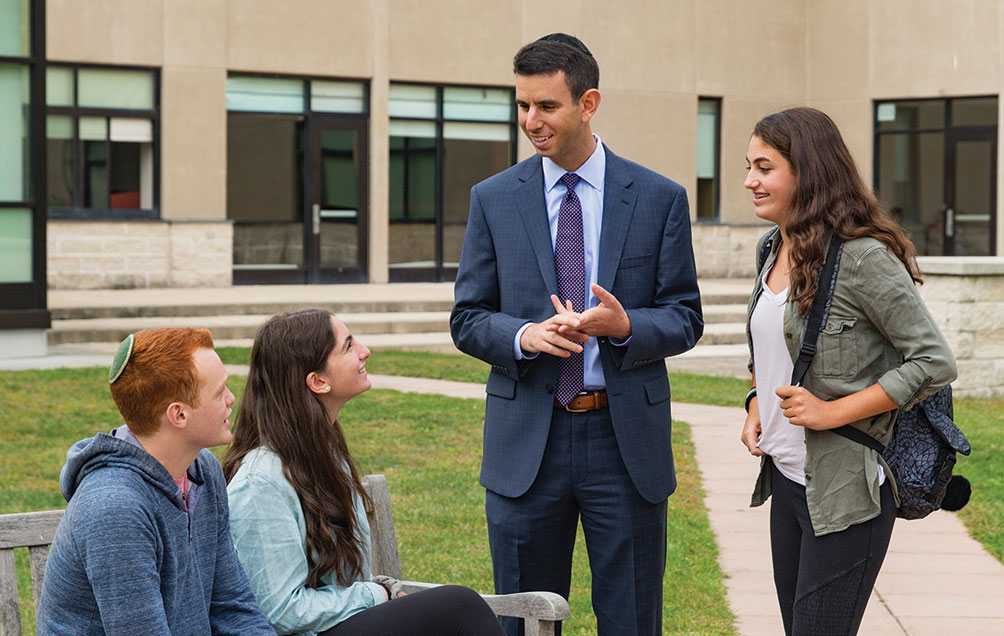
The country’s largest Jewish federation, UJA-Federation of New York, has reached into the day school world to tap its next leader, naming longtime Jewish educator Michael Kay as CEO, Jewish Insider has learned.
In a generational change that signals the growing importance of day schools on the Jewish communal agenda, Kay, who currently serves as head of school at The Leffell School in Westchester County, N.Y., will succeed Eric Goldstein, 66, a former Wall Street lawyer who announced last June that he was stepping down after 12 years in the role. Kay, 46, will enter the position on Oct. 5.
Goldstein steered New York’s Jewish community through a series of crises, including the COVID-19 pandemic, the Oct. 7, 2023, Hamas terror attacks and the surge in antisemitism and multiple wars that followed. Though last year’s announcement set Goldstein’s departure for the end of the fiscal year in June, he will now remain in the role until Oct. 4.
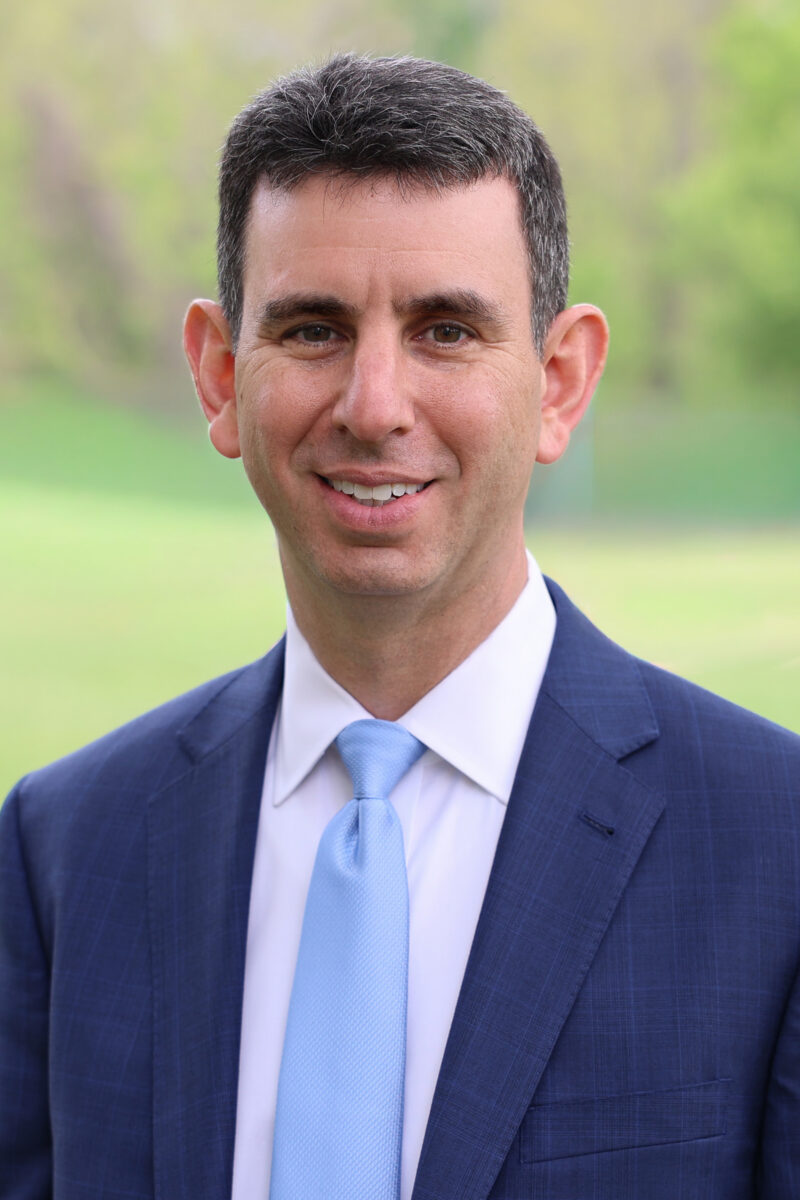
Kay inherits a key leadership position in a complex, often divided New York Jewish community. Over the last three years, new cracks have emerged and old ones have widened within the community in the aftermath of the Oct. 7 attacks. In November, exit polls showed that 33% of Jewish voters cast their ballots for New York City Mayor Zohran Mamdani, an outspoken critic of Israel who has clashed with Jewish leaders and organizations, including UJA-Federation of New York.
Asked how he wants UJA’s relationship with Mamdani to look under his leadership during an interview with Jewish Insider announcing his appointment, Kay emphasized UJA’s commitment to advocating for the well-being of the Jewish community with local officials, “no matter who they are.”
“We have an obligation and a responsibility to work with our local elected officials no matter who they are to ensure that our needs are met and they are accountable for meeting those needs, as I said, well-being, thriving, safety, security,” Kay said. “I start the job in five months, I’m sure that there will be a lot of conversation between now and then with our government relations team about the specific best way to interact with City Hall to achieve that, but we’re not going to lose sight of what those goals are.”
Joining the New York federation after 13 years at the Leffell School, an independent K-12 school with nearly 900 students — formerly a Solomon Schechter school — Kay brings decades of experience in Jewish education to the role.
Prior to Leffell, Kay also served as Upper School principal and director of Judaic studies at the Charles E. Smith Jewish Day School in Rockville, Md., and led Camp Givah, a Jewish summer camp in upstate New York — both pluralistic institutions. He is also an alumnus of the Wexner Graduate Fellowship.
Kay’s appointment comes as Jewish education and day school affordability have become priorities for the Jewish Federations of North America. Recently, the organization has lobbied governors to adopt a federal tax credit that could reduce the financial burden of Jewish day school tuition, marking JFNA’s growing foray into issues of day school affordability and school choice. Earlier this week, New York Gov. Kathy Hochul stated her intention to opt-in to the tax credit.
Asked what he thinks the New York federation should do to advance day school affordability and Jewish education in New York, Kay acknowledged the role of childhood Jewish education in fostering long-term relationships with Judaism, stating that UJA has a responsibility to promote “Jewish engagement in all its forms.”
“I think it’s critically important. We have data showing that students who grow up experiencing Jewish education at a young age are substantially more likely to support Israel on their college campuses, and to take on roles of leadership in the Jewish community,” he said.
Kay is also a senior lay leader and member at Temple Israel Center of White Plains, the egalitarian Conservative congregation that he attends with his wife, Rachel, and their two children.
Announcing his appointment, UJA-Federation highlighted Kay’s work in expanding and strengthening philanthropic support for The Leffell School, including through UJA’s Day School Challenge Fund, and his capabilities as a unifying leader, skilled in bringing people together across differences and partisan divides “through respectful dialogue.”
“It has been the privilege of a lifetime to lead UJA-Federation,” Goldstein said in a statement. “Michael has proven throughout his career an ability to bring the full spectrum of our community together, building trust across differences and harnessing our diversity as a source of strength. That experience will be invaluable to UJA’s next chapter.”
Entering his role the day after the bodies of three kidnapped and slain Israeli teenagers were recovered in the West Bank, Goldstein’s 12-year tenure as CEO of the continent’s largest Jewish federation provided a constant in a particularly tumultuous period for North American Jewry.
Goldstein, whose appointment — as the first Orthodox head of the organization — raised eyebrows within the New York community, led the organization through a period of rising domestic antisemitism. That period was bookended by 2017’s Unite the Right rally in Charlottesville, Va., and the 2018 deadly shooting at Pittsburgh’s Tree of Life Synagogue that killed 11 congregants — and the recent set of deadly attacks on Jewish institutions following the Israel-Hamas war. Under Goldstein, in late 2019, the UJA-Federation of New York and the Jewish Community Relations Council of New York launched the Community Security Initiative, a program designed to protect the Jewish community from violent threats and antisemitic incidents. Since its inception, as threats against the community have continued to mount, the program has grown significantly.
Goldstein also steered the organization both through funding shortfalls during the COVID-19 pandemic, forgoing his own salary for the 2021 fiscal year, and a massive influx of donations for emergency relief after the Oct. 7 attacks.
“We are deeply grateful to Eric S. Goldstein, whose 12 years of leadership leave UJA in a position of strength as we look to the future,” Marc Rowan, the federation’s board chair, said in a statement.
According to the federation, more than 40 candidates were considered for the role, in a search conducted by a 14-member search committee, led by Linda Mirels, the federation’s board president, and supported by global search firm Heidrick & Struggles. Kay’s selection was unanimous.
“Michael is the right leader for this defining moment,” said Rowan. “He is battle-tested — unflappable under pressure and willing to take on the most pressing challenges facing our community, from the safety and security of the Jewish people to the urgent work of strengthening Israel as a Jewish and democratic state.”
At the end of June, Mirels and Rowan, will both conclude their three-year terms. Suzanne Peck and David Wasserman, both of whom served on the search committee, will succeed Rowan and Mirels as president and chair, respectively.
“Michael distinguished himself as a singular and compelling leader — a truly original thinker whose intellect, moral seriousness, and vision for Jewish life set him apart,” said Mirels. “He is an eloquent and persuasive communicator with a long record of inspiring the next generation of proud Jews and Zionists. The work ahead is real — strengthening Jewish identity and pride, deepening commitment to Israel, confronting rising antisemitism, and caring for global Jewry and New Yorkers in need. Michael is the leader our community needs for the work ahead.”
Fearing a pullback of NYPD resources, the Community Security Initiative has formed ‘Task Force Z’ to prepare for potential changes under the incoming mayor

Adam Gray/Getty Images
NYPD Strategic Response Group (SRG) stand guard outside of 26 Federal Plaza on October 21, 2025 in New York City.
New York City’s leading Jewish security organization has prepared a new set of strategies to respond to policies that the city’s Mayor-elect Zohran Mamdani might put into place that would affect public safety.
Among the primary concerns of Mitch Silber, executive director of the Community Security Initiative and former director of NYPD intelligence analysis, is Mamdani’s vow to cut the police department’s Strategic Response Group.
“SRG is what essentially stands in between ‘Free Palestine’ protesters and the Jewish community,” Silber told Jewish Insider on Thursday. Disbanding SRG “will diminish public security and security for the Jewish community,” said Silber. Mamdani pledged he would disband the force as mayor in December 2024, saying it had “cost taxpayers millions in lawsuit settlements and brutalized countless New Yorkers exercising their first amendment rights.”
SRG was created after the 2008 Mumbai terrorist attacks so that New York City could be prepared in the event of similar multi-site attacks. “There’s no way CSI could replicate that,” Silber said.
But there are some elements of what SRG does that Silber said CSI, which is a partnership between the UJA-Federation of New York and the Jewish Community Relations Council of New York that relies on funds from private donors, “might be able to step up and, to some degree, fill a gap.”
Immediately after Mamdani won the Democratic primary in June, CSI formed “Task Force Z,” a group of senior regional security directors charged with understanding what policies Mamdani, as mayor, might put into place that would affect public safety and Jewish security in the city, and began to prepare strategies to deal with challenges.
One of SRG’s primary missions is protest management, such as responding to the anti-Israel encampment on Columbia University’s campus last year. “Having volunteers be trained as how to be a buffer in a protest is something that we’re looking at if need be,” Silber told JI.
Asked how likely Mamdani is to be able to fulfill his pledge of disbanding SRG, Silber said, “The mayor in New York City calls the shots and the police commissioner either gets on board or gets a new job. If Mamdani wants to get rid of SRG, he’s going to get rid of SRG because he’s going to hire a police commissioner who will do it.”
Another threat to the Jewish community’s safety, said Silber, is Mamdani’s desire to reduce NYPD overtime pay.
“The Jewish community is one of the primary beneficiaries of NYPD’s overtime — when NYPD responds because it’s the High Holidays, or there’s an event overseas, they have to use overtime to do it. So if the police department cuts overtime that will cut the Jewish community’s security,” Silber said.
Already, the NYPD has just below 35,000 employees. “The last time the NYPD was 35,000 was 1994 when there were a million less people in the city,” Silber said. “We’re at an extremely low number and Mamdani isn’t going to increase the number of police.”
To help fill the gap, CSI’s new plans involve increased partnerships with other Jewish volunteer security groups.
“Who can we partner with on the ground who is capable, has resources and is proven the community can trust? Some of that is volunteer community security patrols called Shomrim and Shmira that are very connected to their respective communities in Crown Heights, Borough Park, Flatbush, Queens and Far Rockaway,” Silber told JI. “We’ve worked with them in the past and found them to be very capable. They are already doing some of the job that the NYPD would do but because the department is so resource short, when there’s a funeral or wedding in the neighborhood, NYPD calls these groups and asks them to use their own patrol cars. So it’s already happening and we anticipate, as the number of cops in a given precinct continues to fall, Shomrim and Shmira can really amplify our security efforts. These groups need resources, more vehicles, vests and radios if they are going to be a deterrent.”
“We’re finding out what these groups need and then will have conversations with donors,” continued Silber.
In Manhattan and Bronx neighborhoods, CSI is turning to its partnership with the Community Security Service, which has a network of more than 2,000 volunteers across New York City.
Richard Priem, CEO of CSS, told JI that the group has “contingency plans to address different scenarios including gaps in coverage or surges in requests for CSS support — whether from synagogues seeking training for their members to join our volunteer network, Jewish organizations requesting CSS volunteers to protect their events or parents serving as eyes and ears at their children’s day schools.”
“There will also be a fund for private security like we did after the Oct. 7, 2023, terrorist attacks [in Israel],” Silber said. “UJA will give us a fund for when a school or institution is having an event and doesn’t have enough security.”
CSI is also coordinating with Jewish security leadership groups in cities including Johannesburg, South Africa, Mexico City and Toronto “to try to understand how to protect the Jewish community when police don’t respond in a way that you expect them to,” said Silber.
“That informs some of our efforts as well,” he said. “They’ve invested very robustly in control rooms and camera systems so that they have situational awareness of what’s going on. That’s something we’re taking a closer look at.”
But the magnitude of New York City’s population — with about 1 million Jews — poses additional challenges. “Nevertheless, we may look more closely at incorporating cameras into security,” Silber said.
As NYPD officers are increasingly expressing interest in leaving the department, according to Silber, he said CSI is fielding inquiries “looking for landing when Mamdani comes in.”
The group is “looking into trying to figure out who might best fit in our team.”
Please log in if you already have a subscription, or subscribe to access the latest updates.
 Continue with Google

 Continue with Apple