















































































BRENDAN SMIALOWSKI/AFP via Getty Images
Qatar's Emir Sheikh Tamim bin Hamad al-Thani (L) and Prime Minister and Minister of Foreign Affairs Sheikh Mohammed bin Abdulrahman Al-Thani talk to US President Donald Trump as he prepares to leave at the end of the Qatari leg of his regional tour, at the Al-Udeid air base southwest of Doha on May 15, 2025.


 Add JewishInsider on Google
Good Wednesday morning.
In today’s Daily Kickoff, we cover yesterday’s antisemitism hearing on Capitol Hill with the leaders of Georgetown University, the City University of New York and the University of California, Berkeley, as well as the suspension of Georgetown professor Jonathan Brown following his call for Iran to strike the U.S. We also report on steps taken by Columbia University to try to reach a deal with the Trump administration on its handling of antisemitism and report from the Pennsylvania Energy and Innovation Summit in Pittsburgh. Also in today’s Daily Kickoff: Ambassador Mike Huckabee, Albert Bourla and Richard Attias.
What We’re Watching
- President Donald Trump is slated to host Qatari Prime Minister Mohammed bin Abdulrahman Al Thani tonight at the White House. More below.
- At the Aspen Security Forum this afternoon, Amos Yadlin, the former head of the IDF’s Intelligence Directorate; former Israeli Ambassador to the U.S. Mike Herzog; Brett McGurk, the former National Security Council coordinator for the Middle East and North Africa; and author and “Call Me Back” podcast host Dan Senor are set to take the stage for a conversation about Israel’s future.
- This morning in Washington, the Senate Foreign Relations Committee is slated to hold a business meeting followed by a full committee hearing on State Department reform.
- This afternoon, the House Foreign Affairs Committee’s Middle East and North Africa subcommittee is holding its own hearing on State Department management.
- Also today, Rep. Mark Harris (R-NC) is holding a press conference with other members of Congress calling for the National Education Association’s congressional charter to be revoked following the organization’s adoption of a measure effectively banning cooperation with the Anti-Defamation League.
What You Should Know
A QUICK WORD WITH jI’S MELISSA WEISS
Ceasefire and hostage-release talks have been ongoing in Doha, Qatar, for the last week. But one of the most consequential meetings in the negotiations could be happening tonight in Washington, when President Donald Trump hosts Qatari Prime Minister Mohammed bin Abdulrahman Al Thani for dinner at the White House.
This continues a new tradition for Trump of hosting prominent Gulf royals who aren’t the heads of state of their respective countries for dinner at the White House. In March, Trump hosted a dinner in the White House’s State Dining Room for Sheikh Tahnoon bin Zayed Al Nahyan, the United Arab Emirates’ national security advisor and chairman of several sovereign wealth funds.
Qatari officials have been in the U.S. all week. Qatari Emir Sheikh Tamim bin Hamad Al Thani was rumored to have met with Trump on the sidelines of the FIFA finals in New Jersey on Sunday, after being spotted in New York over the weekend.
White House Middle East envoy Steve Witkoff, whose trip to Doha last week was postponed over stalled talks, told reporters over the weekend that he planned to meet with Qatari negotiators on the sidelines of the match. And Trump shared a suite with senior Qatari sports officials at the match, including Nasser bin Ghanim Al-Khelaifi, the president of the Paris Saint-Germain team who played in New Jersey on Sunday and chairman of beIN Sports, previously known as Al Jazeera Sport. (In a weekend interview at the FIFA match, Trump even noted Qatar’s “big presence.”)
Qatar also loomed large in Washington this week, where legislators on the House Education and the Workforce Committee pressed university leaders from Georgetown, CUNY and the University of California, Berkeley about their foreign funding sources during a hearing about antisemitism in higher education. (More below on the hearing.) Former Rep. Jim Moran (D-VA), one of Qatar’s top lobbyists in Washington, was seen sitting right behind Georgetown University interim President Robert Groves as Groves testified on Tuesday. The school has received over $1 billion from Qatar, and has a campus in Doha.
Qatar’s be-everywhere, invest-in-everything strategy has allowed Doha to gain footholds across the global economy and in diplomatic circles. And since the start of the war, it has sought to highlight its role as a facilitator of ceasefire talks between Israel and Hamas, the latter of which Doha supports financially and diplomatically.
Doha has the power to push Hamas to accept a ceasefire. Whether tonight’s dinner will exact a change in Qatar’s approach to Hamas remains to be seen. The sit-down between Trump and the Qatari prime minister could change the tide in the 21-month war, or it could serve as yet another missed opportunity in a war full of stalemates and diplomatic posturing — with fresh casualties mounting on both sides and 50 hostages still languishing in captivity.
TESTIMONY TALK

When the leaders of Georgetown University, the City University of New York and the University of California, Berkeley sat down on Tuesday morning to testify at a congressional hearing about antisemitism, they clearly came prepared, having learned the lessons of the now-infamous December 2023 hearing with the presidents of Harvard, the University of Pennsylvania and MIT, each of whom refused to outright say that calls for genocide violated their schools’ codes of conduct. Georgetown interim President Robert Groves, CUNY Chancellor Felix Matos Rodriguez and UC Berkeley Chancellor Rich Lyons were all quick to denounce antisemitism and even anti-Zionism at Tuesday’s House Education and Workforce Committee hearing examining the role of faculty, funding and ideology in campus antisemitism. But while the university administrators readily criticized antisemitism broadly, they struggled to apply that commitment directly to their field of academia, Jewish Insider’s Gabby Deutch reports.
Mind the gap: Lyons in particular offered a revealing look at the gulf between a university’s stated values and its difficulty in carrying them out. He was asked to account for the promotion of Ussama Makdisi, a Berkeley history professor who described the Oct. 7, 2023, Hamas terror attacks as “resistance” and later wrote on X that he “could have been one of those who broke the siege on October 7.” Why, Lyons was asked by Reps. Randy Fine (R-FL) and Lisa McClain (R-MI), did Berkeley announce last September that Makdisi had been named the university’s inaugural chair of Palestinian and Arab studies? Lyons first defended Makdisi: “Ussama Makdisi, Professor Makdisi, is a fine scholar. He was awarded that position from his colleagues based on academic standards,” Lyons said. Later, when McClain followed Fine’s line of questioning, Lyons went to great lengths to avoid criticizing Makdisi.
Given the boot: Jonathan Brown, a tenured Georgetown University professor who came under fire last month for a social media post in which he called for Iran to conduct a “symbolic strike” on a U.S. military base, has been placed on leave and removed as chair of the school’s Department of Arabic and Islamic Studies, Georgetown’s Groves said Tuesday at the congressional hearing.
CAMPUS BEAT
Columbia University announced on Tuesday it would implement several measures to confront antisemitism in an effort to reach a deal with the Trump administration to restore the $400 million in federal funding that was cut by the government in March due to the university’s record dealing with the issue, Jewish Insider’s Haley Cohen reports.
The measures: The steps include the university further incorporating the International Holocaust Remembrance Alliance’s working definition of antisemitism by requiring its Office of Institutional Equity to embrace the definition; appointing a Title VI coordinator to review alleged violations of the Civil Rights Act; requiring antisemitism training for all students, faculty and staff; and refusing to recognize or meet with “Columbia University Apartheid Divest,” a coalition of over 80 university student groups that Instagram banned for promoting violence.
MIKE’S MOMENT

Former White House National Security Advisor Mike Waltz laid out an aggressive approach to countering anti-Israel sentiment at the United Nations during his Senate confirmation hearing on Tuesday to be U.S. ambassador to the global body, accusing the organization in his opening statement of “pervasive antisemitism,” Jewish Insider’s Matthew Kassel reports.
Setting goals: Waltz, a staunch supporter of Israel and an outspoken critic of Iran who was nominated for the U.N. post in May after being removed from his position as national security advisor, said he would seek to block “anti-Israel resolutions” in the General Assembly and would push for the dismantlement of the United Nations Relief and Works Agency over some of its employees’ involvement in the Oct. 7, 2023, Hamas attacks.
SMART STATE

Pennsylvania’s top lawmakers put up a united front on Tuesday to emphasize to the hundreds of tech and energy investors at Sen. Dave McCormick’s (R-PA) inaugural innovation summit the benefits of working with states that embrace bipartisanship and the national security imperatives of investing domestically, Jewish Insider’s Emily Jacobs reports from Pittsburgh. The Pennsylvania Energy and Innovation Summit brought top tech and energy executives to Carnegie Mellon University’s campus, home to one of the world’s most advanced AI programs. Tuesday’s gathering also included the state’s two leading Democrats, Gov. Josh Shapiro and Sen. John Fetterman (D-PA), and President Donald Trump, all of whom praised the conference as a strategic way to promote U.S. investment to the scores of foreign and American leaders in attendance.
Better together: Amazon Web Services’ $20 billion investment last month in three computing and AI campuses in the Keystone State was “an indicator of all that we can be when we harness the new things that we have going for us, and when we have government and the private sector working together, not at odds, and when we pull in our educational institutions … in a way that really helps move Pennsylvania forward,” Shapiro said during a panel discussion with McCormick and AWS CEO Matt Garman.
STRAIGHT TALK

U.S. Ambassador to Israel Mike Huckabee on Tuesday called on Israel to “aggressively investigate” the death of Saif Musallet, a Palestinian-American man from Florida who was killed by Israeli settlers in the West Bank last Friday. In a statement posted to X, Huckabee called the incident a “criminal and terrorist act” and said “there must be accountability.” Musallet, 20, was attacked by Israeli settlers while visiting his family in Sinjil, a village north of Ramallah. The Palestinian Authority Ministry of Health reported a second man was also shot and killed during the incident, Jewish Insider’s Danielle Cohen-Kanik reports.
Weighing in: Democratic lawmakers in Washington also weighed in on the attack. Rep. Brad Schneider (D-IL), a pro-Israel stalwart, said on Tuesday that he was “appalled and heartbroken” by the news, adding he had “repeatedly called on the Israeli government to address the growing number of violent attacks by Israeli settlers in the West Bank.” House Minority Leader Hakeem Jeffries (D-NY) called the “brutal killing” of Musallet “shocking and appalling” and said the Israeli government “must thoroughly investigate this killing and hold any and all settlers responsible.”
EXCLUSIVE
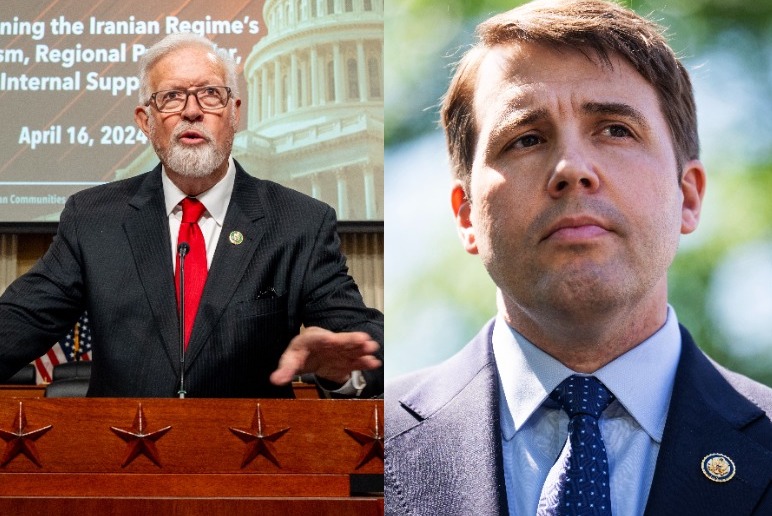
A new bipartisan House bill set to be introduced on Wednesday aims to expand U.S.-Israeli research and development cooperative programs in the medical field. The BIRD Health Act, led by Reps. Randy Weber (R-TX) and Chris Pappas (D-NH), builds on the long-running Binational Industrial Research and Development Foundation program, Jewish Insider’s Marc Rod reports.
Moving forward: Around a third of BIRD projects in the past decade have been related to the health-care sector, and the U.S. and Israel have pursued growing cooperation in the field in recent years. The bill would further formalize those efforts by establishing a new $10 million annual funding stream and joint management structure between the Department of Health and Human Services and the Israeli Ministry of Health specifically focused on supporting such projects. It would support research and development between institutions and companies in both countries, including startups, as well as health systems, telemedicine, disease prevention efforts and biological product manufacturing.
Worthy Reads
NEA’s Lesson Plan: In The Wall Street Journal, Anti-Defamation League CEO Jonathan Greenblatt responds to the National Education Association’s recent adoption of a measure targeting the ADL. “This wasn’t about the ADL. It was a clear and unambiguous statement to Jewish educators, parents and children: You don’t count. And it perversely takes this stance at a time when anti-Jewish hate is skyrocketing. … Unfortunately, the NEA vote is symptomatic of a larger problem of intensifying antisemitism in our K-12 schools. Specifically, antisemitism cloaked in the rhetoric of anti-Zionism. A generation of teachers has been educated on college campuses where this poison has festered and spread. It has been normalized. Now its purveyors want to bring this bigotry into your children’s classrooms.” [WSJ]
Pressing Putin: The Washington Post’s David Ignatius looks at President Donald Trump’s new approach to Russia, following Trump’s support for sending offensive weapons to Ukraine. “Trump decided to escalate for three reasons, according to a source familiar with administration discussions. First, he believed that Putin was disrespecting him, feigning a readiness to make peace but ignoring the U.S. president’s call for a ceasefire. Second, he saw the efficacy of U.S. military power in the use of B-2 bombers and Tomahawk missiles against Iran. And third, he thought Putin would only negotiate if threatened with greater force. As the Russians like to say, Trump decided to ‘escalate to de-escalate.’ Trump has made a sound choice in recognizing that Putin won’t make concessions without more pressure. But the president has also embarked on an escalatory course whose risks are unknowable.” [WashPost]
Mamdani’s Gift … to the GOP: The New York Times’ Bret Stephens posits that a victory in November by New York City Democratic mayoral candidate Zohran Mamdani would be a positive outcome for Republicans nationwide who are likely — and in some cases, have already begun — to push Mamdani as the future of the Democratic Party. “Among the reasons the Democratic Party’s brand has become toxic in recent years is progressive misgovernance in places like Los Angeles; San Francisco; Oakland, Calif.; Portland, Ore.; Seattle; and Chicago. If Mamdani governs on the promises on which he’s campaigned, he’ll bring the same toxicity to America’s biggest city. … A Mamdani mayoralty would be the political gift that keeps on giving. The state of the city would become a reflection of the Democratic Party writ large. Every Mamdani utterance would become a test for every Democratic politician, starting with Senator Chuck Schumer on Israel.” [NYTimes]
Word on the Street
The FBI released new images of three Iranian intelligence agents believed to be involved in the kidnapping and disappearance of retired special agent Bob Levinson, who was last seen on Iran’s Kish Island in 2007; Levinson is believed to have died in Iranian custody sometime prior to the onset of the COVID-19 pandemic…
Adelita Grijalva was declared the winner of the Democratic primary special election in Arizona’s 7th Congressional District to succeed her father, Rep. Raúl Grijalva, who died earlier this year; the special election in the deep-blue district will take place in September…
Former Washington, D.C., Councilmember Trayon White, who was expelled last year over an ongoing bribery case, was reelected to his seat in a special election on Tuesday; White had previously promoted antisemitic conspiracy theories while in office…
New York City Democratic mayoral candidate Zohran Mamdani told business leaders on Tuesday that he would “discourage” the use of the “globalize the intifada” slogan and not use the phrase himself, but said the term was used by many to show support for Palestinians; among the attendees in the 90-minute meeting was Pfizer CEO Albert Bourla, who, according to The New York Times, “pushed Mr. Mamdani about the meaning of genocide and defended Israel’s war in Gaza”…
Former Future Investment Initiative Institute CEO Richard Attias is rejoining the Saudi Arabian conference network as interim CEO, replacing Penny Richards, who is departing after six months in the position…
The United Synagogue of Conservative Judaism ended its contract last month with an interfaith advisor who had been working with the group for several years, in a potential indication that it is moving away from previous plans to allow rabbis within the movement to officiate interfaith weddings, eJewishPhilanthropy’s Jay Deitcher reports…
The Washington Post reports on the recent reunion between a 97-year-old Holocaust survivor and one of the American soldiers involved in the liberation of the Buchenwald concentration camp; the reunion was facilitated by the USC Shoah Foundation…
British police cautioned that Russia, China and Iran were behind an increasing number of sabotage, espionage and kidnapping plots in the U.K….
France, Germany and the U.K. will bring back sanctions on Iran via the U.N. Security Council if a nuclear deal is not reached by the end of August, French Foreign Minister Jean-Noel Barrot warned on Tuesday, Jewish Insider’s Lahav Harkov reports…
The Wall Street Journal looks at how Iran struck Israeli targets with increasing success during the 12-day war between the countries, as Tehran used trial and error to adapt its military strategy by using more advanced weaponry and firing from more locations toward the end of the war…
The Financial Times reports on tensions between Iranian hard-liners and the country’s reformists following the country’s war last month with Israel, with the country’s hard-line faction opposing engagement with the Trump administration that President Masoud Pezeshkian has supported…
The U.N.’s special representative for Afghanistan warned that the country’s support systems were under strain amid an influx of Afghans returning to the country following the implementation of new immigration laws in Iran; more than 1 million Afghans illegally living in Iran have been repatriated this year amid the crackdown…
The three members of the U.N.’s Commission of Inquiry on the Occupied Palestinian Territory reportedly resigned from their positions in rapid succession earlier this month; the resignations come amid an effort by the Trump administration to sanction officials who have targeted Israel in international institutions…
Twenty Palestinians were killed in a crowd rush at a Gaza Humanitarian Foundation distribution site in Khan Younis, Gaza; the organization said the “chaotic and dangerous surge” was “driven by agitators in the crowd”…
Pic of the Day

The Argentine Embassy in Washington held a commemoration event at the Capitol last night ahead of the 31st anniversary of the bombing of the AMIA Jewish community center in Buenos Aires, in which 85 people were killed.
Birthdays

World-renowned violinist, violist and conductor, Pinchas Zukerman turns 77…
One of the three co-founders of Comcast Corporation, he served as its chief financial officer and vice chairman, Julian A. Brodsky turns 92… Senior U.S. district court judge for the Southern District of New York, Judge Sidney H. Stein turns 80… President of an eponymous communications firm, public speaker and coach, Betsy R. Sheerr… Co-creator of the first-ever spreadsheet program (VisiCalc), he currently serves as the chief technology officer of Alpha Software, Daniel Singer “Dan” Bricklin turns 74… Former high ranking civilian official in the Pentagon during the Bush 43 administration, now a senior fellow at the Hudson Institute, Douglas J. Feith turns 72… Senior rabbi since 1997 at Temple Beth Avodah in Newton Centre, Mass., Rabbi Keith Stern… Los Angeles-based attorney, she is the president emerita of the LA chapter of the Jewish National Fund, Alyse Golden Berkley… Past vice chair of the Board of Trustees of The Jewish Federations of North America, Cynthia D. Shapira… British solicitor, he represented Princess Diana in her divorce and Ambassador Deborah Lipstadt in a libel case, Anthony Julius turns 69… Pulitzer Prize-winning and Tony Award-winning playwright and screenwriter, Tony Kushner turns 69… U.S. ambassador to the EU in the Trump 45 administration, Gordon David Sondland turns 68… Former airline executive at Northwest and Delta, now on the board of Spirit Airlines, Andrea Fischer Newman… Former president of Viacom Music and Entertainment Group, Douglas Alan Herzog turns 66… Businessman and philanthropist, owner of interests in many Israeli firms including IKEA Israel, Matthew Bronfman turns 66… Canadian journalist, he worked for CNN International for 30 years, Jonathan Mann turns 65… Former Israeli minister of science and technology, now a venture capitalist, Yizhar Nitzan Shai turns 62… Chief of staff of the Jewish United Fund of Metropolitan Chicago, Jim Rosenberg… Chicago-based entrepreneur and philanthropist, Victoria Rivka Zell… Former NFL offensive lineman, he is now the president of Collective Mortgage in Colorado, Ariel Mace Solomon turns 57… Senior scholar at the Fuchsberg Jerusalem Center, a home for Conservative Judaism in Israel, Rabbi Joshua Kulp turns 55… Israeli former professional tennis player, in 2003 she was ranked 15th in the world, Anna Smashnova turns 49… Founder of Pinkitzel, a cupcake cafe, candy boutique and gift store located in three Oklahoma cities, Jonathan Jantz… U.S. senator (R-IN) since the beginning of this year, Jim Banks turns 46… National political correspondent for The New York Times, Shane Goldmacher… Co-founder of Los Angeles-based Meteorite Social Impact and Health Action Alliance Advisors, Steven Max Levine… White House liaison to the Jewish community in the Bush 43 administration, now managing partner at Arogeti Endeavors, Scott Raymond Arogeti… Features reporter for Jewish Insider, Matthew Kassel… Founder and managing partner at Vine Ventures, Eric M. Reiner… Registered nurse and an internationally board-certified lactation consultant, Chantal Low Katz…
The leaders of Georgetown, CUNY and UC Berkeley condemned antisemitism generally at a Capitol Hill hearing, but struggled to criticize antisemitic professors

Win McNamee/Getty Images
Dr. Robert Groves, Interim President of Georgetown University, Dr. Félix Matos Rodríguez, Chancellor of The City University of New York, and Dr. Rich Lyons, Chancellor of the University of California, Berkeley, testify during a House Committee on Education and Workforce hearing in the Rayburn House Office Building on July 15, 2025 in Washington, DC.
When the leaders of Georgetown University, the City University of New York and the University of California, Berkeley sat down on Tuesday morning to testify at a congressional hearing about antisemitism, they clearly came prepared, having learned the lessons of the now-infamous December 2023 hearing with the presidents of Harvard, the University of Pennsylvania and MIT, each of whom refused to outright say that calls for genocide violated their schools’ codes of conduct.
Georgetown interim President Robert Groves, CUNY Chancellor Felix Matos Rodriguez and UC Berkeley Chancellor Rich Lyons were all quick to denounce antisemitism and even anti-Zionism at Tuesday’s House Education and Workforce Committee hearing examining the role of faculty, funding and ideology in campus antisemitism.
But while the university administrators readily criticized antisemitism broadly, they struggled to apply that commitment directly to their field of academia.
Lyons in particular offered a revealing look at the gulf between a university’s stated values and its difficulty in carrying them out.
He was asked to account for the promotion of Ussama Makdisi, a Berkeley history professor who described the Oct. 7, 2023, Hamas terror attacks as “resistance” and later wrote on X that he “could have been one of those who broke the siege on October 7.” Why, Lyons was asked by Reps. Randy Fine (R-FL) and Lisa McClain (R-MI), did Berkeley announce last September that Makdisi had been named the university’s inaugural chair of Palestinian and Arab studies?
Lyons first defended Makdisi: “Ussama Makdisi, Professor Makdisi, is a fine scholar. He was awarded that position from his colleagues based on academic standards,” Lyons said.
Later, when McClain followed Fine’s line of questioning, Lyons went to great lengths to avoid criticizing Makdisi.
“I want to separate the phrase from the person. If I heard some other person —” he said, before McClain cut him off. What, McClain asked, did Lyons think Makdisi meant with his tweet?
For five seconds, Lyons sat in silence.
“I believe it was a celebration of the terrorist attack on Oct. 7,” he replied slowly.
He shared that he had spoken to Makdisi about the social media post. Pressed to share what the conversation was like, Lyons returned to an earlier line: “He’s a fine scholar,” Lyons said.
Lyons, like Matos Rodriguez and Groves, acknowledged that antisemitism exists at his campus. But they all struggled to reckon with what Republican lawmakers alleged was an explosion in antisemitism at each of the three schools after Oct. 7.
“I believe that most Jewish students feel safe on our campus,” Lyons said, though he also said that he knows some do not feel safe. When asked why they may not feel safe, he demurred.
“Well, I think there are Jewish people that don’t feel safe in lots of parts —” he said, cut off again by McClain, who asked him to speak specifically about UC Berkeley.
“I think there is antisemitism in society,” Lyons said, before he was cut off again.
Lyons repeatedly attempted to make the same point: “I do believe that public universities are reflections of society, and I believe the antisemitism in society is present on our campus,” Lyons said. Asked whether the actions that he takes or that his faculty take can influence the campus environment, he said yes. McClain accused him of “avoiding the question,” and asked: Would he commit to act to make sure all Jewish students and all students feel safe?
“I’m committing to striving to reach that goal,” said Lyons.
Each of the university leaders was asked, at different occasions, to account for faculty members who had shared antisemitic or pro-Hamas rhetoric. Matos Rodriguez, the CUNY chancellor, did not deny that the New York City university system employs antisemitic faculty, though he did not specify whether any action would be taken against them.
“We have faculty that might conduct themselves in antisemitic behavior, and we have no tolerance for it, and we’re clear about the expectations to follow all our rules and policies,” Matos Rodriguez said. “If any individual breaks those rules, they will be investigated, and the appropriate disciplinary action will be taken if warranted.”
Presented with the cases of two faculty members who had shared pro-Hamas content on social media, Matos Rodriguez condemned Hamas, but did not say specifically if their rhetoric violated codes of conduct or led to any consequences.
“I have been very clear that Hamas is a horrible terrorist organization, and we have no tolerance at the City University of New York for anyone who would embrace that support of Hamas,” said Matos Rodriguez. “I clearly condemn the statements, and it’s been my testimony here, and our practice, that if any member of the City University community violates our policies and our code of conduct, we will conduct an investigation, and if discipline is warranted, we will take it, and we will not hesitate to do that, and we have done so.”
Groves, Georgetown’s president, shared early in the hearing that the university had taken action against Jonathan Brown, a tenured professor who faced criticism last month for a tweet calling for Iran to conduct a “symbolic strike” on a U.S. military base after Washington struck Iranian nuclear sites. Brown is no longer the chair of the university’s Arabic and Islamic studies program, Groves said, and he has been placed on leave pending an investigation.
Groves, who faced several questions about Georgetown’s ties to Qatar, pledged to commit to disclosing every dollar that Georgetown receives from foreign sources.
At the same time, he stood by Georgetown’s decision to award Sheikha Moza bint Nasser, the mother of the Qatari emir, with the university’s president’s medal in April. Sheikha Moza has a history of incendiary anti-Israel commentary on social media, including several posts praising the Oct. 7 attacks and Hamas leader Yahya Sinwar, who orchestrated the violence. Rep. Mark Harris (R-NC) asked Groves why Georgetown gave her a medal, given those posts.
The medal was awarded because of her “decades-long work for educating, getting access to education, to the poorest children around the world,” Groves said.
“I don’t support that tweet,” he added, when asked if Georgetown’s values include calls for the destruction of Israel. “That tweet is not consistent with Georgetown policy. We honored her for her decades of work in access to education to the poorest children of the world.” Georgetown would not consider revoking the award, he added.
Groves’ stated commitment to transparency about its sources of foreign funding — the university’s 20-year relationship with Qatar is well-documented and oft-criticized — stood in contrast to Lyons’ response to questions about whether he would disclose all foreign funding to Berkeley.
“As a public university, I am not ready to commit to that on the fly. There are different donors to the university who request anonymity,” Lyons said. “What I’d be very, very happy to be very transparent about is exactly what is our process for vetting those things. We say no to a lot of foreign money. I promise you that.”
He would not give an example of foreign money he had rejected.
Democrats at the hearing mostly used their time to criticize President Donald Trump’s approach to higher education, and his funding cuts that are affecting scientific and medical research at top universities. They highlighted his administration’s massive cuts to the Education Department, including at the Office for Civil Rights, the division tasked with investigating civil rights violations — including antisemitism — at American schools and universities.

Chip Somodevilla/Getty Images
U.S. Census Bureau Director Robert Groves holds a news conference at the National Press Club August 25, 2011, in Washington, D.C.
School may be out of session for the summer, but officials from Georgetown University, the University of California, Berkeley and the City University of New York will be in the hot seat this week when they testify on Tuesday before the House Education and Workforce Committee.
This is not the first time that university officials have appeared in front of Congress to account for the situations on their campuses, but this week’s hearing aims to focus on more than just the anti-Israel activism that has permeated many campuses since the Oct. 7, 2023, Hamas terror attacks on Israel and the ensuing war in Gaza to focus on root issues, including foreign funding in higher education as well as faculty anti-Israel organizing efforts.
With that as the backdrop, Georgetown’s interim president, Robert Groves, is likely to face hard-hitting questioning about the school’s donations from authoritarian regimes.
Nearly a decade ago, Georgetown took a $10 million donation from an organization connected to Beijing’s ruling Chinese Communist Party — more specifically, according to The Washington Post, to “the specific CCP organizations that manage overseas influence operations” — to establish the Initiative for U.S.-China Dialogue on Global Issues.
But that $10 million is a drop in the bucket compared to the amount of money Qatar is alleged to have sent to Georgetown. According to a study by the research institute ISGAP — which primarily focuses on progressive and Islamist antisemitism — Qatar has donated more than $1 billion dollars to the Jesuit school in recent decades. In addition, Qatar has long had a partnership with Georgetown that includes an outpost of the school in Doha. Earlier this year, the school extended its contract with Doha for another decade.
UC Berkeley’s own handling of foreign funding will be under the microscope during Tuesday’s hearing. Earlier this year, the Department Education launched an investigation into the school’s alleged failure to report hundreds of million dollars in foreign funding — including $220 million from China for the creation of a Berkeley-linked campus in the city of Shenzhen.
The CUNY system doesn’t receive foreign funding. But it is likely to face scrutiny for its handling of campus antisemitism issues, which date back long before the Oct. 7 attacks. A decade ago, CUNY’s graduate student union was one of the first to push an anti-Israel vote on Shabbat.
In the years since, the school has seen a number of issues across its campuses and disciplines. CUNY Law School’s 2022 commencement speaker, Nerdeen Kiswani, said from the lectern that she had been targeted by “well-funded organizations with ties to the Israeli government.”
Kiswani, one of the founders of the far-left anti-Israel Within Our Lifetime organization, was a national leader of Students for Justice in Palestine when she was an undergraduate attending both Hunter College and the College of Staten Island.
We also expect a number of committee members to grill Georgetown and Berkeley leaders on their handling of campus incidents, such as the Georgetown’s support for a professor earlier this year who was alleged to have ties to Hamas, as well as the more recent call last month by the chair of the school’s Islamic studies department to call for “symbolic” Iranian strikes on American bases in the Middle East.
Past hearings have proven to be significant moments for some of those testifying, as well as members of Congress. Rep. Elise Stefanik’s (R-NY) profile was elevated following her grilling of University of Pennsylvania, Massachusetts Institute of Technology and Harvard leaders — two of whom resigned shortly after appearing before the committee.
But they are perhaps most consequential for the Jewish students on those campuses — many of whom matriculated amid the COVID-19 pandemic after having lost out on key adolescent and teenage experiences. For some of these students, their desire to have a “normal” college experience was taken from them by the protests and anti-Israel activity that swept across campuses nearly two years ago. But still, many continue to apply to these schools, hopeful that the worst is in the past.
There’s a saying that has floated around many a conference, Jewish organizational board meeting and Shabbat dinner table in recent years: Jews endow buildings, their enemies endow what happens inside of them. Tomorrow’s hearing will see just how deeply those efforts have permeated.
The hearing is set to focus on issues including foreign funding and antisemitic student groups

Bill Clark/CQ-Roll Call, Inc via Getty Images
Chairman Tim Walberg (R-MI) attends the House Education and Workforce Committee hearing on "The State of American Education" in the Ryaburn House Office Building on Wednesday, February 5, 2025.
The House Education and Workforce Committee announced that its next hearing on campus antisemitism will feature testimony from the leaders of Georgetown University, University of California, Berkeley and the City University of New York.
The hearing, set for July 9, will include testimony from Georgetown’s interim president, Robert Groves, UC Berkeley Chancellor Rich Lyons and CUNY Chancellor Félix Matos Rodríguez. Rep. Tim Walberg (R-MI), the committee’s chair, indicated in a statement that the committee plans to focus the hearing on the issues driving campus antisemitism including foreign funding and antisemitic student groups.
“We continue to see antisemitic hatred festering at schools across the country,” Walberg said. “While much of the discussion has focused on the devastating effects of antisemitism, this hearing will focus on the underlying factors instigating antisemitic upheaval and hatred on campus. Until these factors — such as foreign funding and antisemitic student and faculty groups — are addressed, antisemitism will persist on college campuses. Our Committee is building on its promise to protect Jewish students and faculty while many university leaders refuse to hold agitators of this bigotry, hatred, and discrimination accountable.”
The funding Georgetown has received from Qatar, in connection with its Qatar campus, has come under intense scrutiny in the wake of the Oct. 7, 2023, Hamas attacks on Israel.
UC Berkeley has seen a series of disruptive anti-Israel incidents, including a riot that shut down a speaking event, a disruption of a law school event at the dean’s home and various other incidents including assault, harassment, vandalism and robbery. An anti-Israel student group at Berkeley also praised the Oct. 7 attack.
CUNY has faced antisemitism issues predating Oct. 7 and Jewish students have been targeted with antisemitic harassment. Last year, CUNY’s Baruch College tried to cancel a Rosh Hashanah celebration, telling students that it could not “guarantee their security.”
A Georgetown University spokesperson said Groves “looks forward to testifying before the Committee and describing Georgetown’s efforts to combat antisemitism.”
“As a Catholic and Jesuit University, Georgetown condemns antisemitism and all forms of hatred and is committed to ensuring our university is a safe and welcoming space for every member of our community,” the spokesperson continued. “Given its mission of encouraging inter-religious dialogue Georgetown has not only implemented programs and resources to prevent and address antisemitism, but has also worked to cultivate a strong interfaith mission, complete with a robust Office of Jewish Life, to ensure students from all traditions are welcomed and supported in their educational and faith journey.”
A CUNY spokesperson said, “The City University of New York is firmly committed to combating antisemitism and ensuring every student and faculty member is safe from discrimination and harassment. We look forward to discussing the steps we are taking to support Jewish members of our campus community and to uphold CUNY’s values of inclusion, safety and respect for all.”
A Berkeley spokesperson said, “UC Berkeley is committed to combating antisemitism and all forms of hate and has taken meaningful action to achieve this. Chancellor Lyons looks forward to testifying before the committee to share how the campus has been investing, and continues to invest, in resources and programs designed to prevent and address antisemitism on the Berkeley campus.”
The meeting came as a result of several antisemitic incidents CUNY students have faced just weeks into the new academic year

Haley Cohen
Mayor Eric Adams and Rep. Ritchie Torres (D-NY) met with CUNY Jewish students at City Hall to discuss antisemitism on campus, Sept. 23, 2024
Jewish student leaders from the City University of New York shared firsthand accounts of campus antisemitism with Rep. Ritchie Torres (D-NY) and New York City Mayor Eric Adams at a roundtable inside City Hall on Monday.
The meeting came as a result of several antisemitic incidents CUNY students have faced just weeks into the new academic year. Many of the students in attendance said that antisemitism is more intense on campus than it was last year. They shared that they were met with loud protests outside of a recent event intending to welcome new Jewish students to campus.
On Sep. 3, some CUNY Jewish students were followed to a kosher restaurant in midtown Manhattan, where pro-Palestinian student demonstrators blockaded the entrance and shouted threats at Jewish customers.
Also this month, CUNY’s Baruch College tried to cancel an annual campus Rosh Hashanah celebration over safety concerns. Baruch’s president, Szu-yung David Wu, initially told students that he could not “guarantee their security.” The decision was later reversed on the condition that Hillel’s name would not be on the Sept. 26 event due to fears of anti-Israel protests.
“We’ve been fighting for almost a year now with all of the antisemitism going on both on campus and in the city,” Maya Gavriel, a third-year student studying accounting at Baruch, told Jewish Insider at the event. “Being able to speak with leaders who can actually make change, and they’re listening to what’s happening, feels like I’m finally getting an opportunity to be proud about being Jewish. I’m under the impression that [Adams and Torres] care about wanting to give us the resources to make a change, but it will only come with time and a lot of pressure.”
Gavriel noted that she’s particularly appreciative of Torres for meeting with Baruch Jewish students immediately after the Rosh Hashanah event cancellation. “He set up the meeting with Mayor Adams and the NYPD,” she said. “He listened and gave us resources and that’s how I know things are happening. That’s why we keep showing up to tell our stories and we’re not stopping this fight.”
Students expressed that the NYPD did not move fast enough last year to break up demonstrations.
Adams told the group of about a dozen students that “we need action from you guys to ask them to go onto campus.”
“Our lawyers made it clear you don’t have the authority to go on those college campuses without the permission of the individuals of the schools, the presidents and the faculties,” the mayor said after listening to students’ concerns and experiences.
“Whatever the law allows me to do, I am going to do it to ensure New Yorkers are safe,” Adams said.
“Free expression is vital to a free society,” said Torres. “But there is a difference between free expression and harassment [and] intimidation. What we’re seeing in our colleges and universities is the creation of a hostile environment in violation of Title VI [of the Civil Rights Act of 1964].”
Several Jewish members of Adams’ team also addressed students’ concerns at the roundtable, including Menashe Shapiro, deputy chief of staff and senior advisor to the mayor; Richie Taylor, deputy chief of the NYPD and Fabien Levy, deputy mayor for communications.
Please log in if you already have a subscription, or subscribe to access the latest updates.
 Continue with Google

 Continue with Apple