




























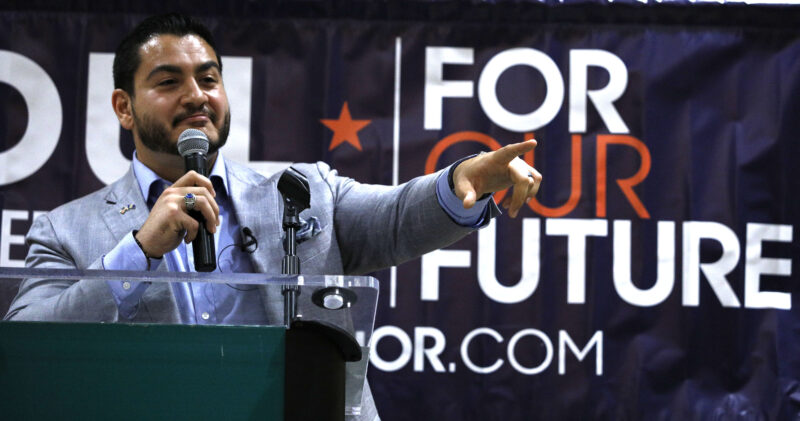


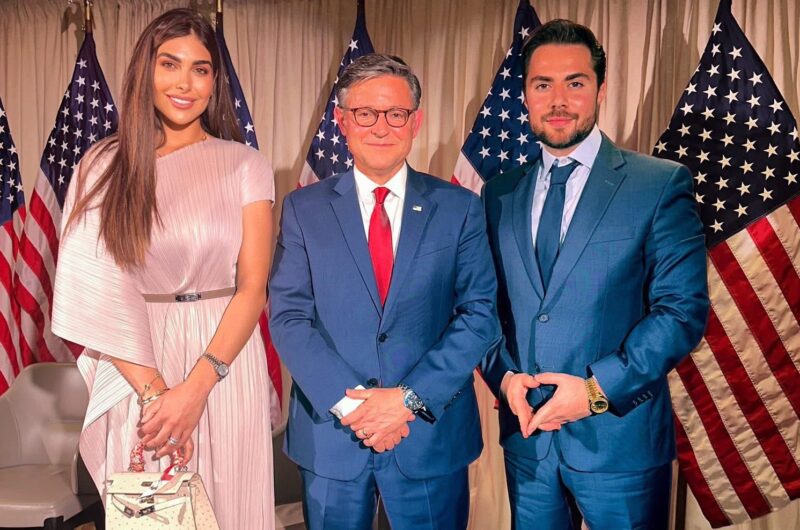
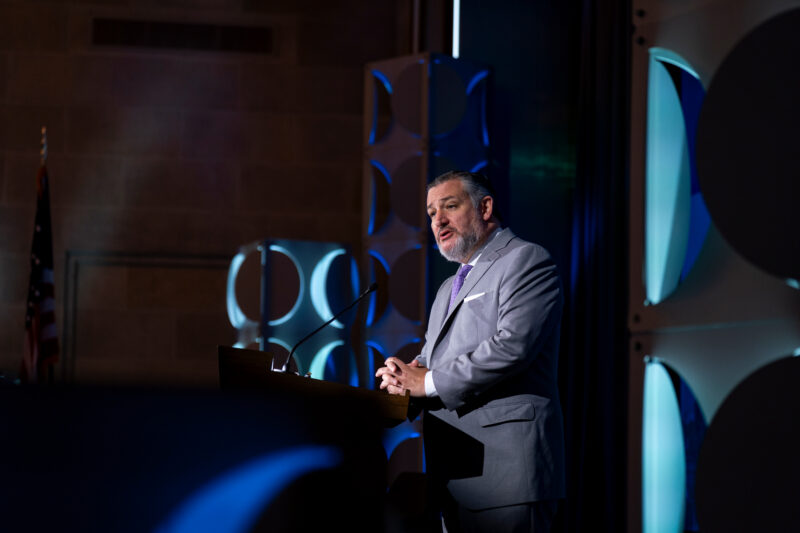

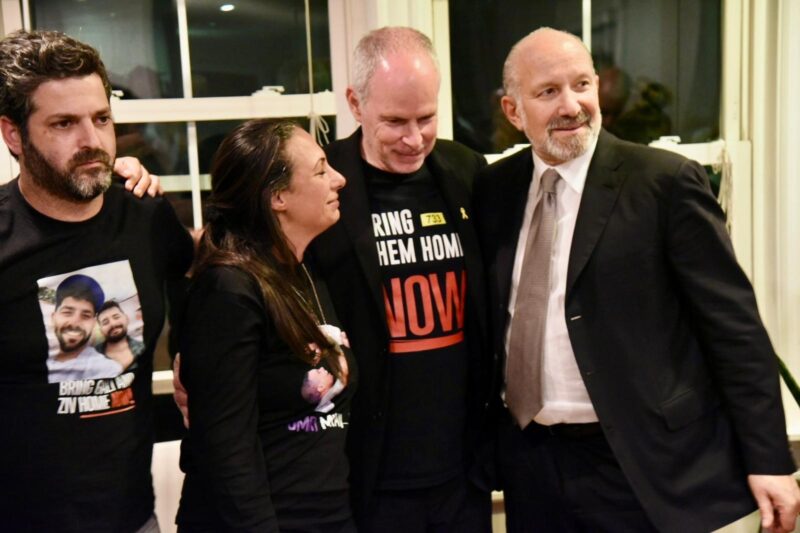














At gala, Birthright Foundation CEO Elias Saratovsky announced two new goals: a $900 million fundraising campaign and bringing 200,000 participants to Israel over the next five years

NIRA DAYANIM/EJEWISHPHILANTHROPY
Birthright Israel Foundation marks 25 years at a gala at Manhattan’s Pier Sixty, Nov. 3rd, 2025


 Add JewishInsider on Google
In 1999, with the lofty goal of bringing every young Jewish adult to Israel free of cost, the nascent Birthright Israel launched its first trip to the Jewish state. Over the next 25 years, the organization would bring over 900,000 young Jews from some 70 countries to Israel.
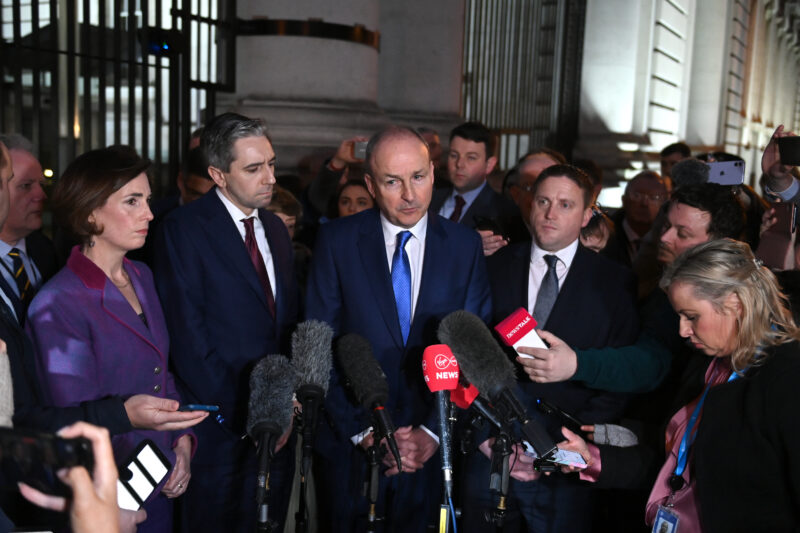
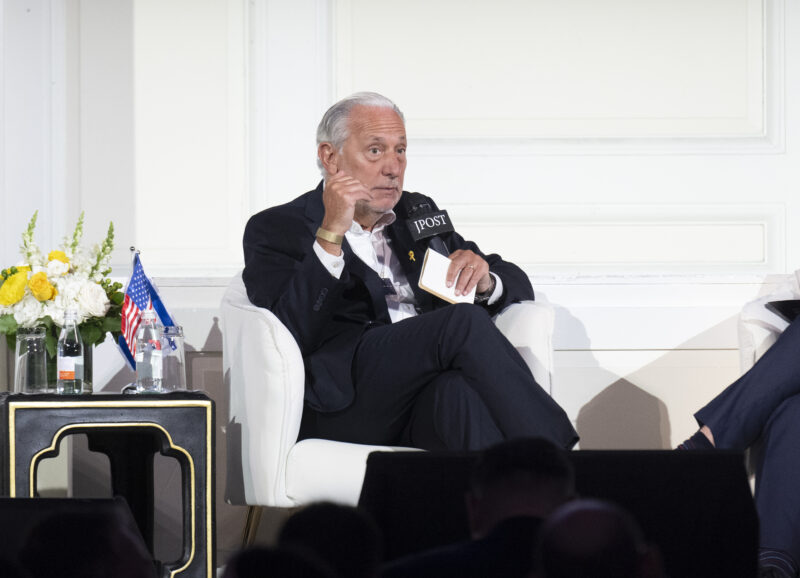
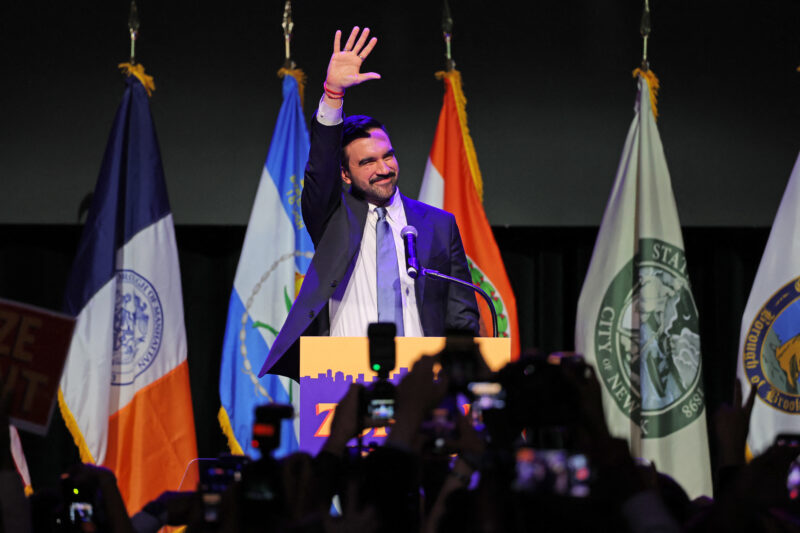
Last night, at a gala marking a quarter century of activity at Manhattan’s Pier Sixty, Birthright Israel Foundation’s CEO Elias Saratovsky announced two new goals: a $900 million fundraising campaign aimed at securing the organization’s future and bringing 200,000 participants to Israel over the next five years.
The campaign has already secured more than $220 million in commitments, Saratovsky told eJewishPhilanthropy — $132 million toward its $650 million goal for trips, and $90 million toward its $250 million goal for legacy commitments.
“We have a solid foundation of gifts,” he told eJP. “We’re grateful to everyone who has given so far, and now the opportunity we have in front of us is to ask the entire Jewish community to support an organization that has impacted the entire Jewish world over the last two and a half decades.”
Alongside Jewish summer camps, Birthright trips are credited with increased connection to Israel and Jewish engagement among participants, research from Brandeis University’s Cohen Center for Modern Jewish Studies has found. A participant on the first Birthright Israel trip, Saratovsky also credits that experience for his own Jewish involvement.
But at $5,000 per participant, the signature trips are also a mammoth financial undertaking, requiring both logistical mastery and a constant funding stream. (See: the organization’s efforts to quickly charter a cruise ship in order to evacuate participants who were stranded in Israel after the skies were closed during the war with Iran last June.)
Since its early days, Birthright has benefited from support from some of the Jewish community’s most prolific donors — chief among them Charles Bronfman and Michael Steinhardt, as well as Sheldon and Dr. Miriam Adelson, who donated half a billion to the organization over 15 years; following Sheldon Adelson’s death in 2021, the family scaled back its contributions, encouraging other donors to fill the gap.
Many of those supporters — representing nearly every major Jewish foundation and individual donor family — turned out for the Manhattan gala — a sprawling, candlelit affair packed to capacity. Attended by nearly 1,000 trip alumni, along with Jewish professionals and donors, Lynn Schusterman was honored for her contribution to the project, delivering a speech about the love that her late husband, Charles, had for Israel and the butterfly effect she’s witnessed since the program launched.
“Each of you in this room has the power and the responsibility to decide how the story of Israel and the Jewish people unfolds. When my late husband, Charlie, passed away, I had this idea of creating what I call ‘the Charlie’ — young people who had gone on Birthright, got past their community and [gave] back from what they had learned and the impact of Birthright,” said Schusterman.
The event was emceed by Jonah Platt. Schusterman’s daughter, Stacy, and the co-president of the Charles and Lynn Schusterman Family Philanthropies, Lisa Eisen, co-chaired the event. Other speakers included Birthright Israel cofounder Charles Bronfman, Saratovsky and Birthright Israel CEO Gidi Mark.
“This is a room filled with leaders, with dreamers, with community,” said Platt.
Fortunately, for an organization seeking nearly $700 million in donations, it was also a room filled with philanthropists.
Moulton turned against the group when it was unable to guarantee him an endorsement upon the launch of his Senate campaign, a source told JI
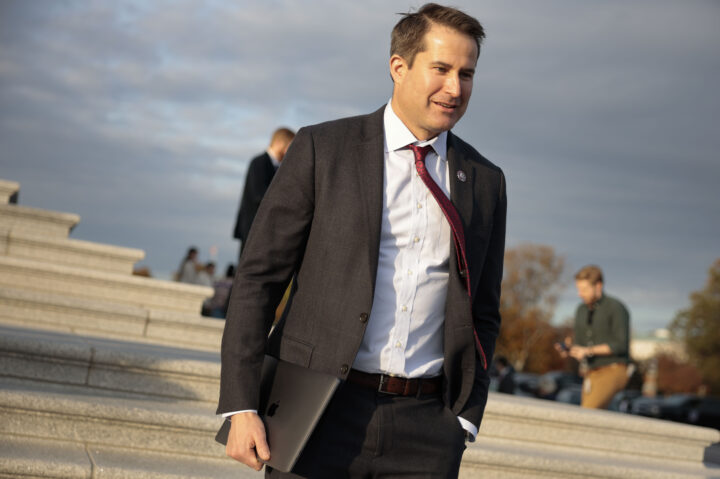
Anna Moneymaker/Getty Images
Rep. Seth Moulton (D-MA) speaks with a reporter outside of the U.S. Capitol Building on November 16, 2021 in Washington.
Before making public denunciations and rejections of AIPAC an early pillar of his Senate campaign against Sen. Ed Markey (D-MA), Rep. Seth Moulton (D-MA) spent months seeking a promise that the group would endorse him upon the announcement of his Senate campaign, a source familiar with the situation told Jewish Insider.
The source said that Moulton — who has been endorsed by AIPAC in previous races — began courting AIPAC leaders in Massachusetts in the spring this year and then made multiple explicit requests for an endorsement throughout the summer.
AIPAC leaders were ultimately unwilling to provide such a guarantee before the race began, the individual said.
On the second day of his nascent primary campaign, Moulton released an announcement rejecting AIPAC and saying that he would return any donations he had received from its members.
He has continued to hammer the group since then, saying in a recent interview that his break with AIPAC was “a long time coming.”
“AIPAC has made clear to all in Congress that it intends to use its significant resources to influence U.S. elections, and Seth believes that’s all the more reason to engage and push for change from within,” the Moulton campaign said in a statement. “He’s never been afraid to disagree with AIPAC, both privately and in public, but he’s been increasingly and particularly focused on getting them to distance themselves from the Netanyahu government. When it became clear that they would not do so, Seth made the decision to return their contributions.”
The campaign did not deny JI’s reporting that Moulton had made repeated requests for a guarantee of an AIPAC endorsement before announcing his Senate run.
Asked for comment on the situation, AIPAC spokesperson Marshall Wittmann referred JI to the group’s original statement on Moulton’s break with AIPAC. That statement highlighted his past relationship with and requests for an endorsement from the group — though it did not explicitly mention outreach in connection with the Senate campaign.
“Rep. Moulton is abandoning his friends to grab a headline, capitulating to the extremes rather than standing on conviction,” Wittmann’s original statement reads. “His statement comes after years of him repeatedly asking for our endorsement and is a clear message to AIPAC members in Massachusetts, and millions of pro-Israel Democrats nationwide, that he rejects their support and will not stand with them.”
The revelation of Moulton’s recent and unsuccessful efforts to secure a guarantee of AIPAC’s support may cast his rejection of the group in a new light.
Many strategists involved in Massachusetts politics said Moulton’s move is an odd strategic choice for a lawmaker known more as a moderate — especially when running against Markey, who holds a strong progressive record and has a deep well of support among progressive voters.
Moulton’s strategy is “all a little head scratching,” a state Democratic official told JI. In some ways, the official said, Moulton’s campaign mirrors his successful line of attack — focused on a generational and anti-establishment argument — against then-Rep. John Tierney (D-MA) in 2014, whom he unseated.
But, the official continued, “on the face of it, it doesn’t make a whole lot of sense as a political strategy” for Moulton to try to out-flank Markey from the left. “Maybe he sees something other people [don’t], but it’s an odd thing to make as your signature opening move.”
Moulton, the official continued, would probably be more successful once again focusing on a generational argument and “frankly staying far away from issues like Israel,” which is not likely to be a particularly salient issue in the race.
Anthony Cignoli, a longtime Massachusetts political consultant, said that “it’s clear Moulton is looking for the base of voters that he would need in a primary” — a voting population that’s generally to the left of Moulton’s own track record.
“But here you’ve got the long-standing champ of a lot of these issues, Ed Markey, and Moulton is really trying to find a way to muscle in here,” Cignoli said. “These are not issues he has a track record on.”
In the primary, Cignoli said Moulton needs to “reinvent and reintroduce himself” as a more progressive figure. “It’s hard to change in mid-course from his congressional track record … [and] that’s going to take an awful lot of money.”
He said that he thinks many voters, particularly in the Jewish community, will find Moulton’s sudden U-turn on AIPAC to be disingenuous. And he said that Markey is well-known and highly popular among key Democratic primary constituencies, particularly among the progressives who make up the base of the primary electorate.
One leader in the Boston Jewish community told JI that Moulton’s rejection of AIPAC has been largely overlooked outside of a highly engaged constituency of Jewish voters.
But, the leader agreed, Moulton’s strategy does not seem to make much sense. In a head-to-head race, they said, Markey will clearly own the left flank of the electorate. Moulton has “actively and aggressively” sought AIPAC’s endorsement in past races, the leader continued, and it’s not likely that many anti-Israel voters will see his recent turn as authentic.
Moulton’s strong rejection of AIPAC could lead Jewish pro-Israel voters in Massachusetts to give a second look to Markey, local observers say.
Particularly in recent years, Markey has been one of the most vocal and consistent critics of Israel in the Senate. He voted in favor of every resolution to block arms transfers to Israel that has come before the chamber in the past year and faced boos for a call for de-escalation between Israel and Hamas at a Jewish communal gathering immediately after the Oct. 7, 2023, Hamas attacks.
He was also a frequent critic of Israeli policy prior to the war in Gaza.
But despite his record, Markey has a long-running relationship with the state’s Jewish community and has been popular among Jewish Democratic voters during his long career.
“He does have a multi-decade well of support and goodwill. That’s been challenged in recent years … but he’s got a deep well of relationships to call upon and credibility from the past,” the Democratic official said. “That could potentially open an opportunity for new conversations.”
Moulton’s anti-AIPAC blitz is “almost pushing that community into Markey’s arms,” the official continued.
Cignoli said that while Markey may face some challenges in the Jewish community, Moulton appears to be effectively surrendering that territory.
It remains unknown whether other candidates, such as Squad member Rep. Ayanna Pressley (D-MA), will join the race. A Pressley candidacy in particular could prompt Jewish voters to unite around an alternative to block her ascension.
How strong supporters of Israel end up voting remains an open question, the Boston Jewish leader said — highly dependent on the ultimate shape of the race.
The Democratic official said that whether Pressley enters the race is currently one of the most-watched dynamics in Massachusetts politics — “the person that everybody is waiting for is Ayanna” — and that she is believed to be considering a campaign, though time could be running short.
“If Ayanna is in, that definitely changes the calculus for the [pro-]Israel community. Maybe people would rather have Markey at that point,” the official said.
Cignoli was somewhat skeptical that any others would enter the race, given that they’d likely split the anti-incumbent vote with Moulton, potentially to Markey’s benefit, and might struggle to qualify for the ballot.
“Pressley against the incumbent is one thing, but Pressley with another challenger out there who’s aggressive in his election style, campaign style, it makes it more difficult,” Cignoli said. “She would be a more significant candidate [against Markey] but with Moulton in, not as much.”
Pressley, he added, might have a stronger chance of winning a Senate seat if she waits until one of the incumbents retires. She could retain her safe House seat until then, or potentially find herself in line for a House Democratic leadership position, gain a spot in a future Democratic administration or run for another office.
Another potential challenge for Moulton could be locking down the necessary 15% support at the state’s Democratic convention — from local Democratic activists and officials, who are well to the left of the average Democratic voter and not Moulton’s natural constituency — to appear on the ballot next year.
Markey already has sufficient support and Pressley would likely be able to rally it, but “I don’t see where Seth gets his 15% from,” the official said.
Cignoli also said he’s unclear on how Moulton plans to meet that 15% threshold.
Jewish Insider’s Congressional correspondent Emily Jacobs contributed reporting.
In a speech at a ‘No Kings’ rally, Bush spent time eulogizing convicted murderer Assata Shakur
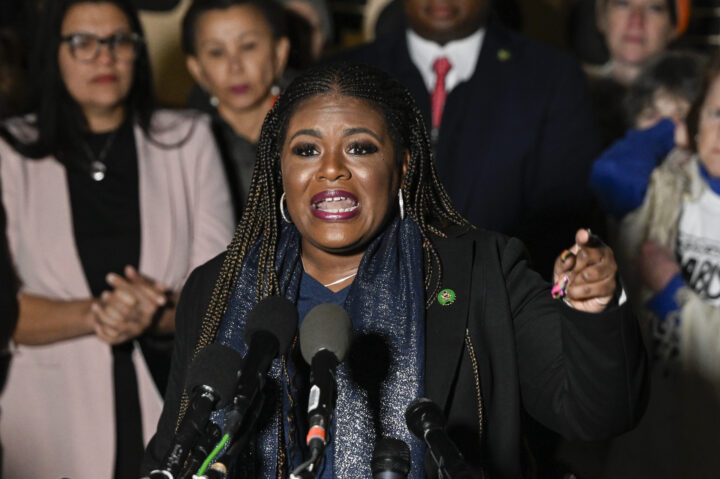
Celal Gunes/Anadolu via Getty Images
Rep. Cori Bush at a press conference in front of the U.S. Capitol to call for a ceasefire in Gaza on November 13, 2023.
In her congressional comeback attempt against Rep. Wesley Bell (D-MO), former Rep. Cori Bush (D-MO) is continuing to lean into extreme rhetoric and stances.
Speaking at an anti-Trump “No Kings” rally in St. Louis shortly after launching her campaign, Bush dedicated extensive time to eulogizing murderer and escaped convict Assata Shakur, an activist who killed a police officer in 1977 and later escaped from prison. Shakur died in Cuba in September.
Bush, in her remarks, described Shakur as “an activist that we recently lost” who “gave us a mantra that we live by. She said it is our duty to fight for our freedom.”
During those remarks, Bush — who has faced repeated accusations of antisemitism — made passing reference to fighting antisemitism and other forms of bigotry.
She finished other remarks about the Trump administration — seemingly unrelated to Israel policy — with a shout of “Free Palestine.”
On X, Bush continues to attack Israel and its supporters as a central message of her campaign, including reposting unfounded claims accusing Israel of violating its ceasefire agreement with Hamas — a subject she has otherwise not addressed on her account, including when the agreement was initially announced.
Bush reposted a response on X to her announcement video that explicitly framed her campaign around her opposition to AIPAC, reading, “Rematch in St. Louis, Cori Bush taking on AIPAC again.”
In that video, Bush continued to implicitly blame her 2024 loss to Bell on AIPAC. Discussing that loss, she said she faced attacks for the fact that she “spoke truth,” accusing her opponents of spreading “lies and hate” about her, while flashing up a series of headlines relating to AIPAC spending in the race.
Responding on X to a video of House Speaker Mike Johnson (R-LA) discussing plans to jointly nominate President Donald Trump for the Nobel Peace Prize with Israeli and other international lawmakers, Bush said, “You should probably tell him [Trump] this won’t get him into heaven.”
Since launching her campaign, Bush has also reposted X posts accusing Israel of genocide, supporting International Criminal Court and International Court of Justice efforts targeting Israel, attacking American supporters of Israel and attacking CBS News editor-in-chief Bari Weiss and the publication she founded, The Free Press, for their Israel coverage.
Mayor Jacob Frey’s most prominent backers are declining to criticize his rival for employing staff that celebrated the Oct. 7 Hamas attack

Stephen Maturen/Getty Images
Omar Fateh, a member-elect of the Minnesota State Senate, speaks during a vigil for Dolal Idd, who was shot and killed by Minneapolis Police on December 31, 2020, in Minneapolis, Minnesota.
Leading elected officials in Minnesota are remaining silent in response to a top Minneapolis mayoral candidate, far-left state Sen. Omar Fateh, whose campaign has faced scrutiny for employing staffers who have celebrated Hamas’ Oct. 7, 2023, attacks and called for Israel’s destruction, among other extreme views he has yet to publicly address.
Fateh, a 35-year-old Democratic socialist, now employs a campaign communications manager, Anya Smith-Kooiman, who, in now-deleted social comments recently unearthed by Jewish Insider, has endorsed the Hamas attacks as a justified act of “resistance,” said Israel “does not have a ‘right’ to exist” and “must be dismantled,” and amplified a comment dismissing widespread reports of sexual violence on Oct. 7 as “propaganda,” according to screenshots.
Meanwhile, David Gilbert-Pederson, a local political activist and City Council aide who has been listed as a Fateh campaign staffer in filings, has unreservedly praised the Oct. 7 attacks, insisting in remarks on a December 2023 panel discussion that supporters of the Palestinian cause must “stand in unconditional solidarity with those resisting oppression.”
But even as some of the state’s leading Democratic lawmakers have endorsed Fateh’s rival, incumbent Mayor Jacob Frey, who is seeking a third term, they have so far declined to weigh in on the staffers’ comments and Fateh’s decision to hire them, which has raised questions about his acceptance of extreme rhetoric on a particularly sensitive issue.
Sen. Amy Klobuchar (D-MN) and Gov. Tim Walz, who are Frey’s most high-profile backers in what is expected to be a hotly contested race, both avoided addressing the matter to JI. A spokesperson for Klobuchar declined to comment on Friday, and representatives for Walz did not return multiple requests for comment.
Prominent Democratic officials who have not taken sides in the mayoral contest also did not respond to requests for comment — including Peggy Flanagan, the lieutenant governor who is now running for U.S. Senate, and Rep. Angie Craig (D-MN), a pro-Israel lawmaker also seeking to replace retiring Sen. Tina Smith (D-MN). A spokesperson for the senator did not respond to a message seeking comment about Fateh.
The muted responses underscore an increasing reluctance among many Democratic elected officials and public figures to speak out against extremist or antisemitic language related to the ongoing war between Israel and Hamas.
In Minneapolis, only one of the three City Council members who have endorsed Frey’s reelection bid was open to weighing in on the matter, denouncing the campaign staffers as well as Fateh’s judgement for choosing to employ them.
“Defending the Oct. 7 terrorist attack is disgraceful, and it’s embarrassing that Sen. Fateh is OK with this behavior,” Linea Palmisano, a Democratic councilwoman, told JI on Friday. “Who mayors surround themselves with matters, and anyone who stands by these remarks isn’t ready for the job.”
LaTrisha Vetaw and Michael Rainville, the other Council members supporting Frey, did not return requests for comment.
While Fateh himself has not used the same rhetoric as his allies, the state legislator has been a staunch critic of Israel — calling for a ceasefire 10 days after the Hamas attacks and accusing Israel of genocide in its war in Gaza.
Fateh has also voiced his support for the Boycott, Divestment and Sanctions movement targeting Israel, which some critics have accused of stoking antisemitism, and has pledged not to engage with the local Jewish Community Relations Council, according to a candidate questionnaire solicited by the Twin Cities chapter of the Democratic Socialists of America, a supporter of his campaign.
In the document, portions of which were recently obtained by JI, Fateh vowed to “refrain from any and all affiliation” with the JCRC, which the DSA dismissed as a “Zionist lobby group” akin to AIPAC, J Street and Christians United for Israel — even as the group is nonpartisan and represents the Jewish community to Minneapolis government officials.

Fateh did not share an explanation for his answer despite space to do so, according to the document reviewed by JI.
Steve Hunegs, executive director of the JCRC of Minnesota and the Dakotas, sharply criticized the state senator’s responses to the DSA in a statement to JI on Friday, while questioning his commitment to combating antisemitism.
“Sen. Fateh’s campaign slogan promises a ‘city that works for everyone,’” Hunegs said. “But how can Sen. Fateh be understood as anything other than a divider when he’s pledged to boycott Jewish organizations? Likewise, how can Jews feel that our safety will be a priority when Sen. Fateh’s staff traffic in antisemitism? As proud Jews we aren’t going to allow Sen. Fateh, the DSA or Hamas apologists drive us from the public square.”
Fateh’s campaign did not respond to a request for comment on Friday.
Fateh, who assumed office in 2021 as the first Muslim and first Somali American to serve in the Minnesota state Senate, won the state Democratic Party endorsement last month over Frey, who has challenged the results.
The mayor, 44, is the second Jewish mayor to represent Minneapolis and has been increasingly outspoken against rising antisemitism in the wake of Hamas’ attacks, while opposing some resolutions on Israel in the City Council that he has dismissed as one-sided. He has also been a critic of Israel Prime Minister Benjamin Netanyahu and his handling of the war in Gaza amid a worsening humanitarian crisis.
It’s the GOP gubernatorial nominee’s second trip to the Jewish state
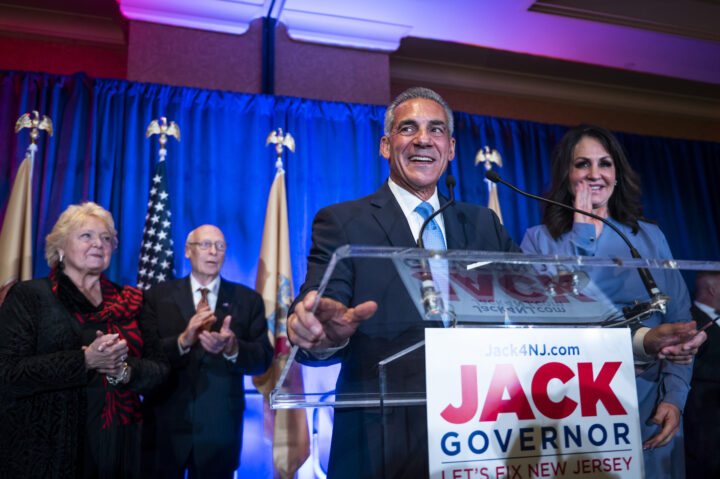
Mark Kauzlarich/Bloomberg via Getty Images
Jack Ciattarelli, Republican candidate for governor of New Jersey
Former New Jersey state Rep. Jack Ciattarelli, the Garden State’s Republican nominee for governor, will travel to Israel on Sunday for his first visit during the campaign, his campaign revealed to Jewish Insider.
Ciattarelli is running against Rep. Mikie Sherrill (D-NJ) in the race to succeed New Jersey Democratic Gov. Phil Murphy, who is term-limited. He was New Jersey’s GOP gubernatorial nominee in 2021 against Murphy, narrowly losing to the sitting governor.
Speaking to JI in an interview ahead of his trip, the New Jersey Republican said he expects to have “five very, very productive days in Israel.”
Ciattarelli said that the goal of the visit was to find opportunities for economic investment in New Jersey from leading Israeli companies in the technology and medical sectors and to show his solidarity with the Garden State’s Jewish community.
New Jersey has the second-largest Jewish population in the country.
“One of my objectives as governor is to grow our economy, and one of the ways that we achieve that objective is by forging a closer economic relationship with a number of nations, one of which is certainly Israel. They have technology companies, medical device companies, pharmaceutical companies, and a number of other industries that are looking to expand internationally. And when they do, we certainly want them to do that in New Jersey,” Ciattarelli said.
Ciattarelli added that the trip, his second time visiting the Jewish state, “also has great significance for New Jersey’s Jewish community,” because it signifies his commitment to a strong U.S.-Israel relationship.
“I’ve always been a big supporter of Israel. And as we know, antisemitism is at an all-time high in New Jersey, across the nation and the globe. As governor, antisemitism will not be tolerated. And so again, by going to Israel, we demonstrate a very close relationship between New Jersey and this very important ally in the Middle East and, of course, in the world,” he explained.
Ciattarelli previously traveled to the Jewish state during his 2021 gubernatorial run, one month before the general election. The trip, which Ciattarelli described to JI at the time as a “life-changing experience,” was his first visit to Israel.
“My goal was to let civic leaders, business leaders and religious leaders know that Israel will have a strong ally in New Jersey when I’m governor. From an economic development perspective, Israel does more than $14 billion a year in bilateral trade with New York. It does only $1 billion with New Jersey. That shouldn’t be the case,” Ciattarelli said after his 2021 visit.
“So I made clear during my trip and meeting with all leaders, that New Jersey is going to strengthen its cultural, religious and economic ties with the State of Israel. And we will stand with her in defending its people,” he continued.
He again mentioned the trade deficit while speaking to JI on Friday about his upcoming visit.
“Israel does $14 billion a year in bilateral trade with New York, less than $2 billion a year with New Jersey. There’s nothing New York has that New Jersey doesn’t. So we want to make sure that Israeli companies, when they invest in the United States, they do so right in New Jersey,” Ciattarelli said.
The terror group has once again ramped up its attacks on international shipping in the Red Sea two months after reaching a ceasefire with the U.S.

Tom Williams/CQ-Roll Call, Inc via Getty Images
Senate Armed Services Committee Chairman Roger Wicker (R-MS) arrives for a confirmation hearing in Dirksen building on Tuesday, May 13, 2025.
A top Senate lawmaker indicated on Thursday that he’s open to resumed U.S. involvement in the campaign against the Houthis, amid a ramp-up of the group’s attacks on commercial shipping in the Red Sea and Israel that comes two months after the U.S. and the Houthis reached a ceasefire that ended the American bombing campaign against the group.
The Iran-backed Yemeni terrorist group has attacked and sunk two cargo ships passing through the Red Sea this week, killing several members of the ships’ crews and wounding and kidnapping others. The Houthis have also launched new strikes on Israel.
“The Houthis need to be totally eliminated,” Sen. Roger Wicker (R-MS), the chair of the Senate Armed Services Committee, told Jewish Insider. “They have no purpose other than to kill free people.”
Asked if the U.S. should become involved directly against the Houthis again, Wicker said, “I wouldn’t rule that out.”
Sen. Mark Kelly (D-AZ) told JI that if the Houthis continue to block Red Sea shipping, “we’ve got to figure out a path forward on how to respond. It can’t be a long-term thing for ships to go around the Horn of Africa.”
Sen. James Lankford (R-OK) said he wouldn’t, at this point, discuss possible American action, but emphasized that any Houthi activity has Iran’s hand behind it.
“The Houthis have decided the war against Israel is not over, and that doesn’t happen without Iranian support,” Lankford said, noting Iran’s assistance in providing intelligence, training and arms to the Yemeni terror group. “That would tell me Iran’s not done with their acts of terrorism in the region. … We have to decide, and Israel has to make a determination — as they have, of late — to be very, very clear. And Israel has carried out additional strikes on the Houthis to try to make that stop.”
Sen. Mike Rounds (R-SD) said, “I’m not sure what our interests are there right now, but most certainly, we have told them in the past that if they want to have a ceasefire, we’ll support a ceasefire. If they want to get back in the middle of it, I suspect that the administration may very well have a response to that.”
He said that he couldn’t discuss the possibility of a U.S. response without having been briefed on the situation.
Sen. Ted Budd (R-NC) said he would need to think further about what circumstances would require American intervention.
“You’ve seen their main source, of Iran, be taken offline,” Budd told JI. “It remains to be seen what Iran is going to do in connection with the Houthis, but they’re a malevolent force that needs to be dealt with.”
Asked for comment on whether the Houthis’ strikes violated the group’s ceasefire with the U.S. or what might prompt further American action against the terrorist organization, the White House referred JI to a State Department press release condemning the attacks.
“These attacks demonstrate the ongoing threat that Iran-backed Houthi rebels pose to freedom of navigation and to regional economic and maritime security,” State Department spokesperson Tammy Bruce said. “The United States has been clear: we will continue to take necessary action to protect freedom of navigation and commercial shipping from Houthi terrorist attacks, which must be condemned by all members of the international community.”
The ADL accused the nation’s largest teachers union of pushing a ‘radical, antisemitic agenda on students’
Kristoffer Tripplaar/Sipa via AP Images
A logo sign outside of the headquarters of the National Education Association (NEA) labor union in Washington, D.C. on July 11, 2015.
A grassroots campaign urging educators to stop using teaching materials from the Anti-Defamation League reached the highest levels of K-12 education over the weekend.
Inside a packed conference hall in Portland, Ore., the thousands of delegates who make up the governing body of the National Education Association — the largest teachers union in the country — passed a measure that bars the union from using, endorsing or publicizing any materials from the ADL.
In the moments before the vote, several Jewish delegates spoke passionately in opposition of the measure.
“I stand here and ask you to oppose [the measure] to show that all are truly welcome here,” a teacher from New Jersey said, according to audio of the closed-door meeting obtained by Jewish Insider.
Another Jewish teacher quoted NEA Executive Director Kim Anderson from her keynote address earlier in the weekend. “This union has your back,” Anderson told the more than 6,000 assembled delegates.
“Does that include stopping Jewish hate, antisemitism? Some of our members don’t feel they are safe,” the Jewish teacher said during Sunday’s debate.
The vote occurred by voice. The margin was so close that delegates had to vote three times as the chair considered whether the loudest cheers were in support of the measure or in opposition, but, ultimately, it still received the backing of more than half the delegates. It now heads to the NEA’s nine-member executive committee, which gets the final word on whether the measure will be put into effect. (The passage of the anti-ADL measure was first reported by the North American Values Institute.)
The episode garnered criticism from Jewish teachers and allies. NEA’s national leadership has not yet weighed in on the measure.
“At a time when incidents of hate and bias are on the rise across the country, this action sends a troubling message of exclusion and undermines our shared goal of ensuring every student feels safe and supported,” a spokesperson for the NEA’s Jewish affairs caucus said in a statement to JI. The caucus said its members plan to continue using ADL materials in their classrooms.
The ADL slammed the vote, calling it “profoundly disturbing that a group of NEA activists would brazenly attempt to further isolate their Jewish colleagues and push a radical, antisemitic agenda on students,” according to an ADL spokesperson.
Staci Maiers, an NEA spokesperson, declined to comment on the specific measure. “NEA members will continue to educate and organize against antisemitism, anti-Muslim bigotry and all forms of hate and discrimination,” Maiers told JI in a statement. “We will not shy away from difficult or controversial issues that affect our members, our students or our schools.” (The NEA assembly also adopted a measure pledging to highlight Jewish American Heritage Month each May.)
The NEA’s adoption of a measure targeting the leading Jewish civil rights organization may be an escalation, but it is only the most recent example of antisemitism — and divisive politics surrounding the war in Gaza — spilling into K-12 education, and teachers unions in particular.
Since the 2023 Hamas attacks, Jewish parents have raised concerns about discrimination against Jewish students and about the increasingly frequent use of anti-Israel materials in classrooms. Last week, for instance, the parents of an 11-year-old sued their child’s Virginia private school, alleging school administrators ignored antisemitic harassment directed against her for months.
The NEA’s vote on the anti-ADL measure grew out of a campaign called #DropTheADLFromSchools, which began with an online open letter and gradually garnered the support of some of the country’s most powerful local unions, including United Teachers Los Angeles, which represents 35,000 LA teachers.
In March, UTLA president Cecily Myart-Cruz wrote a letter asking the superintendent of the LA Unified School District and the LAUSD school board to stop using ADL materials and “refuse to contract or partner” with the ADL, because of its “focus on indoctrination rather than education.” (An LAUSD spokesperson said no action had been taken in reference to the letter.)
Last year, the NEA joined a campaign to pressure then-President Joe Biden to halt all U.S. military aid to Israel. The Massachusetts Teachers Association, an NEA affiliate, has encouraged members to introduce anti-Israel materials into classrooms.
Last week, the largest teachers union in California published a letter urging state senators to vote against a bill focused on fighting and preventing antisemitism.
“While we share the same overarching goal of the AB 715 author and sponsors of combating antisemitism, we have serious reservations about the proposed methods for achieving it,” wrote Seth Bramble, legislative relations manager of the California Teachers Association, a 300,000-member affiliate of the NEA. “We are also concerned with academic freedom and the ability of educators to ensure that instruction include perspectives and materials that reflect the cultural and ethnic diversity of all of California’s students.”
In May, the state assembly voted unanimously to approve the bill, which was co-sponsored by the Jewish, Black, Latino, Native American and Asian American and Pacific Islander legislative caucuses. The legislation would create a statewide antisemitism coordinator in the state’s Education Department and strengthen anti-discrimination protections, while providing additional guidelines to keep antisemitism out of teaching materials.
But the bill’s fate is now in jeopardy as senators face pressure from one of the state’s most powerful unions to reject it. The California Senate’s education committee is set to vote on the bill on Wednesday. State Sen. Sasha Renée Pérez, the Los Angeles-area Democrat who chairs the committee, did not respond to a request for comment about whether she plans to vote for the bill.
State Sen. Scott Wiener, a Democrat from San Francisco and the co-chair of the legislative Jewish caucus, said it is “frustrating” seeing the CTA oppose the bill instead of collaborating with its authors.
“We need, as a matter of state policy, to be very, very clear that antisemitism will not be tolerated in California public schools,” Wiener told JI. “I was really disappointed to see CTA’s letter which basically says, ‘Oh, we hate antisemitism, but we can’t possibly do anything meaningful about it.’” (A CTA spokesperson did not respond to a request for comment.)
More than two dozen California Jewish groups released a statement on Monday slamming the CTA, saying that advocates for the bill have already put its passage on hold for more than a year to try to negotiate with the union. The sponsors pivoted from an earlier version of the bill — which was intended to root out antisemitism in the state’s ethnic studies curriculum — at the urging of the CTA.
“We call on the legislature to stand firmly in support of California’s Jewish students and move the bill forward,” wrote the Jewish organizations, including the ADL, StandWithUs, American Jewish Committee and the Jewish federations in Los Angeles, San Diego, San Francisco and several other communities.
Jewish community activists plan to spend the next two days lobbying for passage of the bill. Jay Goldfischer, a teacher in Los Angeles County, is traveling to Sacramento to urge lawmakers to vote for it.
“Jewish students across California are being silenced. Many are afraid to walk into their schools, unsure if they’ll be targeted for who they are,” Goldfischer told JI. “As a CTA member, I am personally disappointed that CTA doesn’t feel Jewish students are worth protecting.”
Adams would have to win over most New York City Republicans while remaining competitive with Democrats and winning over independents who weren’t eligible to participate in the Democratic primary

Yuki Iwamura-Pool/Getty Images
Democratic mayoral candidate Zohran Mamdani
Mainstream political and business leaders in New York City, including the organized Jewish community, will soon need to decide whether to coalesce against far-left presumed Democratic mayoral nominee Zohran Mamdani — by rallying behind the candidacy of scandal-plagued Mayor Eric Adams despite his significant political baggage.
Adams, who is running as an independent in the race, appears to be the only alternative candidate capable of putting together a campaign rallying anti-socialists across the city to stop Mamdani. It won’t be easy, given Adams’ own low approval ratings and record of alleged corruption, but the makings of an anti-Mamdani coalition are there — at least on paper.
For Adams to win plurality support in a general election, it would require most Republicans to put partisanship aside and vote for Adams to stop the socialist, and hold onto most of the Black, Jewish voters and moderate Democratic voters who voted in large numbers for former New York Gov. Andrew Cuomo in the primary. Adams benefits from the name recognition of incumbency, and the potential to receive support from outside centrist groups spending on his behalf.
Keeping a bipartisan coalition of that nature will be challenging, especially given the mayor’s own unpopular record. It would require a number of lucky breaks, from Cuomo opting not to run in the general election (he appears to be staying on the ballot without an active campaign) to Republicans effectively nudging their voters to back Adams when there’s a Republican already on the ballot. But if the campaign is less about Adams and more about stopping left-wing radicalism on crime, the economy and antisemitism, it’s not implausible to see a campaign coalescing around a “block socialism, vote Adams” type of message.
Here’s the political math: Adams would have to win over most New York City Republicans — President Donald Trump won 30% of the citywide vote in 2024 — while remaining competitive with Democrats and winning over independents who weren’t eligible to participate in the Democratic primary.
An Emerson College poll conducted amid Mamdani’s surge in late May offers some empirical evidence that such a coalition has an outside shot at victory in a general election, with a broader, more-moderate electorate. The survey found that with Mamdani as the Democratic nominee, he leads with 35%, Republican Curtis Sliwa finishes with 16%, Adams holds 15% and independent Jim Walden tallied 6%.
Put together the Sliwa, Walden and Adams votes, and you’ve got yourself a competitive race.
There’s already a lot of rumbling that Trump administration officials, eager to see Sliwa off the ballot, are looking at offering him a job in the administration to help nudge GOP voters into the Adams column to stop Mamdani. But Sliwa has given every indication so far that he’s not dropping out, which would force Republican leaders to more subtly nudge GOP partisans towards Adams.
The big red flag for anti-Mamdani moderates? Adams’ favorability rating in the same poll was a dismal 19%, with 69% viewing him unfavorably. That said, given the changed nature of the contest, the perception of Adams could change amid the shifting strategic environment. He’s already running a more energetic campaign than Cuomo did in the primary. (And it’s a safer bet to hope Adams’ numbers improve as an anti-Mamdani vehicle than betting on a total outsider with minimal name ID to play that role, as a few business leaders have suggested.)
There is some precedent for mainstream forces working to block a far-left or far-right candidate after an unexpected primary outcome. One of the most recent examples is socialist India Walton’s out-of-nowhere upset against Buffalo Mayor Byron Brown in a 2021 Democratic primary. Many analysts attributed her victory to a left-wing surge; it turned out to be a mirage of a low-turnout election before a broader array of voters really had a chance to scrutinize her record and background. Brown easily won the general election — as a write-in candidate.
There’s also former Sen. Joe Lieberman winning as an independent in 2006 after losing the Democratic primary, with Republicans signaling to their voters to back the senator over the also-ran GOP nominee on the ballot. And there’s the 1991 Louisiana governor’s election where scandal-plagued Democratic Gov. Edwin Edwards beat David Duke, whom Republican voters knowingly nominated. Edwards’ slogan? “Vote for the Crook. It’s Important.”
To be sure, any anti-Mamdani effort will be something of a long shot. Mamdani is now winning support from elected New York Democratic leaders all too willing to accommodate his radical record, and he generated strong turnout in the primary that underscores his natural charisma and strength as a politician. He’s got more starpower than many of the other aforementioned extreme nominees.
But if Jewish leaders believe Mamdani would pose a serious threat to Jewish life and safety in the city if elected, you’d expect they would make every effort to stop his candidacy — especially since there’s a chance, albeit a small one, that his momentum could be stunted as his record draws closer attention.
NYC mayoral candidate Zohran Mamdani said a trip to Israel is not necessary to support Jews but said in 2020 he would ‘coordinate a trip with other legislators to Palestine’
Yuki Iwamura-Pool/Getty Images
Democratic mayoral candidate Zohran Mamdani
In his campaign for New York City mayor, Zohran Mamdani, a far-left Queens state assemblyman polling in second place behind former New York Gov. Andrew Cuomo, has indicated he would not visit Israel if he is elected, saying he does not believe that such a trip is necessary “to stand up for Jewish New Yorkers.”
“I believe that to stand up for Jewish New Yorkers means that you actually meet Jewish New Yorkers wherever they may be, be it at their synagogues and temples or their homes or on the subway platform or at a park, wherever it may be,” Mamdani, a fierce critic of Israel, reiterated in comments at a mayoral forum hosted by several progressive Jewish groups on Sunday night.
By contrast, in a 2020 Zoom discussion with the Adalah Justice Project, a pro-Palestinian advocacy group, Mamdani said he was planning to organize a trip to the Palestinian territories, suggesting that he would make an exception for an issue he has upheld as one of his top causes during his tenure in Albany.
“Once COVID is over, I am planning on finding a way to coordinate a trip with other legislators to Palestine,” Mamdani said at the time. “We’ll figure that one out. I’ll probably get to the border and get turned away, but at the very least I’m going to organize it and go myself.”
It is unclear if Mamdani organized such a trip. His campaign did not immediately respond to a request for comment on Monday.
The comments, however, broadly underscore how Mamdani’s past remarks on the Israel-Palestinian conflict have become a source of growing tension as he confronts basic questions on the issue during his mayoral campaign.
Several of Mamdani’s Democratic opponents in the June 24 primary have said they would visit Israel if elected — in keeping with a long-standing tradition for New York City mayors who represent the largest Jewish community outside of Israel. Cuomo, who is leading the primary, has vowed it would be his first trip abroad, as have other candidates.
Mamdani, for his part, has suggested he would not visit any foreign country as mayor, saying he would instead “stay in New York City,” as he confirmed at the first mayoral debate last week. “My plans are to address New Yorkers across the five boroughs and focus on that,” he said.
During the mayoral forum on Sunday evening, he also raised doubts about whether he would be able to enter Israel at all, citing Israeli legislation barring non-citizen backers of the Boycott, Divestment and Sanctions movement from visiting the Jewish state.
Despite his long-standing support for BDS, Mamdani, who has faced scrutiny for declining to acknowledge Israel’s right to exist as a Jewish state, did not provide a direct answer about whether he would continue to endorse the movement as mayor when asked at the forum, saying only that he would seek to “bring New York City back into” compliance with international law.
“I think ultimately, the focus of our mayor should be on the issues of New York City at hand,” he insisted, even as he had argued in the Zoom conversation five years ago that BDS is a salient “local” issue and said that mayoral candidates should be pressured to join the movement to boycott Israel.
Elsewhere in that discussion, Mamdani voiced hostility to resolutions in the state Legislature to “disavow BDS” or “stand in solidarity with Israel,” which he dismissed as promoting Israeli interests.
“They use all of these hasbara propaganda talking points in the resolutions,” Mamdani said, using the Hebrew word for Israeli public diplomacy. “That is one place to fight is to stop such resolutions from being passed, to pass different kinds of resolutions.”
Mamdani has faced scrutiny for not signing on to several resolutions commemorating the Holocaust and honoring Israel during his tenure in office. He has defended his decision as consistent with what he now describes as a general policy against joining any such measures.
“In January, I told my Assembly staff not to co-sponsor any resolutions that were emailed to our office,” Mamdani said in a video last month. “It had nothing to do with the content of the resolution. But I understand this has caused pain and confusion for many.”
He said he had “voted every year for the Holocaust Remembrance Day Resolution, including this year, to honor the more than 6 million Jewish people murdered by the Nazis.”
The ads, running in both Yiddish and English, urge the GOP congressman to oppose cutting Medicaid funding

Courtesy House Speaker Mike Johnson (R-LA)
House Speaker Mike Johnson (R-LA), center, met in June 2024 with Hasidic leaders in New Square and Monsey, N.Y., alongside local GOP Rep. Mike Lawler (R-NY), right.
A new campaign is targeting Hasidic and Orthodox Jewish voters in Monsey, N.Y., with ads calling on voters to contact Rep. Mike Lawler (R-NY) to oppose proposals cutting Medicaid funding. But the group behind those ads has its own checkered history with Jewish community issues.
The ads, which are running both in Yiddish and English in local Jewish community publications, direct viewers to a website to send a form email to their lawmakers, identifying themself as a member of the Jewish community and opposing cuts to Medicaid programs as particularly harmful to local Jewish communities. Republicans have said such cuts are likely as part of the upcoming budget reconciliation bill.
The campaign largely targets Lawler, who represents many of the Hasidic communities in Rockland County and has been fending off accusations from Democrats and liberal groups that he is backing cuts to Medicaid. He has pledged that he will “never cast a vote that takes Medicaid away from eligible recipients who rely on this vital program,” but instead wants to crack down on fraud within the program.
One of the groups behind those advertisements, healthcare union 1199SEIU, has a history of anti-Israel activism.
In December 2023, the group called for an immediate ceasefire in Gaza, while also condemning the Oct. 7, 2023, Hamas terror attacks and calling for the unconditional release of hostages. It suggested both Israel and Hamas had committed war crimes.
In October 2024, the group called for an arms embargo on Israel, saying, “the Netanyahu government has used the October 7 atrocities to justify inexcusable destruction and killing in Gaza, creating an unprecedented humanitarian catastrophe in the region.”
It also condemned Israeli operations in Lebanon, while also accusing both Israel and Hezbollah of war crimes.
The national SEIU umbrella organization has criticized crackdowns on antisemitic activity on college campuses.
In their individual capacity, 1199SEIU staff and members have signed on to statements accusing Israel of genocide and supporting the Boycott, Divestment and Sanctions movement targeting Israel. Some leaders inside the national SEIU organization expressed support for Hamas.
A Lawler spokesperson suggested that it’s hypocritical for the group to attempt to appeal to the Jewish community given its history of Israel criticism.
“We strongly condemn SEIU1199 for targeting Hasidic and Orthodox Jewish voters in Rockland with blatantly false ads,” a Lawler spokesperson said in a statement. “The irony of SEIU1199 attempting to appeal to Jewish voters while having a history of supporting the Boycott, Divestment, and Sanctions (BDS) movement, supporting pro-Hamas encampments on our universities, and pushing for an arms embargo on Israel is comical. SEIU1199 should immediately retract these advertisements and issue an apology.”
1199SEIU did not respond to a request for comment.