




















































New York City Council Speaker Julie Menin called the museum's decision to spotlight John Galliano 'a serious mistake,' despite his efforts to make amends with the Jewish community
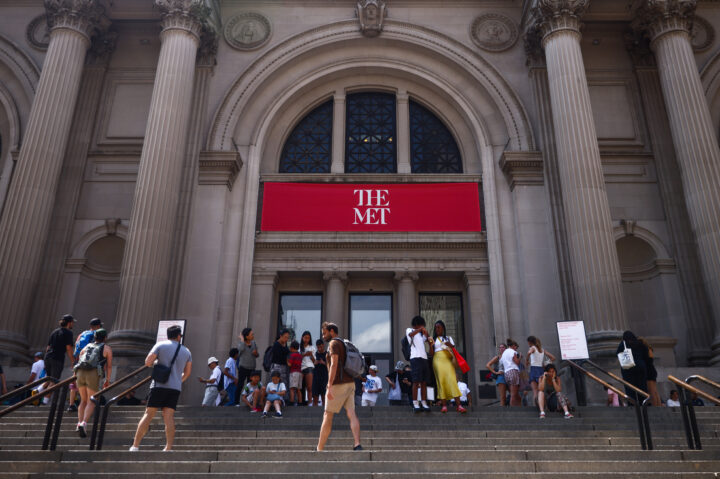
Beata Zawrzel/NurPhoto via Getty Images
The Metropolitan Museum of Art in New York City, on July 15th, 2024.


 Add JewishInsider on Google
The Metropolitan Museum of Art is facing mounting backlash over its plans to honor British fashion designer John Galliano — who was convicted more than a decade ago of a hate crime in France for antisemitic remarks. The choice was blasted as a “serious mistake” by a senior Jewish city official, even as the Met consulted with Jewish leaders ahead of the announcement.
In 2011, Dior fired creative director Galliano after a video surfaced of his drunken, antisemitic tirade at a bar in La Marais, a Jewish quarter of Paris. The footage — in which he declared “I love Hitler” and spewed insults at patrons about “dirty Jews” — led to his immediate dismissal after 15 years at the luxury fashion house and a subsequent hate crime conviction.
Now, the disgraced fashion powerhouse is scheduled to be the focus of “John Galliano: Horizons,” a nine-month exhibition by the Met’s Costume Institute. The exhibition — which makes Galliano only the third living designer to receive a solo retrospective at the museum — will launch with the Met Gala in May, the star-studded spring benefit overseen by Vogue’s global editorial director and Met trustee, Anna Wintour.
Attributing his rants to substance abuse, Galliano later apologized and entered rehab. He then studied with London Rabbi Barry Marcus and met with Abraham Foxman, the former national director of the Anti-Defamation League, to educate himself on Judaism, antisemitism and the Holocaust. Last month, when the Met’s plan to honor him became public, Wintour said, “There is no one more deserving of an exhibition of this scale than John Galliano. His career isn’t defined by a single moment.”
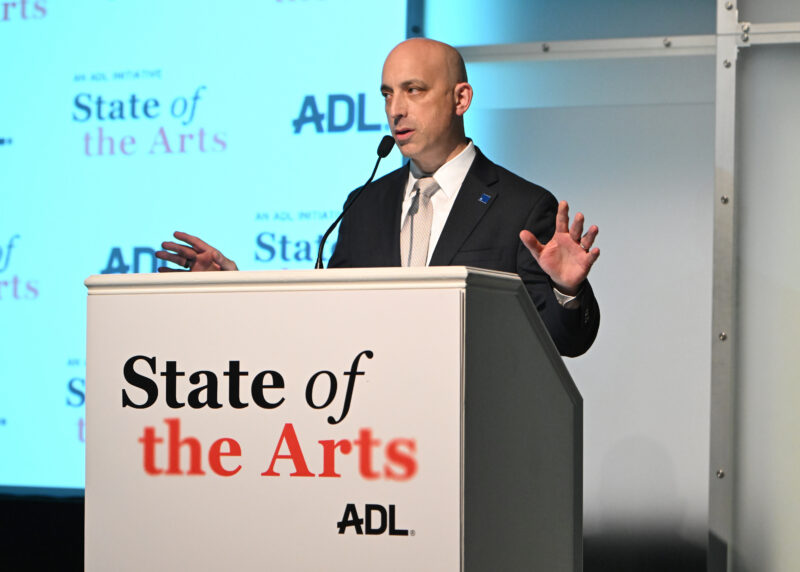
Before announcing the exhibition, the Met consulted with Jewish leaders including the ADL’s Jonathan Greenblatt; Rabbi Rick Jacobs, president of the Union for Reform Judaism in North America; Rabbi Joshua Davidson, leader of the Reform Congregation Emanu-El in New York City; and Rabbi Danya Ruttenberg, author of the book “On Repentance and Repair.”
Following the meeting in May, Jacobs told The New York Times he was impressed by Galliano’s attempt to make amends. “The word I come back to is ‘sincerity,’” Jacobs said. “He was open. He looked right at us and spoke in a clear way, not as if he had memorized talking points.”
Greenblatt said at the time, “We believe John Galliano has genuinely worked through the issues that led to his antisemitic outburst years ago in Paris, and we have long since accepted his apology. His efforts to repair the damage his words caused and to learn from that incident should be applauded.”
Yet, some Jewish leaders in New York and beyond remain skeptical.
After the meeting, Ruttenberg told the Jewish Telegraphic Agency that Galliano’s apology “didn’t appear very sincere or heartfelt.”
Julie Menin, the first Jewish speaker of the City Council, called the museum’s decision to highlight Galliano’s career “a serious mistake” in a letter she sent on Thursday to Wintour and other Met leadership.
“Our cultural institutions, particularly those that receive funding from the City of New York, have a responsibility to demonstrate that hatred and bigotry carry consequences,” Menin wrote in the letter. “Words matter, and whom we choose to elevate is a direct statement of our values and what we are willing to tolerate.”
David Ingber, the senior director for Jewish life, senior director of the Bronfman Center at 92NY and the founding rabbi of the Romemu synagogue — who did not participate in the May meeting with Galliano — criticised the museum in a statement to The New York Times. “By centering Galliano,” he said, “the Met has put the Jewish community in a no-win position. Either we are blamed for being overly sensitive and not allowing him to be honored or we are complicit. The question is not whether they can do this, but whether they should have.”
David Wolpe, the emeritus rabbi at Sinai Temple in Los Angeles, lamented the Met Gala as a “moral travesty” in a Substack essay published last week, titled “Antisemitism — back in ‘Vogue.’”
Meanwhile, angry donors have warned Met executives that they will cancel their financial gifts if the Galliano exhibition moves forward, the Times reported.
In a statement to the Times, museum director Max Hollein said, “The Met has no tolerance for antisemitism, racism or prejudice of any kind. We are in close consultation with Jewish leaders and other stakeholders, and we take the concerns we’ve heard very seriously.” He added that Met leadership “is developing a thoughtful plan for next year’s exhibition and gala that meets the moral and ethical standards set by the museum.”
The Met is also facing scrutiny over the event’s date — which this year coincides with Yom HaShoah, Holocaust Remembrance Day. Responding to a wave of public criticism, the Times reported that the Met’s board is considering moving the upcoming Met Gala from its traditional first Monday in May to the following week.
British rap duo Bob Vylan was slated to perform in 19 U.S. cities this fall

Ben Birchall/PA Images via Getty Images
Bob Vylan performing on the West Holts Stage, during the Glastonbury Festival at Worthy Farm in Somerset.
The members of the British rap duo Bob Vylan had their visas revoked by the State Department on Monday ahead of a planned U.S. tour after leading chants calling for “death to the IDF” over the weekend at the Glastonbury music festival in the U.K.
“The Department of Justice Task Force to Combat Antisemitism will work with the U.S. State Department to deny entry into the United States of performers who incite violent antisemitic behavior,” a spokesperson for the DOJ told Jewish Insider.
“Foreigners who glorify violence and hatred are not welcome visitors to our country,” Deputy Secretary of State Christopher Landau wrote on X.
Bob Vylan was slated to perform in 19 U.S. cities this fall. Organizers of the annual Glastonbury festival — Britain’s biggest summer music festival — said on Sunday they were “appalled” by the chants.
Irish rap group Kneecap, which had their visas revoked in April, also performed at the festival on Saturday despite one of its members having been charged with a terror offense for displaying a Hezbollah flag at a London concert.
The visa revocation comes amid a broader effort by the Trump administration to crack down on the explosion of antisemitism in the U.S, with several recent high-profile cases of student visa cancellations.
The former hostage wrote to the board on social media: ‘This is not a question of politics. This is a question of humanity. And today, you have failed it’

Catherine Ivill - AMA/Getty Images
A sticker with an image of Emily Damari who is being held in Gaza during the Premier League match between Tottenham Hotspur FC and Liverpool FC at Tottenham Hotspur Stadium on December 22, 2024 in London, England.
A former British-Israeli hostage who was held by Hamas in Gaza for 15 months spoke out against the Pulitzer Prize Board on Thursday for bestowing an award to a Palestinian poet who has disparaged victims of the Oct. 7, 2023, attacks and appeared to legitimize the abduction of hostages, among other comments that have stirred controversy.
Emily Damari, who in January was released from Hamas captivity after she was shot and taken from her home in Kibbutz Kfar Aza in southern Israel on Oct. 7, expressed outrage at the Pulitzer committee board over its decision to honor Mosab Abu Toha, a Gazan-born writer whose New Yorker essays on the war-torn enclave won the award for commentary on Monday.
In an anguished statement posted to social media, Damari, 28, voiced “shock and pain” that Abu Toha had won the prestigious award, citing his past remarks, uncovered earlier this week by the pro-Israel media watchdog HonestReporting, in which he denigrated Israeli captives abducted by Hamas and questioned their status as hostages, while also casting doubt on Israeli findings that a baby and a toddler kidnapped by the terror group were “deliberately” murdered in Gaza with “bare hands.”
“If you haven’t seen any evidence, why did you publish this,” Abu Toha said in a social media post in February, criticizing a BBC report on the murder of Kfir and Ariel Bibas, the young siblings who were abducted by Hamas. “Well, that’s what you are, filthy people.”
Elsewhere, Abu Toha, who is now a visiting scholar at Syracuse University, took aim directly at Damari, arguing that she could not be described as a hostage because, like most Israelis, she previously served as a soldier in the Israel Defense Forces.
“How on earth is this girl called a hostage?” he said in a social media post in January, when Damari was among the first of three Israeli hostages to be freed amid a ceasefire deal that has since collapsed. “This soldier who was close to the border with a city that she and her country have been occupying is called a ‘hostage?’”
He likewise denounced another former Israeli hostage, Agam Berger, an IDF surveillance soldier freed in January. “These are the ones the world wants to share sympathy for, killers who join the army and have family in the army!” Abu Toha said in a social media post in February. “These are the ones whom CNN, BBC and the likes humanize in articles and TV programs and news bulletins.”
In her social media statement addressing the Pulitzer board on Thursday, Damari called Abu Toha “the modern-day equivalent of a Holocaust denier” and said that the committee had “joined him in the shadows of denial” by choosing to award his writing with one of the country’s top journalism prizes.
“This is a man who, in January, questioned the very fact of my captivity,” she wrote. “He posted about me on Facebook and asked, ‘How on earth is this girl called a hostage?’ He has denied the murder of the Bibas family. He has questioned whether Agam Berger was truly a hostage. These are not word games — they are outright denials of documented atrocities.”
Damari, who lost two fingers after she was shot in the left hand during the Hamas-led assault on Oct. 7, also recounted the harrowing circumstances of her nearly 500 days in captivity, writing that she had “lived in terror” as she was “starved, abused, and treated like I was less than human.”
“You claim to honor journalism that upholds truth, democracy, and human dignity,” Damari said in her statement to the Pulitzer board. “And yet you have chosen to elevate a voice that denies truth, erases victims, and desecrates the memory of the murdered. Do you not see what this means?”
“This is not a question of politics. This is a question of humanity. And today, you have failed it,” she concluded.
The Pulitzer board did not respond to a request for comment from Jewish Insider on Thursday, nor did Abu Toha.
Please log in if you already have a subscription, or subscribe to access the latest updates.
 Continue with Google

 Continue with Apple