














































































The deputy director for mission integration had been affiliated with the libertarian Koch network and isolationist Defense Priorities think tank

Brendan SMIALOWSKI/AFP via Getty Images
Bill Pulte, director of the Federal Housing Finance Agency, speaks to reporters outside the West Wing of the White House in Washington, DC, on January 9, 2026.


 Add JewishInsider on Google
Acting Director of National Intelligence Bill Pulte forced out Will Ruger, the deputy director for mission integration, from the agency as part of a series of cuts said to be targeting the “deep state,” according to CBS News.
Ruger previously held senior positions at groups tied to the libertarian Koch network, and had been affiliated with the isolationist Defense Priorities think tank.
Ruger had been a vocal opponent, prior to his government service, of both the maximum pressure sanctions campaign against Iran and potential U.S. military operations against the regime.
He was also a defender of the 2015 Iran nuclear deal.
Ruger’s role included overseeing the president’s daily intelligence briefing.
Pulte has reportedly fired five other staff at ODNI and sent 45 others back to their home agencies, after President Donald Trump directed him to enact further cuts at the agency on top of those done by former DNI Tulsi Gabbard.
Intelligence Committee Chair Tom Cotton said that Clayton’s scheduled Wednesday afternoon confirmation hearing would go on as scheduled unless Clayton doesn’t show up
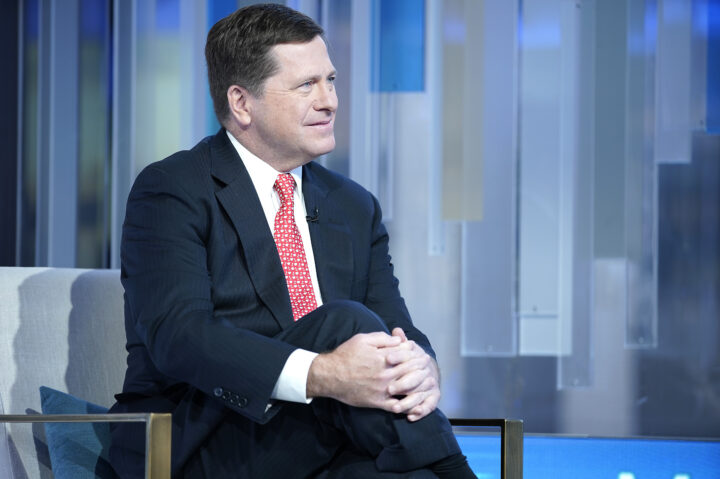
Photo by John Lamparski/WireImage
Jay Clayton appears on "Mornings With Maria" on Fox Business in 2020. At the time, Clayton was serving as chairman of the SEC.
President Donald Trump upended an expedited effort to confirm Jay Clayton as director of national intelligence before the end of the week with a Wednesday morning Truth Social post announcing that he was “cancelling” Clayton’s planned confirmation hearing later that afternoon — but Sen. Tom Cotton (R-AR), the Intelligence Committee chairman, insisted the hearing would go on as scheduled unless Clayton fails to appear.
Though Trump doesn’t have the ability to unilaterally cancel a Senate hearing, he could instruct Clayton not to appear as scheduled. Senate lawmakers were rushing to confirm Clayton before the end of the week to prevent federal housing chief Bill Pulte from serving as acting DNI, a choice lawmakers on both sides of the aisle view as problematic and unqualified for the role.
“Jay Clayton is a pending nominee before the Intelligence Committee. We will proceed with his hearing as scheduled unless the president directs him not to appear or withdraws his nomination,” Sen. Tom Cotton (R-AR) said on X following Trump’s post.
Republicans have been trying to clear a path to rapidly confirm Clayton before Pulte is set to take over as acting DNI on Friday.
Confirming Clayton and blocking Pulte from the DNI role would also unlock Democratic support for renewing federal foreign surveillance authorities under Section 702 of the Foreign Intelligence Surveillance Act (FISA), which lapsed last week amid Democratic opposition.
Sen. Mark Warner (D-VA), the vice chair of the Intelligence Committee, lambasted the “extraordinary display of dysfunction from a president who seems determined to turn America’s national security into a political bargaining chip.”
“At every turn, the president has injected more uncertainty into a process that should be focused on one thing: keeping the American people safe,” Warner continued. National security cannot be governed by social media post. The president’s latest intervention only underscores a simple reality: the biggest obstacle to resolving these issues has not been Senate Democrats or Senate Republicans. It has been the chaos and confusion coming from the White House itself.”
Trump asserted that “Dumocrats broke the Deal” on FISA and Pulte, and also demanded that James McDonald, who Trump said he would nominate to replace Clayton as U.S. attorney for the Southern District of New York, be confirmed before Clayton is confirmed for DNI.
But McDonald’s nomination hasn’t yet been transmitted to the Senate, according to congressional records.
Trump also indicated that he would veto the FISA renewal unless Republicans attach the SAVE America Act, which aims to impose new national voter ID and proof of citizenship requirements at the ballot box and limit mail-in and online voter registration, to it — a proposal that cannot pass the 60-vote threshold in the Senate.
“To add a slight bit of intrigue but, for the Good of the Nation, and the People of our Country, I will not approve FISA without THE SAVE AMERICA ACT going along with it,” Trump said. “Not complicated, actually, the Republicans fell into a trap.”
The nomination is winning a warmer reception on Capitol Hill than Bill Pulte, though it likely comes too late to avert a lapse in key surveillance authorities
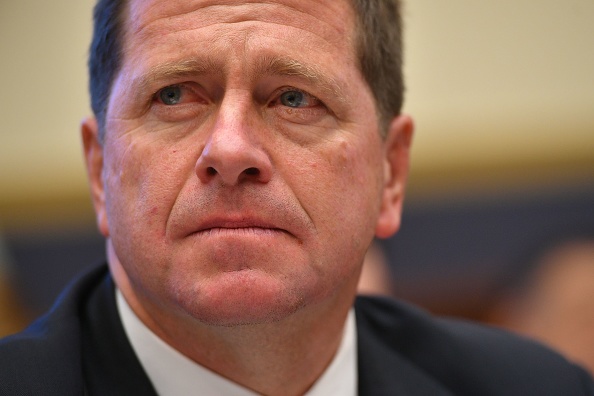
MANDEL NGAN/AFP via Getty Images
The U.S. attorney for the Southern District of New York Jay Clayton testifies before the House Financial Services Committee on oversight of the Securities and Exchange Commission in the Rayburn House Office Building on Capitol Hill in Washington, DC on September 24, 2019.
President Donald Trump named Jay Clayton, the U.S. attorney for the Southern District of New York, as his nominee to replace Tulsi Gabbard as director of national intelligence, after a two-week furor over his plans to name federal housing chief Bill Pulte to the role in an acting capacity.
But the nomination likely comes too late to prevent a lapse on Friday of federal foreign surveillance authorities under Section 702 of the Foreign Intelligence Surveillance Act, which Democrats have refused to reauthorize in protest of the Pulte pick.
Clayton is also a former chairman of the Securities and Exchange Commission and partner at Sullivan & Cromwell. “Few people anywhere in the Legal Community are respected at the level of Jay. I encourage the United States Senate to confirm Jay as soon as possible,” Trump said in his announcement on Truth Social.
Though his career hasn’t been focused on national security issues, Clayton’s time at the SEC and the SDNY gave him background in law enforcement, security and counterterrorism issues, which could help assuage concerns on the Hill.
Clayton signed the U.S. indictment of Venezuelan President Nicolás Maduro ahead of Maduro’s capture by U.S. forces in Caracas.
After his time in the first Trump administration, among other roles, Clayton served as an advisor to Fireblocks, an Israeli-based cryptocurrency firm.
Trump initially said that Pulte would begin as acting DNI at the end of the month, but subsequently moved his start date earlier, to June 19. It’s unlikely that Clayton could be confirmed before the end of next week, so it remains unclear whether Trump still intends to put Pulte in the role at all.
Trump said Thursday afternoon that Pulte will be DNI for “a little while” and “he’s running it for a short while we get a very talented person, Jay Clayton, in.”
Senate Minority Leader Chuck Schumer (D-NY) told reporters, “Pulte’s got to go. The DNI role is too important for him to be there. He has got to go, period. No matter what else they do.”
Asked whether he would support Clayton, Schumer responded, “I support getting rid of Pulte. That’s unequivocal.”
Senate Majority Whip John Barrasso (R-WY) told Jewish Insider he was “encouraged by the president’s decision to name someone permanently for that role, and it’s the right move.”
Sen. Lindsey Graham (R-SC) said on X that Clayton is an “outstanding choice” who has “real-world experience, the complete confidence of the President and has performed every task in the public and private sectors in an exemplary manner.”
Some Democrats worried by Trump’s pick of Pulte appear to be at least somewhat relieved by the Clayton nomination.
“[It’s] a vast improvement. I’ll need to look at his record,” Sen. Richard Blumenthal (D-CT) told reporters. “I’ll need to look at his record … whether he has experience in the area of national intelligence.”
Rep. Jim Himes (D-CT), the top Democrat on the House Intelligence Committee, said on X he has “known and respected Jay Clayton for decades” and that he will be a “terrific DNI.”
“Had this nomination been made a week ago, lots of pain might have been avoided,” Himes said.
Others remain on guard.
Sen. Ruben Gallego (D-AZ) said he needs to research Clayton further before forming an opinion on him but said that he believes Trump “hasn’t changed on the whole idea of using the DNI to effectively screw with the 2026 elections.”
The Clayton nomination seems to come too late to salvage FISA talks before the Section 702 authorities lapse. Both chambers rejected efforts for a short-term extension of surveillance authorities — which Republicans warn creates national security and terrorism risks, especially ahead of the World Cup.
A bill requiring a two-thirds majority in the House was opposed by a majority of the House on Thursday, with Democrats and several Republicans voting against it. The House has now left Washington for a scheduled recess until June 23.
Senate Democrats blocked efforts to unanimously pass an extension of Section 702 authorities shortly before Trump announced Clayton’s nomination.
Sen. Mark Warner (D-VA), the vice chair of the Senate Intelligence Committee, said, “I’ve never been a fan of Director Gabbard, but if Director Gabbard were to stay until he was confirmed, that could be a path out. But again, if there was any level of serious concern about this in the White House — the House has already left town.”
But Warner said he has “great respect” for Clayton.
Sen. Raphael Warnock (D-GA) told reporters, “Quite frankly, I wish we were talking about the substance of the bill, how we balance national security concerns on the one hand and civil liberties on the other. Instead, once again, Donald Trump is the fly in the ointment, and he’s put forward someone [Pulte] that demonstrates that he’s much more interested in having a political operative over our intelligence agencies than preserving our national security.”
Asked about Clayton, Warnock said, “Pulte has to be out of the equation.”
Given initial reactions from critical Senate Republicans, Pulte would likely struggle to be confirmed for a permanent position
Brendan SMIALOWSKI/AFP via Getty Images
Bill Pulte, director of the Federal Housing Finance Agency, speaks to reporters outside the West Wing of the White House in Washington, DC, on January 9, 2026.
Senate Republicans on Tuesday expressed skepticism about President Donald Trump’s decision to name Bill Pulte, a lawyer and Trump ally who has been working on housing policy issues and has no known intelligence or national security background, as acting director of national intelligence.
Pulte will take over the agency, which coordinates efforts across the intelligence community, after DNI Tulsi Gabbard resigns later this month. Trump had originally announced that Gabbard’s current chief deputy, Aaron Lukas, a career intelligence official, would be assuming the acting role, but pivoted without explanation.
It’s not clear yet whether Trump plans to nominate Pulte, who he said will simultaneously continue in his current roles as director of the Federal Housing Finance Agency and chairman of Fannie Mae and Freddie Mac, as permanent DNI, but given initial reactions from critical Senate Republicans, he would likely struggle to be confirmed. The statute establishing the post also requires that the nominee be an individual with experience in national security.
Under federal law, Pulte could serve in the role in an acting capacity for up to 210 days, before requiring Senate confirmation.
Leading Senate Republicans said they did not think Pulte was qualified for the role.
“I don’t see any evidence of qualifications for that job, but as you know the Senate doesn’t have a role to play in acting [appointments],” Sen. John Cornyn (R-TX) said. Cornyn would be a crucial swing vote on the Senate Intelligence Committee if Pulte is nominated for the permanent role, and was recently defeated in his primary by a Trump-backed challenger.
“He doesn’t seem very qualified,” Sen. Bill Cassidy (R-LA), also recently defeated by a Trump-backed primary challenger, agreed.
Sen. Ted Budd (R-NC), who also sits on the Intelligence Committee, offered a terse response. “Certainly an interesting choice. There’s a lot of talented people that I probably would have considered. Congrats on his nom[ination],” Budd said.
Other Senate Republicans couched their comments, emphasizing their lack of familiarity with Pulte and his record, and saying they were not aware of whether he had any national security experience (per his public record, Pulte does not).
Sen. James Lankford (R-OK), a member of the Intelligence Committee, said that he did not know what experience Pulte has in intelligence, or whether he would be nominated for the role in the long-term. But he emphasized that intelligence experience is critical for the job.
“That role’s pretty important in coordinating people from a lot of different agencies, you’ve got to have some level of trust in the different agencies to be able to help move,” Lankford said. “The ODNI’s role is to be able to see where are the siloes and to be able to help tear those down to make sure we keep our nation secure. If you don’t know those different roles — it’s not a matter of knowing intelligence products, it’s knowing how each agency actually works. That’s the bigger challenge. If you don’t have any familiarity with that, that does make that job tougher.”
He said separately that it’s critical for the job to remain “nonpartisan.”
“I had no idea he had national security experience. I’m going to have to look into his resume,” said Sen. Thom Tillis (R-NC), who is retiring and has broken on numerous occasions with the administration.
Sen. Susan Collins (R-ME) said that she doesn’t know anything about Pulte, including whether he had any intelligence or military background or even a security clearance.
She said she’s not concerned about her lack of familiarity with Pulte “yet, because maybe there’s a lot in his background that is relevant to this important position. As one of the authors of the Intelligence Reform and Terrorism Prevention Act of 2004, which created the position of DNI, I obviously care a great deal about having a qualified individual in that position.”
Other top Senate Republicans were also hardly enthusiastic about Trump’s pick.
Senate Majority Leader John Thune (R-SD) said, when asked if he was worried about Pulte weaponizing the role, “we don’t need a weaponized DNI, we need professionals there,” but said he had “just heard about it.”
“If he’s somebody they want in that position permanently, he’s got, as you all know, a lengthy road ahead of him,” Thune continued.
Asked at a press conference later in the day about the choice, Thune deferred to Intelligence Committee Chairman Tom Cotton (R-AR), who said he has “no observations” on the choice of Pulte.
Trump’s choice of Pulte for the role is likely to fuel greater concerns that he aims to politicize and weaponize the role for his own ends. Pulte, in his current role, became perhaps best-known for pursuing investigations against and making allegations that various political adversaries of Trump were engaged in mortgage fraud.
Gabbard faced backlash for her alleged involvement in manipulating intelligence information to fit the administration’s preferred narrative, and for her involvement in an FBI raid on an elections office in Georgia, linked to Trump’s claims that the 2020 presidential election was fraudulent.
In a scathing statement, Sen. Mark Warner (D-VA), the ranking member of the Senate Intelligence Committee, said that Trump’s appointment of Pulte “makes clear that this president is not looking for an intelligence leader who will follow the facts or speak truth to power, but rather someone who will be willing to shape intelligence around the president’s wishes, regardless of the cost to the American people.”
He said that Pulte is not only unqualified for the job, but “appears to have been selected precisely because the White House believes he will provide the narrative it wants, not the intelligence we need,” ultimately raising the risk of a terrorist attack.
Pulte’s appointment could make the passage of critical legislation renewing federal foreign surveillance authorities more difficult. The legislation was already plagued by opposition on both sides.
Please log in if you already have a subscription, or subscribe to access the latest updates.
 Continue with Google

 Continue with Apple