








































































Matt Maasdam is gaining late momentum running on his national security credentials, but Bernie Sanders-backed William Lawrence is winning over the base
Campaign website
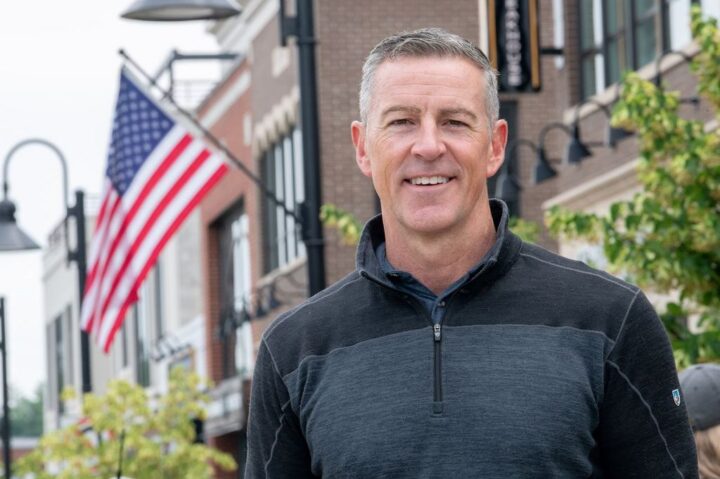
Matt Maasdam


 Add JewishInsider on Google
The Democratic primary in Michigan’s 7th Congressional District — a Lansing-area swing seat key to Democrats’ hopes for taking back the House — has turned into a three-way battle between two moderate Democrats with national security backgrounds and a far-left activist who has emerged as a contender for the nomination despite repeated controversies over extremist comments.
On the campaign trail, Matt Maasdam, a former Navy SEAL, has leaned into his background as a veteran and a military aide to former President Barack Obama who carried the nuclear football. Bridget Brink, a career foreign service officer, is highlighting her service as U.S. ambassador to Ukraine from 2022 to 2025.
William Lawrence, the progressive backed by Sen. Bernie Sanders (I-VT), is a former organizer with the Sunrise Movement, which bills itself as leading “the climate revolution” but also embraces other left-wing causes.
Adrian Hemond, a Michigan political strategist, said he expects the race to be close, predicting that the three candidates could all finish within several points of each other.
He previously told JI that Lawrence holds the progressive lane to himself, which could be an asset if Maasdam and Brink split the moderate vote — but he could lose out on young, progressive-leaning Michigan State University students who won’t return to campus until after the Aug. 4 primary. Lawrence has also struggled with Black and older voters.
The race initially appeared to be a contest between Maasdam and Brink. Lawrence gained momentum and attention by scoring a series of prominent endorsements from Sanders and other progressive leaders.
But Lawrence’s rise hit a stumbling block with the re-emergence of past comments disparaging Black political leadership, which prompted condemnations from Michigan leaders and the Congressional Black Caucus. After those initial revelations, Lawrence subsequently came under fire for past comments disparaging Obama and his administration.
In past comments on the “Hegemonicon” podcast he hosted, first uncovered by Jewish Insider, Lawrence repeatedly argued, for the sake of climate and economic goals, Americans would have to abandon the idea of the American dream and their way of life.
Discussing whether and how ideas of “abundance” or “degrowth” could or should be part of an agenda to fight climate change, Lawrence said on an episode of the podcast release in January 2024, “we’ve experienced the last several years of how that got filtered through the lens of American global competitiveness and geoeconomic dominance and, some of these questions about the role of the American consumer on a global stage and and whether or not we are proposing the continuation of the American consumer way of life and its translation into China and presumably the rest of the globe, is really viable in a climate-changing world.”
“We made that move, and now we need to reckon with the contradictions inherent even in that move,” Lawrence said. “I’m wondering how we can inspire a sense of abundance for people in the United States while, frankly, destroying the American way of life and the negative connotations, and material realities that has come to mean.”
In a statement, Lawrence defended the comments.
“We’ve been told that we would achieve happiness by buying more TVs and taking on a bigger mortgage,” Lawrence said. “Instead, the cost of housing, healthcare, and education is skyrocketing, while Michigan’s land and water is under threat. We need a new version of the American dream in which we can all have economic security while leaving a healthy environment for our kids and grandkids.”
In another episode, released in December 2023, Lawrence said that “there are certain aspects of the American dream that need to die — but maybe that’s another episode,” arguing that most people would not be able to have “the McMansion in the suburbs.”
A senior political advisor close to the Maasdam team said that the endorsements from Sanders and other top progressives catapulted Lawrence toward the front of the field, but the recent revelations of his past comments have stunted that growth.
The advisor said the endorsements from Sanders and others likely earned Lawrence the votes of around a third of the Democratic electorate who will likely vote for the most-left candidate in the race, leaving around two-thirds up for grabs.
Last week, Maasdam picked up an endorsement from Sen. Elissa Slotkin (D-MI), who subsequently filmed an advertisement supporting him. The freshman senator represented the Lansing-area district before being elected to the Senate.
The advisor close to the Maasdam campaign said that they see the race now largely as a contest between Maasdam and Lawrence, but said they believe Maasdam is well-positioned going into the final weeks of the race and peaking at the right time.
He has been the beneficiary of more than $1.6 million in outside spending by VoteVets, with another outside group, Crush MAGA PAC, spending nearly $1 million to attack Lawrence, and a third group, Michigan Values PAC, spending around $1 million to attack Brink. A nursing union group has spent $400,000 boosting Lawrence.
At the same time, they also acknowledged a real concern that Maasdam and Brink could split the moderate vote, allowing Lawrence to win with a plurality.
Brink has faced criticism from primary rivals for her service under and praise of President Donald Trump — though she ultimately resigned in protest of the administration’s efforts to pressure Ukraine.
The advisor argued that, compared to Brink, Maasdam has a better resume and background as a fighter, and said Maasdam plans to highlight his links to Obama in the wake of the revelation of Lawrence’s comments disparaging the former president.
Maasdam posted an X video on Monday highlighting his support for and ties to Obama, while calling out Lawrence’s criticism of him.
In spite of their moderate and national security focused backgrounds, neither Maasdam nor Brink appears to have spoken much about Israel policy during the campaign, and neither campaign provided comment to JI on their stances.
Lawrence has attacked the two for declining to describe the war in Gaza as a genocide, and has made cutting off arms sales to Israel a major plank of his campaign.
All three have been critical of the war with Iran.
Matthew Kozma, under secretary for intelligence and analysis, spoke at a briefing for the Secure Community Network, a leading Jewish security organization

Emily Elconin/Getty Images
Members of Hatzalah of Michigan, a Jewish volunteer emergency medical service survey the area near Temple Israel following reports of an active shooter on March 12, 2026 in West Bloomfield, Michigan.
Extensive security “preparations, training and practice” that had taken place prior to an attack on a Detroit-area synagogue earlier this month “greatly helped to dramatically mitigate what could have been so much worse in Michigan,” a Trump administration intelligence official said on Tuesday.
During a security briefing webinar hosted by the Secure Community Network, a leading Jewish security organization, ahead of the Passover holiday, Matthew Kozma, under secretary for intelligence and analysis at the Department of Homeland Security, called for continued vigilance “given the threat that’s stemming from Iran, particularly in the Middle East, but also here at home.”
He said that Americans should remain cautious of threats from “malicious actors, particularly ones encouraged by or empathetic to Iran,” as two upcoming events in the country — the 2026 FIFA World Cup and America’s 250th anniversary — bring an influx of visitors into the U.S.
The briefing was held during what Michael Masters, CEO of SCN, described as “an elevated threat environment from Iran and its proxies,” ahead of the start of the Passover holiday next week.
Since the U.S.-Israeli war with Iran started nearly one month ago, Jewish institutions have seen a surge in attacks, including the one targeting Temple Israel in West Bloomfield Township, Mich. — one of the country’s largest Reform congregations — and three shootings outside of Toronto synagogues.
Masters said SCN monitored over 8,000 direct calls for violence against the Jewish community in North America over a six-day period this month, marking a 137% increase over the average tracked and “the highest number we’ve ever tallied in that timeframe.”
Oakland County, Mich., Sheriff Michael Bouchard, who was on the scene following the Temple Israel attack, shared with attendees that he himself has been the target of death threats for supporting the Jewish community.
Still, Bouchard doubled down on his support. “Something that I’ve said before, and I believe, is that if you target our Jewish community, we’re going to stand in front of them to protect them. And we’re coming for you.”
The briefing concluded with Eric Fingerhut, CEO of the Jewish Federations of North America, calling for “more resources at this time.”
“Temple Israel was one of the best, most secured buildings, having spent a significant amount of money of their dues budget and of their donors’ budgets on security, and yet we need additional levels of security,” Fingerhut said. “Our federations are committed to generating those additional resources, bringing those resources to our communities. But in addition, I have to mention that it’s the government’s responsibility, first and foremost, to protect its citizens in their places of worship, in their places of communal gathering.”
Last week, in a letter to the leaders of the House Appropriations Committee, a bipartisan group of 150 House members asked the committee to provide $1 billion in funding for the Nonprofit Security Grant Program in 2027, a massive expansion of the program that marks the first time lawmakers’ request aligns with the $1 billion that some Jewish groups have been advocating for. The program received $274.5 million in funding in 2025, but that funding has still not been distributed, according to the letter, which cited delays at FEMA, and lawmakers have not been provided customary data about supplemental funding rounds awarded last year.
“We need more resources and support from the government,” continued Fingerhut, who announced that JFNA will hold an advocacy fly-in in Washington in mid-May.
“We will be visiting every member of Congress, asking them for their support. We’ll be visiting the members of the administration, as well … to make sure that [they] know that every one of us has the right in this country to practice our faith and to gather together as a community in safety and security.”
Former Rep. Melissa Bean emerged as the clear frontrunner in her old suburban Chicago district, while state Sen. Laura Fine looking formidable in race to succeed Rep. Jan Schakowsky
Melissa Bean campaign page
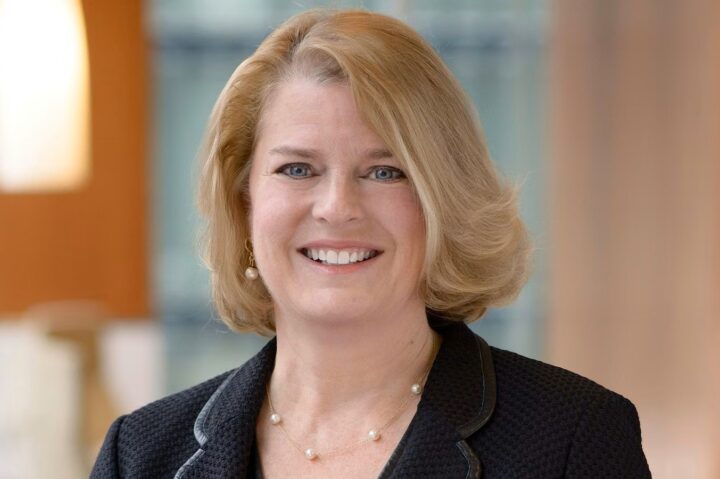
Former Rep. Melissa Bean (D-IL)
Fundraising reports for the fourth quarter of 2025, released on Sunday, brought the state of the race in several hotly contested Chicago-area Democratic congressional primaries into focus, with pro-Israel candidates putting up strong showings in several seats.
In the 9th District, state Sen. Laura Fine led the field with $1.2 million raised and ended the quarter with a narrow cash-on-hand lead, at $1.4 million in the bank. Evanston Mayor Daniel Biss, an Israel critic, raised $659,000 and had $1.37 million on hand at the end of the quarter, and far-left influencer Kat Abugazaleh raised $1.1 million, but spent $1.4 million, leaving her with $811,000 in her war chest.
With her substantial fundraising, Fine has been the only candidate in the district to air advertisements on network television, while other candidates are advertising on cable.
Though publicly released polling has shown Biss and Abugazaleh at the top of the field and Fine trailing, Chicago political strategist Frank Calabrese emphasized to Jewish Insider that — with the large number of candidates in the race and Fine’s fundraising and momentum — she remains a leading contender.
On the other hand, he said that Biss, who previously ran for governor, and Abugazaleh, with her substantial online presence, are likely the most recognizable candidates, giving them a built-in advantage in a crowded field.
Calabrese also stressed that the fundraising data shows Abugazaleh is a serious and competitive candidate — despite some having written her off earlier in the race — and she is likely to pick up significant support among younger and more transient voters.
Calabrese predicted that an ad blitz against Biss — which the AIPAC-linked United Democracy Project is rumored to be considering — could ultimately redound to Abughazaleh’s benefit, rather than sending Biss voters toward Fine’s campaign.
UDP has said it has not yet made any decisions about the race.
One Jewish community activist in the district expressed concerns to JI in recent weeks about such a scenario, arguing that AIPAC and other Jewish community affiliated groups should be focused on stopping Abughazaleh above all else, and that they should agree to get behind either Biss or Fine, depending on which candidate polling shows has the best chance of beating Abughazaleh.
But others in the pro-Israel community have raised significant concerns about Biss’ own stance on Israel policy, which includes support for an offensive weapons ban on Israel.
Calabrese said that Phil Andrew, a former FBI hostage negotiator who closed the quarter with almost $1 million on hand — including $400,000 in self-funding — could be a wild-card candidate.
Calabrese explained that Bruce Leon, a prominent member of the local Orthodox Jewish community community who recently left the race, had thrown his support behind Andrew, following a spat with Fine and AIPAC, potentially pushing the Orthodox Jewish community toward Andrew and away from Fine.
In the 8th Congressional District, former Rep. Melissa Bean (D-IL) solidified her spot as front-runner by raising $772,000, ending the quarter with more than $1 million on hand, followed by anti-Israel challenger Junaid Ahmed, who raised $360,000 and ended the quarter with $836,000 on hand.
Businessman Neil Khot finished the quarter with $573,000 on hand, having provided $765,000 to his own campaign during the cycle, which has made him the only candidate in that race to run network television ads. But he received just $58,000 in the last quarter in donations.
Others, including Cook County Commissioner Kevin Morrison and Hanover Park Trustee Yasmeen Bankole, an Israel critic, trailed further behind, with $233,000 and $170,000 on hand, respectively, though Calabrese emphasized that Morrison enjoys substantial support from local officials. Veteran Dan Tully ended the quarter with $412,00 on hand, but may see a boost from outside spending by pro-veteran groups.
Calabrese said that Bean, given her defined public image and name recognition, is the front-runner, but noted that Ahmed has been building a strong base of support in the Muslim community. He said Bean, as a conventional moderate Democrat, also stands out among a series of other candidates trying to define themselves as more liberal or progressive, and will likely benefit from those other candidates dividing the field.
“Everyone agrees the favorite is Melissa Bean, and if someone tells you otherwise, they’re lying to you,” Calabrese said.
In the 7th Congressional District, Jason Friedman, a real estate developer and leader in the local Jewish community, cemented his place as a leading candidate, ending the quarter with $1.3 million on hand and $1.8 million raised over the course of the race, including $296,000 in the quarter.
Calabrese said that Friedman “has a very decent shot at winning” if he’s able to lock down the upper-income downtown area, while other candidates compete for votes in the district’s Black community. Friedman also has substantial support from the Jewish community, Calabrese added.
He said that Friedman’s chances have been underestimated by some in the area who have failed to recognize the demographic changes in the once Black-dominated district over time, but also said the race could be a “jump ball” among any of several candidates in the running.
Friedman’s war chest gives him a substantial lead over the rest of the field, but his fourth quarter fundraising was comparable to that of Dr. Thomas Fisher, an emergency medicine doctor, who raised $243,000 and finished with $455,000 on hand.
State Rep. LaShawn Ford, the handpicked successor of retiring Rep. Danny Davis (D-IL), raised $145,000 and closed the quarter with $308,000 on hand, and Chicago Treasurer Melissa Conyears-Ervin raised $112,000 and finished with $217,000 on hand. Anthony Driver, a former leader of the Chicago police oversight board and a local union leader, raised just $73,000 in the quarter, but is likely to receive significant outside backing from union groups, Calabrese said.
Anti-Israel progressive Kina Collins, making her third run for the seat, still had not filed her quarterly report as of Monday evening, leaving her status somewhat unclear.
In the 2nd Congressional District, Cook County Commissioner Donna Miller dominated the field in fundraising, raising $1.1 million and closing the quarter with nearly $1 million on hand, followed by anti-Israel state Sen. Robert Peters, who raised $210,000 and closed the quarter with $263,000 on hand. Peters has raised $900,000 over the course of the race, but burned through the majority of his reserves and outspent what he raised in the last quarter.
Calabrese said he was “extremely surprised” by the poor fundraising performance of former Rep. Jesse Jackson, Jr. (D-IL), who raised $85,000 in the fourth quarter and finished the quarter with just $90,000 on hand, despite being a local political celebrity and enjoying substantial institutional support.
Nevertheless, internal polling by other campaigns has shown Jackson in the lead with around 25% support, and Calabrese argued that it’s still his race to lose. With his local reputation and endorsements, he may not need to spend as much to get his message out, Calabrese noted.
“Donna Miller has the money advantage. But is it enough? I don’t think so, but I could be wrong,” Calabrese said.
The progressive Peters is a poor fit for the district, Calabrese argued. “He’s trying to run as a university, campus-centric progressive, and it’s just not the district,” he said. “It’s a very work-a-day district.”
Please log in if you already have a subscription, or subscribe to access the latest updates.
 Continue with Google

 Continue with Apple