














































































Rabbi Noah Farkas, CEO of Jewish Federation Los Angeles: ‘California has a special obligation to … protect the people who power this industry from antisemitism’
Hoda Davaine/Getty Images
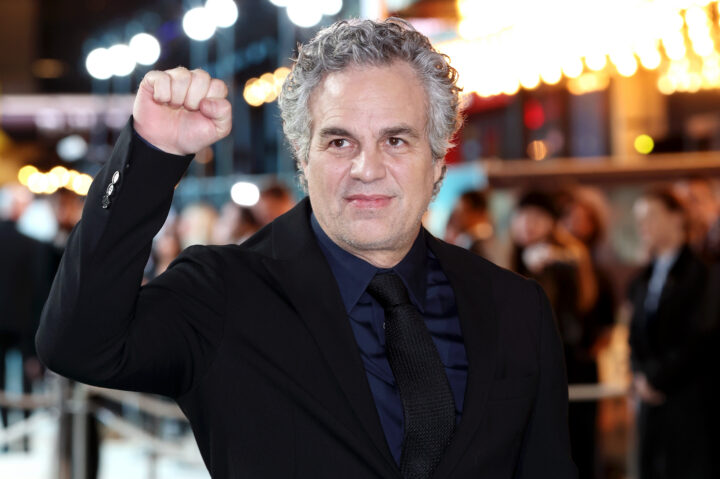
Mark Ruffalo attends a screening at Odeon Luxe Leicester Square on Jan. 28, 2026 in London, England.


 Add JewishInsider on Google
Several leading Jewish and pro-Israel organizations condemned actor Mark Ruffalo for using what they deemed antisemitic rhetoric in his social media commentary targeting the Ellison family amid the pending merger of Paramount with Warner Bros. Discovery.
Ruffalo posted an Instagram story last week featuring footage of Safra Catz, the executive vice chair of Oracle and a Paramount board member, discussing the company’s engagement in Israel following the Oct. 7, 2023, Hamas terrorist attacks. In the post, Ruffalo called Larry Ellison, Oracle’s co-founder and executive chairman, a “classic oligarch,” accusing him and his son, Paramount Skydance chairman and CEO David Ellison, of “powering some of the most destructive and inhuman forces in the world.”
Pointing to Catz, who is Israeli American, Ruffalo wrote that she “revels in what we now have come to see as a genocide, which was built on an apartheid system of oppression powered by Oracle.”
Paramount condemned Ruffalo on Friday, saying it was “troubled when antisemitic tropes are invoked in purported service of a business dispute. Words like ‘genocide’ and ‘apartheid,’ applied to a corporate transaction, aren’t just wrong — they’re a bridge too far, and they cheapen the very real suffering those words are meant to describe. This doesn’t deserve a response in kind — and to be clear, we don’t tolerate prejudice of any kind, against anyone.”
The studio said Ruffalo’s remarks “expose the true motive of some of those who have acted against the deal” and urged those involved to “lower the temperature, not raise it.”
The “Avengers” star fired back on Paramount’s accusations of antisemitism, calling it “appalling and fundamentally dishonest,” and stating that “everything I know about acting, activism, and humanism has been profoundly shaped by the Jewish friends, colleagues, and loved ones.”
On Monday, Rabbi Noah Farkas, president and CEO of Jewish Federation Los Angeles — which serves the epicenter of the entertainment industry — said Ruffalo’s “unhinged rant, which combined Jewish wealth, media control, secret technology and sinister global power, is not legitimate criticism. It draws on recognizable antisemitic tropes with a long and dangerous history.”
Farkas called on California Attorney General Rob Bonta — who told Ruffalo in February “Mark, I hear you,” regarding earlier criticism of the deal and said the state has a “special interest in protecting competition” — to clarify his comments. On Sunday night, Bonta canceled planned settlement talks with Paramount after accusing the company of acting in bad faith by misrepresenting details from an earlier meeting.
“We agree that California has a special obligation to protect Hollywood, but not only from anticompetitive conduct. It must also protect the people who power this industry from antisemitism and every form of hate,” Farkas said.
“Bonta has done the right thing on some issues, but his record with Jewish Californians remains mixed. In some important moments, he has failed to stand up with the clarity and urgency our community deserved. This is why it is so important that Bonta clarify what ‘Mark, I hear you’ means. Hearing legitimate antitrust concerns cannot mean excusing rhetoric that invokes age-old tropes about Jewish wealth, media control and sinister power.”
Several other Jewish leaders condemned Ruffalo over the weekend, stating that his comments repeat old antisemitic tropes and could put Jewish people in danger. Since the Oct. 7 attacks and ensuing war in Gaza, Ruffalo, a four-time Oscar nominated actor, has frequently pushed accusations of Israeli-led “genocide,” “apartheid” and “famine” to his millions of followers.
“Oppose the Paramount merger on the merits, find arguments grounded in facts, and draw on what you know about the industry without engaging in antisemitic rhetoric,” Jonathan Greenblatt, CEO of the Anti-Defamation League, wrote on X.
“Introducing the Jewish state out of the blue when it’s entirely unrelated, making baseless claims about Israel, and then trying to avoid accountability by essentially claiming that ‘some of my best friends are Jewish’ is gaslighting 101,” Greenblatt wrote, asserting that Ruffalo’s words “continue to put Jewish communities around the world at risk while antisemitic incidents are far too common.”
Simon Wiesenthal Center CEO Jim Berk said, “Invoking Israel in an issue where it is completely irrelevant is a textbook case of obsession and demonization.”
Ari Ingel, executive director of Creative Community for Peace, said Ruffalo’s statements “echo some of the oldest antisemitic conspiracy theories in history, depicting Jews as a wealthy and sinister elite who accumulate control over media, money and power, then use that control against society.”
CCFP, an organization that works to counter anti-Israel sentiment in the entertainment industry, called for Hollywood to boycott Ruffalo until he retracts the remarks and apologizes.
Two progressive groups took a different approach, defending Ruffalo by stating that his criticism of a corporation and the Israeli government is not antisemitic.
“What is antisemitism? Blaming Jewish people for the actions of the Israeli government. Hatred or discrimination directed at people because they are Jewish,” the Israel advocacy group J Street wrote Monday on X. “What isn’t? Criticism of a corporation’s monopolistic actions and investments. Criticism of Israel’s government. We cheapen the fight against antisemitism when we blur that distinction.”
The Nexus Project wrote Sunday on X that claiming Ruffalo is antisemitic is “misguided.”
“He expressed his opinion about a corporation’s actions and investments, not an executive’s religion,” the group said. “Whether you agree with him or not, he did not cross the line into antisemitic speech. The same is true of his longstanding opposition to Israel’s actions in Gaza.”
Ruffalo was among more than 20 Hollywood actors known for their roles in Marvel films who on Friday reportedly signed a petition calling for the release of Marwan Barghouti, an imprisoned Palestinian terrorist serving five life sentences in Israel, according to an Instagram post published by the group.
The school said the planning process ‘did not meet the necessary level of rigor’; the event listing had described Piker as ‘armed with sharp analysis and an irreverent wit’
Joshua Lott/Getty Images
Hasan Piker speaks during a campaign rally for Wisconsin gubernatorial candidate Francesca Hong on August 2, 2026 in Milwaukee, Wisconsin.
The University of Washington on Friday reversed its decision to host far-left, antisemitic influencer Hasan Piker, citing a flawed planning process.
Piker, who has an extensive history of antisemitic rhetoric — including justifying Hamas’ Oct. 7, 2023, terrorist attacks, calling Orthodox Jews “inbred” and asserting that America deserved 9/11 — was scheduled to appear in January as part of the school’s 2026-27 Speaker Series.
On Friday, however, the public university in Seattle said that “it was determined that the process for organizing this event did not meet the necessary level of rigor for University-hosted events in the Speaker Series. As a result, this event will not be held.”
“Going forward, procedures will be updated to ensure the standards we have for University-hosted events like the Speaker Series are met, particularly so that we can help elevate the level of dialogue on divisive topics during a polarized time in our country,” the statement said.
The event listing, which has since been removed from the university website, described Piker as a “journalist and wildly popular content creator,” who has “become an authoritative voice for millennials and Gen Z,” and as someone who is “armed with sharp analysis and an irreverent wit.” It also asserted that Piker “has built a massive daily audience on Twitch and become an unlikely but authoritative voice for a generation hungry for honest political engagement.”
The listing added that Piker has “sharp political insight and a characteristically irreverent sense of humor” and that he is “redefining what political commentary looks like in the digital age.” The university suggested attendees pay $10 per ticket, Jerusalem News Syndicate reported before the cancellation.
Miriam Elman, executive director of the Academic Engagement Network, a network of faculty and staff countering antisemitism on campus, told Jewish Insider that the school’s faculty and administration should work to ensure a similar incident does not occur in the future.
“In general, universities shouldn’t be in the business of canceling speakers, provided they are invited through established processes. University officials should use their own voice to distance the school from hateful speech and to reiterate school values,” said Elman. “However, in this case, the university has alleged that protocols weren’t followed properly in organizing the event. It’s reassuring to hear that moving forward the university will work to ensure that standards for such university events are met — as clearly they weren’t in this case.”
Elman called the description of the event, which lauded Piker, “an embarrassment.”
“In addition to tightening up standards and protocols for future guest speaker invitations, it’s also important for university officials to get to the bottom of the invite itself — who were the administrators and faculty who thought that Piker, a non-academic provocateur who has repeatedly supported U.S.-designated terror organizations, engaged in Holocaust trivialization and vilified Jewish-Zionist identity, would be the right speaker for this year’s series?”
“Guest speakers come and go — it’s the faculty and staff who are the permanent stakeholders,” said Elman.
Piker has recently been invited to speak at high-profile student events, including the Yale Political Union and the College Democrats of America’s convention.
‘If this is a real pivot, and not just a momentary detour, it'll be very disappointing,’ the former antisemitism envoy said

Noam Galai/Getty Images
Ambassador Deborah Lipstadt, U.S. special envoy to monitor and combat antisemitism, speaks during 'March For Israel' at the National Mall on November 14, 2023 in Washington, D.C.
Ambassador Deborah Lipstadt, the former U.S. envoy to monitor and combat antisemitism, told Jewish Insider on Tuesday that she’s concerned by the increased pace of antisemitic rhetoric coming from Saudi Arabia, and warned that an extended change of course by Riyadh could have implications on the spread of antisemitism globally.
Lipstadt, who began in the role in May 2022, said that she saw the Saudi government initially very open to addressing antisemitism, but less willing to work with her toward the end of her term, which finished in January 2025. She said that the situation has appeared to deteriorate further since then.
“If this is a real pivot, and not just a momentary detour, it’ll be very disappointing,” Lipstadt said. If that’s the case, “then it’s very disturbing because there was a chance for a change in the culture and in the atmosphere of the Middle East.”
She said she sees antisemitic and extremist sermons recently delivered at Saudi holy sites and around the kingdom as particularly significant — noting the Saudi government also funds imams who preach around the globe. This support gives Riyadh a significant lever to “limit the amount of Jew hatred that is expressed in Muslim communities throughout the world.”
“This is more than just a geopolitical shift,” Lipstadt continued. “It’s that — and it’s certainly an important geopolitical shift — but it also has implications for the spread of hatred, Jew hate.”
The former U.S. ambassador said that she’s also seen a distinct shift in the tenor of translated articles from the Saudi press.
“It’s completely different from what I saw when I was there in July of 2022, and very different from the numerous conversations and interactions I had with Princess Reema, the Saudi ambassador to the United States,” Lipstadt said. “She could not have been more gracious and forthcoming, publicly so.”
The former envoy said that the timing of the Saudi shift is also troubling, noting that it comes as tensions in the region are otherwise easing, as the war in Gaza winds down and progress is made toward a longer-term ceasefire. The Saudi government, she noted, was subject to pressure from its public, which was upset over the war.
“It’s happening now, when things are quieting down — that’s worrisome,” Lipstadt explained. “I hope it can be turned around because it has very, very big implications. … At a time that we’re seeing the impact of radical Islamism, it’s even more troublesome.”
Lipstadt’s first trip abroad in her role in the Biden administration was to Saudi Arabia in June 2022, where she conveyed the “message that I saw real possibilities there.” She said that she came to believe that the Saudis were on a path to joining the Abraham Accords, and that she received “a very warm welcome,” including meetings with the minister of Islamic affairs, who is in charge of the country’s holy sites, and the Saudi deputy foreign minister.
“One high-ranking official, when I walked into his office, introduced himself to me. He said, ‘Hello, welcome. I come from a city of Jews,’ and he meant Medina,” Lipstadt recounted. “Mecca and Medina, where the prophet was, and grew up — that’s a pretty significant way of identifying yourself.”
Her second visit to the kingdom, toward the end of her term in office, “was less promising, less forthcoming on the part of the officials.”
She said it was difficult to gauge at the time whether that was due to a lack of interest in engaging with an outgoing administration or because of pressure from popular opinion in Saudi Arabia against the war in Gaza.
But she said she believes the situation has continued to worsen since she left office. And, she noted, Saudi Arabia has made no further public strides toward joining the Abraham Accords, which some expected the kingdom to do once President Donald Trump returned to office.
Please log in if you already have a subscription, or subscribe to access the latest updates.
 Continue with Google

 Continue with Apple