














































































With Netanyahu and Zelensky in attendance, tributes underscored how difficult it will be to replace Graham's influence on Iran, Ukraine and Israel policy
Daniel Heuer/Bloomberg via Getty Images
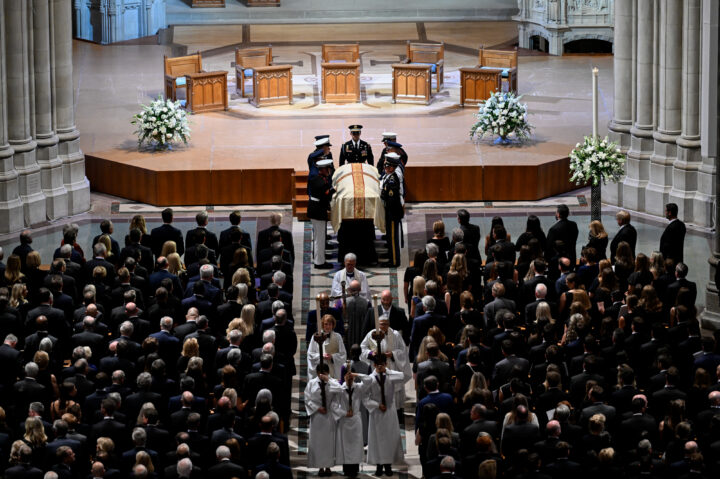
The casket of late Sen. Lindsey Graham is carried out during a funeral service at the Washington National Cathedral in Washington, DC, on July 28, 2026.


 Add JewishInsider on Google
A who’s who of international leaders, Cabinet members, senators and ambassadors gathered on Tuesday at the National Cathedral and on Capitol Hill for a somber and emotional tribute to the late Sen. Lindsey Graham (R-SC), a giant both in Washington and on the world stage.
Graham distinguished himself over his career as one of the most important foreign policy voices in the Republican Party and a global statesman, evident in the fact that Israeli Prime Minister Benjamin Netanyahu and Ukrainian President Volodymyr Zelensky sat just seats away from one another at the afternoon memorial service, representing two of the countries that Graham championed during his time in office.
In one sign of how appreciated Graham’s pro-Israel leadership was to so many in the Jewish community, a number of attendees were seen wearing kippot at the National Cathedral service. Among the notable guests at the service were: philanthropist Miriam Adelson; Israel’s former Minister of Strategic Affairs Ron Dermer; Israeli opposition leader and Netanyahu rival Yair Lapid; Axios reporter Barak Ravid; and the parents of slain American Israeli hostage Omer Neutra.
Fox News host Sean Hannity gave special attention to Graham’s dedication to Israel in his eulogy, offering effusive praise to Netanyahu and the importance of the U.S.-Israel relationship.
“Lindsey would have been blown away that you took this long journey with your beautiful bride to be here today. He loved you. He loved the state of Israel, he loved the people of Israel,” Hannity told Netanyahu and his wife, Sara, from the lectern. “Under your leadership, Israel has been one of America’s most consistent and loyal allies. He was never shy to say it, to the day he passed. Just as President Trump has been Israel’s strongest friend in the history of the White House … Lindsey was that friend to Israel in the United States Senate.”
Sean Hannity speaks about Netanyahu and Israel at Sen. Lindsey Graham's funeral.
— Jewish Insider (@jewishinsider) July 28, 2026
"He loved you. He loved the state of Israel. He loved the people of Israel." pic.twitter.com/pOdBZdHRNp
Acknowledging Graham’s role as one of the GOP’s most prominent voices on foreign policy, President Donald Trump said in his own eulogy that Graham “was extremely hawkish” and “never saw a war that he didn’t like” but said Graham pursued those policies “for the good of our country.”
Graham had been one of the most influential voices in Trump’s ear in support of confronting Iran’s malign activity in the Middle East — and urging the president to more actively confront Russian aggression against Ukraine.
This week could mark a major turning point for the senator’s legacy: the Senate voted overwhelmingly yesterday evening to open debate on the Russia (and, at the last minute, Iran) sanctions bill that Graham spent his final months negotiating. And Trump’s meeting Tuesday with Netanyahu, where the two were expected to discuss next steps in Iran, could shape the future of the war.
Graham was one of a rare breed of Republicans who managed to remain a fervent advocate for U.S. involvement abroad while also keeping in Trump’s good graces and maintaining his influence with the president.
But there’s no clear successor to replace Graham’s hawkish voice in Trump’s inner circle, an absence that could tangibly impact the direction of U.S. foreign policy in the coming weeks and months, including the direction of the Iran war.
Under the preliminary agreement, Israel will withdraw from two ‘pilot zones’ while maintaining its security zone in southern Lebanon
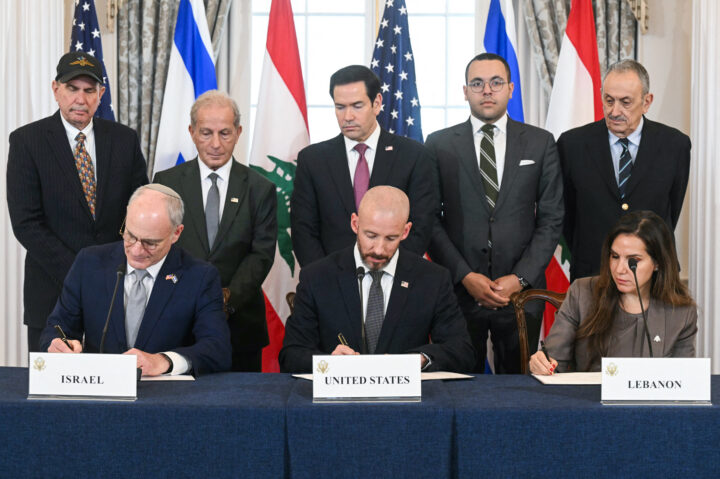
Photo by SAUL LOEB / AFP via Getty Images
Secretary of State Marco Rubio looks on as Israeli Ambassador to the U.S. Yechiel Leiter, State Department Chief of Staff Daniel Holler, and Lebanese Ambassador to the U.S. Nada Hamadeh sign a framework agreement at the U.S. Department of State in Washington, DC, on June 26, 2026.
Secretary of State Marco Rubio and the ambassadors of Israel and Lebanon signed a framework agreement in Washington on Friday aimed at scaling back Israel’s military presence in Lebanon, where the IDF has established a presence for the last three months as part of its campaign against Hezbollah.
Israeli Ambassador to the U.S. Yechiel Leiter and Lebanese Ambassador to the U.S. Nada Hamadeh Moawad announced the deal at a press conference with Rubio, following four days of negotiations in Washington during the fifth round of direct talks between Jerusalem and Beirut.
Under the deal, Israel will withdraw from two “pilot zones,” one north of the Litani river and one in southern Lebanon, and transfer administration of the areas to the Lebanese Armed Forces.
The preliminary deal between Israel, Lebanon and the U.S. is aimed at enabling a broader agreement in the future, a senior Israeli official told CNN.
Israeli Prime Minister Benjamin Netanyahu hailed the framework agreement as a “major blow to Iran,” emphasizing in a video statement that Israeli forces will maintain their presence in Israel’s security zone in southern Lebanon until Hezbollah is disarmed.
“Iran is trying to force us into a withdrawal from southern Lebanon by force. In effect, Israel, Lebanon and the United States are telling them: this is none of your business,” Netanyahu said.
Today is “the beginning of the beginning,” Rubio said at the signing ceremony. “There’s a lot of work ahead. We don’t, in any way, underestimate the difficulty of the task ahead. But we understand the importance of it, how vital it is. And we are honored to play a part in bringing this together.”
Moawad said at the signing that the agreement would be the “first step on the road to restoring Lebanese sovereignty and territorial integrity.”
The announcement comes after months of negotiations and on the heels of the Trump administration signing a memorandum of understanding with Iran and launching a deconfliction mechanism to end the fighting in Lebanon without Israel’s participation.
The negotiations will mark the highest-level direct talks between the countries in over 30 years
Jalaa MAREY/AFP via Getty Images
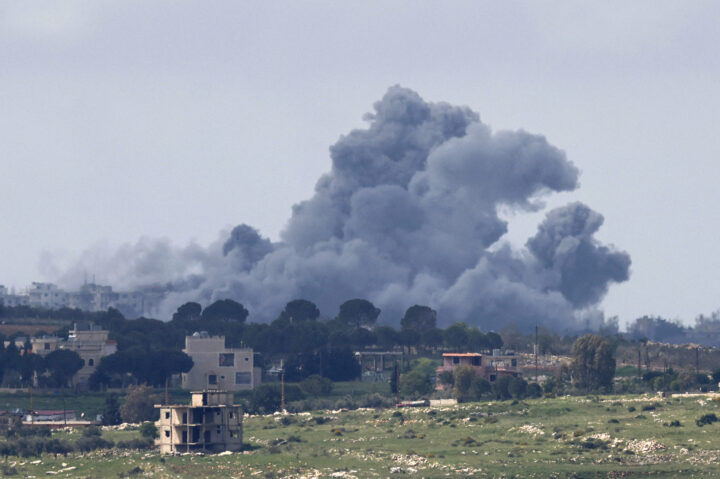
Smoke rises following Israeli strikes in southern Lebanon near the border as seen from the Upper Galilee, in northern Israel on April 10, 2026
Secretary of State Marco Rubio will convene the ambassadors from Israel and Lebanon in Washington on Tuesday for the highest-level direct talks between the countries in over 30 years.
Israeli Ambassador to the U.S. Yechiel Leiter and Lebanese Ambassador to the U.S. Nada Hamadeh will represent their countries, with U.S. Ambassador to Lebanon Michel Issa and State Department Counselor Michael Needham also taking part in the meeting.
The negotiations are meant to focus on how Israel and Lebanon can work together to disarm Hezbollah and make peace between the countries.
A State Department official said the talks are “a direct result of Hezbollah’s reckless actions,” and “will scope the ongoing dialog about how to ensure the long-term security of Israel’s northern border and to support the Government of Lebanon’s determination to reclaim full sovereignty over its territory and political life.”
“Israel is at war with Hezbollah, not Lebanon, so there is no reason the two neighbors should not be talking,” the State Department official said.
Lebanese Prime Minister Nawaf Salam canceled a planned visit to the U.S. this week to monitor the situation from Beirut and “safeguard the security of the Lebanese people and preserve national unit,” he wrote on X.
Israeli Prime Minister Benjamin Netanyahu announced the talks last week, marking a shift in his position from earlier in the Lebanon campaign that began after Hezbollah joined Iran in attacking Israel in late February. Netanyahu said over the weekend that he had agreed to the talks because they would not only be about a ceasefire, but about disarming Hezbollah and working toward peace with Lebanon. President Donald Trump said at the time that he asked Israel to “low-key a bit” the strikes in Lebanon.
Lebanese Foreign Minister Youssef Raggi posted on X that the direct talks “in practice reinforced the separation between the Lebanese file and the Iranian track. … The Lebanese state alone holds the authority to negotiate on behalf of Lebanon.”
The talks are set to take place as Hezbollah continues to launch rockets and drone attacks at northern Israel on a daily basis and the IDF continues to target Hezbollah in southern Lebanon. The IDF said it struck about 150 Hezbollah targets on Monday, and it continues its ground operations in the Iran-backed terrorist organization’s stronghold of Bint Jbeil.
The IDF cleared for publication on Tuesday the name of Sgt.-Maj. Ayal Uriel Bianco, who was killed in battle in Lebanon.
Netanyahu visited IDF troops in Lebanon over the weekend, and praised them on Monday for “pushing the enemy away from the border” and creating “a solid, deeper security zone that both prevents the danger of invasion and distances the anti-tank missile threat.”
Please log in if you already have a subscription, or subscribe to access the latest updates.
 Continue with Google

 Continue with Apple